

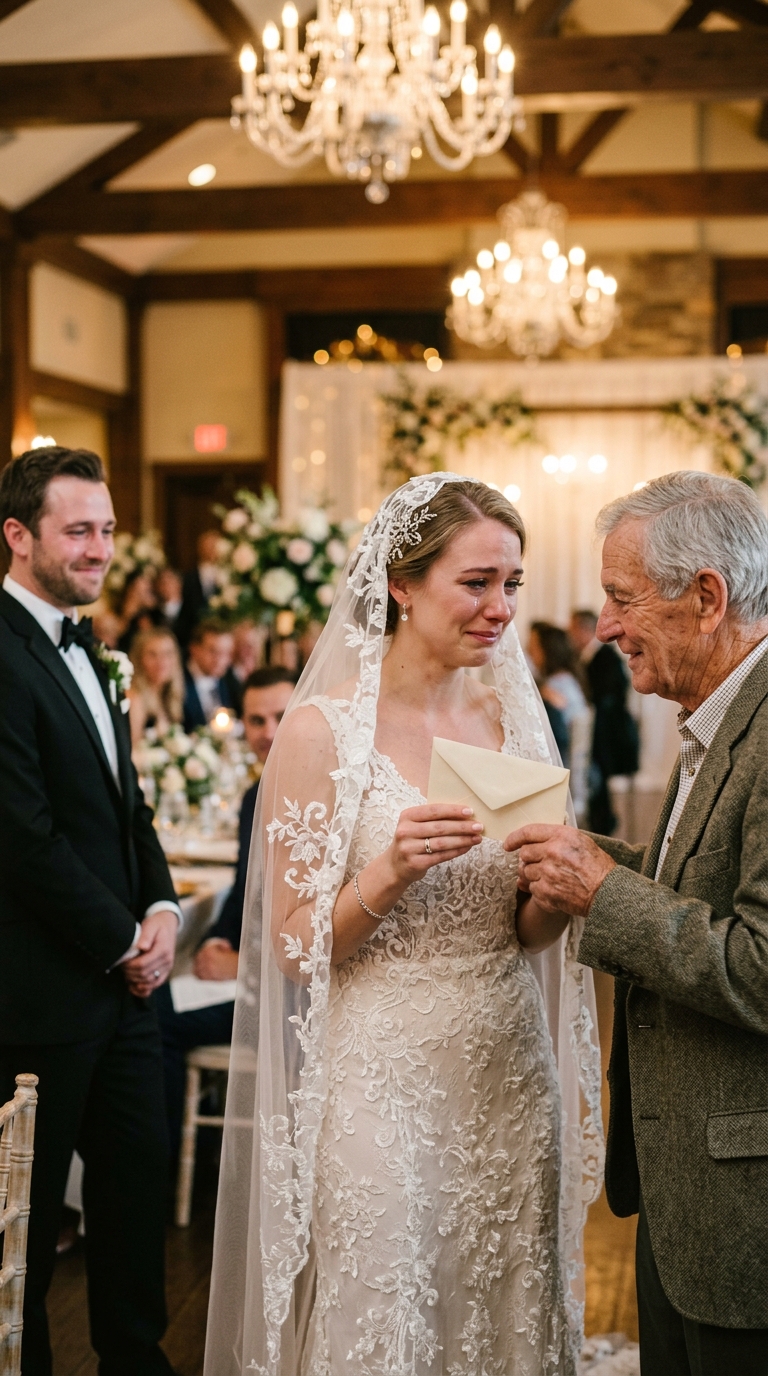
The wedding took place in the most luxurious restaurant in the city. A grand hall, white tablecloths, fresh flowers, soft music—everything appeared elegant and flawless.
The groom’s family filled most of the space. Confident men in expensive suits laughed loudly, lifted their glasses, and behaved as if they owned the entire celebration.
The bride’s side was small. A few friends, distant relatives, and a neighbor who had helped her prepare. Her father sat quietly at the edge of the table. His jacket was old, his hands worn from years of labor. He spoke little and barely touched his food.
The groom’s mother had disliked the bride from the very beginning. She never tried to conceal it. Not because the girl was rude or lazy—no.
Simply because she came from a poor family.
To her, that alone was unacceptable. The bride’s mother had passed away long ago, and her father was just an ordinary worker with no status or respected name. In her eyes, such a girl could never be worthy of her son.
She tolerated her daughter-in-law—nothing more. Only for her son’s sake.
The gifts began to be presented one by one. The groom’s parents stood and offered a toast. Then his mother proudly revealed the keys to an apartment.
Applause filled the hall. Next, another relative stepped forward with a thick envelope—everyone immediately understood it was money.
And then the host announced:
“And now, a gift from the bride’s father.”
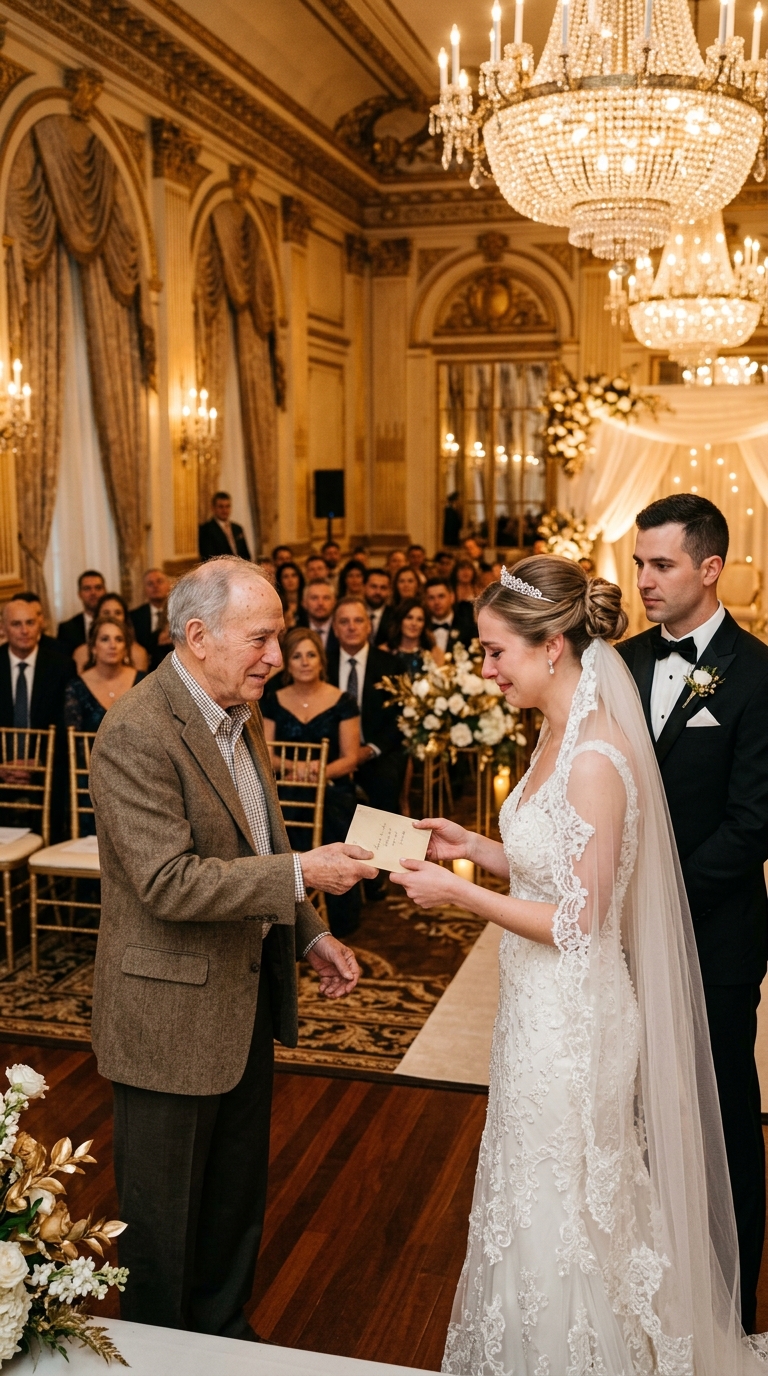
An uneasy silence settled over the room. The father rose slowly, holding a plain white envelope. No ribbon. No decoration. The groom’s relatives exchanged amused glances.
He walked over to his daughter and said quietly,
“This is for you.”
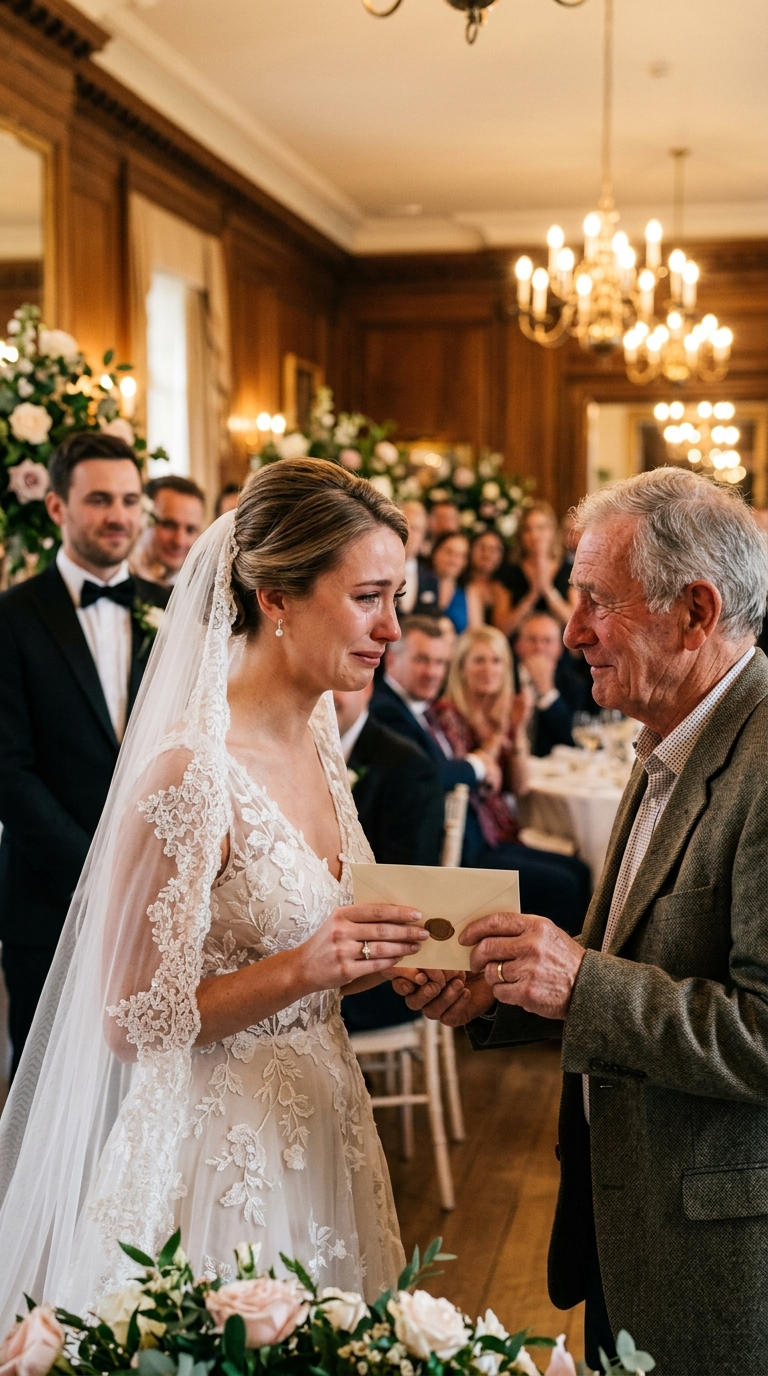
She opened the envelope. Inside was a single sheet of paper. As she read, her expression gradually shifted. Her eyes widened. The color drained from her face until those nearby thought she might faint.
When she finished, she looked up at her father. He met her gaze calmly—no smile, just quiet certainty.
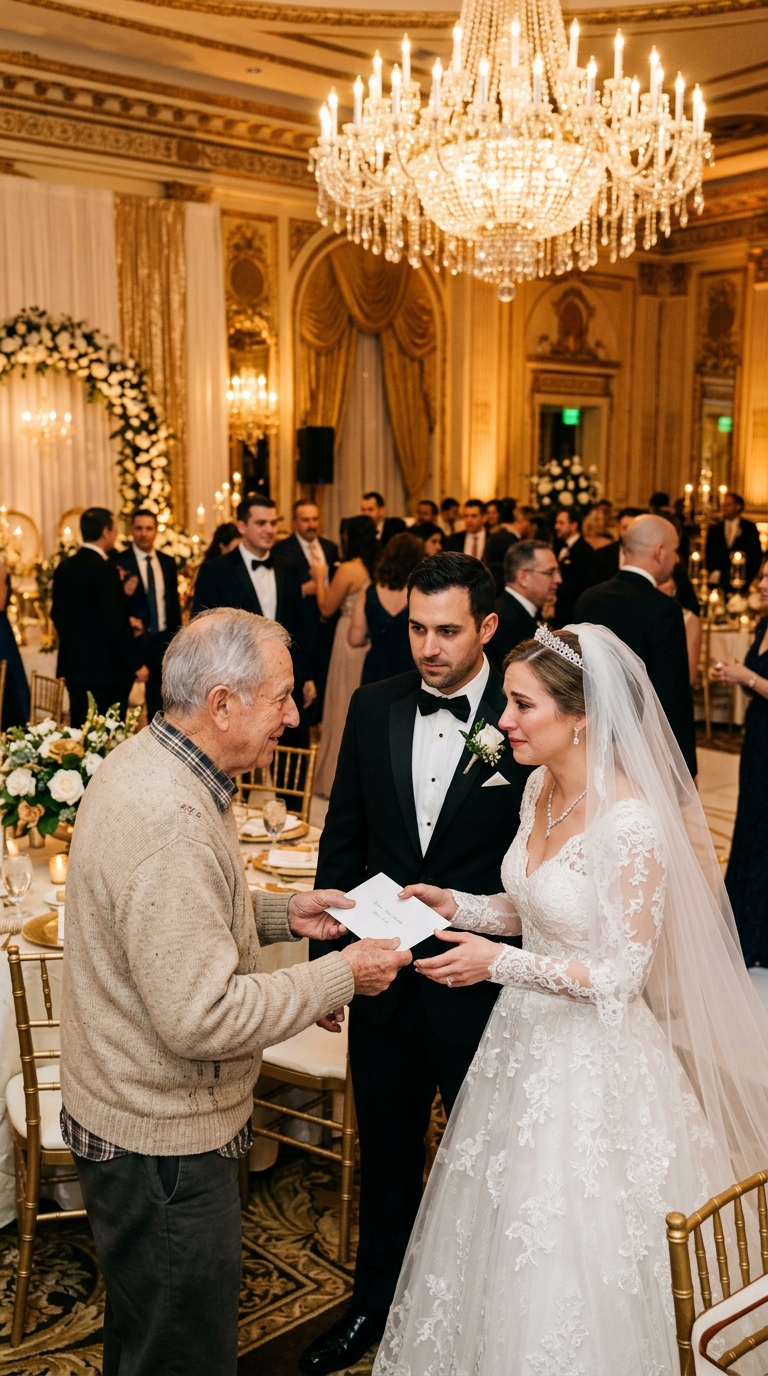
Without a word, she handed the paper to the groom.
The groom took it, confused, and began to read. The room fell completely silent.
His expression changed before everyone—confusion, then disbelief, then shock. He reached the final line and slowly sank into his chair.
Inside the envelope was… a will.
The bride’s father had prepared it for years, quietly and without saying a word. He worked tirelessly, took extra shifts, saved every spare coin. He never complained, never boasted, never asked for recognition.
The document listed everything he was leaving to his daughter:
The small house she grew up in, officially registered in her name.
Two plots of land outside the city, purchased long ago when no one believed they would ever be valuable.
And a bank account—not meant to impress, not meant to show off, but enough to ensure she would never again have to rely on anyone’s mercy.
At the bottom, one final line:
“All I have is yours. And if your husband ever hurts you, come home.”
The daughter finished reading and could no longer lift her eyes. Only then did she truly understand how much her father had carried alone, silently, for her sake.
The groom sat frozen, the color drained from his face. In that moment, he realized a painful truth:
It was never the bride who was poor.
It was the way she had been judged.
