

The world had always admired men who moved quickly—men who dominated boardrooms, shaped headlines, and lived at the center of power.
Lucas Hale was no longer one of them.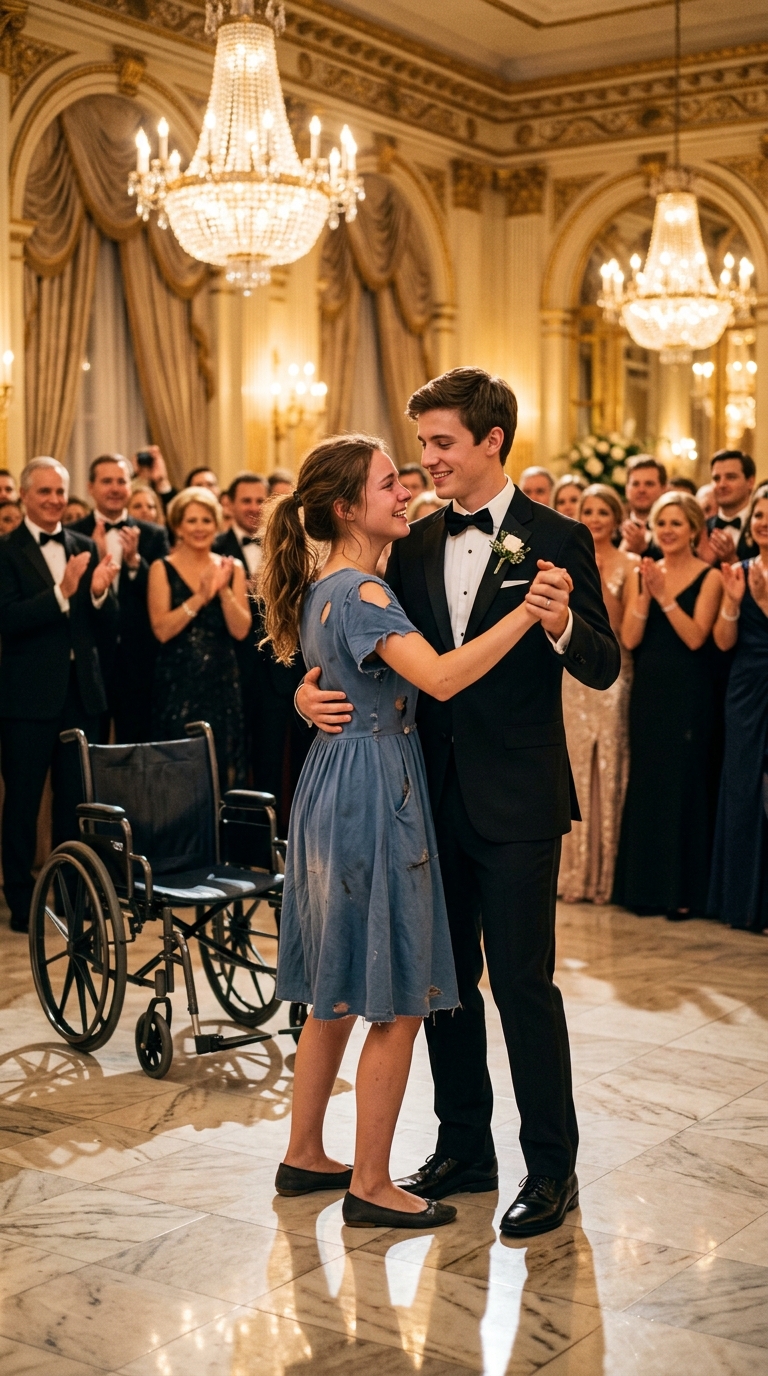
At thirty-three, he had once been known as one of the sharpest minds in the corporate elite. Tailored suits, flashing cameras, quiet admiration in every room—his life had been built on momentum and control.
Then came the accident.
One night on a rain-slick highway took his ability to walk, shattered his confidence, and stripped away the identity he had spent years creating. When he returned to his high-rise apartment overlooking the city, it wasn’t as a victor—but as a man confined to a wheelchair, fighting battles no one could see.
People responded in different ways.
Some showed sympathy.
Some kept their distance.
Most disappeared.
But the injury wasn’t what broke him.
It was the loneliness.
Invitations stopped. Messages faded. Conversations became careful and distant. It felt as if the man he once was had vanished—and the world had already moved on.
On the night of his company’s annual charity gala, Lucas nearly didn’t attend.
“It might help,” his doctor suggested.
“It’ll exhaust me,” Lucas replied.
Still, something pushed him to go—to face the world again, not as a symbol of loss, but as himself.
What he didn’t expect was that the most important person he would meet that night wouldn’t be a CEO or investor—
But the daughter of a maid.
THE NIGHT EVERYTHING CHANGED
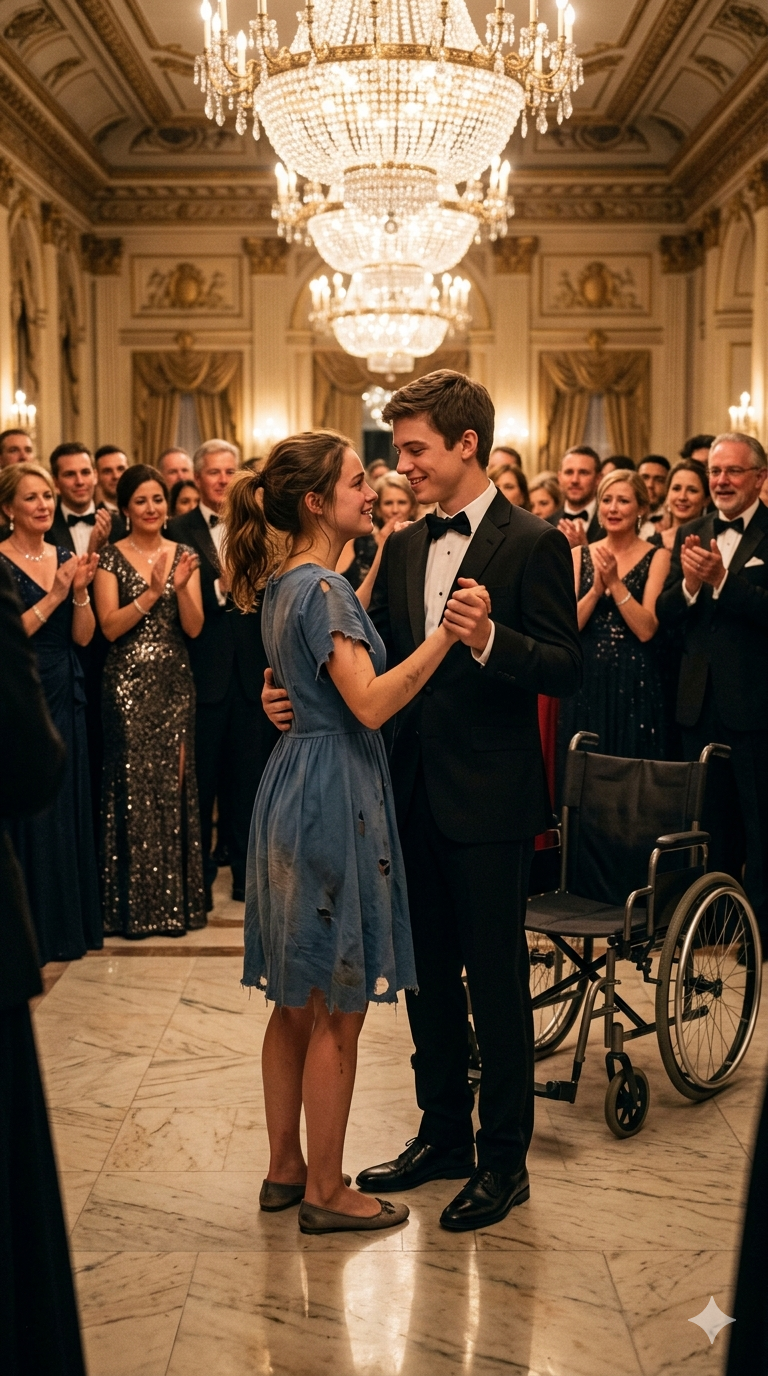
Crystal chandeliers filled the ballroom with warm light. Silk gowns shimmered. Music drifted through the air. Lucas entered quietly, his wheelchair gliding over polished floors, drawing looks of pity and discomfort.
He hated it.
Some guests spoke in hushed tones. Others avoided him completely. The colleagues who once stood beside him now moved forward without him.
He couldn’t walk anymore.
But they were the ones who had left.
Lucas positioned himself at the edge of the room, watching couples dance—each step a reminder of everything he had lost.
Then someone approached.
No hesitation.
No pity.
Just warmth.
She looked to be in her mid-twenties, dressed simply in navy. Her eyes were bright, her smile effortless.
“Hi,” she said. “I’m Elena.”
Lucas blinked. “Do I know you?”
She shook her head. “No. But my mom cleans your office building. I’ve heard about you.”
He raised an eyebrow. “Hopefully good things.”
She laughed softly. “She says you’re kind. That matters.”
Something inside him eased.
“So why are you here?” he asked.
“I volunteer at events like this,” Elena said. “I like watching people when they forget they’re being observed.”
They stood in quiet for a moment.
“Funny,” she added, “how people work so hard to look perfect while hiding what hurts most.”
Lucas studied her. “You’re different.”
She smiled. “I try to be.”
THE INVITATION
Elena looked at him, eyes shining with quiet courage.
“Would you dance with me?”
Lucas froze.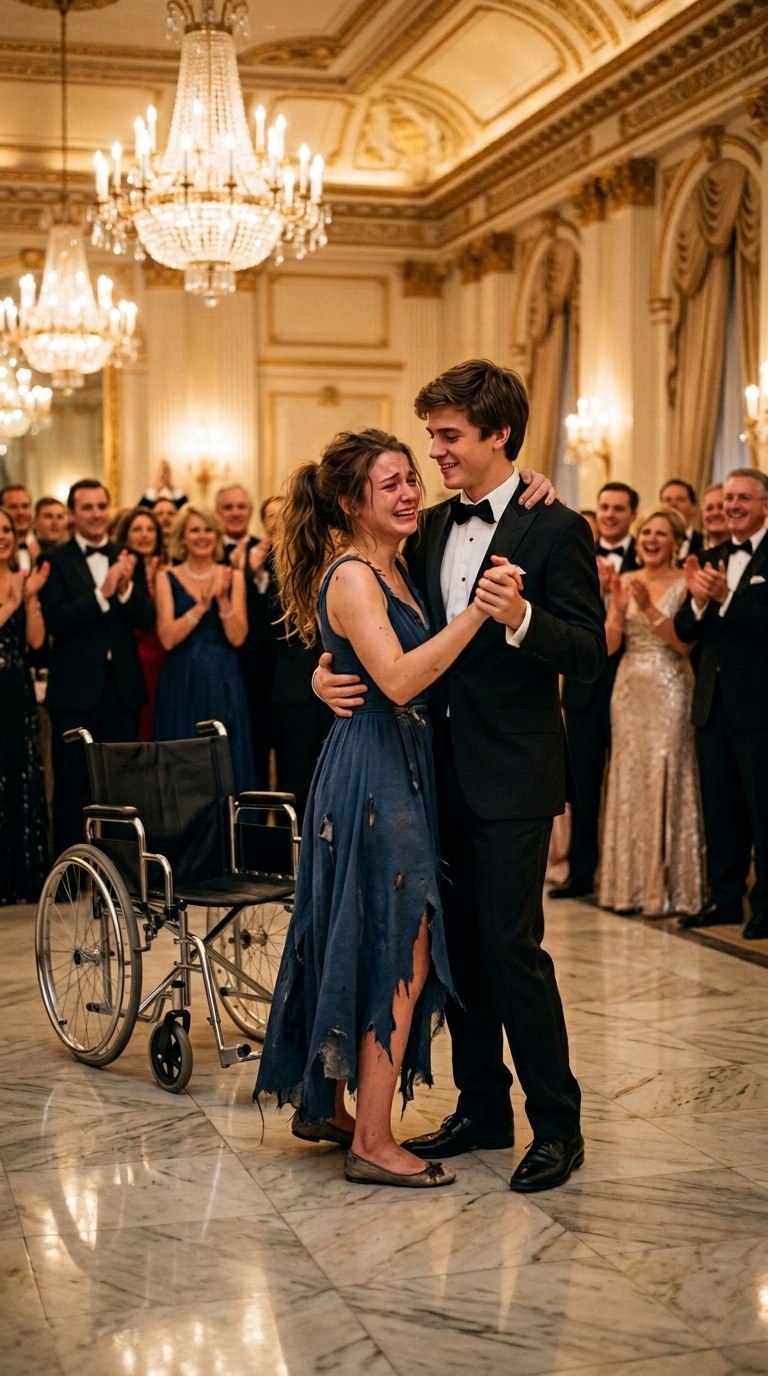
He glanced at his wheelchair—the barrier that had separated him from the world for months.
“I can’t,” he said softly.
She shook her head.
“You can’t dance like them,” she said. “But you can still dance.”
“People will stare.”
“They already are,” she replied gently. “Let them.”
She stepped closer.
“I’m asking you,” she said. “Not the chair.”
His throat tightened.
No one had spoken to him like that since before the accident.
After a long pause, he nodded.
“I’d like that.”
A DIFFERENT KIND OF DANCE
Elena placed one hand lightly on his shoulder, the other in his. She followed his movement—small turns of the chair, gentle rhythm, quiet connection.
They weren’t dancing to impress.
They were dancing to feel alive.
The room watched.
Lucas didn’t care.
For the first time in months, the weight inside him lifted. The pain softened. He felt present again.
When the music ended, Elena smiled.
“You’re better than you think.”
Lucas laughed—genuinely.
“I haven’t felt like myself in a long time.”
“You are yourself,” she said softly. “More than most people here.”
THE MOMENT THAT STAYED
They spent the rest of the night talking—about life, fear, dreams, and everything people usually avoided.
“People don’t talk to me like this anymore,” Lucas admitted.
“That’s their loss,” Elena replied.
He looked at her, something shifting inside him.
“Why did you ask me to dance?” he asked.
She hesitated, then answered honestly.
“Because you looked like someone drowning… in a room full of people who wouldn’t reach out.”
The truth hit him deeply.
“And because loneliness,” she added, “doesn’t care how rich you are.”
WHAT CAME AFTER
Before leaving, she handed him a note.
“My number,” she said. “In case you want to talk… or dance again.”
“I will,” Lucas said.
The next morning, he texted:
Thank you. You reminded me I’m still alive.
She replied:
You never stopped. You just forgot.
They spoke every day after that.
Elena visited often—bringing laughter, stories, and warmth that slowly filled the emptiness in his life.
And Lucas began to heal.
Not in his body.
But in his heart.
A NEW BEGINNING
Months later, sitting beside Elena as rain fell softly over the city, Lucas spoke quietly.
“I thought my life ended after the accident.”
She squeezed his hand. “And now?”
“Now I think it began the night you asked me to dance.”
Her eyes shimmered.
“You let me see you,” she said.
“And I want you to keep seeing me,” he replied.
She smiled.
“I’d like that.”
EPILOGUE — STILL DANCING
A year later, at another gala, Lucas returned—this time with Elena beside him.
They moved onto the dance floor again.
People stared.
But it didn’t matter anymore.
They danced their way—slow, real, unapologetic.
When the music ended, Lucas kissed her hand.
“Thank you.”
“For what?” she asked.
“For seeing me.”
Elena leaned closer.
“I didn’t see the chair,” she said. “I saw your heart.”
And in that moment, Lucas understood something no fortune could ever give—
A reason to truly live again.
