

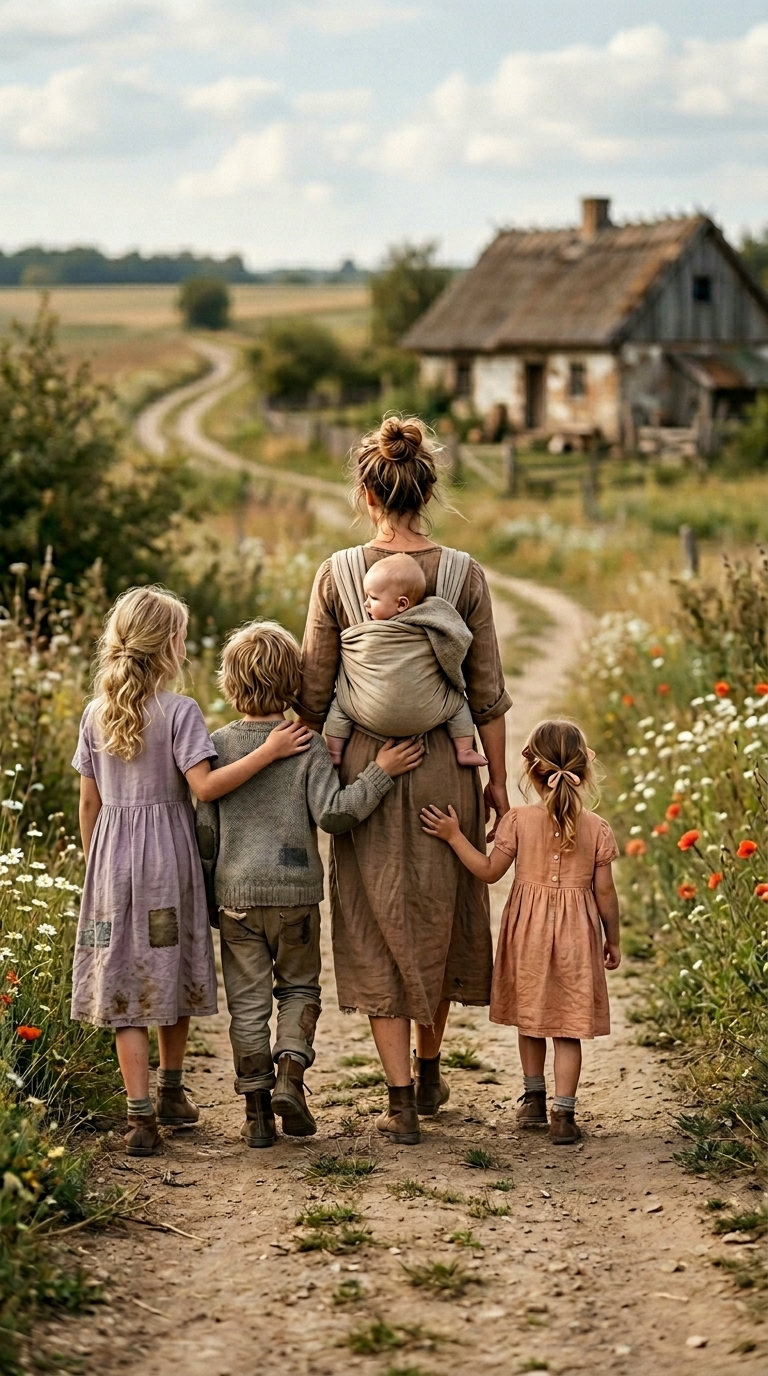
The storm tore across the dark hills that August night with merciless force. Sarah Mitchell stood in the mud, soaked through, clutching her 11-month-old baby Emma tightly to her chest, shielding her from the icy wind.
Beside her, Lucas, eight years old, held a torn backpack while trying to cover his sister Ava, six, and little Noah, three, with his small body. It had only been eight months since David, Sarah’s husband, died in a devastating highway accident, leaving everything shattered.
That same afternoon, her mother-in-law, Margaret, had done something unforgivable. After secretly collecting her son’s life insurance, she arrived with forged papers and bribes to take the modest home Sarah lived in. Without hesitation or compassion, she threw Sarah and her four children out into the storm, shouting that she would not support a useless daughter-in-law or children she saw as burdens.
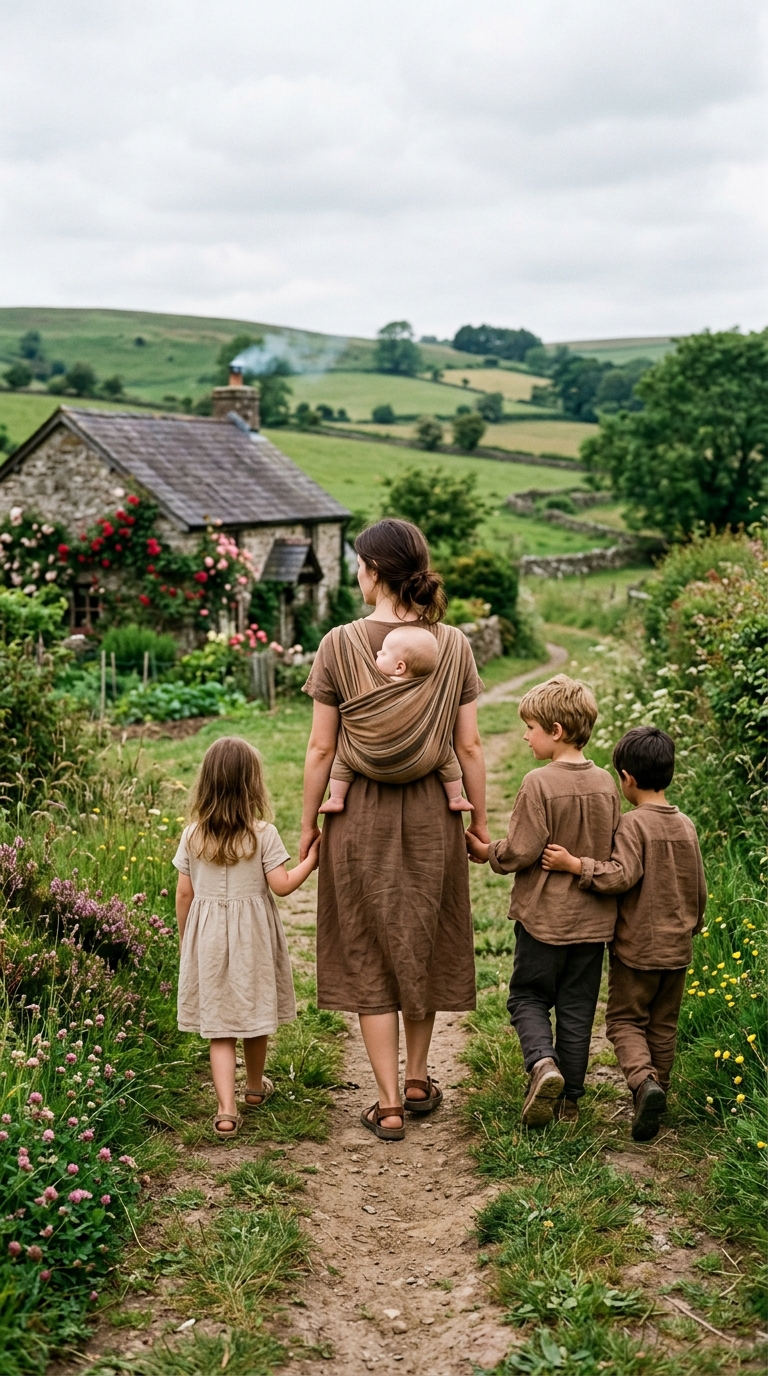
With her heart broken and only 47 crumpled dollars in her coat pocket, Sarah began walking down the empty road. The cold cut through them. One mile. Then two. Then three. The children cried softly, their stomachs empty, their feet blistered and raw.
In the darkness, lightning revealed a looming shape—a decaying wooden cabin tangled in thick wild vines covered in thorns as long as a thumb. It looked abandoned, almost cursed, as if nature had tried to hide it. But it was their only chance.
Lucas pulled out a small kitchen knife and, with shaking hands, helped his mother cut through the vines. Their hands bled, mixing with the rain, but after fifteen painful minutes, they forced the rotting door open. Inside was complete darkness and the smell of neglect.
They huddled together on the dusty floor, trying to survive the worst night of their lives.
Morning revealed the full extent of their situation. There was no clean water. No food. Not even a crumb. Noah cried from hunger.
Trying to distract them and bring in light, Sarah grabbed an old rag and began scrubbing a filthy window. She wiped hard, clearing years of dirt. Then suddenly, her hand stopped. Words were etched into the glass from the inside:
“If you are here, it’s because God brought you. Don’t give up. Under the loose board next to the stove, there is something for your new beginning. With love, Hope.”
Sarah’s breath caught. She rushed to the stove and struck the floor. One board sounded hollow. She pried it open with the knife and reached into the dark space, pulling out a heavy, rusted metal box.
Her hands shook as she forced it open. Inside were $3,800 in cash, a blue notebook, and a sealed envelope. It was a miracle. Salvation.
But the relief vanished instantly. The front door burst open with a violent crash. Margaret stood there, a twisted smile on her face, with a lawyer beside her. She had followed them through the storm, waiting for them to fail, and now her greedy eyes locked onto the box.
“Give it to me, you worthless woman!” Margaret screamed, lunging forward. The lawyer stepped in, threatening. “That cabin belonged to the late David, and everything here legally belongs to his mother,” he claimed.
Little Lucas, fierce and desperate, jumped forward and bit the lawyer’s hand as hard as he could, making him cry out.
In that moment, something inside Sarah changed. She was no longer afraid. She grabbed the heavy knife and stood, pointing it straight at Margaret. Her eyes burned with fury.
“Take one more step and I swear you won’t leave here!” she shouted. “You threw us away to keep my husband’s money, but you won’t take the only thing keeping my children alive! Get out of my house!”
Margaret stepped back, pale and shaken, then fled with the lawyer, swearing revenge. Sarah blocked the broken door with a heavy log. She knew she needed protection.
She opened the envelope. Inside were the original property documents. The former owner, Hope, had legally transferred the cabin years ago to the first abandoned mother who found shelter there. Margaret had no claim.
With tears in her eyes, Sarah read the letter. Hope had raised five children alone by baking bread. The blue notebook held recipes—sweet corn bread, vanilla rolls, pumpkin pastries. At the bottom was a small bag of seeds with a note: “Cut away the thorns of pain and plant flowers on your new path.”
That same day, Sarah used part of the money to buy flour, eggs, sugar, yeast, and lard. She lit the stove and followed the recipes. The smell of fresh bread filled the cabin, pushing out the scent of despair.
The next morning, she sold twenty pieces at the market. They sold out in thirty minutes. The next day she made forty, then eighty. Within a week, she was earning real money.
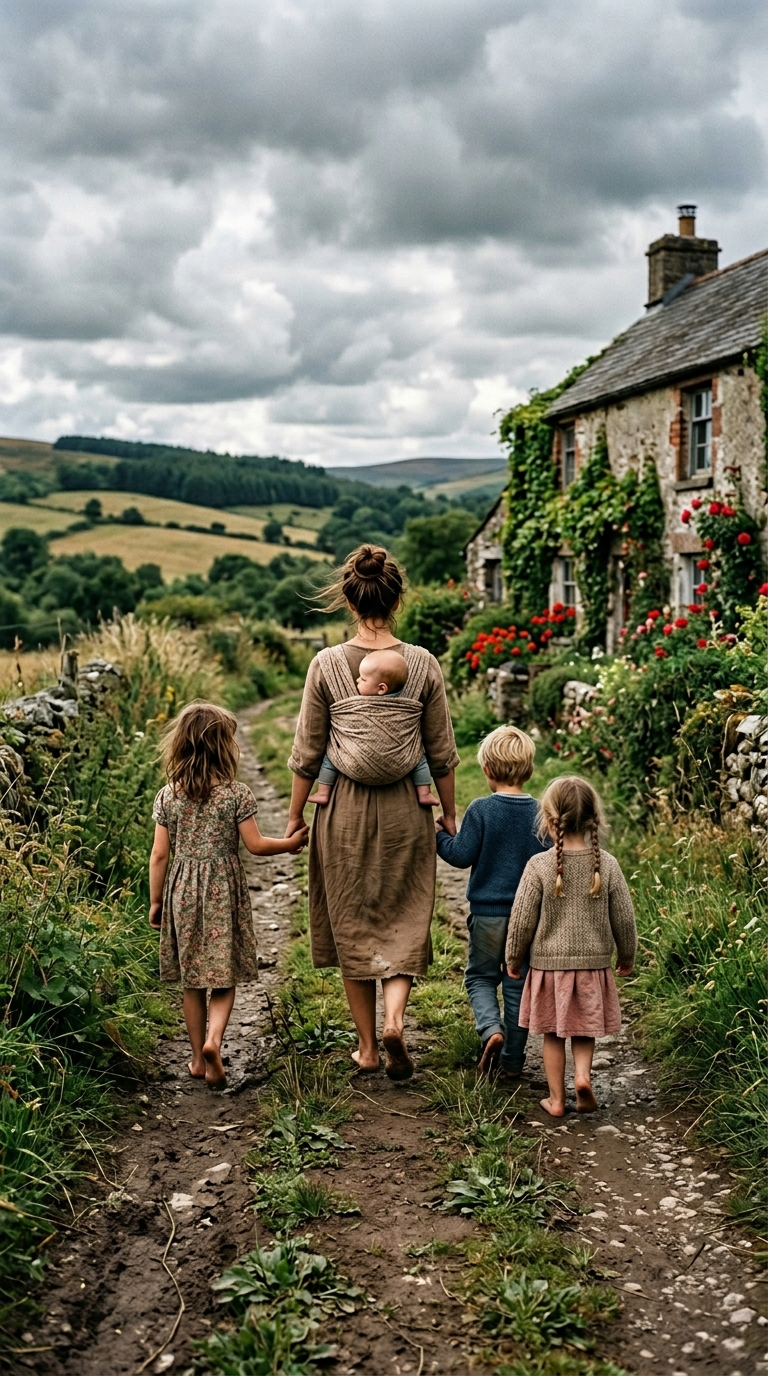
Months passed. Sarah bought equipment, hired help, and built a thriving bakery called “Hope’s Miracle.” The thorny vines around the cabin were cut away and replaced with sunflowers and marigolds. One year later, Sarah was a respected business owner, supplying multiple cafés. Her children were in school, healthy and smiling.
Then one rainy afternoon, the bell rang. Standing at the door, soaked and broken, was Margaret. No longer proud—now weak, trembling, desperate. She fell to her knees, crying. She had been betrayed, robbed, abandoned by her own children, left with nothing.
Silence filled the room. Lucas, now stronger, stared at her. Sarah remembered everything—the storm, the hunger, the fear.
She packed bread, milk, and $1,000 and handed it to her. “I give you this because my heart is not as rotten as yours,” she said calmly. “I forgive you to free myself, but you are no longer our family. Take this and never come near my children again.”
Margaret left, destroyed by regret.
That same day, another desperate mother arrived with three children. Sarah welcomed her, fed them, gave her work and a place to stay.
That night, Sarah buried a new metal box—filled with money, recipes, and seeds—for the next mother in need. She stood beneath the stars, finally at peace.
Because she understood something deeply:
Karma is real. And those who carry kindness will always find their way back to the light.
