

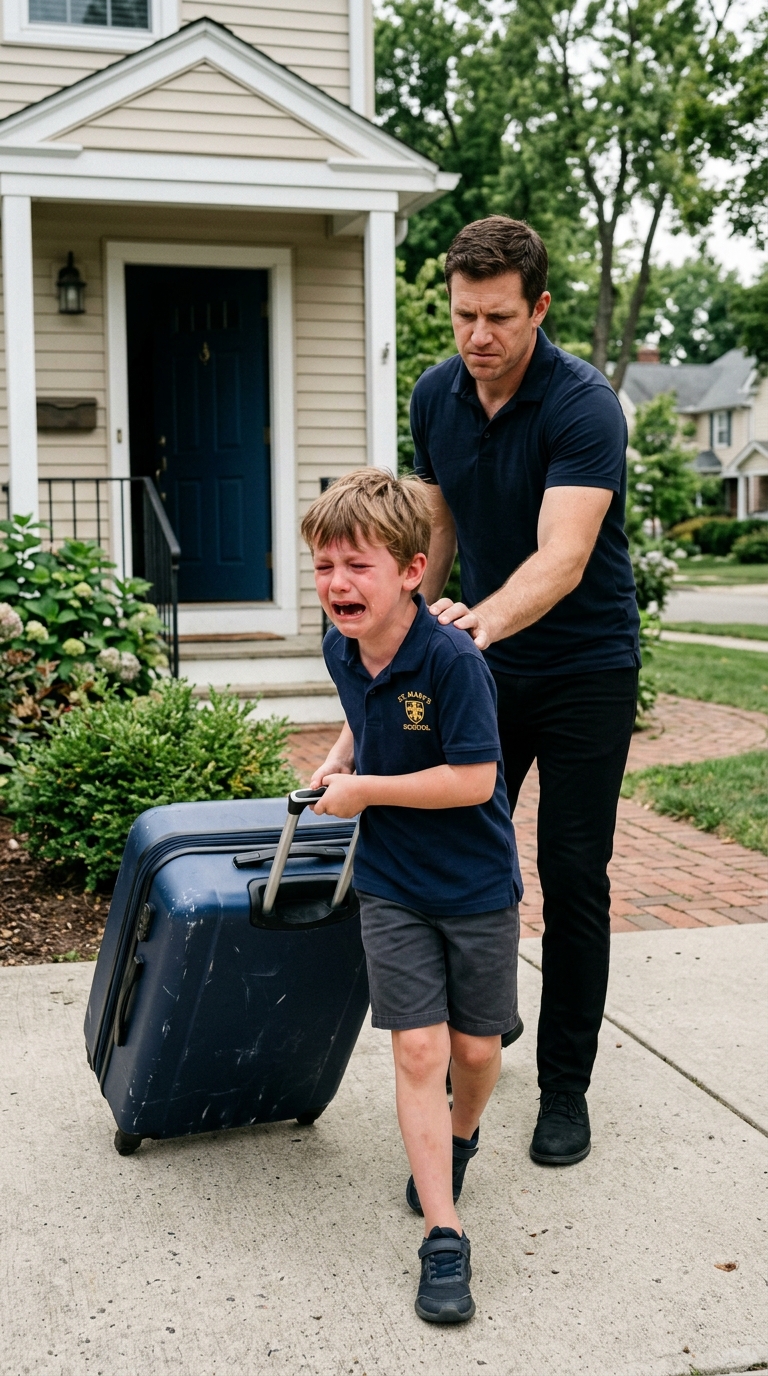
“Pack your things, Liam. You’re not my son. Your mother is gone, and I have no responsibility for you anymore.”
He didn’t argue.
He didn’t cry.
The twelve-year-old simply bent down, picked up his torn backpack from the floor, and walked out into the cold night.
And the most disturbing part?
No guilt. No hesitation. Only a strange sense of relief, as if a weight had finally been lifted from my shoulders.
My name is Adrian Cole, and I was thirty-six when my wife, Marina, died suddenly from a stroke. Her passing shattered our home overnight. But she didn’t leave just me behind.
She left her son.
Liam.
A quiet, observant boy with deep brown eyes who had just turned twelve.
When I married Marina, Liam was already part of her life. His biological father had disappeared long ago, leaving her to raise him alone. I often told others how generous I was for marrying a woman with a child.
But the truth was far less honorable. That generosity was a façade.
I provided for Liam. I paid for his schooling, bought his supplies, and made sure he had food and clothes.
But in my heart, I never truly embraced him. To me, he was a responsibility… not a son.
When Marina died, the fragile bond between us broke completely.
He never complained. Never caused trouble. He stayed quiet at dinner and remained polite in every interaction.
Strangely, that silence made it even easier to push him away.
One month after the funeral, I told him to leave.
And he did. I never tried to stop him.
Soon after, I sold the house and moved to another city, determined to start over. My business flourished, and I built a comfortable, successful life. Eventually, I remarried a woman with no children and no complicated past.
For years, I convinced myself Liam was nothing more than a fading memory. Occasionally, a thought would surface: Did he survive out there?
But even those questions faded with time.
In my darkest moments, I told myself something cruel:
If he disappeared… maybe it was for the best.
I buried that part of my life in silence.
Or so I thought.
Ten years later, at forty-six, I had everything I once wanted — wealth, stability, respect.
“Mr. Cole,” a calm voice said, “we would like to invite you to the grand opening of the L.K. Art Gallery this Saturday. Someone specifically requested your presence.”
“I’m not interested,” I replied quickly, ready to hang up.
But the voice continued.
“Don’t you want to know what happened to Liam?”
My hand froze.
The phone nearly slipped from my grip.
His name echoed in my mind like something returning from the grave.
“What… did you say?” I asked, my throat suddenly dry.
“Liam Cole requested that you attend personally,” the voice said. “He mentioned the exhibition wouldn’t feel complete without you there.”
I couldn’t answer.
I simply ended the call.
That night, sleep never came.
Memories I had buried for a decade resurfaced all at once: the sound of the door closing behind him… the torn backpack… the look in his eyes that night.
I didn’t know if he wanted forgiveness… or revenge.
When Saturday arrived, the city felt unfamiliar, even though I had lived there for years.
Or perhaps the truth was simpler.
I was the one who had changed.
The new gallery stood in the center of the arts district, its tall glass walls gleaming in the sunlight like a monument to perseverance. On the façade were the initials:
L.K.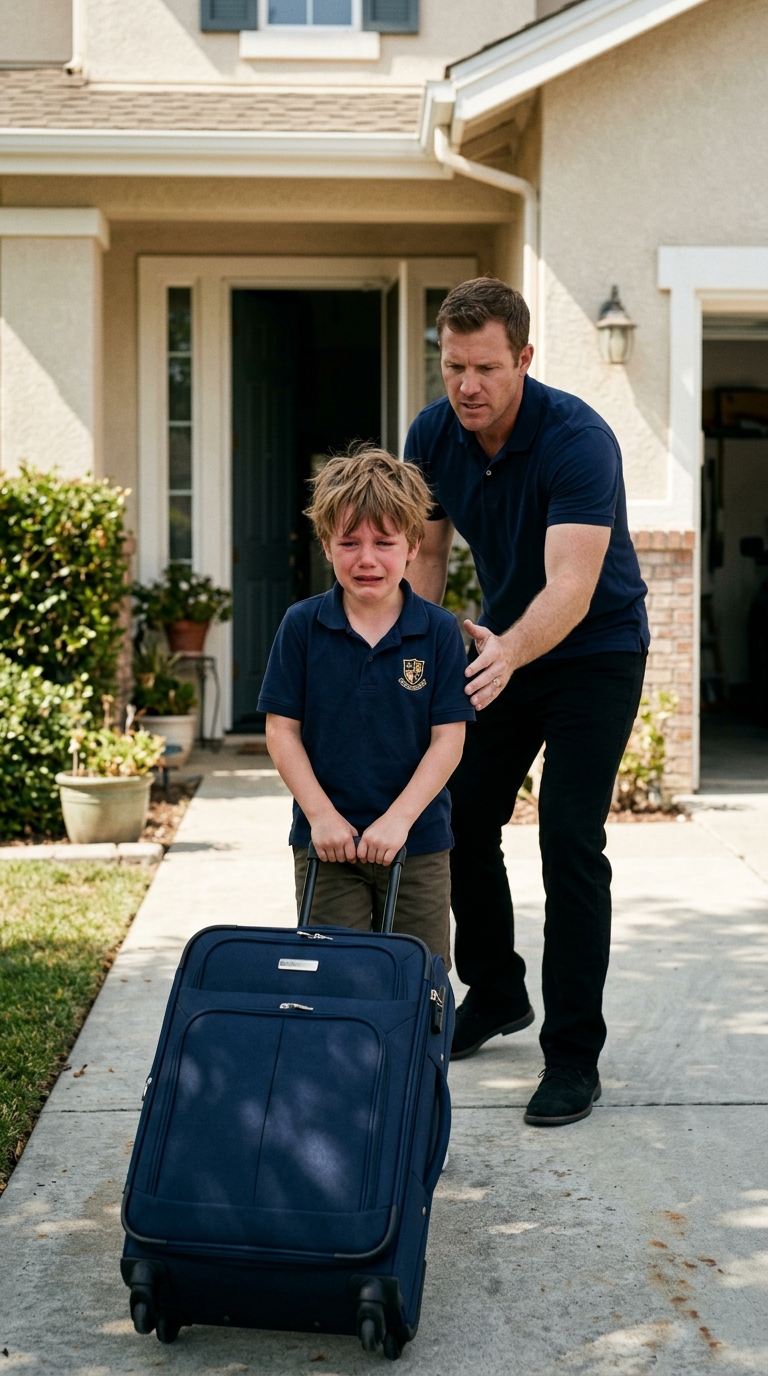
Liam Cole.
My heart raced as I stepped inside.
The lobby was filled with journalists, collectors, and artists. White walls displayed paintings and portraits.
But one piece in the center stopped me cold.
It showed a blurred adult figure standing in a doorway… while a small boy walked away into darkness carrying a torn backpack.
I didn’t need to read the title.
Still, my eyes drifted to the plaque.
“The Night I Lost My Father.”
“I had a feeling you’d come.”
The voice behind me sent a chill through my body.
I turned slowly.
And there he was.
No longer the frightened child I remembered—but a grown man.
Tall, composed, with Marina’s gentle eyes and a quiet strength I had never seen before.
“Liam…” I whispered.
He gave a slight nod.
“Hello, Mr. Cole.”
That title hit harder than any insult.
I had never truly been his father.
“I thought you were dead,” I said before I could stop myself.
“In a way, I was,” he replied calmly. “But sometimes losing everything teaches you how to rebuild.”
He led me into a private room behind the gallery.
On a table lay sketches, photographs, and newspaper clippings.
They told a story I had never known.
A teenage boy sleeping in shelters.
A young artist cleaning studios at night in exchange for space to draw.
Then gradually, exhibitions… scholarships… awards.
“I lived in train stations for almost two years,” Liam said quietly. “Then an art teacher let me work in her studio after hours. She was the first person who ever called me son.”
His words cut deeply.
“Why did you invite me here?” I finally asked.
He opened a folder and removed a sealed envelope.
“My mother gave this to me before she died,” he said. “I didn’t open it until recently.”
Inside was an old medical document.
A paternity test.
My name.
His name.
Result: 99.8% match.
The room seemed to spin.
“No…” I whispered.
Liam looked at me steadily.
“You didn’t just raise me,” he said. “You were my father all along.”
Regret tightened in my chest.
Every harsh word.
Every moment of rejection.
And the night I forced my own son out of my home.
I sank into a chair, trembling.
“What have I done…”
Liam stood quietly before speaking again.
“Many parents make mistakes,” he said gently. “They forget that children don’t need perfection… they just need love.”
I wiped my tears.
“I don’t deserve your forgiveness.”
“I’m not asking for forgiveness,” he replied.
He looked at me carefully.
“But there is something I want.”
“Anything.”
He took a slow breath.
“I want you to call me son. Just once. Not for me… for yourself.”
The word caught in my throat.
But eventually, I forced it out.
“Son.”
Liam closed his eyes as a tear slipped down his cheek.
“Thank you… Dad.”
Years later, the gallery held a special exhibition titled “Second Chances.”
At the center hung the painting of the boy and the man.
But now, the final detail had changed everything.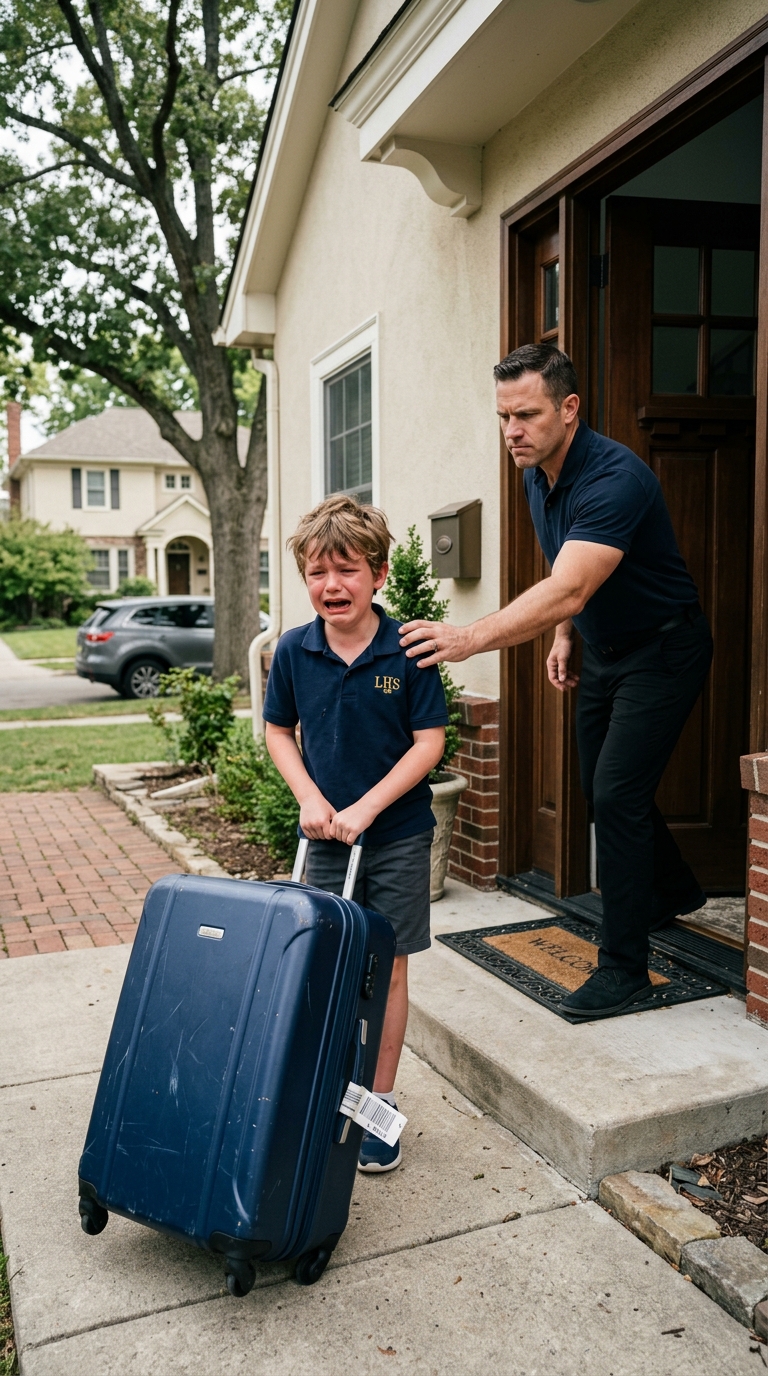
The man’s hand was finally reaching toward the child.
And beneath the painting was a simple dedication:
“For the father who taught me that even the worst mistakes can still lead to redemption.”
Standing beside my son that night, I understood something I would carry forever:
The past cannot be undone.
But the future can still be rebuilt—one honest word at a time.
