

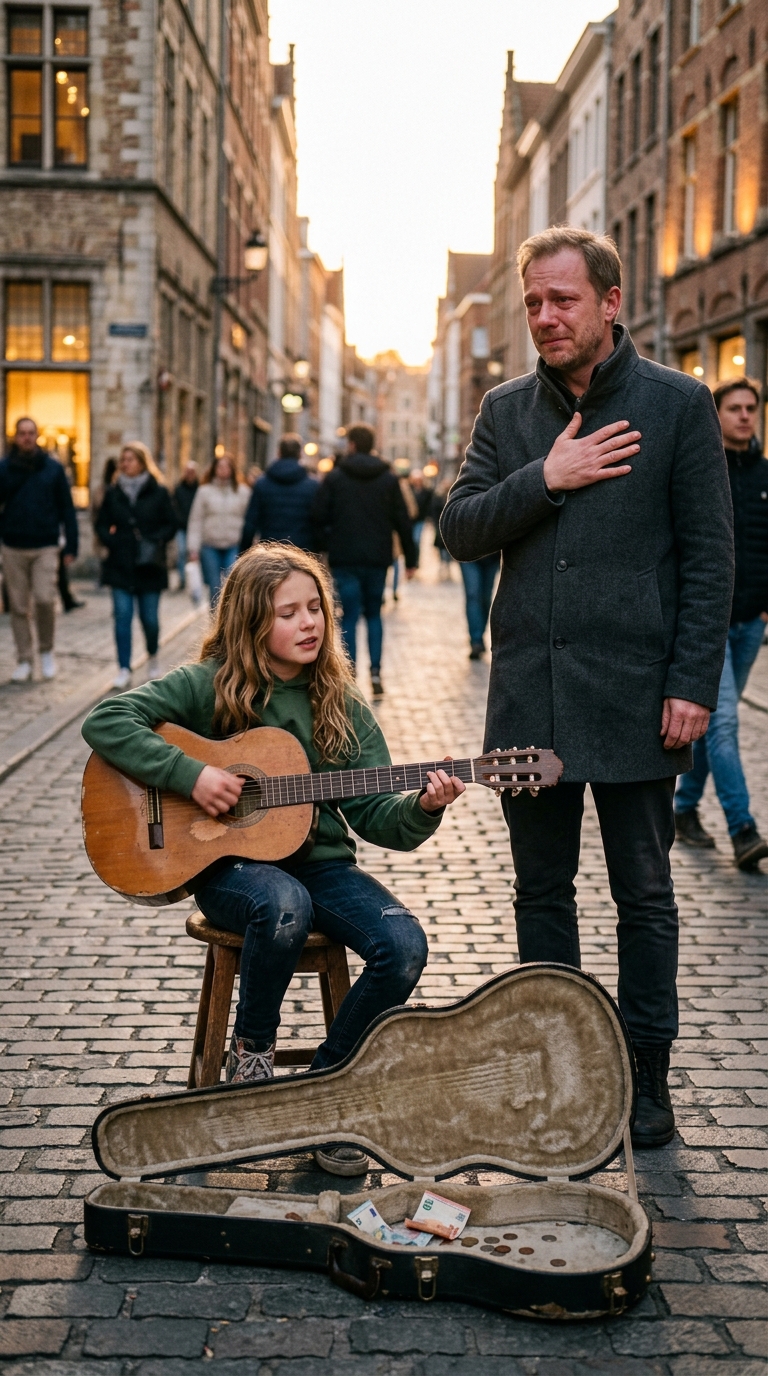
I hadn’t heard that song in two years—not since the day my daughter vanished—so when it drifted softly down the street, I froze in place, because some melodies don’t just sound familiar, they carry pieces of your life you thought were gone forever.
It was late afternoon, that quiet hour when the city slows just enough for small sounds to rise above the noise, and at first I thought I was imagining it, because grief has a way of replaying things that aren’t really there. But the voice was real—soft but steady—threading through passing cars and distant conversations.
I turned.
A young girl stood near the corner, holding a worn guitar, her head slightly tilted as she sang, her voice gentle but clear, and every note felt like it was pulling something out of me I had spent two years trying to bury.
“That’s not possible…” I whispered to myself.
My daughter used to sing that song.
Not perfectly, not professionally, but in a way that made it hers—adding small pauses, shifting the rhythm, smiling at certain lines as if she knew exactly which parts mattered most. It had been her favorite, the one she hummed while doing homework, the one she sang the night before she disappeared.
I stepped closer without realizing it, my heart pounding harder with every step, because something about the way this girl sang felt too precise, too familiar, like it wasn’t just the song—but the memory behind it.
When she finished, a few people clapped lightly, dropping coins into the open case in front of her, but I didn’t move.
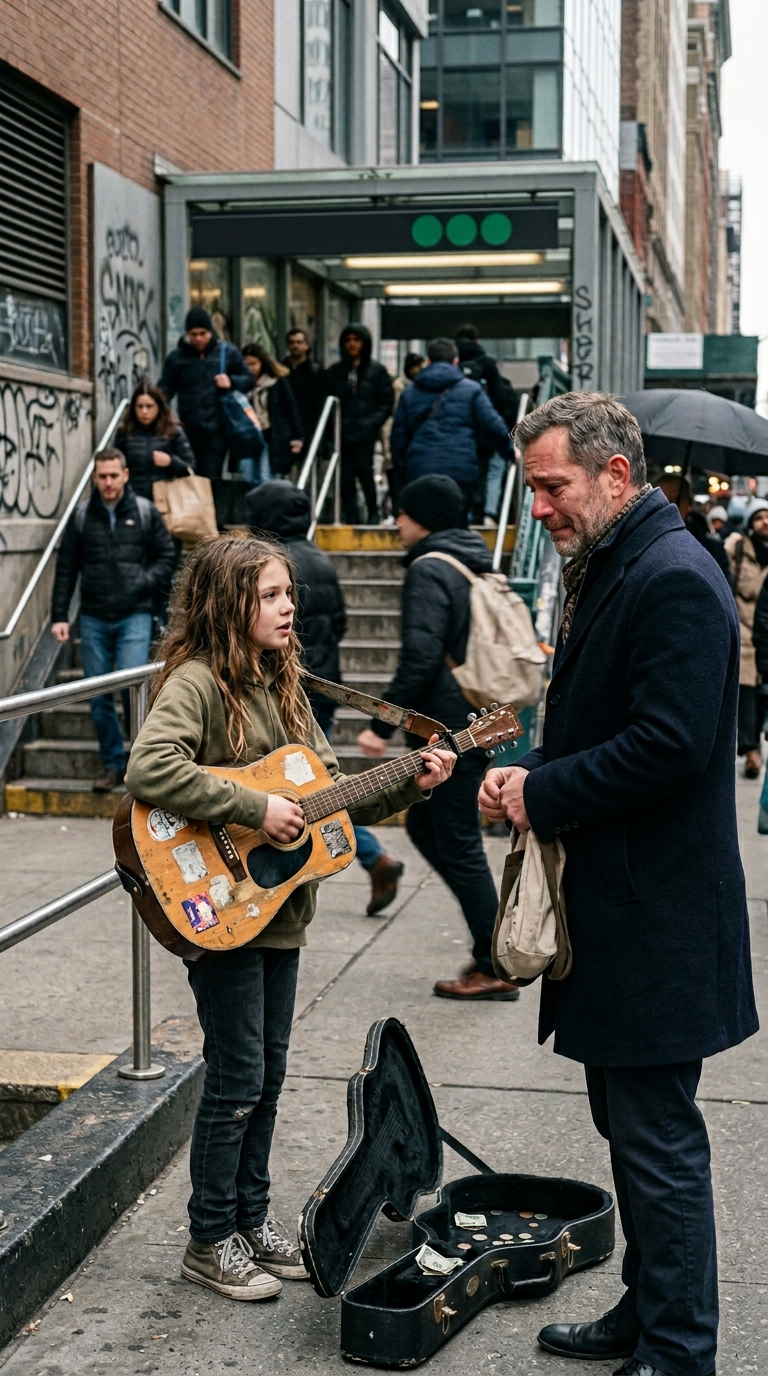
I just stood there, staring.
“Where did you learn that song?” I asked.
She looked up, surprised.
“My sister used to sing it,” she said.
The world narrowed.
“Your sister?” I repeated.
She nodded.
“She taught it to me a long time ago.”
I swallowed, my voice tightening.
“What’s her name?”
The girl hesitated, as if deciding whether to answer.
Then she said it.
“Lily.”
Everything inside me stopped.
“That’s not…” I shook my head slightly. “That’s not possible.”
The girl frowned.
“Why?”
I took a breath, trying to steady myself.
“Because my daughter’s name is Lily,” I said. “And she’s been missing for two years.”
The girl’s expression shifted—not dramatically, but enough.
“She told me not to tell anyone about her,” she said quietly.
My chest tightened.
“Where is she?” I asked, my voice barely holding together.
The girl glanced around nervously.
“I’m not supposed to say,” she whispered.
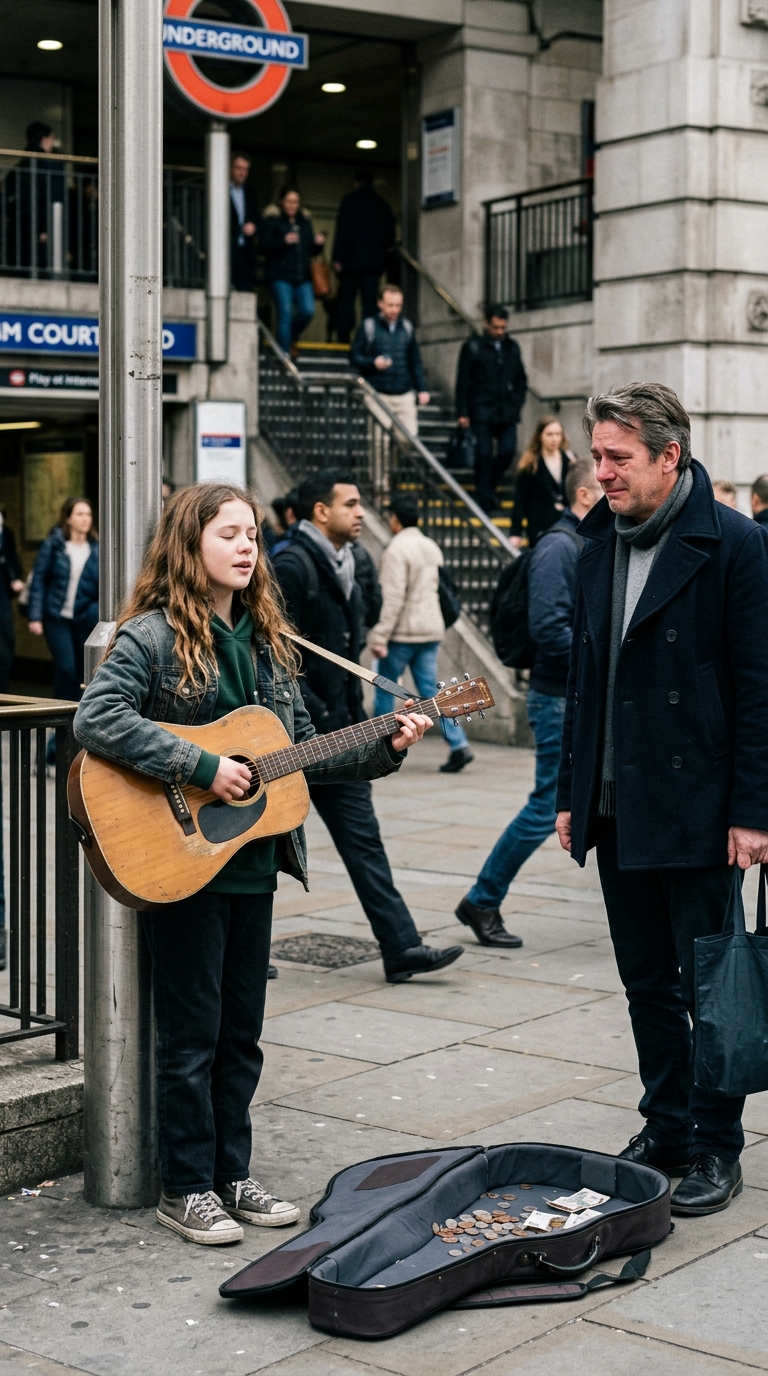
I stepped closer.
“Please,” I said. “I’ve been looking for her every single day.”
For a moment, she didn’t answer.
Then she reached down, picked up her guitar case, and motioned for me to follow.
“Come with me,” she said.
We walked through streets I didn’t recognize, turning corners that felt further away from everything familiar, until we reached a narrow building tucked between two old shops. The windows were covered, the paint peeling—the kind of place you’d never notice unless you were searching for something specific.
The girl stopped.
“She’s inside,” she said.
My hands started to shake.
“Why didn’t she come home?” I asked.
The girl looked down.
“Because she thinks you stopped looking.”
The words hit harder than anything else.
“I never stopped,” I said.
She opened the door slowly.
Inside, the air felt still—heavy—as if time had been moving differently there, and for a moment, I couldn’t see clearly, maybe because my eyes were adjusting, or maybe because I wasn’t ready for what I might find.
Then I saw her.
Sitting in the corner.
Older.
Thinner.
But unmistakably her.
“Lily…” I whispered.
She looked up.
And froze.
For a moment, neither of us moved, because some distances aren’t measured in space, but in time—in everything that happened in between.
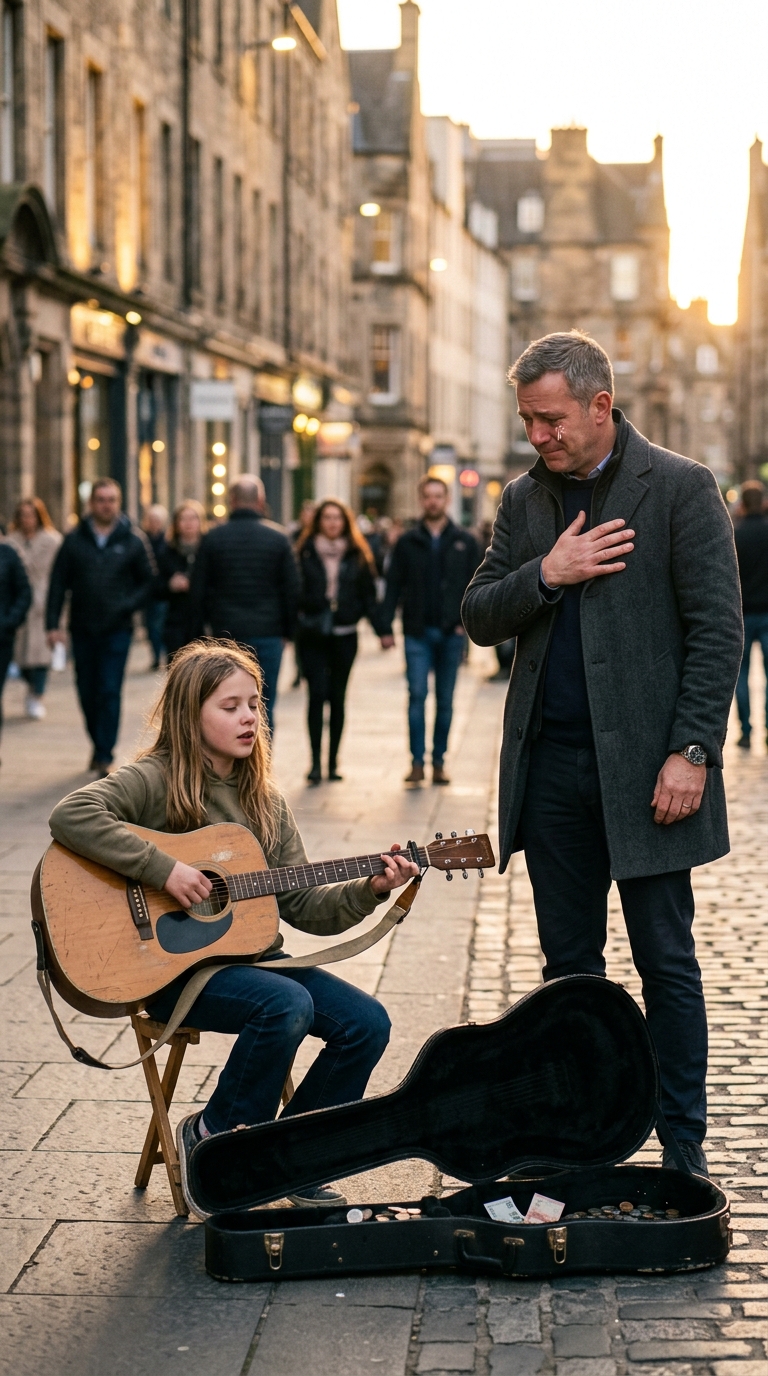
“Dad?” she said.
That one word broke everything.
I stepped forward slowly, afraid that if I moved too fast, she might disappear again.
“I’m here,” I said. “I never stopped looking for you.”
Her eyes filled with tears.
“I thought you gave up,” she said.
I shook my head.
“Never.”
She stood, hesitating for just a second before running toward me, and when I held her, it felt like something missing for two years had finally found its way back.
Later, when things began to settle, when the questions started to take shape, I looked at the girl who had led me there.
“Why did you help me?” I asked.
She shrugged slightly.
“Because she still sings that song,” she said. “And when she does… she sounds like she’s waiting for someone.”
I looked back at my daughter.
And for the first time in two years…
she wasn’t waiting anymore.
Because sometimes, the smallest sound—a single song—is enough to lead you back to everything you thought you lost.
