

PART 1: THE SEATS THEY CHOSE TO LEAVE EMPTY
“Your brother’s graduation is more important than your wedding.” Those were my father’s words on the morning I was getting married. I had barely begun trying to change his mind when he disconnected. I stood looking at myself in the mirror, still holding the phone, while my best friend, Lena, waited behind me with the pins she had been arranging in my hair. The conversation was over before I had found a way to make him understand what he was saying.
My name is Mara Vance, and that afternoon I was supposed to marry Daniel beside Lake Michigan in downtown Chicago. The ceremony would begin at one o’clock. For months, my family had assured me they would be there. I had believed those promises while making the arrangements, never imagining that I would spend my wedding morning trying to persuade my own parents to attend an occasion they already knew mattered deeply to me.
My younger brother, Evan, was receiving his master’s degree in mechanical engineering from the University of Wisconsin-Milwaukee that morning. We had discussed the overlap well before either event arrived. Daniel and I had even pushed back our wedding photographs so my parents could travel from Milwaukee without missing them. Their schedule had shaped ours because I wanted to celebrate my brother’s achievement without surrendering the chance to have my family beside me.
“Dad, you promised you’d come after Evan’s graduation. We planned everything around your schedule.” His answer made all that coordination sound irrelevant. “We can’t be in two places at once, Mara. Evan’s achievement comes first.” I wasn’t asking them to choose between two events occurring at the same moment. We had already worked through that difficulty together. Yet now he spoke as though the arrangements had never existed and my disappointment was simply something I should accept.
My mother took over the call and explained that traffic had made the original plan inconvenient. She reminded me of Evan’s academic struggles and said his graduation needed their undivided attention. There was no suggestion that one parent might travel ahead or that they might still try to reach us afterward. Instead, she offered a substitute for the day they were choosing to miss. “We’ll take you and Daniel to dinner next month, sweetheart. Please don’t make this difficult.”
When the call ended, there was no longer any room to misunderstand them. Neither parent intended to come. Lena asked softly whether I wanted some time alone, but I told her to finish my hair. I was still marrying Daniel. Whatever my family had decided, I wouldn’t let their absence take that decision away from me. I could be wounded by what they had done and still walk toward the life I wanted.
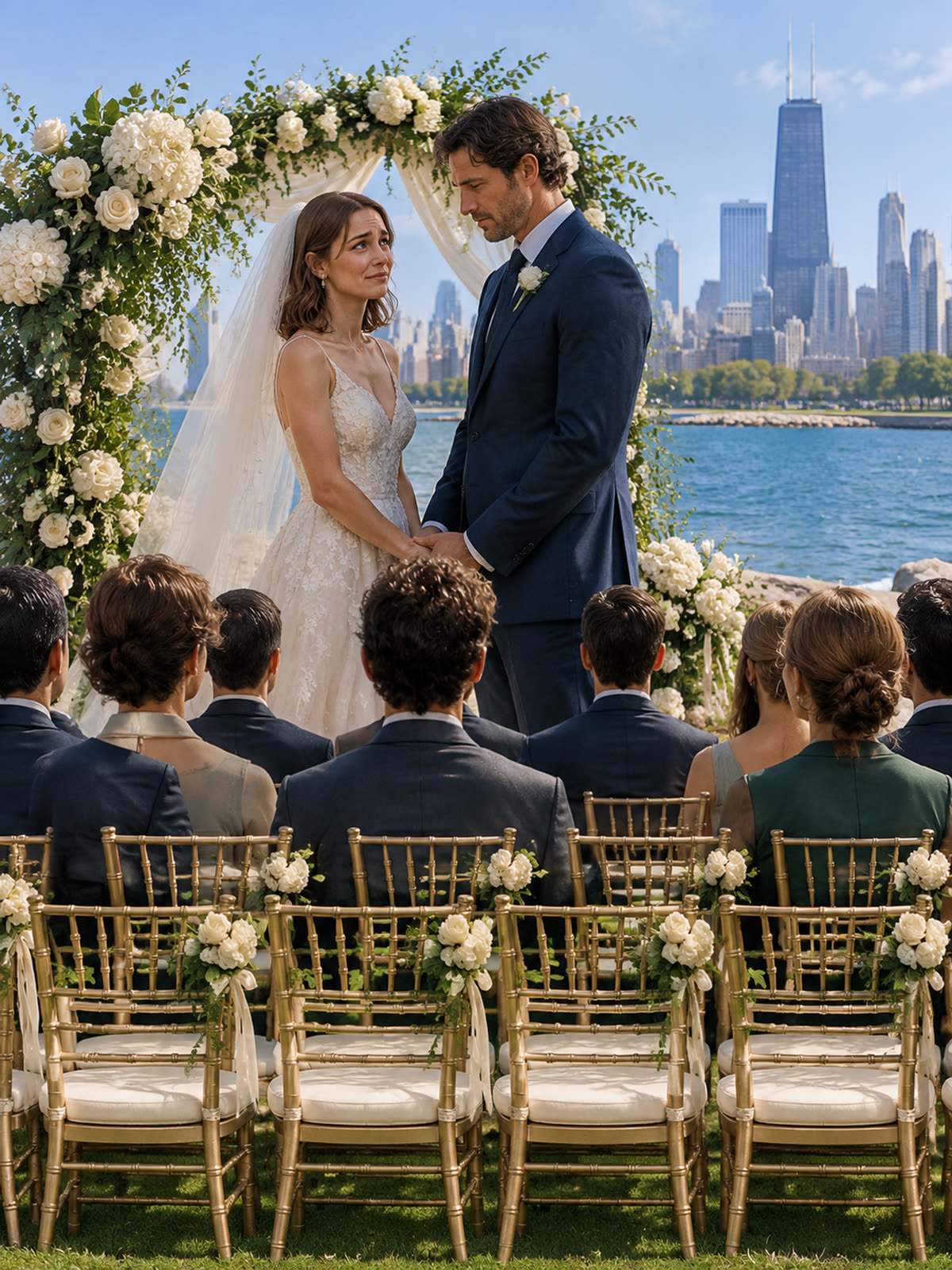
At one o’clock, I went down the aisle in my ivory gown. Daniel was waiting beneath the arbor beside Lake Michigan, and his reassuring smile helped me hold myself together. I tried to keep my attention on him rather than on the part of the ceremony that suddenly felt unfinished. The day we had planned was happening around me, even though the people I had expected to see in the front rows were missing.
Ten chairs reserved for my family stayed empty. Their absence was impossible to overlook, especially when guests had been expecting my parents and siblings to arrive. Nobody from my immediate family appeared. I could look toward Daniel and remember why I was there, but I could not stop noticing those untouched places. They represented promises I had trusted, and no amount of preparation had equipped me to see those promises reduced to vacant seats.
Rachel, my sister, eventually sent a message apologizing and admitting she should have challenged our father. I left it unanswered. I didn’t want the rest of my wedding day to become an argument conducted through a phone. My family had made its choice, and there was nothing I could say from the reception that would place them beside me during the ceremony they had already missed. I wanted whatever happiness remained within reach.
Daniel understood the depth of the hurt without asking me to explain it away. Throughout the reception, he held my hand, danced with me, and stayed close. He never suggested that my parents must have had a good reason or that I should excuse them because they were family. His support did not erase those empty chairs, but it allowed me to celebrate our marriage without pretending I hadn’t been wounded by the people who should have been there.
My parents knew Daniel as a quiet thirty-nine-year-old who worked in publishing. They had never taken enough interest to learn that he was Northline Media’s majority shareholder and chief executive, overseeing newspapers and broadcasting networks throughout the Midwest. They knew similarly little about my own career. I had developed a significant investigative reporting initiative, but my work had never seemed important enough to command the attention they so readily gave my brother’s accomplishments.
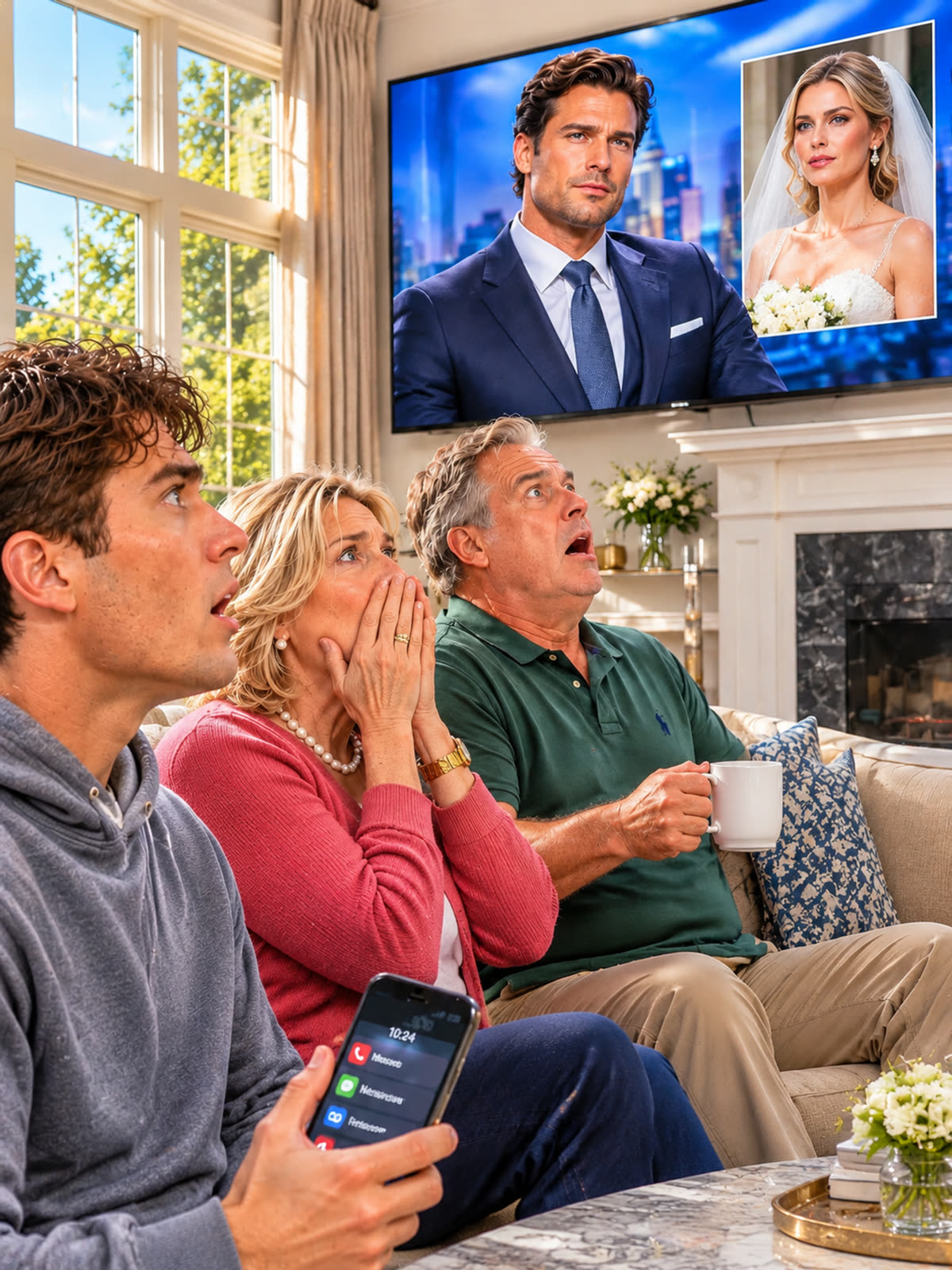
The next morning, Daniel appeared in a previously scheduled live television interview about a multimillion-dollar grant for regional journalism. The host congratulated him on getting married and asked about the family celebration. Rather than supply a polished account that concealed what had happened, Daniel answered honestly. “My wife’s parents chose her brother’s graduation over her wedding. But they also missed something else: Mara built the reporting initiative we’re funding today, long before she became my wife.”
He went on to describe me as one of the most formidable women in modern media. The interviewer was visibly surprised, and clips began spreading almost immediately. By the time Daniel returned to our hotel suite with coffee, my phone showed fifty-four missed calls. The relatives who had not found time to attend my wedding now seemed unable to tolerate waiting for me to answer. Their sudden urgency stood in painful contrast to the silence of those empty chairs.
I showed Daniel the notifications and told him I wished he hadn’t brought the wedding into the interview. He explained that the host had been steering toward a cheerful human-interest story instead of addressing difficult questions about the industry. “I wasn’t going to let him pretend your wedding was perfect when your family deliberately hurt you.” I understood his anger on my behalf, even while struggling with the fact that our private disappointment had become public.
Viewers focused on the contrast between my parents’ disregard and Daniel’s acknowledgment of my work. Some began searching my family’s public accounts. My father’s regional logistics business drew negative attention, and strangers left comments about the wedding chairs on my mother’s gardening page. What had started as a short television exchange was reaching people who knew nothing about us beyond a clip. Meanwhile, the messages on my phone continued arriving faster than I wanted to read them.
Rachel called, asking me to persuade Daniel to correct his remarks. Reporters were gathering near our parents’ home in Elm Grove, she said, and Evan was being mocked online. “What exactly should Daniel correct, Rachel? Did Mom and Dad attend my wedding?” She conceded that they hadn’t, then insisted the situation was more complicated. Our father, she explained, had decided the previous evening that the journey between Milwaukee and Chicago would be too difficult.
I asked whether she had known before my wedding-morning call. After hesitating, Rachel admitted our mother had discussed taking separate cars but had told her not to upset me. “You knew they might not come, and you said nothing.” She apologized and said she had feared our father’s temper. Her explanation brought back years of familiar silences: everyone avoiding his anger, everyone adjusting to his decisions, and nobody willing to challenge him until someone else was already hurt.
I remembered my parents celebrating Evan’s small successes while treating my academic achievements as ordinary. Even a regional journalism fellowship had failed to interest them as much as his junior varsity soccer activities. Rachel wanted a public statement calling the wedding situation a misunderstanding. I refused. Whatever explanations surrounded it, the central fact remained unchanged. My parents had known when and where I was getting married, and they had decided not to attend.
My father followed with an angry voicemail demanding that Daniel stop humiliating the family. He threatened consequences unless I persuaded my husband to retract what he had said. Daniel reviewed the message and offered to involve his legal team if the harassment continued, but he would not apologize for telling the truth. I had barely absorbed that exchange when a message from Evan introduced a possibility I had not considered: he might have been deceived, too.
Evan said our father had told him the family celebration was being postponed until August. “Dad said you wanted me to enjoy my graduation without worrying about your wedding. I didn’t know you were actually getting married that day.” Our ceremony date had never changed. By noon, Daniel and I were back at our Lincoln Park brownstone, facing interview requests and supportive messages. We agreed on one statement clarifying my Northline role, not a public family battle. Then Evan called, distressed, asking to meet privately at an Evanston bakery. He said there were things about our father I needed to understand.
PART 2: THE DIFFERENT STORIES MY FATHER TOLD
Evan was already waiting when I reached the quiet Scandinavian bakery on Central Street. In his gray hoodie, with reddened eyes and an exhausted expression, he looked as though he had slept very little since Daniel’s interview aired. He immediately told me he had not known our parents intended to miss my wedding. I listened, still trying to reconcile his message with the plans everyone had supposedly understood for months.
Three weeks before the ceremony, our father had given him a different account. According to Evan, Daniel and I were going to sign our marriage documents privately and hold the larger family celebration later. “Dad said you didn’t want your wedding overshadowing my graduation. I believed him, Mara.” What he described bore no resemblance to anything I had arranged. Yet he had accepted it as an explanation from the parent who routinely spoke for everyone else.
I reminded him that the wedding invitations had clearly listed the ceremony date. Nothing had been postponed, and I had never asked anyone to treat my marriage as a private formality. Evan lowered his head and acknowledged what that meant. Our father had apparently invented the entire arrangement. The distance between us was no longer simply the result of competing events or careless communication. Someone had supplied my brother with a story that made his absence seem reasonable.
There had been another version for our mother. Our father had told her that Evan was struggling emotionally because the family was paying so much attention to my wedding. He described panic attacks during final examinations and insisted Evan desperately needed both parents at graduation. Evan admitted he had felt anxious about finishing his degree, but he had never demanded that they abandon my ceremony. His difficulties had been enlarged into a justification he had not authorized.
As he explained, the shape of the deception became clearer. Different relatives had been told different things, each account suggesting that someone vulnerable needed protection. Our mother believed she was supporting a distressed son. Evan believed he was honoring an arrangement I had chosen. Meanwhile, I had been told that my brother’s achievement simply mattered more. Our father had placed himself at the center of every explanation while preventing us from comparing them directly.
I asked why he would deliberately turn his children against one another. Evan thought our independence had unsettled him. Daniel and I had arranged our engagement and marriage without seeking permission, choosing his preferred country club, or asking him to pay. My brother still relied on him for certain expenses, but I had established a life outside that dependence. To our father, Evan believed, the difference was not reassuring. It made him feel that his authority was slipping.
“Dad couldn’t make decisions for you anymore. He needed to prove he was still important somewhere, and he used my graduation to do it.” I considered how often our father had seemed most comfortable when someone needed his money, approval, or intervention. I had earned scholarships, worked nights to put myself through Northwestern, and built my career without his assistance. What I had understood as self-reliance seemed to have registered with him as rejection.
Evan had learned the truth only after seeing Daniel on television. Our father reacted with fury, while our mother finally appeared to grasp the damage they had caused. Rachel had reached a breaking point as well. Following another confrontation with him, she packed her things and moved into a temporary apartment in Lakeview. The family structure that had depended on everyone accommodating one man’s temper was beginning to come apart.
Then Evan disclosed something else. A morning television program had offered him ten thousand dollars to discuss the controversy. The producers wanted his side, and our father had already prepared several pages of talking points. Those notes cast Daniel as a rich media executive who was manipulating me and using his company to disgrace an ordinary family. Even after his conflicting stories had begun to unravel, our father was trying to decide what everyone should say next.
“What did you tell the producers?” I asked. Evan’s answer was direct. “I refused. Then I blocked Dad’s number.” I believed him. Challenging our father offered him little advantage, especially when he had spent so much of his adulthood shaped by that dependence. For once, he was separating his own choice from the version our father wanted presented. The brother sitting across from me was no longer asking me to absorb the consequences so everyone else could remain comfortable.

In the days that followed, the public interest slowly began to subside. The attention surrounding our wedding did not disappear all at once, but the constant discussion eased. My parents, however, continued reaching for me through voicemails, emails, and increasingly forceful messages. The volume changed less than the tone. They still seemed to believe there was something I could say or do that would remove the consequences without requiring them to face the decision that had caused them.
My father moved between threatening legal action and insisting that I owed an apology. My mother sent emotional letters recalling family memories and asking for forgiveness, but she did not plainly acknowledge that they had deliberately stayed away. Their messages left the central wound untouched. They wanted relief from the aftermath, while I was still waiting for an honest explanation of why they had been willing to leave those chairs empty in the first place.
By Friday, I knew that indefinitely avoiding them would not answer the questions I carried. I arranged to meet them at a diner on Ridge Avenue the following morning. “Saturday, ten o’clock. No lawyers, no interviews, and no prepared excuses. If you can’t speak honestly, I’ll leave.” My father confirmed they would come. I was no longer prepared to let traffic stand in for the truth, and I wanted them to understand that before we sat down.
I arrived twenty minutes early. Lena stayed in her car across the street, ready to help if the conversation became more than I could manage. The diner was familiar from childhood, a place our father had taken us after school activities. Sitting in a red vinyl booth brought back the ease with which he used to direct every family discussion. This time, I had not come to let his version become the only one anyone was allowed to hear.
My parents arrived at exactly ten. My father looked more tired than usual, and my mother held tightly to her handbag without meeting my eyes. Several uncomfortable minutes passed before I asked why he had chosen Evan’s graduation over my wedding. I made clear that I was not asking about traffic. We had already spent enough time on an explanation that could not account for the separate stories he had told us.
His first response was to complain that Daniel had embarrassed him on national television. I reminded him that my husband had described a choice my parents had made. Their absence had happened before anyone spoke about it publicly. “Why did you do it, Dad? Why wasn’t my wedding important enough for you to attend?” I wanted an answer about the wedding itself, not another argument about how unfair it felt to have other people know.
Eventually, he admitted that he had felt shut out of my life. He resented that I had completed my education, developed my career, and planned my marriage without relying on his permission or financial help. “You never needed us, Mara. You didn’t need my money, my permission, or even my blessing.” Hearing him say it made Evan’s explanation harder to dismiss. The independence I had worked so hard to achieve was the very thing my father held against me.
I asked whether he had punished me for being capable. My mother began crying and returned to Evan’s emotional difficulties during his final examinations. She said they had believed he might fall apart without their support, whereas I appeared strong enough to handle my wedding alone. Her explanation was painful in its familiarity. Because I had learned to manage without constant reassurance, they had decided I could also manage without their presence on a day when I had explicitly asked for it.
“Being strong doesn’t mean I don’t deserve to be loved.” I told them what it had felt like to stand at my ceremony and see the places reserved for them remain empty. Even our photographer had assumed something terrible must have happened. He could not imagine parents voluntarily missing their daughter’s wedding. I had spent the day trying to celebrate while carrying an absence that other people recognized immediately, even when they knew nothing about our family.
My father finally conceded that he had made a serious mistake. Then he admitted another reason he had stayed away: Daniel’s wealthy colleagues and media executives made him uncomfortable. He had feared there would be no place for him in the life I was entering. After all his explanations about schedules and graduation, the truth had narrowed to his own uncertainty. “With Evan, I still felt like a father. With you, I felt like someone who wasn’t needed.”
PART 3: WHAT AN APOLOGY COULD NOT RESTORE
I told him I had never stopped considering him my father. I had wanted him beside me, not because I needed him to finance or approve my life, but because he belonged there as my parent. By staying away, he had damaged our relationship far more than any difference in income or professional standing could have done. The place he feared losing had been offered to him. He was the one who had chosen to leave it empty.
My mother asked how they could make things right. She suggested interviews and public apologies, then begged me to persuade Evan and Rachel to contact them again. I refused to take responsibility for my siblings’ relationships with our parents. I also told them not to give interviews or release statements about the wedding. Another public performance would not provide what had been missing, and I would not become the person responsible for restoring everyone else’s comfort.
Forgiveness, I explained, could not be demanded simply because the consequences were unpleasant. Daniel was my immediate family now. If my parents wanted a relationship with us, they would have to respect the life I had built rather than resent the fact that I could build it. “If you want to be part of my life, you must stop trying to control it.” I wasn’t offering a punishment. I was explaining what could no longer continue.
When I got up to leave, my father said my name. Looking down at his coffee, he admitted that Daniel had been right about my professional achievements. He had never seriously read my investigative reporting or tried to understand the work behind it. For the first time, he seemed ashamed of how little attention he had paid. “I should have read your articles, Mara.” I answered without softening the truth. “Yes, Dad. You really should have.”
I left without promising that we would reconcile. The conversation had given me answers, but answers were not the same as repair. I could finally recognize that no amount of achievement would force my parents to appreciate me if they remained unwilling to look. What I could decide was how much access they would have to my future. Their disappointment with my independence no longer had to become the organizing principle of my life.
By October, the wedding controversy had mostly vanished from the news. Daniel’s interview could still be found online, but the daily attention had passed to other subjects. At our Lincoln Park brownstone, we settled into married life, discovering each other’s habits and establishing ordinary routines. Evenings were no longer defined by reporters or family arguments. The quiet gave us room to become a married couple rather than two people continually responding to everyone else’s reaction.
Months after the broadcast, Daniel apologized again for speaking publicly about my parents. I appreciated that he had defended me, but I wanted him to understand the kind of partnership I needed. “You don’t need to fight every battle for me, Daniel. I need you beside me, not standing in front of me.” He listened. His willingness to respect my independence mattered as deeply as his willingness to recognize my accomplishments when my family had failed to do so.
Rachel moved into a two-bedroom apartment in Lakeview and began making choices without first seeking our father’s approval. She visited regularly, bringing takeout and talking about her career, relationships, and the novel she had privately wanted to write for years. Evan accepted a job with an environmental engineering company in Madison. About once a month, he came to Chicago and spent time with Daniel working on the vintage Alfa Romeo in our garage.
My relationships with both siblings improved as we stopped allowing our father’s expectations to determine how we treated one another. We were learning to meet as adults instead of rivals for approval. Our parents remained in their large Elm Grove home. My father retired early from his logistics business, and my mother joined a book club, spending more time outside the conflicts that had occupied so much of her life. None of it erased the wedding, but our lives were no longer standing still around it.
On the second Sunday in November, I invited my parents to dinner. It wasn’t an announcement that everything had been forgiven. I wanted to discover whether they could enter our home and respect the boundaries I had set. My father arrived with a wooden crate of Honeycrisp apples from a Wisconsin orchard. He greeted Daniel politely and came inside without criticizing our decisions or trying to direct the evening. For once, he allowed the home we had created to remain ours.

We served roast chicken and vegetables. Conversation was careful, and although nobody argued, the easy familiarity of earlier family gatherings was missing. I could feel the distance without believing I had to rush to close it. We had spent too long pretending that avoiding disagreement meant everything was well. A quiet dinner in which nobody tried to control me was not a complete reconciliation, but it was different from the pattern I had finally refused to continue.
After dessert, I found my father washing dishes in the kitchen. I offered to take over, but he said he wanted to contribute because he had not cooked the meal. Then he mentioned an anthology he had purchased. It contained my investigation into a municipal water scandal in Rockford. He had read my contribution twice. This was not another broad claim that he supported my career. He was referring to work I had actually done.
“You’re an exceptionally good investigator, Mara. You follow the evidence wherever it leads.” The specificity of his praise surprised me more than praise alone would have. I asked what he thought of the article, and he spoke about how the findings could have exposed serious misconduct by the officials involved. He was discussing the reporting itself rather than using my job as a polite subject to pass over. For the first time, he sounded interested in understanding it.
After a pause, he asked whether he had missed much of my professional life. I could have reduced the answer to spare him discomfort. For years, that was how our family had kept difficult conversations from becoming confrontations. Instead, I told him the truth. “Yes, Dad. You missed almost everything.” He did not argue, defend his intentions, or remind me of something else he had done. He accepted what I said, and we went on drying the dishes.
His willingness to listen meant more to me than another dramatic apology would have. The work he had ignored did not become less neglected because he had finally read one article, but neither did I have to dismiss the fact that he was trying to understand it now. I could recognize a small change without pretending it repaired everything. That distinction allowed me to remain in the kitchen beside him without abandoning the boundaries that had brought us there.
Later, after my parents had gone, Daniel and I sat together with our newly delivered wedding album. We looked at Lena adjusting my veil, our friends celebrating, and Daniel standing beside me with Lake Michigan behind us. The photographs held moments I had lived through while trying to carry too many feelings at once. Looking at them from the quiet of our home, I could see more than the absence that had seemed so large on the day itself.
Eventually, we reached a wide photograph of the ceremony. The empty chairs on my side were unmistakable. They preserved the choice my parents had made, and I did not need to pretend that choice had stopped hurting. Yet the sadness no longer overwhelmed everything around it. I could study the photograph without feeling that those unoccupied places were the only true account of my wedding. They were visible, but so were all the people who had come.
Friends and colleagues had traveled to celebrate our marriage. Daniel’s family had welcomed me. People who genuinely valued us had remained present from the ceremony through the reception. My parents’ absence had caused real pain, but it had not weakened the vows Daniel and I exchanged. I had married the man I loved beside Lake Michigan. Their failure to witness that commitment had not made the commitment itself smaller or less worthy of celebration.
The months afterward had taught me that reconciliation needed patience, accountability, and boundaries. My parents could not revise the wedding day, and I could not make them become different people by explaining my hurt perfectly. I no longer needed their approval to take pride in my reporting, my marriage, or the life I had created. Whether they occupied a greater place in that life would depend on their choices, not on my willingness to overlook them.
I closed the album and leaned against Daniel while rain began falling outside. What had become a rush of fifty-four missed calls had finally returned to the quiet of a home where I felt understood. The empty chairs would always remain in our wedding photographs, but they were no longer the most important part of the picture. My parents had shown that they could listen for one evening. Whether they could keep doing it was the question still waiting for an answer.
Disclaimer: This story is a work of fiction inspired by real-life themes. Names, characters, places and events are fictionalized, and any resemblance to real persons is purely coincidental. Images are for illustration purposes only.
