

PART 1: The Promise That Left Them in the Cold
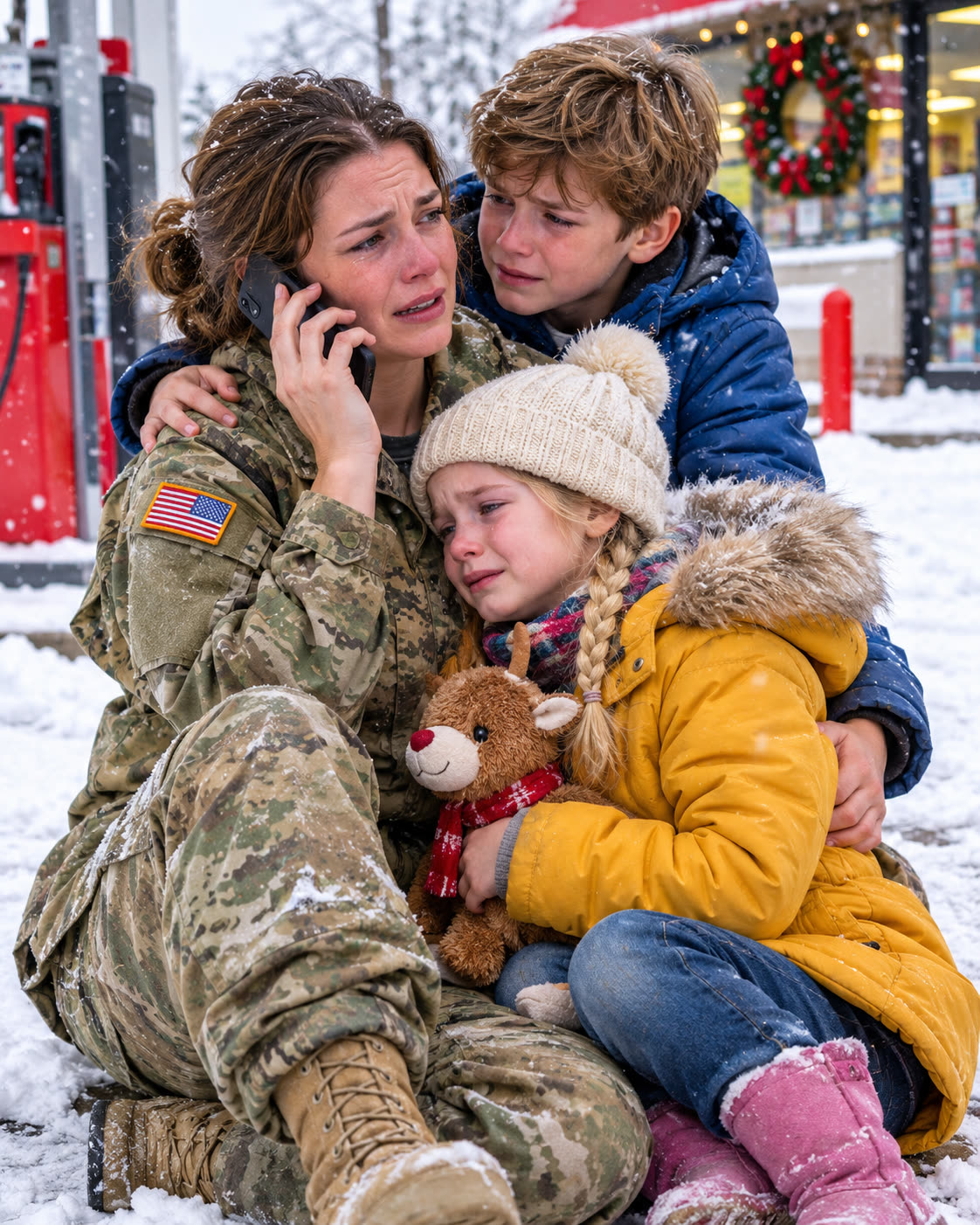
My mother left my two children at a freezing gas station on Christmas Eve while I was answering emergency calls as a 911 dispatcher. Her explanation arrived in a text: my sister wanted Christmas morning reserved for her own boys. She apparently believed that was enough to justify leaving a twelve-year-old and an eight-year-old beside a highway while their mother was trapped at work. What she didn’t understand was that this time, the consequences wouldn’t end with me swallowing my anger and fixing the damage. Her decision would finally bring a six-year family secret into the open, along with the documents that proved how much of her comfortable life had depended on my silence.
My name is Tara Shaw. I was thirty-six, a single mother, and an employee at the county emergency dispatch center. Managing other people’s emergencies had become part of my everyday life, but managing my own household required just as much planning. My husband was no longer involved in our daily routine, and the children’s father lived in another time zone. Beyond the occasional gift card, he contributed very little. Jamie was twelve, old enough to notice more than I wished he had to, while eight-year-old Christa still expected Christmas morning to arrive wrapped in excitement and surprises. Keeping that feeling alive for both of them mattered to me.
That Christmas Eve, my scheduled shift ran from three in the afternoon until three the following morning. Emergency services don’t shut down because families are gathering around their trees, and someone still has to answer when a holiday becomes the worst night of a stranger’s life. My regular babysitter couldn’t help, and every alternative seemed to disappear as quickly as I considered it. During Sunday dinner, my mother unexpectedly offered a solution. The children could stay at her house, sleep there, and celebrate Christmas morning before I arrived from work. “Just bring them over, Tara. They can sleep here and celebrate Christmas morning the way you and Jenna used to. You can come straight from work and rest on the couch.”
I didn’t accept immediately. My younger sister, Jenna, had always occupied the favored place in our mother’s affections, and her sons were coming over the next morning. I knew how easily everyone else’s needs could become negotiable when Jenna wanted something. “Are you sure, Mom? Jenna’s bringing her boys tomorrow morning, and the house is going to be crowded.” My mother laughed and put her hand on my wrist, treating my hesitation as something she could gently brush away. “It’s Christmas, Tara. A little chaos is part of the fun. You can count on me.” I wanted those words to mean what they should have meant. With no better arrangement available, I let myself believe them.
On Christmas Eve afternoon, I brought Jamie and Christa to my parents’ two-story house on Alder Street. Before leaving, I hung their red felt stockings above the fireplace. My grandmother had made those stockings years earlier, and placing them on that mantel felt like preserving something dependable. Then I checked Jamie’s phone. “How much battery do you have?” “Eighty percent, Mom.” I asked him the question we had practiced before. “And what’s our most important rule?” He answered without hesitation. “If an adult tells me to keep something secret from you, I record it and tell you anyway. Even if it’s Grandma.” I made certain he understood. “Especially if you feel something is wrong. Even Grandma.” After he nodded, I kissed them both and left for work.
The beginning of my shift gave me little opportunity to think about anything beyond the console in front of me. There was a deck fire, an elderly man who had fallen from an icy ladder, and a woman whose husband had stopped breathing. For eleven exhausting minutes, I guided that woman through CPR until paramedics arrived and brought back his pulse. Those calls demanded the steady voice people needed from me, regardless of how tired I felt. At 9:05, a pause finally allowed me to look at my phone. Jamie had called at 8:47. Beneath that missed call sat a message that seemed to drain every bit of warmth from my body.
“Grandma left us at the gas station on Route 9. Christa is crying. Are you coming?” I read it, then read the next message, which my mother had sent at 8:52. “Jenna wants Christmas morning just for her boys. The kids are at the Sunoco on Route 9. Pick them up whenever you can.” There was no apology and no acknowledgment of what she had done. By the time I saw Jamie’s message, eighteen minutes had already passed. My children had been left in the freezing darkness while I sat helping other families survive their emergencies. Before I could answer either message, another call lit up my console, demanding the attention I desperately wanted to give my son.
A seventeen-year-old driver had slid into a roadside ditch. He was frightened, and whatever my mother had done, I couldn’t make another parent’s child pay for it. I kept my voice controlled, established where he was, and sent a patrol car. Only after he reported seeing the deputy’s flashing lights did I use the override function and signal my supervisor. She came over immediately. “My mother left my children at a gas station on Route 9. They’re there alone, and I can’t leave my console.” Saying it aloud made the situation feel even more impossible. My supervisor didn’t ask me to justify my alarm. She pulled over a chair and started working out coverage.
“Go make your calls. I’ll handle your console for five minutes and find someone to relieve you.” I hurried to the breakroom and called the Sunoco, hoping someone would answer before my imagination carried me any further. A young employee named Elijah picked up. He sounded tired, another person spending the holiday at work, but I had no room for an explanation longer than the essentials. “My name is Tara Shaw. My twelve-year-old son and eight-year-old daughter should be there. My little girl is wearing a red coat.” I waited for his answer with the terrible awareness that everything depended on a stranger having noticed two children who should never have needed his help.
Elijah knew exactly whom I meant. Jamie and Christa were beside the coffee machine, and Christa had been crying so hard that he had almost called the police. Knowing someone had seen them brought relief, but it didn’t quiet the fear of being unable to reach them myself. “I’m a 911 dispatcher, and I’m currently on duty. I can’t leave until someone replaces me. Please keep my children somewhere safe.” His reply was immediate. “Don’t worry, ma’am. They’re staying right here with me, and I’m not letting them out of my sight.” When I explained that their grandmother had left them, he went quiet before offering to bring Jamie to the telephone.
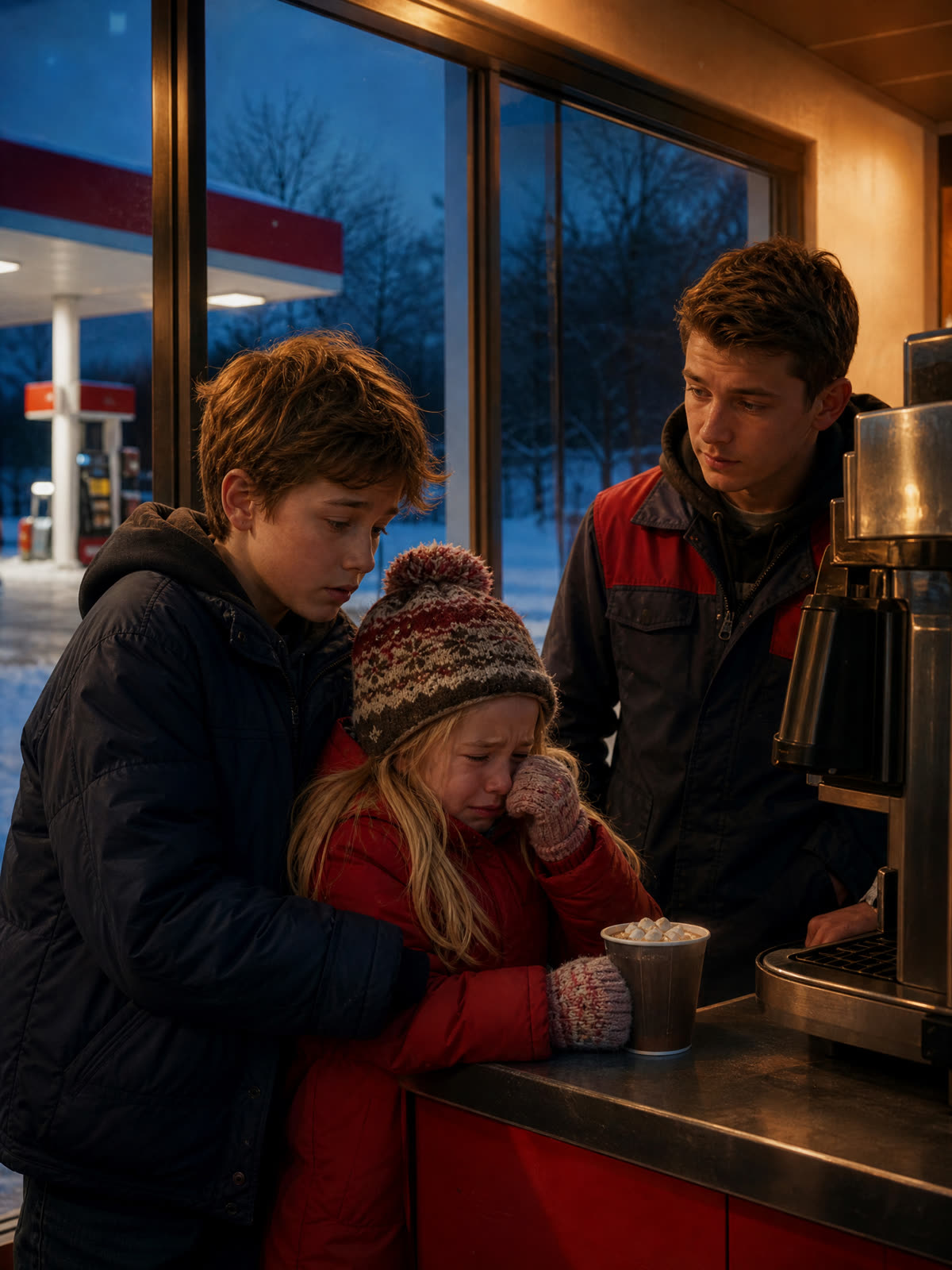
“Mom?” My son sounded as though he was making himself older by sheer determination. I asked if they were warm and whether his sister was all right. “Elijah gave her hot chocolate, but she spilled some on her coat.” The ordinary detail nearly undid me. “Forget the coat, sweetheart. Did Grandma tell you I knew she was bringing you there?” “She said you knew, but I didn’t believe her.” I told him to stay inside with Elijah and not to get into anyone’s car, including his grandmother’s. Then he answered with a calmness that frightened me more than tears would have. “Grandma isn’t coming back, Mom. And I remembered our rule. I recorded everything.”
I told Jamie how proud I was that he had protected Christa and asked him to save the recording. Then he passed the telephone to his sister. “Mommy, are we in trouble?” That was what she needed to know after being taken away from her grandparents’ house and left behind: whether she had somehow caused it. “No, sweetheart. You haven’t done anything wrong, and I’m coming to get you.” I couldn’t take away what had already happened, but I could make sure she heard that clearly. Whatever explanation my mother eventually offered, I would not allow either child to carry responsibility for a decision an adult had made.
After the call, I tried my mother repeatedly. Every attempt went directly to voicemail. I didn’t leave a message. Anything I said while frightened and furious could later become something she repeated selectively, another reason to claim I was being unreasonable. My supervisor eventually found someone to cover the remainder of my shift, but he was still forty minutes from the center. She asked whether I could remain until he arrived. “I can stay until he gets here.” It was among the hardest promises I had ever made. I kept it because I knew Elijah was with my children, and because the people calling my console still needed someone to answer.
By 11:25 that night, I finally reached the gas station. Jamie was sitting beside his sleeping sister, holding her mitten. The sight of them together was almost more than I could bear. My son had spent those hours being brave because he believed his sister needed him to be. I knelt in front of him and pressed my forehead to his, letting myself feel the relief I had been holding back since I first checked my phone. “I’m here now, Jamie.” His response was quiet and certain. “I knew you’d come, Mom.” He should never have needed to test that certainty at a highway gas station on Christmas Eve.
Elijah wouldn’t accept payment for staying with them. He explained that his own mother had left him at a supermarket when he was nine. Suddenly, his immediate promise not to let my children out of his sight carried a weight I understood differently. I slipped twenty dollars beneath his tip jar before taking Jamie and Christa to the car. Once they were safely inside, Jamie handed me his phone. The recording lasted nine minutes. I listened, then saved copies to my email, encrypted work storage, and a secure cloud account. My mother’s explanation would not be the only version of that night preserved.
Before driving home, I called my parents’ house. My father answered, and I told him what had happened. His response made it clear that he had accepted a very different account. “Your mother said you wanted the children dropped somewhere closer to work. They’re with you now, Tara, so stop making this a bigger deal than it is.” I ended the call instead of arguing. I had spent enough of the evening trying to keep my voice steady while other people decided what my children should be expected to endure. Dad’s dismissal didn’t change the recording, the messages, or the fact that neither child had been safe in the care I had arranged.
At home, I got Jamie and Christa into bed. Only after they were settled did I allow myself to consider what came next. My mother had relied on me to solve the problem she created, collect my children, and absorb the hurt without disturbing anyone else’s Christmas. For years, I had made it easy for her to believe I would do exactly that. Then I remembered the faded blue folder in my kitchen drawer. It had been there for six years, holding the truth behind the house on Alder Street. I went downstairs knowing that once I opened it, my mother’s version of our family would no longer be protected by my silence.
PART 2: The House Everyone Thought Was Hers
The blue folder contained my grandmother’s authenticated will, the recorded deed to the Alder Street property, and a lease signed by my mother. I had kept those papers while allowing a very different story to circulate through the family. Looking at them that Christmas morning, I wasn’t discovering anything new. I was finally refusing to separate what the documents said from how I allowed myself to be treated. My mother had promised my children a safe place to sleep. Instead, she had removed them because keeping that promise had become inconvenient. The arrangement represented by the folder had lasted six years, but her behavior had changed what I was willing to continue.
Six years earlier, my parents had gone through bankruptcy after my father’s hardware store failed. The collapse had stripped away nearly everything they had, and Dad carried a deep sense of shame about it. He didn’t know where they would live or how he was supposed to recover from losing the business. My grandmother had left the Alder Street house to me alone. Rather than let my parents face the uncertainty of having nowhere to go, I let them move in. It had seemed like a way to help them through a devastating period without making their lives any harder than they already were.
To spare my father’s pride, I also let my mother tell people that she had inherited the property herself. I agreed to protect him from embarrassment, not because the house belonged to her or because the documents were unclear. Still, I had insisted on a formal lease. Generosity and a legal agreement didn’t have to cancel each other out. Now I spread those papers in front of me and read the provision allowing the tenancy to end with sixty days’ written notice. The terms were there in the agreement my mother had signed. For six years, those pages had stayed out of sight while she enjoyed the authority of being the supposed owner.
I calculated the deadline: February 22. Then I drafted a message explaining that abandoning my children had ended my willingness to continue the arrangement. At 1:40 a.m., I sent the notice. One minute later, it showed as read. I didn’t send a second message, make a pleading call, or offer a softer version she might prefer. The lease, will, and deed already established the situation. For the first time in years, I was not putting her reputation ahead of my own children. She had treated my promise to help as though it could survive anything she chose to do. That assumption had finally reached its limit.
At 7:45 on Christmas morning, the doorbell began ringing insistently. Looking outside, I saw my father’s sedan and Ross’s pickup truck. Jenna stood on the porch in flannel pajama pants, with tears marking her face. My younger sister looked desperate before I had even opened the door. It was clear that my mother had not spent the hours since reading my message quietly considering why I had sent it. Whatever she had told the others had brought them to my doorstep early on Christmas morning. I still had two children upstairs who needed peace, and now the adults who had helped disrupt their holiday wanted my attention.
“Tara, please take it back! You can’t do this to us!” Jenna began. I asked the question she hadn’t answered. “Take what back, Jenna?” “Whatever you sent Mom! She’s been crying since two this morning. She says you’re forcing her to sell the house, and we’ve already told our landlord we’re moving out by February first.” I stared at her. Until that moment, nobody had told me she and Ross intended to move into Alder Street. My mother had apparently been making plans involving a house she did not own, while the actual owner knew nothing about them. The notice had exposed more than one assumption.
“What exactly did Mom tell you I said?” I asked. Jenna’s answer showed how thoroughly the message had already been rewritten. “She wouldn’t show me your message. She said you’re demanding repayment of some huge debt and threatening to take the house through the courts.” My mother hadn’t merely softened what she had done to my children. She had replaced the entire reason for the notice with a story that made me sound threatening and unreasonable. Jenna had arrived believing I was endangering the family’s future over money. She had not been allowed to read the words that explained what had actually happened.
Before I could respond, Dad came up the porch steps carrying Jamie’s and Christa’s red stockings. The oranges inside were part of the tradition my grandmother had started, and seeing them in his hands made the morning feel painfully divided between what Christmas should have been and what it had become. “Whatever money your mother owes you, I’ll find a way to repay it,” he said. “But you don’t throw a family out of its home over a misunderstanding about a car ride.” A misunderstanding about a car ride. My children’s fear had been reduced to something small enough for him to dismiss before he had heard them.
As he spoke, I understood something I hadn’t fully grasped before. Dad had lived at Alder Street for six years without knowing his own daughter owned the roof above him. My mother had maintained the inheritance story even with him. She had also collected four hundred dollars from him every month, telling him it covered property taxes. Now she had sent him to me carrying my children’s stockings, trusting his worry and affection to accomplish what her messages could not. I asked where she was. “She’s waiting in the car. She said she couldn’t face you.” Even then, she had positioned other people between herself and the consequences.
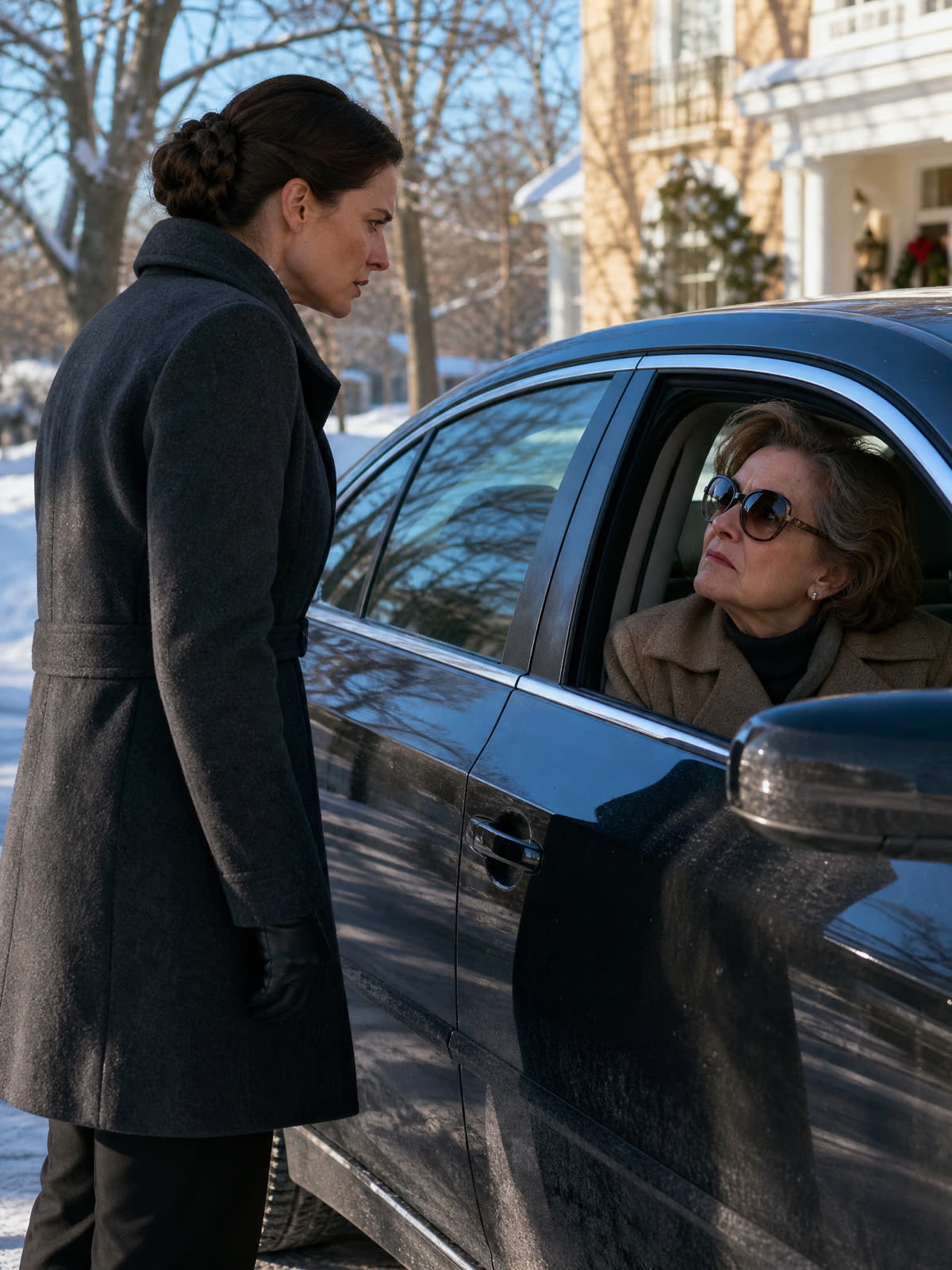
I asked Jamie to take Christa upstairs and use his noise-canceling headphones while I spoke with the adults. Then I went out to my father’s sedan. My mother sat in the passenger seat behind oversized sunglasses. When I knocked, she lowered the window only a little. “I’m not coming inside just so you can humiliate me on Christmas morning.” Her concern was still how the conversation might make her look. “You can explain everything inside, or I can tell everyone the truth right here where the neighbors can hear. It’s your decision.” She glared at me before opening the door. This time, I wasn’t going to carry the uncomfortable part for her.
Inside, everyone settled into the living room with the strained caution of people waiting for an argument they did not fully understand. Jenna sat on the sofa. Dad remained standing, still holding the stockings. My mother chose a place near the window, as if staying close to the edge of the gathering might help her escape it. I asked Dad whether he had actually seen the message I sent. He admitted that he had only heard my mother’s summary. That was how she had kept control of the story: nobody else had been permitted to examine the words for themselves.
I took out my phone and read the notice aloud. “Mom, you promised my children would be safe at Grandma’s house, but you abandoned them at a gas station on Christmas Eve. This is your formal sixty-day notice under our lease. Your tenancy ends February twenty-second, and I’m finished pretending Grandma left you the house when she actually left it to me.” There was no demand for repayment in it. No threat to force the sale of property she owned. There was a lease, an ending date, and the truth about the inheritance. Spoken in front of everyone, the message sounded nothing like the story that had brought them to my door.
Jenna turned toward our mother, confusion giving way to disbelief. “Grandma left the house to Tara? Mom, you told us she left everything to you!” Dad said his wife’s name in a low, strained voice. Sheila responded by accusing me of manipulation, as though revealing ownership were the same thing as inventing it. She insisted I was searching for excuses to take the house back. I had listened to enough explanations that morning. None of them could change a recorded deed, and none could explain away why two children had ended up waiting at a gas station while their grandmother returned to the comfort of that house.
I went into the kitchen, brought back the blue folder, and laid its contents on the coffee table. The authenticated will named me as the beneficiary. The deed recorded the property in my name. My grandmother had even left a handwritten explanation: Alder Street was going to the granddaughter who had consistently visited and cared for her. Beneath those papers was the lease naming Sheila Shaw as the tenant. Dad examined the documents, visibly shaken. The room had become quiet enough for the paperwork to speak more clearly than my mother’s accusations. Six years of accepted family history were being contradicted by pages I had kept in a kitchen drawer.
“You told me the four hundred dollars every month was only for property taxes, Sheila.” Dad’s question finally brought the monthly payments into the room. “It was for the house! I never technically lied about that. You’d lost the hardware store, Floyd, and I knew you couldn’t bear living in a house owned by your own daughter.” She presented the deception as a kindness she had performed for him. She also pointed out that I had agreed to it. I admitted that I had allowed the story to continue. What I had never agreed to was the idea that providing my parents a home gave my mother permission to endanger my children.
Jenna then asked about the gas station. The inheritance was no longer the only story beginning to fail. “Mom, you said Tara arranged that whole thing. You told us she wanted the kids brought to the gas station.” My mother held to the explanation she had already given them. “She did! Ask her to show you a message saying she didn’t agree!” It was the same maneuver again: make me prove that I hadn’t consented, rather than explain why she had taken the children there. She still seemed to believe the argument would remain a contest between her account and mine, with enough room left for everyone to choose the more comfortable version.
But Jamie had remembered our rule. The recording he made was already saved in more than one place, untouched by any argument about my tone or my mother’s intentions. I unlocked my phone and opened the audio file. Then I set it on the coffee table beside the will and lease, placing the evidence of that night next to the papers that had exposed the older deception. I turned up the volume. The sound began with the road, then Christa’s frightened sniffles. Everyone listened. My mother had demanded proof, and now her own voice was about to answer her.
PART 3: The Voice She Couldn’t Explain Away
On the recording, my mother told my children to stop complaining and accept that Jenna’s sons would have Christmas morning without them. There was no indication that I had requested the trip, and no comforting explanation for a frightened little girl. Instead, everyone in my living room heard Sheila say exactly what Jamie had preserved. “Stop crying, Christa. It’s only a gas station, and Aunt Jenna wants Christmas morning just for her boys. Jamie, don’t call your mother at work. If Grandpa asks, tell him your mother wanted me to bring you here.” She had not only abandoned them. She had instructed my son to hide it from me and repeat a lie to his grandfather.
When the recording stopped, silence settled over the room. Dad lowered himself slowly onto the sofa. Jenna covered her mouth with both hands. The argument my mother had tried to create—whether I was demanding money, overreacting, or misrepresenting a harmless arrangement—couldn’t survive what they had just heard. The children’s voices were there. So were her instructions. Nobody had to rely on my description of the night, or imagine how I might have misunderstood it. She had explained her decision herself, at a moment when she believed the only people listening were two children she expected to obey her.
Ross had come into the house during the confrontation and heard enough to understand. His face had gone pale. He turned toward my mother. “You abandoned an eight-year-old girl at a highway gas station in the middle of the night just so my sons could have the living room to themselves?” Sheila tried to call it a private family matter, as if naming the relationship could make the conduct acceptable. Ross refused that explanation. He immediately told Jenna they would not be moving into Alder Street. Whatever plans had been made without me, he was no longer willing to take part in them after hearing what those plans had helped produce.
He apologized and explained that he hadn’t known about the arrangement or what had happened to Jamie and Christa. Then he stepped outside to call their landlord and ask whether they could stay in their current home. My mother turned back to me. Even now, with the recording finished and the paperwork spread out in front of us, she didn’t begin by acknowledging the fear she had caused. Instead, she asked whether I really intended to make my own mother homeless. She wanted the conversation moved away from two abandoned children and back toward the discomfort she might face because I was no longer willing to accommodate her.
“You left my children outside in the freezing darkness on Christmas Eve,” I replied. “I’m giving you sixty days in a heated house to find somewhere else to live. The notice stands.” That was the distinction she kept trying to erase. I had not driven her somewhere unfamiliar and told her to wait until someone became available. I had given her the time required under our agreement, inside the house she already occupied. For once, Dad did not rise to defend her. He looked at Sheila and quietly told her to return to the car. He wasn’t asking me to withdraw the notice.
After my mother went outside, Dad stayed behind with the stockings still in his hands. He looked drained. When he finally spoke, regret had changed his voice. “They were hanging on the mantel when I found them. I told you it was a minor inconvenience, Tara, but I was wrong.” I didn’t reassure him that his dismissal had been harmless, or make it easier for him by pretending it hadn’t hurt. “Yes, Dad. You were.” It mattered that he could say it plainly. It also mattered that I no longer felt responsible for protecting every adult in the room from an honest description of what they had done.
He asked if he could see Jamie and Christa before leaving. I considered it, torn between allowing an apology and protecting what remained of their Christmas morning. They had already spent enough time carrying the consequences of other people’s choices. “Not today, Dad. They need some peace.” He nodded and accepted the answer without trying to negotiate it. Later, I learned that he had not gone back to Alder Street with my mother. He had gone to stay with his brother instead. For the moment, the house that had hidden so much misunderstanding was no longer somewhere he wanted to return.
Sheila began calling friends from church and telling them that an ungrateful daughter was threatening to take away her home. But Ross had already told his mother, who sang in the same church choir, what had happened. My mother’s familiar version of herself could not remain untouched once other people learned about the gas station and heard what Jamie recorded. The story no longer belonged entirely to the person most determined to edit it. By the middle of January, she was attending a church two towns away, where fewer people knew about the deception surrounding my grandmother’s house. Her reputation had depended on details staying private.
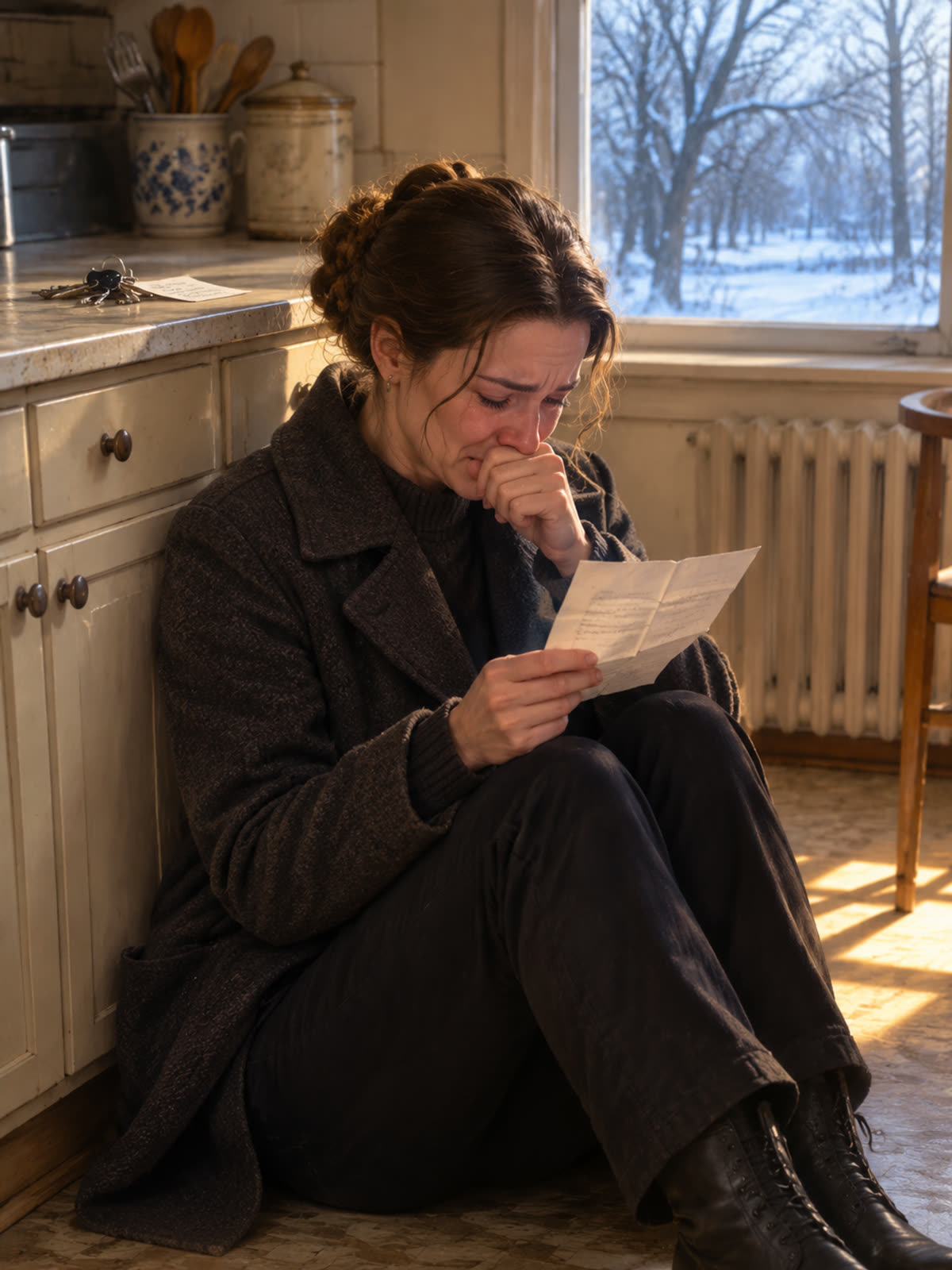
Eventually, my father reconciled with Sheila, although their relationship was different afterward. He took charge of their finances and found a modest two-bedroom apartment above a dry-cleaning business. They left Alder Street three days before the February 22 deadline. When I went to inspect the empty house, the keys were waiting on the kitchen counter beside a short note in Dad’s handwriting. “The furnace filter has been replaced. I’m sorry I never cleaned the back gutter.” There was nothing elaborate about it. He had listed a completed task and apologized for one he had not finished, leaving those ordinary words in the quiet of my grandmother’s kitchen.
I sat on the old kitchen floor and cried. The feelings I had held back for weeks finally came through, but they weren’t grief for my mother’s damaged reputation. I cried for Dad, who had spent six years maintaining a home without knowing that it belonged to his daughter. He had believed someone else had provided the roof over him because my mother had decided preserving his pride mattered more than telling him the truth. Somehow, the unfinished gutter made the whole thing sadder. His note was so practical, so recognizably his, and yet it carried the weight of everything we hadn’t understood about one another while that secret remained in place.
In April, Jamie, Christa, and I moved into Alder Street ourselves. The rooms that had become part of such a painful argument began to take on the shape of our everyday lives. Jamie chose my grandmother’s former sewing room as his bedroom. Christa wanted the room directly above the front porch. Their choices gave the house a meaning that had nothing to do with the notice, the confrontation, or the story my mother had told. I put the blue folder back into the kitchen drawer. The papers were still important, but they no longer had to sit quietly behind a deception I was helping maintain.
For the first time in years, the house felt as though it belonged to the people my grandmother had meant to protect. That feeling did not undo the Christmas Eve my children had endured, and it didn’t make the family’s broken trust disappear. Still, there was something different about living there without pretending. I no longer had to watch someone else claim ownership of a gift my grandmother had deliberately left to me. More importantly, my children could belong in that house without wondering whether another set of grandchildren might suddenly matter more. The home itself had not changed, but what I was willing to accept inside it had.
When the next holiday season approached, I made sure there would be no repeat of the previous year’s childcare arrangements. I volunteered for a demanding double shift on Thanksgiving in exchange for having Christmas entirely free. That trade gave me something I had not been able to promise before: I would be with Jamie and Christa throughout the holiday. In December, we decorated my grandmother’s house together and hung the two red felt stockings above the fireplace. This time, I filled them myself. There was no uncertainty about where the children would sleep or whose preferences might displace them before morning. I knew exactly where they would be.
At nine o’clock, someone knocked hesitantly on the front door. When I opened it, Dad stood on the porch holding a white bakery box. “May I come inside, Tara?” He asked rather than assumed. I stepped aside and welcomed him in. There was no need to pretend that the previous Christmas had never happened in order to let him cross the threshold. He sat cross-legged on the living room rug, and Christa proudly showed him drawings she had made during the past year. I watched them together, aware of how much had changed since he had stood in my other living room holding the children’s stockings.
Jamie demonstrated his noise-canceling headphones. Dad seemed genuinely amazed by how thoroughly they shut out the sounds around him. For a while, the room felt peaceful in a way I had not experienced with my family for years. Nobody was trying to persuade me that a child’s distress should be overlooked for an adult’s convenience. Nobody needed me to preserve an appearance or soften a fact. We were simply together, and that ordinary ease felt significant precisely because it had been missing. Letting Dad share the morning did not mean everything was repaired. It meant there was enough honesty between us to allow a beginning.
When it was time for him to leave, he went into the garage and brought out a heavy stepladder. He carried it around the house and began clearing leaves and debris from the back gutter with his bare hands. It was Christmas morning, but he would not come inside again until he had finished. Watching him, I remembered the note on the kitchen counter and the apology for leaving that job undone. Now he was completing it. He wasn’t asking me to take a promise on faith or insisting that I accept his intentions instead of his behavior. He was doing something he had said he regretted not doing.
I understood that the gutter was not the whole apology. It was simply the part he could put his hands to that morning. Trust would take longer than clearing away leaves, and I could not pretend that one peaceful visit had restored everything between us. But seeing him with Jamie and Christa gave me hope that some relationships could recover when people acknowledged their mistakes instead of explaining them away. There was a difference between demanding forgiveness and making room for it to become possible. For the first time in a long while, I could see that difference taking shape in my family.
My mother had taught me something I would never forget, though not in the way she might have intended. A promise to a child cannot be casually withdrawn because another adult suddenly prefers a different arrangement. For years, she had expected me to be the strong daughter: the one who accepted disappointment, solved the practical problems, and quietly absorbed the consequences. She had mistaken my willingness to help for an obligation to tolerate whatever she chose. I had helped that misunderstanding survive by repeatedly making everyone else comfortable. That Christmas Eve forced me to see what continuing to do so would cost my children.
Strength, I finally understood, was not the ability to endure every hurt without objecting. Sometimes it meant drawing a boundary and allowing other people to dislike it. Sometimes it meant accepting that a family would change because I would no longer keep it comfortable at my children’s expense. Looking at Jamie and Christa enjoying Christmas morning in the home my grandmother had left us, I knew where my loyalty belonged. I chose my children. What I still couldn’t know was whether the rest of my family would ever learn to live with that choice.
Disclaimer: This story is a work of fiction inspired by real-life themes. Names, characters, places and events are fictionalized, and any resemblance to real persons is purely coincidental. Images are for illustration purposes only.
