

PART 1 — The Call We Never Expected
After spending years teaching our son with Down syndrome at home, we had finally enrolled him in a mainstream school. Each afternoon, Ethan returned with a smile, eager to describe his lessons and the children he was getting to know. Then, on his fifth day, the principal telephoned.
“Mrs. Parker, you and your husband need to come to school immediately.” My stomach clenched. “Is Ethan okay?” I asked. “He’s safe, but there are two police officers in my office.” For a moment, I couldn’t move. Police officers at my six-year-old son’s school?
“What happened?” I asked, struggling to steady my voice. “There’s been an incident involving several students. Please come as soon as possible.” The call ended without another explanation. I contacted Michael at once, and we hurried to the school.
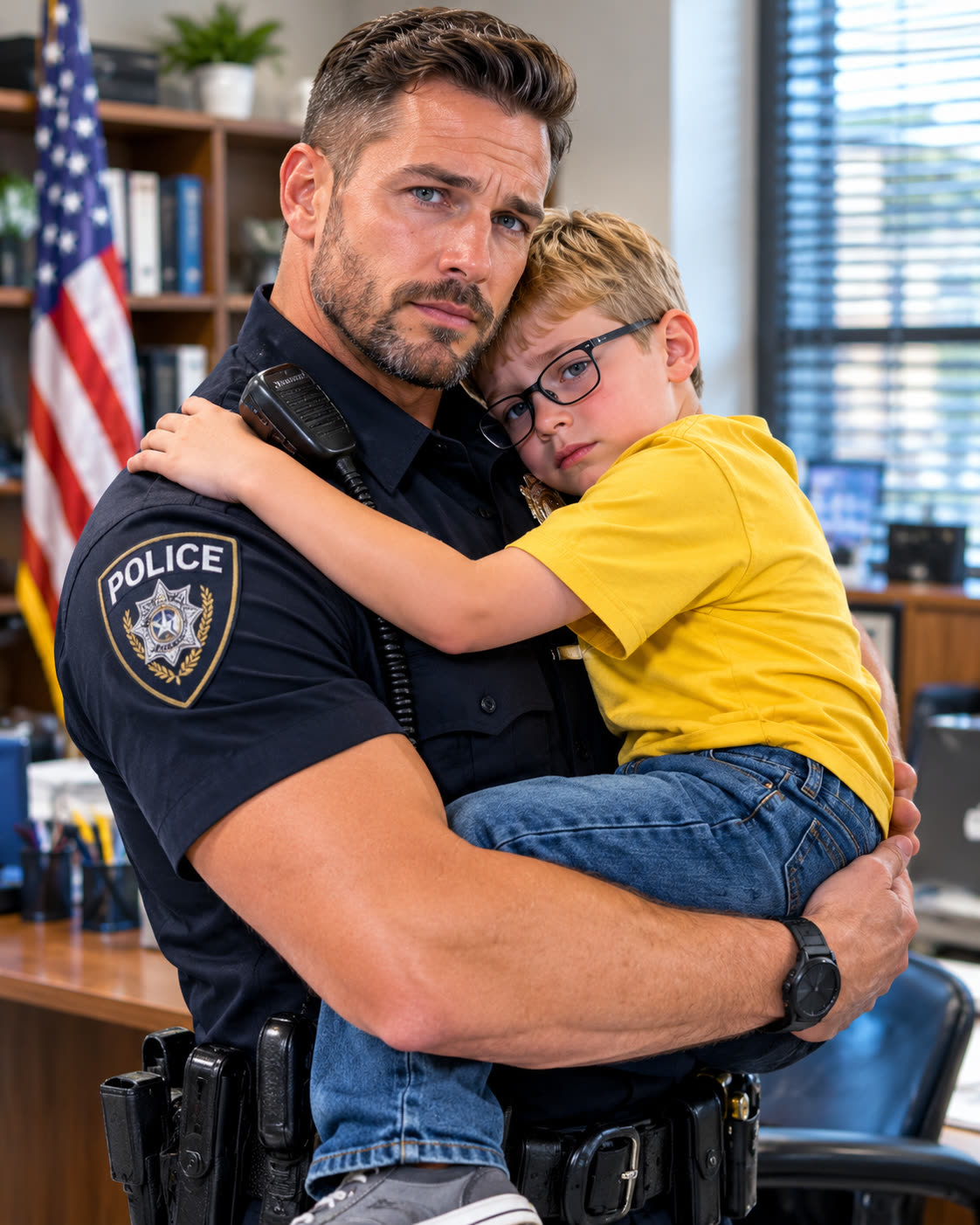
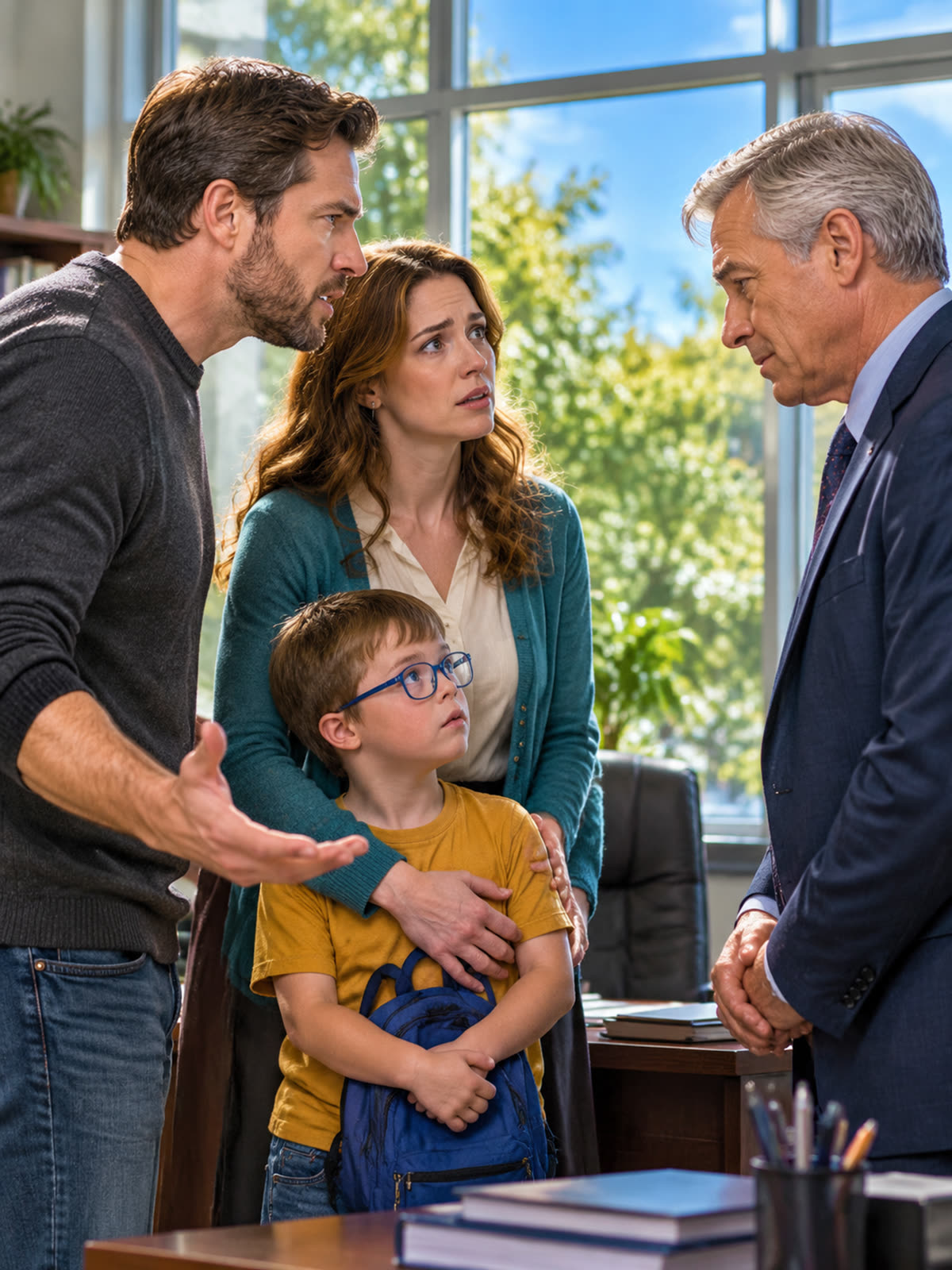
Inside Principal Harris’s office, Ethan sat near a window with his blue backpack gripped in his hands. His eyes were red. “Mommy!” he cried, rushing toward me. I wrapped him tightly in my arms. “Sweetheart, are you hurt?” He shook his head, then whispered the words that broke my heart: “Please don’t make me leave school.”
I glanced at Michael, bewildered. Two uniformed officers stood beside the principal’s desk. One approached and introduced herself as Officer Miller. “Your son isn’t in trouble,” she assured us. “Then why are the police here?” Michael demanded.
Principal Harris sighed. “Several students were teasing Ethan during lunch. Another boy intervened, and the situation escalated. Our school resource officers responded because staff feared it might become physical.” When I turned toward Ethan, he dropped his gaze.
We had homeschooled Ethan for years because we weren’t certain a traditional classroom could offer the support he needed. But he had wanted so much to go to school and make friends. After consulting professionals and discussing his needs with the school, we had agreed to give it a try.
Those first afternoons had seemed to confirm our decision. On Monday, he had arrived home beaming. “Mom! School is amazing!” On Tuesday, he had eagerly described Oliver, the boy sitting next to him. By Wednesday, he was delighted that several classmates had asked him to join their lunch table.
We had believed he was beginning to belong. Now, in the principal’s office, I wondered whether we had completely misunderstood. Principal Harris set a tablet on his desk. “There’s something you should see.” He started a cafeteria recording.
On the screen, Ethan sat at a table with three boys standing nearby. One raised a phone. “Ethan, tell us what you’re going to be when you grow up!” Ethan smiled. “I’m going to be a famous scientist!” The boys laughed. “Say it again! Louder!” He repeated the words, but his smile slowly faded. Another boy copied his voice.
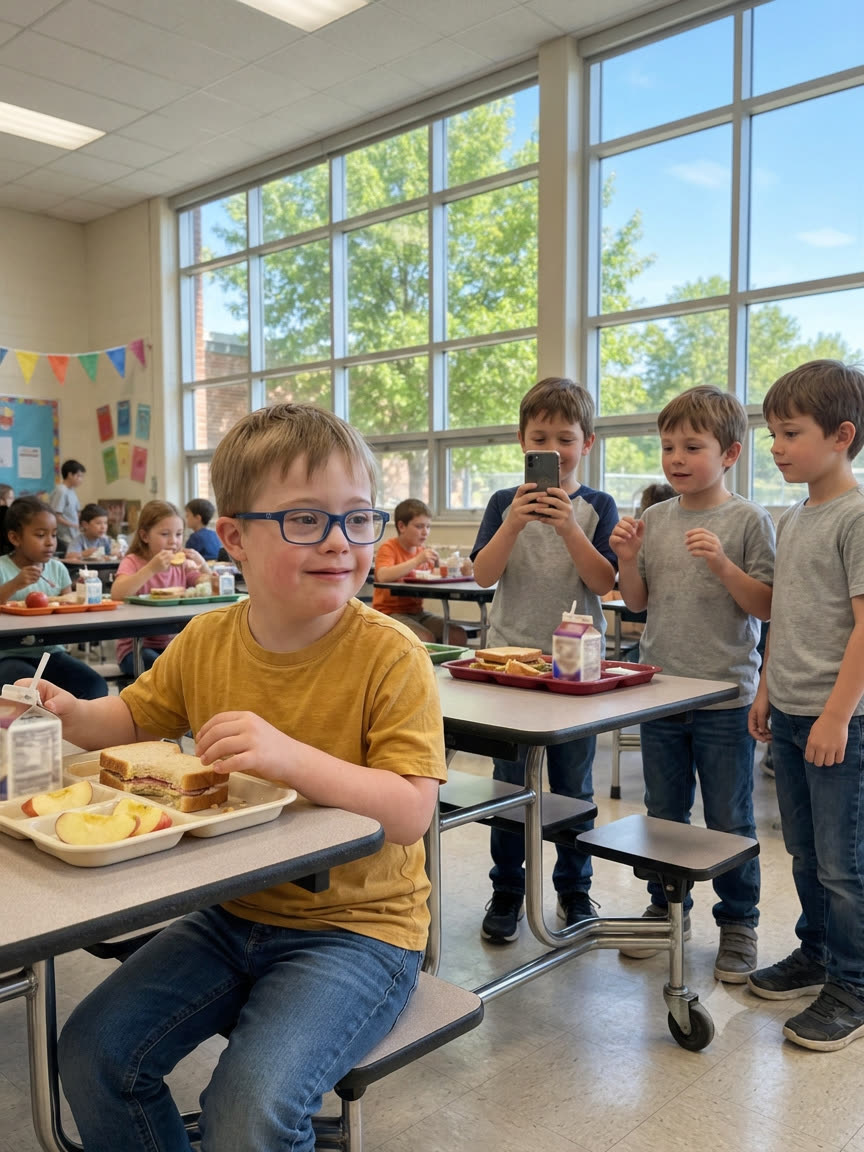
My heart sank. Ethan loved science. He could spend hours asking about planets, animals, and how machines worked. These children had taken something precious to him and made it a joke.
Then Oliver entered the recording. “Stop filming him,” Oliver demanded. “Relax! We’re only joking!” one of the boys replied. “He doesn’t think it’s funny!” Oliver answered. A boy shoved Oliver’s shoulder. Oliver pushed the hand aside, and a chair scraped across the floor. The recording ended.
Michael’s anger was unmistakable. “How long has this been happening?” Principal Harris said they were still investigating. I turned to our son. “Sweetheart, have those boys been teasing you before today?” Ethan hesitated. “Sometimes.”
“Since when?” I asked. “Wednesday.” My heart dropped. Wednesday was the afternoon he had been so proud to tell us about his lunch invitation. I could still remember his happiness.
“Why didn’t you tell us?” I asked gently. Ethan wound his backpack strap between his fingers. “Because I like school.” His answer left me trying to understand how something he loved had become something he felt he had to hide.
PART 2 — What Ethan Had Been Afraid to Tell Us
“We know, sweetheart.” Ethan’s fingers remained tangled in the strap. “You said if school was too hard, I could come home.” Suddenly, I understood what my promise had meant to him.
Before his first day, I had told him we could return to homeschooling if he became overwhelmed. I had wanted him to feel reassured. Instead, he had heard a warning: if he admitted that children were teasing him, he might lose the school he loved.
I knelt beside him. “Ethan, someone being unkind doesn’t mean you’ve failed. We aren’t going to take away something you love because another child behaved badly.” He lifted his eyes. “Promise?”
“I promise we’ll listen to you and work out how to keep you safe.” Michael then asked about Oliver. “He’s my friend,” Ethan replied without hesitation.
“Did he know those boys were teasing you?” Ethan nodded. “He told me they weren’t nice.” Michael asked, “Then why did you keep eating with them?” Our son seemed puzzled by the question. “Because they let me sit there.”
Tears gathered in my eyes. He had wanted friendship so badly that he had accepted their laughter as the price of being included. Then he explained something neither of us had known: Oliver had been new to the school as well.
On their first day, Ethan had spotted Oliver sitting by himself and asked if he wanted company. They had begun talking about dinosaurs. The next day, Ethan had invited him to lunch.
When the other boys called Ethan over on Wednesday, he had taken Oliver along. Oliver had recognized their unkindness and warned him, but Ethan had kept hoping friendship would follow. “I thought maybe they’d be nice tomorrow,” he explained. I held him close.
A few minutes later, Principal Harris returned with further information. Oliver had told a lunch supervisor about the teasing the day before. The report hadn’t received the follow-up it needed. The boys had insisted they were joking, and the supervisor had merely reminded them to be respectful.
The next day, the same thing had happened again. Michael was understandably upset. “Someone reported this yesterday, and nothing changed?” Principal Harris accepted responsibility. “We should have addressed it immediately. We’re correcting that now.” He explained that the school would document the bullying, meet with the children and their parents, and increase lunchtime supervision.
There was something else we needed to know. At first, staff had sent Oliver to the office because they thought he had initiated the confrontation. The recording had shown otherwise: he had been trying to stop the teasing.
Oliver had also refused to leave Ethan by himself while the adults worked out what had happened. “He insisted that Ethan be allowed to explain what happened,” Principal Harris said. “And Ethan kept asking us not to punish Oliver.”
I looked at my son. “Is that true?” He nodded. “Oliver said friends don’t leave.” Michael turned aside and wiped his eyes.
Officer Miller assured us that neither child had done anything that required police action. The school would deal with the matter. Before leaving, she smiled at Ethan. “You did the right thing by telling the truth.” He answered, “Oliver did too.” “Yes,” she agreed. “He did.”
Then Principal Harris asked whether we wanted to take Ethan home. I turned toward our son instead. “What would you like to do?” His reply came immediately. “Go back to class.”
Michael and I exchanged a look. Everything in us wanted to take him home, away from the possibility of another cruel word. But we had spent years helping him grow more confident and independent. Now he was telling us what he wanted. Could we listen, even when our first instinct was to carry him out the door?
PART 3 — The Choice That Changed What We Understood
We couldn’t spend years encouraging Ethan’s independence and then disregard his wishes. Before agreeing that he could return to class, we arranged daily check-ins with his teacher, extra support at lunch, and a clear way for him to report anything else that happened.
Before we left, Ethan looked at us. “Mom, can I still become a scientist?” “Of course you can.” He asked, “Even if I talk differently?” Michael knelt beside him. “Your ideas matter, Ethan. Speaking differently doesn’t make them any less important.”
Our son smiled. “Okay. Then I’m going to science class.” Over the weeks that followed, the school kept its commitments. The children involved were dealt with appropriately, his teachers supported him, and Ethan gradually became more comfortable telling someone when something upset him.
Oliver remained his closest friend. One afternoon, his mother invited Ethan over to play. When I came to collect him, she thanked me. “For what?” I asked. “For Ethan.”
She told me Oliver had found transferring schools difficult and had eaten alone during his first days. “He came home so happy the day Ethan invited him to sit together,” she told me.
Only then did I fully understand the friendship. Oliver hadn’t simply stepped in when Ethan needed help. Ethan had welcomed Oliver when he, too, had needed someone. One small kindness had brought them together.
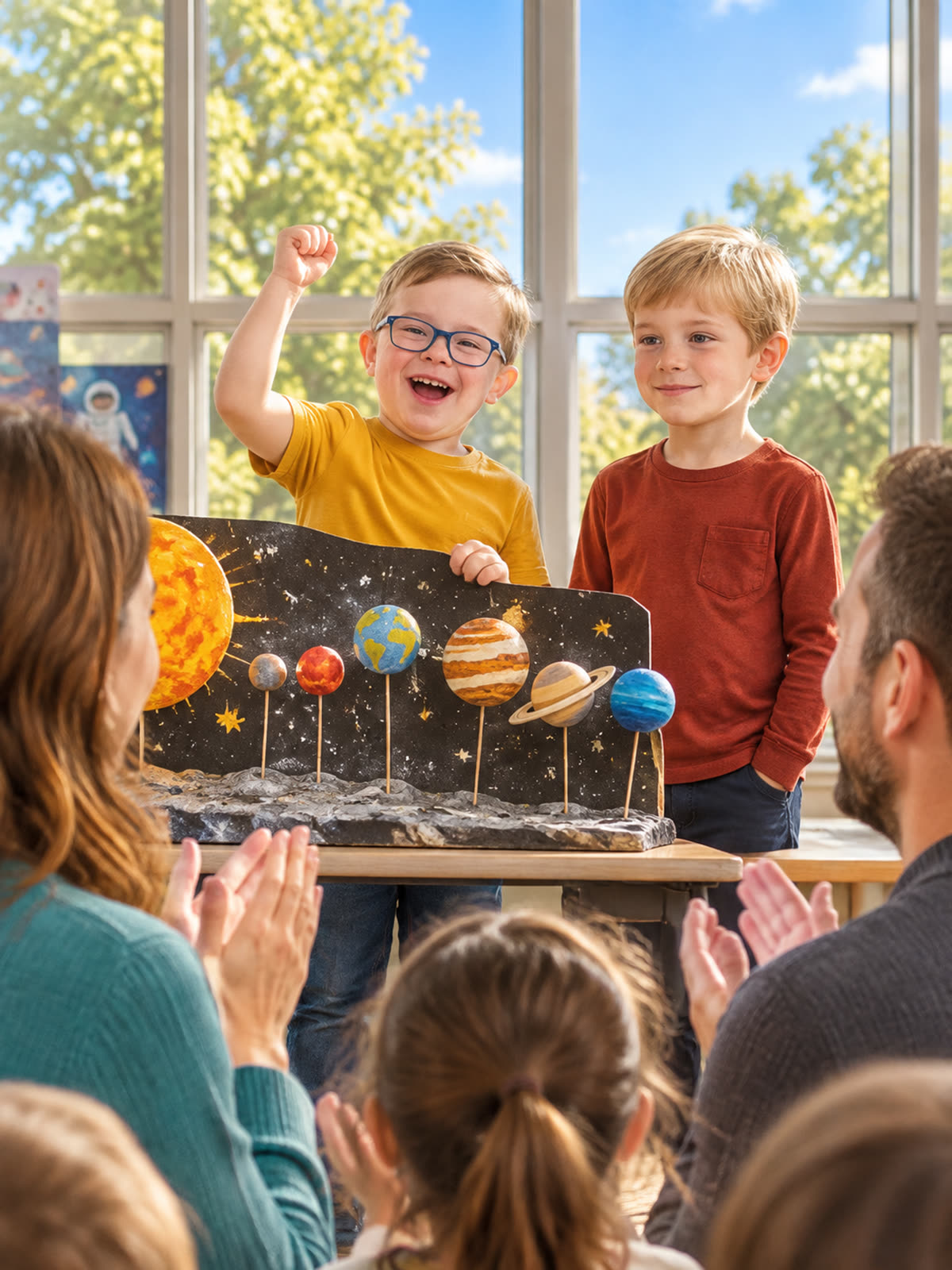
A month later, the school held a science exhibition. Ethan and Oliver presented a project about the solar system. Oliver had drawn the planets, while Ethan had helped label them and explain their characteristics.
As they presented, Ethan stumbled over a word. He stopped, drew a breath, and tried once more. Oliver stayed beside him, waiting patiently.
There was no imitation of his voice this time, no pressure to repeat himself for somebody else’s amusement. His friend simply gave him the time he needed.
When the boys finished, we applauded. Ethan’s smile was one I would never forget. The child who had asked whether speaking differently could keep him from becoming a scientist had stood beside his friend and explained the planets.
That evening, he wanted to know whether Oliver could come over again. “Of course,” I replied. Then he asked, “Mom, do you think I’ll make more friends someday?”
I smiled at him. “I think you will, sweetheart.” He thought about that answer before saying, “But Oliver is my best friend.”
For the first time since the principal’s frightening call, I understood what we had almost overlooked. Ethan didn’t need us to shrink his world until nothing could hurt him. He needed us to hear him, support him, and help him through difficult experiences without removing the opportunities he cherished.
A few days later, he came downstairs with his backpack on, excited about another school project. We were heading out when he stopped at the door. “Mom?” “Yes, sweetheart?”
“If somebody’s mean to me again, I’ll tell you.” I hugged him. “And we’ll figure it out together.” He grinned, then hurried toward the car.
Five weeks earlier, he had entered school hoping someone would want to be his friend. He had found that person, and he had shown us that protection wasn’t about keeping him apart from the world. It was about making certain he never faced it alone.
We couldn’t keep every unkind word from reaching him. But now he had promised to tell us, and we had promised to listen. If somebody was mean to him again, what happened next would begin with that promise…
Disclaimer: This story is a work of fiction inspired by real-life themes. Names, characters, places and events are fictionalized, and any resemblance to real persons is purely coincidental. Images are for illustration purposes only.
