

PART 1: The Empty Garage
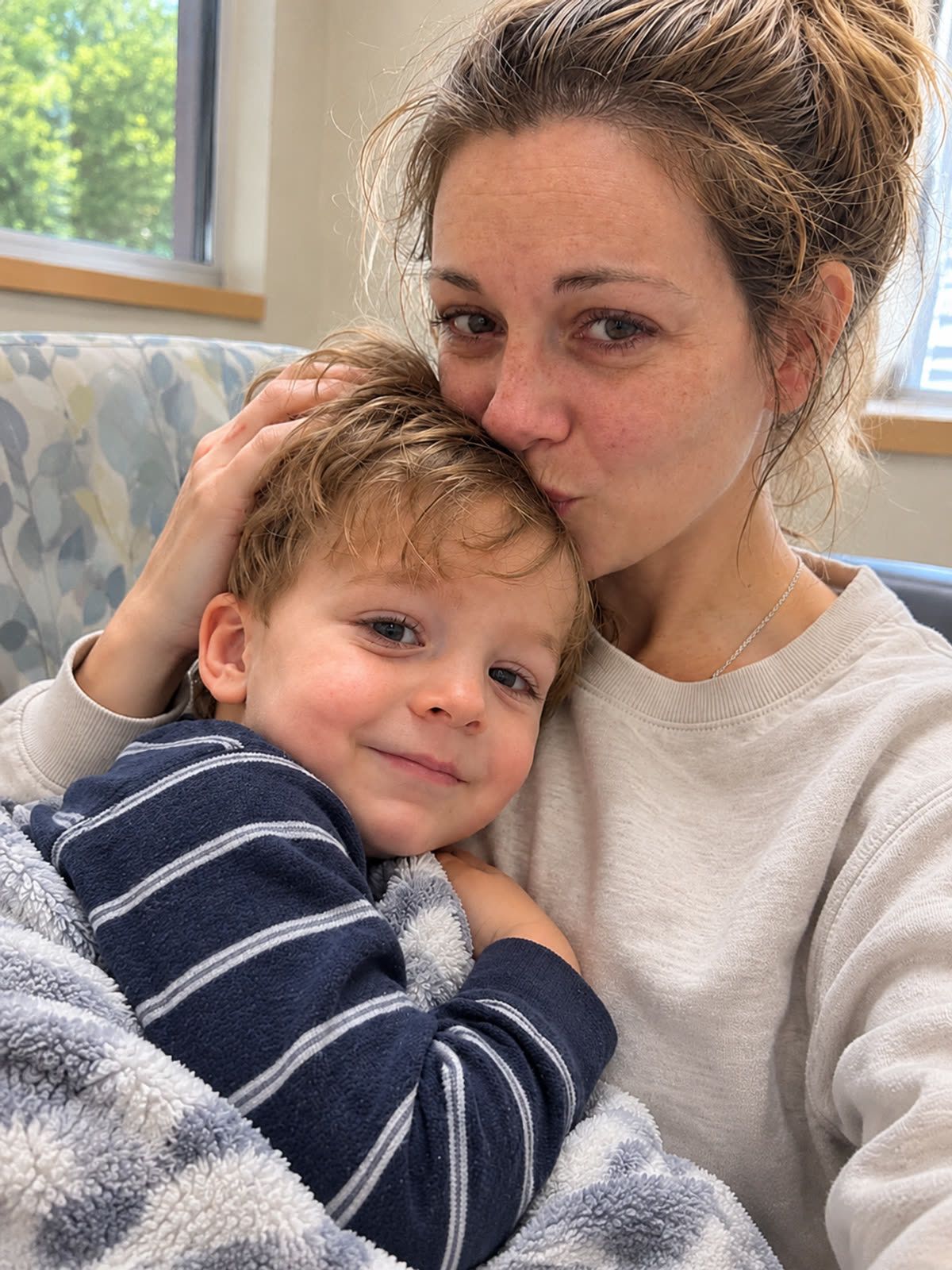
Our two-year-old was burning against my shoulder when I opened the garage door and discovered that my SUV was missing. Trent declined my call, then sent a message explaining that he had borrowed it for his weekend at a friend’s house. When I told him Silas had a temperature of 103 and needed medical attention, his answer changed what I did next.
Silas was wearing only one sock when the pediatric nurse told me to bring him in. The other was underneath the couch, though I hadn’t found that out yet. All I knew was that my toddler felt frighteningly hot, the diaper bag was only halfway zipped, and he had turned down the same cup of apple juice six times. His temperature was 103. I held him against my shoulder while I listened.
The fever itself wasn’t the nurse’s only concern. Silas was unusually drowsy, and he wouldn’t drink. Those were the details that mattered. "Take him to the emergency room," she said. "On my way." I gathered what I had and carried him toward the garage. Getting him into the car and getting help were the only things I was thinking about.
Then I opened the door. No SUV. I actually glanced behind me, as if I might somehow find it in the laundry room. But the garage was empty, and looking again didn’t change that. "Take him to the emergency room." The instruction was still fresh in my mind, and the vehicle I needed wasn’t where it belonged.
Trent’s car wasn’t available either. It had been at Miller’s repair shop since Wednesday. Then I remembered his plans: Friday through Sunday at Dave’s house, watching a game and going fishing. Dave was meant to collect him. I’d genuinely been glad Trent was getting a break. We had a toddler, and opportunities to get away weren’t exactly plentiful. I had believed we did a decent job of making room for each other.
I called Trent. He rejected the call. I tried again, and he rejected that one too. Then a text came through. "Took your SUV. Dave didn’t feel like driving out to get me, and we needed the trunk space for our extra gear anyway." I looked at the message, then at Silas, then back at the space where my SUV should have been.
"We needed the trunk space for our extra gear anyway." That was his explanation. Holding Silas with one arm, I typed with my free thumb. "Trent, Silas has a 103 fever. The nurse says he needs to be seen. You are twenty minutes away. Bring the SUV back now." The typing bubbles appeared. I watched them, still standing in the empty garage with our son pressed against me.
"I just sat down on the couch and the game is starting. I’m not driving back because you can’t handle a basic toddler cold. Give him Tylenol." I read his reply twice. Silas made a small, miserable sound and buried his face against my neck. "He won’t drink and he’s barely staying awake. I am completely stranded. How am I supposed to get him to the emergency room if he gets worse?"
This response arrived immediately. "Stop trying to sabotage my weekend with your hysterical drama. You’re a mother. Figure it out. 🤷🏻♂️" I stood there until the garage light turned itself off. Then I switched it on again. Beside a box of Christmas decorations sat our spare toddler car seat, the one I had bought for my sister to use when she watched Silas. Trent had complained that one seat should have been enough.
That afternoon, the spare was the most useful thing we owned. I didn’t send Trent another message. Instead, I requested a rideshare to the emergency room. The driver arrived eleven minutes later and waited while I struggled to fit the car seat into his back seat with Silas crying against my shoulder. "You need a minute?" he asked. "Probably six." He waited while I secured the seat, buckled Silas into it, and climbed in beside him.
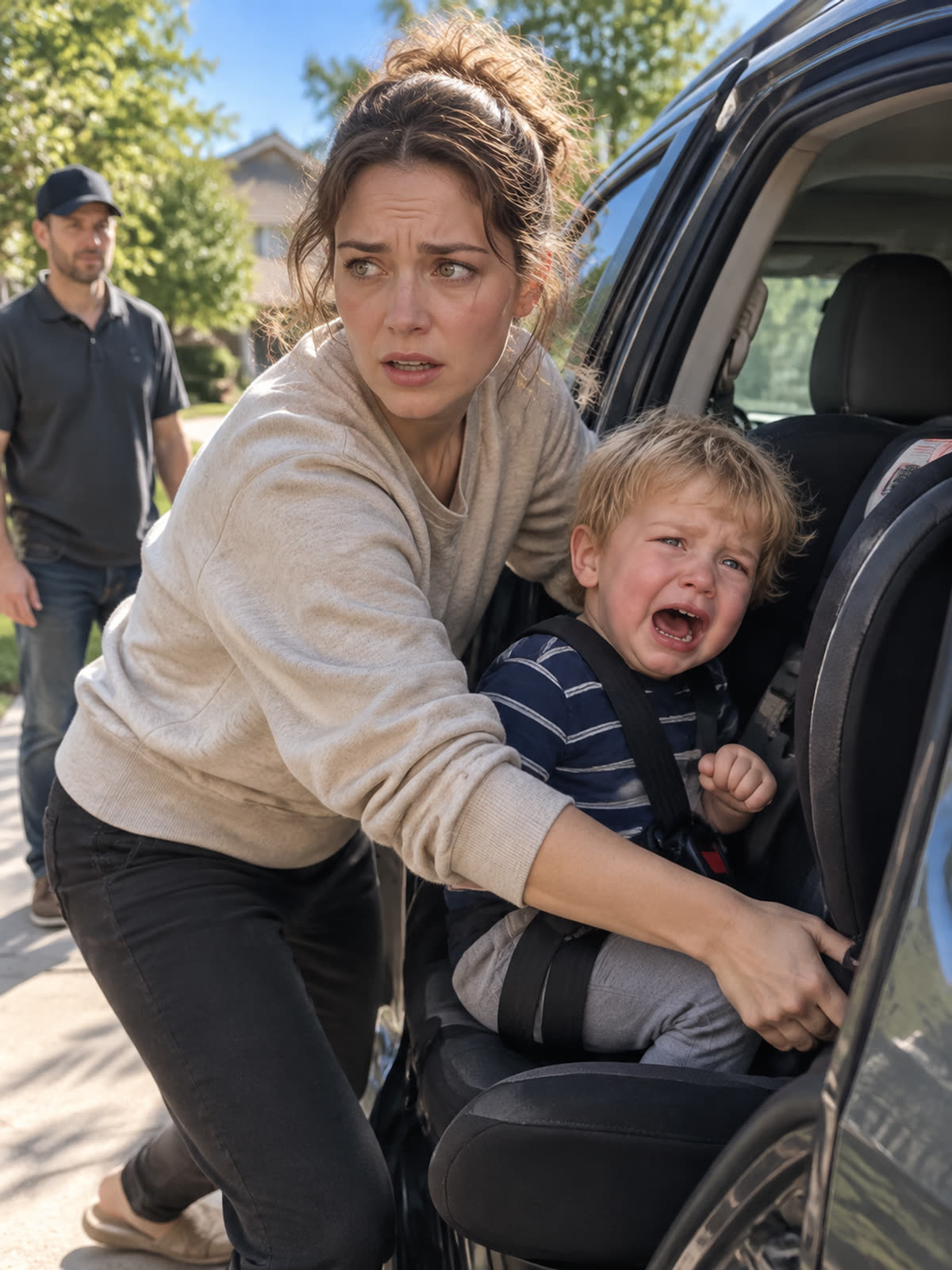
Only after we started moving did I notice my feet. I was still wearing slippers. There hadn’t been room in my attention for shoes; there had barely been room for anything beyond Silas, the bag, and getting that spare seat installed. Trent had told me to figure it out. I had found a way to get our son to the emergency room, and now we were finally on our way.
At the hospital, Silas vomited down my shirt. After that, my slippers seemed considerably less important. The doctor examined him and got some fluids into him. His symptoms, I was told, were consistent with a viral infection. We left with directions for his medication, specific hydration goals, and warning signs that would mean bringing him back. I needed to remember all of it.
Eventually, Silas accepted a few sips of juice. I could have kissed the cup. After all those refusals, watching him drink even that little felt enormous. He fell asleep against me as I waited for another ride home. I held him and let him sleep. For the previous three hours, being angry hadn’t been something I had time to do.
There had been temperatures to keep straight, questions to answer, medication to collect, and a toddler who objected to anyone bringing anything close to his ears. One thing had followed another without much space between them. Only when he was finally sleeping in my arms did I look properly at my phone. Nothing from Trent. Not a single message asking how his son was doing.
No "How is he?" No "What did the doctor say?" Nothing. While I had been answering questions and trying to get Silas to drink, Trent hadn’t asked for an update. I opened our shared email account because I needed the pharmacy receipt. I wasn’t looking for anything connected to his weekend or his car. I only needed the receipt.
Another message caught my attention before I found it. MILLER’S AUTO SERVICE: VEHICLE READY FOR PICKUP. It had arrived at 3:18 that afternoon. Beneath it, the automated footer gave the shop’s weekend collection hours, which extended through Sunday afternoon. I read the message and kept looking at it. Trent’s car was ready. His own transportation was sitting at Miller’s.
My first response was so automatic that it was embarrassing. I began working out the arrangements. If my sister could stay with Silas, I could get to the shop before it closed and collect Trent’s car. Then, on Sunday, he could return my SUV, and I could follow him back so he could pick up his own vehicle. I was already fitting the pieces together.
That was where my mind went: to solving the problem, finding someone to watch our child, and arranging the driving so everything would be convenient afterward. I had made it halfway through organizing the whole thing before I stopped. Why was I doing that? The car wasn’t mine. The weekend wasn’t mine. The child asleep in my arms was the one Trent had told me to handle.
I looked at that pickup notice again. His car was ready, and the collection hours were right there. There was nothing more I needed to arrange on his behalf. He had made his weekend plans, taken my transportation, and left me to work out how to get our sick toddler medical care. Yet my first instinct had still been to make his return easier.
For once, I didn’t finish solving it. I closed the email.
PART 2: Twenty Minutes
Once Silas and I were back home, I sent Trent one message. "Silas has been seen. He’s home. We have instructions for tonight. Your car is ready at Miller’s." It contained what he needed to know: our son had received medical attention, we were home, and his vehicle was available. I didn’t arrange a pickup or offer to collect it for him.
Five minutes later, he replied. "Good. So we’re good? 😃" I looked at Silas, asleep on the couch with his damp hair stuck to his forehead. Then I answered, "Silas is." I set my phone down. Our son had been examined, and I knew what to watch for that night. That was what was good. It wasn’t an answer about anything else.
Saturday contained very little drama. Mostly, it contained crackers. Silas managed half of one, and I celebrated as though he had just received a college acceptance letter. He wouldn’t eat lunch. He slept on me for ninety minutes. When it was time for medicine, the syringe offended him deeply. The day revolved around those small things: something swallowed, a little sleep, another attempt at medication.
Around noon, Trent sent a message. "How’s he doing?" I gave him an honest answer. "Fever lower. Drinking a little. Still tired." He responded with a thumbs-up, and the exchange ended there. Ordinarily, I would have kept it going myself. I would have supplied all the details he hadn’t asked for, making sure he knew everything without needing to find anything out.
I would have repeated the doctor’s instructions, explained when the next dose was due, reported whether Silas had eaten, and included his temperature from 9:15. That was the pattern of our marriage. I kept track, and then I passed the information along. The pediatrician was on speed dial. The daycare tuition schedule was lodged in my head. Those things lived with me whether anyone asked about them or not.
I had gone to three grocery stores to find the crackers Silas would eat when he was ill. I could reach into the hall closet in the dark and put my hand straight on the spare wipes. When I closed his blue cup, my fingers automatically gave it a second firm twist so it wouldn’t leak onto the rug. None of it required a conversation anymore. I simply knew.
Trent knew things as well. He knew when the games started. He knew where the batteries were kept. With the grill, he could identify almost any problem just by listening. I had always regarded those different areas of knowledge as a balance between us. We each knew things the other didn’t. That was the explanation I had given our arrangement, and until that weekend, I had believed it.
On Sunday morning, Silas sat on the living-room rug, slowly moving a wooden truck back and forth. Trent called. "Hey," he said. "I need you to do something." "What?" His request came without much preamble. "Dave has to leave earlier than he thought. I’ll bring your SUV home, then you follow me to Miller’s so I can get my car."
"I can’t." He paused. "What do you mean?" "Silas is still sick." "He’s better." "He’s better than Friday." "So put him in the car." "He needs to rest." Trent sighed. "He can rest in his seat. Heather, it’ll take twenty minutes." I looked at the thermometer on the coffee table. Twenty minutes: the same distance he hadn’t wanted to drive when our son needed him.
"I know." "Then what’s the problem?" "I said no." There was another pause. "Okay, so what am I supposed to do?" I looked down at Silas. He rolled his wooden truck over my foot. I answered Trent with the distinction he had apparently forgotten. "You’re a father, Trent. Figure it out." There was silence on the other end. Then he hung up.
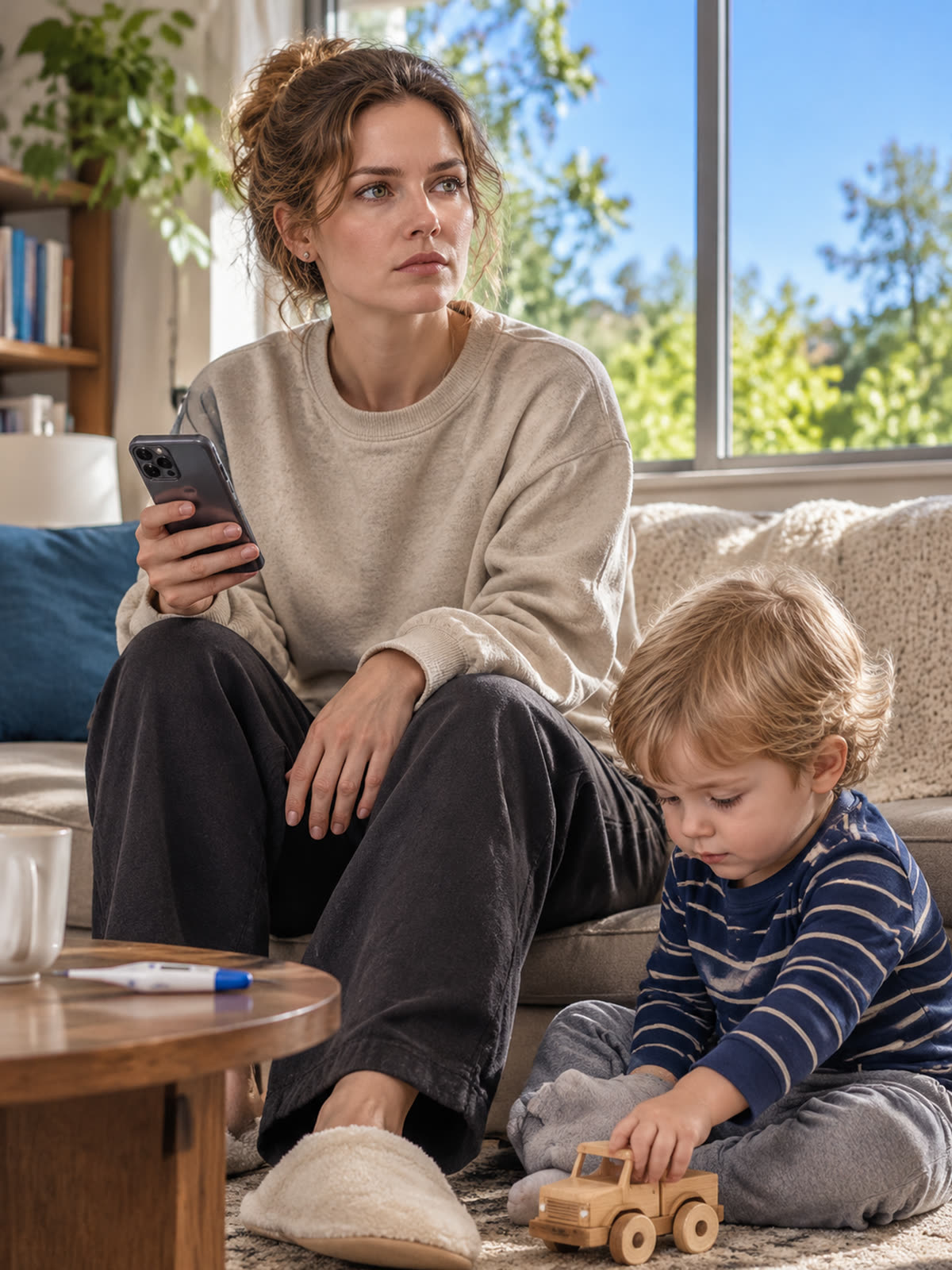
I didn’t feel victorious. Mostly, I needed to change Silas’s diaper. There wasn’t a triumphant moment waiting after the call, only the next thing our toddler needed. Trent had a transportation problem, and I had told him I wasn’t available to solve it. Then I put my attention back where it had been all weekend: on Silas.
About forty minutes later, my phone rang again. This time, Dave’s name was on the screen. I answered because I assumed something had happened. "Hey, Heather." "Hi." The pause that followed was awkward. "Silas okay?" "Getting there." "Good." Another silence followed. Then Dave said, "I didn’t know." I sat down as the conversation shifted away from the question I had expected.
"Know what?" "That he took your SUV without asking." Apparently, Trent had complained that he was stranded. Dave had asked why I wouldn’t just drive him to the repair shop. Trent had explained what had happened—not the way I would have described it, but his own version. Even in that version, Dave had heard enough to change his mind.
The turning point had been Silas: two years old, with a fever of 103. Dave hadn’t needed a different account from me to understand why I wasn’t offering another drive. "He said you would’ve said no if he’d asked," Dave continued. "Probably." "Yeah." Dave let out a breath. "That’s usually why people ask." I nearly laughed. There wasn’t much else to say to that.
Dave had called after hearing Trent’s explanation, not because I had sought him out or told him my side. I hadn’t needed to. Trent had supplied the facts himself while complaining that I wouldn’t help him. The SUV, the lack of permission, our sick son—all of it had come from the person who expected Dave to agree with him.
"I’ve got to head out," Dave said. "I just wanted to check on the little guy." "Thanks." That was the end of our conversation. He had asked about Silas and clarified what he hadn’t known. There was no transportation arrangement for me to make, no additional errand I needed to organize, and no reason to turn the conversation into another job.
Trent finally came home that afternoon, driving my SUV. He parked it badly. That was how I knew he was angry before he even came through the door. I was on the couch beside Silas when he entered with his overnight bag. He was home, my vehicle was back, and his own car was still waiting for him at Miller’s.
"You made me look like an idiot in front of Dave." That was what he said first. I hadn’t been at Dave’s house. I hadn’t taken part in the conversation that had upset him, and I hadn’t given Dave the account that changed his opinion. I was sitting beside the child I had spent the weekend looking after. "I wasn’t there."
Trent dropped his bag. "You know what I mean." "I really don’t." He wasn’t finished. "He spent the whole morning acting like I abandoned my kid." I answered with what had actually happened. "You told him what happened." Trent had explained the situation himself. Whatever Dave thought afterward had come from hearing Trent tell it.
"Because I thought he’d understand." "Apparently he did," I said. Trent rubbed his forehead. "Can we not do this?" I almost admired that. After telling me to find transportation for our sick toddler, he was already weary of the conversation. Then he pointed toward the garage. "Come on. Miller’s closes soon."
PART 3: The Instructions Were on the Table
"I’m not going." "Heather." "Silas is sleeping." "Wake him up." I looked at Trent. After everything that had happened, he was still asking me to interrupt our son’s rest to make collecting his car easier. The answer I had given him on the phone hadn’t changed just because he was now standing in front of me.
"He’ll fall asleep again in the car." I looked at Silas under his blanket. "No." Trent raised his voice. "Then how am I supposed to get my car?" "Whatever you’d do if I wasn’t here." He stared at me. "What is that supposed to mean?" My eyes went to the medication log on the coffee table, the record of what our son needed and when.
"I thought we were a team, Trent." "We are." "No." He started to speak, but I continued. "I found out this weekend that I’m the backup plan." Some of the irritation left his face. "That’s ridiculous." "Is it?" I wasn’t talking about a single drive to Miller’s. I was talking about being the person expected to manage whatever remained after his decisions.
"I made one bad call, Heather." "You left me without transportation when Silas needed medical care." "I know." He rubbed both hands over his face. "I keep hearing what I texted you. The part about being a mother. Figuring it out. All of it." I waited. This time, I didn’t supply the next thing for him to say or move the conversation along.
"I wish I could take every word back," he said. "You can’t." "I know." He sat down across from me. "What do you want?" For once, the answer didn’t come immediately. I had been quick to answer questions all weekend—temperatures, medication, drinks, symptoms. This was different. I let myself pause before telling him what needed to change.
"I want you to know how this house works." He frowned. "What?" I told him exactly what I meant. "I want you to know Silas’s doctor’s name without asking me. I want you to know when he needs medicine. I want you to know what daycare sends home. I want you to be able to buy groceries without texting me from aisle four."
"Heather, you’re better at that stuff." "Neither was I until I learned it." That stopped him. The things I knew hadn’t simply appeared in my head. I had learned them because they needed to be known. "If we’re staying married, this changes." Trent looked toward Silas. Our son moved beneath his blanket, then sat up with his hair damp and sticking crookedly.
"Mama." "I’m here, baby." Trent leaned forward. "When does he get medicine again?" I knew the answer immediately. It was right there, ready to come out as automatically as all the other answers I usually gave him. I could have supplied the time without making him reach for anything or read a single line.
Instead, I pointed to the paper on the coffee table. "It’s on there." Trent looked at me. Then he picked up the sheet. I stayed where I was while he read it, then read it again. His eyes shifted from the written instructions to the medicine bottle. The information was there. He didn’t need me to carry it from the page to him.
"Six-thirty?" I nodded. Trent measured the medicine while Silas watched him with obvious suspicion. "No." Trent crouched beside our son. "I know, buddy." I remained on the couch. The instructions, the bottle, and the syringe were all within his reach. For once, I wasn’t the one doing each step while somebody else waited for the result.
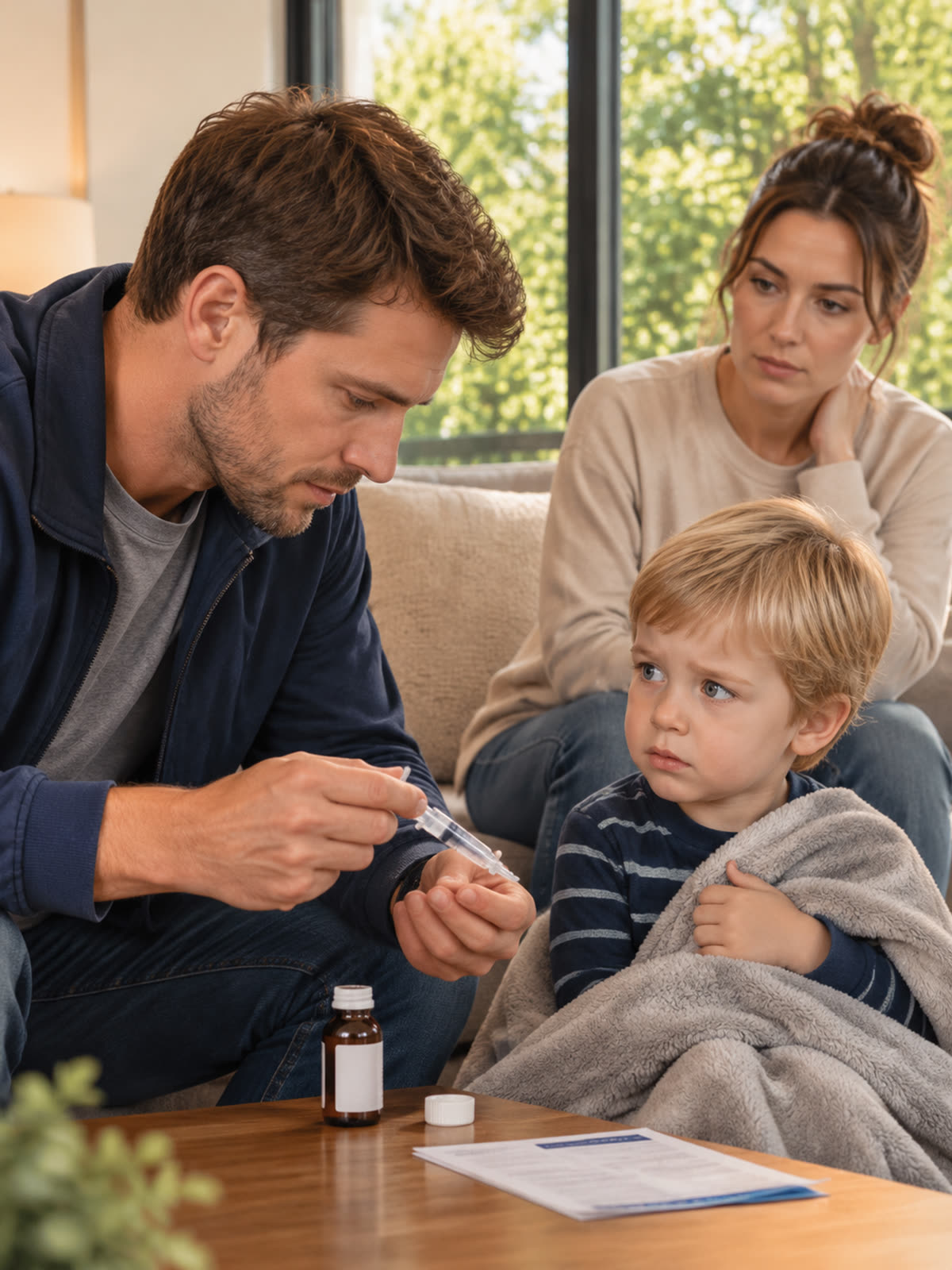
It wasn’t effortless. It took three attempts, a cartoon video, and a cracker before Silas swallowed the medicine. But he swallowed it. Trent had read the instructions, measured the dose, and worked through our toddler’s refusal. I stayed seated through the whole thing. The task hadn’t become mine simply because it took patience or because Silas objected.
On Monday morning, Trent arranged his own transportation to Miller’s. I didn’t ask how he got there. Not asking felt surprisingly good. His car needed collecting, and he had handled getting himself to it. I didn’t have to know every detail of the arrangement for it to happen. There was no schedule for me to build around it and no ride for me to provide.
The following week didn’t bring a dramatic transformation. That was probably the point. Trent learned the pediatrician’s name. He downloaded the daycare app. He put a red washcloth into a load with Silas’s pajamas and ruined the laundry. I considered that educational. Learning how the house worked involved actually doing the things that kept it working, including doing some of them badly at first.
There wasn’t one grand gesture that erased the weekend. There were the ordinary things: knowing the doctor’s name, having access to the daycare information, and dealing with a load of toddler laundry. Those were the things I had asked him to learn. They weren’t extraordinary accomplishments. They were pieces of our daily life that had too often rested with me.
The next Saturday, I came downstairs expecting the usual question about breakfast. Instead, Silas already had his sneakers on and was carrying his stuffed dinosaur. Trent stood at the refrigerator, holding the grocery list. "Where are you two going?" "Follow-up appointment. Then groceries." He checked the list. "We need milk." "Almost." He looked again. "Bananas."
Silas raised both arms. "Nanas!" Trent laughed. "Apparently bananas." Outside, he opened his own car. The spare car seat was installed in the back—the same seat I had been grateful to find beside the Christmas decorations. Now it was in Trent’s vehicle, ready for him to take our son to an appointment and then go grocery shopping.
He settled Silas into the seat and drew the straps over his shoulders. Then he stopped. One strap was twisted. My feet almost started carrying me toward the car before I caught myself. I stopped moving. Trent studied the diagram on the side of the seat. The answer wasn’t something I needed to deliver to him. He could look at the instructions.
He unbuckled Silas, straightened the strap, and started again. Click. Then he checked the chest clip and closed the door. Before climbing into the driver’s seat, he looked toward me. He didn’t wave as though he had just achieved something remarkable. Good. He hadn’t. He was taking his child to an appointment and picking up groceries.
That was parenting. I went back inside. On the kitchen table, my phone lay beside a fresh cup of coffee. I sat down and drank it while it was still hot. For once, I hadn’t followed them out to fix the strap, explain the next step, or make sure every answer was delivered before a question could arise.
Then I turned my phone facedown.
Disclaimer: This story is a work of fiction inspired by real-life themes. Names, characters, places and events are fictionalized, and any resemblance to real persons is purely coincidental. Images are for illustration purposes only.
