

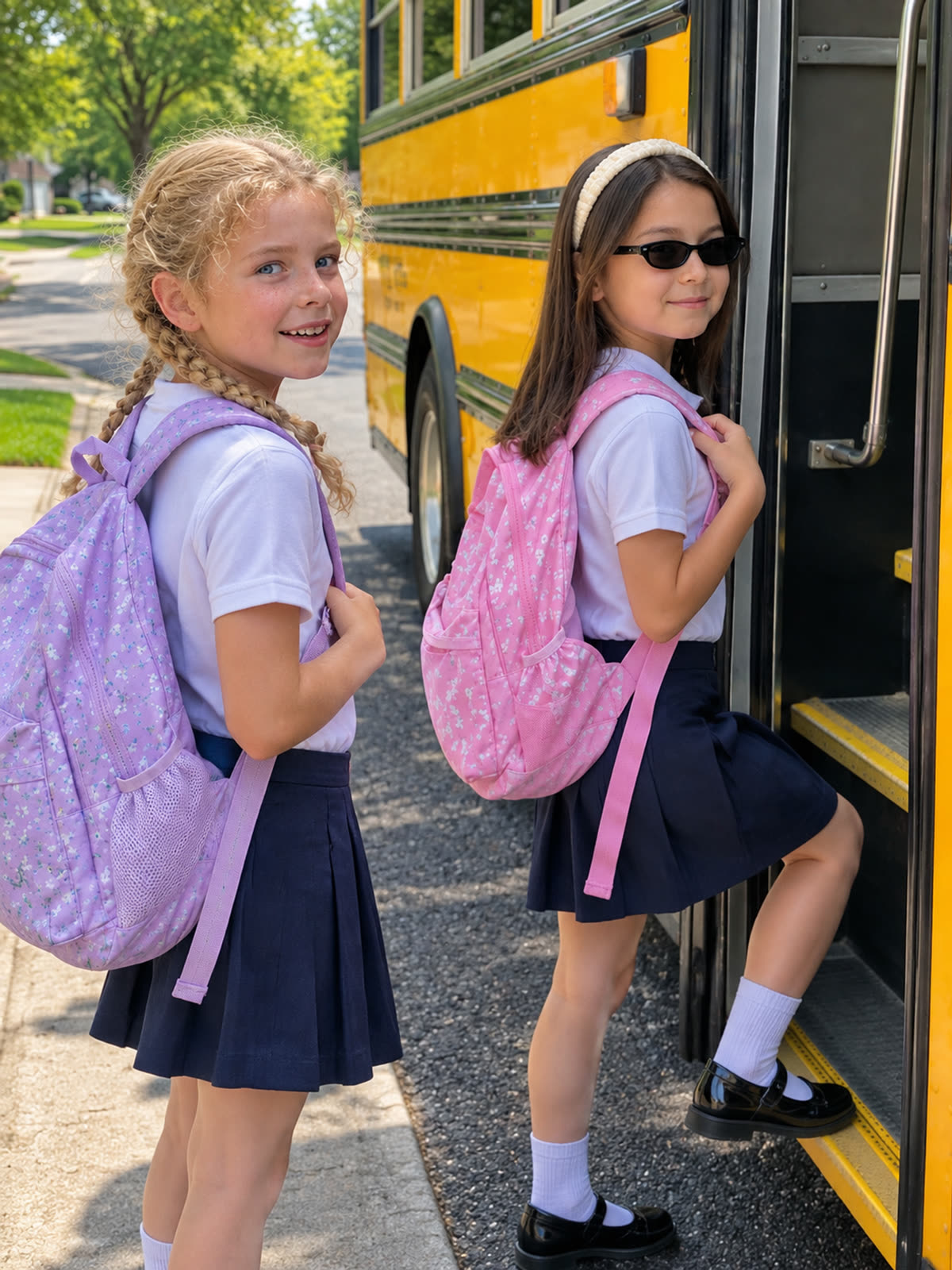
PART 1 — The Girl Who Never Took Off Her Sunglasses
My daughter’s best friend wore sunglasses through dinner, during sleepovers, and even while brushing her teeth. If she needed to remove them, she made certain nobody was watching. For months, I wondered about the little girl behind those dark lenses without asking questions that were not mine to ask. Then some boys at school pulled the glasses from her face. Anna came home sobbing, barely able to explain what had happened. When she finally told me what she had seen, I thought I understood why she was so distressed. I had not yet heard the part about why Sofia no longer trusted her.
The first thing Sofia did after moving into the house next door was inform my daughter that there was something wrong with her chalk house. "Your windows are on the roof," she said. Anna put both hands on her hips, entirely untroubled by the criticism. "They’re for birds." I watched from our porch with a laundry basket in my arms as Anna added a tiny doorway halfway up the wall. "For short birds." Sofia laughed so hard that her chalk fell from her hand. They had known each other for perhaps five minutes, and already they had found something wonderfully ridiculous to share.
By lunchtime, they were best friends. Sofia was seven, the same age as Anna, and had arrived at the beginning of June. She was polite, funny, and quite certain that board games should be played according to her instructions. She also wore sunglasses everywhere. Initially, that last detail hardly caught my attention. It was summer, after all. The girls spent much of their time outside, racing their scooters and filling our driveway with chalk villages. Sunglasses seemed no more remarkable than the other things children brought along when they expected to spend the day in the sun.
Then I began noticing them inside the house. Sofia kept them on while eating lunch and watching cartoons, and she was still wearing them one afternoon when she helped me roll cookie dough. "Careful," I told her. "You’ll get flour on your glasses." She simply rubbed the lenses with her sleeve. "That’s okay, Mrs. Suzana." I smiled and let her continue helping. Still, I found myself wondering. It was not the glasses themselves that puzzled me so much as the consistency. No matter what the girls were doing, Sofia never seemed willing to let anyone see her without them.
My husband, Harry, was away serving in the army, and Anna missed him terribly. She seldom said so directly. Instead, she collected ordinary things she wanted to tell him about: a crooked carrot from our garden, a bird that had stolen a cracker, the squeaking wheel on her scooter. These small happenings became the pieces of home she saved for their conversations. During one scheduled video call, Harry asked how she had been spending her days. "Mostly scooter racing, Dad." "Who’s winning?" "Sofia. But her scooter cheats." Beside her, Sofia immediately objected. "It does not!"
Harry laughed at their argument. "I wish I could hear those races." Anna glanced at me, then at the little digital recorder he had given her before leaving. She said nothing about it during the call. That afternoon, however, she took the recorder outside with her. At the time, I did not connect that quiet decision with anything beyond her father’s passing remark. There were scooters to race and another summer afternoon to fill. Only later would I understand what the girls had begun collecting, and how much of their friendship had found its way into those recordings.
By July, Sofia was at our house so often that her presence at the kitchen table felt completely natural. She ate with us in her sunglasses, helped clear things away without being reminded, and once offered Anna three crayons after hers broke. I saw the considerate little things she did as clearly as I noticed her certainty over board games. Whatever lay behind the glasses, it did not stop her from reading, running, laughing, or beating my daughter at almost every game in our cupboard. Most of the time, the girls were simply two friends who could not wait to spend another day together.
The sleepover made me more curious. The girls assembled a blanket fort, ate popcorn, and settled in for two movies. Sofia kept her sunglasses on through all of it. Nothing about the evening persuaded her to take them off, not the dimmer surroundings or the familiar rooms or the fact that she was staying with a friend. I did not challenge her. I kept noticing, though, because the glasses seemed to belong to every part of her day. What had first looked like an ordinary summer habit was clearly something she took far more seriously.
She wore them when the girls changed into their pajamas. She wore them while brushing her teeth. When I checked on them at midnight, Anna was asleep, and Sofia was curled beside her with those same dark glasses still covering her eyes. I stood there looking at the two girls, struck by how carefully Sofia maintained a boundary that neither of us fully understood. There was no reason to wake her or disturb the quiet room. I left them sleeping. The following morning, after Sofia had gone home, I finally asked Anna the question that had been on my mind.
"Have you ever seen Sofia without her sunglasses?" "No, Mom." "Not once?" Anna shook her head. "Sometimes she takes them off, but I have to turn around." I stopped wiping the counter. "Why?" "She says, ‘Don’t look yet.’" "And you turn around?" "Of course!" Anna looked genuinely bewildered that I would need to ask. "She asked me to." To my daughter, there was no mystery in her own behavior. Sofia had asked for privacy, and Anna had given it to her. The explanation was as straightforward as that, even if it left my original curiosity unanswered.
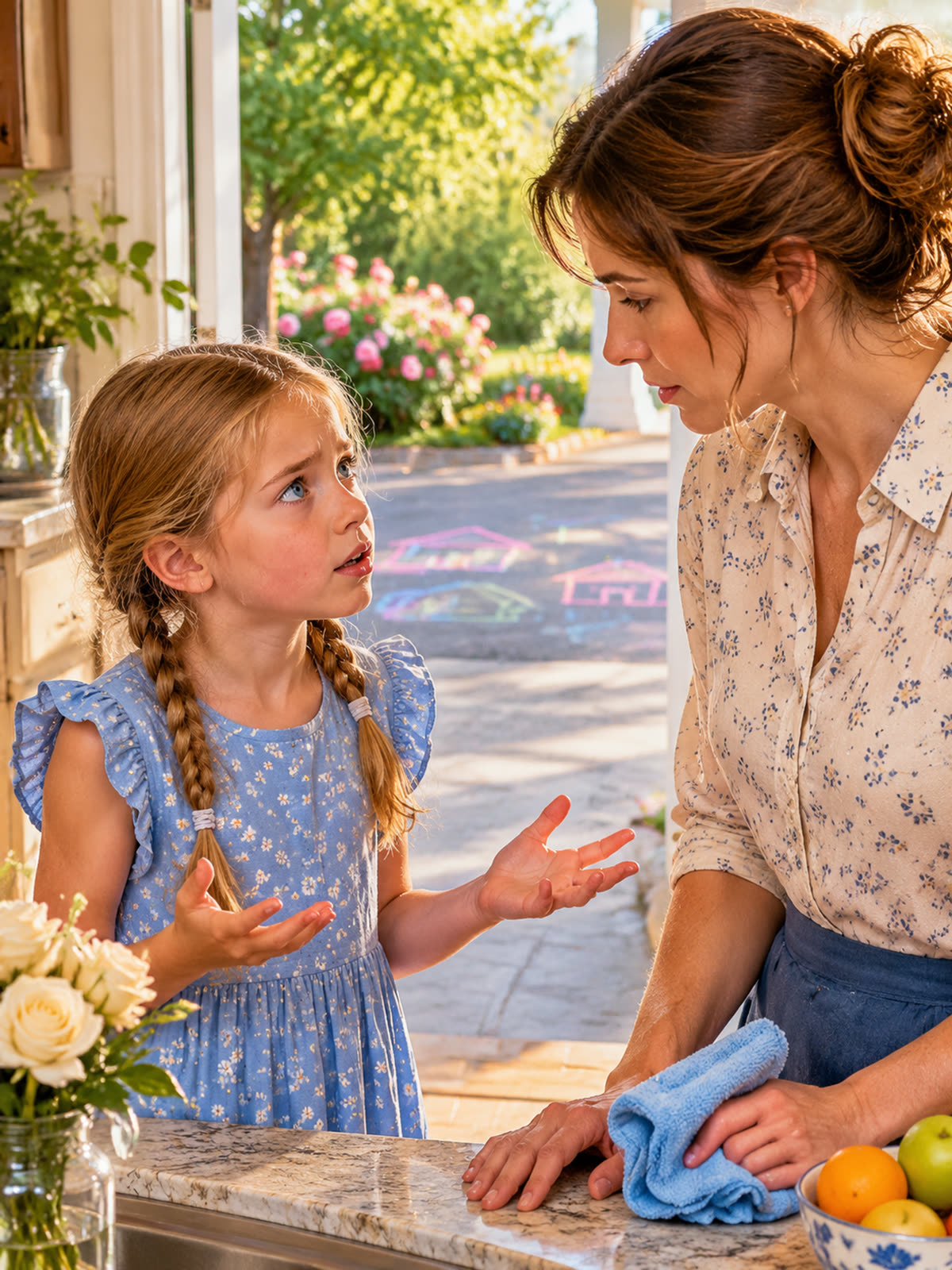
I thought about what Anna had told me and decided to leave the matter alone. Sofia’s parents knew their child. Whatever the sunglasses meant, they were handling it, and I had no reason to turn her visits into an investigation. She was happy in our house. She and Anna played well together, disagreed over games, and found their way back to laughter. The most important thing I knew about her was that she had become my daughter’s closest friend during a summer when Anna badly missed her father. The glasses did not change any of that.
In September, the girls began first grade at the same private school. Anna wore her navy skirt, white polo, and new black shoes. Sofia had the same uniform, along with a smaller pair of darker sunglasses that sat close to her face. Before the bus arrived, her mother adjusted them carefully. Seeing that small gesture reassured me. This was plainly not something Sofia was doing without her parents’ knowledge, and the school must have approved the glasses as well. I let the question settle where I believed it belonged—with the adults who already understood the reason.
For nearly three weeks, school seemed to be going well. Anna came home with stories about spelling tests, cafeteria pizza, and the other children in her class. Sofia remained part of those stories, just as she had been part of nearly every summer afternoon. Then another name began appearing: Tyler. At first, he was simply another classmate Anna mentioned. But when she described the questions he kept asking Sofia, it no longer sounded like an ordinary detail from the school day. His curiosity was not ending when Sofia made it clear that she wanted him to stop.
"Tyler keeps asking Sofia about her glasses, Mom." "What does Sofia say?" "She tells him to stop." "Does he?" Anna shook her head. I meant to ask their teacher whether the teasing was continuing. It was one of those things I knew I should follow up on, and I wish I had done it that very day. Sofia had already answered as much as she wanted to answer. She should not have needed to keep defending that choice. At the time, however, I did not understand how quickly those unwanted questions were going to turn into something worse.
The following Tuesday afternoon, Anna came home crying. She was gasping so hard that her first words were almost impossible to understand, and one backpack strap hung loosely from her elbow. "Mom!" I crossed the living room toward her. "What happened, sweetie?" She caught hold of my shirt. "They did it!" "Who did what?" "The boys! They took Sofia’s glasses!" I put a hand on her shoulder and waited, trying to give her enough time to breathe. Her distress was so complete that I could not yet tell what had happened after the glasses were taken.
"Where is Sofia?" "Her mom came and got her." "Was she hurt?" Anna nodded, then shook her head. "I don’t know!" I sat her down on the couch. "Start at the beginning." It took patience to separate the story from her sobbing. I wanted answers immediately, but rushing her would not make the words come any more easily. She was trying to explain something that had frightened and upset her, and she could barely keep hold of one part before another overwhelmed her. Slowly, the account of recess began to emerge.
Tyler and two other boys had followed Sofia behind the play structure. They wanted to see her eyes and kept demanding that she show them. Sofia told them to leave her alone. It should have ended there, with a simple request that needed no further explanation. Instead, Tyler laughed. Then he reached toward her face and snatched away the sunglasses she had been so careful to keep on. Anna said Sofia screamed. The bright sunlight made her clamp her eyes shut, and for a moment she could do nothing but stand there without the protection she had depended on.
When Sofia opened her eyes, the boys stared. One of them laughed. Another began copying the way her eyes moved. Anna tried to get the glasses back, and a teacher heard the shouting and hurried over. By then, Sofia was crying so hard that she could not explain what had happened. As Anna told me this, the glasses were no longer a mystery I had wondered about from a distance. They had been taken from a frightened little girl who had asked to be left alone. But even then, sitting beside my sobbing daughter, I had not heard what made Anna afraid that Sofia would never trust her again.
PART 2 — What Anna Had Promised Not to Share
I pulled Anna close. "Those boys had no right to touch her." "Yes, Mom." She buried her face against my shoulder, and for a moment I thought she might simply need to cry before she could say anything more. Then she whispered something so quietly that I almost failed to catch it. "Mom, her eyes wouldn’t stay still." I gently raised her chin. "What do you mean?" She was not asking out of the idle curiosity that had followed Sofia around the playground. She was trying to understand what she had seen happen to her friend.
"They kept moving back and forth. Sofia tried to look straight at me, but her eyes kept moving." Anna’s lower lip trembled as she remembered it. "She couldn’t make them stop. And Tyler started copying her." I kept my voice steady. "That doesn’t mean something terrible happened to her eyes today, sweetheart." "But the boys were laughing." "That was cruel. It wasn’t Sofia’s fault." Whatever explanation lay behind Sofia’s eye movements, there was nothing uncertain about the boys’ behavior. They had frightened her, taken something she needed, and laughed when she could not control what they were seeing.
Anna wiped her nose and began worrying at the cuff of her sleeve. I could see that she had not finished. "Mom, she thinks I told them." "Told them what?" She stared down at her shoes. "Her secret." I waited, but the silence did not make it easier for her to continue. "Anna?" She started crying again. Until that moment, I had believed she was overwhelmed by what the boys had done to Sofia. Now I understood there was another fear underneath it. The playground incident was not the only reason she had come home unable to stop sobbing.
A few days earlier, another girl in their class had asked why Sofia never took off her sunglasses. Anna had answered before considering whether the answer belonged to her. "She only takes them off when nobody’s looking." Tyler had been close enough to hear. "So she does take them off," he had said. Anna remembered his laughter afterward, although she had not understood it then. She had not described Sofia’s eyes; she had never seen them. But she had shared something Sofia had trusted her to keep private, and Tyler had listened.
"I didn’t tell him to take them, Mom!" she cried. "I know you didn’t." "I just said it!" I held both her hands. "Anna, you shouldn’t have shared something Sofia wanted private." She nodded miserably. "But Tyler chose to grab her glasses, Mom." "That was his decision, not yours," I said. I wanted her to understand both things without confusing them. Her careless answer mattered. So did the fact that Tyler had made his own cruel choice. Admitting one did not mean she had to take responsibility for the other, even though the two now felt tangled together.
Anna looked at me. "After the teacher came, Sofia asked if I told." "What did you say?" "Nothing." "Why?" "Because I did." She dissolved into sobs again. Her silence had not protected Sofia, and it had not made Anna feel any less guilty. She knew she had spoken about something her friend wanted kept between them. Now Sofia believed she might have told Tyler everything, and Anna had been too ashamed to explain what she actually said. I took her upstairs, away from the living room where she had first struggled to tell me about the playground.
She sat on her bed with the stuffed rabbit Harry had given her clutched in her arms. "Does Sofia know you told someone?" Anna shook her head. "She just thinks I did." "Why was it a secret?" She hesitated before telling me about a game they sometimes played. When Sofia’s eyes grew tired, she would ask Anna to turn around. Then she would remove her glasses while Anna described things for her. It might be the view outside, pictures in a book, or the imaginary adventures they had invented for their dolls. Anna kept talking, and Sofia listened without worrying about being watched.
"Why didn’t you just sit quietly?" I asked. "Because quiet makes Sofia think I’m looking." That had never occurred to me. I had spent the summer noticing the glasses without understanding the small arrangements the girls had already made around them. "So you kept talking?" Anna nodded. "Sometimes she tells me to make it funny." "What kind of funny?" "Like when I said the squirrel outside was as big as a dog." I smiled. "Was it?" "No. Sofia said I was being ridiculous." For the briefest moment, Anna nearly laughed at the memory.
Then she lowered her eyes again. "She won’t play with me anymore." I was about to reassure her when she reached beneath her pillow and brought out Harry’s little recorder. "There’s something else." She pressed a button. A faint squeaking filled the room, followed by Anna’s recorded voice. "That’s my scooter. It sounds like a mouse." Sofia answered, "A mouse with a broken trumpet." Both girls burst out laughing on the recording. Anna stopped it, leaving the room quiet again. The contrast between that easy summer laughter and the child sitting beside me was painful.
"We were making something for Daddy." I looked at her. "What?" She opened a notebook whose cover carried five words in uneven purple writing: THE SUMMER YOU MISSED, DADDY. Inside, she had made a list. Scooters. Ice cream truck. Rain on the porch. Mom singing while washing dishes. I looked from the page to the recorder. "You recorded all these?" Anna nodded. "Daddy said he wished he could hear our summer." His remark during the video call had become something much larger than I had realized. The girls had been saving the sounds of our ordinary days.
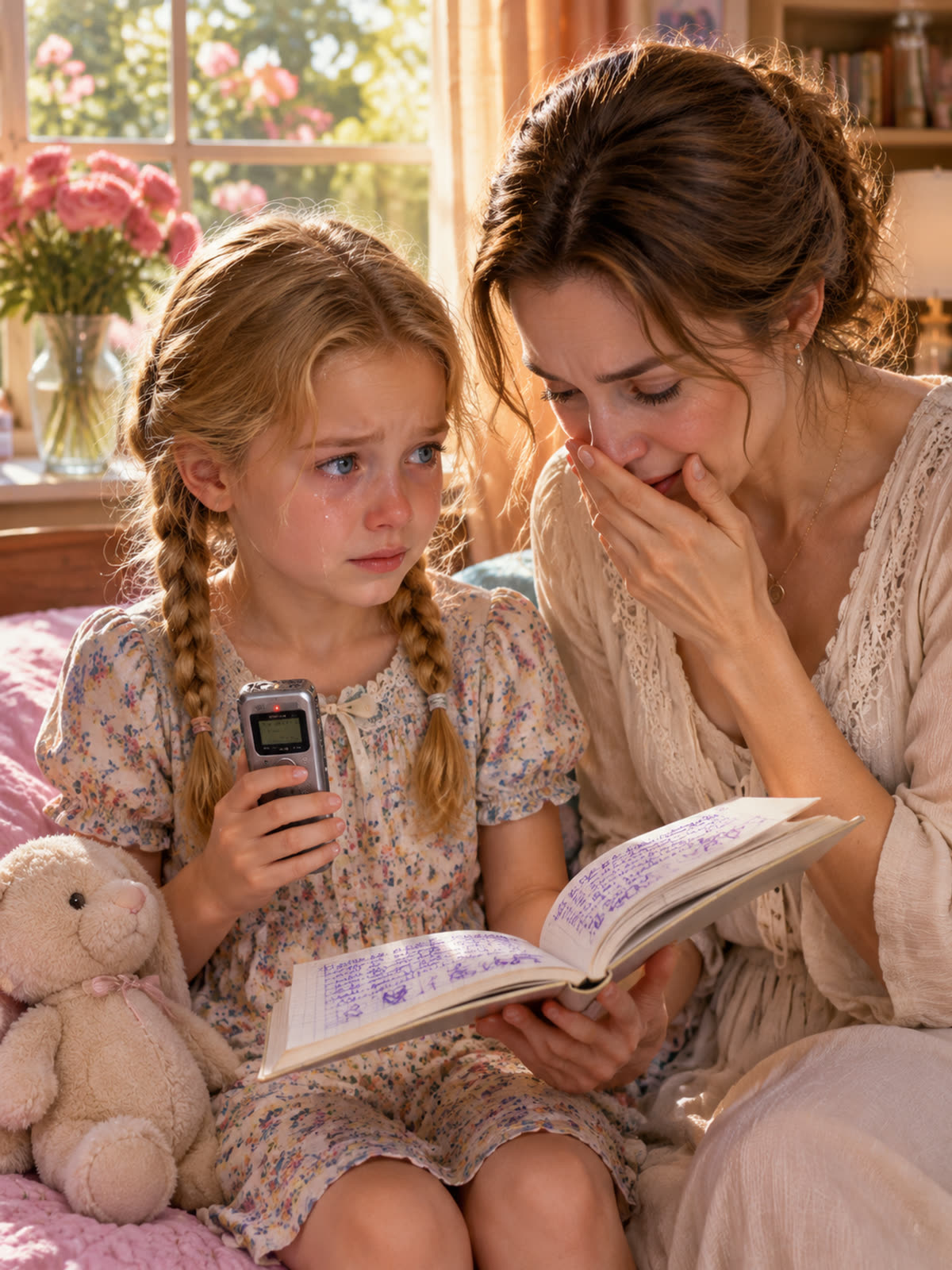
Anna pressed another button, and the ice-cream truck’s familiar tune came out of the recorder. Then Sofia announced, "Anna is running because she thinks the ice cream will escape." From somewhere in that summer afternoon, my daughter shouted, "It might!" I laughed despite myself. They had turned a simple race for ice cream into something they could send to Harry, complete with Sofia’s commentary. I had been there for the summer they were recording, yet I had not known they were keeping it this way. Their collection held the things Anna wanted her father to hear, not merely hear about.
Another recording captured me humming as I worked in the kitchen. Sofia whispered, "Your mom sings the wrong words." Anna answered, "Don’t tell her." I covered my mouth with one hand. They had been collecting us without my understanding what they were making: the kitchen, the scooters, the interruptions, the jokes that might otherwise disappear as soon as the afternoon ended. Harry was absent from those moments, but the girls had found a way to save some of them for him. Sofia had not simply been keeping Anna company. Her voice had become part of the summer Anna was preparing to share.
I thought back to the way Anna stored up small stories for their calls. The crooked carrot, the stolen cracker, the squeaky wheel—none of those things had seemed important on its own. Together, they were the life she wanted her father to remain part of while he was away. The recorder had given her another way to bring him into it. And now the friend who had helped her make that gift thought Anna had exposed something she had wanted hidden. The recordings did not erase what Anna had said at school. They made it clearer what their friendship had held before that happened.
Anna moved through the recordings, choosing another. "Listen to this one." At first there was a rustling sound. Then I heard Sofia. "Don’t look yet." "I’m not," Anna’s recorded voice answered. After a pause, Sofia said, "Tell me what’s outside." I sat listening beside my daughter, knowing now what those words meant. Sofia had taken off her sunglasses and was trusting Anna to keep her back turned. This was the game Anna had just described, preserved in the same little machine that held scooter races and the ice-cream truck. Nothing about it had sounded remarkable enough to the girls to stop recording.
Anna began describing the backyard. "The roses are pink. There’s a bird on the fence. He’s very fat." "How fat?" Sofia asked. "Like a potato with wings." Sofia giggled. I could hear how naturally they had found their way through that moment. Anna did not need to see Sofia’s eyes to make her laugh. Sofia did not need to explain herself before asking for company. One girl talked, the other listened, and the ordinary view outside became another small joke between them. The arrangement had been simple enough for two seven-year-olds to understand without making a lesson of it.
The exchange brought me back to Anna standing at the counter after the sleepover, looking puzzled when I asked whether she really turned around. Of course she did. Sofia had asked her to. I had been searching for an explanation for the glasses while my daughter had been responding to the person wearing them. She had understood the practical kindness of keeping her eyes elsewhere and her voice going. That did not make her later mistake smaller. If anything, it showed why Sofia might have felt so wounded. Anna was the friend who had already demonstrated that she could be trusted.
I stayed still beside her, listening to the recording. The laughter had not fixed the hurt in the bedroom, but it had given that hurt a shape I could understand. Sofia had allowed herself to relax with Anna in a way she apparently did not around other children. She had made requests, and Anna had respected them without treating them as strange. Then a careless sentence had traveled beyond their friendship. What Anna had meant as an answer to a classmate’s question had become part of something frightening for Sofia, who could not know exactly what had been said or intended.
There was more on the recording. After the joke about the bird, Sofia asked something that made me stop thinking about the boys, the playground, and all the explanations I still did not have. I looked at the little recorder in Anna’s hand. Until then, I had heard the easy laughter of two children making a gift for a father who was far away. Now I heard how carefully Sofia had been deciding what could be included in that gift. Her voice came out clearly, carrying a question whose answer suddenly seemed to matter more than anything else: "Are you going to tell your daddy about my glasses?"
PART 3 — The Choice That Belonged to Sofia
Anna’s recorded reply came immediately. "No. You said not to." "Good." Then Anna asked, "Want to hear about the bird again?" Sofia answered, "Only if he’s still a potato." I stared at the recorder. My daughter had understood something I had spent the summer wondering about without ever reaching the right conclusion. Sofia did not need someone to solve her mystery. She needed someone willing to let it remain hers. The recording preserved that understanding as clearly as it preserved the laughter. It also explained why Anna’s thoughtless answer at school could feel like such a serious betrayal to her friend.
That evening, I called Sofia’s mother and told her what Anna had described. She was quiet before answering. "Sofia has nystagmus. Her eyes move involuntarily, and she’s sensitive to bright light." I listened. "The tinted glasses help her. She also feels more comfortable wearing them around other children." At last, the things I had noticed had an explanation, but the explanation did not change what Sofia should have been allowed to decide for herself. Her glasses helped her, and she wanted to wear them. Neither fact had entitled the children at school to take them away.
"Has the school known all along?" "Yes. Her teacher has the accommodation paperwork." Sofia’s mother sighed. "Unfortunately, I didn’t know the questions at recess had gotten this bad." I told her that Anna had accidentally shared something private. "I’m sorry," I said. "Thank you for telling me." Then she added, "Sofia’s very upset. She thinks Anna told Tyler everything." "Anna wants to apologize." "I know. But Sofia needs a little time." I understood. Wanting to put things right was not the same as being entitled to an immediate chance to do it. Sofia had already had too many choices taken out of her hands.
The next morning, I contacted the school. Sofia’s mother had already asked for a meeting and invited me to join her. The principal acknowledged that the boys had repeatedly questioned Sofia about her sunglasses and that the school should have recognized the problem sooner. Tyler would face consequences, playground supervision would increase, and Sofia would not be made to explain her condition to the class. Those responses mattered. She deserved to return to school without being expected to turn what had happened into a public explanation of herself. Still, none of those arrangements could repair what had broken between the girls.
Anna wrote Sofia a note. She erased it three times before she finally handed it to me. It read: Sofia, I told someone you take your glasses off when nobody looks. I’m sorry. I didn’t tell Tyler to take them. I should have kept our secret. I still want to be your friend. Anna. At the bottom, she had drawn two scooters, one blue and one purple. The note did not hide behind what Tyler had chosen to do. Anna had put down the part that belonged to her, as plainly as she knew how, and left Sofia room to answer.
With her mother’s permission, Anna left the note at Sofia’s door. Then there was nothing left to do but wait. One day passed, followed by another. Anna stopped taking her scooter out. The chalk houses disappeared from her afternoons, too. She even stopped asking when Harry would call. I could not make Sofia ready to speak before she was ready, and I could not give Anna an answer that belonged to someone else. Her apology had been delivered. Whether Sofia wanted to return to their friendship was a separate decision, and waiting for that decision was hard.
I kept thinking about the two scooters Anna had drawn beneath her words. So much of their summer had been built around those ordinary things: racing along together, arguing over whose scooter had an advantage, laughing at the wheel that sounded like a mouse. The same memories now sat inside the recorder, mixed with Sofia’s jokes and the sound of their easy companionship. Anna had made a mistake, but she had not stopped caring about her friend. Caring did not tell her what Sofia would decide. It only made the silence after the note more difficult to bear.
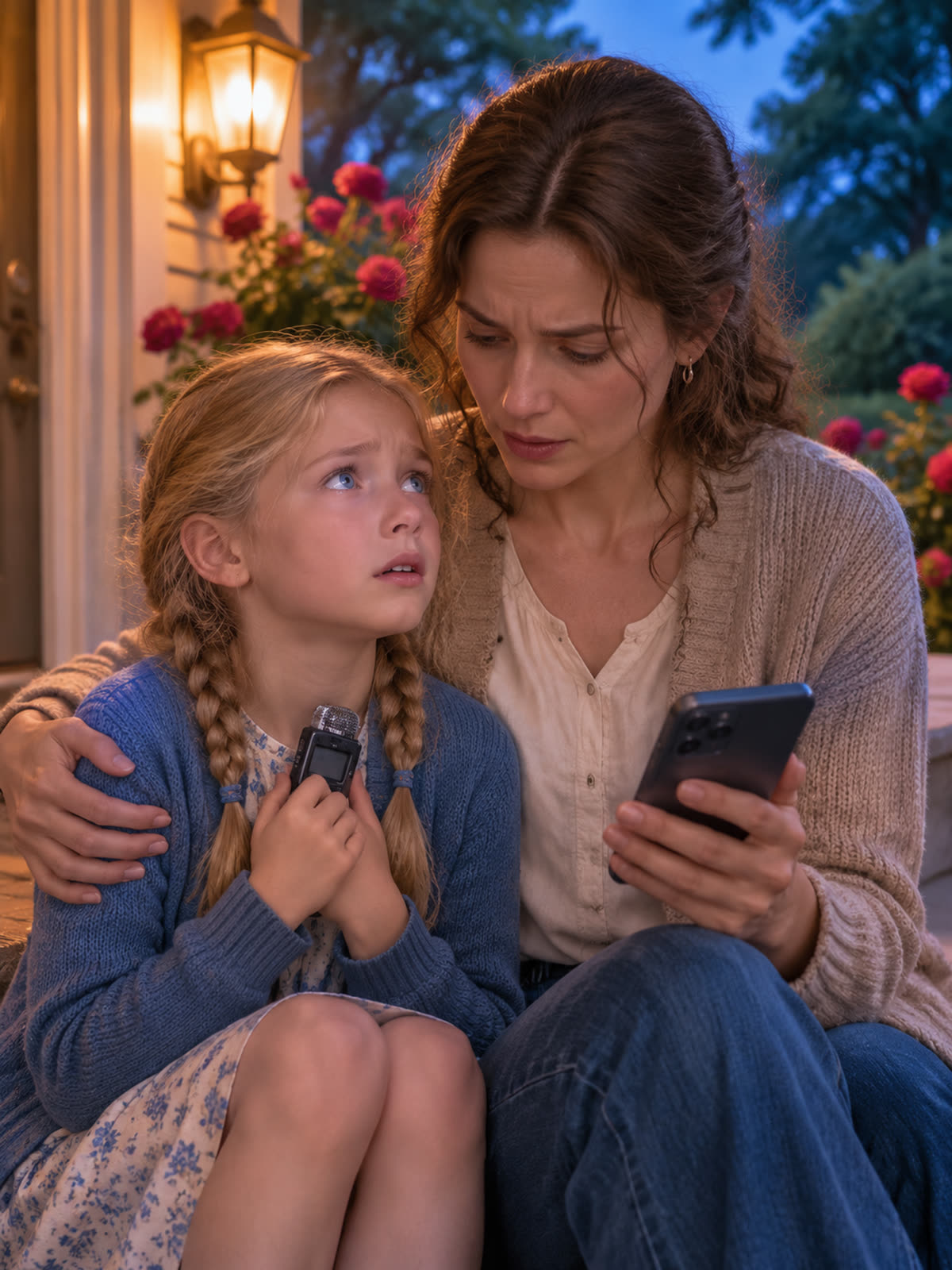
On Friday afternoon, I found Anna sitting on the porch with the recorder in her lap. "Did you send Daddy the summer recordings?" I asked. She shook her head. "Why not?" "Sofia’s in them." I sat beside her. "Yes." Anna moved her thumb over the buttons. "I don’t want to send her voice if she’s mad at me." I put my arm around her. She had wanted so much to share those sounds with Harry, yet now she was unwilling to send them without knowing whether Sofia wanted her voice included. This time, she was stopping to consider what belonged to her friend.
We remained on the porch until the light came on. There was no promise I could make that would settle things for her. Sofia might read the apology and still need more time. She might understand what Anna had meant and remain hurt by what had happened. All I could do was sit beside my daughter while she held the little recorder that contained so much of what she missed. Then my phone buzzed. The message was from Sofia’s mother: Sofia read Anna’s note. She says she’d like to see her tomorrow.
I turned toward my daughter. "Anna?" She lifted her head. "Sofia wants to talk to you." Anna’s eyes widened. "Is she still mad?" "I don’t know, sweetheart." She hugged the recorder against her chest. "What if she doesn’t want to be my friend?" I wished I could tell her that an apology always brought the answer we wanted. I wished I could promise that the next morning would put everything back where it had been. But Sofia’s choice was not mine to make, and it was not Anna’s either. We would have to let her speak for herself.
Saturday morning, Sofia waited beside her purple scooter. Anna approached slowly. After the days of silence, the sight of them together again did not make it clear what would happen next. There was still the hurt between them, and there were still words Anna needed to say without asking a note to say them for her. "I’m sorry," she whispered. Sofia adjusted her sunglasses. "Why did you tell?" "I wasn’t thinking." It was a small answer, but it was the answer Anna had. She could not turn the moment at school into something more careful than it had been.
"I thought you were the only one who wouldn’t." Anna stared at her shoes. "I know… I’m sorry." Neither girl moved for a moment. Sofia had trusted Anna in a very particular way. She had let her hear requests she did not want repeated and had believed she could remove her glasses without being watched. Anna could not undo the sentence she had spoken, or the fact that Tyler had heard it. She could only stand there and acknowledge what Sofia was telling her. For once, there was no funny description to soften the silence between them.
Then Sofia noticed the recorder. "Did you send your daddy our summer?" Anna shook her head. "Not without asking you." Sofia considered that. The answer did not erase what had happened at school. It did, however, give her something that had been missing from the playground incident: a choice about herself. Her voice was in those recordings, and Anna had waited rather than assuming she could send it. The summer they had made together was still there, but Anna had not treated that shared summer as something she was free to use however she wanted.
"Can we listen first?" They sat on the porch steps, and soon the sound of their own recorded laughter filled the air. Sofia giggled. "Your scooter really does sound like a mouse." "A very fast mouse." The little joke was familiar, but hearing the girls answer each other again felt different from hearing them on the recorder. This was not an afternoon saved from before everything went wrong. They were sitting together now, listening and choosing what to do next. The recording had brought back a sound they both recognized, and this time their laughter was not only coming from the machine.
Sofia nudged Anna. "You can send it." Anna looked at me. "Can we send Daddy the recordings now?" "Of course, sweetheart." That afternoon, we moved the files to my phone and sent them to Harry. The gift that had begun with his wish to hear the scooter races finally reached him with both girls’ permission. It carried the ice-cream truck, the rain, my imperfect kitchen singing, and the ordinary summer sounds Anna had not wanted him to miss. It also carried Sofia’s voice, not because anyone had taken a choice away from her, but because she had said yes.
Harry called that evening. "I heard everything," he told them. "Even that squeaky scooter." Anna beamed. "Did you hear Sofia?" "Every word. Thank you both." Sofia smiled. I thought of the notebook with its uneven purple letters and of Anna taking the recorder outside after that earlier call. What had seemed like a small response to something her father said had become a gift neither girl could have made in quite the same way alone. Harry had heard their summer, including the laughter that had filled so many of the days he could not spend with us.
Afterward, rain began tapping on the porch roof. Anna picked up the recorder again. "Ready?" Sofia nodded, and Anna pressed the button. "Do you think Daddy can hear the big drops?" "Only if you stop talking," Sofia whispered. Anna giggled. From the kitchen, I watched them trying desperately to be quiet. They were together on the porch again, with the rain overhead and another ordinary moment becoming something they could share. Sofia still wore her sunglasses. Anna still had a scooter that squeaked. Neither thing needed to change for the afternoon to belong to both of them.
Their effort to stay silent did not last long. The recorder was on, the rain kept falling, and the girls could not keep their laughter out of it. I had spent so much of the summer wondering what Sofia was hiding that I had nearly overlooked what she was asking for: the right to decide what other people saw, what they were told, and when she was ready. Now Anna was learning to ask instead of assume, and Sofia had chosen to sit beside her again. From the kitchen, I listened as their silence broke. What would Harry hear next?
Disclaimer: This story is a work of fiction inspired by real-life themes. Names, characters, places and events are fictionalized, and any resemblance to real persons is purely coincidental. Images are for illustration purposes only.
