


PART 1 — The Daughters He Left Behind
Richard waited for the courthouse doors to close behind us before declaring that our four daughters no longer belonged in his family. “I’ll pay the court-ordered child support,” he said on the steps above downtown Chicago. “But neither you nor those girls will ever touch another red cent of the Sterling family money.” He sounded exactly as he did when rejecting a supplier’s proposal: composed, businesslike, entirely unmoved. All four girls stood close enough to hear every word. Gabriella, fifteen and the oldest, searched his face. She had always tried to understand an injury before letting herself feel it. “And what about us, Dad?” she asked. “Do we stop belonging to you today, too?” Richard looked toward the traffic instead of answering. Paula stared down at the steps. Mara held her hands rigidly beside her. Six-year-old Zoe slipped behind me and caught a fold of my trench coat.
At forty-two, after sixteen years of marriage, I had become responsible for helping four children understand a rejection they had never deserved. The divorce gave me primary physical custody, ordinary visitation provisions, and modest child support. Richard had scarcely disputed where the girls would live. He cared far more about having our belongings removed from the family house before the afternoon was over. When we turned away, he called after us. “You’ll come crawling back when you realize what it takes to raise four girls alone.” I wanted to tell him that I had already done most of that work alone. I wanted to remind him whose labor had sustained the company he treated as his birthright. More than anything, I wanted Gabriella to see me defend us. But the girls had endured enough lawyers, whispered arguments, and disappointment disguised as family tradition. A scene would not give them back their security.
I covered Zoe’s fingers with my hand, loosened her hold on my coat, and guided the girls toward our waiting taxi. Five overfilled suitcases consumed the trunk and part of the front seat. We crowded into the back and headed along I-90 toward O’Hare. For several miles, no one spoke. Gabriella folded her arms and watched Chicago pass. Paula read highway signs while Mara leaned against her sister. Zoe pressed into my side. “Are we poor now?” she asked, so quietly the traffic nearly swallowed her voice. “No, sweetheart.” “Dad said we don’t get any money.” “Your father was talking about his family’s money. He was angry, and he should never have said that in front of you.” Gabriella turned from the window. “He meant it.” I would not insult her understanding by pretending otherwise. “Yes,” I said. “He meant to hurt us.” “Did it work?” Mara asked. “It hurt,” I said. “That doesn’t mean he gets to decide what happens to us next.”
Paula looked up. “Are we really moving to Savannah?” “We’re staying with Aunt Sarah while we settle in. She found us a townhome.” “And school?” “We’ll handle school. We’ll handle the rest one thing at a time.” I kept my voice steady while privately sorting through everything ahead: registration forms, medical records, furniture, interstate travel, divorce documents, and troubling financial records from the manufacturing business. We were not leaving because I wished to evade responsibility. We were leaving a place where my daughters had slowly learned to feel apologetic about not being sons. Gabriella had stopped talking about what she learned at the factory. Paula could calculate production costs in her head but hesitated when adults challenged her. Mara concealed her furniture sketches as though enjoying design required permission. Zoe still asked why her grandmother missed her performances. Their hurt had accumulated through years of neglected accomplishments and attention reserved for a grandson who had not yet arrived.
Adele Sterling, my former mother-in-law, had established those expectations early. At Gabriella’s birth, she stood beside my hospital bed and predicted that our next baby would be a boy. After Paula, she asked when we planned to “try seriously.” She barely visited after Mara arrived. When Zoe lay beside me in her bassinet, Adele looked at her fourth granddaughter and wondered aloud who would inherit the business. Richard insisted that his mother was traditional, not cruel. “She loves them in her way,” he would say. Yet her particular version of affection seldom included school events or an introduction that did not emphasize Richard’s four daughters as though an explanation were necessary. He rarely contradicted her. Every unchallenged remark taught our children a little more about the disappointment they supposedly represented. They did not need anyone to explain the preference directly. They had lived beneath it for years.
The deepest irony was that Sterling Custom Millwork might have failed without me. When Richard and I met, his family owned a struggling Rockford workshop with old equipment, unpaid bills, and managers whose confidence exceeded the available cash. I put my savings into it. My parents sold part of our Southern farmland and invested the proceeds because they trusted what I believed the business could become. For sixteen years, seventy-hour weeks were ordinary. I created product lines, secured commercial contracts, managed payroll, and learned the factory floor well enough to recognize machinery problems before supervisors reported them. Alongside the employees, I helped grow one failing workshop into two modern facilities employing 180 people. The ownership records reflected some of that work: I held 43 percent, Thomas held 24 percent, and Richard owned 33 percent. Adele nevertheless regarded the surname as more important than the percentages. In her mind, only a male successor could preserve the company properly.
She believed Richard had finally supplied that successor. Leo was three, and Richard claimed he was his biological son. His mother, Vega Vance, was a fashionable interior designer with wealthy clients. Richard’s affair with her had effectively finished our marriage long before the decree. A DNA report supposedly confirmed Leo’s paternity. That evening, Adele planned to receive sixty guests at her Lake Forest estate and present the boy with the Sterling signet ring. Richard had spoken about the ceremony with an enthusiasm I could not remember hearing at our daughters’ birthday celebrations. Still, the party was not the only reason I had left the courthouse without arguing. Several weeks before the divorce, while examining corporate records, I had found a resolution claiming that I had assigned my entire ownership interest to Richard. The signature resembled mine closely enough to survive a hurried glance. There was only one problem: I had never signed it.
Nor had I authorized anyone else to sign for me. I took a copy to Rachel Adams, a corporate attorney whose judgment I trusted. After studying the signature, she looked up. “Who knows you found this?” “No one.” “Keep it that way for now.” She instructed me to preserve related records and arrange an examination by qualified forensic specialists. She offered no instant victory and did not suggest that suspicion alone settled the document’s validity. We needed to establish its origin, who had authorized it, and what use someone intended to make of it. “Don’t confront Richard until we understand what they’ve built around this,” she warned. That advice stayed with me while he stood outside the courthouse proclaiming that our daughters would receive nothing. Perhaps he already believed my shares belonged to him. My refusal to argue was not agreement. It was the best way to keep him from realizing what I knew.
At O’Hare, our driver helped unload the five suitcases outside Terminal 1. Gabriella claimed the two heaviest before I could object. Paula checked the boarding passes, and Mara kept hold of Zoe as we entered. Watching them organize themselves hurt in a different way. They were children trying to make a frightening day easier for their mother. I had reassured them that we would manage one task at a time, and now we were doing exactly that: luggage, documents, a line to join, a departure gate to reach. Behind us lay a house we had been instructed to vacate and a family preparing to celebrate someone else. Ahead lay my sister, a smaller home, unfamiliar schools, and responsibilities that would not wait until I felt ready. I kept moving because the girls needed to see that uncertainty did not mean we were lost.
While we waited in line, my phone vibrated. The message came from Teresa, the Sterlings’ housekeeper of ten years: Take the girls and go. Tonight, I am finally opening the envelope I’ve kept hidden for far too long. I read it twice. Teresa remembered the girls’ favorite foods, pressed their uniforms, and stayed beside Zoe after nightmares. During the hardest months of the marriage, she had begun finding chores that kept her nearby whenever Richard or Adele became hurtful. I called immediately, but the ringing ended in voicemail. “Teresa, it’s Claire. We’re at the airport. Call me as soon as you can.” Gabriella watched my face. “Is something wrong?” “I don’t know yet.” That was the truth. I knew about a suspicious corporate document. I knew nothing about an envelope, or whether its contents concerned the company, Vega, or a secret I had never imagined.

Boarding started before Teresa answered. I led the girls down the jet bridge, aware that roughly thirty miles north, Adele’s guests would soon arrive. What followed at the estate reached me afterward through Teresa, Thomas, and statements collected during the investigation. By the time our plane landed in Savannah, the celebration had already veered into something none of its hosts had intended. Adele had filled the ballroom with white flowers and gleaming silver. Business acquaintances, council members, distant relatives, and people who had never asked after our daughters gathered under the chandeliers. The photographs of Gabriella, Paula, Mara, and Zoe had been removed from the mantel. A large oil portrait of Leo in a miniature formal suit occupied their place. The room had been prepared not merely to welcome him, but to display the future Adele believed she had secured.
Vega arrived on Richard’s arm in an ivory silk gown, entirely comfortable beneath the cameras’ attention. Leo, immaculate in a navy blazer, cared more about the miniature crab cakes than the conversations surrounding his inheritance. Thomas sat near the French doors with both hands resting on his cane. He did not join the applause. He remembered Gabriella learning to distinguish wood grain during Saturday factory visits. He remembered Paula calculating material costs faster than experienced accountants and Mara showing him furniture designs drawn at our kitchen table. He loved his granddaughters. What he had failed to understand was that loving them privately did little to protect them from Adele’s public dismissal. While the room celebrated, those memories remained with him, along with the empty places where their photographs had stood.
In the banquet pantry, Teresa waited with an old manila envelope hidden beneath her apron. From there she could see the velvet ring box on the head table and the mantel stripped of the girls’ photographs. Adele raised her champagne flute and declared that they were finally celebrating the family’s “true future.” Thomas stayed silent. Richard brought Leo forward, and Adele opened the box. Then Teresa came through the ballroom doors. “Stop.” Evan, Richard’s younger brother, rose at once. “Get back to the kitchen, Teresa. Don’t make a scene.” She continued until she stood in the middle of the room. “That child is not Richard’s son.” Adele’s glass slipped, struck the table, and shattered against the white cloth. Vega pulled Leo closer so abruptly that he began to cry. Richard moved in front of them. “We have certified DNA results.”
“A test was performed,” Teresa said. “But the sample labeled with Leo’s name did not come from Leo.” She set the envelope on the head table and withdrew a certified courier receipt, timestamped photographs of a home collection kit, and a handwritten account. Evan tried to interrupt. She spoke over him, explaining that he had pressured her to enter the nursery one evening while Zoe slept. Teresa had taken a cheek swab from my daughter, sealed it in the testing vial, and allowed it to be submitted under Leo’s name. Richard stared. “Zoe’s sample?” Teresa nodded. Richard’s own sample had been genuine. The laboratory had identified a biological relationship between him and the other specimen without knowing that it belonged to his daughter. The samples themselves were real. The lie was the identity attached to one of them.
Evan called the account ridiculous. Teresa answered by producing printed messages. They showed that he had threatened to accuse her son Marcus, a former company driver, of involvement in missing cargo. Terrified that Marcus might be prosecuted, she had obeyed. But she had also retained the demands, kit identification numbers, package tracking records, and courier receipt. Thomas asked why she had waited so long. “Because he said he would send my son to prison,” Teresa answered. “And because I have hated myself every day for what I did to Zoe.” Adele ordered everyone to leave. Some guests reached for their coats, but many remained where they were, unsure what to do with what they had heard. Teresa had risked everything by opening the envelope. She had not yet finished emptying it.
She reached inside again. “There is another test.” This document was a private paternity screening dated six months before Leo’s introduction to the Sterlings. It recorded a 99.9 percent probability of paternity, but Richard was not the man named as the father. He took the report, read it, and read it again. Then he turned to Vega. She lowered her eyes. The man identified as Leo’s biological father was Evan Sterling. In a corner of the document, in handwriting recognizable as Evan’s, someone had added five words. Next, we take the company.
PART 2 — What the Envelope Could Not Hide
While the Sterling celebration disintegrated, I was beside a Savannah baggage carousel with four exhausted daughters and five heavy suitcases. Sarah waited beyond the security doors. Zoe spotted her first and ran into her arms. My sister reached toward me with her free hand. “You made it,” she said. I held her longer than I had intended. She had found us a brick townhome, considerably smaller than the house near Lake Forest. Its kitchen table barely accommodated five people, but nobody complained that evening. We ate sandwiches from paper plates because the dishes were packed, and the girls negotiated bedroom assignments with unexpected seriousness about closet space. I kept checking my phone. Teresa had still not called. Richard’s first missed call appeared shortly before midnight. By seven the next morning, there were six more. His eighth attempt lit the screen while I sat at Sarah’s kitchen counter.
Zoe and Mara were discussing who should get the last waffle. Paula wrestled with a tangled laptop charger. Beside her cereal, Gabriella had unfolded a transit map and was tracing the route to her new high school. A message appeared under Richard’s name: Please pick up. Evan played us all. I need to talk to you. For sixteen years, I need you had interrupted almost every part of my life. He needed agreements repaired, financial statements explained, his mother calmed, and his mistakes managed. His emergencies had repeatedly outranked dinners, bedtime, appointments, and sleep. I placed the phone facedown. “Do we have more waffles?” Zoe asked. I found an unopened box in the freezer. For once, Richard could wait while I looked after our children. The ordinary task felt different because I was no longer abandoning it to solve another Sterling problem.
He continued calling all morning. I let each attempt go unanswered. Gabriella eventually glanced at the screen. “Are you going to call him?” “Not yet.” “Because you’re angry?” “I am angry. But that isn’t the only reason.” I sat opposite her at the small table. “Your father has attorneys, relatives, and company officers around him. You and your sisters have me and Aunt Sarah here. I’m not leaving this table just because he has finally discovered that someone lied to him.” She followed a line on the map. “He believed them because they gave him what he wanted.” I could not honestly disagree. The false paternity report had reinforced an existing preference; it had not created it. “We’ll deal with the company and the documents carefully,” I said. “But we don’t have to rush because he wants us to.” She nodded and returned to planning her route.
Within hours, Richard requested another paternity examination, this time with supervised cheek swabs and a documented chain of custody. The results came forty-eight hours later: the probability that he was Leo’s biological father was zero. As suspicions of fraud deepened, Evan submitted to a court-ordered examination. That result supported the earlier private screening. He was Leo’s father. Adele insisted for two days that there must have been an administrative error. Eventually, Thomas asked the question she had avoided. “Are you grieving because Richard isn’t Leo’s father,” he said, “or because you discarded four granddaughters over a fraudulent laboratory report?” He later told me she left without answering. The laboratory deception explained the ballroom disaster, but it did not explain the ownership resolution or the vendor transactions that had troubled me for months. Those required a different investigation.
Independent counsel and forensic accountants began comparing the records. Gradually, a larger arrangement emerged. Evan and Vega had been involved privately for more than five years. When she became pregnant, Evan was carrying heavy debts from a failed suburban property development and wanted to conceal another financial disaster from Thomas. He also knew exactly where Richard was vulnerable. Throughout our marriage, Richard measured himself against the other Sterling men. He wanted his father’s approval and his mother’s admiration. Adele had repeatedly assured him that a son would secure the family legacy. Evan had not invented that insecurity, but he understood how to exploit it. He introduced Vega to Richard at an industry dinner. She praised his judgment, listened to his grievances about being overlooked, and suggested that a successful man deserved a son to carry his name.
By the time Richard admitted the relationship to me, he had persuaded himself that Vega and Leo represented the family he should always have had. Vega already knew Evan was Leo’s father; a private test shortly after the birth had established it. Presenting the child as Richard’s nevertheless offered opportunities neither she nor Evan otherwise possessed. Adele would likely insist on financial support. Vega could obtain a company position. Evan could take advantage of Richard’s authority without exposing his own debts. Zoe’s cheek swab supplied the apparent confirmation. Neither child had done anything wrong. Leo had not chosen the story told about him, and Zoe had not understood that someone was taking something personal from her to sustain it. Two children had been used to support a deception entirely devised by adults. For its financial side to succeed, however, there was another requirement: I had to be removed from the business.
I supervised receivables, payroll, and supplier agreements. Years on the production floor had taught me to compare an invoice with what actually arrived on a truck. Expensive black-walnut orders did not match finished production. Unfamiliar suppliers appeared. Receiving records bore initials I could not identify, while inventory values rose even as usable lumber diminished. Richard said my questions proved I wanted control. When I challenged Vega’s newly created auxiliary marketing position, he accused me of jealousy. Evan suggested that supply-chain procedures had changed and that the divorce was interfering with my judgment. I had begun copying records before finding the share transfer. At first, I thought they documented poor management. I did not yet understand that the discrepancies might belong to a coordinated scheme designed to move money out of the company while discrediting the person most likely to notice.
Evan had formed vendor businesses under associates’ names. Some billed Sterling Custom Millwork for premium timber that never arrived. Others charged for high-quality lumber and delivered cheap construction remnants. Evan approved purchasing paperwork, Vega signed receiving documents, and Richard authorized electronic payments without checking the deliveries. Teresa and Marcus had preserved material linking suspicious invoices to unverifiable shipments. As a driver, Marcus kept duplicate dispatch schedules and freight logs, recording plates, arrival times, and actual manifest contents. Teresa cleaned the Rockford executive offices twice a week. Together, they compared his records with invoices found in discarded papers and accessible files. They listed questionable shipments in a spiral notebook, marking twenty-three entries in red. After Marcus refused to approve a delivery that had never occurred, altered inventory records implicated him in missing cargo. He lost his job. Evan used those allegations to frighten Teresa into silence.
He warned that exposing the DNA substitution or challenging his business activities could send Marcus to prison. Teresa remained silent until she learned that paperwork was being prepared to take my shares. She had already let Evan use Zoe once. She could not let him use my daughters again to seize the business I had spent years building. When Rachel explained that our evidence might establish financial misconduct extending well beyond a disputed signature, I booked a flight to Chicago. The girls would remain in Savannah with Sarah. Leaving them so soon after our move was difficult, but ownership carried obligations I could not transfer to someone else. The company supported 180 employees, and its records now suggested that people entrusted with its future had been draining its resources. I needed to be there without confusing that responsibility with a return to my marriage.
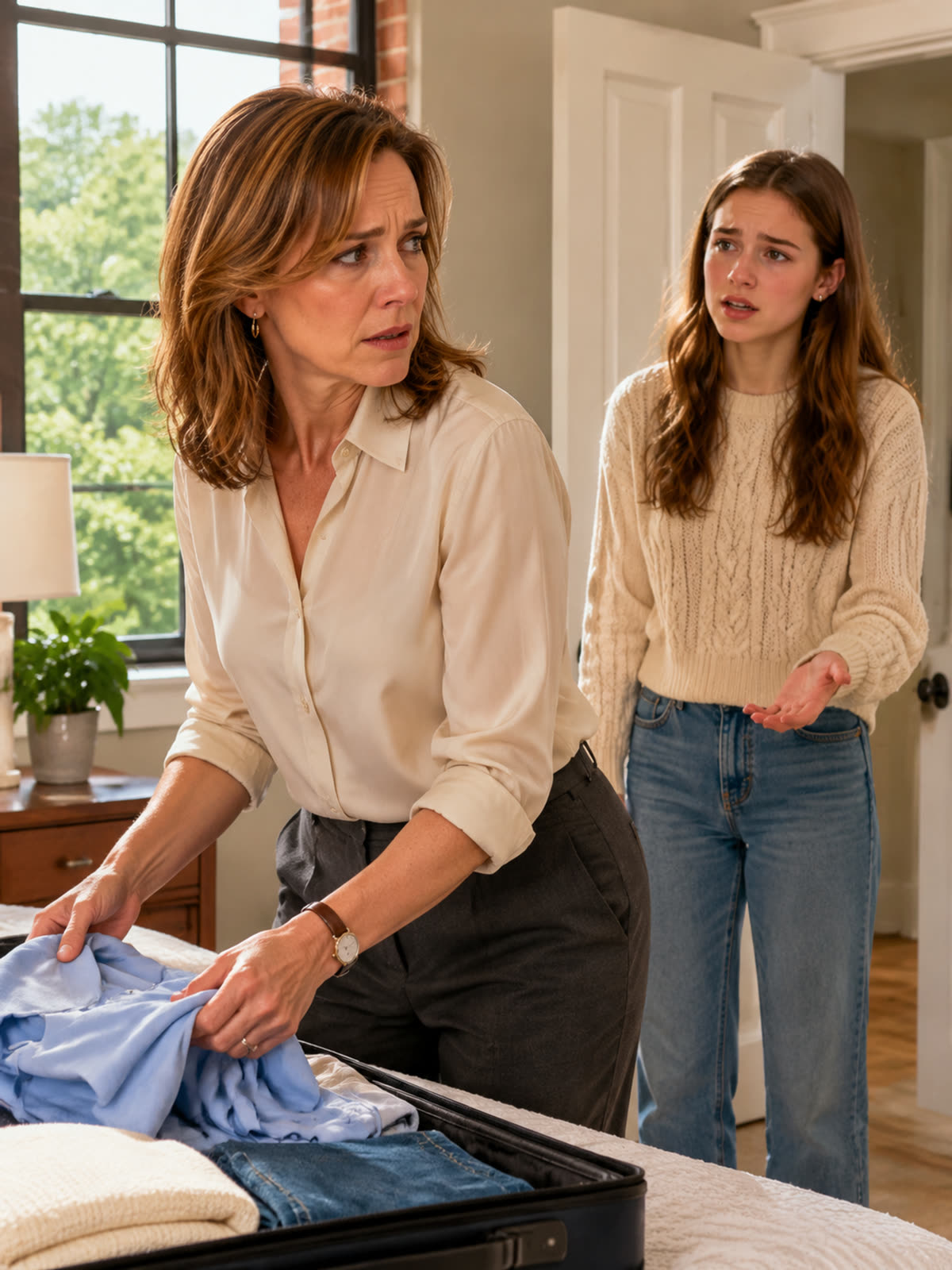
Gabriella followed me into the bedroom while I packed. “Are you going back to Dad?” “No.” “Then why are you going?” I folded a blouse into the suitcase. “Because I own part of the company. People’s jobs depend on whether it survives, and someone tried to take my shares using a signature that isn’t mine.” “Dad said we wouldn’t get Sterling money.” “Your father confused family approval with legal ownership. They aren’t the same thing.” She sat on the bed. “Are you scared?” “Yes.” Her surprise showed me how rarely I had admitted fear in front of the girls. “But being scared doesn’t mean I leave our work in someone else’s hands,” I added. “It means I prepare carefully and go anyway.” She nodded, still concerned. At the doorway, she looked back. “Don’t let them make you apologize.” I carried that sentence with me to Illinois.
Teresa’s disclosure had consequences far beyond losing the household’s trust. Several days after the gathering, two men approached her in a supermarket parking lot and forced her into an SUV. They drove to a disused freight facility and pressured her to sign a statement blaming Marcus for the suspect invoices. She refused. Before leaving home that morning, she had sewn the spiral notebook into her handbag’s lining. The men wanted her to replace the records she had preserved with an account that would protect those responsible. Once again, Marcus’s future was being used against her. This time, she would not give them the statement. When Marcus could not reach his mother, he reported her missing within hours. Police examined available phone-location information and highway traffic-camera recordings to trace the vehicle’s movements.
Authorities found Teresa and brought her to safety. Both men were taken into custody. Investigators then examined financial transactions linking them to people associated with Evan. I visited Teresa after she was safe. She sat in a borrowed office with her handbag on the table. Its lining had been carefully opened to recover the notebook; loose threads hung from the seam. “You should have told me sooner,” I said, regretting it immediately. She looked down. “I know.” “No. I’m sorry. You were trying to protect Marcus.” “And I hurt Zoe to do it.” “You were threatened.” “I still entered her room. I still used that swab.” There was no honest way to dismiss what she had done without dismissing what had happened to my daughter. There was also no honest way to ignore the threats or the danger Teresa had accepted by keeping and revealing the records.
“Zoe deserves the truth when she’s old enough to understand it,” I said. “And Marcus deserves to have his name cleared.” Teresa touched the opened handbag lining. “That’s why I kept everything.” Her notebook could not independently prove every aspect of the suspected scheme. It could, however, tell investigators where to begin. Dates could be checked against bank activity. Vehicle identifiers and routes could be compared with shipping documentation. The twenty-three red-marked entries gave auditors a structure for reviewing transactions that otherwise might have remained scattered across company records. Marcus’s duplicate logs and Teresa’s collected paperwork had survived because both had understood that the official account was not matching what they had witnessed. The notebook made those differences easier to trace. What had looked like a series of questionable invoices was becoming a documented pattern.
Independent counsel arranged a comprehensive forensic audit. All twenty-three shipments proved to have been improperly recorded. Investigators also located offshore accounts associated with Vega and correspondence directing employees to inflate reported inventory values. The documented losses exceeded $7.4 million. The figures represented more than money missing from a ledger. They reflected resources removed from a company whose workers depended on it, while those questioning the discrepancies were blamed or pushed aside. Alongside the financial records, authorities obtained the purported assignment of my shares, an unauthorized power of attorney, and a restructuring proposal that would have installed Leo as managing partner of the family trust. The child celebrated as the answer to Adele’s hopes had also been placed at the center of paperwork intended to change who controlled the business.
Rachel filed motions in federal court seeking temporary injunctive relief so the disputed documents could not be used while their validity was examined. Afterward, she called me. “The documents are frozen for now,” she said. “That is not the same as a final judgment, but no one can treat that transfer as settled while the forgery issue is before the court.” “And my voting rights?” “We proceed under the last verified ownership record unless a judge orders otherwise.” That distinction mattered. We had not reached a final resolution, and suspicion had not become judgment merely because the evidence was growing. But the unauthorized paperwork could no longer be treated as an accomplished transfer. The last verified records still gave me 43 percent, Thomas 24 percent, and Richard 33 percent. My divorce had not erased the ownership I had earned.
Thomas called an emergency board meeting at the Rockford plant. I would have to return to the room where I had negotiated agreements, reviewed payroll, and helped build a future for far more people than the Sterlings alone. Rachel would bring the records. Thomas would be there, as would Richard. Evan would arrive with his criminal defense attorney. The evidence had moved beyond whispers, and the disputed signature could no longer remain hidden among routine corporate documents. Yet no court order could guarantee how the family would react when I sat down as an owner instead of the dismissed wife they had expected to disappear. Gabriella’s warning stayed with me as the meeting approached. I was going back without an apology—and with the company’s future still hanging over the table.
PART 3 — The Inheritance They Could Not Take
Returning to the Rockford building after the divorce felt stranger than entering the house I had shared with Richard. Freshly cut cedar scented the air. Beyond the conference-room wall, a planer started, its vibration faintly reaching the windows. I knew those sounds. I had worked there through pregnancies, negotiated labor agreements at that table, and learned the names of machinists whose households depended on Friday’s wages. The company bore the Sterling name, but hundreds of people had created its value. That fact mattered more than ever as I walked into a meeting where ownership, family pride, and the consequences of years of silence were about to collide.
Richard sat at the table with an unshaven face and the exhausted appearance of someone whose assumptions had collapsed faster than he could replace them. Adele stood by the window. Evan arrived with his criminal defense attorney, looking irritated rather than frightened. Rachel set a thick binder down in front of us. Nothing about the familiar room could make the gathering ordinary. The work beyond the wall continued while, inside, we confronted records that threatened the stability of everything being produced there. I had come because my shares were mine, but also because machinery, payroll, contracts, and workers could not wait for the Sterlings to settle their feelings about one another.
Rachel began with the verified position. “Until a federal judge rules otherwise, the last verified equity holdings remain in effect,” she said. “Claire holds 43 percent. Thomas holds 24 percent. Richard holds 33 percent. The purported assignment of Claire’s shares is formally disputed as a criminal forgery.” Hearing the percentages stated aloud was different from reading them in a filing. Richard’s courthouse declaration had treated access to money as though it depended entirely on his permission. The binder on the table represented the distinction I had explained to Gabriella: family approval and legal ownership were not the same. The unauthorized resolution had attempted to make them appear interchangeable. For now, that attempt had been stopped.
Evan leaned back. “It’s absurd that a divorced ex-wife thinks she can run a company bearing our family name.” I looked directly at him. “My marital status didn’t design your product line, secure your contracts, or fund payroll when this company was failing.” I had spent too many years performing work that became invisible whenever the family discussed its legacy. The products had not designed themselves. The contracts had not materialized because of a surname. My parents’ contribution had been real, and so had the years I spent helping employees turn a failing workshop into a viable business. Becoming Richard’s former wife changed none of that history.
Thomas planted his cane against the floor and stood. “Her family put up money when we couldn’t meet payroll,” he said. “Claire brought in commercial clients while you brought us gambling debts. Our corporate charter does not care whether an owner is male or female.” Evan’s expression tightened. “Her daughters will marry. The assets will pass to strangers.” It was the old judgment, stripped of its polite covering. Even now, confronted by missing funds and disputed documents, he spoke as though the real danger came from girls who might someday choose lives of their own. Their accomplishments were irrelevant to him beside an assumption about whose names they might carry.
“Those girls are my granddaughters.” Thomas struck the table with his palm. “You used your own family to steal what you were unwilling to build.” His words carried the force of an acknowledgment I had needed years earlier. He was no longer speaking privately about loving the girls while allowing others to diminish them in public. This time, the defense happened in the room where the insult had been made. But as he finished, something changed in his posture. The effort seemed suddenly too much. His hand moved toward his chest, and he began to lose his balance.
I reached Thomas first and helped support him while Richard called emergency services. The meeting ended at once. We followed the dispatcher’s instructions until the paramedics arrived and took him for urgent treatment. The binder, the ownership percentages, and Evan’s anger remained behind as we faced a different uncertainty. There was nothing useful to argue about while Thomas needed medical care. The family confrontation had brought years of resentment into the open, but it had not prepared any of us to see him collapse beside the table where we had gathered to determine the company’s future.
Doctors stabilized him after an acute cardiac episode. Later, he asked to speak with me alone in his hospital room. Against the white pillows, he looked more fragile than he had at the plant. His cane stood in a corner, separated from the hand that usually rested on it. There was no conference table between us now and no audience to persuade. The emergency had interrupted the meeting, but it had not removed what needed to be said. I sat with him while the immediate fear gave way to the older history neither of us could repair simply by acknowledging it.
“I watched Adele mistreat you and the girls for sixteen years,” he said. “I told myself silence kept the peace.” I did not interrupt. He needed to finish without being spared the meaning of his own admission. “All I did was leave you standing alone in my home.” He had loved the girls, remembered their interests, and recognized their abilities. Yet those private feelings had not prevented the public dismissals, the missed celebrations, or the expectation that the family remained incomplete without a grandson. His silence had protected the appearance of peace while leaving the cost to us.
I pulled my chair closer. “I didn’t need you to love me like a daughter, Thomas. I needed you to look at your wife when she demeaned my children and tell her to stop.” He turned toward the window, tears gathering in his eyes. “I know,” he said. The apology could not return forgotten birthdays or remove the years my daughters had spent questioning their worth. Still, this was the first time he had openly recognized that private affection had not been enough. He was not asking me to pretend his silence had been kindness. At last, he was naming it for what it had left us to endure.

The legal cases continued through the following year. Vega eventually cooperated with prosecutors, turning over encrypted messages, bank records, and emails connecting Evan to the suspect vendors. She admitted participating in the substitution of Zoe’s DNA and preparing inaccurate shipping records. Evan and Vega were indicted on charges including wire fraud, conspiracy, grand larceny, forgery, and witness tampering. Restitution orders and asset-forfeiture proceedings recovered part of the missing money. The unauthorized share assignment was formally invalidated, confirming my 43 percent without the uncertainty surrounding the forged resolution. Marcus was cleared, and Teresa received legal protections for her cooperation. These were important outcomes, but none amounted to a complete return to what had existed before the deception.
The company recovered only some of its losses. Employees had spent months wondering whether their jobs would survive. Teresa continued struggling with memories of the freight facility. Marcus had lost work and suffered damage to his reputation before investigators established the truth. My daughters now knew that adults could misuse something as intimate as a child’s genetic information for money. Leo also paid for decisions he had been too young to understand. During Vega’s early court appearances, Richard received temporary guardianship. Later, while proceedings continued, Leo went into the legal custody of Vega’s sister. He was three, loved toy trains, and did not understand why the four older girls who used to read to him were no longer there.
One evening during his temporary stay with Richard, Leo developed a fever. Richard later told me that the boy looked up from the couch and asked, “Is Gabi coming home?” Richard had genuinely loved him as a son. Discovering that they were not biologically related did not instantly remove that love, nor should it have. But caring for the sick child forced Richard to think about the relationships he had neglected. Gabriella had once waited on our porch with her honor-roll report, hoping to show him. She waited until the paper curled in the damp air while he kept saying he was busy. The memory belonged to the same father now sitting beside a child who wanted to know where she had gone.
After Leo fell asleep, Richard called. “I lost my girls,” he said. “You threw them away, Richard. They didn’t leave you. You left them.” His breathing became uneven. “Can I hear their voices?” That was not a decision I would make for them. I took the phone into the living room and explained his request. Gabriella refused. Paula shook her head quietly. Mara spoke politely for less than a minute. Zoe described the dolphins she had seen during our visit to Tybee Island. When he asked whether she missed home, she looked toward me and said she wanted to get back to her cartoons. I had not taught the girls to reject him. I simply would not make them responsible for soothing his remorse.
If Richard wanted a meaningful place in their lives, he would have to become dependable and accountable over time. One tearful conversation could not repair years of being made to feel secondary. Meanwhile, I spent the next eighteen months working with an independent advisory firm to reorganize Sterling Custom Millwork. I traveled repeatedly between Illinois and Georgia, spending more nights in hotels than I wanted. We replaced suppliers tied to the irregular transactions, improved delivery verification, and worked to preserve jobs at both plants. Recovery required procedures that did not depend on someone’s family standing or willingness to accept another person’s assurances. The business needed records that matched the trucks, materials, and payments they described.
I also negotiated the sale of some company equity to a private cooperative. Together, we created an employee profit-sharing trust. The people who shaped wood, maintained equipment, packed orders, and met customer commitments would share in the company’s long-term success. The Sterling name stayed on the building, but preserving one family’s prestige would no longer be its sole purpose. In Savannah, the girls were building routines of their own. Gabriella learned the bus routes and found her place at school without waiting for permission to express herself. Paula helped Sarah calculate household expenses because she enjoyed numbers. Mara filled sketchbooks with furniture designs. Zoe collected seashells and insisted that even the irregular ones mattered because the ocean had made each differently.
Before Georgia became our permanent home, I agreed to one final visit with Adele at Thomas’s house. The choice belonged to the girls. Gabriella wanted to say something directly to her grandmother. Paula and Mara chose to go with her. Zoe first asked about snacks and then decided she would come too. Adele received us in the sitting room. Away from the Lake Forest ballroom, she seemed quieter and less imposing. A polished wooden box rested on the table. There were no elaborate introductions and no prepared speech. She opened the box and placed the Sterling signet ring in front of us. The object that had once been meant to crown a family celebration now sat within reach of the girls who had supposedly never been enough.
Zoe leaned forward. “Was that supposed to be for Leo?” “Yes,” Adele said. Zoe inspected it. “Good thing you didn’t give it to him. It would’ve slid all the way up to his elbow.” Gabriella and Paula struggled not to laugh. For an instant, Adele looked close to smiling. Instead, her eyes filled. She closed the box gently. “I made all four of you feel as if you were less than enough,” she said. “I don’t expect forgiveness.” Mara looked at the carpet. Paula folded her hands. Zoe shifted nearer to me. Gabriella held her grandmother’s gaze. “We didn’t need your ring,” she said. “We needed you to care about us while we were still here.” Adele did not defend herself or blame her upbringing. She remained seated, hands on the box, and listened. That was all the girls were prepared to offer.
When my flight reached Savannah/Hilton Head International Airport, Sarah and the girls waited near baggage claim. Zoe reached me first and wrapped herself around my waist. Mara held up a new sketchbook. Paula balanced iced teas, and Gabriella took my suitcase before I could protest. Outside, warm Georgia air replaced the terminal’s chill. “Is it finally over?” Gabriella asked. I looked at all four of them. Gabriella still tightened when Richard’s name appeared on my phone. Paula carefully checked adult promises. Mara seldom discussed Chicago, and Zoe understood only pieces of what had brought us south. None had come through untouched. Yet none was hiding behind my coat anymore. “The part where other people decide what we’re worth is over,” I said. “The rest is ours to build.”
That evening, we crowded around the townhome’s kitchen table with warm pizza on paper plates because nobody wanted to wash dishes. Mara showed us a chair design, and Paula immediately identified a leg that would need more support. Zoe placed a seashell beside my plate as our centerpiece. Gabriella laughed hard enough to nearly spill her drink. The table was too small and the napkins mismatched. There was no family ring waiting in velvet. In Illinois, the signet remained untouched, carrying the authority, acceptance, and male inheritance Adele had once treated as inseparable. My daughters had never needed it to establish their worth. My parents’ gift had meant more than money: they had believed I could build something meaningful. That was what I wanted to pass on. Zoe climbed onto my lap. Paula rescued the shell from spilled soda. Mara kept explaining her chair while everyone talked and laughed. For years, the Sterlings had called a family with four daughters incomplete. Nothing was missing at our crowded table. What remained unwritten was what the five of us would build next.
Disclaimer: This story is a work of fiction inspired by real-life themes. Names, characters, places and events are fictionalized, and any resemblance to real persons is purely coincidental. Images are for illustration purposes only.
