


PART 1 — The Signature That Wasn’t Mine
My daughter-in-law laughed when I wouldn’t surrender my lake house for a full month. “Stop being selfish! We’ve already booked paying guests!” she snapped. That was how I learned she had forged my signature and secretly rented out the home my late wife treasured. I didn’t argue. I phoned my attorney. Three days later, my furious son stood outside the property, shouting, “DAD, YOU’VE RUINED EVERYTHING!” Yet the consequences weren’t over.
It began with my son claiming thirty days at the lake house. Before long, he was threatening the last promise I had made to his mother.
“Dad, we’ll be using the lake house for thirty days,” Nathan texted on Tuesday.
His wife followed immediately. “Make sure the refrigerator is stocked and the cleaning service is paid. We’re bringing guests.”
I was working in my workshop, restoring a wooden fishing lure Ellen had carved. She had been gone four years, but her tools remained where she had left them. “No,” I typed.
Nathan sent back eight laughing emojis. Then Brooke wrote, “We’re informing you, not asking you. Don’t make this awkward.”
My hands trembled as I put down the phone. I had learned to treat anger carefully, the way I would handle a sharpened knife.
Nathan had once loved that cottage. Ellen and I had devoted twenty summers to building it, putting money aside for every window and railing. Before she died, she asked me to make certain nobody ever felt unwelcome there.
At her funeral, Nathan promised he would protect me. In my grief, I believed him. I never imagined he would take advantage of my trust—or the spare key I had given him.
Three days after those messages, our neighbor June called. “Walter, why is your cottage being advertised as an exclusive lakeside retreat?” The screenshot she sent showed Ellen’s blue door, our dock, and her favorite quilt. Four weekly reservations required substantial deposits.

Brooke appeared as the manager, allegedly authorized by the owners to arrange private events. Shock left me cold.
June hesitated before continuing. “Walter, there’s a document attached. It looks like your signature.”
There it was: a clumsy imitation of my handwriting on a digital authorization. They weren’t merely planning to borrow the cottage. They had accepted money from strangers for access to it.
I had continued honoring Ellen’s wishes even as Nathan’s visits became limited to occasions when he wanted something.
The previous Thanksgiving, he had dismissed my pension as “a quaint little allowance.” Brooke suggested I sell the property and enter senior housing so they could “manage the proceeds.”
I had refused then, too.
Now, looking at the advertisement and the false authorization, I saw how far they had gone without asking me.
Then I noticed the reservation dates. Nathan had selected the very thirty days when major construction was due to begin.
PART 2 — The Warning He Ignored
Six weeks before this, an engineer had found that spring flooding had compromised two foundation supports. The repairs called for replacement pilings, electrical improvements, and lifting the cottage temporarily onto steel cribbing.
I had already signed a permitted, insured construction contract. Work was scheduled to start Monday. While the building was being raised, no one could stay inside.
Nathan knew all of it. I had emailed him the inspection report, hoping he would show some concern for Ellen’s home. He had replied with nothing but a thumbs-up.
I forwarded the screenshots and messages to my attorney, Clara Bennett. “Do not confront them alone,” she said. “And don’t interfere with the work to make a point. Let the facts speak.”
Clara reached out to the rental platform’s fraud department, the county property records office, and the sheriff’s nonemergency desk.
We provided the ownership records, the engineer’s report, and my sworn statement denying that I had approved any rentals or signed Brooke’s agreement.
The platform suspended the advertisement and froze the deposits while it investigated. Through the platform, Clara informed the booked guests that the property was unsafe and unavailable.
Brooke called twelve times before I picked up. “You embarrassed me in front of our clients,” she snapped. “Do you realize how much money you’ve cost us?”
“Did you sign my name?” I asked. After a pause, she said, “Nathan said you’d be fine with it.” I replied, “That’s not an answer.” Her voice turned venomous. “You’re being selfish,” she hissed. “That house will be ours someday anyway.” I ended the call.
That afternoon, Nathan arrived wearing a watch that cost more than Ellen’s first car and walked in without permission. “Brooke has investors,” he said. “We already spent some of the deposits on marketing and travel. You can’t ruin everything over paperwork.”

“Did you know she forged my signature?” He lowered his eyes. That told me what I needed to know.
Then he brought his mother into it. “Mom would want you to help us.”
For once, I raised my voice. “Your mother would never sell strangers a bed beneath her roof without asking the person who lives there.”
Nathan flinched, then recovered with an arrogant smile. “We still have the spare key. We’ll be there Monday. You won’t call the cops on your own son.”
He left as though being family entitled him to ownership.
The following morning, I went to the cottage. The contractor walked me through the utility markings, fencing, crane access, and posted safety notices.
I told him to proceed with the approved plan and keep the site secure. This work wasn’t retaliation. It was necessary to protect Ellen’s home.
Preserving it for another generation would consume almost all my savings.
On Sunday evening, Nathan sent another text: “Arriving at nine. Hope you’ve learned to cooperate.”
I didn’t answer.
At nine on Monday morning, my phone rang. Nathan was shouting so loudly that I could barely hear the wind sweeping across the lake.
PART 3 — A House They Couldn’t Enter
“DAD! WHAT HAVE YOU DONE TO THE HOUSE?”
I held the phone farther from my ear. “Nothing that wasn’t planned,” I said.
“The whole thing is in the air!”
On the security camera, I could see the cottage raised above its foundation on steel beams and cribbing. The front steps had been removed. Fencing enclosed the site, and workers in hard hats moved underneath the building.
Beside a rented SUV, Brooke stood staring, unable to believe what she was seeing.
“You did this to humiliate us!” Nathan yelled. I answered, “The foundation was failing. I sent you the engineer’s report.”
“We have guests coming!” he shouted. “That,” I said, “is a problem you created.”
A second SUV pulled up. A family climbed out with their luggage, and the mother held out her booking confirmation.
Brooke hurried toward them and forced a smile. “There’s been a small scheduling issue.” The site supervisor stepped in. “Ma’am, this is a restricted construction site. Nobody can enter.”
Nathan charged toward the fence, then stopped when a patrol car turned into the public driveway. At Clara’s request, the sheriff’s office was documenting attempted unauthorized entry. A deputy spoke with the guests, inspected their reservations, and took Brooke’s information.
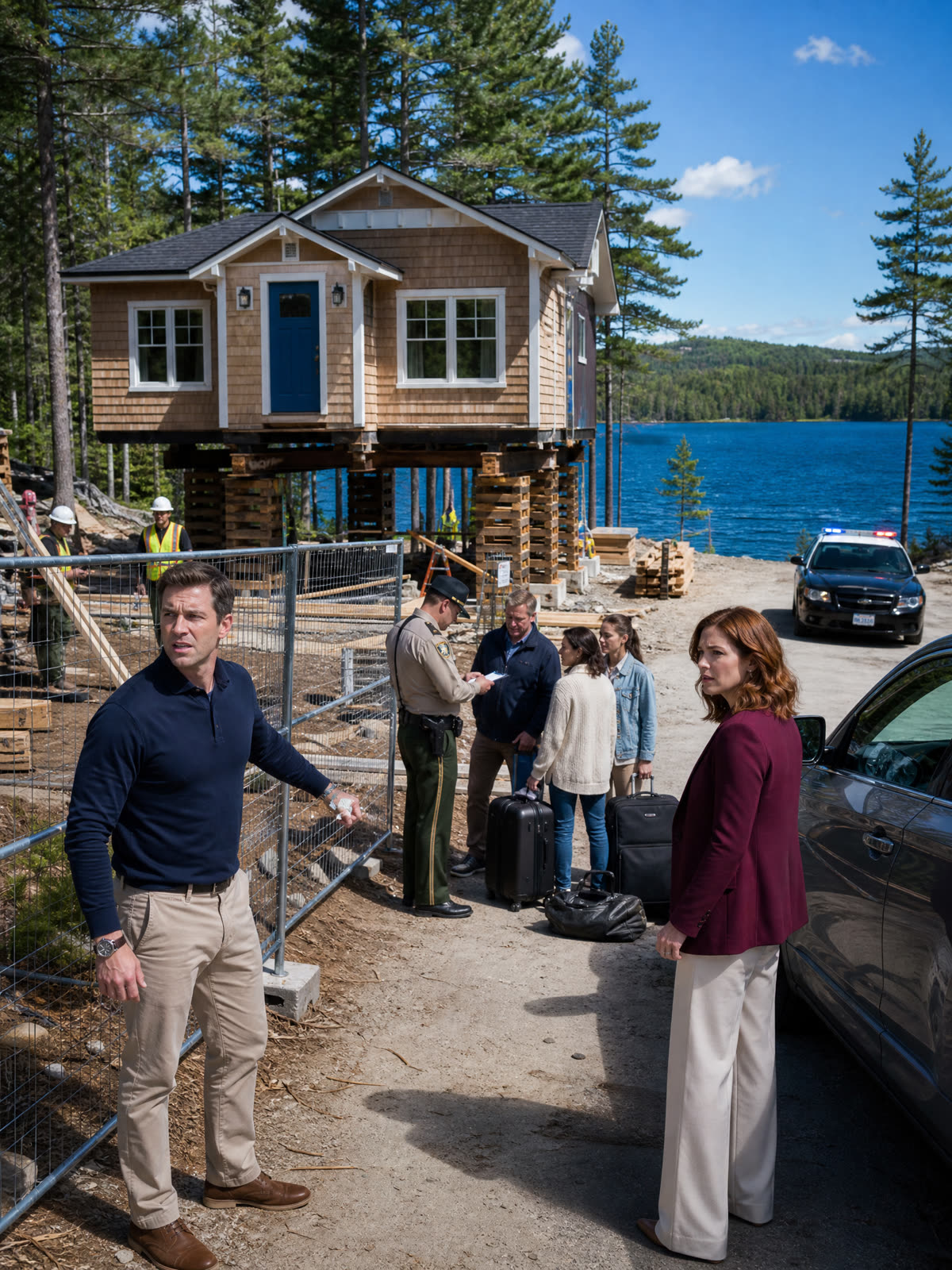
There were no arrests at the property. The evidence was enough to speak for itself.
We gathered at Clara’s office that afternoon.
Among the documents were Brooke’s forged authorization, messages discussing the deposits, and a recorded voicemail acknowledging that some of the payments had already been spent.
Clara spread out the evidence. “You used your father’s property to collect payments you had no authority to collect,” she said. “Those people are entitled to their money back.”
Brooke leaned toward me. “If you love your son, you’ll tell them it was a misunderstanding.”
Nathan waited for me to do what he expected: cover their debts and swallow their insults once again.
“No,” I said. “I’m finished purchasing your affection.”
The platform returned the deposits it still held to the guests. Brooke and Nathan faced a civil claim concerning the funds they had withdrawn. Investigators later sent the forged authorization and payment records to prosecutors.
Seven months afterward, Brooke pleaded guilty to fraud. Her sentence included probation, community service, and restitution. In a separate disciplinary proceeding, her real estate license was revoked.
Nathan entered a plea agreement for his part in it. Their debts eventually forced the sale of their luxury condominium.
I took no pleasure in their suffering. What mattered was that they could no longer exploit me.
By autumn, new pilings held the cottage securely in place. When I reopened it, I offered free weekends to families caring for seriously ill loved ones rather than turning it into a luxury rental.
On opening evening, a little girl’s laughter carried from the dock. It brought Ellen back to me perfectly.
For the first time in years, I knew I had truly kept my promise.
Disclaimer: This story is a work of fiction inspired by real-life themes. Names, characters, places and events are fictionalized, and any resemblance to real persons is purely coincidental. Images are for illustration purposes only.
