

PART 1 — The Room Beside the Laundry
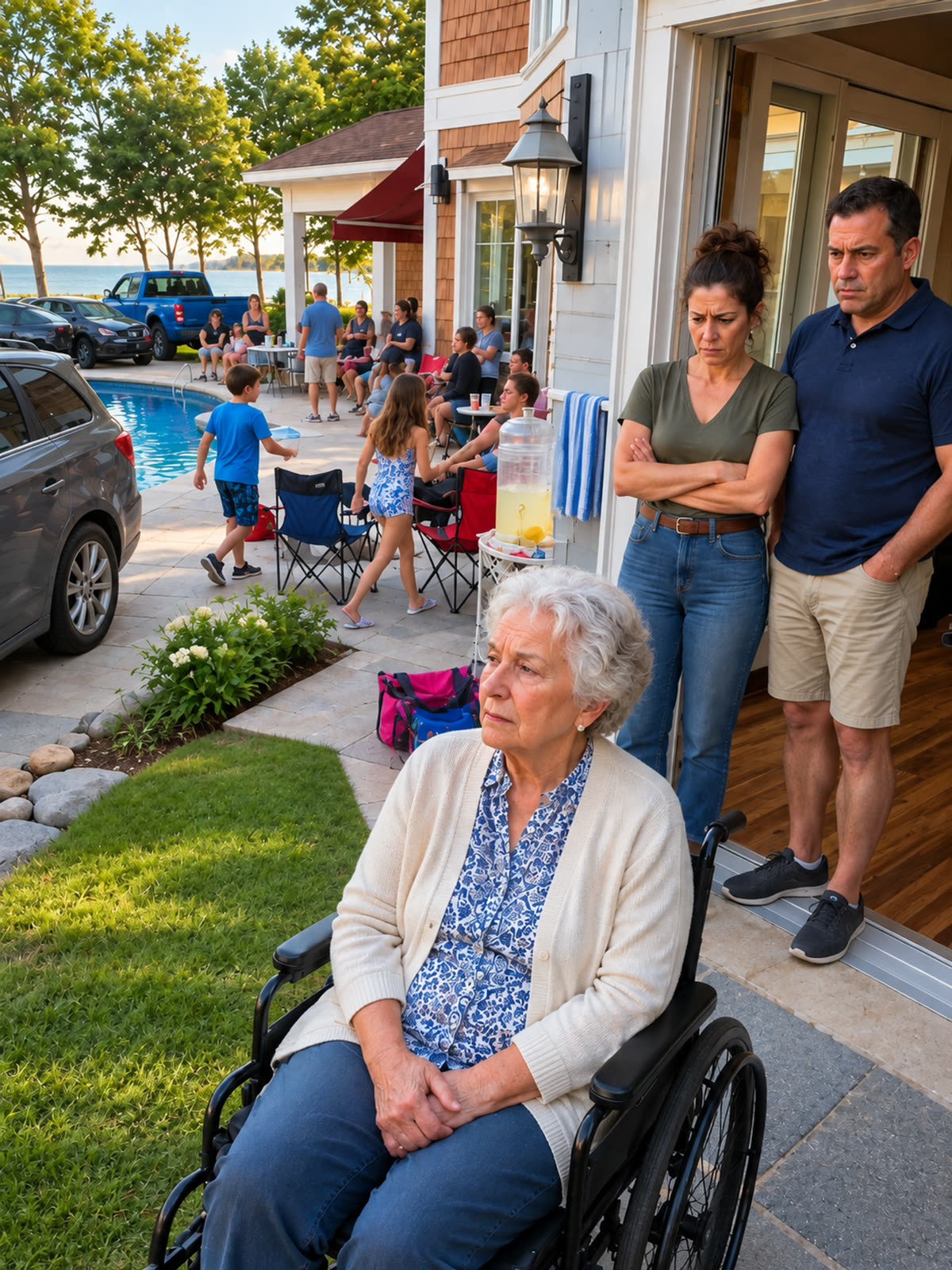
“Why is she here?” Those were the first words my daughter-in-law spoke when she noticed me waiting in my wheelchair outside the Florida beach house my late husband and I had spent decades saving to purchase. Megan stood in the doorway with her arms folded. Beside her, my son, Daniel, looked at me as if I had arrived somewhere I had no reason to be. At seventy, still recovering from a serious hip injury, I had come home expecting somewhere peaceful to recover. Instead, I found myself wondering whether I would even be allowed inside.
Music poured from the living room behind them. Vehicles filled the driveway, children raced through my flowerbeds, and damp towels were draped over the porch railings. Almost every face I could see belonged to a stranger. “Daniel,” I asked quietly, “what’s going on?” Before answering, he looked toward Megan. “We’ve been staying here, Mom.” I tried to understand what he meant. “For how long?” His answer came without any explanation of why he had never told me. “Almost four months.” Beyond his shoulder, I could see that my furniture had been moved, our family photographs were gone, and Richard’s little office had become a room crowded with storage boxes.
My husband and I had both worked as teachers. That house represented years of setting money aside, repairing furniture instead of replacing it, and driving cars long after newer ones would have been more comfortable. Expensive holidays were things we usually decided we could do without. We had wanted that small stretch of Florida coastline more than any of those things. When we finally bought the house, Richard told me it would be the place where we grew old together. For years, that was exactly what it became: the home we had worked for, and the place where we expected to spend the rest of our lives.
Then Richard became ill, and eventually I lost the man who had stood beside me through every hard chapter. After the funeral, Daniel’s calls grew less frequent. When he did telephone, money often became the subject. Sometimes he needed help paying the mortgage. Sometimes Megan wanted a newer car, or there was something costly the children needed. Whenever I could help, I did. I never imagined that the support I offered would lead my son to believe he could take over my home without even asking. Yet there he stood, while strangers enjoyed rooms filled with the belongings his father and I had collected.
Six months before that afternoon, I had fallen and badly injured my hip. For the time being, I needed a wheelchair. Daniel had invited me to recover at his house, and I had accepted with gratitude. I thought his offer meant he wanted me close while I needed help. But after only three weeks, Megan began objecting to the space I occupied. “The children need their rooms back,” she told him one evening. I heard her, and later I heard something that hurt even more. “She barely has any money anyway,” Megan whispered. “We can’t keep taking care of her forever.”
Daniel did not speak up for me. Instead, he proposed that I go back to Florida, although I still had difficulty moving around and nobody had arranged a caregiver or transportation. Eventually, I made the journey. I wanted the quiet of the beach house and the comfort of being among familiar things. I had already felt unwelcome in my son’s house; I had not expected that feeling to follow me to my own. Finding him there with Megan, surrounded by guests and the noise of a party, left me struggling to make sense of what had happened while I was away.
When I questioned the changes, Daniel answered as though the problem were my reaction rather than what they had done. “Mom, don’t make this dramatic,” he said. “This is our family home now.” I looked at him, scarcely able to take in the words. “Our family home?” The home Richard and I had purchased had apparently become something Daniel felt entitled to claim. No one had asked whether they could move in. No one had told me they were already living there. Now my son was speaking as if the decision had been made and I was simply expected to accept it.
Megan moved forward. “You can’t expect to manage a property this large forever. Robert and I—” She caught herself and corrected the name. “Daniel and I need to think about what’s best for everyone.” I turned toward my son and waited. I wanted him to say that I still had a place there, that nobody could make plans for my home without involving me. He offered no objection. His silence left Megan’s words hanging between us, and I understood that I would have to ask a question I should never have needed to ask at my own front door.
“Where am I supposed to sleep?” I finally asked. My bedroom—the room Richard and I had shared through so many years—was inside that house. So were the familiar things I had hoped would make recovering easier. Yet Megan did not look toward that room. She indicated the back hallway instead, as though the answer were simple. I followed the direction of her gesture, already aware that whatever space she had in mind was not the place I had returned expecting to occupy.
“There’s a small room beside the laundry area. You could use that temporarily.” I glanced toward the bedroom that had belonged to Richard and me, then turned my wheelchair toward the front door. “Mom, where are you going?” Daniel asked. “Somewhere I’m wanted.” He did not try to stop me. After everything I had done to help him, I was leaving my own house while he remained behind with the people he had welcomed into it. The room beside the laundry was what they were prepared to offer me, and even that had been described as temporary.

That night, I checked into a small hotel with one suitcase. My ordinary checking account held just $237. Daniel knew about that account and believed its balance represented everything I had left. What he did not know was that Richard had placed our most valuable assets into a carefully managed family trust years before his death. Among the papers my husband had left behind was something that would undermine the claim Daniel had so confidently made at the doorway. But that evening, sitting in an unfamiliar hotel room, the hurt was much closer than the paperwork.
I slept very little. Whenever I closed my eyes, I saw Daniel standing beside Megan, allowing her to decide whether I belonged in the house his father and I had bought. I had helped him through financial difficulties for years. When I needed a safe place to recover, he had allowed me to be offered a little room beside the laundry. Megan’s treatment had been cruel, but Daniel’s silence hurt most. He had watched the conversation unfold without defending me, and he had let me leave without trying to make things right.
The following morning, I sat near the hotel window and looked again at the $237 shown in my banking app. That was the account I used for groceries and everyday expenses. Daniel had seen its balance before, but he had never asked about Richard’s financial arrangements. My husband had always kept our savings organized and our important papers secure. Shortly before he died, he told me he had made provisions so that I would never have to depend on someone else financially. While he was ill, I had been too overwhelmed to ask many questions. Now I remembered what he had said.
At about nine, a black sedan pulled up outside the hotel. A woman wearing a navy business suit got out and entered the building. A few minutes later, the front desk called. “Mrs. Carter? There’s someone here to see you.” I went downstairs in my wheelchair. The woman introduced herself as Rebecca Lane from Harbor Private Banking. “Your husband established a financial arrangement for your protection,” she explained. “I’d like to review the documents with you.” I stared at her. “Richard arranged this?” She answered, “Yes, ma’am. He wanted to make certain your financial security would be preserved.”
Rebecca gave me a small envelope containing a black private-banking access card. I turned it over, remembering Richard slipping away into his study to sort through financial papers. I had trusted him with those matters, just as he trusted me with the many practical responsibilities of our marriage. Rebecca opened a folder of trust documents. The beach house appeared among the assets, along with investment accounts and other properties Richard had put under the trust’s management. “Does this mean Daniel doesn’t own the beach house?” I asked. She shook her head. “The property belongs to the trust. Your son does not hold legal title.”
For a moment, I could say nothing. Daniel had claimed the property as his family’s home, and Megan had moved my possessions as if she already owned it. Neither had checked the title. Rebecca showed me the provisions governing who could live there. Occupancy required my approval. “Did you authorize Daniel and Megan to move in?” she asked. “No. I didn’t even know they’d been living there for four months.” She wrote something down. “Then we need to address their occupancy through the appropriate legal process.”
I looked over the papers again. For years, I had treated protecting Daniel as a reason to pay bills, cover unexpected costs, and excuse things I would not have tolerated from anyone else. The previous night had changed that. I did not want revenge. I wanted my home returned, and I wanted my kindness to stop being mistaken for permission to control my life. Rebecca set another document before me. “This authorizes us to begin the formal process of addressing the unauthorized occupants,” she explained. I read every part carefully. With Richard’s banking card beside the paperwork, I reached for the pen. For the first time since leaving that doorway, I could see a way forward—but taking it meant making a decision I had never imagined making about my own son.
PART 2 — The Signature They Never Expected
I studied the document Rebecca Lane had placed on the table. For so long, I had been the mother who stepped in whenever something went wrong. Daniel needed money, and I helped. Megan complained about expenses, and I found something I could contribute. When their choices hurt me, I told myself that keeping the family together mattered more than my feelings. Yet my son had just stood by while his wife treated me as an unwelcome guest in the home his father and I had worked a lifetime to buy. I picked up the pen and signed.
Rebecca checked the signed paper and returned it to her folder. “This allows the trustee and legal counsel to begin addressing the unauthorized occupancy,” she explained. “Any required notices and possession proceedings will follow Florida law.” I nodded. “I don’t want anyone threatened or humiliated. I just want my home returned to me.” Her answer was steady. “That’s exactly why we’re handling this formally.” I did not want a confrontation on the doorstep or a scene in front of the children. I wanted the matter handled properly, with the rights Richard had protected for me respected.
Rebecca explained that the trust had been created to safeguard my finances and preserve control of the property throughout my lifetime. Expecting an inheritance did not give Daniel the right to announce that he already owned something. That knowledge comforted me, but it also hurt. During his final months, Richard had been making arrangements for my safety after his death. Our son, meanwhile, had spent the previous evening allowing his wife to decide where I could sleep. The contrast was painful, even as the documents gave me a way to address what had happened.
Rebecca arranged for the trust’s attorney to contact Daniel and Megan. The trustee would review both their occupancy and the alterations they had made to the house. I returned to my hotel room to wait. For once, I was not trying to anticipate Daniel’s next difficulty or find a way to spare him the consequences. Someone else was helping with my problem. It was unfamiliar to step back instead of immediately trying to make everything easier for my son, but I left the signed authorization where it belonged—with the people responsible for carrying it forward.
Several hours later, Daniel’s name appeared on my phone. I watched the screen before answering. “Hello, sweetheart.” His voice sounded strained. “Mom, what’s going on?” I asked, “What do you mean?” He began explaining what was happening at the house. “There are people here asking questions about the house. An attorney and someone representing a trust. They’re saying we don’t own it.” I closed my eyes. The conversation I had known would come was beginning, and this time I was not going to make his discomfort disappear by giving up what I needed.
“That’s correct, Daniel.” He sounded bewildered. “What do you mean, correct?” I told him, “Your father placed the property into a family trust before he died.” Silence followed. Then he asked, “Why didn’t you tell me?” I answered the question without softening what he had done. “Because you never asked me who owned the house before moving your family into it.” He had made plans around an assumption and treated that assumption as permission. Only now, with the attorney and trust representative involved, was he asking about the ownership of the property he had already claimed.
“Mom, we thought it was going to be mine eventually.” I replied, “Thinking you might inherit something doesn’t make it yours today.” He started talking quickly. Megan had renovation plans, he explained, and the children had become settled in the house. I listened without interrupting. Those were the things he wanted me to consider: the plans they had made and how comfortable they had become. The day before, I had arrived injured and in a wheelchair, yet my comfort had not seemed to belong in their discussion of what was best for everyone.
When he finished, I asked the question that had stayed with me since I left. “Daniel, when you saw me sitting in my wheelchair yesterday, did you think about where I would sleep that night?” He did not answer straightaway. Then he said, “Mom, we offered you a room.” I reminded him what that offer had been. “Beside the laundry area, while strangers occupied the rest of my home.” He sighed. “We didn’t mean for things to get this bad.” I answered, “But you allowed them to.”
Neither of us spoke for several seconds. Eventually, his voice changed. “Mom, I made a mistake.” I looked toward the hotel window. I had accepted those words before, often without expecting anything to be different afterward. This time, I could not treat them as enough. “Daniel, forgetting an appointment is a mistake. Moving into someone’s house without permission and treating her as though she no longer belongs there is a choice.” He had nothing to say in response. Before we ended the call, I told him the attorney would explain what came next and that I expected him to cooperate.
I did not threaten Daniel or insist that he apologize immediately. I simply refused to withdraw the authorization I had signed. Later that afternoon, Rebecca confirmed that he and Megan had received the relevant documents and understood that their continued occupancy was being challenged. The legal process had only begun, but one thing was different already. My son now knew that the house he had called his own did not legally belong to him. I was no longer agreeing to be the person who surrendered everything so that he could remain comfortable.
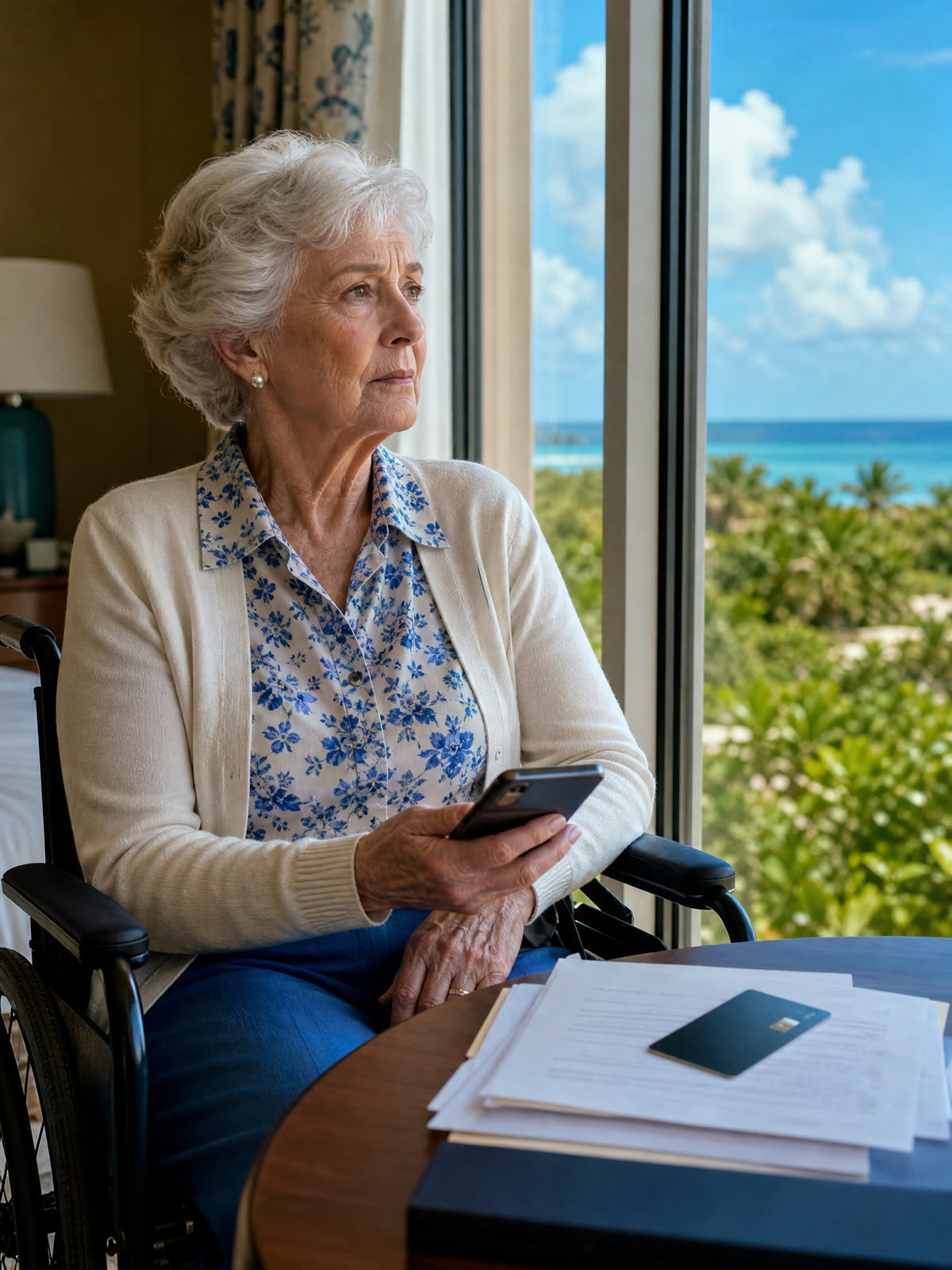
Megan called that evening. For months, she had addressed me as an inconvenience; now her voice trembled. “Margaret, please. We need to talk.” I was beside the hotel window with Rebecca’s documents in front of me. “I’m listening,” I replied. “Daniel told me about the trust. We had no idea Richard arranged everything that way.” I said, “You knew the house wasn’t yours when you moved in.” She paused before answering. “We thought Daniel would inherit it eventually.” I gave her the same distinction I had given my son. “That isn’t the same as owning it.”
She began to cry. The children were comfortable there, she told me. Moving would upset their lives, and she and Daniel had already spent time discussing renovations. I listened to everything she said. Then came the sentence that explained more than the rest. “We never thought you’d actually take the house back.” I looked down at the papers on my lap. Her surprise was not simply about the hurt she had caused. She had not expected me to refuse the treatment she had assumed I would accept.
“Did you think about how I felt when you asked why I was standing in my own doorway?” I asked. “Margaret, I was surprised. We weren’t expecting you.” I continued, “And when you offered me a room beside the laundry area?” She replied, “We were trying to make space for everyone.” I answered, “Everyone except me.” She fell silent. I remembered how warm and charming she had been when Daniel first brought her home, how she had praised my cooking and asked about Richard. Over time, those conversations had changed into criticism of the furniture, the kitchen, and the way I handled money.
Megan had discussed remodeling the beach house long before I had considered leaving it. I had overlooked those comments because I wanted my son’s marriage to be happy. Now I could see how much I had chosen not to confront. “I’m sorry,” she finally whispered. I wanted to believe the apology, but I also remembered Daniel standing quietly while she kept me from my own bedroom. “An apology matters,” I said. “But it doesn’t erase what happened.” When she asked whether I would withdraw the legal action, I told her I would not.
The trustee and attorney would follow the proper procedures. Daniel and Megan would have an opportunity to arrange somewhere else for their family, but I would not give up control of my home. After the call, I sat quietly for a long while. There was no feeling of victory, only exhaustion. Richard and I had wanted that house to be somewhere our family felt welcome. I had never expected to need legal papers to establish that I belonged there too. Protecting my place in it had become necessary, but that did not make the need any less painful.
The weeks that followed brought practical decisions and difficult conversations. Rebecca kept me informed while the attorney and trustee completed the required steps. I planned the accessibility changes I would need when I returned, beginning with a proper wheelchair ramp. I also asked that my belongings and Richard’s photographs be kept safe while the property issue was resolved. Daniel called from time to time. Sometimes he apologized; sometimes he was frustrated about finding another home. I listened, but I no longer offered money to remove the difficulty.
My son was an adult with a family of his own. Loving him did not mean paying for every choice he made. Eventually, the arrangements for returning possession of the house began moving ahead. I found myself thinking about flowers, familiar furniture, and how to make the rooms comfortable again. For the first time since my injury, I could imagine waking in my own bedroom with the ocean outside. Soon I would have my home back. What I could not imagine so easily was what would remain between Daniel and me once the property was no longer standing between us.
PART 3 — The Home I Reclaimed, and the Trust Still Missing
On the day I returned to the Florida beach house, I sat in my wheelchair at the end of the driveway and cried. I was not crying from fear or unhappiness. I could finally look at my home without feeling as though I were an unwanted visitor. The matter of Daniel and Megan’s occupancy had been resolved through the proper legal process. They had moved out with their possessions, leaving the furniture Richard and I had gathered over the years. The house was quiet again, and I could approach it knowing that I no longer needed to ask where I was allowed to stay.
Inside, I stopped beside the living room window. The ocean stretched toward the horizon just as it had when Richard and I first stood there imagining our retirement. So much had happened since those days, yet the view remained familiar. For a moment, I could almost hear him speaking. “We worked hard for this place. Promise me you’ll enjoy it.” I had devoted so much of my time to keeping other people comfortable that I had lost sight of those words. Being back reminded me of the life we had meant to have there.
That afternoon, I called Rebecca Lane and thanked her. “Your husband wanted you to have security,” she told me. “I’m glad the arrangements he made could help protect your home.” The papers had not taken away the hurt of what had happened, but they had made it possible to recover something I should never have been asked to surrender. Richard had prepared those protections while I was occupied with his illness. Only after his death had I fully understood how much care he had put into ensuring that I would not be left dependent on someone else’s willingness to help.
After speaking with Rebecca, I put the black private-banking card in a small wooden jewelry box beside Richard’s old wristwatch. I did not need to keep carrying it as proof of what I owned. What I needed to remember was that I had the right to make decisions about my own life. The card belonged with the things I kept safe, not as something to display or use to impress anyone. Its importance lay in what it had helped me understand about the arrangements Richard had made and the choices that were still mine.
During the months that followed, I made the house comfortable once more. A wheelchair ramp was installed near the entrance. I replaced the damaged plants beside the walkway and filled the porch with flowers. These were practical changes, but they also allowed me to enjoy being home again. I arranged the assistance I needed as I continued recovering from the hip injury. I did not have to pretend I could manage without help in order to keep control of my life. For the first time in a long while, my days felt like my own.
Daniel had difficulties after leaving the beach house. He and Megan rented somewhere smaller and began managing their household expenses without the money I had regularly provided. Our conversations were uncomfortable at first. He would apologize, but sometimes his apology was followed by an explanation of how hard things had become. I listened to him. I did not offer to pay the bills or relieve the strain. That was a change for both of us, and neither of us could simply speak as though the old arrangement were still in place.
I had spent years responding to his problems by searching for something I could do to solve them. Now I let him tell me what was happening without taking responsibility for making it disappear. My decision did not mean I had stopped caring about him. It meant that his difficulties could no longer determine every choice I made. The house had been returned to me, but keeping my life from slipping back into its old pattern required more than the conclusion of the property process. I had to continue respecting the boundaries I had finally set.
In time, Daniel’s calls began to change. He stopped asking for money. Instead, he asked how I felt. There was no sudden conversation that restored everything, and I did not pretend there had been. The change was smaller than that, something I noticed in the questions he asked and the requests he no longer made. For so long, our conversations had been shaped by whatever he needed from me. Hearing him ask about my recovery without leading toward a financial problem made a difference.
One afternoon, he called simply to ask whether my hip was improving. We talked for nearly twenty minutes. There was no discussion of bills, no question about the property, and nothing he wanted me to provide. It was only a conversation between a mother and her son. After everything that had happened, I could not call that a complete repair of our relationship. But I recognized it as a beginning, and I allowed myself to value it without turning it into a promise that the past had been put right.
That ordinary call mattered because, for once, I did not have to separate his concern for me from something he wanted. He asked about my recovery, and I could answer without wondering when the conversation would turn toward money. Nearly twenty minutes passed without the house or the trust becoming the subject. I had regained the home Richard and I had worked for; now there was at least a small possibility that Daniel and I could recover a different kind of connection. Whether it would last was something only his actions could show.
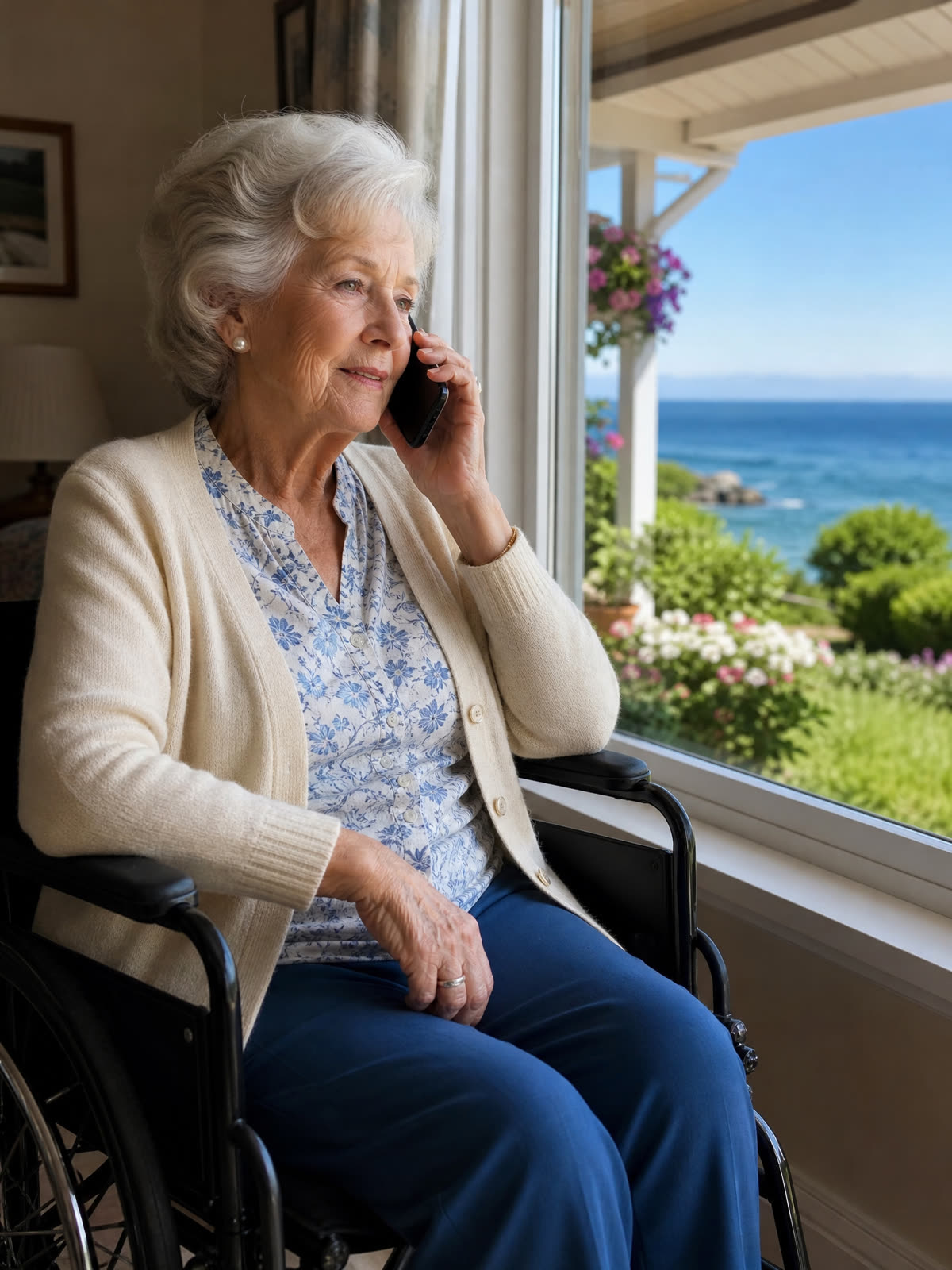
A year after the evening he had let me leave, Daniel came to the beach house alone. He stood awkwardly on the porch and looked at the ramp and the flowers beside it. “Mom, the place looks beautiful.” I answered, “Thank you.” He sat opposite me while I poured coffee. For a while, we spoke about the children and his work. The visit did not begin with the trust or the house dispute. Then he lowered his eyes to his cup, and I waited while he found the words he had come to say.
“I’ve been thinking about what happened that night.” I let him continue. “I knew you were recovering. I knew you needed help. And I still let Megan make you feel like you didn’t belong.” His eyes filled with tears. It was not the explanation about renovation plans or how settled the children had become. He was speaking about what he had known, what I had needed, and what he had allowed to happen. I listened without interrupting, just as I had during the phone call when he first learned about the trust.
“I don’t know why I thought you’d always forgive me without anything changing.” I reached across the table and touched his hand. “I’ll always love you, Daniel. But loving you doesn’t mean I have to accept being treated that way.” He nodded. “I understand that now.” I wanted his words to be true, but I knew one conversation could not restore trust. I could hear his apology and still remember the doorway. I could love him and still require something more than regret before believing that our relationship had changed.
I was willing to let his actions show me who he wanted to become. That was different from declaring the hurt forgotten or returning to every habit we had before. Megan and I remained polite, but the closeness we once shared did not return. She sometimes sent photographs of the grandchildren, and visits were arranged ahead of time. My home continued to be a place for family. It simply stopped being somewhere people could arrive, make decisions, and ignore what I wanted.
Five years later, Daniel and I have a relationship with clearer boundaries. Last Sunday, he arrived with a toolbox to repair a squeaky hinge on my screen door. He did not ask for money. He did not bring up the trust. He repaired the hinge, stayed for coffee, and asked whether I would like company for dinner. It was an ordinary visit, the kind that might once have seemed too small to notice. After what had happened between us, I noticed what was there—and what was absent.
While he worked, I looked through the open doorway toward the ocean and thought about Richard. He had left financial arrangements that protected me, but there was something no document could teach me in advance. I had to learn that having money was not what made me deserving of respect. Being Daniel’s mother did not obligate me to give up my dignity. Needing a wheelchair did not remove my right to decide where I lived or how I wanted to spend my life.
That evening, after Daniel had driven away, I went back to the porch and watched the sun settle over the water. The house was peaceful. I had recovered more than somewhere to live: I had learned that I could love my family, hear their apologies, and still protect the life Richard and I had worked so hard to build. Yet peace did not make trust automatic. That remained the one thing no banking card, signature, or legal document could return to me—and the question of how fully Daniel could earn it back was still his to answer.
Disclaimer: This story is a work of fiction inspired by real-life themes. Names, characters, places and events are fictionalized, and any resemblance to real persons is purely coincidental. Images are for illustration purposes only.
