

PART 1
“That woman doesn’t deserve a chair in this office! She divorced my son, and now she’s come to take my husband’s money!” Marguerite Prescott shouted, pointing at her former daughter-in-law in front of everyone.
Eleanor Hayes, thirty-three, stood still near the doorway.
She was dressed in a dark green dress, holding a small purse tightly in both hands.
She hadn’t come there to fight.
She had come because Thomas Prescott, the only man who had ever treated her like his own daughter, had explicitly requested her presence.
Three weeks earlier, Thomas had passed away in Charleston at the age of seventy-one following a cardiac complication.
His death had left a tremendous void in Eleanor’s life.
What nobody knew was that he had also prepared one final decision, one that could destroy the carefully guarded reputation of one of the city’s most prominent families.
The meeting was taking place in an elegant law office in downtown Charleston.
Marguerite occupied the main chair, dressed in a cream-colored suit and wearing a pearl necklace.
To her right sat her son, Warren Prescott, thirty-six, a businessman and Eleanor’s former husband.
Beside him was Camille, his new wife, who came from a wealthy family and regarded Eleanor with unmistakable discomfort.
“I don’t understand why my father insisted on inviting you,” Warren murmured. “You don’t belong to this family anymore.”
Eleanor met his eyes calmly.
“I didn’t come for you.”
Her response seemed to upset him more than any insult could have.
Eleanor had been Warren’s wife for four years.
They had met while she was restoring antique fixtures at a hotel owned by his family.
She had grown up in a modest neighborhood in North Charleston, in a little house with a mother who sewed clothes to provide for her children.
Warren, on the other hand, had never experienced financial hardship.
His family owned a pecan distribution company, several properties, and an old estate outside Summerville.
Marguerite had never approved of their marriage.
“A girl without an important last name always ends up wanting something,” she would say in front of their guests.
Thomas had always been different.
Whenever Eleanor finished work late, he would arrive carrying a bag of food and ask whether she had eaten.
When she secured her first major contract, he was the first person to congratulate her.
“A person’s worth isn’t in her bank account, honey. It’s in what she does when nobody’s watching.”
But Warren never stood up for his wife when Marguerite humiliated her.
The mistreatment accumulated until Eleanor finally decided to walk away.
Their divorce had been finalized twenty-two months earlier.
Not long afterward, Warren married Camille, the very woman Marguerite had always considered the perfect match for her son.
Thomas, however, never abandoned his relationship with Eleanor.
He continued visiting her, bringing sweets from a bakery in Summerville, and calling her “honey,” despite the end of her marriage.
That was why she had come to pay her final respects.
At last, the attorney, Gerald Whitaker, opened the file.
Warren inherited his father’s business shares along with a substantial portion of his estate.
Marguerite retained her rights to the marital property and received several additional provisions under the will.
Then an unexpected name appeared.
“To Ms. Eleanor Hayes, from the portion of the estate subject to the testator’s free disposition, I bequeath the house in Summerville known as Magnolia Hollow and the sum of $142,000.”
Marguerite immediately jumped to her feet.
“That’s impossible! That house is worth a fortune!”
Warren’s face turned pale.
“My father was sick. She must have talked him into it.”
The attorney raised his hand.
“Mr. Prescott documented his mental capacity and his intentions. He also left a letter that was meant to be opened in your presence.”
He removed an ivory-colored envelope.
Written on the outside in the unmistakable handwriting of the deceased was a single sentence:
“If Marguerite accuses Eleanor of deceiving me, read first what happened on May 7.”
Marguerite suddenly stopped breathing.
That date was connected to a secret she had spent more than a year desperately trying to conceal.
“What happened that day, Mother?” Warren asked, noticing how carefully she avoided looking at the envelope.
“Nothing of any importance. Your father was confused.”
The attorney disregarded her interruption and began reading.
“For years I allowed my wife to look down on Eleanor because she came from a humble family. My son allowed those humiliations to continue as well. But neither of them understands the true cost of their decisions.”
Warren leaned closer.
“On May 7, Eleanor attempted to inform my son of news that would have changed his life. She sent a notice to the family offices. Marguerite signed the delivery receipt. Warren never received that document.”
“Lies!” Marguerite shouted.
The attorney displayed a copy of the delivery receipt.
Her signature was clearly visible.
Eleanor felt as though the ground had disappeared beneath her feet.
For months, she had assumed Warren knew the news and had deliberately chosen to ignore it.
She had even received a message from a device connected to his number, telling her never to contact him again.
Now, she was beginning to understand the truth.
“What news?” Warren demanded.
Marguerite reached for the document, attempting to grab it, but the attorney pulled it away.
“That letter informed him that Eleanor was pregnant. And the child she was carrying was Warren’s.”
The room fell completely silent.
Camille’s purse slipped from her hands.
Warren slowly turned toward Eleanor.
“You were pregnant?”
Her eyes filled with tears.
“Yes.”
“And where is that child?”
Eleanor glanced toward the courtyard outside the office.
“Very close.”
The attorney explained that Thomas had met his grandson several months after his birth.
He had also prepared documents supporting his estate decisions and protecting Eleanor against any unfair legal challenges.
Marguerite began crying, but her first words were not an apology.
“You hid our own grandson from us!”
“I tried to tell his father,” Eleanor replied. “You received that letter.”
Warren turned toward his mother.
“Mother, tell me you didn’t do that.”
She remained silent.
Eleanor requested permission to step into the courtyard.
She needed some air and wanted to collect her son, who was waiting with his grandmother.
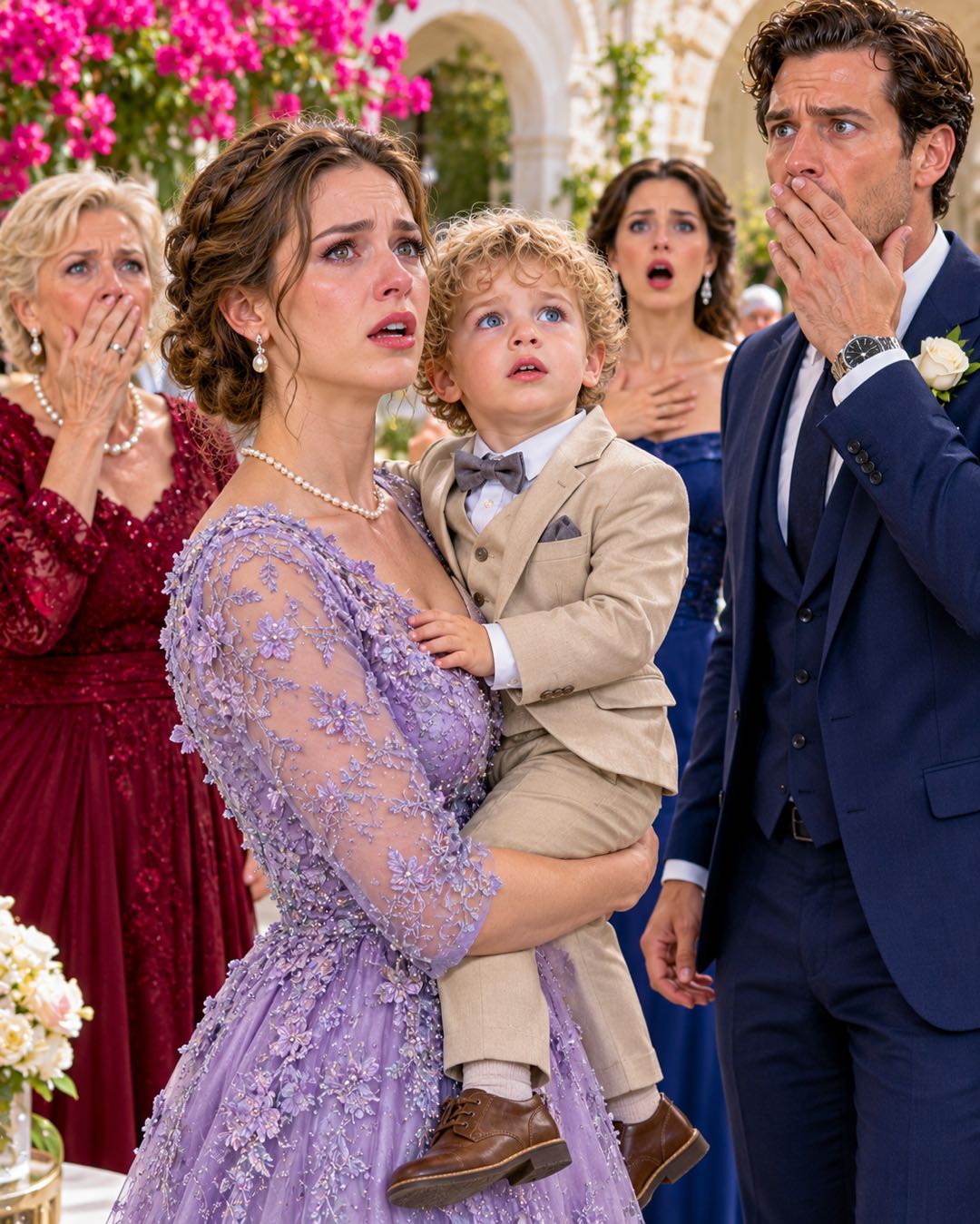
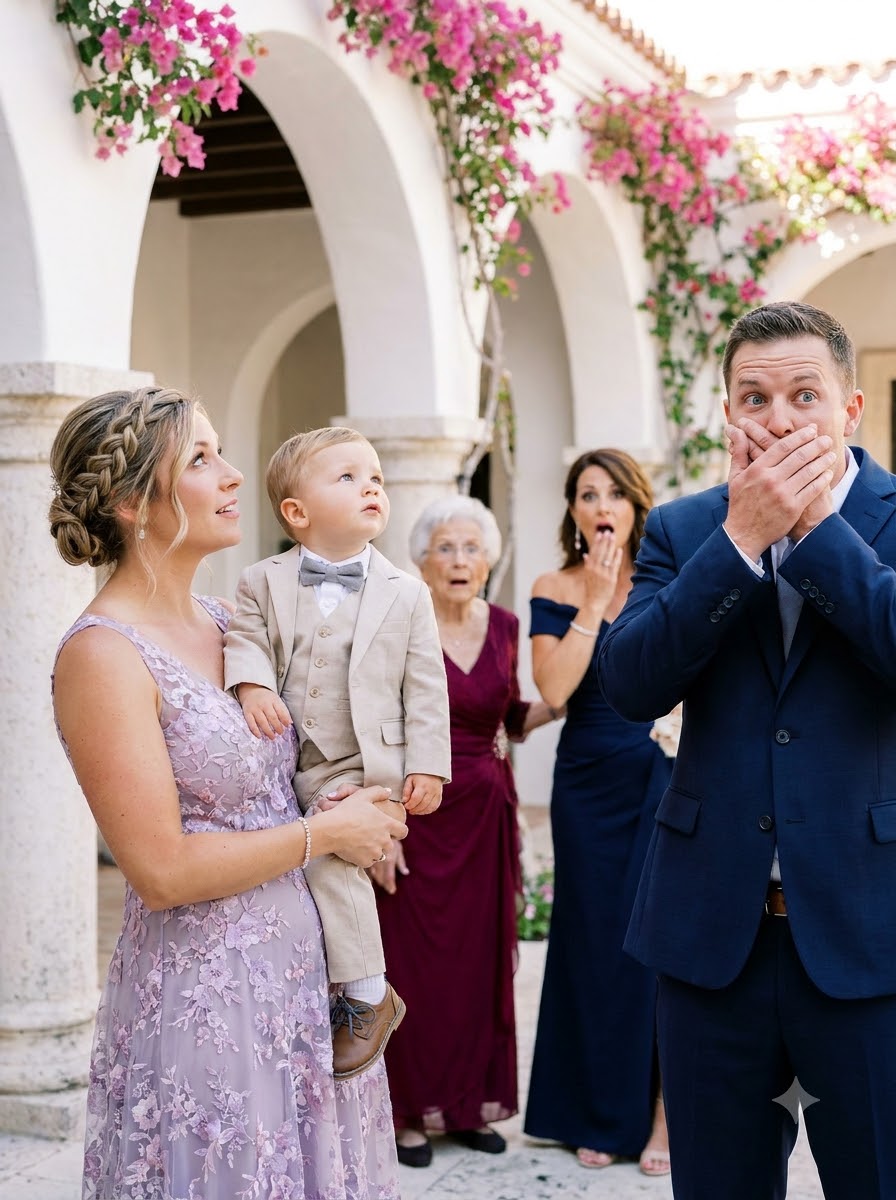
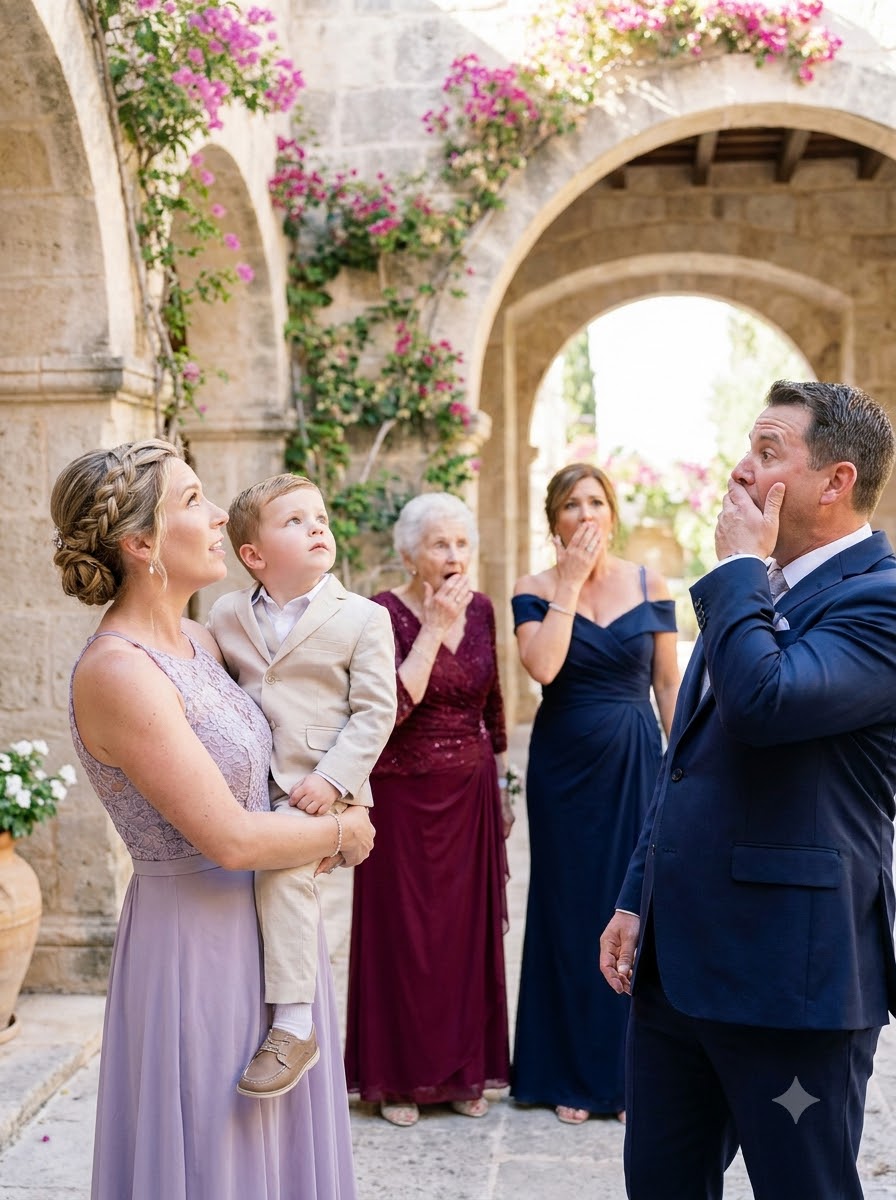
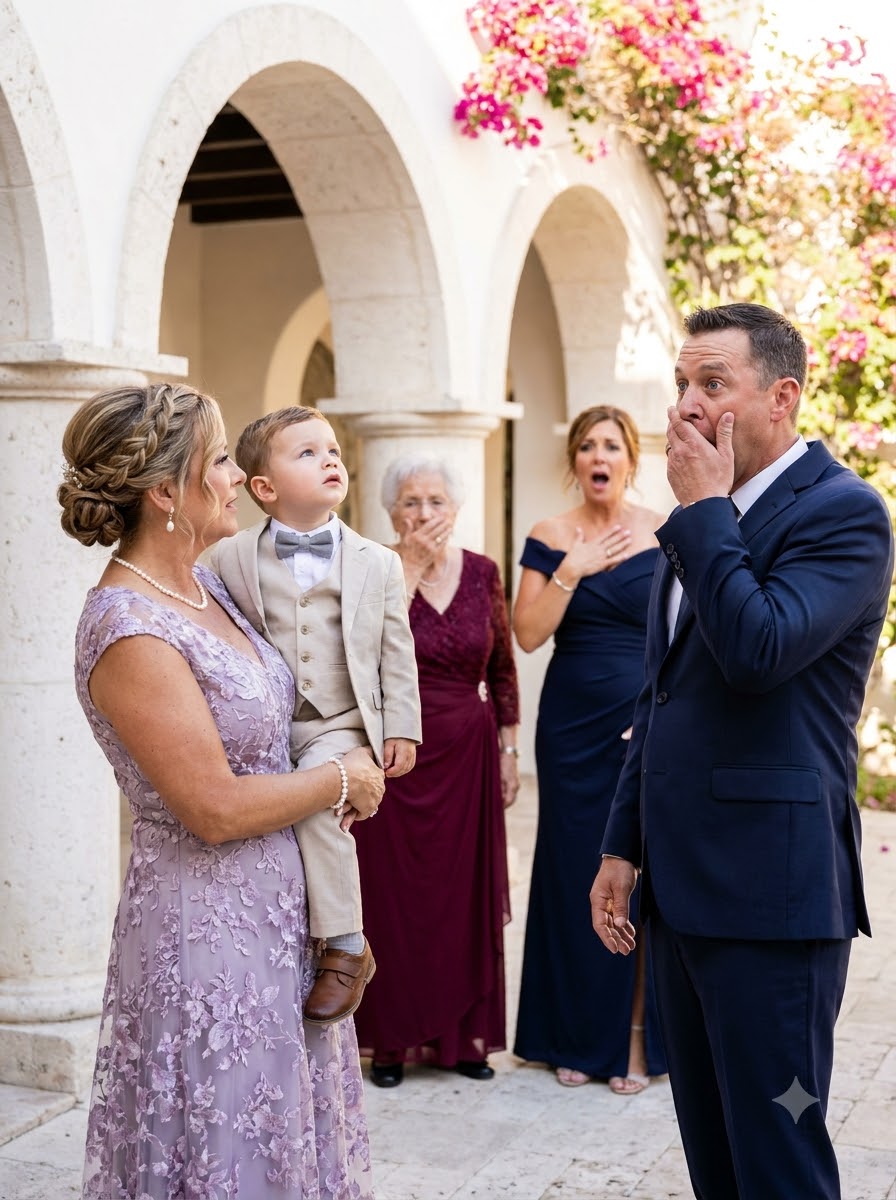
The small courtyard featured white arches, antique lanterns, and deep-fuchsia bougainvillea.
Nancy handed the baby to her daughter.
His name was Thomas. At fifteen months old, he had curly chestnut hair and eyes that looked remarkably like Warren’s.
When his father appeared in the hallway, he stopped dead.
Eleanor held her little boy against her chest, wearing a sage-green blouse and a matching long skirt.
Warren covered his mouth with one hand.
“My God… He has my eyes.”
Behind him, Marguerite stared at the child, speechless.
Camille remained several steps away.
Warren approached Eleanor.
“Eleanor, why did you tell me you never wanted to see me again?”
She frowned.
“I never said that. You’re the one who wrote me that you wanted nothing to do with us.”
“I never got your letter. And I never sent you any such message.”
At that moment, Camille began to cry.
“Warren… there’s something you need to know.”
Marguerite spun around.
“Camille, be quiet!”
But Camille shook her head.
“Your mother hid the letter, it’s true. But the message Eleanor got that night…”
She glanced at the little boy before looking at her husband.
“I wrote it. From your tablet. And your father found out what we did before he died.”
Warren slowly stepped backward.
For several moments, he couldn’t bring himself to look at his wife.
Then his attention shifted to little Thomas, who was happily playing with a button on Eleanor’s blouse.
The child had no idea that the adults surrounding him had just watched their lives fall apart.
“Did you know I had a son?” Warren asked Camille.
She nodded, tears streaming down her face.
“Your mother told me Eleanor was pregnant. I thought if you knew, you’d go back to her.”
“And you decided to keep me from knowing my own child?”
Camille lowered her gaze.
“I was afraid of losing you.”
Warren gave a bitter laugh.
“Well, you’ve just accomplished exactly that.”
Marguerite attempted to intervene.
“Son, Camille only wanted to protect your marriage.”
Warren turned toward her.
“Protect it from what, Mother? From a baby who hadn’t even been born yet?”
Marguerite parted her lips but couldn’t find an answer.
Nancy, Eleanor’s mother, had been observing the conversation from a short distance away. She approached her daughter.
“Let’s go, sweetheart. Thomas needs to eat.”
Marguerite immediately recognized her.
She was the seamstress she had spent years looking down on.
“Mrs. Hayes, wait. I need to meet my grandson.”
Nancy regarded her calmly, and that composure was more unsettling than any accusation.
“He’s been in this world fifteen months, Mrs. Prescott. He hasn’t missed out on anything because his mother is poor. He’s missed out because you decided my daughter didn’t deserve to be part of your family.”
Marguerite lowered her eyes.
For once, nobody hurried to defend her.
Eleanor adjusted the little boy on her hip.
“Warren, our son isn’t to blame for anything. But today I won’t let him witness another fight.”
He nodded.
“I just want to know why my father knew him and I didn’t.”
That question reopened a wound Eleanor had struggled for a long time to heal.
Everything had started shortly after the divorce, when she discovered she was pregnant.
She had been working on restoring an old mansion on South Battery when she began feeling unwell.
A coworker insisted on taking her to the clinic.
The news arrived at the worst possible time.
Warren had just publicly announced his engagement to Camille.
Eleanor returned home with an ultrasound in her purse and spent the entire night sitting in the kitchen, staring at the picture of the tiny life growing inside her.
She had endured too much during her marriage.
But the baby had done nothing wrong and wasn’t responsible for the choices his parents had made.
When she finally found the courage, she wrote Warren a letter.
She told him she was pregnant, made it clear she wasn’t asking to reconcile, and explained that they needed to discuss how they would fulfill their responsibilities.
When he failed to answer her calls, she sent an official notice to the family offices through certified mail.
She kept the delivery receipt.
On May 7, somebody signed for it.
That person was Marguerite.
That same evening, a response arrived from the tablet Warren normally used for communication while working.
The message was cruel.
“Don’t look for me again. You’ve already gotten too much from this family. Solve your problems and let me live in peace.”
Eleanor read those words so many times that she eventually memorized them.
She never called him again.
For months, she persuaded herself that her former husband knew about the pregnancy and had deliberately abandoned them.
Then, one afternoon, Thomas Prescott unexpectedly appeared at her little apartment in North Charleston.
He had come to return several boxes of books she had left behind in their former marital home.
When Eleanor opened the door, she was nearly six months pregnant.
Thomas glanced at her stomach.
Then he looked directly into her eyes.
“Eleanor… is that baby Warren’s?”
She immediately began crying.
She couldn’t bring herself to answer.
But no answer was necessary. Thomas entered, placed the boxes on the floor, and sat beside her.
He listened as she explained everything.
He examined the copy of the notice and read the message she had received.
For several minutes, he remained completely motionless.
“My son has made many mistakes,” he finally said. “But I find it hard to believe he wrote this.”
Eleanor assured him that she knew exactly which device the message had come from.
Thomas asked her to allow him to investigate and resolve the matter whenever she felt ready.
“That child deserves to know who his father is. And Warren will have to answer for him, whether he likes it or not.”
Eleanor wasn’t refusing forever.
She was simply exhausted.
She asked him to give her enough time to complete her pregnancy without being dragged back into the painful situation involving Warren and Marguerite.
Thomas respected her wishes, although he continued reminding her that the truth eventually needed to come out.
From that point forward, he visited her every week.
He accompanied her to purchase a secondhand crib.
He spent nearly two hours studying the instructions before successfully putting together a stroller.
He even exchanged friendly arguments with Nancy about which of them made the better crab cakes.
When Eleanor discovered she was expecting a boy, she asked Thomas whether he would mind if the baby carried his name.
Thomas removed his glasses.
“You want to name him after me?”
“I want him to have the name of a good man.”
The man who routinely conducted business meetings without ever raising his voice began crying in her arms.
PART 2
On the day the baby was born, Thomas was waiting at MUSC hospital.
He stayed beside Nancy until a nurse emerged and announced that everything had gone well.
When he finally held his grandson, he whispered:
“Welcome, little one. Your grandfather took a lifetime to find you.”
After that day, Thomas became a constant presence in their lives.
He spent every Tuesday at Eleanor’s home.
He brought fruit, diapers, and little presents that he always pretended were necessities.
He taught the little boy to clap, wave, and point toward the birds outside the window.
At the same time, he began investigating what had happened to Eleanor’s notice.
The truth emerged when he reviewed old company records several weeks before his death.
He discovered the delivery receipt bearing Marguerite’s signature.
Then he uncovered the connection between the tablet used to send the message and an account Camille had accessed while organizing her wedding.
Thomas demanded an explanation.
Marguerite eventually confessed that she had hidden the letter.
Camille admitted that she had sent the message.
Thomas insisted that they tell Warren everything immediately.
They pleaded with him to wait.
He refused.
But before he could bring everyone together, the cardiac complication that took his life occurred.
He had already prepared the necessary documents and written his final letter.
In it, he also admitted that he had made a mistake.
“I believed I could find the right moment to talk to my son without causing Eleanor more pain. I was wrong. Silence, even when it comes from love, can end up doing harm.”
By the time Eleanor finished explaining everything, Warren was sitting on a courtyard bench.
His face was buried in his hands.
“My father was there when he was born…”
Eleanor nodded.
“He was the one who held him while I recovered.”
“And I was on my honeymoon with Camille.”
His words came out barely above a whisper.
Eleanor remained silent.
There was nothing she needed to add.
Warren raised his head and looked at his son.
“I missed his first steps.”
“He’s still learning to walk,” she answered. “You can be there for the next ones.”
He began to cry.
“I don’t know if you’ll ever be able to forgive me.”
Eleanor inhaled deeply.
“It wasn’t all your mother’s fault, Warren. When we were married, you never defended me. You let them treat me as if I were worth less than everyone else. That was your choice too.”
Warren lowered his head.
“I know.”
“And I made a mistake too, by not finding another way to confirm that you’d received the news. But I was scared, and I thought protecting our son meant keeping him away from all of you.”
Little Thomas reached toward his mother’s face.
Eleanor gently kissed his fingers.
“What matters now is that he never pays for our mistakes again.”
Warren slowly moved closer.
“Can I hold him?”
Eleanor hesitated.
Then she glanced at her son.
“First let him get to know you.”
Warren lowered himself onto his knees in front of the little boy.
“Hi, Thomas. I’m…”
His voice faltered.
He didn’t know how to introduce himself to a child who shared his blood but regarded him as a complete stranger.
The little boy examined his burgundy tie.
Then he stretched out his hand and touched it.
Warren smiled through his tears.
“I’m your daddy.”
Thomas giggled.
That little smile completely broke him.
Marguerite watched everything from the hallway.
She appeared to have aged several years in a matter of minutes.
When she attempted to approach, Warren raised his hand.
“Not now, Mother.”
“But he’s my grandson…”
“That’s exactly why. If you want to be part of his life, you’ll have to learn to respect his mother.”
Marguerite remained rooted to the spot.
For the first time, her son had established a boundary without seeking her approval.
In the days that followed, the Prescott family experienced a transformation nobody would have expected.
Warren temporarily left the house he shared with Camille.
He wasn’t doing it to punish her. He simply needed time to understand how someone he had built a marriage with could conceal something so significant.
Camille accepted responsibility for what she had done.
She acknowledged that insecurity had influenced her decisions and that she had allowed Marguerite to control a situation she should never have interfered with.
“I thought I’d lose our future,” she confessed. “And I ended up stealing a piece of your past.”
Warren offered her no promise that their marriage could be repaired.
Their relationship had been severely damaged.
Meanwhile, he reached out to Eleanor so they could begin the necessary legal procedures.
They agreed to undergo a paternity test.
The results confirmed that they were biologically related.
Afterward, they began the process of legally establishing his paternity and defining his responsibilities.
Eleanor insisted that Warren’s visits take place gradually.
He accepted her conditions.
He didn’t want to suddenly enter Thomas’s life simply to ease his own guilt.
He wanted to learn how to become a father.
Their first visits happened at a park near Waterfront Park.
Nancy accompanied Eleanor while Warren sat on a blanket playing with his little boy.
Initially, Thomas repeatedly reached for his mother’s arms.
Gradually, however, he began recognizing the dark-haired man who always arrived with a smile and sat down at his level.
Warren learned his son’s daily routine, favorite foods, and the song that helped him settle down before bedtime.
He also discovered how much effort went into what had once seemed like ordinary everyday activities.
One afternoon, after struggling to dress the baby while he kept squirming, Warren looked at Eleanor with genuine admiration.
“How did you manage to do all of it alone?”
She gave him a sad smile.
“I wasn’t completely alone. My mother and your father helped me enormously. But there were nights I would have given anything for someone to tell me I could rest.”
Warren turned his gaze away.
This time, he had no excuse to offer.
The inheritance dispute also began moving toward a resolution.
Marguerite had hired an attorney because she intended to challenge the will, arguing that Thomas had not been mentally competent when he made his decisions.
However, the medical records, the attorney’s documentation, and the clarity of the provisions made her accusation difficult to support.
Furthermore, Eleanor’s inheritance came from the portion of the estate Thomas was legally entitled to distribute as he pleased.
He had left sufficient assets for both his wife and son to receive their fair shares.
He had never intended to disinherit anyone.
His intention had been to protect the people he believed needed it most.
Eventually, Marguerite decided against pursuing the challenge.
Finalizing the estate still required several months.
However, Eleanor no longer received threatening messages.
Magnolia Hollow was officially transferred into her name, and the $142,000 was distributed according to the will.
When Eleanor first visited the property as its rightful owner, an unexpected emotion washed over her.
It was a white house with green shutters, a courtyard filled with potted plants, and an old fig tree standing beside the well.
Thomas had spent many summers of his childhood there.
Inside the master bedroom, Eleanor discovered a small box resting on the desk.
It contained family photographs, old receipts, and a letter addressed specifically to her.
She immediately recognized her former father-in-law’s handwriting.
“Dear Eleanor,
I know some will think I’m leaving you this house because you’re the mother of my grandson. But I want you to know I would have wanted to help you even if Thomas had never been born.
I watched you get back on your feet after losing your marriage. I watched you work without rest. I watched you care for your mother and rebuild your life without asking anyone for anything.
When everyone treated you like a stranger, you kept asking about my health. You never asked me for property. You never asked me for money. You only gave me something I had missed for years in my own home: the peace of being loved for who I am.
I want this house to be a place where my grandson grows up happy and where you never have to ask permission to feel at home.
And remember, daughter: you don’t have to go back to a place that made you small to prove you’ve learned to be strong.”
Eleanor sat beside the window.
She cried for a long time.
It wasn’t because of the property’s value.
It was because Thomas had understood a pain she had never been able to put into words.
Several months later, Warren asked if he could speak with her privately.
They had taken Thomas to the park, and the little boy was sleeping peacefully in his stroller.
“Eleanor, I’ve changed a lot of things,” he began. “I don’t let my mother decide for me anymore. I’m trying to be a good father. And I know it may be too late, but I need to ask you.”
She turned toward him.
“What do you want to ask me?”
“Do you think someday we could be together again?”
Eleanor fell silent.
For years, she had imagined hearing those words.
She had wanted Warren to recognize how deeply his indifference had hurt her.
But now, sitting across from him, she realized she no longer wanted their marriage back.
“No, Warren.”
He closed his eyes.
“I figured.”
“I’m glad you’re changing. Thomas needs a father who loves and respects him. But I don’t need to be your wife again for our son to have a family.”
Warren nodded.
“You’re right.”
Eleanor offered him a gentle smile.
“We can give him something we never had: two adults who can respect each other, even if they’re no longer in love.”
He accepted her decision.
And for the first time, he didn’t contact Marguerite to ask her what he should do.
His relationship with his mother changed as well.
Marguerite needed considerable time to understand that an apology couldn’t undo years of contempt.
When she finally visited Magnolia Hollow, she brought a small wooden box.
Inside was one of Thomas’s antique watches.
“I want my grandson to have it when he’s older,” she explained.
Eleanor agreed to look after it.
Marguerite glanced toward the garden, where Nancy was playing with the little boy.
Then she approached the woman she had humiliated so many times.
“Nancy, I want to ask your forgiveness. I spoke about your work as though it were something shameful.”
Nancy placed the toy on the table.
“Working to raise my daughter has never made me ashamed, Mrs. Prescott.”
“I know.”
“The shame belongs to whoever uses money to make other people feel inferior.”
Marguerite lowered her head.
“You’re right.”
They didn’t embrace.
They didn’t suddenly become friends.
But that conversation marked the beginning of a different relationship, one founded on boundaries that had never existed before.
Eventually, Marguerite was allowed to visit her grandson under the agreed conditions, without trying to dictate decisions or interfere with Eleanor’s life.
Little Thomas grew up surrounded by people who were finally learning to keep their disagreements away from him.
When he celebrated his second birthday, Eleanor arranged a small party at Magnolia Hollow.
She decorated the space beneath the fig tree with garlands and prepared a table filled with sweets, deviled eggs, and a cake decorated with little animal figures.
Warren arrived early to help with the preparations.
Nancy brought a tray of crab cakes.
Marguerite arrived with a modest present and politely asked whether anything was needed before entering.
For the first time, everyone gathered without an argument breaking out.
They weren’t a flawless family.
But they had finally understood that affection never gave anyone the right to control another person’s life.
After the celebration ended, Eleanor noticed her son sitting in front of a photograph of his grandfather.
The little boy pointed toward the picture.
“Grandpa Thomas.”
Eleanor knelt beside him.
“Yes, sweetheart. That’s your grandpa.”
The child gently touched the glass.
“Where is he?”
Eleanor felt tears gathering in her eyes.
She glanced at the fig tree Thomas had planted many years earlier.
Then she turned toward her son.
“Your grandpa can’t come play with you anymore, my love. But he loved you very, very much. And this house is full of things he did thinking of you.”
Thomas pulled the photograph against his little chest.
Eleanor wrapped her arms around him.
From the doorway, Warren silently watched them.
He finally understood that his father hadn’t left the inheritance to shame his wife or punish his son.
He had been trying to correct an injustice that everyone else had allowed to happen.
And he had accomplished something much more meaningful than simply distributing an estate.
He had compelled an entire family to confront the consequences of its choices.
That evening, after everyone had departed, Eleanor placed Thomas’s photograph on the mantel.
Beside it, she set the letter she had discovered on the desk.
Before switching off the lights, she read its final sentence once more:
“Family isn’t the one who lets you sit at their table when it suits them, but the one who keeps a seat for you even when you can no longer offer them anything.”
Eleanor glanced toward the bedroom where her son was sleeping.
She had lost her marriage, endured countless humiliations, and spent entire nights believing she wasn’t enough for anyone.
Yet the man to whom she had never been related by blood had left her something that neither Marguerite nor Warren could ever take away.
The knowledge that she had always deserved to be treated with respect.
As a gentle breeze moved through the branches of the fig tree, Eleanor finally understood that Thomas Prescott’s greatest inheritance had never been recorded in his will.
It was the lesson that a woman doesn’t need the approval of a powerful family to recognize her own worth.
Sometimes, the people who truly deserve to be called family are precisely those who restore the dignity others have tried to take away from you.
THE END
