

PART 1
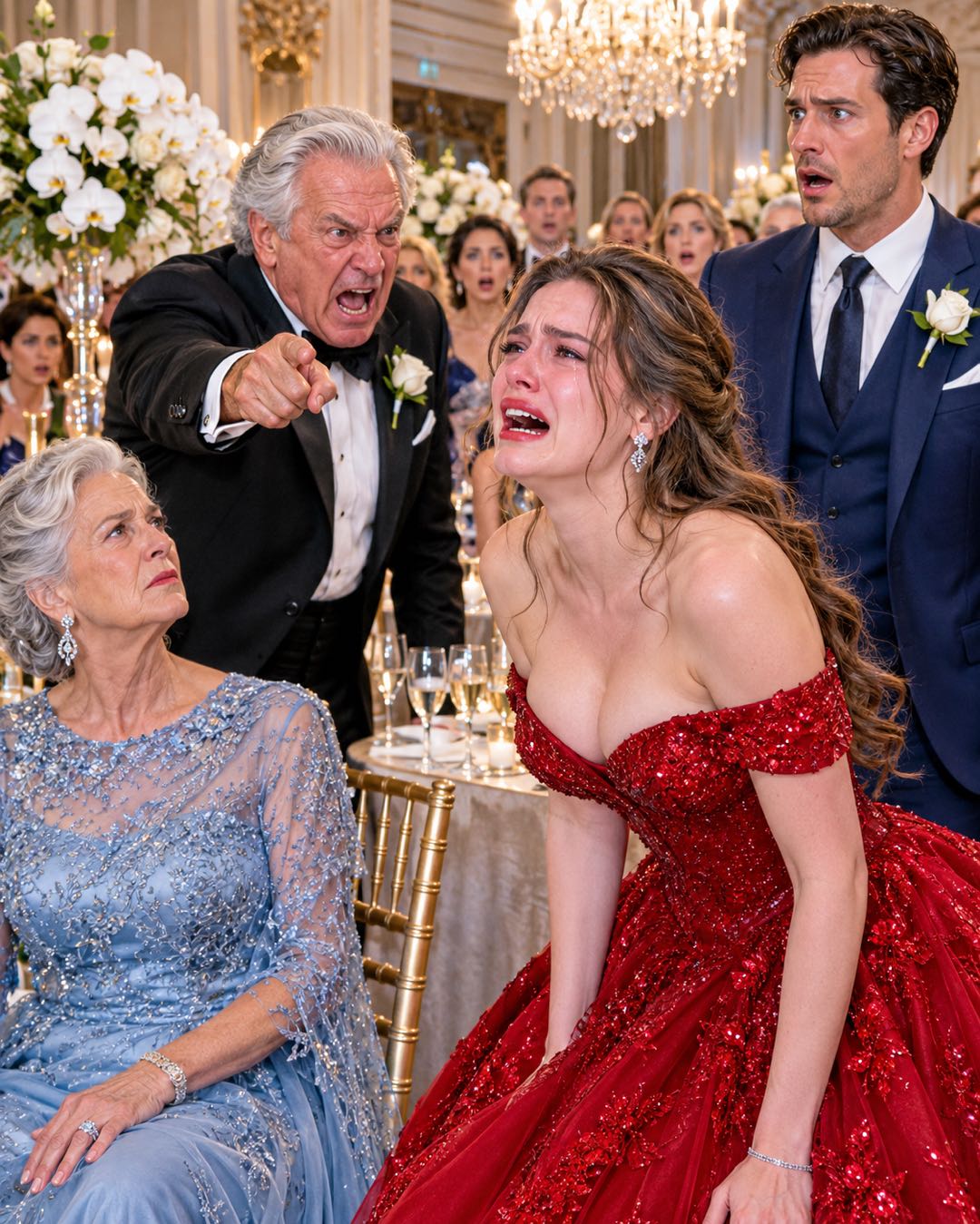
“NICK…” RENEE WHISPERED, BARELY ABLE TO MOVE HER LIPS. “PLEASE, HELP ME.”
Nicholas leaned toward her, initially wearing a confused expression. But when he finally understood what had happened, his face hardened with anger.
“What have you done?” he muttered through clenched teeth.
Renee stared at him in disbelief. “What have I done? You were the one who told me to use more!”
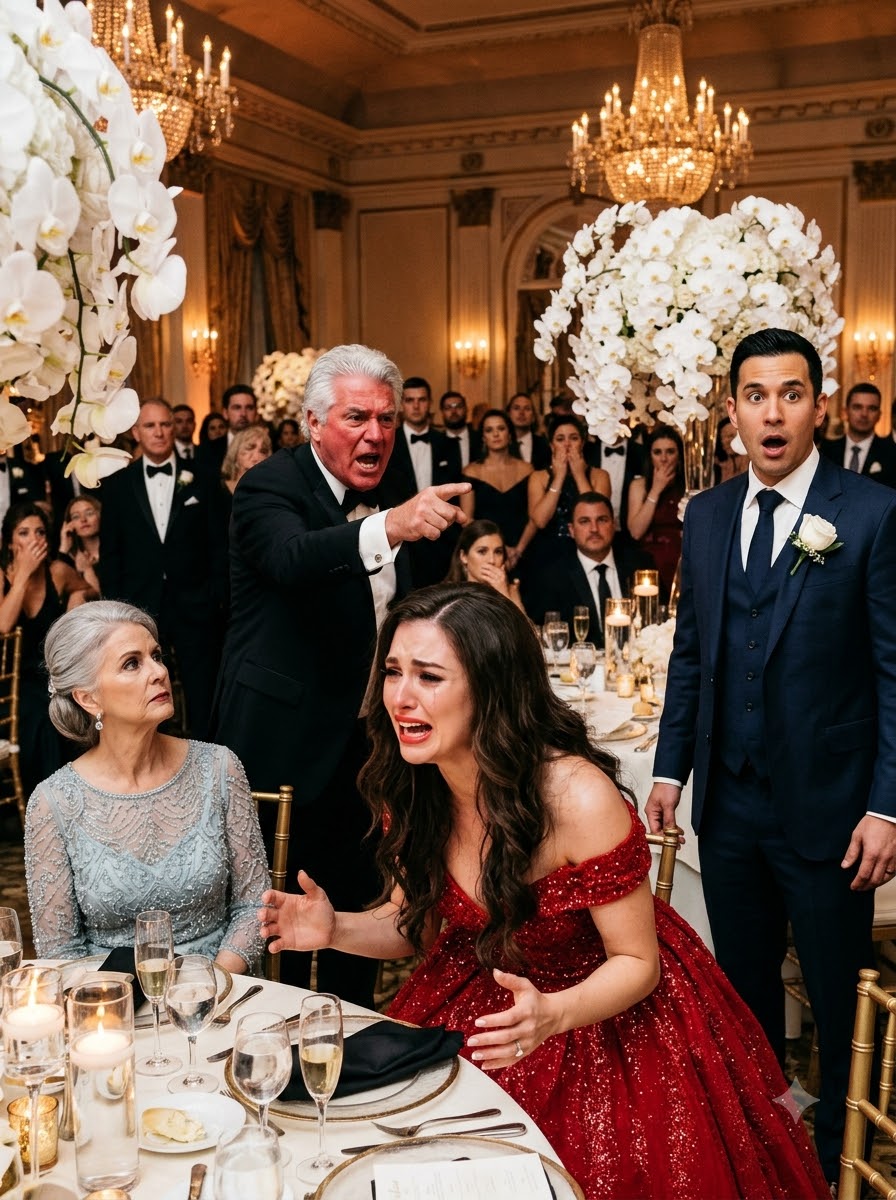
The microphone was still on.
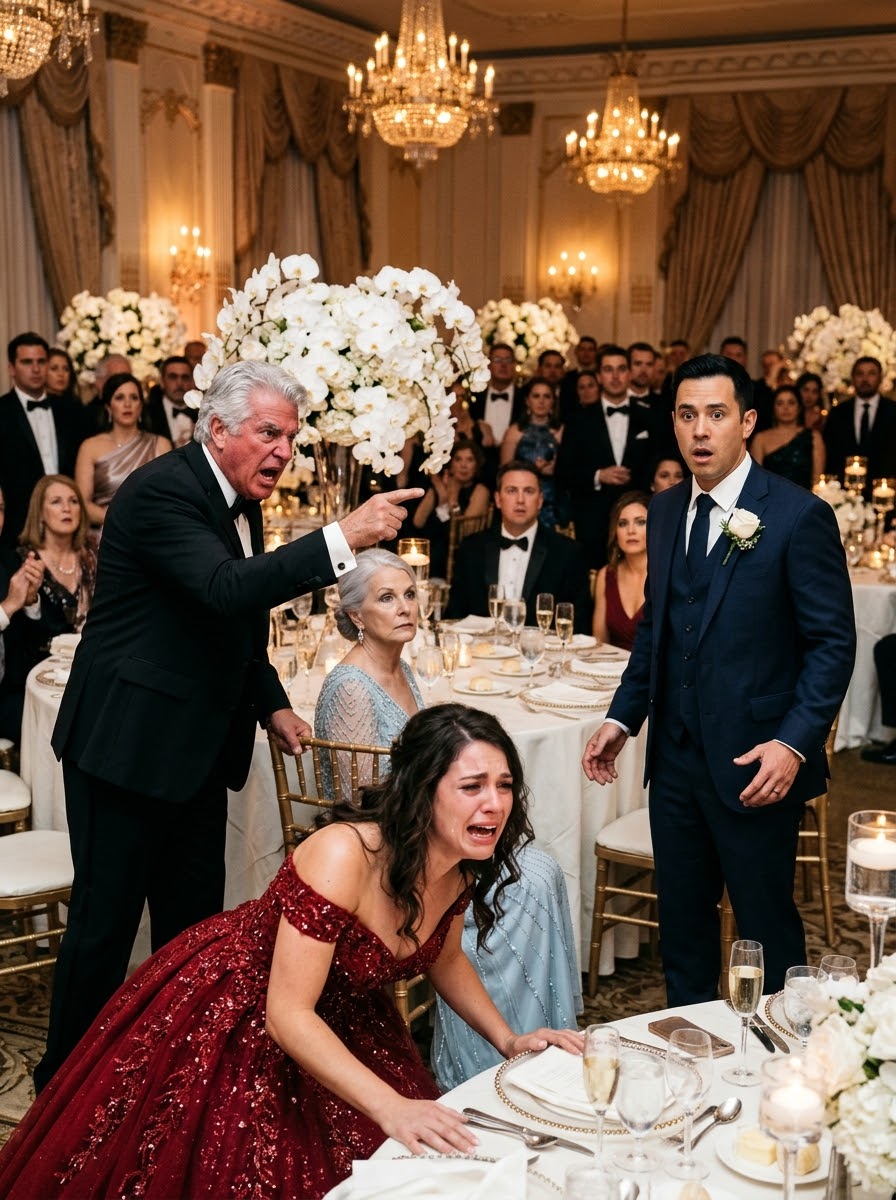
Her words reverberated throughout the ballroom, reaching every corner of the room. The applause stopped immediately. The orchestra fell silent. Nearly two hundred guests remained frozen, staring at the bride, whose expensive wedding gown was now stuck to the chair by the very substance she had intended to use against my wife.
Rosario tightened her hold on my hand.
“Bill… what is happening?”
For a moment, I couldn’t find the words. My eyes remained fixed on Nicholas. He was looking at me, and for the first time, I didn’t see the little boy I had raised. I saw a man who had suddenly realized he might have to face the consequences of his behavior.
Renee struggled once more. The lace made a sharp ripping noise as she pulled against the chair. Several guests covered their mouths. A nervous laugh came from somewhere near the back, but nobody else joined in.
“Get me out of this, you idiot!” Renee snapped.
Nicholas grabbed her arm. “Stop making a scene.”
“I’m stuck!”
Her voice came through the microphone again. Every person in the ballroom heard her.
Mrs. Amparo, Renee’s mother, suddenly jumped to her feet. Her pearl necklace shook against her chest.
“What kind of disgusting behavior is this?”
I slowly stood up. I wasn’t attempting to make some grand entrance. At my age, even getting to my feet took effort, especially when something inside you has just been shattered.
“This is what your daughter arranged for my wife.”
Rosario turned toward me, her eyes filled with bewilderment.
“For me?”
Her voice was barely a whisper. It was painful to hear such a faint sound from a woman who had spent forty years holding our family together with remarkable strength and patience.
Nicholas moved closer.
“Dad, don’t start.”
I looked straight at him. For the first time, I struggled to recognize the child I had once carried on my shoulders. Instead, I saw a grown man who had learned to hide behind his father’s surname and treat his mother’s kindness as something he could exploit indefinitely.
“I didn’t start anything, Nicholas. All I did was exchange the place cards.”
Whispers spread throughout the ballroom.
Renee began to cry, but there was no sincere remorse in her expression. She was humiliated, furious, and incapable of accepting that someone had turned her own plan against her.
“He did this!” she yelled, pointing at me. “Mr. Aranda did this to me!”
I gave a calm nod.
“Yes. I gave you the seat where you intended to put the glue.”
Rosario pressed a hand against her chest.
“Glue?”
Nicholas stepped toward me.
“Dad, stop talking. There are guests here.”
“That is precisely why I intend to speak.”
I picked up my glass and returned it to the table. I wasn’t planning to give a toast. I wanted everyone present to remember what had happened.
“Thirty-five years ago, your mother sold her earrings so she could afford the private school you insisted on attending. Twenty-eight years ago, she went months without eating meat because she was saving every penny to buy you your first computer. And twelve years ago, when you crashed your car while driving drunk and begged me not to find out, your mother secretly paid for the damage to the other man’s vehicle.”
Nicholas’s face went pale.
“That has nothing to do with today.”
“It has everything to do with today. The woman you wanted to humiliate—the woman you wanted to leave helpless, frightened, and ashamed in front of hundreds of people—is the same woman who stayed beside you whenever you were sick. When you had a fever as a little boy, she held you all night and begged me not to punish you because, in her eyes, you were still just her child.”
Rosario quietly began to cry.
I looked at her and felt something inside me break. She should never have been forced to discover the truth this way. But cruelty has a way of exposing itself when people least expect it. All we can do is decide whether to continue pretending it doesn’t exist.
Mrs. Amparo hurried toward Renee and started tugging at the fabric.
“Someone get scissors! Bring alcohol! Find something to help her!”
A waiter quickly approached.
Renee tried to conceal her face.
“Mom, please do something!”
Her mother angrily turned toward me.
“You are a terrible man! How can you destroy your own son’s wedding like this?”
“No, ma’am. Your daughter destroyed it when she decided my wife was nothing more than an ugly detail that needed to be removed from the wedding photographs.”
Mrs. Amparo opened her mouth but couldn’t come up with an answer.
Then a young woman’s voice rang out from the crowd.
“I recorded everything.”
Every head turned.
It was Danielle, Renee’s cousin. She held her phone in her hand, her face pale.
“I’m sorry, Renee,” she said. “But before the ceremony, you kept making jokes about Rosario. You said she would become the entertainment of the evening. I thought you were just being cruel, but something about it made me uncomfortable, so I started recording.”
Renee shot her an angry glare.
“Danielle, put your phone away!”
“No.”
Nicholas shouted from beside the table.
“Put that phone down!”
His reaction only made matters worse.
Danielle’s hands trembled, but she continued recording.
“I also have footage of Nicholas discussing what would happen after the wedding. He said he would persuade Mr. Aranda to transfer control of the construction company to Renee because his mother was supposedly very ill and his father would soon be left alone.”
The entire ballroom fell silent.
Rosario slowly loosened her grip on my hand. She didn’t pull away abruptly. Her fingers gradually relaxed one after another, as though she had just discovered something painful she could no longer bear to hold on to.
She looked at our son.
“Did you really say that?”
Nicholas turned toward her.
“Mom, that’s not what I meant.”
But he made no attempt to approach her.
Renee’s chair had become a dividing line nobody wanted to cross.
I reached into my pocket and took out my phone.
“Ben.”
My driver appeared near the rear entrance.
“Yes, Mr. Aranda?”
“Bring the black folder from the car.”
Nicholas looked at me with genuine fear. Finally, he seemed worried—not about the suffering he had caused his mother, but about what his actions might cost him.
People who have spent their entire lives receiving everything often fear losing their privileges more than they fear hurting someone else.
Ben returned with a black folder. It was the same one my attorney had prepared two days earlier, following months of suspicions and conversations I had repeatedly avoided.
I placed it on the head table and opened it.
“I had planned something very different for today, Nicholas. I came here intending to give you a wedding present.”
Renee stopped struggling for a moment.
Nicholas swallowed.
“Dad…”
“I planned to appoint you director of our residential development division. I was going to transfer some company shares and make sure you had a secure future.”
Rosario looked at me, obviously confused.
I turned toward her and softened my voice.
“I also wanted to ask you to come home for dinner with your mother once a week. Nothing complicated. Just an old man’s wish to see his family together.”
Nicholas’s eyes filled with tears. But I could no longer tell whether those tears meant anything.
I pulled out the first document.
“This was the trust fund.”
Then I ripped it in half.
A shocked gasp swept through the room.
Nicholas stepped forward.
“You can’t do that!”
I picked up another sheet.
“This was your appointment.”
“Dad, please!”
I tore that one apart, too.
“And this was the authorization allowing you and Renee to use our summer house in the Hamptons during your first year of marriage.”
Renee screamed from her chair.
“Nick! Do something!”
I looked at her.
“He has already done more than enough.”
Mrs. Amparo began to cry.
“My daughter made a mistake. It was supposed to be a joke. You cannot destroy two families over a chair!”
Rosario slowly lifted her head.
Her cheeks were wet, but her voice had become firm.
“It was never just a chair.”
The room went quiet.
My wife, dressed in her sky-blue gown, carefully pushed herself upright. I reached out to help, but she gently indicated that she wanted to stand on her own.
And she did.
“It wasn’t just a chair,” she repeated. “It was my body. My hip. My dignity. My fear. You weren’t simply trying to ruin a dress. You wanted to make me feel worthless so your son wouldn’t have to feel guilty about treating his own mother with contempt.”
Nicholas finally broke down in tears.
“Mom, I’m sorry. I lost control. Please forgive me.”
Rosario looked at him with the sorrow of someone examining something she had spent her entire life building, only to discover it had been quietly destroyed from within.
“I don’t know whether I can.”
Those words appeared to hurt him more than anything else that had happened that evening.
Renee continued pulling desperately. Eventually, the fabric ripped from her hip down toward her thigh. Several guests turned away, uncomfortable with what they were witnessing.
Two hotel employees arrived carrying a specialized adhesive remover. After examining the situation, one of them shook his head.
“This adhesive won’t come off easily. We’ll need to cut away part of the dress and remove the remaining material carefully. If this had happened to an elderly person, it could have caused a serious injury.”
Rosario closed her eyes.
Nicholas covered his face.
I felt sick. Hearing about the damage was one thing. Listening to a stranger explain how close my wife had come to suffering a serious injury because of her own son was something else entirely.
At that moment, my lawyer arrived.
Ramiro was a serious, silver-haired man who rarely showed up without a reason.
“Mr. Aranda,” he said, approaching me. “I received your call.”
Nicholas raised his head.
“You called your lawyer, too?”
“Not before the ceremony,” I replied. “But once I learned what you were planning, I knew I needed legal protection.”
Ramiro stepped forward.
“The hotel has internal security footage. The management has already been instructed to preserve it. We also have witnesses and recordings that may establish an intention to harm someone who was particularly vulnerable.”
Renee screamed.
“I’m not a criminal!”
Ramiro remained composed.
“That is something a court will determine, ma’am.”
“I’m not even his wife yet!” Renee shouted.
Her words seemed to stop Nicholas in his tracks.
She hadn’t denied the accusations. She hadn’t shown concern about what had happened. She hadn’t even asked whether anyone was hurt.
Her immediate concern was whether she would still become an Aranda.
Rosario turned toward our son.
“Have you signed the marriage papers?”
Neither Nicholas nor Renee responded.
Ramiro opened another folder.
“The religious ceremony has taken place. However, the civil registration was scheduled for seven o’clock this evening, after the reception.”
Relief briefly washed over me, followed by shame for feeling relieved at such a moment.
At least my son wasn’t legally married to that woman yet. There was still an opportunity to prevent another mistake.
Nicholas looked at me desperately.
“Dad, please don’t do this. Everyone is emotional. Renee made a mistake, and I made one too. But we’re still family.”
“Family?” I repeated. “Only three hours ago, you were telling people your mother looked like an old piece of furniture.”
Rosario flinched.
Nicholas shook his head.
“I wasn’t thinking clearly.”
“No. You knew exactly what you were saying. You simply never imagined anyone would hear it.”
He dropped to his knees before his mother.
“Mom, please forgive me. I let Renee influence me. She was nervous, and I didn’t want to…”
Rosario stepped backward.
“Don’t blame that woman for words that came from your own mouth, Nicholas.”
Renee, now partially covered with a borrowed tablecloth while the employees worked to free her dress, suddenly let out a bitter laugh.
“How convenient! Now everything is my fault. He told me his mother was controlling his life. He said she pretended to be sicker than she really was just to manipulate him. He also told me his father would eventually leave him with nothing if he didn’t get married quickly.”
Nicholas spun toward her.
“Shut your mouth!”
But Renee had reached the point where she no longer wanted to face the consequences alone.
“No, sweetheart. If I’m going down, you’re coming with me.”
The guests held their breath.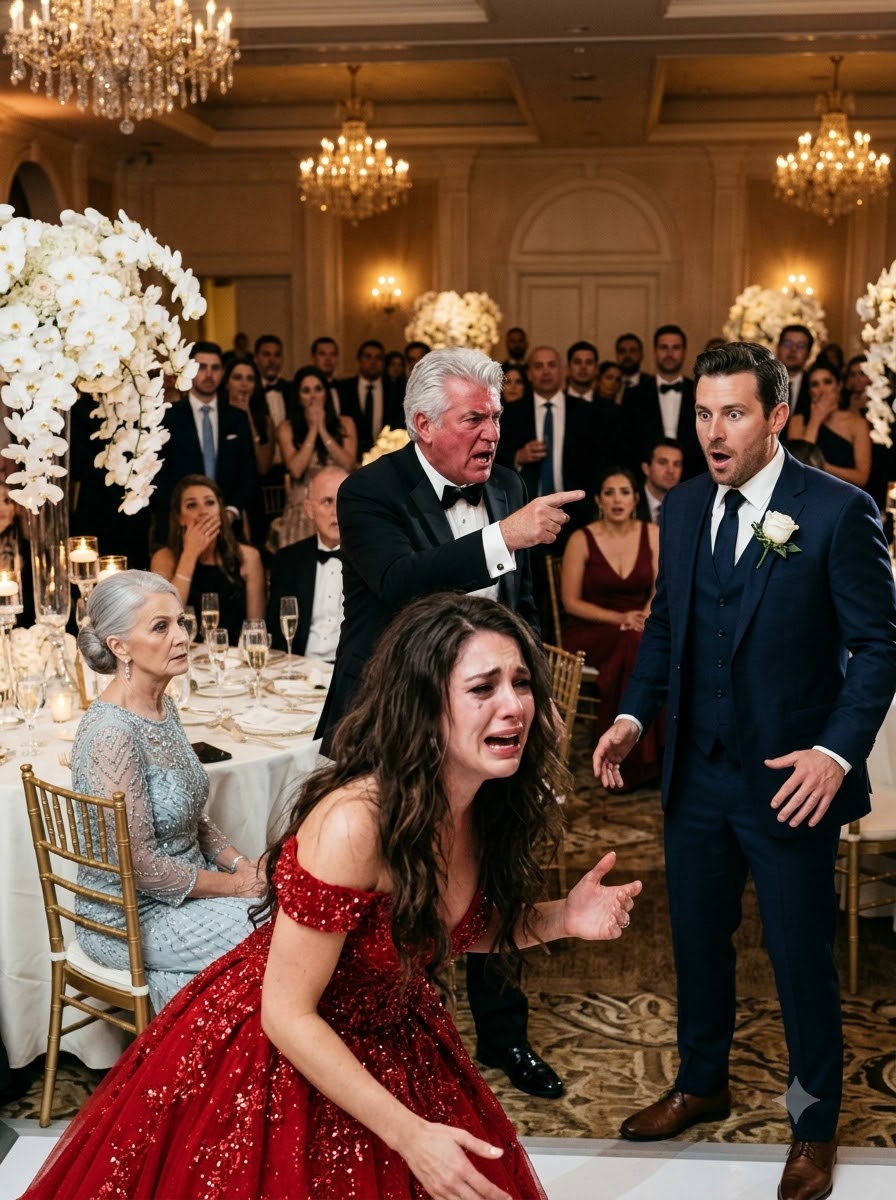
She turned toward me.
“Do you want the truth, Mr. Aranda? Your son doesn’t love me, and I don’t love him either. This marriage was a business arrangement.”
Rosario covered her mouth.
I could hear my heartbeat pounding in my ears.
“What arrangement?”
Nicholas shouted her name.
“Renee!”
She gave a bitter smile.
“Your precious son needed to marry before you changed your will. My mother needed me to enter a wealthy family before we lost our house. Everyone was supposed to benefit.”
Mrs. Amparo hurried toward her.
“Stop talking, you fool!”
But it was already too late.
Ramiro was recording. Danielle was recording. And judging by the number of phones raised around the ballroom, plenty of other guests had captured her confession.
I looked at Nicholas.
“Did you know about my will?”
He remained silent.
Ramiro frowned.
“Mr. Aranda, only three people were supposed to know the details of that clause: you, me, and the notary.”
A cold sensation spread through my body.
Renee laughed again.
“Well, someone else knew. Nicholas had a copy.”
My son turned completely pale.
Ramiro approached him.
“Where did you get that document?”
Nicholas didn’t respond. Instead, his eyes shifted toward a table near the back of the ballroom.
I followed his gaze.
My younger brother, Esteban, was sitting there. His drink remained untouched. His suit was immaculate, and his expression belonged to a man watching a disaster he had helped bring about.
I understood before anyone said another word.
Esteban had worked alongside me for thirty years. He knew my offices, my business records, and the places where Ramiro stored important documents before they were formally signed.
Ever since I had decided to protect Rosario’s future by placing most of my assets in her hands rather than simply leaving everything to Nicholas, Esteban had gradually stopped visiting us.
“Nobody else, Uncle Esteban,” Nicholas whispered.
The name was enough to attract everyone’s attention.
My brother slowly placed his glass on the table.
“Bill, don’t make assumptions.”
Rosario grabbed my arm. This time, she was the one keeping me steady.
I looked at Esteban, then at Nicholas, Renee, and Mrs. Amparo. Around us, the guests no longer knew whether they were attending a wedding or witnessing the collapse of an entire family.
PART 2
Suddenly, I realized the incident with the chair had never been an isolated prank. It was simply the visible crack in a much larger structure.
Something underneath had been rotten for years.
My family. My blood. My name.
Ramiro leaned closer.
“Mr. Aranda, we need to leave and secure your documents immediately.”
I nodded.
But before we could move, Rosario released my arm and approached Nicholas.
Everyone assumed she was going to embrace him. Even I thought so. A mother can sometimes forgive things that the rest of the world considers unforgivable.
Instead, she removed the imitation-pearl brooch pinned to her chest and placed it in his hand.
“I was saving this for the day you had your first child,” she said. “It belonged to my mother. I’m giving it to you now so you’ll remember that the only false thing at this table was never the pearls.”
Nicholas completely broke down.
Rosario returned to my side.
“Take me home, Bill.”
I gently took her arm.
We walked past Renee, who had finally been partially freed. Part of her expensive gown remained attached to the chair, like a piece of fabric abandoned by a carefully constructed lie.
As we approached the exit, Esteban hurried after me.
“Brother, wait. You’re making a terrible mistake.”
I stopped.
“No, Esteban. My mistake was believing that family relationships never needed to be inspected for structural damage.”
His expression hardened.
“You don’t know the whole story.”
“Then tell me.”
He glanced at Rosario, then Ramiro, and finally at Nicholas, who was still kneeling on the floor.
“Your father’s letter wasn’t the only document I copied.”
Ramiro immediately became alert.
“What else do you have?”
Esteban offered a faint, unpleasant smile.
“The letter your father left before he died.”
I felt the air leave my lungs.
My father had been dead for forty years. I had always believed he had never left a letter.
Esteban reached inside his jacket and pulled out an old yellow envelope.
My name was written across the front.
Guillermo.
There was no mistaking my father’s handwriting.
Rosario whispered my name.
Esteban held the envelope up.
“If you destroy me today, you’ll also destroy the story you’ve believed about how you built your company—and who actually paid for that first piece of land.”
My grip tightened around Rosario’s cane.
The wedding was no longer the issue. The chair, the adhesive, the humiliation, and the ruined dress had opened a door to something much older.
Behind it stood my own brother, holding a secret that had remained buried in our family for four decades.
That evening, I left the ballroom with my wife safe, my son on his knees, and my family in ruins.
But when I finally opened my father’s envelope in the car, I realized Renee hadn’t been the greatest betrayal of the night.
She had merely been the one everyone could see.
If you had been in my position, would you have forgiven Nicholas, or would you have let him face the consequences of his decisions?
Share your thoughts in the comments and follow the page, because the contents of that letter didn’t simply change my understanding of our inheritance. They revealed why my father had hidden the truth about Esteban’s parentage for so many years.
Esteban held the envelope as though it were a weapon.
And, in a way, it was.
It couldn’t fire a bullet, but it could destroy everything I believed about my past.
For forty years, I had repeated the same story about my beginnings. My father had died leaving me an aging truck, a few tools, unpaid debts, and one piece of advice:
“Concrete has no mercy for a lazy man.”
Those words had become the foundation of my life. I built my construction company around them. I raised my son with them. They taught me when to be demanding and when to remain humble.
But now I was holding an envelope bearing my father’s handwriting.
And when the dead finally speak after decades of silence, they rarely do so merely to offer comfort. Sometimes, they return to demand the truth.
“Give it to me,” I demanded.
Esteban raised the envelope slightly.
“Not here.”
I let out a bitter laugh.
“Now you’re worried about people watching? A few minutes ago, you were perfectly comfortable watching my wife being humiliated in front of two hundred guests.”
“I had nothing to do with the chair.”
“But you were involved in everything else.”
He didn’t respond.
Rosario held my arm. Her fingers felt cold.
“Bill, let’s go.”
“We will,” I replied. “But the envelope is coming with us.”
Esteban pressed his lips together.
Nicholas slowly got up from the floor. His face was swollen from crying, his eyes were red, and his expensive suit was badly wrinkled.
For a brief moment, he reminded me of the little boy who used to break something and then hope his mother would convince everyone it had happened accidentally.
“Dad, listen to Uncle Esteban. He never wanted to hurt you.”
I stared at him.
“And what about you?”
His gaze dropped to the floor.
That silence told me everything.
Ramiro stepped between us.
“Mr. Esteban, if that document belongs to Mr. Aranda, you should return it. If it was taken from private records or used to influence financial decisions, the situation could become considerably more serious.”
Esteban gave a sarcastic smile.
“You always act like a man of principles, Ramiro. It’s interesting, considering how willing you were to help Bill exclude Nicholas from the company.”
“I didn’t exclude anyone,” I replied. “Your nephew excluded himself when he started treating an inheritance as something he was automatically entitled to.”
From the back of the room, Renee shouted:
“Well, obviously he needed to get married! You were planning to leave everything to your wife!”
Rosario closed her eyes.
It wasn’t weakness. It was exhaustion—the kind that comes from hearing people discuss your life as though you were nothing more than an asset waiting to be divided.
“I am not a prize for anyone to claim,” she said.
Her voice was soft, but her words silenced the room.
Esteban looked at me again. His confidence was beginning to fade.
He had expected me to become frightened. He believed mentioning my father would make me forget what had happened to Rosario. Perhaps he thought the old letter would be enough to make me abandon every question surrounding the wedding.
But decades in the construction business had taught me something important.
When a support column develops a crack, you don’t conceal it with a fresh coat of paint. You investigate the damage, inspect the steel inside, and determine whether the structure can still stand.
“I’m asking you one last time,” I said. “Hand me the envelope.”
For a moment, Esteban looked ready to tear it apart.
Ramiro moved forward.
But Danielle, the young woman who had recorded Renee’s confession, stepped closer first.
“Mr. Esteban,” she said nervously, “everything is being recorded. If you destroy that letter, everyone will see it.”
Esteban glared at her.
“Stay out of this, girl.”
“No,” she answered, her voice trembling. “I’m tired of pretending nothing is wrong in this family.”
I barely knew Danielle, but I admired her courage. Sometimes, the people who grow up surrounded by dishonesty are the ones who eventually decide to speak the truth.
Esteban gave a bitter laugh and tossed the envelope toward me.
I caught it.
It was surprisingly light, considering how much it seemed to weigh.
I didn’t open it just yet.
“Ramiro,” I said, “we’re leaving.”
“It’s better to use the side entrance, Mr. Aranda. Hotel security has already secured the surveillance recordings and the witness information.”
Nicholas made one final attempt to approach his mother.
“Mom, please. Don’t leave like this.”
Rosario turned toward him.
“What exactly do you want me to do, Nicholas?”
He couldn’t answer.
“Leave with my dignity? Leave without being injured? Or stay so you can explain why you wanted to see your own mother suffer?”
Nicholas began crying again.
“I never wanted to hurt you.”
Rosario slowly shook her head.
“No, son. You wanted to hurt me just a little. Enough to make everyone laugh. Enough to remind me that you believed I had no place in your life. But you forgot something. I was the person who taught you to walk. I knew where I belonged long before you learned how to stand.”
Nicholas seemed to crumble under the weight of her words.
I felt sorry for him. Despite everything, I could still remember the innocent child he had once been.
But feeling pity isn’t the same as offering forgiveness.
That evening, I understood that sometimes a parent must love a child from a distance, especially when remaining close only gives that child more opportunities to cause harm.
We walked out of the ballroom surrounded by whispers.
Nobody applauded. Nobody attempted to stop us.
Ben was waiting with the SUV near the side entrance.
I opened the door for Rosario, and she carefully climbed inside. Ramiro took the front passenger seat.
I remained outside for a moment, holding my father’s envelope.
From the main entrance, I could still hear the shouting. Renee was arguing with her mother. Mrs. Amparo was blaming Nicholas. Nicholas was calling after me, while Esteban demanded that someone listen to his side of the story.
The people who had arrived to celebrate a wedding were now fighting to escape the consequences of their own secrets.
Finally, I climbed into the car.
“Take us home,” I told Ben.
Nobody spoke during the drive.
Rosario gazed out the window. Her tears had stopped, but the sadness remained in her eyes.
I lowered my gaze toward the envelope.
Guillermo.
The handwriting was firm and slightly slanted, exactly as I remembered.
We arrived home as the evening light began to disappear.
Ben offered to assist Rosario out of the vehicle, but she politely refused. She wanted to walk inside by herself.
Every step seemed to remind her that she was still standing, despite everything that had happened.
Inside, the house looked just as it always had. The familiar sofas, family photographs, and Nicholas’s childhood portrait remained in their usual places.
Rosario stopped in front of the photograph on the piano.
He was six years old in that picture, smiling with his front teeth missing and a little soccer medal hanging around his neck.
She gently touched the frame.
“I must have done something wrong,” she whispered.
My heart tightened.
“No, Chayo.”
“Yes, Bill. Somehow, our son grew up believing his own mother was an obstacle.”
I moved closer.
“Some children mistake love for permission to hurt the people who care about them. That isn’t the fault of the person who loved them.”
She looked at me.
“What if we spoiled him too much?”
I remembered all the occasions when we had excused his behavior. The times we convinced ourselves he was simply tired. The broken belongings we replaced without teaching him responsibility. The doors we opened for him before he had learned to knock.
I didn’t want to offer her an easy answer.
“Perhaps we did,” I admitted. “But giving a child too much doesn’t automatically teach him to become cruel. Those were still his choices.”
Rosario sat on the sofa. I took the seat across from her.
Ramiro remained standing nearby, allowing us some time to gather ourselves.
I placed the envelope on the coffee table.
For almost a minute, nobody touched it.
Finally, Rosario took a deep breath.
“Open it, Bill.”
My fingers trembled as I lifted the flap.
Inside were three things: a handwritten letter, an old receipt, and a photograph.
The photograph slipped out first.
It showed my father as a young man, standing beside my mother with his hat in his hand. Behind them stood a woman whose eyes I recognized immediately.
Aurelia.
Rosario’s mother.
In the picture, my father held a folder while Aurelia rested one hand against it, as though she had just given him something important.
Rosario leaned closer.
“That’s my mother.”
Her voice broke.
I picked up the letter.
Its opening sentence was written in my father’s familiar handwriting.
“Guillermo, if you’re reading this, it means I never found the courage to tell you the truth while I was alive.”
I had to stop for a moment.
Rosario reached for my hand.
I continued reading.
My father explained that when I was twenty-two, I had been desperate to purchase my first piece of land. I wanted to establish a construction business, but I had no money.
The old truck was worth almost nothing. My tools had already been pawned, and the bank was threatening to repossess our house because of the outstanding debt.
Then Aurelia stepped forward.
She had saved a modest amount over many years. It wasn’t a fortune, but it represented almost everything she had earned through sewing, selling little items, and putting aside a few coins whenever possible.
She had kept the money in old tins and containers, saving a little at a time.
She gave it to my father under one condition: it had to help Rosario and me build a future.
Not for himself.
Not for Esteban.
Not for the Aranda family.
She wanted me to have the chance to establish a business and wanted her daughter to live without constantly worrying about money.
My father agreed.
He purchased the land under his own name because he believed that arrangement would be simpler.
Later, he transferred it to me and allowed me to believe that the entire investment had come from his personal sacrifice.
He never mentioned Aurelia.
He never mentioned Rosario.
And he never told me that the original foundation of my company had been financed by the savings of a woman I had always remembered as someone who quietly served coffee in chipped cups.
My chest tightened.
Construction Aranda. My pride. My life’s work. Every anniversary speech in which I described how I had built the company from nothing.
The beginning of everything had been made possible by someone I had never properly acknowledged.
Rosario was now crying openly.
“My mother never told me about this.”
I continued reading.
My father confessed that he had regretted keeping the truth hidden for years. He had wanted to set the record straight, but shame had gradually become part of his life.
Eventually, Esteban discovered the original receipt and demanded a share of the business. He argued that because the initial financial support had come from someone connected to the family, he deserved part of what had been established.
My father refused.
According to the letter, that refusal marked the beginning of Esteban’s resentment.
He had spent years believing something had been unfairly withheld from him, when the real problem was that he couldn’t accept the truth about how the company had begun.
PART 3
The final sentence made me stop reading.
“If you are an honest man, Guillermo, put the right person’s name where I placed mine.”
I lowered the letter.
Nobody spoke.
The silence in the living room felt heavier than anything we had experienced at the wedding.
Ramiro carefully examined the receipt.
“This document could have historical and possibly legal significance. If we can locate additional records, we may be able to establish the source of the company’s original capital.”
I looked at Rosario.
For most of my life, I had called Construction Aranda my company.
She had never corrected me. She had never demanded financial recognition. She had never asked me to explain how much her mother had contributed.
Instead, she woke early whenever I had work. She waited for me with dinner. She helped me select gifts for employees and patiently listened whenever I discussed a new contract.
She had watched me celebrate my achievements without ever reminding me that her mother’s money had helped make them possible.
How many times does someone remain silent not because they have nothing to say, but because they don’t want to diminish the pride of the person they love?
I slowly knelt before her.
My knees protested, but I ignored them.
“Forgive me, Chayo.”
She shook her head.
“You didn’t know.”
“But I enjoyed a version of our history that left out the most important part. I never asked how much you and your mother had sacrificed to help me achieve my dreams.”
She gently touched my cheek.
“I gave you my life, Bill. I don’t regret that. But I don’t want my contribution to remain invisible anymore.”
I kissed her hand.
“It won’t.”
Ramiro cleared his throat.
“Mr. Aranda, we need to act before Esteban has an opportunity to move or alter anything. If he had access to company records, there may be additional copies or transactions we need to investigate.”
I stood up.
The angry man who had walked out of the ballroom was gone. In his place stood someone who wanted to restore order rather than simply pursue revenge.
“Tomorrow morning, we’re going to the office. We’ll change every access code, examine the records, revoke unnecessary authorizations, and arrange an extraordinary board meeting.”
Ramiro nodded.
“And Nicholas?”
I looked at the childhood photograph on the piano.
The innocent boy in that picture remained part of my memories, but the adult standing in the ballroom was responsible for his own decisions.
“Nicholas will have no authority over the company. No position, no signing privileges, no financial benefits, and no access to the trust until everything has been properly reviewed. If he ever wants a place at my table again, it will have to be earned through his actions.”
Rosario closed her eyes.
I knew how painful that decision was for her.
It hurt me, too.
But sometimes difficult decisions are like surgery. They cause pain because something unhealthy has to be removed.
That night, Esteban called me seventeen times.
Nicholas called thirty-four times.
Renee sent a message from an unfamiliar number:
“You’re going to destroy yourself along with everyone else.”
I read it and deleted it.
Not because I was frightened.
But because I no longer wanted unnecessary poison in my life.
The following morning, I arrived at the company with Rosario.
I had never taken her to a business meeting before. I had always assumed she would find such discussions uninteresting.
The truth was more uncomfortable.
I had created a world in which she was welcome at celebrations but rarely included in decisions.
That arrangement was over.
Employees looked surprised when they saw her walking beside me. Some greeted her warmly. Others offered polite smiles, uncertain about how much they should ask about the previous evening.
The boardroom was already occupied.
The directors were present, along with Ramiro, our accountant, the notary, and Esteban.
My brother had arrived early.
He was sitting in my chair.
When I entered, he didn’t even bother to stand.
“How dramatic,” he remarked. “Bringing Rosario along to make everyone feel sorry for you.”
Rosario stepped forward before I could respond.
She placed her purse on the table and looked straight at him.
“Esteban, stealing from the dead to pressure the living is not something that deserves sympathy.”
Several people lowered their eyes.
Esteban’s face turned red.
“You know nothing about business.”
“I know about foundations,” Rosario replied. “My mother paid for the first one.”
The room fell silent.
Ramiro distributed copies of the letter, the receipt, and several records we had uncovered that morning.
They included evidence of unauthorized access to company files, copies of documents sent to Esteban’s personal email account, and suspicious communications.
Our accountant appeared increasingly uncomfortable.
“Mr. Aranda, there are transactions that require further examination. Several suppliers connected to Mr. Esteban appear to have submitted invoices with unusually high prices.”
Esteban slammed his palm against the table.
“That’s a lie!”
Ramiro remained calm.
“Then you should have no objection to an independent audit.”
That was when my brother finally realized the envelope had never been the weapon he imagined.
It was evidence.
He stood up angrily.
“I helped you build this company!”
“Yes,” I replied. “And you were compensated. You received a salary, shares, bonuses, vehicles, business trips, and years of patience from me. What you were never entitled to was the right to undermine my family from within.”
“Dad always favored you!”
His words hurt, but not in the way he expected.
After forty years, he was still fighting an old resentment.
“Then take that complaint to his grave,” I said. “But leave my wife out of it.”
The notary formalized Esteban’s temporary removal from operational responsibilities while the investigation continued.
Ramiro began arranging the necessary legal steps regarding the copied documents. The accountant provided backups, and the directors signed the required confidentiality agreements.
Then I stood before everyone in the room.
“There is something else that needs to be corrected. From this day forward, the woman who provided the original capital for this company will be publicly recognized as its moral founder: Aurelia Méndez.”
I paused and looked at Rosario.
“Without her contribution, this business would never have existed. I also appoint my wife, Rosario Méndez de Aranda, as president of our new family heritage council.”
Rosario stared at me as though I had just opened a window in a room where she had spent years struggling to breathe.
“Bill…”
I gently interrupted her.
“This isn’t a present, Chayo. It’s a correction.”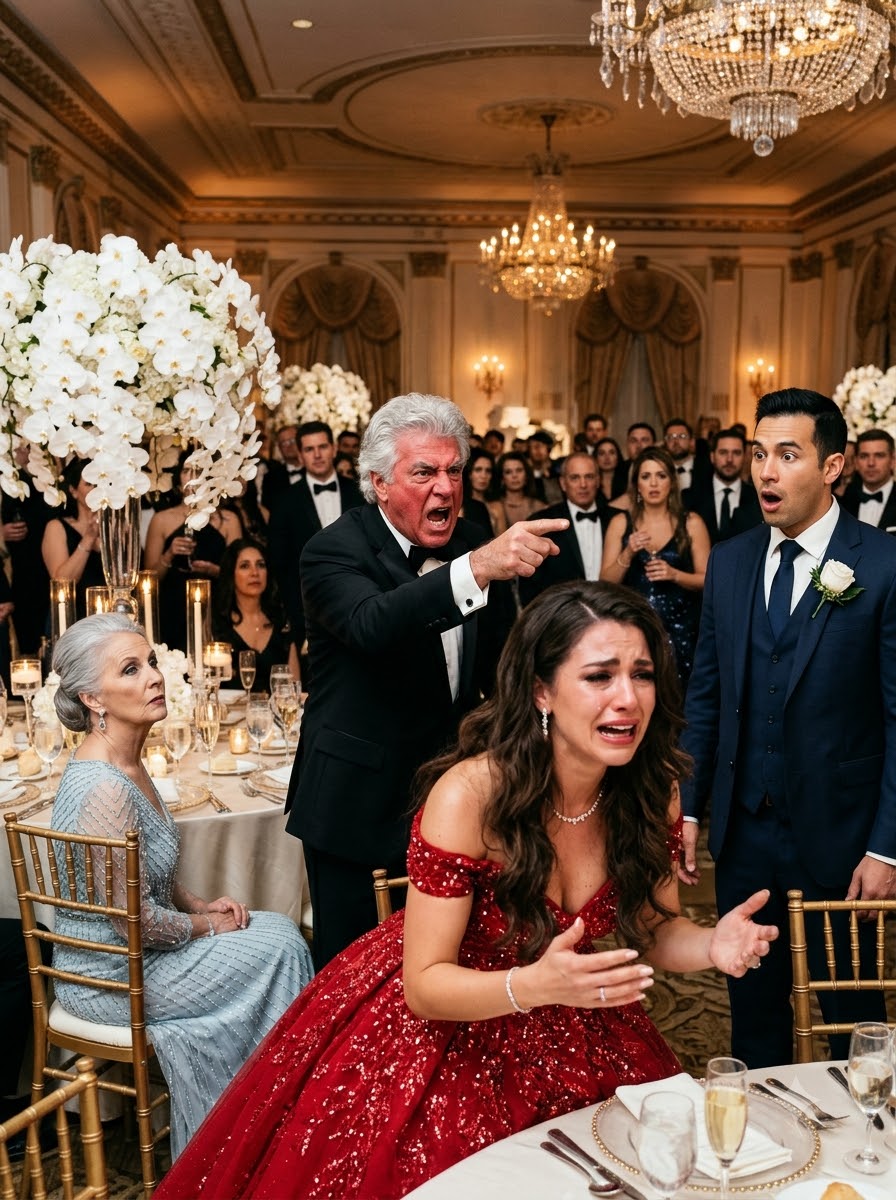
Three months later, the company established a scholarship program for employees’ children.
It was named the Aurelia Méndez Scholarship.
Rosario insisted that students should be free to pursue whatever future they wanted. Engineering, nursing, cooking, accounting, music—every path deserved encouragement.
“Not everyone is meant to build buildings,” she said. “Some people build lives in other ways.”
On inauguration day, Rosario cut the ribbon.
I stood nearby and applauded.
For the first time, I had no desire to be at the center of the celebration. I discovered that pride could be just as powerful when it meant watching the right person receive the recognition she deserved.
Nicholas wasn’t there.
After the wedding was canceled, he disappeared for two weeks.
Then, one evening, he arrived at our gate, visibly drunk and crying.
We didn’t allow him inside.
Rosario cried behind the curtain.
So did I.
But we kept the door closed.
The following morning, I sent him a message.
“I love you. But I will not protect you from the consequences of your decisions. When you’re sober and ready to make things right without demanding forgiveness, contact Ramiro.”
Months went by.
Nicholas sold his car. Renee left him after realizing there would be no trust fund, no summer house in the Hamptons, and no wealthy family name she could use to improve her position.
Mrs. Amparo attempted to take legal action against the reception hall, the hotel, me, and even the company that manufactured the chair.
None of those efforts succeeded.
Danielle provided her statement. Eventually, more recordings came to light.
Once people stop being afraid to tell the truth, evidence has a way of multiplying.
Esteban’s situation became increasingly serious.
The initial audit uncovered relatively minor financial irregularities. Then investigators discovered much larger problems involving inflated supplier costs, questionable contracts, unauthorized favors, and suspicious signatures.
I didn’t need to destroy my brother.
His own ambition had already left a trail of evidence behind him.
One afternoon, he asked for a meeting.
I agreed, but not at my house.
We met on a bench outside the office.
He looked considerably older than I remembered. Perhaps he had changed. Or perhaps I was finally seeing him without the image of a loyal brother clouding my judgment.
“Are you going to send me to prison?” he asked.
“That decision isn’t mine alone.”
“We’re family. We’re blood.”
I looked down at my hands.
They were the hands of a man who had worked, negotiated contracts, built structures, and signed countless documents. They were also the hands of someone who had trusted the wrong people without asking enough questions.
“Blood isn’t concrete, Esteban. It can’t hold together something that’s already rotten. Sometimes, it only leaves a stain.”
He laughed bitterly.
“Dad gave you everything.”
“No. Dad gave me a false story. You took advantage of it, and I believed it. Rosario paid the price.”
He had nothing else to say.
He walked away, and I haven’t seen him since.
Nicholas’s story was different.
A son never completely disappears from a parent’s heart, regardless of how much damage he causes.
About a year after the canceled wedding, Ramiro called me.
“Mr. Aranda, Nicholas came to see me.”
Rosario and I went together.
Nicholas was waiting in the reception area. He looked thinner, was clean-shaven, and wore a simple shirt. His expensive watch was gone, along with the familiar entitlement he had carried everywhere.
When he saw us, he stood up.
He didn’t rush toward us or immediately start crying.
That made me willing to listen.
“Mom. Dad.”
Rosario squeezed my hand.
Nicholas took a folded piece of paper from his pocket.
“I didn’t come to ask for money, a job, or for you to cancel anything. I just wanted to give you this.”
It was a letter.
Unlike my father’s old envelope, this one was new. But it carried just as much weight.
Nicholas began reading.
He apologized for treating his mother with contempt. He admitted that he had planned to benefit from my money and had allowed Renee to arrange a cruel humiliation. He acknowledged that he had mistaken love for obligation and believed our family name gave him permission to take whatever he wanted.
Then he looked at Rosario.
“I’m not asking you to hug me. I’m not asking you to trust me again. I just want you to know that I’m attending therapy. I’m working at a hardware store for someone who doesn’t even know my background. And I’m paying my rent with money I’ve earned myself.”
He paused.
“I’m frightened sometimes. But I think I needed to learn how to live without depending on everything you gave me.”
Rosario’s eyes filled with tears.
Mine did, too.
Nicholas placed the letter on the table.
“I’ll keep meeting with Ramiro every month and let him know how I’m doing. If one day you want to see me for ten minutes at a coffee shop, I’ll be there. If you aren’t ready, I’ll respect that.”
Then he turned and walked away.
Rosario didn’t call him back.
But she didn’t throw away the letter, either.
She placed it inside her purse and read it three times that evening.
She didn’t ask me what she should do. A mother understands that forgiveness cannot be forced. Sometimes it comes slowly, accompanied by hesitation. Sometimes it never comes.
Six months later, we agreed to meet Nicholas at a café.
What was supposed to be a ten-minute conversation lasted fifteen minutes, then half an hour.
He didn’t return to our house for quite some time.
When he finally came back, he didn’t walk inside as though he owned the place.
He rang the doorbell and waited.
He brought flowers for Rosario and a toolbox for me.
“I thought I could help repair the garden gate,” he said. “If you’ll let me.”
I agreed.
We worked quietly together. I showed him how to position the hinge and tighten the screws. He listened without interrupting or insisting that he already knew everything.
When we finished, Rosario brought out some lemonade.
We sat together on the patio.
It wasn’t a perfect family reunion. There was no music, no grand speech, and no unrealistic promise that everything would suddenly return to normal.
There were simply three people sitting around a table, learning that love should never be used as a weapon.
Sometimes, that kind of small beginning is more meaningful than an extravagant wedding.
Eventually, the ballroom closed for renovations.
People said the closure was related to the scandal, although nobody could confirm it.
One morning, I drove past the building and noticed workers taking away the old chairs.
Perhaps the one from that evening was among them.
The chair that had been intended to trap Rosario had instead exposed everyone who believed humiliating an elderly woman was acceptable entertainment.
I considered stopping to look.
But I continued driving.
Rosario was sitting beside me.
She wore a yellow dress, and her hair was neatly tied back. The imitation-pearl brooch was no longer on her chest. Nicholas had returned it in a small box.
“I still don’t deserve to wear this,” he had told her.
Rosario kept it anyway.
Not as a punishment, but as a reminder.
That Sunday, we inaugurated the community dining hall established by the Aurelia Méndez Foundation.
Rosario had insisted that it be built beside one of our affordable housing developments.
“You can’t build a wall when the people around you are hungry,” she had explained.
Children ran throughout the new building. Their shoes echoed across the freshly completed floors, and their laughter filled the bright rooms.
Rosario watched them with a smile that made her look younger.
Nicholas arrived late, carrying several boxes of fruit.
He was sweating, had no driver, and wasn’t wearing a suit.
He approached his mother.
“I’m sorry. Traffic was terrible.”
Rosario looked at the boxes, then at him.
“The important thing is that you arrived carrying something other than an excuse.”
He gave a faint smile.
So did I.
A plaque had been mounted on the main wall.
“AURELIA MÉNDEZ — THE FIRST STONE WAS HERS.”
Rosario gently touched the inscription.
“My mother would probably have said all this recognition was unnecessary.”
“That’s exactly why it was necessary,” I replied.
She rested her head against my shoulder.
“Do you still remember the wedding, Bill?”
I looked around.
Children were running between the tables. Nicholas was handing out apples. Danielle had joined us, too, and was now studying law with support from the foundation. Ramiro was talking with Ben.
And my wife stood among them—not as an accessory to anyone’s life, but as the woman whose contribution had helped make all of it possible.
“Yes,” I answered. “I remember.”
“Me too,” she whispered. “But remembering doesn’t hurt the same way anymore.”
I held her hand.
“How does it feel now?”
She thought for a moment.
“Like a scar. It no longer bleeds, but it reminds me of the day I learned never to let anyone force me into a place I didn’t choose.”
I squeezed her hand.
Just then, a little boy ran past me and nearly knocked over a pitcher of water.
“Sorry, sir!”
“Watch where you’re going,” I told him gently.
He laughed and continued running.
Rosario watched him disappear into the crowd.
The children were running freely.
Nobody was stopping them out of fear. Music played from an old speaker. There was plenty of food for everyone. The chairs were clean, and nobody had hidden anything beneath them.
Nobody was whispering about inheritance.
Nobody needed to humiliate someone else to feel important.
And I finally understood something I should have learned much earlier.
A family isn’t preserved simply by keeping everyone with the same surname gathered around one table.
Sometimes, saving a family means removing the seats occupied by dishonesty, cruelty, and greed.
Those empty spaces may remain. They may hurt for a while.
But eventually, someone arrives carrying fruit. Someone offers an apology without demanding an embrace. Someone places the correct name on a plaque. And children fill the room with laughter.
What once appeared to be an empty space gradually becomes an opportunity.
An opportunity to breathe.
To rebuild.
And to finally recognize the person whose contribution made the first stone possible.
Rosario turned toward me and smiled.
“Let’s go eat, Bill. But this time, you’re serving me.”
I laughed.
“Of course, Madame President.”
I picked up two plates and served her first.
Not merely as a gesture of courtesy.
But because it was the right thing to do.
As I watched her receive her meal, her rightful place, and the complete story of her family’s contribution, I realized that the wedding hadn’t simply exposed a son, a brother, and a collection of lies.
It had returned something far more valuable to us.
The truth.
And no matter how painful it may be, the truth is the only foundation on which a person can finally build something that lasts.
