

PART 1
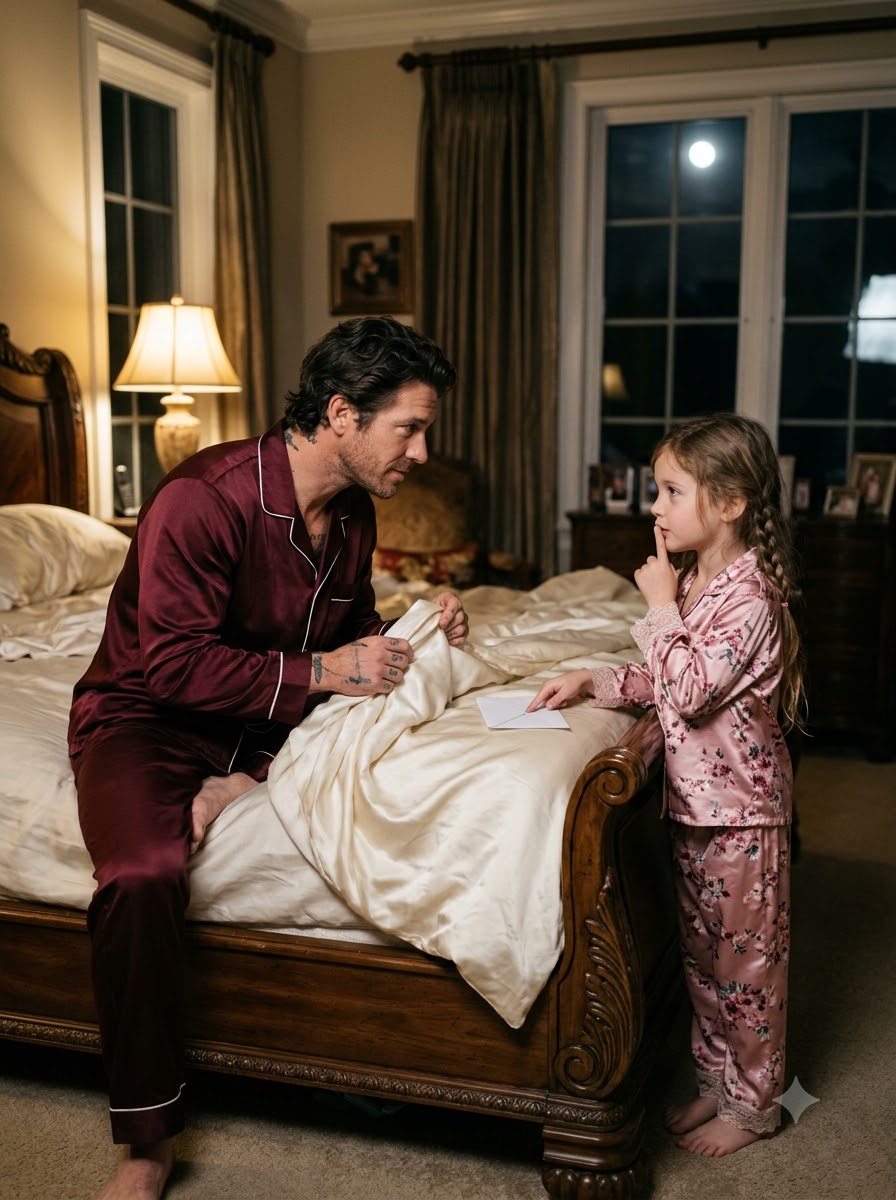
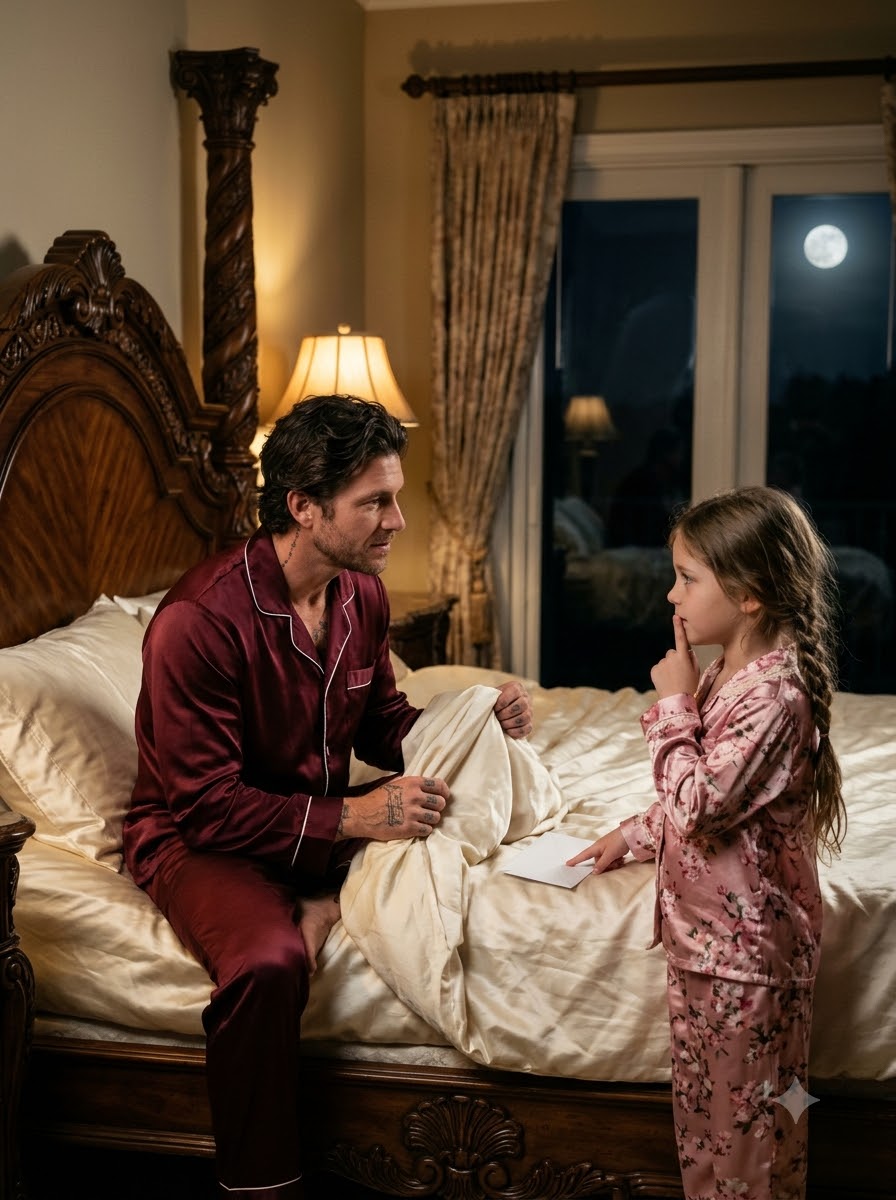
At 3:12 in the morning, a seven-year-old girl crept barefoot into the bedroom of the most feared man along the Georgia coast and whispered into his ear:
“Mr. Kincaid, somebody switches your pills while you sleep.”
Jasper Kincaid opened his eyes.
For eighteen years, warehouse owners, truck drivers, and businessmen throughout the Port of Brunswick had learned to be careful about mentioning his name.
Jasper controlled a network of maritime companies inherited from his father, some operating completely legally and others surrounded by secrets nobody dared expose.
Yet the forty-six-year-old man who had once terrified half the coastline could no longer leave his bed without assistance.
For four months, his weight and hair had been disappearing, his legs had become increasingly unreliable, and he experienced episodes of confusion.
The specialists in Atlanta described his condition as an unusual combination of exhaustion, neurological complications, and a preexisting heart condition.
Jasper had even started making arrangements for his estate.
But Hattie Ames, the seven-year-old daughter of his overnight nurse, had discovered something that every grown-up had overlooked.
Her mother, Renee, had accepted a position at the Kincaid estate because she desperately needed the income.
She had been a widow for five years.
Her husband, Eddie Ames, had lost his life during a nighttime trip out to sea while working for one of Jasper’s companies.
Since that day, Renee had never trusted the Kincaid family.
Hattie, on the other hand, knew nothing about family names or ancient grudges.
She knew numbers.
She counted the thirty-nine steps throughout the house, the sixty-four tiles along the hallway, the seagulls settling on the dock, and even how many times a loose floorboard creaked outside Jasper’s bedroom.
That was how she realized that on certain nights, shortly after three in the morning, someone was moving through the hallway.
The person wore checkered slippers.
Entered using a key.
Remained inside for less than two minutes.
Then quietly vanished.
Hattie had also observed that Jasper’s white medication tablets occasionally appeared slightly yellow in the morning, with edges that looked different.
For five consecutive nights, she did something nobody would have imagined a little girl doing: she waited until the mysterious visitor left, quietly entered the room, and removed the suspicious pills before Jasper had a chance to take them.
By the sixth night, she couldn’t bear to keep the discovery to herself anymore.
“The bad ones are under your pillow,” she said.
Jasper slowly reached beneath the fabric with a trembling hand and discovered a small packet.
He opened it.
There were eighteen tablets inside.
He turned toward Hattie.
“Does your mother know about this?”
The little girl shook her head.
“Mama says kids imagine things when they can’t sleep.”
Jasper remained motionless.
Only five people possessed keys to that bedroom: his brother Travis, his physician, the housekeeper, Renee, and Lyle Hargrove, the man who had worked alongside his father for over thirty years.
Any one of them might have been waiting for Jasper to die.
But there was an even more frightening possibility.
Whoever was secretly replacing those pills had no idea that a seven-year-old girl had discovered the scheme.
Jasper carefully wrapped his fingers around Hattie’s wrist.
“From now on, don’t walk around this house alone at night.”
“Why not?”
Jasper stared at the tablets resting on the blanket.
He suddenly understood something that frightened even him.
If the person responsible discovered who had been removing those pills, Jasper would no longer be their only problem.
Hattie would become their next target.
Jasper’s hand stayed locked around Hattie’s thin wrist longer than he meant. The girl’s pulse beat fast under his fingers, quick as a trapped bird. He forced himself to loosen his grip.
“Listen to me,” he said, voice low so it wouldn’t carry past the heavy bedroom door. “You did something brave. But brave doesn’t keep you safe in this house. From now on you stay with your mother after dark. You don’t count steps. You don’t check floorboards. You don’t come in here alone. Do you understand?”
Hattie nodded, but her eyes stayed on the open packet of tablets resting on the blanket. Eighteen of them. Some still pale white, others already stained the sickly yellow she had noticed. The edges of those yellow ones looked slightly melted, as if heat or moisture had touched them after they left the pharmacy bottle.
“Mama will be mad if she finds out I was up,” Hattie whispered.
“Then we won’t tell her yet.” Jasper closed the packet carefully and slid it into the drawer of the nightstand, under a stack of unread medical reports. His fingers trembled. He hated that she could see it. “Go back to your room. Walk quiet. If anyone asks, you got thirsty and went to the kitchen. That’s all.”
She slipped off the bed without another word. Bare feet made almost no sound on the rug. At the door she paused, one hand on the brass knob.
“Mr. Kincaid… are you going to die?”
The question landed harder than any of the specialists’ careful phrases. Jasper looked at her—small for seven, hair still tangled from sleep, wearing a faded nightgown that had once belonged to her mother. She had risked everything to keep him alive for five nights. He couldn’t give her a lie that would make her feel better.
“Not if I can help it,” he said. “Now go.”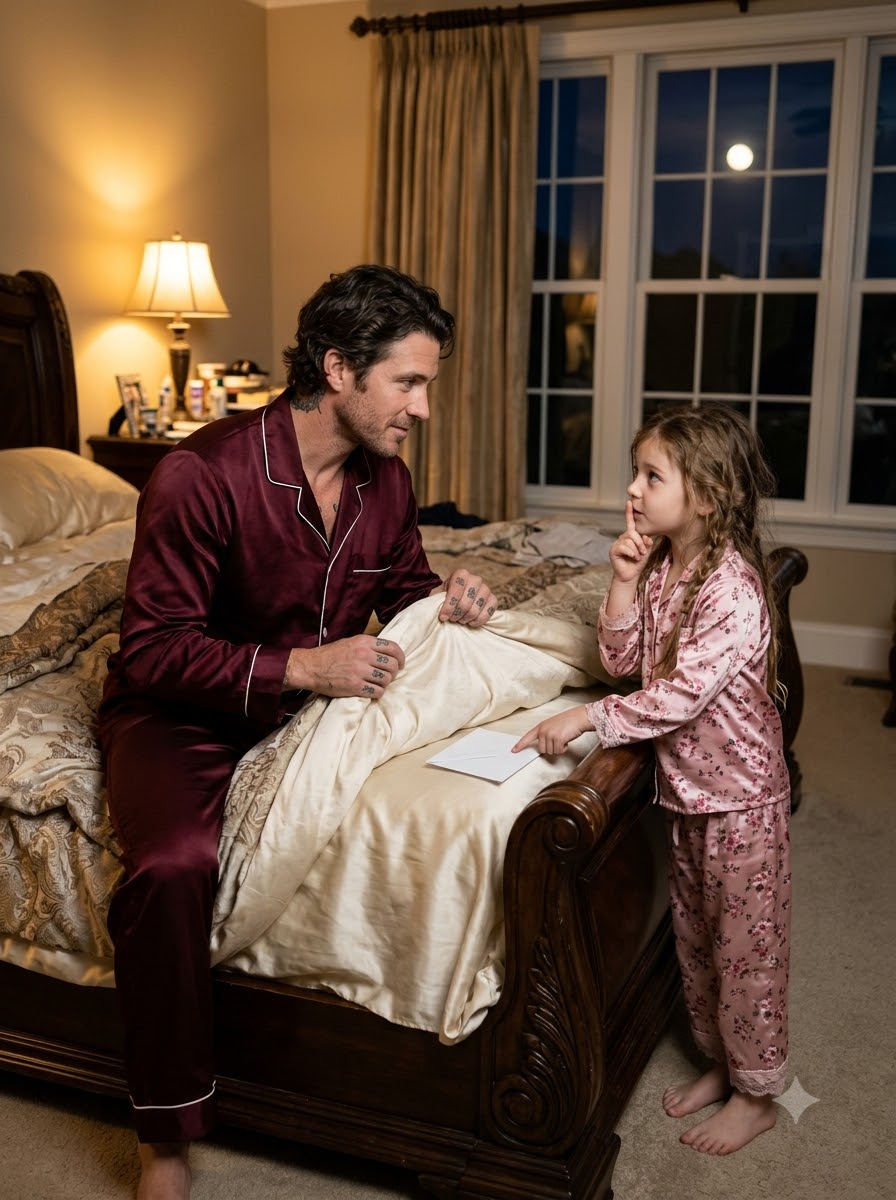
The door clicked shut. He listened until her footsteps faded down the hallway, counting the loose board she always avoided. When the house was quiet again he reached for the landline on the nightstand—the old corded phone that had been there since his father’s time. Cell service was unreliable this far out on the coast, and he no longer trusted any device that might be monitored.
He dialed the number for the Brunswick police non-emergency line. A dispatcher answered on the second ring. Jasper gave his name, his address, and a single clear sentence: someone had been replacing his heart and neurological medication with unknown tablets, and he had the evidence in his possession. He asked for a detective to come quietly, no lights, no sirens, and not to notify anyone else at the house. The dispatcher said a unit would be there within the hour.
After he hung up he sat with his back against the headboard, listening to the wind off the marsh and the soft creak of the old house settling. Four months of weakness had taught him the precise sound of every door and every floorboard. He knew the difference between the housekeeper’s soft-soled shoes and Travis’s heavier tread. He knew the physician’s habit of clearing his throat before he knocked. He knew Lyle Hargrove still walked the way men walked who had spent decades on boat decks—slightly wide, slightly careful.
Any one of them could have the key.
Any one of them could want him gone.
The inheritance was not simply money. The Kincaid companies controlled shipping contracts, warehouse leases, and a handful of quieter operations that had never appeared on any public ledger. Jasper’s will, updated three weeks earlier when the doctors first used the word “deteriorating,” left controlling interest to a trust that would be managed by an Atlanta law firm. Travis received a comfortable monthly stipend and the family house in town. Lyle received a generous pension. No one received the power to move cargo or open certain containers without the trust’s approval. That arrangement had made Travis angry enough to stop speaking to him for ten days. Lyle had only nodded and said, “Whatever you think is best, Mr. Jasper.” The physician had advised him, gently, that stress would only worsen the symptoms.
Now Jasper wondered which of those reactions had been real.
A soft knock came at the bedroom door just after four-thirty. He expected the detective. Instead Renee Ames stepped inside, already in her pale blue scrubs, hair pulled back, carrying the small tray of morning medications she always prepared at the kitchen counter.
“You’re awake early,” she said. Her voice was careful, the way it always was around him. She set the tray on the nightstand and reached for the blood-pressure cuff. “How did you sleep?”
“Restless.” He watched her hands. They were steady. She had been a widow for five years and a nurse for longer than that; steady hands were part of the job. “Hattie up?”
“She was moving around earlier. Said she needed water.” Renee wrapped the cuff around his arm. “She’s a light sleeper. Always has been, since Eddie…” She stopped herself. “Since her father died.”
The machine beeped. Numbers appeared. Jasper’s pressure was higher than it had been the day before. Renee frowned at the display but said nothing about it. She picked up the small plastic cup that held his usual two white tablets and held it out.
Jasper did not take it.
“Leave them on the tray,” he said. “I’ll take them after I use the bathroom.”
Renee studied him for a moment. In the low light her face looked older than thirty-two. “The doctor said consistency matters. Missing even one dose—”
“I’ll take them.” He kept his tone even. “Just not while I’m half asleep.”
She set the cup down. For a second her eyes flicked toward the nightstand drawer, then away. Jasper felt the hair on his arms rise. He had closed the drawer completely. Nothing should have looked different.
“All right,” she said. “I’ll check on you in an hour. Call if you need help standing.”
When she left he waited until her footsteps reached the stairs, then he opened the drawer, removed the packet Hattie had hidden, and transferred the eighteen tablets into a clean plastic bag he kept for the pharmacy bottles. He labeled the bag with the time and date in his own shaky handwriting and slid it under the mattress. The cup on the tray he left untouched.
The detective arrived at 5:07 a.m. He came alone, as requested, and parked at the far end of the circular drive where the security cameras had a blind spot. Jasper met him at the side door that led into the mudroom, leaning on the cane he hated. The man was in his early forties, plain clothes, name badge clipped to his belt that read DET. M. CALLOWAY. He listened without interrupting while Jasper explained the visitor with the checkered slippers, the five nights Hattie had removed the pills, and the packet now under the mattress.
Calloway photographed the tablets, sealed them in an evidence envelope, and asked for the names of everyone with a key. Jasper gave them. When he reached Renee Ames he added, carefully, that her daughter had been the one to notice the change in the pills and that the girl must not be questioned in front of her mother yet.
“Understood,” Calloway said. “We’ll send these to the state lab this morning. Results on an unknown substance can take forty-eight hours, sometimes longer if we have to run a full tox screen. In the meantime I can place an officer in an unmarked car at the end of the drive. No one inside the house needs to know.”
“Do it,” Jasper said. “And if anyone asks why you’re here, you’re following up on a report of trespassing on the dock. That’s all.”
After the detective left, Jasper returned to bed and forced himself to rest. Sleep did not come. At seven the housekeeper brought breakfast he did not eat. At eight Travis arrived from town, as he did most mornings now that Jasper could no longer drive himself to the office. Travis stood in the doorway of the bedroom with his hands in his pockets, wearing the same checkered slippers he had worn for years around the house.
“You look worse,” Travis said. It was not a question.
“Feel worse.” Jasper kept his eyes on his brother’s feet. The slippers were clean. No marsh mud. No sign they had walked the hallway at three in the morning. “Doctor wants more tests in Atlanta next week.”
Travis nodded. “I’ll drive you. Lyle can handle the warehouse.” He hesitated. “The trust papers came back from the lawyer. Everything’s in order. You still sure you want to lock the companies up that tight?”
“I’m sure.”
Travis’s mouth tightened, but he didn’t argue. He had stopped arguing weeks ago. Instead he said he would be in the study going over manifests and left the room. Jasper listened to the sound of those slippers on the stairs and tried to remember whether he had ever heard them at three in the morning. He could not be certain.
By mid-morning Lyle Hargrove appeared with the day’s shipping reports. Lyle was sixty-one, broad through the shoulders, hair gone mostly gray. He had started as a deckhand for Jasper’s father and had stayed through every expansion and every quiet arrangement that never made the books. He set the folder on the nightstand and waited while Jasper signed the pages he could still read clearly.
“Anything else you need, Mr. Jasper?” Lyle asked.
“Just the truth,” Jasper said. The words came out before he could stop them.
Lyle’s expression did not change. “About what?”
“About who walks this hallway at night.”
PART 2
For a long moment the only sound was the wind against the windows. Then Lyle said, very quietly, “I’ve walked these halls for thirty years. I know every creak. If someone was moving through here after three, I’d have heard them. Unless they knew exactly which boards to miss.” He met Jasper’s eyes. “Your brother knows those boards. So does the housekeeper. So do I.”
“And Renee?”
“She knows them too. She’s been here four months.” Lyle closed the folder. “You want me to start sleeping in the room across the hall?”
“Not yet.” Jasper signed the last page. “But if you hear anything tonight, you call me on the house line. Don’t knock. Don’t investigate. Just call.”
Lyle nodded once and left.
The day dragged. Jasper took none of the medication from the tray. By afternoon his hands shook harder and the edges of his vision grayed when he stood. He told Renee the new dosage was making him nauseated and that he would speak to the physician before taking more. She wrote it in the log without comment. Hattie appeared once, trailing her mother, and did not look at Jasper. She counted the tiles in the hallway under her breath—sixty-four—and then disappeared into the kitchen.
At 6:40 p.m. Detective Calloway called the landline from his car at the end of the drive.
“Lab put a rush on the first screen,” he said. “Those tablets aren’t your prescribed medication. They’re a mix of your usual dose cut with something else—looks like a low-level cardiac glycoside, the kind that builds up over weeks. Consistent with the symptoms your doctors described. We’ll have a full identification by morning. In the meantime I’ve got a warrant request ready if you want us to search the house for the source.”
“Not yet,” Jasper said. “If we move too fast whoever did this will destroy whatever’s left. Give me tonight. I’ll watch.”
“You’re not in any shape to watch anything.”
“I’ve got help.”
After he hung up he called Lyle on the house line and asked him to stay in the small room at the top of the stairs. Lyle agreed without questions. Then Jasper asked the housekeeper to bring Hattie to the bedroom under the excuse of needing help sorting old photographs for the trust documents. When the girl arrived he sent the housekeeper away and closed the door.
“They’re testing the pills,” he told her. “The police know. You’re not in trouble. But tonight you stay in your mother’s room. Door locked. If anyone knocks and it isn’t her, you don’t open it. Can you do that?”
Hattie nodded. She looked smaller than she had at three in the morning. “Are the bad pills going to make you better now that you stopped taking them?”
“Eventually.” He hoped it was true. “You did the right thing, Hattie. Don’t forget that.”
She left with the housekeeper. Jasper turned off the lamp and sat in the dark with the cane across his knees and the landline within reach. Outside, the unmarked police car remained at the end of the drive, lights off. Inside, Lyle waited at the top of the stairs. The house settled into its nighttime sounds.
At 2:51 a.m. the loose floorboard outside the bedroom creaked once.
Jasper’s hand closed around the phone. He did not lift it yet. He listened. The creak came again—lighter this time, as if someone had shifted weight and then frozen. A full minute passed. Then the soft brush of fabric against the wall. Checkered slippers, he thought, or something meant to sound like them. The footsteps stopped directly outside his door.
The knob turned, slow and silent.
Jasper had locked it from the inside after Hattie left. The knob met the lock and stopped. For three seconds nothing moved. Then the footsteps retreated, careful, missing the loose board on the way back down the hall. Jasper counted the steps. Thirty-nine to the stairs. He lifted the phone and dialed Lyle’s extension.
“Someone just tried my door,” he said. “They’re heading toward the back stairs.”
“I’m already moving,” Lyle answered.
Jasper heard the heavier tread of Lyle’s boots a moment later, then the sound of a door opening farther down the hall. Voices—low, urgent. He could not make out the words. He pushed himself upright, cane in one hand, phone still in the other, and unlocked his own door.
The hallway was empty except for Lyle, who stood at the far end with one hand braced against the wall. His face was gray under the night-light.
“Gone,” Lyle said. “Out the service door by the laundry. I saw the edge of a coat. Couldn’t tell who.”
“Slippers?”
“Couldn’t see the feet.” Lyle’s voice was tight. “But they knew the boards. Same as I would.”
Jasper called Calloway. The detective was at the house in four minutes. They found the service door unlocked from the inside. No prints on the knob that weren’t already expected. No discarded slippers. No one missing from their rooms when Calloway did a quiet head count: Travis asleep in the guest room he used when he stayed over, housekeeper in her quarters, Renee and Hattie behind a locked door on the second floor, physician not on the property at all.
By dawn the full lab report arrived. The contaminant was a concentrated extract of oleander, delivered in doses small enough to mimic progressive heart failure and neurological decline. Fatal if continued. Already dangerous after four months. Calloway had enough for warrants. He asked Jasper who he wanted brought in first.
“Everyone with a key,” Jasper said. “But start with the house. Search it while they’re all still here.”
The search began at 7:15 a.m. Officers moved through the bedrooms, the study, the kitchen, the boathouse. In the pocket of a jacket hanging in the mudroom—Travis’s jacket—they found a small unmarked bottle containing white tablets identical to the ones Hattie had saved. Travis claimed he had never seen the bottle. His prints were on it.
They also found, taped beneath the drawer of the nightstand in the room Lyle used when he stayed late, a second bottle and a handwritten note in Lyle’s careful block letters: dates, dosages, and the single line “Enough to finish by the trust signing.”
Lyle did not deny the note was his. He sat at the kitchen table while Calloway read him his rights and said only, “I did what I was paid to do.”
“Paid by who?” Calloway asked.
Lyle looked at Travis. Travis looked at the floor.
Before either man could answer, Jasper’s landline rang. The caller ID showed a number he did not recognize. He answered on speaker.
A man’s voice, rough from years of salt air and cigarettes, said, “Jasper Kincaid. You don’t know me, but I knew Eddie Ames. The girl upstairs—Hattie—her father didn’t die on that boat five years ago. Eddie Ames is alive. He’s been living under another name in Savannah. And the man who paid to have you poisoned is the same man who paid to have Eddie thrown overboard when he threatened to talk about the containers that never got inspected. That man is your brother. Eddie recorded the conversation. I’m sending the file now.”
The line went dead.
A moment later Jasper’s phone buzzed with an incoming message from the same unknown number. Attached was an audio file. Calloway played it. Travis’s voice was clear, younger, angrier, telling someone to “make sure Ames doesn’t make the next run.” A second voice—Lyle’s—agreed to handle it. In the background, faint but unmistakable, was the sound of a child asking her mother when Daddy would be home.
Renee had come downstairs when she heard the police. She stood in the doorway now, Hattie’s hand in hers, face white. Hattie stared at the phone as if she could see the man on the other end of the recording.
“That’s my daddy,” she said, very small. “He used to sing that song when he tucked me in.”
Travis lunged for the door. Two officers put him on the floor before he reached it. Lyle did not move. He only looked at Jasper and said, “Eddie was going to burn the whole quiet side of the business. Travis said the inheritance would be cleaner if both of you were gone. I took the money. I’m not proud of it.”
By noon both men were in custody. The oleander supply was found in a locked cabinet in the boathouse Travis used for storage. The trust documents remained unchanged. Jasper’s physicians, once they had the toxicology, began treatment to clear the remaining glycoside from his system. Recovery would be slow, but the progression had stopped.
That evening, after the house had emptied of officers and the unmarked car had finally driven away, Jasper sat on the back porch with the cane across his knees and watched the marsh turn gold in the last light. Renee came out carrying two mugs of coffee. Hattie trailed behind her, counting the steps from the door to the railing under her breath—seventeen.
Renee set one mug beside Jasper. Her hands were steady again, but her eyes were red.
“The man on the phone,” she said. “He called me too. Eddie’s in Savannah. He’s been afraid to come back because he thought Travis would finish what he started if he ever showed his face. He didn’t know about Hattie finding the pills. He didn’t know you were sick.” She swallowed. “He wants to see her. If you’ll allow it.”
Jasper looked at the girl. She had stopped counting and was watching a line of pelicans cross the inlet.
“She’s the reason I’m still here,” he said. “If her father wants to explain himself, he can do it on this porch, in daylight, with both of you present. No one else.”
Renee nodded. She did not thank him. She didn’t need to.
Hattie climbed onto the wide railing and sat with her feet dangling. After a minute she said, “Mr. Kincaid? The bad man is gone now, right? So I can walk around at night again if I want?”
“Not alone,” Jasper said. “Not for a while. But you can walk with me. I’ll go slow.”
She considered that. Then she smiled—the first real smile he had seen from her—and went back to counting the pelicans. Jasper drank his coffee and listened to the numbers. Seventeen steps. Sixty-four tiles. One little girl who had refused to let him die quietly. The inheritance was still his. The companies would remain bound by the trust. And somewhere in Savannah a man who had been listed as lost at sea was learning that his daughter had saved the life of the person everyone believed had let him drown.
The house behind them was quiet. For the first time in four months, Jasper did not dread the dark.
