

Part 1: The Sugar-Coated Ambush
At my sister’s baby shower, my husband sent me a text from across the room. Put the plate down. Do not consume anything she hands you.
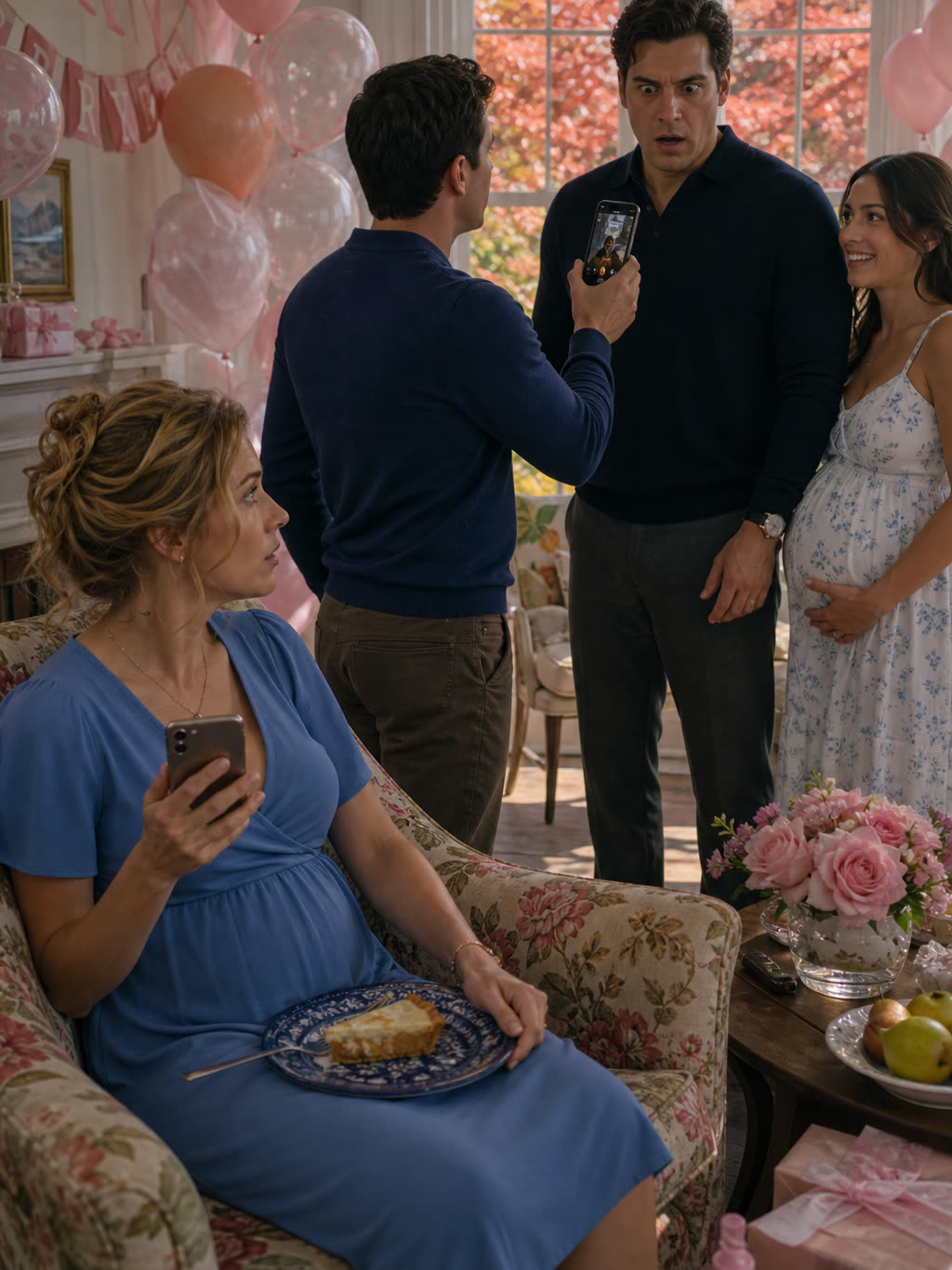
When I looked up from my phone, I saw him standing beneath the hallway arch. He was holding his own device out toward my sister’s husband, and her husband was staring at the glowing glass as though it had just told him the earth was splitting open beneath their house.
It was a Saturday in early November, a little past two in the afternoon. My sister Serena’s living room in Marion, Iowa, was a stifling sea of pastel pink. Pink balloons were tied to the backs of rented folding chairs, pink tissue paper spilled out of gift bags, and a tacky pink banner hung over the mantel, spelling out Welcome Baby Girl in cheap glitter that kept dropping onto the carpet.
Roughly thirty women were packed into that house, most of them from my mother’s church. Nearly every one of them held a plate. Mine was cobalt blue. That was the detail I fixated on later, once the roaring in my ears had faded enough for clear thinking to return. Every plate in that overheated room was thin pink cardboard, except the one Serena had personally carried across the carpet and set in my hands.
Hers was real ceramic, taken from her own kitchen cabinets. In its center sat one delicate pear tart, dusted with powdered sugar and topped with a little paper toothpick flag. The flag read Safe, next to a hand-drawn heart.
“I made sure the bakery boxed one up entirely separate, just for you,” she announced, her voice pitched so the cluster of women nearby would hear her generosity. She was thirty-three weeks pregnant and wrapped in a flowing white sundress, one hand resting over her swollen belly as if she were posing for a maternity catalog. “Utterly nut-free. I triple-checked the order. You know how meticulous I am about your condition.”
“That is incredibly thoughtful of you,” I replied, arranging my face into a practiced, polite expression.
“Well, don’t just let it sit there. I want to see you enjoy it,” she urged, her smile stretching wider until her teeth showed. “Don’t be ungrateful, Elinor. Eat what you are given.”
A few of the church ladies chuckled, taking it for ordinary, affectionate sibling banter. I let out a hollow laugh of my own. I was actually holding the silver fork. I had pressed its tines into the fluted edge of the crust, watching the pastry crumble, and I was lifting a piece toward my mouth when my phone buzzed sharply against my hip.
I want to be completely honest about this moment, because people who hear this story always assume my instincts were already screaming, that some primal survival sense had warned me. It hadn’t. I was simply exhausted. I am a clinical pharmacist at St. Jude’s Medical Center, and I was still recovering from a brutal double shift on Thursday. My main thought was how little time I could politely stay before faking a migraine and escaping. But my husband, Julian, lives by a strict personal code: he never texts me when we are in the same room, because he finds it rude. So I lowered the fork, rested it on the rim of the blue ceramic, and unlocked my screen. Put the plate down. Do not consume anything she hands you. A heartbeat later a second message appeared. I am entirely serious. Look at me. I looked. Julian stood by the built-in bookshelf near the corridor, where Serena had earlier put him to work coaxing a stubborn Bluetooth speaker to sync with the family iPad. He held his phone in his right hand and the tablet in his left, tilting the phone toward Marcus, my sister’s husband. Marcus was a towering, famously stoic man, an industrial electrician, the rare kind of person who quietly fixes broken things and never asks for praise. From the floral armchair where I sat, I watched every drop of color drain from his face. He read the screen, blinked fast, read it again, shot a horrified look across the room at his pregnant wife, and then met my eyes.
A deep, unnatural stillness settled in my chest. I did not drop the porcelain. I did not gasp or make a scene. I lowered the blue plate onto the end table beside me with excruciating slowness, as if it were unexploded ordnance, and draped a paper napkin over the tart to hide it.
“Elinor?” Serena’s voice lilted over the chatter. “Is everything alright?”
“Work,” I lied smoothly. “Give me one brief moment.”
I stood, took my leather handbag from the closet doorknob, and unzipped the hidden inner pocket. I have lived with a life-threatening tree nut allergy since I was four years old. Walnuts in particular can trigger anaphylaxis and close my airway in under fifteen minutes. For three decades I have never left home without two auto-injector pens.
I slid my hand into the familiar pocket. It was empty. Both pens were gone.
Standing in the shadowed hallway, my fingers brushing the bare lining of my purse, I felt a cold, crystal-clear realization wash over me. I had not come to a celebration. I was standing in the middle of a carefully built trap.
Julian appeared at my elbow. He didn’t say a word. He just turned his phone so I could see the photograph he had taken: a clear image of an iMessage thread on the family iPad, which was registered to Serena’s Apple account. The notifications had apparently been piling up on the screen while he tried to pair the speaker.
The contact name at the top of the thread was Mom.
Our mother, Helena, had written: Did she get the blue plate yet? Make sure it’s the ceramic one, not the paper ones.
Serena’s reply, stamped eleven minutes earlier, read: Relax. Walnut flour baked straight into the crust. The powdered sugar hides the texture. Her pens are zipped in my diaper bag. She’ll be admitted to St. Jude’s by tonight and out of commission for days. She cannot be at Pendelton’s office by Friday. That is the only thing that matters.
I read the exchange twice. I had no idea who Pendelton was. I had no idea what Friday meant. I had only two hard facts, and both were catastrophic: my little sister had just smiled into my eyes while handing me a possible death sentence in a room full of witnesses, and the woman who gave birth to me was eagerly watching the execution.
I had to get out, but I couldn’t leave empty-handed. If they learned that Julian had seen the iPad, they would delete everything.
What happened next took exactly eight and a half minutes. I have since confirmed it from the metadata on the photographs I took.
I turned back into the noisy living room, gave a calm smile to a woman asking about my hospital shifts, picked up the napkin-covered blue plate, and walked straight into Serena’s kitchen. I yanked open the drawer beside the oven, the exact spot where she has hoarded gallon-sized freezer bags for five years, and slid the entire ceramic plate, tart, flag, and napkin into the heavy plastic. I sealed it tight.
I pulled out my phone and took a sharp, high-resolution photo of the bakery box abandoned on the granite counter, capturing the printed label and the custom order ticket taped to the cardboard. I photographed the sealed evidence bag. Then I forwarded Julian’s screenshot to my personal email, my encrypted work server, and my closest confidante, Kelly, under the subject line: EMERGENCY – DO NOT DELETE.
Then, clutching the plastic bag to my chest like a fragile artifact, I marched to the front door. Julian fell into step right behind me.
Serena caught us on the porch, the screen door slapping shut behind her. “Where on earth are you going? We haven’t even started the gift registry.”
“I am feeling unwell,” I said, my voice drained of all inflection.
“You didn’t even touch your dessert.” Her smile stayed fixed, but the corners of her eyes tightened with sudden worry. “Elinor, what exactly do you have in that bag?”
I looked at the woman who shared my DNA. I had held her in my arms the day she came home from the maternity ward. I had bandaged her scraped knees. “Your blue plate,” I answered softly. “I promise I will return it to you.”
I slid into the passenger seat of our sedan, and Julian drove us straight to the pharmacy on Collins Road. Because of my profession, I knew exactly which words would cut through the red tape and get an emergency refill of my auto-injectors on a weekend afternoon.
Afterward we lingered in the asphalt parking lot. Two pristine, life-saving pens lay in my lap, and the freezer bag was locked in the trunk. Julian reached over and wrapped my trembling hand in his. We sat in total silence as the gray November afternoon darkened around us.
I did not cry. It matters that you know this; my eyes were completely dry. I had no idea that by the next morning Helena would be sobbing in the church pews, spinning a story about how I had suffered a psychotic break, stolen heirlooms from a pregnant woman, and ruined her joyful day. I had no idea that my late grandmother, Beatrice Sterling, buried fourteen months earlier, had foreseen this very treachery.
My name is Elinor Vance. I was thirty-four that autumn. As a clinical pharmacist, my whole life revolves around auditing dosages, studying chemical interactions, and catching the lethal mistakes careless people make. I am a professional keeper of the record. In my world, if something is not documented, it might as well not have happened.
To understand how we reached this edge, you have to understand the architecture of our family’s resentment.
Serena is three years younger than I am. She was always the fragile baby, a status Helena used as a weapon with relentless precision. Our father vanished when I was seven, leaving the three of us in a cramped, drafty duplex on the industrial side of the city. From then on, my mother built our reality around one unshakeable rule: Serena was delicate, and Elinor was fine.
For me, Elinor is fine meant finishing my own science projects while also doing Serena’s math homework. Elinor is fine meant accepting the broken mattress because my younger sister needed maximum comfort to avoid night terrors. Elinor is fine peaked the day I won a full-ride academic scholarship to the state university and Helena wept bitterly at the kitchen table, because my success would surely make Serena feel inadequate.
The allergy was the only part of my life that forced my mother to acknowledge I was vulnerable, and she resented me for the inconvenience.
The first sabotage happened when I was nine, at a holiday bake sale. Helena had made two separate batches of cookies, one plain and one loaded with crushed pecans. She marked the safe container with a thick strip of masking tape bearing my name. Serena, then six, begged to carry the tins to the folding tables. Somewhere between the trunk of the car and the gymnasium, the masking tape moved to the dangerous batch.
I swallowed two bites before my tongue swelled and the familiar fire lit in my throat. I remember collapsing on the freezing tile of the church restroom, my mother slapping my back while sirens wailed in the distance. And I remember clearly that Serena lingered in the doorway in her velvet dress, watching me struggle to breathe with wide, dry, unblinking eyes.
Afterward, Helena brushed it off as a childish mistake. “She’s only six, Elinor. She doesn’t understand labels.” No adult asked why a child who supposedly couldn’t read had deliberately peeled adhesive tape off one metal surface and stuck it to another.
When I was sixteen, a similar “accident” happened on a camping trip. My auto-injector disappeared from my zipped backpack. Serena casually suggested I was just being paranoid and had forgotten it. When we got home, Helena miraculously found the device buried under used tissues in the bathroom trash, a bathroom I had never set foot in. “See? You knocked it off the counter,” she declared, closing the subject.
There was also the financial bleeding. Two years before the baby shower, Serena and Marcus were buried in debt from failed fertility treatments. Helena worked on my guilt, reminding me that I had the only “real” salary in the family. I wired them twelve thousand dollars. No contract. No expectations. When the treatments finally worked, the debt was never mentioned again. At the baby shower, Helena publicly presented the imported crib as a joint gift from herself and Marcus’s parents. I had paid for that crib. I swallowed that insult, too.
The only real refuge I ever knew was Grandma Beatrice. She lived in a modest brick house in town but spent every summer at a remote, secluded cottage on Clear Lake, a property my grandfather built by hand in the seventies. Beatrice would carry me off to that sanctuary for weeks at a time. The cottage had no modern plumbing and no internet, but it offered salvation. Beatrice never sighed dramatically while studying ingredient lists. She reshaped her entire cooking repertoire to keep me safe and never demanded gratitude.
When Beatrice’s health failed, Helena and Serena swarmed in. They handled her appointments, monopolized her time, and eventually took control of her finances. With my grueling hospital residency, I foolishly saw this as them finally accepting responsibility.
Beatrice died in her sleep. After the funeral, Helena casually told me the estate was remarkably simple: the brick house to Helena, small cash sums to the granddaughters, and the beloved lake cottage to be sold off to cover assorted expenses. I was drowning in grief. I didn’t ask for the paperwork. I assumed there was nothing left to fight for.
I was deeply mistaken.
Julian and I went home. I sealed the freezer bag with the tart inside a second industrial ziplock, shoved it to the very back of the refrigerator, and stuck a strip of medical tape on it reading: EVIDENCE. DO NOT COMPROMISE.
The digital assault began at exactly 4:31 PM. Serena fired off thirty-seven text messages over the next eight hours.
Where did you vanish to? People are gossiping. You stole my ceramic plate. That was a wedding gift. You always make everything about yourself. Marcus is giving me the silent treatment. What did Julian say to him? If Julian snooped through my iPad, that is a federal privacy violation. It was a joke. Mom and I were engaging in dark humor. You are delusional. I hope you rot.
Not one message asked about my health. Not one text reassured me the dessert had been safe. An innocent person would have been frantic with fear at having accidentally poisoned her sibling. Serena never asked, because she already knew the venom was in the dough.
I stared at the ceiling, the silence of the bedroom broken only by the steady hum of the central heating. Then tires crunched on wet gravel outside. I peered through the blinds. Marcus was standing on my front porch in the pouring rain, clutching a leather laptop bag to his chest like a shield.
Part 2: Digital Venom
Julian opened the door before the bell even rang. Marcus stood dripping on our welcome mat, his shoulders completely slumped. He looked as though he had aged a decade in a single afternoon.
“I apologize for the hour,” Marcus rasped, his voice barely rising above the downpour. “I need to show you the device. I couldn’t do this through a phone screen.”
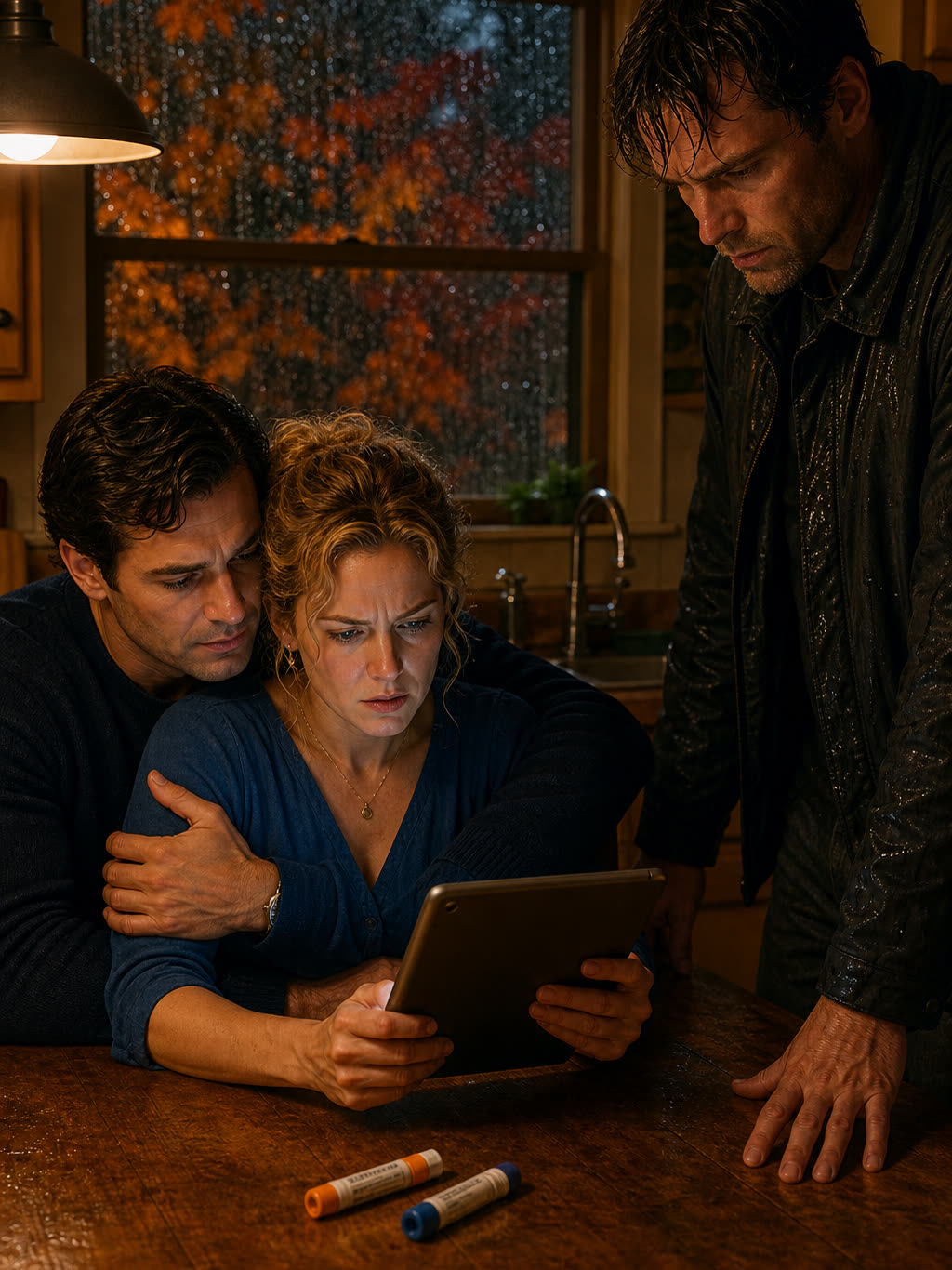
We led him to the kitchen table. Marcus carefully drew the family iPad out of the damp leather bag. He didn’t turn it on right away. He just stared at the blank glass.
“After you evacuated the shower,” Marcus began, his voice shaking, “I confronted her. I demanded an explanation for the notification. She deflected. She claimed your mother has a twisted sense of humor and that I was overreacting.” He dragged his large, calloused hands down his face. “I desperately wanted to believe her, Elinor. She is carrying my child. We fought for years to create this life.”
He reached into the pocket of his soaked jacket, took out two plastic cylinders, and set them gently on the oak table.
They were my missing auto-injectors. I recognized the scuffed serial number on the main pen, a battle scar from the time I dropped it in the hospital parking garage months earlier.
“When she finally fell asleep,” Marcus whispered, “I searched her designer diaper bag. They were buried in the deepest zippered compartment, hidden under a sealed package of baby wipes.”
A heavy, suffocating silence settled over the kitchen.
“Then I unlocked the tablet,” Marcus went on, pushing the device toward me. “I read the entire history. The conspiracy didn’t start today. It goes back to September.”
Julian pulled a chair close to mine and wrapped his arm firmly around my shoulders. I woke the screen and began to read. For twenty agonizing minutes I took in the raw, unfiltered malice of my own family. Marcus refused to look; he kept his eyes fixed on the dripping faucet.
The betrayal wasn’t contained in a single explosive speech. It was insidious, woven into mundane chatter about nursery paint swatches and prenatal vitamins.
September 28th – Mom: The lawyer’s paralegal confirmed it today. If Elinor defaults and fails to appear, the property automatically reverts to you.
October 4th – Serena: She is too stubborn. She will never voluntarily sign a disclaimer of interest. You know how rigid she is.
Mom: Then we must guarantee she is physically incapable of attending the appointment.
Serena: What do you suggest? Slashing her car tires?
Mom: Do not be juvenile. It must be an incident where no one can assign legal liability.
October 18th – Serena: What if she suffers one of her severe allergic reactions? A legitimate one. She would be hospitalized for a minimum of 48 hours, correct?
Mom: She is paranoid. She constantly carries those injection pens.
Serena: Pens are small. Pens can be misplaced.
A two-hour gap in the timestamps came before Helena’s next message.
Mom: I do not want to be privy to the logistical details. Just ensure the ingredient cannot be traced back to your kitchen. Utilize a third-party bakery.
And finally, the message from the previous Wednesday, the one that had sent Julian out to the back patio to rein in his rage:
Serena: If she ends up in the emergency room, you must corner the attending physicians. Tell them she has been mentally unstable, threatening self-harm. They will initiate an involuntary 72-hour psychiatric hold. She will be locked down. She will never make the Friday deadline.
Helena’s answer was a single digital thumbs-up emoji.
I felt blood roaring in my ears. I am a medical professional. I know intimately the violent cascade of anaphylaxis. I know the terror of your own tissues betraying you, the frantic gasping as oxygen is denied. My sister had watched it happen. And she had plotted to cause it, knowing she had stolen my only lifeline, and planned to trap me in a psychiatric ward as a backup.
“I archived everything,” Marcus said, breaking the silence. “I exported the threads to my secure cloud storage. I forwarded copies to my brother. I am prepared to hand this hardware to law enforcement whenever you say.” He finally looked at me, his eyes red-rimmed and hollow. “I need you to understand, Elinor… I had no knowledge of this. I swear on my unborn daughter’s life.”
“I know you didn’t, Marcus,” I replied, squeezing his wrist. “I saw your face this afternoon. That kind of horror cannot be faked.”
Marcus slept on our sofa that night. He said he couldn’t cross the threshold of his own home, couldn’t lie in the dark beside a woman capable of calculated attempted murder.
I did not sleep. I sat at the table with a yellow legal pad and drafted a meticulous timeline, treating the plot against me like a complex medical diagnosis. Who is Pendelton? What deadline expires on Friday?
The answers arrived with the dawn, but not the way I expected. At 6:10 AM, hard, rhythmic pounding rattled our front door.
Julian answered in nothing but sweatpants. I was right behind him, cinching my robe. Two uniformed officers from the Cedar Rapids Police Department stood on the frost-covered porch, their postures stiff, their hands resting casually near their utility belts.
“We are seeking to speak with Elinor Vance,” the female officer announced. “We received an emergency dispatch regarding a severe welfare concern.”
“I am Elinor,” I said, my voice eerily calm.
The officer studied me. “Ma’am, a distressed family member contacted emergency services an hour ago. She reported that you made explicit threats of self-harm. She claimed your behavior has been dangerously erratic since a family altercation yesterday, that you stole property, and that you are an immediate danger to yourself. May we enter the premises?”
The psychological trap had been sprung. Serena, realizing the poison had failed, was pulling the backup lever. A 72-hour involuntary psychiatric hold started on a Wednesday morning would expire Saturday morning, conveniently neutralizing me until the mysterious Friday deadline had passed.
“By all means, officers. Please step inside,” I offered, gesturing toward the kitchen. “I have documentation I believe you will find highly relevant.”
I seated them at the same table where Marcus had wept hours earlier. I poured them coffee. Then, slipping into my professional persona, the pharmacist explaining drug interactions to a stubborn resident, I laid out the evidence.
I gave them the incident number I had filed ahead of time with the county sheriff’s non-emergency line the previous afternoon. I showed them the screenshot of the iPad messages plotting the very “psychiatric hold” they had been sent to carry out. I set the stolen auto-injectors on the wood and explained how they were recovered from Serena’s bag.
Finally, I offered them Marcus. He came out of the living room, haggard but resolute, and confirmed every detail.
“Who placed the emergency call this morning?” Marcus asked the male officer.
“The caller identified herself as your wife,” the officer replied, glancing between Marcus and the iPad screens.
The female officer closed her notepad with a decisive snap. Her demeanor had shifted from suspicious to deeply sympathetic. “Mrs. Vance, do you feel safe remaining in this residence?”
“I am perfectly safe in my own home,” I assured her. “The threat is entirely external.”
“Understood.” She stood up. “I am officially documenting this as an unfounded, malicious welfare check. I will add a note about the high probability of false statements made to law enforcement, and I am forwarding this entire file to the detective assigned to your sheriff’s case.”
Once the cruisers pulled away, I took a personal leave from the hospital and drove the frozen tart to Hawkeye Analytical, a private food-testing laboratory in Des Moines. I paid five hundred dollars for an expedited allergen panel and a legally binding chain-of-custody document.
Back in the safety of my kitchen, I opened my laptop and typed Pendelton, attorney, Iowa into the search engine.
The algorithm delivered the truth in milliseconds. Arthur Pendelton, Estate Planning and Trusts, located in Mason City, a mere twenty minutes from Grandma Beatrice’s lake cottage.
I dialed the firm’s number at exactly 8:00 AM the following morning. The receptionist hesitated when she heard my name before hurriedly transferring me.
Arthur Pendelton had a voice like aged parchment: dry, meticulous, and weary. “Mrs. Vance,” he said. “I have been trying to reach you since August.”
“I have received zero correspondence from your office,” I replied, cold dread pooling in my stomach. “My mother assured me the estate was settled.”
I could hear heavy paper rustling through the receiver. “Your grandmother’s estate was deliberately complex. May I verify your current mailing address?”
I gave him my home address. Pendelton sighed. “The address listed in your grandmother’s file is a condominium on Edgewood Road.”
“That is my mother’s residence. I haven’t lived there in fifteen years.”
“When my staff called the emergency family contact to verify the address, your mother, Helena, explicitly confirmed it was accurate. We sent three separate legal notices. The second and third went by certified mail. I am looking at the return receipts right now. Both bear the signature of Helena Vance.”
The puzzle pieces locked together with sickening precision. “What were the notices about?”
Pendelton explained the legal reality. Grandma Beatrice had not used a simple will. She had set up a revocable living trust. Helena received the modest brick house. Serena was allotted forty-five thousand dollars in liquid assets. But the lake cottage, appraised at nearly half a million dollars, along with a substantial investment portfolio, was set aside in a dedicated share exclusively for me.
“There was a strict condition,” Pendelton clarified. “Your grandmother required the beneficiary of the cottage to appear in this office in person, sign a formal acceptance, and take on legal responsibility for the property within a specific distribution window. If the primary beneficiary fails to appear, the gift is legally treated as declined.”
“And where does it go if declined?” I asked, my knuckles white around the phone.
“To the alternate beneficiary. Your sister, Serena.”
“When does this window permanently close?”
“This Friday, November fourteenth, at precisely 5:00 PM.”
She cannot be at Pendelton’s by Friday. That is the only thing that matters.
“Mrs. Vance,” the lawyer continued, his tone dropping an octave. “In late September, your mother telephoned my assistant. She claimed you were deeply traumatized by the cottage and wished to formally disclaim your interest. She aggressively asked whether the property would automatically revert to Serena.”
“I will be in your office on Thursday,” I vowed. “Not Friday. Thursday at one o’clock.”
Thursday was tomorrow.
Part 3: Article Nine
That afternoon, Julian was still at the high school teaching chemistry when the doorbell rang. I checked the security feed. It was Helena. She stood on my porch clutching a thick manila folder, wearing her beige cashmere coat, the armor she put on whenever she wanted to project absolute maternal authority.
I unlocked the door and let her in, out of sheer morbid curiosity.
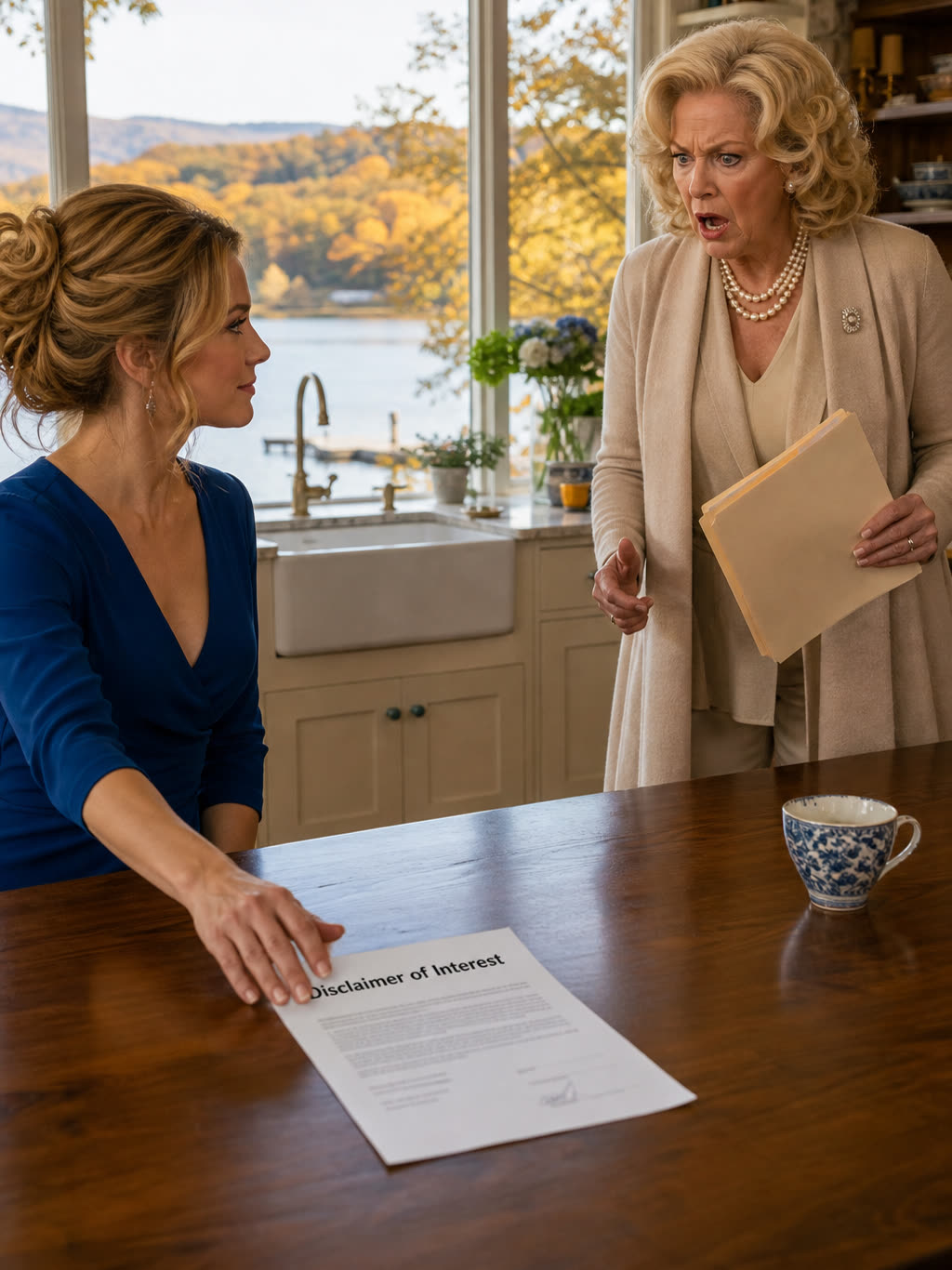
She skipped the pleasantries, sat at my table, and slid a legal document toward me. It was titled Disclaimer of Interest. My full legal name was printed at the top.
“I had my attorney draft this to save you the headache,” Helena announced smoothly. “It is a standard procedure. I have scheduled a public notary at my bank for tomorrow morning at ten.”
I stared at the paperwork. “You have known about the cottage since August.”
She didn’t flinch. “I was waiting for the appropriate moment. You are so overwhelmed at the hospital. Frankly, Elinor, you and Julian are financially secure. Serena is bringing a child into a cramped rental property. That cottage could guarantee her future. Relinquishing it is what a selfless sister would do.”
“Grandma Beatrice bequeathed it to me.”
Helena scoffed, her mask slipping. “Your grandmother was senile. Serena and I managed her decline. You visited sporadically. You owe this family.”
I laid my index finger on the document and pushed it back across the smooth wood. “No.”
Helena froze. Defiance was completely foreign to our dynamic. “What did you say?”
“I am not signing your fraudulent document. I am driving to Mason City.”
Panic, raw and unvarnished, flashed in her eyes before it was smothered by venomous rage. She stood abruptly and shoved the folder under her arm. “If you pursue this, you are severing this family permanently. You are prioritizing real estate over your pregnant sister, and the entire congregation will know exactly how greedy you are.”
“Did you know there was walnut flour baked into the crust, Mom?” I asked softly.
Helena stopped at the threshold. She didn’t turn around. “You were always an impossible, dramatic child,” she spat, and slammed the door behind her.
On Thursday morning, Julian and I drove the desolate, frost-bitten stretch of Highway 18 toward Mason City. Marcus followed close behind in his own pickup truck. He insisted on coming, wanting to give his own sworn statement to the attorney.
Arthur Pendelton’s office sat on the second floor of a historic brick building overlooking the town square. He met us at the top of the creaking staircase. He was a tall, austere man with wire-rimmed glasses and an air of absolute integrity.
“You possess her eyes,” he said gently as he shook my hand.
We gathered in his mahogany-paneled conference room. For two hours I carefully reviewed every page of the acceptance documents. At exactly 2:14 PM, with Pendelton’s paralegal and an independent notary beside me, I signed my name. Pendelton immediately sent the electronic files to the county recorder’s office.
“It is done,” Pendelton announced, taking off his spectacles. “The property is legally yours. No entity can contest it now.”
He then walked to a locked filing cabinet and took out a small, polished cedar box and a heavy cream envelope sealed with crimson wax. My name was scrawled across the paper in Beatrice’s unmistakable, trembling cursive.
“She entrusted these to me two years before her passing,” Pendelton explained. “Her explicit instruction was to hand them over only when you were physically sitting in this chair. She was adamant you would eventually arrive.”
I broke the wax seal. The letter ran two pages on thick stationery.
My dearest Elinor,
If you are reading this, my faith in you was justified. I must confess sins I was too cowardly to confront in life. Two years ago, I audited my banking statements. Substantial sums were hemorrhaging from my accounts. Over nineteen months, nearly forty thousand dollars had been siphoned by Helena and Serena under the guise of ‘reimbursements.’
I was ancient, exhausted, and terrified of spending my final days caught up in a vicious legal war with my own daughter. So I instructed Arthur to build an impenetrable fortress around your inheritance. Inside the wooden box, you will find the audited ledgers.
I leave you the sanctuary of the lake not out of charity, but because you are the sole member of this bloodline who loved me unconditionally. You never demanded a toll for your affection.
The final paragraph was written with great difficulty, the letters jagged and rushed.
If they attempt to sabotage your journey, Arthur is equipped with the countermeasure. I ensured it. Be fiercely brave, my girl. And always inspect your food.
Tears finally broke through my defenses, hot and fast, blurring the ink. Julian pressed his forehead against my temple.
I opened the cedar box. It held the highlighted bank statements proving the embezzlement, a stack of faded Polaroid photographs of me laughing on the lake dock as a child, and Beatrice’s gold wedding band, worn smooth by decades of labor.
“What countermeasure did she mean?” I asked, looking up at the attorney.
Pendelton steepled his fingers. “When Beatrice restructured the trust, she insisted on including Article Nine, a punitive clause standard in contentious estates, often called a ‘bad faith interference’ provision. It stipulates that any beneficiary who engages in malicious actions to obstruct, delay, or sabotage another beneficiary’s inheritance automatically forfeits their own entire interest in the trust. They are legally treated as if they had died before the benefactor.”
The magnitude of the trap Beatrice had set settled over the room.
“Serena’s forty-five thousand dollar cash gift,” I breathed.
“Precisely,” Pendelton confirmed. “If irrefutable evidence of obstruction is presented, I am legally bound as trustee to execute Article Nine. The cash has not yet been disbursed.” He paused, his gaze hardening. “Your mother and sister have scheduled an appointment in this exact room tomorrow at four o’clock. They are bringing independent counsel. They intend to claim the cottage the moment the deadline expires, and to demand the liquid cash.”
He looked at me, a silent question in his eyes.
“I will be here,” I promised.
On Friday, November fourteenth, at 3:55 PM, I sat concealed in the dim corner of Arthur Pendelton’s conference room, settled into a leather armchair. A heavy manila folder lay across my knees. Julian occupied the seat to my left, while Marcus sat at the farthest end of the long walnut conference table, his body stiff and his eyes fixed expressionlessly on the frosted glass door.
Their voices reached us from the stairwell before they appeared. They were laughing, their conversation filled with the easy satisfaction of people who believed they had already won.
Helena came through the doorway first, wrapped in her familiar camel-colored coat. Serena followed close behind, one hand resting theatrically over her pregnant stomach, her face displaying smug expectation. Behind them walked Stuart Nolte, a flushed, heavyset attorney with a local reputation for pursuing aggressive contingency cases.
The moment Helena’s eyes adjusted to the room and settled on me, her laughter vanished. She halted so suddenly that Serena bumped into her shoulder.
“What in God’s name is she doing here?” Helena demanded, turning sharply toward Mr. Nolte. “You guaranteed us that if she defaulted by today, it was finalized!”
Serena leaned around our mother to see what had caused the interruption. Her gaze landed briefly on me before traveling along the conference table and stopping on Marcus. The color disappeared from her face almost instantly, leaving her complexion pale and sickly. Marcus remained perfectly still, neither blinking nor acknowledging her presence.
“Please be seated,” Pendelton instructed in an even, controlled tone. “We have substantial ground to cover.”
Helena and Serena lowered themselves into the chairs across from us. Mr. Nolte immediately opened his leather briefcase with an aggressive tug at the zipper.
“Let us dispense with the formalities,” Nolte barked. “The distribution window for the Clear Lake asset expires at five o’clock today. My clients are present to officially execute the alternate beneficiary claim, and we are demanding the immediate electronic transfer of Mrs. Serena Ruiz’s cash inheritance, which has been unreasonably delayed.”
“The window is obsolete,” Pendelton answered calmly.
Nolte’s eyebrows drew together. “Excuse me?”
“The primary share was formally accepted and ratified yesterday afternoon at 2:14 PM within these walls. The documentation was filed with the county courts an hour later.” Pendelton pushed a stamped document across the gleaming tabletop. “The estate belongs to Mrs. Vance. There is zero alternate claim to process.”
Helena seized the sheet and hurriedly scanned the dense legal language. Her eyes raced downward until they reached my notarized signature at the bottom.
“This is impossible!” Helena hissed. “She was supposed to be—”
She stopped herself abruptly, but the unfinished sentence left a silence that seemed to fill the entire room.
“I was supposed to be what, Mom?” I asked, my words cutting cleanly through the tension. “In a psychiatric ward? Or in the morgue?”
Helena released the document as though the paper had scorched her fingers.
“This is a farce!” Serena shrieked, her voice climbing into a piercing, defensive pitch. “Fine! She gets the dilapidated cabin! Congratulations, Elinor, you win the misery Olympics again. Just process my check so we can leave. I am heavily pregnant and I refuse to endure this.”
“Regarding the cash disbursement,” Pendelton interjected, “Mrs. Vance has presented evidence that directly impacts my fiduciary duty. I yield the floor to her.”
I opened the folder resting in my lap. I stayed seated, and my voice remained steady. I approached the confrontation with the detached, exacting discipline of a surgeon removing a limb destroyed by gangrene.
“Item one,” I began, passing a pile of copied delivery confirmations across the table. “Three certified legal notices regarding this inheritance, intercepted and fraudulently signed by Helena Vance between August and October. Item two: notes from Mr. Pendelton’s paralegal documenting Helena’s phone call on September 26th, actively attempting to decline the estate on my behalf.”
Mr. Nolte examined the documents, his previously confrontational posture weakening with every passing moment.
“Item three,” I continued, removing the glossy laboratory findings from the folder. “Hawkeye Analytical report. Walnut protein detected at lethal concentrations in the crust of the dessert provided by Serena at the shower. Confirmed presence of baked-in walnut flour.”
Serena drew in a sharp breath, immediately bringing both hands to her mouth.
“Item four. The bakery invoice, subpoenaed by Detective Ramos of the Linn County Sheriff’s Department. Placed by Serena Ruiz. Explicit instructions to utilize walnut flour.”
I placed printed screenshots of their conversations from the iPad in the middle of the table. “Item five. Digital communications spanning two months, detailing a conspiracy to trigger a medical emergency and falsely commit me to a psychiatric facility to ensure I missed today’s deadline.”
At last, I reached into my pocket and laid two plastic auto-injectors beside the documents.
“And these,” I finished quietly, “were recovered from Serena’s diaper bag by her husband on Sunday evening.”
“Marcus,” Serena whimpered, tears overflowing from her eyes. “Marcus, how could you betray me?”
Marcus shifted forward, causing his chair to creak beneath his weight. “You were going to assassinate your own sister while carrying my child, Serena. You are a monster.”
“It wasn’t supposed to be fatal!” Serena screamed, her carefully maintained appearance of innocence collapsing completely. She thrust a shaking finger toward our mother. “She said it! Mom told me to use the bakery so it couldn’t be traced! She told me to lie to the doctors!”
“Shut your mouth!” Helena thundered, springing from her chair with her features twisted by uncontrolled fury. “Do not drag me into your incompetence! You stole the pens! I explicitly texted that I wanted no knowledge of the logistical details!”
“That makes you an accomplice, you manipulative coward!” Serena screamed in response.
There, inside an attorney’s conference room, the mother and her favored daughter turned viciously against one another, each desperately attempting to escape the legal consequences approaching them.
Mr. Nolte closed his briefcase without a word. Rising from his chair, he carefully avoided making eye contact with anyone.
“I am formally advising my clients to seek independent criminal defense counsel immediately. I am withdrawing my representation.”
He hurried out of the conference room so quickly that he nearly broke into a run, leaving both women behind.
Pendelton made no attempt to interrupt their argument. He waited until their furious exchanges finally exhausted themselves, leaving only strained breathing and Serena’s miserable crying. Then he lifted a bound legal document from the table.
“Article Nine of the Beatrice Sterling Revocable Trust,” Pendelton announced, his voice carrying unmistakable authority. “‘Any beneficiary who acts in bad faith to obstruct, delay, or prevent the distribution of another beneficiary’s share shall forfeit his or her entire interest in this trust, and shall be treated for all purposes as having predeceased the settlor.’”
He lowered the document and looked directly at them.
“Based upon irrefutable evidence of malicious interference, I am officially invoking Article Nine against Serena Ruiz. The forty-five thousand dollar bequest is permanently forfeited and absorbed into the trust’s residue.”
Serena broke into a loud, anguished cry and hid her face in the crook of her folded arms.
“Furthermore, Mrs. Helena Vance,” Pendelton continued without the slightest hint of sympathy. “While your real estate inheritance was finalized last year, the estate is formally initiating litigation to recover thirty-eight thousand, two hundred and sixteen dollars in unauthorized transfers siphoned from Beatrice’s accounts prior to her death.”
He pushed the accounting ledgers from the cedar box across the table toward her.
“Your mother audited everything.”
Helena stared at the rows marked in yellow highlighter. For the first time in thirty-four years, the woman who had ruled our family through intimidation had nothing to say. Every layer of her carefully constructed disguise had been stripped away. Beneath it stood an aging thief who had been defeated by someone no longer alive to confront her.
Marcus rose and fastened the buttons of his coat.
“I am residing at my brother’s house,” he announced, addressing the room while keeping his eyes on Serena. “I have retained a divorce attorney. I will be present for the birth of my daughter, but our marriage is terminated.”
He walked out without another word.
Shortly afterward, Helena collected her handbag and hurried away, offering not a single word of comfort to her sobbing daughter. Serena remained behind until everyone else had gone. She gripped the doorframe for support, looking like a shattered remnant of the golden child she had once believed herself to be. As she slowly made her way down the hallway, she never turned her eyes toward me.
I stayed in the leather armchair.
My fingertips found Grandma Beatrice’s gold ring, which hung from a chain around my neck. I held it gently and released a long breath that felt as though it had been trapped inside my chest since I was nine years old.
What followed was a succession of court filings, legal proceedings, and destroyed illusions.
Detective Ramos completed his investigation without unnecessary delay. Because Serena was pregnant, authorities allowed her to surrender after giving birth. She was formally indicted on felony charges of administering a harmful substance, along with filing a false police report.
With the evidence against her overwhelming, Serena agreed to a plea arrangement reducing the charges to aggravated misdemeanors. Her sentence included two years of closely monitored probation, hundreds of hours of community service, and a five-year restraining order that strictly prohibited her from approaching or contacting me.
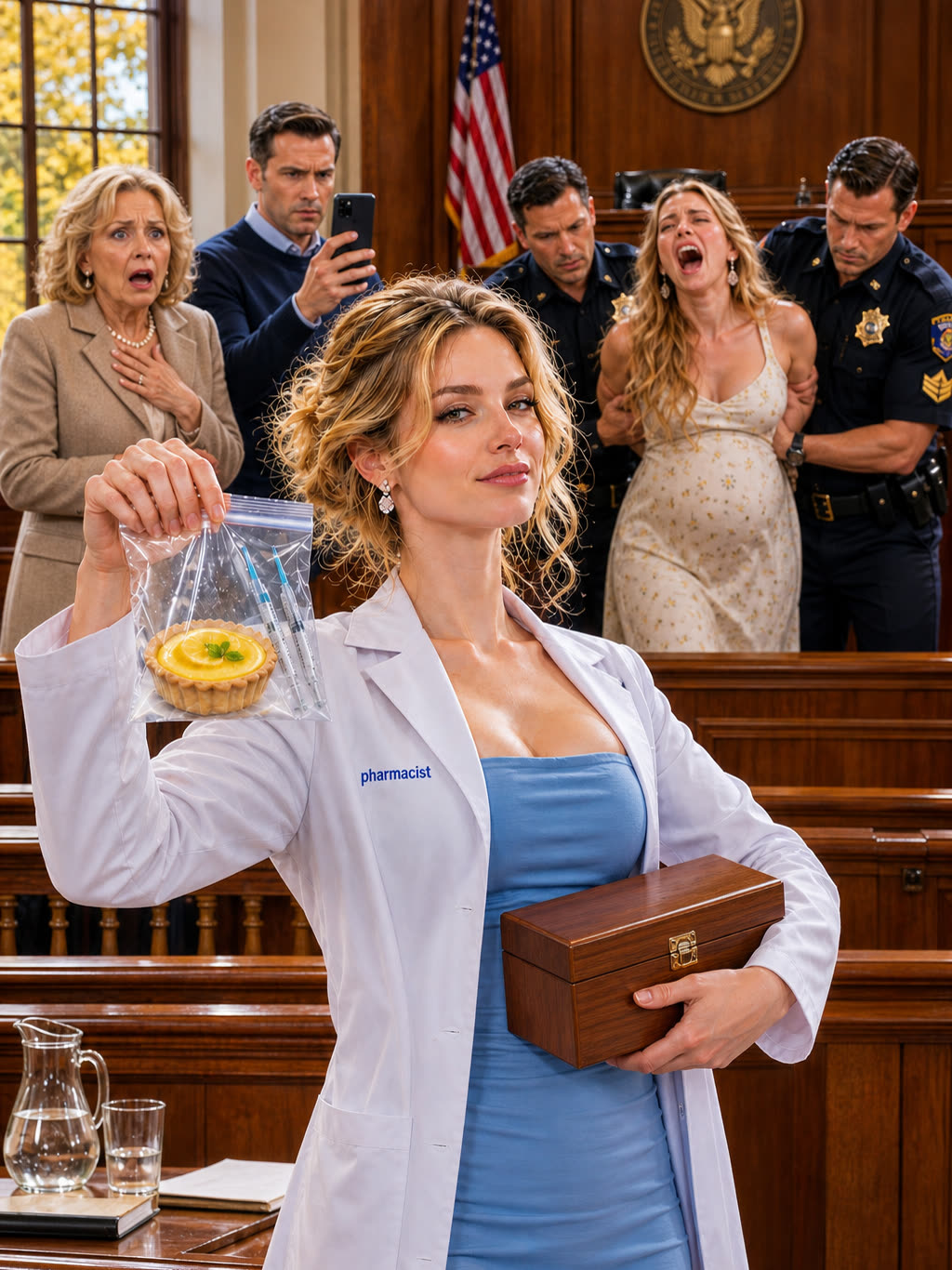
During the sentencing hearing, the presiding judge, a severe woman with no patience for betrayal within families, fixed Serena with an uncompromising stare from the bench.
“The sole reason you are not incarcerated in a state penitentiary today, Mrs. Ruiz, is because your sister possessed the survival instinct to set down the weapon you handed her.”
Helena managed to avoid criminal prosecution. The district attorney acknowledged that her messages were ethically reprehensible, but their ambiguous wording did not establish her legal involvement in the poisoning clearly enough to support criminal charges.
The civil consequences, however, were devastating.
Frightened that a public trial would expose the full extent of her conduct, Helena sold the brick house in Marion to repay the thirty-eight thousand dollars she had taken from the estate. In a remarkably short time, she lost both her residence and the respectable standing she had spent years cultivating within her church congregation.
My niece, Hilda, entered the world shortly before Christmas.
Marcus pursued primary physical custody and succeeded. He became an extraordinary father, so attentive to his daughter’s safety that he carefully examined the ingredient labels on every container of infant purée before allowing her to eat it.
Once the legal proceedings were finally resolved, Mr. Pendelton reached out to explain that Serena’s forfeited forty-five thousand dollars had legally become part of my inheritance.
I used the entire amount to establish an irrevocable college trust for baby Hilda, appointing Marcus as its principal custodian. Not one cent was withheld.
I knew Beatrice would have supported that decision.
A full year has now passed since the oppressive afternoon of the shower, when I found myself surrounded by pink balloons and people who had secretly been plotting my destruction.
As I write these words, I am sitting on the screened porch of the cottage at Clear Lake. Small waves roll against the wooden supports beneath the dock, producing a gentle, familiar rhythm.
Julian and I devoted the summer to bringing the property back to life. Together, we repaired and strengthened the foundations, repainted the exterior trim, and restored the cottage to the peaceful home it was always meant to be.
My name is now permanently recorded on the property deed.
The place where I finally feel safe belongs to me, and no one can take it away.
Next spring, Julian and I intend to begin our own journey toward becoming parents.
Still, I cannot pretend that reaching this point came without enormous personal sacrifice.
Being proven right does not mean emerging from the experience untouched. I had to grieve the mother I should have been able to depend upon, even though she had never truly existed in the way I needed. I also mourned the sister I had spent thirty years convincing myself I possessed.
But I survived their attempt to destroy me.
I finally refused to keep accepting the poisonous offerings my family placed before me, and I learned to wear the protective armor my grandmother had left for me.
Disclaimer: This story is a work of fiction inspired by real-life themes. Names, characters, places and events are fictionalized, and any resemblance to real persons is purely coincidental. Images are for illustration purposes only.
