

PART 1 — THE RING ON THE WRONG HAND
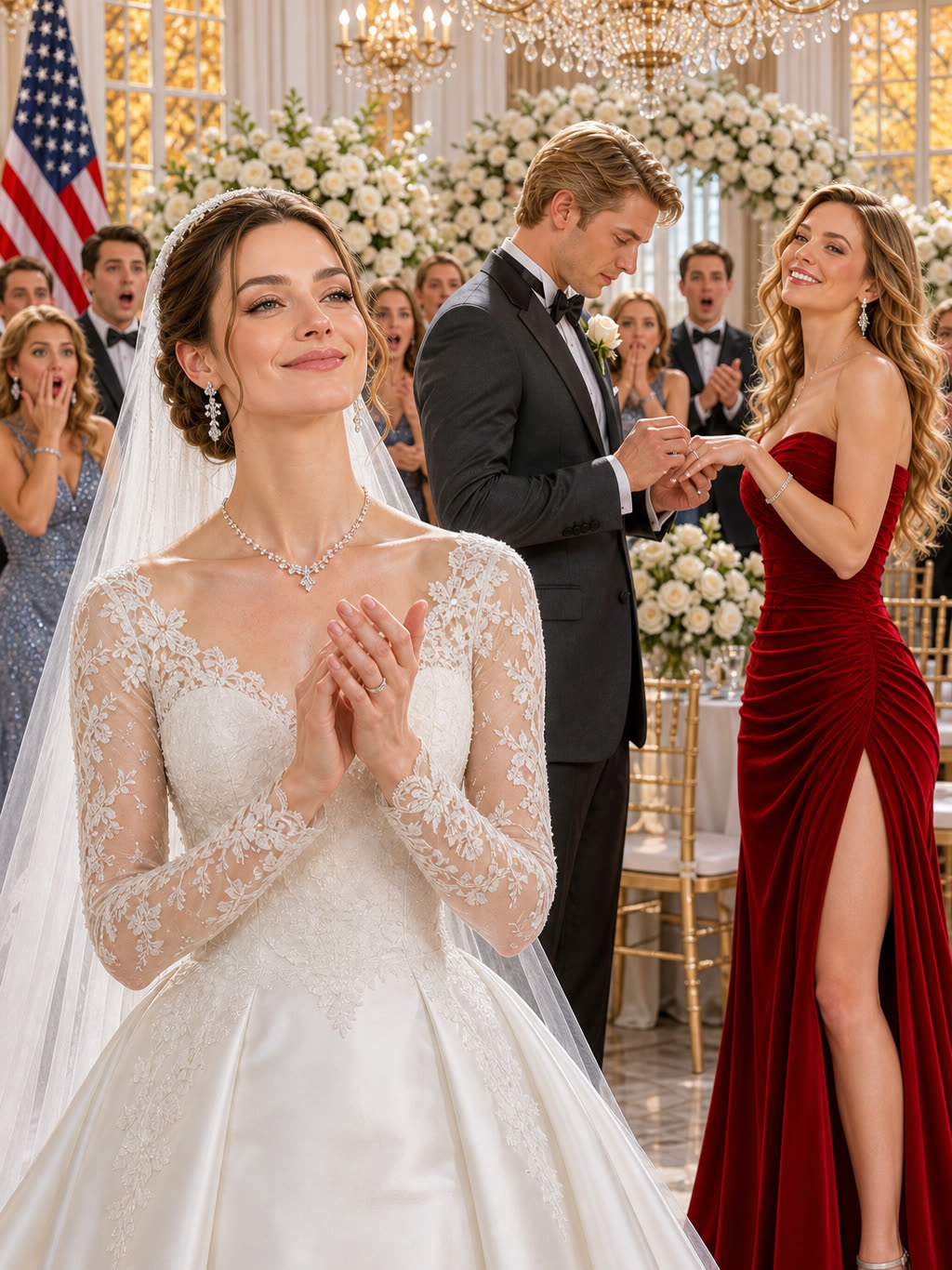
Two hundred eighty-six guests watched my fiancé push my wedding ring onto another woman’s finger.
The woman smiled. She showed no shame and no regret. Under the chandelier, she lifted her hand to admire the three-carat diamond my father had helped pay for.
Graham turned to me and said, “You brought this on yourself, Eliza. I told you to be reasonable.”
I’m Eliza Merritt, thirty-two years old. I was standing at the altar before all our guests in a $9,000 gown I’d picked for my wedding day, while Graham Winslow decided that his childhood best friend should take my place. Her name was Wren Dempsey, and she wore red.
“Take that ring off her finger,” I said.
Graham gripped Wren’s hand more tightly.
“Don’t embarrass yourself.”
Whispers moved from table to table across the ballroom. Somewhere a guest dropped a champagne glass, and from the front row my mother let out a strangled, disbelieving sound.
I held Graham’s gaze.
“You’re giving another woman my wedding ring, and you’re worried about me embarrassing myself?”
“She’s been part of my life since we were five.”
“Then perhaps you should have proposed to her when you were five.”
Several guests gasped. Graham’s mother, Candace Winslow, rose from her seat.
“Eliza, this is precisely the behavior we’ve been concerned about. You’re making a beautiful occasion uncomfortable for everyone.”
I stared at her. For eighteen months, Candace had labeled me controlling every time I raised even a reasonable question about why Wren was so constantly woven into our private relationship. Now she was defending her son for swapping brides at the altar.
Wren leaned against Graham’s shoulder.
“I never wanted things to happen this way.”
I laughed.
“You stood up during my vows and asked him to choose you.”
Tears filled her eyes at once.
“I just couldn’t watch him make the biggest mistake of his life.”
Graham stepped in front of her as if to shield her.
“Enough, Eliza.”
Then he delivered the ultimatum that ended us.
“If you can’t learn to be reasonable, I’ll marry Wren instead.”
The ballroom went silent. I looked at him for three seconds.
Then I said, “Fine.”
His face changed.
“What?”
“Fine. Marry her.”
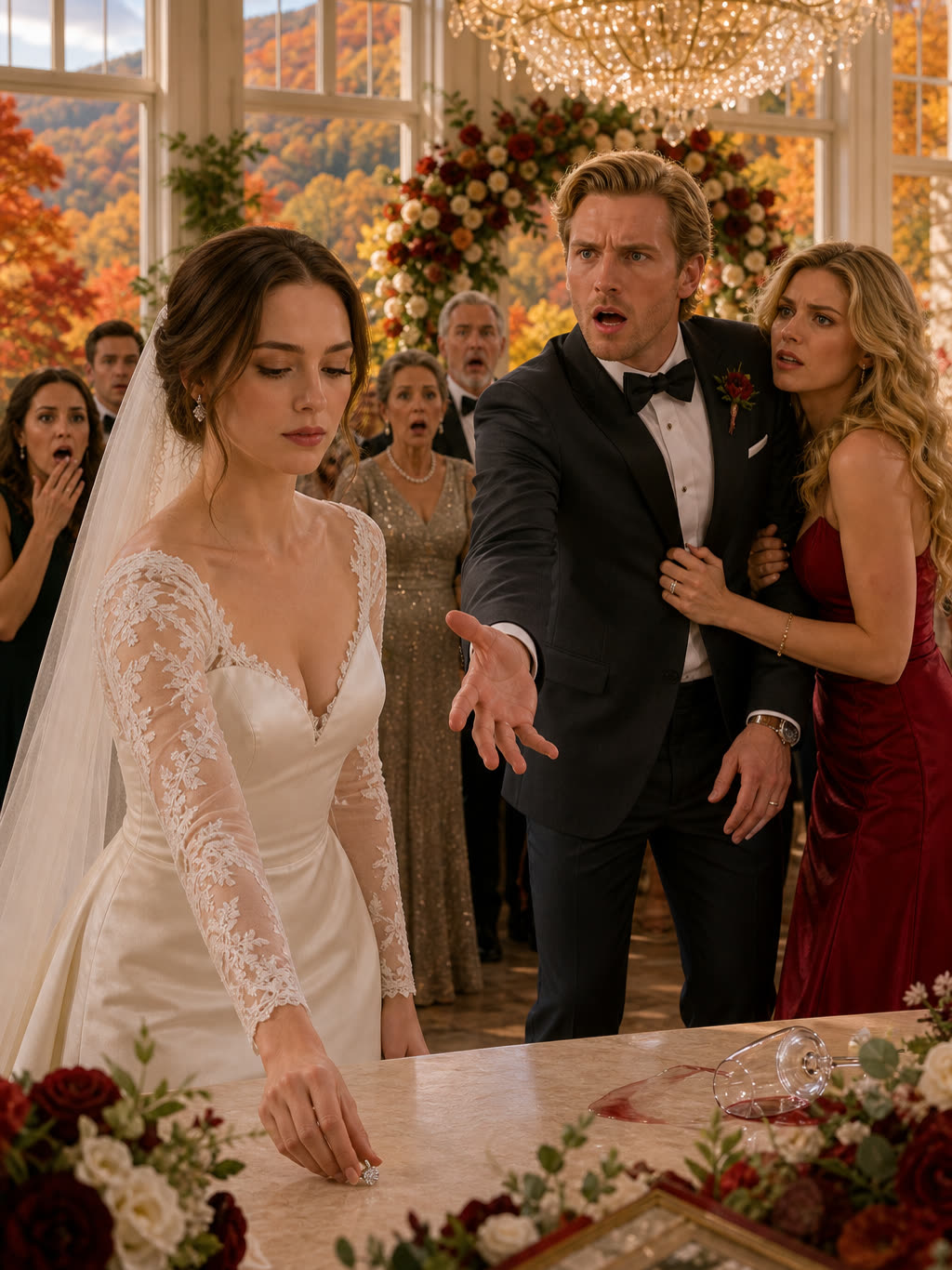
I slid my engagement ring off, laid it on the ceremony table, and turned to the officiant.
“Please stop the ceremony. There will be no marriage today.”
“Eliza, wait,” Graham snapped.
I faced him again.
“No. You made your choice in front of everyone. I’m simply accepting it.”
Candace hurried over and dropped her voice.
“Think very carefully before you do something irreversible.”
I looked from her to Wren, and then to the diamond flashing on Wren’s finger.
“Your son just did something irreversible.”
My father, Dean Merritt, stood up. The color had drained from his face. For thirty-seven years he had run his own commercial construction company, staying steady through lawsuits, catastrophic equipment failures, and projects worth millions. Yet watching his only daughter humiliated at her own wedding had nearly broken him.
“Eliza,” he said softly, “come with me.”
I started toward him, but Graham caught my wrist.
“Don’t walk away over one misunderstanding.”
I looked down at his hand.
“Let go.”
“You’re overreacting.”
“Let. Go.”
He released me. I turned to the guests.
“Thank you all for coming. I’m sorry there won’t be a wedding. Please enjoy the food. It’s already paid for.”
Some people stood. Others only stared in shock. I had nearly reached the aisle when Candace’s next words stopped me.
“You should remember who owns the house before you start acting so independent.”
I turned back slowly.
“What house?”
She smiled as though she knew something I didn’t.
“The house Graham purchased for your marriage. The deed is in his name. Perhaps you shouldn’t throw away your future quite so easily.”
My father clenched his jaw. The house had cost $485,000. My parents had put in $135,000 for the down payment and another $64,000 for renovations. Graham had insisted that listing only his name on the deed would make the mortgage application simpler, and we had always meant to revisit the ownership and settle it properly after the wedding.
We had trusted him. Apparently he saw our trust as weakness.
Wren slipped an arm around Graham’s waist.
“Maybe we should just go home, sweetheart.”
Home. She was calling a house my father had helped buy her own. Something inside me went completely still.
“You’re right,” I told Candace. “I should remember who paid for that house.”
Graham rolled his eyes.
“Don’t start threatening me with money.”
“I’m not threatening you.”
I turned to my father.
“Dad, please don’t make another payment on their behalf.”
His expression sharpened.
“Eliza—”
“Not another dollar.”
Candace’s smile vanished. Graham looked baffled.
“What other payment?”
My father didn’t answer. Then I remembered something Graham didn’t know. A week earlier, Dad had mentioned that the contractor was still waiting on the final renovation payment. A $42,000 transfer was scheduled for Monday morning, and the money was still sitting in his account.
Graham swung toward my father.
“Dean, we had an arrangement.”
My father looked him squarely in the eye.
“That arrangement was for my daughter’s marriage.”
Graham’s face tightened.
“You can’t just change your mind.”
“You just changed your bride.”
That line cut deeper than anything I had said. Wren pulled Graham aside and whispered at him furiously. Candace began muttering about lawyers. I stopped listening. I walked out beside Dad, holding my bouquet, determined not to hand him my humiliation to carry.
Outside, the November wind struck my bare shoulders. June Farrell, my closest friend, came after me with my coat. We had been friends since college, and six months earlier she had been the only one to warn me that Graham and Wren’s closeness was unhealthy.
“Eliza,” she whispered, “there’s something you need to see.”
She held out her phone. The screen showed a photo taken less than an hour before. In the bridal suite, before the ceremony, Wren and Candace stood together. Wren was holding a white envelope, and the paper inside seemed to carry my father’s signature.
June zoomed in. Four words stood across the top of the page:
ACKNOWLEDGMENT OF FINANCIAL GIFT.
My stomach lurched.
“Where did you get this?”
“Graham’s sister sent it to me. She said it was urgent.”
I studied the photograph. Dad stepped closer.
“That isn’t my signature.”
For the first time since leaving the altar, I felt real fear. The ceremony had hidden far more than a betrayal. Someone seemed to be planning to take my family’s money. And the woman wearing my ring might be only the beginning.
The next day, someone sent me a photo of Wren Dempsey standing in my unfinished kitchen. She was still wearing my engagement ring. In one hand she held a glass of champagne, and in the other the brass front-door key I had chosen myself.
The caption read:
Some things are meant to be.
I stared at the picture at my parents’ kitchen table. My mother, Sylvie, set a cup of coffee down beside me.
“Don’t look at it,” she said.
“I need to.”
“Why?”
“Because I need to know exactly what they’re doing.”
Dad sat across from me, going over the document June had photographed. He had spent half the night comparing the signature to his own.
“It isn’t mine,” he said again. “The letter says I gave Graham the down payment without conditions. I never signed anything like that.”
“Did you sign anything for the mortgage?”
“Bank verification forms. A gift letter for the lender.”
“Could someone have copied your signature?”
“That’s what I intend to find out.”
He looked worn out. Dad had started his company with a borrowed pickup and a secondhand excavator. Losing $199,000 was not something he could shrug off without serious consequences. Those savings were years of labor, and he had handed them over believing his daughter was building a home.
Graham called at eleven. I nearly let it ring, then answered on speaker.
“Eliza, we need to talk.”
“Go ahead.”
“First of all, yesterday got out of hand.”
I said nothing.
“Wren was emotional. You were emotional. Everybody started saying things they didn’t mean.”
“You put my wedding ring on her finger.”
He didn’t reply.
“That was impulsive.”
“You announced you were marrying her.”
“I was upset.”
“And now?”
He exhaled.
“Now I need your father to stop interfering with our house.”
Our house. Barely a day after replacing me, Graham was already calling it his home with Wren.
“The final contractor payment isn’t happening,” I said.
“You can’t do that. The kitchen isn’t finished.”
“Then you’ll need to pay for your kitchen.”
“Eliza, don’t be petty.”
I almost laughed.
“Send me the invoices for anything you’ve paid yourself. We can let the attorneys sort it out.”
“Attorneys?”
“Yes.”
His tone hardened.
“Are you really going to sue me because I chose someone else?”
“No, Graham. I’m going to seek repayment of money my family gave you for a marriage that never happened.”
“You don’t have a case. The deed is in my name.”
“Then you shouldn’t be worried.”
I hung up. For the first time in three years, I felt no obligation to soothe him.
Three days later, I went to see civil attorney Naomi Ellison in downtown Richmond. Naomi handled property and financial litigation. She went through the transfer confirmations, construction bills, mortgage documents, and texts. Last of all, she studied the photographed acknowledgment.
“Where is the original?”
“We don’t have it.”
“How did you find out about it?”
I told her about June’s photograph and the message from Graham’s younger sister, Pippa. Naomi made several notes.
“Your father may have a claim for repayment, depending on the documents, the parties’ intentions, and how the money was characterized. But the lender’s gift letter complicates matters. We need to distinguish any unconditional representations made to the lender from what everyone agreed among themselves.”
“Can we get the house?”
“Not automatically. Graham holds title. Our immediate focus should be preserving evidence and establishing what funds were paid, why they were paid, and whether anyone created a fraudulent document.”
She tapped the photo.
“This concerns me more than the breakup.”
“Why?”
“Because if someone forged your father’s signature to obtain an additional financial benefit, we’re no longer dealing with ordinary wedding fallout.”
I leaned closer.
“What do you need?”
“Everything.”
By Friday, Naomi had every payment record Dad could find. She had also dug up three messages from Graham that I had nearly forgotten. One was dated six months before our planned wedding.
Thank your dad again. Tell him I understand the money is for our future marriage, and I’ll make sure everything is fair after the wedding.
Another came after the renovations began.
Once we’re married, we’ll get the deed situation straightened out.
The last had arrived just two weeks before the ceremony.
Your parents are saving us. I promise they’ll never regret helping us build our home.
Naomi read each one carefully.
“These don’t settle every legal issue,” she said, “but they’re important.”
That afternoon, Pippa Winslow called. Pippa was twenty-six and worked in advertising, and she had always treated me more kindly than the rest of her family did.
“Eliza, I’m sorry.”
“You didn’t do anything.”
“I should have told you sooner.”
“Told me what?”
She drew an unsteady breath.
“Mom and Wren have been meeting for weeks. I thought they were planning some surprise for the wedding.”
“What kind of meetings?”
“They kept talking about making sure Graham had no way to back out.”
I tightened my grip on the phone.
“Back out of what?”
“Marrying Wren.”
I went cold.
“Pippa, are you telling me they planned what happened at the altar?”
“I don’t know exactly how much Graham knew. But Wren had a dress ready, and Mom told me not to worry about you because you’d eventually understand.”
I looked out the office window. Cars drifted past as ordinary life carried on while mine fell apart.
“Why would they need a document with my father’s signature?”
“I heard Mom say they needed to make sure the house couldn’t be challenged.”
“Did Graham know?”
“I think he knew there was paperwork. I don’t know if he knew about the signature.”
“Where is it now?”
“In his mother’s study, unless they’ve moved it.”
I closed my eyes.
“Thank you for telling me.”
“There’s something else.”
She lowered her voice.
“Wren told Mom that once Graham married her, nobody would care whose money bought the house.”
We were both quiet for a moment. Then Pippa said something even worse.
“Eliza, Wren says she’s pregnant.”
My heart pounded.
“Pregnant?”
“Almost four months, apparently. They’re planning to announce it at their courthouse wedding.”
Nearly four months. Graham had shared my bed four months earlier. We had talked about honeymoon bookings, the furniture we wanted for our home, and whether we might someday have children of our own.
I managed one last question.
“When did Graham find out?”
Pippa hesitated.
“He told me she only told him the night before your wedding.”
After the call, I reopened Wren’s kitchen photo. I studied her victorious expression, the ring, the champagne. Then I noticed a detail I had missed. Behind her, a magnet held a sonogram to the refrigerator. Beneath it, someone had handwritten a date.
That date did not match what Pippa had just told me.
PART 2 — THE SECRET BEHIND HER PREGNANCY
The ultrasound was dated September 18.
By itself, that proved very little. But beneath it, three words had been written in blue ink.
For Caleb, always.
I zoomed in until the lettering blurred. Caleb. Not Graham.
I called Pippa right away.
“Does Wren know someone named Caleb?”
Her silence told me plenty.
“Caleb Shaw,” she finally said. “He was her boyfriend.”
“Was?”
“They lived together until late August.”
I looked at the photograph.
“And she’s telling people Graham is the father?”
“That’s what she told him.”
“Does Graham know about Caleb?”
“He knows they dated. Wren told him they broke up months earlier.”
I leaned against the kitchen counter. Suddenly everything looked different. Wren hadn’t crashed the wedding simply because she couldn’t bear to lose her childhood friend. She had come prepared. Her family had helped her. And a child was involved too.
I forwarded the picture to Naomi. Twenty minutes later she answered.
Don’t contact Wren about this. Pregnancy dates and photographs don’t establish paternity. Preserve the original image and let us determine what’s relevant to the financial case.
She was right. My anger couldn’t prove anything.
A week later, I met Caleb Shaw at a diner near Richmond. Caleb was thirty-four and broad-shouldered, with closely cropped brown hair and the unmistakable grease of his trade under his fingernails. He repaired commercial refrigeration systems and seemed far more comfortable fixing equipment than talking with strangers. June came along with me, and Caleb had agreed to meet in public.
He watched me take the seat across from him.
“You’re Graham’s ex-fiancée.”
“That’s right.”
“The wedding girl.”
I flinched.
“Apparently, that’s what people call me now.”
He looked embarrassed.
“Sorry.”
“It’s fine.”
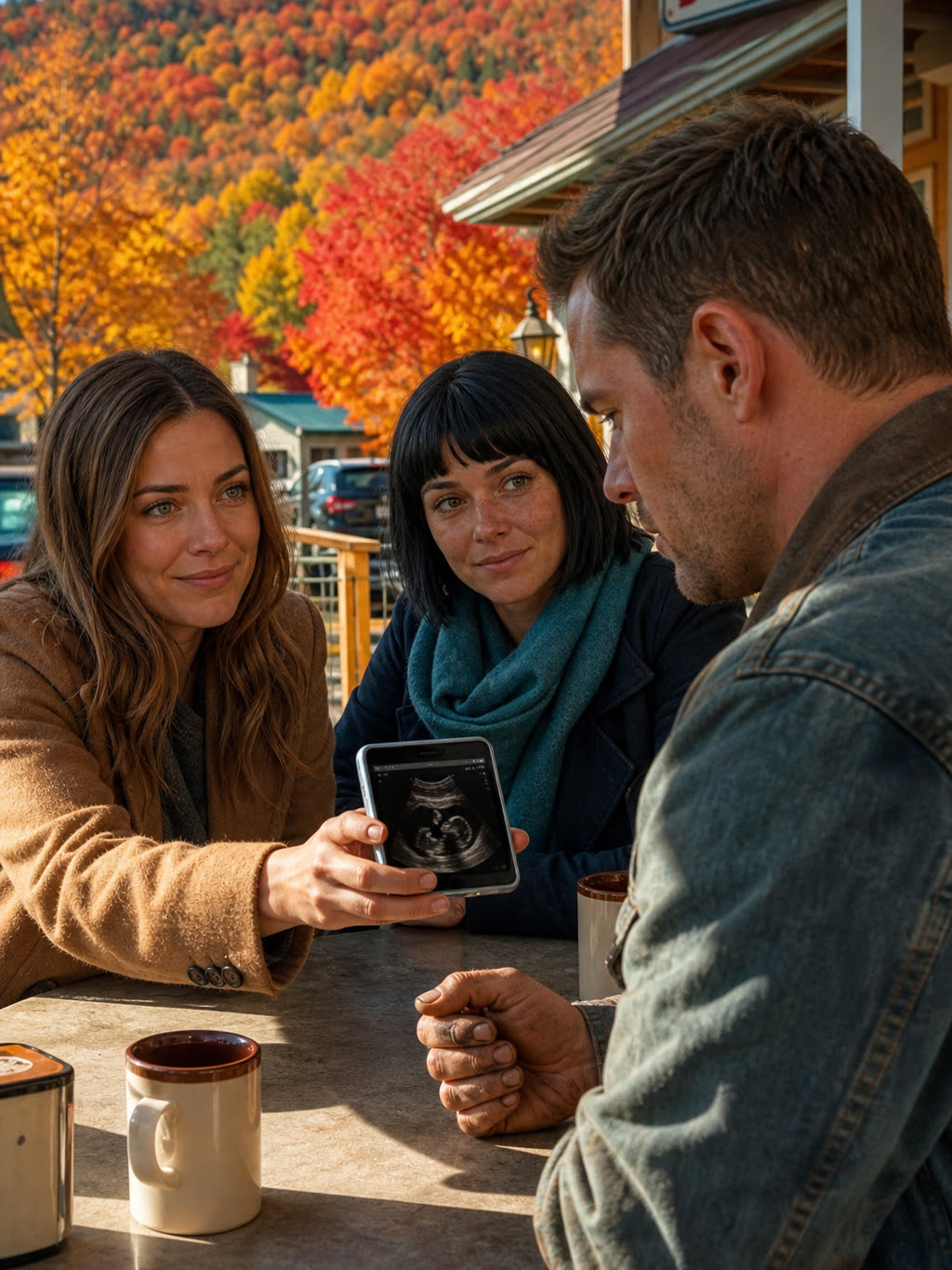
I set my phone on the table with the photo showing.
“Do you recognize this?”
His expression changed at once.
“Where did you get that?”
“Wren posted a picture inside Graham’s house. It was in the background.”
Caleb studied the ultrasound.
“I wrote those words.”
My stomach clenched.
“You did?”
He nodded.
“She told me we were having a baby. I went with her to the first appointment.”
“Was that in September?”
“Yes.”
“Do you believe you’re the father?”
“I do.”
He pulled his phone from his jacket.
“She told me she was pregnant in July. We were still together. I was working overtime, saving money for a bigger apartment.”
He showed me a photo. Wren sat on his sofa holding tiny yellow baby socks, and she looked happy. The picture was dated July 22.
“We were happy,” Caleb said quietly. “At least I thought we were.”
“What happened?”
“Her mother started coming around. Then Wren said she needed space. Two weeks later, she moved out.”
“And Graham?”
Caleb gave a humorless laugh.
“I found out about Graham when I saw the wedding video.”
He scrolled through his texts. One had arrived just after Wren left him.
Please don’t tell Graham anything. Mom says everything will work out if you just stay out of it.
Another read:
You know how long I’ve waited for him. Please don’t ruin this.
Caleb swallowed hard.
“I told her I wasn’t going to disappear if the baby was mine. She blocked me.”
I met his eyes.
“Caleb, I can’t tell you who the father is. Nobody can establish that from these messages.”
“I know.”
“But you deserve to have that question answered.”
He nodded.
“I’ve already contacted a family-law attorney. I want to establish paternity legally when appropriate. Not for revenge. I want to know whether that child is mine.”
His words changed my opinion of him. He wasn’t after revenge against Wren. He wanted to find his child. I handed him Naomi’s card.
“If you have information about the house or those financial documents, my attorney would like to hear it.”
Caleb hesitated.
“Actually, I might.”
He showed me one more text. It was from Wren’s mother, Lorna Dempsey.
Keep Caleb quiet until Graham’s name is on everything. Once the money is secured, nothing else matters.
I read it twice.
“Why did Lorna send you that?”
“She meant to send it to Wren. She deleted it right away, but I’d already taken a screenshot.”
A chill ran through me. The money. In the end, it had always been about the money.
Three days later, Naomi received a startling answer to our demand. Graham’s lawyer attached the acknowledgment bearing Dad’s supposedly forged signature, insisting that the entire contribution was an unconditional gift. Dad denied signing anything like it. Naomi hired a document specialist and notified authorities of the suspected forgery.
Meanwhile, Graham texted me.
Drop this now. You’re making yourself look desperate.
I answered in one sentence.
Please direct all communication to my attorney.
Then I blocked him.
Two more weeks passed. The wedding footage was still online, though the talk now centered more on the property than the ring. I threw myself into real-estate paperwork. After seven years building a reputation as one of my firm’s top agents, I refused to let Graham erode my independence.
Then Pippa showed up at my office unannounced. She looked frightened.
“Eliza, I found something.”
She handed me a printed email. Months earlier, she had accidentally received it at work while helping Candace organize wedding documents. Lorna Dempsey had sent it. It contained an unsigned financial acknowledgment and a scanned signature. The message read:
Use Dean’s signature from the contractor paperwork. Graham needs proof the Merritts can’t ask for their money back after the ceremony.
Candace had answered underneath:
Make sure it’s ready before Saturday.
I studied the words. Pippa’s voice shook.
“My mother didn’t just know what Wren was planning.”
I looked up.
“She helped her.”
Then my phone rang. It was Caleb, and his voice was tense.
“Eliza, someone came to my shop asking for the screenshots.”
“What someone?”
“I don’t know him. He told me to stay away from the Winslows.”
“Call the police, Caleb.”
“I already did.”
There was a pause. Then he whispered something that chilled me.
“He had a picture of your parents’ house.”
I called Dad before I called the police.
“Dad, lock the doors.”
“Eliza, what’s wrong?”
“Someone threatened Caleb, and they have a picture of your house.”
Dad asked nothing more. Before I had finished speaking, he had brought Mom inside, locked up, and switched on the cameras. Instead of driving home, I went straight to Naomi’s office. She was waiting with a paralegal and Detective Erin Kessler. Caleb had already filed a report about the visitor’s threat.
Detective Kessler listened while I described the document, the texts, and the photo.
“We’ll investigate the threat,” she said. “But I need you to understand something. Suspicion isn’t proof that these people arranged it. Do not confront anyone or attempt to investigate on your own.”
I nodded once.
“I just want my family safe.”
“Then let us handle that part.”
That night, officers interviewed Caleb and collected his shop’s surveillance video. The man who had threatened him drove a gray pickup with a damaged rear bumper. Investigators identified it three days later. Its owner had occasionally made deliveries for Lorna Dempsey. That connection didn’t prove Lorna had directed the threat, but it called for more digging.
Meanwhile, the financial dispute moved toward mediation. Graham seemed to expect us to fold once his lawyer produced the acknowledgment. Naomi instead demanded an explanation of how it had been created. The scanned signature differed from Dad’s usual handwriting. More telling, the document showed signs that a signature image had been digitally inserted. Pippa’s email raised further concerns, so Naomi demanded that all communications be preserved and records formally produced.
Graham suddenly became willing to settle. He first offered $40,000. Dad declined. He raised it to $75,000. Naomi refused that too. Then Graham called me from an unknown number.
“Eliza, you’re ruining my life.”
From my balcony, I watched headlights slide past below.
“You’re calling me against my attorney’s instructions.”
“Please, just listen.”
I stayed silent.
“Mom told me the document was legitimate. I didn’t know she’d copied Dean’s signature.”
I shut my eyes.
“You used it to keep his money.”
“I thought it was a gift.”
“Then why were you demanding another $42,000 after you canceled our wedding?”
He didn’t answer.
“Eliza, I made a terrible mistake.”
“You made several.”
“I want to fix this.”
“Then tell Naomi the truth.”
He paused.
“Wren’s pregnant. I can’t destroy my family.”
I gazed out into the dark.
“Graham, your family is built on decisions you haven’t bothered to question.”
I hung up.
Pippa called the next morning. The Winslow household had finally exploded. Candace had spotted Caleb’s name in an old tablet message belonging to Wren. When confronted, Wren insisted Graham was the father. Graham questioned the timeline. Wren admitted she had seen Caleb during the relevant months but kept claiming Graham’s paternity. At last Candace turned against the woman she had praised for years. Pippa described shouting, crying, and accusations that dragged on almost until midnight. They canceled the planned public reception. But the courthouse marriage was already official, and Graham couldn’t erase it by pretending otherwise.
Days later, Caleb’s lawyer reported that Wren had agreed to proper paternity testing after the birth. Photographs would no longer pass for proof, and rumor would not decide anything. A test would give the answer.
At about the same time, the document investigation moved forward. Investigators found messages showing that Lorna had built the false acknowledgment from scans supplied through Candace. Candace admitted sharing the documents but denied understanding the consequences. Graham conceded that he had cited the acknowledgment to refuse repayment. The parties disagreed over who had started the fraud. That no longer mattered to me. The evidence could speak for itself.
Our civil case settled six weeks later. Graham agreed to return Dad’s $199,000 and pay an agreed share of the attorney fees. He was given ninety days to finance the repayment or sell the house. The extra $42,000 renovation transfer never happened. Dad came with me while Naomi explained the settlement.
“Are you satisfied?” she asked.
I thought about my answer.
“No.”
My father looked worried. I went on.
“But I believe this is a fair resolution.”
Naomi smiled faintly.
“That’s an important distinction.”
Graham ended up selling the property. The proceeds, after the mortgage and closing costs and topped up by a family loan, covered the settlement. Dad got his money back. I assumed it was over. I was wrong.
Two months later, Caleb called. Wren had given birth to a healthy daughter. Court-supervised paternity testing had been completed.
“Eliza,” Caleb said, his voice shaking, “she’s mine.”
I sat down.
“You’re sure?”
“The test confirmed it.”
Neither of us spoke for several seconds. Then I heard him sobbing. It wasn’t triumph over Graham, and it wasn’t because Wren’s lies had been exposed. He was crying because he had a daughter.
“I get to be her dad,” he whispered.
Tears filled my eyes.
“Congratulations, Caleb.”
“Her name is Nora.”
I smiled softly.
“That’s beautiful.”
He drew a deep breath.
“There’s one more thing.”
“What?”
“Graham found out this morning.”
I glanced toward the window.
“How did he react?”
Caleb faltered.
“He’s trying to get his marriage annulled. But that’s not why I’m calling.”
My stomach tightened.
“Then why?”
“Because Lorna was arrested an hour ago.”
I went still.
“What happened?”
“Detective Kessler says they’ve connected her to the threats against me. And they found something else in her financial records.”
“What?”
Caleb lowered his voice.
“She wasn’t planning to stop with your parents’ money.”
PART 3 — THE WOMAN WHO WALKED AWAY
Lorna Dempsey had been seeking a $310,000 private loan backed by a forged guarantee, supposedly from Dad’s construction firm. I learned this the next morning, when Detective Kessler came to my parents’ house with a colleague and a thick file. Dad sat at the table, growing grimmer as she described what they had found.
Lorna was deeply in debt from her failed restaurant. Investigative records showed that she and Wren had discussed borrowing against Graham’s house, but Lorna wanted more than the property could support. So she prepared another document, one that falsely named Merritt Construction as guarantor. Dad studied the counterfeit letterhead.
“She used my company?”
“That’s what the evidence indicates,” Detective Kessler said.
“That guarantee never came from me.”
“We understand. The loan wasn’t funded. The lender became suspicious and requested additional verification.”
Mom covered her mouth.
“If they’d believed her…”
Dad finished the thought.
“We could have spent years defending ourselves against this.”
Kessler explained that the forgeries were part of a wider investigation. Investigators had also found messages suggesting Lorna had arranged the threats against Caleb after learning about his evidence on Wren. The man who visited his shop eventually cooperated with officers, and his testimony, messages, and financial records backed up the claims. The danger had been real. So had the work to stop it. For the first time since my ruined wedding, I slept without checking my parents’ cameras.
Lorna’s case moved forward over the following months. She finally pleaded guilty to forgery, attempted financial fraud, and an offense tied to the intimidation scheme, and the judge sentenced her to prison. I didn’t go to the sentencing to enjoy her suffering. I went because Dad’s name had been misused. When the judge finished, I turned to my father. He was staring down at his hands.
“Are you okay?” I whispered.
He nodded carefully.
“Your grandfather used to tell me there are two ways to get rich. You can build something, or you can take what somebody else built.”
He looked toward the courtroom doors.
“I never thought I’d meet people who were so proud of doing the second.”
Candace Winslow was waiting outside the courthouse. She had changed. Gray ran through her once-perfect hair, and her expensive coat hung loosely on her.
“Dean,” she said.
Dad stopped.
“Mrs. Winslow.”
“Could I have a word?”
He glanced at me. I nodded once.
Candace drew a shaky breath.
“I owe your family an apology.”
Dad folded his arms.
“You owe my daughter more than an apology.”
“I know.”
“Then start there.”
Candace turned to me.
“Eliza, I was cruel to you.”
I said nothing.
“I convinced myself Graham deserved someone who understood him better. I ignored everything you did for him. And when you tried to stand up for yourself, I treated you like the problem.”
Her voice cracked.
“I helped create the situation that destroyed my son’s marriage.”
I studied her face.
“Your son wasn’t married to me.”
She lowered her eyes.
“You’re right.”
“He was supposed to be. And you made it very clear that I wasn’t welcome.”
“I did.”
I stayed quiet. She seemed to expect reassurance. I gave her none. Finally she whispered, “Can you forgive me?”
I looked at my parents. Mom stood beside Dad, holding his hand. They had lost sleep, paid legal fees, and lived through months without peace, all because people they once trusted had mistaken their generosity for an opening to exploit.
“I hope you learn from what happened,” I said. “But forgiveness isn’t something you get to demand because you’re finally sorry.”
Candace wept. I walked past her without stopping.
That afternoon I went back to work. Commercial-property proposals covered my desk. My supervisor offered me a promotion: more responsibility, higher commissions, a bigger team. Six months earlier I would have accepted without a second thought. Instead I stared at the paperwork for almost an hour. I was good at real estate. But I no longer wanted a life defined by buying, financing, and selling property. I wanted to create beauty.
The inspiration came suddenly. An aging greenhouse outside Richmond was for sale. A retired horticulture teacher had owned it, growing roses and teaching local children to garden for forty years. It needed work. The roof leaked, the windows were cracked, and the irrigation barely functioned. Yet when I stepped inside, sunlight poured through the damaged glass and lit up the forgotten rows of flowerbeds that no one had tended in so long.
I stood there breathing in the scent of damp earth. For the first time in months, my future excited me. I bought it with my own savings and cautious financing. I didn’t ask Dad to bail me out, and I kept the deed in my name. I hired builders, restored the greenhouse, and turned the adjoining building into a floral studio. I named it Second Bloom.
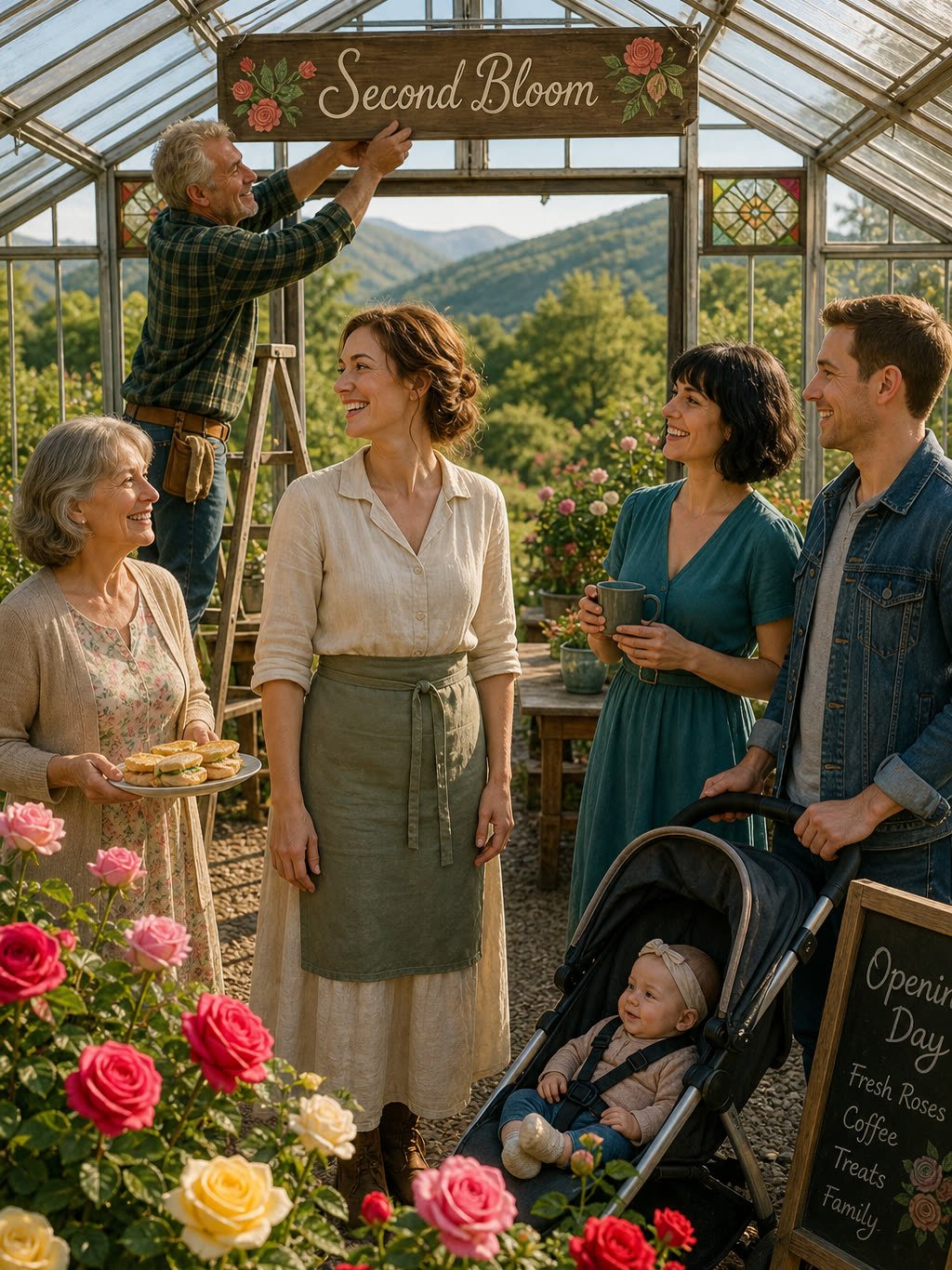
On opening day, June brought coffee and pastries. Mom arrived with homemade sandwiches. Dad showed up with tools, determined to hang my business sign himself. Pippa brought flowers she had bought somewhere else.
“I realize this is ridiculous,” she said, setting the flowers on the counter.
I laughed.
“It’s perfect.”
Caleb arrived afterward with a stroller. Inside lay a lovely dark-haired baby with Caleb’s brown eyes.
“Nora,” he said, “meet the woman who helped your dad find you.”
I crouched down and smiled at her.
“Hello, sweetheart.”
Caleb had confirmed paternity and was negotiating parenting arrangements with Wren. It remained complicated. Still, he attended every visit and appointment and fulfilled every duty. I admired that far more than any extravagant romantic gesture.
By sundown, nearly every bouquet had sold. I stood outside the greenhouse and watched the last customers leave. A man came toward me carrying rolled architectural plans. He introduced himself as Emmett Vale, a preservation expert working on a nearby historic library.
“I heard you might be willing to supply flowers for our fundraising event.”
I smiled gently.
“That depends. How many flowers?”
He grinned.
“More than my budget probably allows.”
For once, talking to a man left me free of any suspicion about his motives. Six months later, Emmett would matter deeply to me. But that evening, before I knew what lay ahead, a familiar black SUV rolled into the lot.
Graham stepped out. He looked thinner, older, and uneasy. In his hand he held a small velvet case, and I recognized it immediately. It was the box from my old wedding ring. As he walked toward me, I sensed an apology wasn’t his only purpose.
He stopped several feet away. For a moment we stood in silence. The evening sun lit the case in his hand.
“Eliza,” he said quietly. “You look good.”
“Thank you.”
He glanced at the greenhouse.
“You really built all this?”
“With some help.”
“It’s beautiful.”
I said nothing. At last he opened the case. Inside lay the diamond he had placed on Wren’s finger at our ceremony. I looked at it. For months, that stone had stood for my humiliation. Now it seemed oddly ordinary.
“Wren gave it back,” he said.
I raised my eyes.
“I didn’t ask.”
“I know.”
He swallowed hard.
“Our marriage is ending. The paperwork is almost finished.”
“I’m sorry things didn’t work out.”
He laughed bitterly.
“You don’t have to pretend.”
“I’m not pretending, Graham. I don’t wish unhappiness on you.”
He looked at the ring.
“I wanted to bring this back. Your father helped pay for it. You should have it.”
I shook my head once.
“No.”
“Eliza—”
“That ring stopped being mine the moment you put it on her finger.”
His expression hardened.
“I made the biggest mistake of my life.”
“You made a choice.”
“I know.”
“No, I don’t think you do.”
I stepped closer.
“At our wedding, I gave you an opportunity to stop. I asked you to tell Wren to leave. I told you we could continue the ceremony if you respected that boundary.”
His eyes glistened.
“And instead,” I went on, “you took her hand. You put my ring on her finger. Then you told hundreds of people I was unreasonable.”
He looked away.
“I wanted to hurt you.”
His admission surprised me. He drew an unsteady breath.
“I knew you hated how close Wren and I were. My mother kept telling me you needed to learn that you couldn’t control me. When Wren challenged me at the altar, I thought I could make you back down.”
“You thought threatening to marry another woman would make me obey you?”
He nodded.
“I never expected you to say fine.”
I looked at him in silence for a while. Then I said, “That’s the difference between us. You thought marriage was about winning. I thought it was about choosing each other.”
He covered his face.
“I’m so sorry.”
At last his remorse sounded genuine. But sincerity couldn’t undo the past.
“Graham, I accept that you’re sorry. I hope you become a better man. But I can’t give you anything more.”
He lowered his hands.
“Do you think there’s any chance we could start again?”
“No.”
I answered immediately. He closed his eyes.
“I figured.”
He tucked the ring case into his pocket.
“What should I do with it?”
“Whatever you think is right. It isn’t my decision anymore.”
He nodded and glanced once more at the greenhouse.
“I heard you’re doing well.”
“I am.”
“I’m glad.”
He walked toward his SUV, then paused.
“Eliza?”
“Yes?”
“I know I don’t deserve to say this, but I hope whoever you marry someday understands how lucky he is.”
I watched him quietly.
“He won’t have to understand it all at once,” I said. “He’ll just have to remember it when things get difficult.”
Graham gave a sad smile and drove away. I never saw him again.
Within the next year, Second Bloom grew beyond retail flowers. We taught classes, supplied flowers for nearby weddings, and donated arrangements to a local assisted-living home. I employed three people and mentored aspiring female entrepreneurs.
Emmett started coming by often. At first it was about the library fundraiser. Later he helped design a community garden. Eventually he was bringing coffee when I arrived before dawn. He never tried to impress me with expensive gifts. He never insisted on knowing where I was at every moment. When I told him about Graham, he made no grand promises about being different. He just listened.
One evening, we were repairing a wooden planter outside the greenhouse when I asked him a question.
“Emmett, what would you do if your childhood best friend told you not to marry me?”
He paused in his work.
“Why would she say that?”
“Maybe she was jealous.”
He thought about it.
“Then I’d tell her she doesn’t get to make decisions about my marriage.”
I watched his face.
“What if she cried?”
“Then I’d offer her a tissue.”
I laughed out loud. He smiled warmly.
“Was that the wrong answer?”
“No,” I whispered. “It was exactly right.”
We began dating the following spring. We took it slowly and with care, and neither of us made the relationship the center of everything. He kept his career. I kept mine. We made room for each other without giving ourselves up.
That winter, Emmett proposed. No audience watched, no photographer lurked behind the trees, and there was no show. We stood in the closed greenhouse while snow drifted outside. He took a small ring from his pocket.
“Eliza Merritt, I love the life you’ve built. I don’t want to take it over. I want to build a life beside yours. Will you marry me?”
I met his eyes. Then I smiled softly.
“Yes.”
Laughing with relief, he wrapped me in his arms. Something became clear to me then. The moment was perfect not because nothing had ever gone wrong, but because I felt safe.
We married the next June, exchanging vows at Second Bloom beneath white hanging flowers and glass panels glowing in the afternoon light. Forty guests came. Mom cried. June cried even harder. Pippa photographed everything. Caleb brought Nora, now old enough to carry a little basket of petals. Dad walked me down the narrow aisle. Before we reached Emmett, he squeezed my hand.
“You know,” Dad whispered, “I used to think my job was to give you away to somebody who would take care of you.”
I met his eyes.
“And now?”
He gave me a warm smile.
“Now I know my job was to raise you to take care of yourself—and recognize a man who would stand beside you.”
I kissed Dad’s cheek.
“Thank you, Dad.”
When Emmett slipped on my ring, I held his gaze. I felt no uncertainty. There was no red-clad woman waiting to interrupt, and no mother-in-law sizing me up by my bank balance. There was only a man who chose me, and whom I chose freely.
A year later, Second Bloom opened a second branch. My parents enjoyed a comfortable retirement. Caleb raised Nora under a formal arrangement that kept her bonds with both parents. Wren eventually found steady work and began rebuilding. We never became friends, though I hoped she would put her daughter ahead of old feuds. Candace mailed one last apology letter. I read it, filed it away, and went back to work. Some apologies deserve to be acknowledged. They don’t have to revive a relationship. I heard Graham moved away and started over. I hoped he had learned something. His future had stopped being my concern.
One evening, Emmett found me watching the light fall across hundreds of roses in the greenhouse.
“What are you thinking about?” he asked.
I looked down at my ring. I remembered the earlier ring, the ruined wedding, and the woman in red who thought that replacing me would steal my future. I smiled gently.
“I’m thinking about how differently everything turned out.”
Emmett put his arm around me.
“Do you regret anything?”
I thought about it. I briefly recalled the ballroom, the witnesses, and Graham’s demand that I be reasonable. Then I remembered the one word that changed my life.
Fine.
I turned to my husband.
“No,” I said. “Not anymore.”
When Graham gave my ring to his childhood friend, he believed he was taking my happiness. Instead, he handed me the chance to find happiness somewhere else.
The woman who left that altar had never lost. She was simply the first one brave enough to walk away.
Disclaimer: This story is a work of fiction inspired by real-life themes. Names, characters, places and events are fictionalized, and any resemblance to real persons is purely coincidental. Images are for illustration purposes only.
