

Part 1: The Woman Who Noticed I Was Cold
I was twenty-five when I married Lenora Vale. Even now, saying it out loud feels like confessing to a crime I committed slowly, over many weeks, with a polite smile on my face.
At the time, my bank account held less than forty dollars. Two of my credit cards had been sent to collections, and my truck only started when the weather was warm. I slept behind a grocery store, in a corner where the night manager pretended not to notice me, because he was either kind or tired of arguing. I never learned which.
Lenora was seventy-one. She had been widowed for almost a decade and lived alone in a pale yellow house with a wide porch, climbing roses that spilled over the railings, and far more empty rooms than any one person could need. From the street, it looked like the kind of house where nothing bad had ever happened.
I wish I could say I loved her.
I did not.
I married her because I was cold, frightened, and exhausted from brushing my teeth in gas station bathrooms before job interviews. I was tired of checking my reflection under flickering lights and hoping no one could smell the night I had just spent in my truck. I told myself it was not greed. I called it survival, because that word made everything sound less ugly.
The truth is that survival was only the first layer. Underneath it was something sharper and more shameful, and I did not look at it for a long time.
I met Lenora while repairing a fence behind the public library. A man who worked there had offered me cash to fix it, and I had accepted before he finished explaining the job. It was a gray, bitter afternoon, the kind where the wind finds every gap in your clothing. My fingers had gone stiff, and the warped board in front of me refused to sit where it belonged.
She stood at a distance and watched me fight with it. I noticed her out of the corner of my eye, a small woman with silver hair and a long coat, holding her purse in both hands. I assumed she was waiting to complain about the noise. Instead she turned and walked away. Twenty minutes later she came back carrying a thermos of soup and a paper bag with bread inside.
“You’re freezing,” she said.
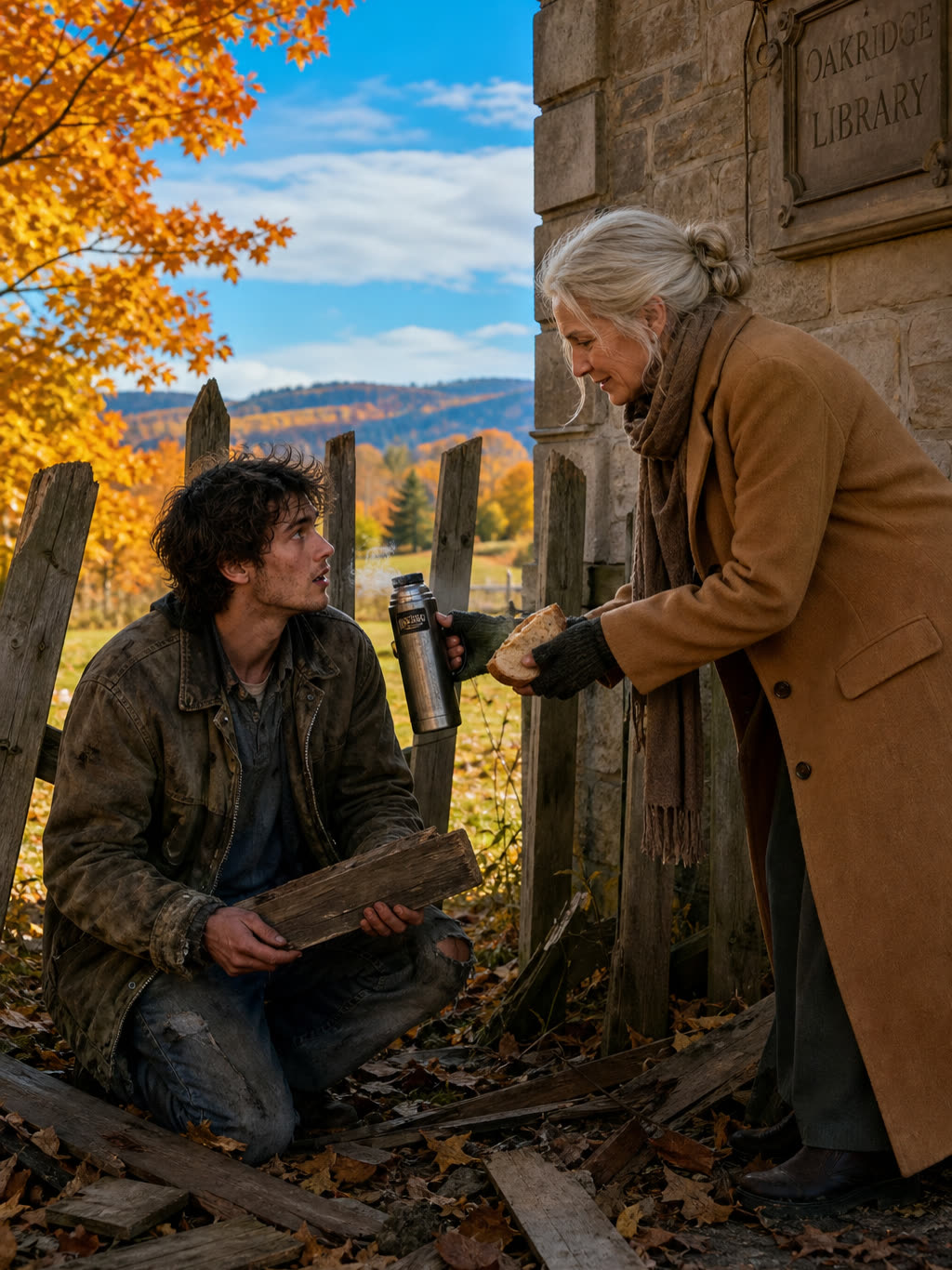
That was the first thing she noticed about me. Not the dirt on my jeans, not the smell of old coffee that clung to my jacket, not the way my hands shook when I took the thermos. She noticed that I was cold. It had been so long since anyone had looked at me and seen something other than a problem that I did not know what to do with my face.
I ate standing up, quickly, with my back half turned to her. She did not comment on it. She sat on a bench nearby and looked at the library roof as if she were giving me privacy.
Before she left, she asked what I charged for small repairs. I gave her a number lower than I should have, because I was afraid of losing the job before it began. She nodded as though she had expected me to undercharge and wrote her address on the back of a church bulletin.
A few days later, she hired me to fix a leaking basement window. The house was even more beautiful up close, with its wide porch and the roses climbing in a tangle of pink and red. Inside, it smelled like cinnamon, old books, and lemon polish. Every room seemed to be waiting for someone who had not come in a long time.
The window took one afternoon. Then she mentioned a loose stair rail. Then the gutters, which were packed with a decade of leaves. Then boxes in the attic that were too heavy for her, filled with a dead husband’s tools and letters and Christmas ornaments wrapped in newspaper from years I had barely been alive for.
One job became several. She paid fairly, always on time, usually with an extra bill folded into the envelope that she called a mistake in her arithmetic. She made lunch every day, set two plates on the kitchen table, and never asked why everything I owned seemed to be in the back of my truck.
I noticed she never asked. I noticed it the way a stray dog notices a hand that does not close into a fist.
I should be honest about what else I noticed. I noticed the size of the house. I noticed the silver in the china cabinet and the framed photographs of a man who had clearly been dead for years. I noticed there were no children in any of the pictures, no grandchildren, no crowded holidays, only a woman and a quiet that she had learned to live inside.
One rainy evening in late autumn, my truck died in front of her house. It did not sputter or warn me. It simply stopped, and the engine ticked as it cooled, and the rain came down so hard that the windshield became a gray wall. I sat there with my hands on the wheel, wondering whether I could sleep in the cab without freezing.
She must have seen the headlights go dark. A moment later the porch light came on, and she stood in the doorway holding an umbrella that was far too small for the weather.
“You can use the guest room,” she said.
“I’ll find somewhere.”
“You already tried that.”
I did not have an answer for it, because she was right. I followed her inside, dripping on the hardwood, apologizing for the mess I was making. She waved it away and handed me a towel that smelled like sunshine.
The guest room had clean sheets and a lamp beside the bed. There was a quilt folded at the foot, and a small window that looked out on the rose bushes, now bare and black in the rain. I lay awake listening to the water hit the roof, stunned by the simple fact that I was warm.
I had forgotten what that felt like. Not warm for an hour in a library or a diner, with someone watching the clock. Warm all the way through, with a locked door between me and the weather and nobody expecting me to leave.
I stayed another night, then another.
Neither of us discussed it. She simply began setting out a third towel, then a toothbrush still in its package. I started fixing things without being asked, as though repairing the house could count as rent. The truck stayed parked out front, a rusting reminder of who I had been a week earlier.
In the evenings, we ate dinner together. She asked questions that were never quite questions. What did I like to read? Had I ever been to the ocean? Why did I hold my fork like that, like it might be taken from me? I answered with half-truths, and she accepted them the way she accepted everything, with a small nod.
I told myself I was being careful. I told myself I was only staying until I found work. But every night, as I lay under that quilt, a different thought crept in, quiet and patient, and it had nothing to do with gratitude.
A month later, Lenora asked me to marry her over chicken stew.
She said it so plainly that I thought I had misheard. The spoon was halfway to my mouth. Steam rose between us, and the kitchen clock ticked above the stove, and outside the first snow of the season was falling against the window.
“People will talk,” I said.
“People talk when they are bored.”
“You’re forty-six years older than me.”
“I can count.”
She set down her spoon. Her hands, I noticed, were perfectly steady, though her voice carried a thin, careful edge, like someone stepping across ice she was not certain would hold.
“I am lonely, Merrick. You need a home. I enjoy having you here, and you make this place feel less empty.”
“You make marriage sound like an arrangement.”
“Most marriages contain one. The honest ones admit it.”
I should have told her everything then. I should have set down my spoon and admitted that I had already searched online for the value of her house, that I had already noticed she had no children, that a part of me had been doing arithmetic since the night my truck died. I should have given her the one thing she was too generous to demand, which was the truth.
Instead, I asked, “Would you really marry me?”
“Yes,” she said. “But I won’t pretend not to see what is standing in front of me.”
I do not know what I expected her to say after that. I think I wanted her to blush, or deny it, or look away. She did none of those things. She looked straight at me, calm and patient, and then she picked up her spoon and finished her stew as though she had just told me the weather.
A week later, she placed a prenuptial agreement on the table.
It sat between the salt shaker and a dish of butter, a thick stack of pages with a blue cover. A pen rested on top. She did not push it toward me. She only folded her hands and waited, like someone who had done this kind of waiting before.
The house and savings would remain hers, and her will would decide what happened after her death. I read the pages twice, my pulse loud in my ears. Every clause was clear, fair, and impossible to argue with.
“You think I’m using you?” I asked.
“I think desperate people can convince themselves of almost anything.”
“I’m not desperate anymore.”
Her eyes moved slowly to my empty plate. There was not a crumb left on it. I had cleaned it with a piece of bread without realizing I was doing it.
“No, but you still eat like someone might take the food away.”
The words landed somewhere deep. I felt my face heat, and I wanted to push back my chair and walk out into the snow. I wanted to be angry, because anger would have been easier than shame.
But the pen was right there, and the house was warm, and behind my anger was a sickening, hopeful calculation.
I signed.
In my head, I told myself that wills changed. People revised them all the time, after birthdays, after fights, after small acts of kindness. If I played the devoted husband long enough, if I was patient and gentle and always present, perhaps she would leave me everything.
It was a monstrous thought, and I held it like a coal in my pocket. I told myself it was not a plan, only a possibility. But I had already begun to behave like a man with a plan.
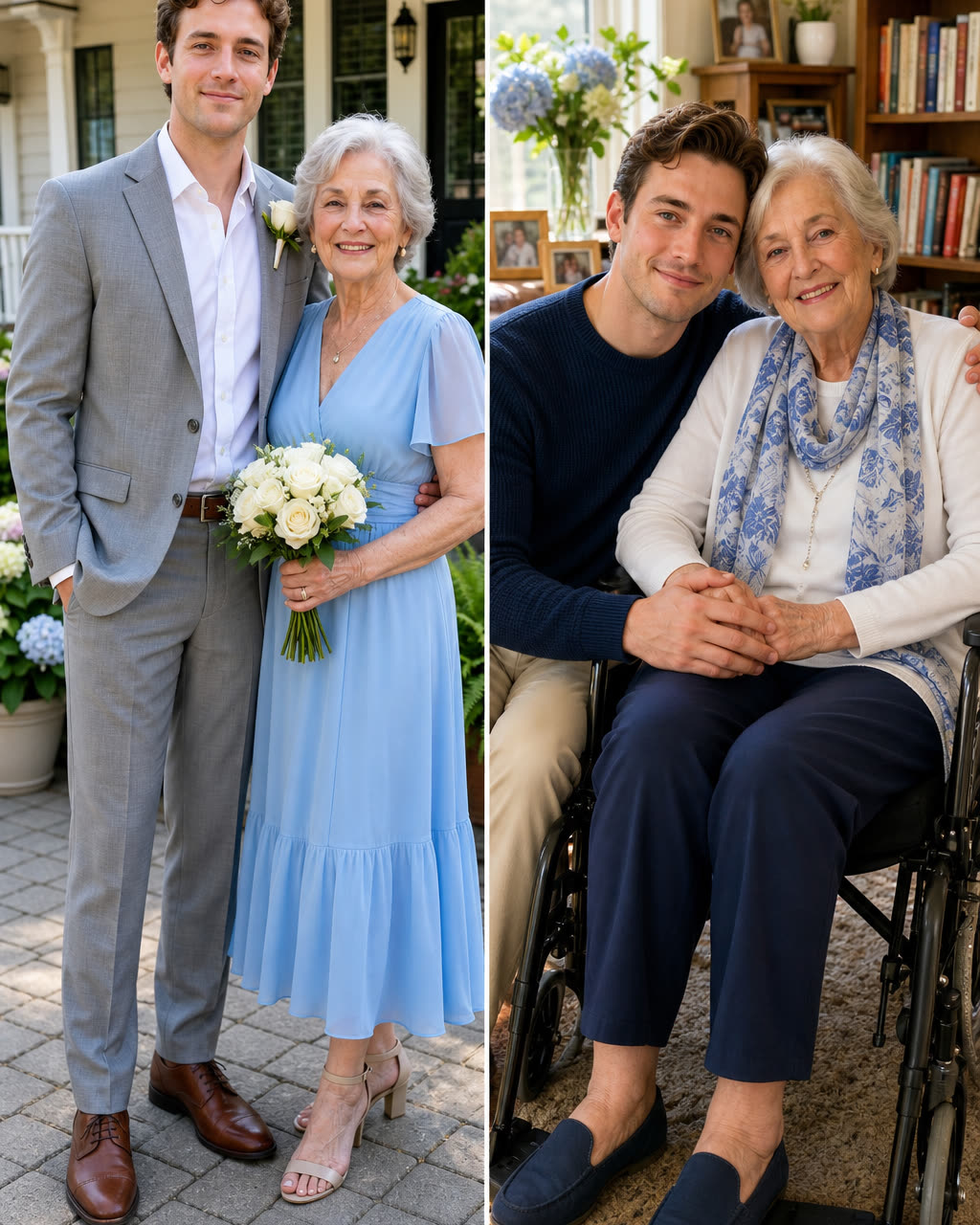
We were married in a small ceremony at the courthouse, with two neighbors as witnesses. Lenora wore a cream dress and carried a few white roses she had cut from her own garden. I wore a borrowed suit that hung a little loose on my shoulders. When the clerk said we could kiss, she touched my cheek instead, lightly, as though she were checking whether I was real.
I felt the strangest thing then. Not love, exactly. Something closer to the dizziness of standing on a ledge. I knew I was doing something wrong, and I knew I was too far in to step back without losing everything I had just gained.
At first, I treated the marriage like a role. I carried groceries when the neighbors watched, taking the heavy bags out of her hands with a flourish I had practiced in the mirror. I held her hand at church, my face arranged into something gentle. I smiled when strangers stared at us on the sidewalk, their eyes sliding from her silver hair to my young face and then away.
At home, the performance felt thinner. There was no audience in the kitchen at six in the morning, when she hummed over the kettle. There was no one to impress on the porch in the evening, when she sat with a blanket across her knees and told me the names of the birds I had never bothered to learn.
And yet I kept up the act, because I could not stand the idea of what I would be without it.
Lenora treated me better than I deserved. When the sole of my boot split, she left a new pair beside the back door, still smelling of leather, without a word of explanation. When she noticed my thin jacket barely closed across my chest, a dark wool coat appeared on the hook in the hall, heavy and warm and exactly my size.
“You’ll freeze in that old thing,” she said.
“I can buy my own.”
“With what?”
She did not say it cruelly, which somehow made it hurt more. A cruel remark I could have hated. This was only a fact, offered gently, and it left me with nowhere to stand.
I wore the coat, but I never thanked her properly. That was how I received most of her kindness. I took what she offered, then acted as if accepting it had injured my pride, as though she owed me an apology for noticing what I needed. I was a man drowning and furious at the hand that pulled him out.
Her health was not terrible. She walked every morning and tended the roses and still carried her own laundry up the stairs. But she had heart appointments in the city, and the kitchen cabinet held several bottles of medication lined up like small soldiers, each with a label in a pharmacist’s tidy print.
Every appointment caught my attention.
Every time she stopped on the staircase to catch her breath, one hand on the rail, I felt a flicker of something that I could not name and did not want to. I wondered how much time she had left. I counted the pills in the bottles when she was asleep. I told myself I was only worried.
I hated myself for those thoughts, but not enough to stop having them.
My old friend Quentin knew exactly why I had married her. I had told him one night, drunk on cheap beer and my own cleverness, in the weeks before the wedding. He had laughed, and I had laughed with him, and the sound of it had stayed in my ears for days afterward.
One evening, I sat on the couch with Lenora beside me, her book open on her lap and her reading glasses low on her nose. The lamp threw a soft gold circle around us. Somewhere in the house a clock was ticking. It was, if I am honest, the closest thing to peace I had known in years.
My phone buzzed on the coffee table, and then again in my hand. A text from Quentin.
How’s life with your retirement plan?
I turned my phone away from her, a reflex that felt like an admission even as I did it. My thumb hovered over the screen. I could have ignored it. I could have typed something harmless, or put the phone face down and picked up a magazine.
Instead, I felt the old, ugly pull of wanting to sound like a man in control.
Good, I typed. Once she’s gone, I’m finally set.
The message sent.
The little sound it made seemed far too loud. I looked up, and Lenora had glanced over at me. Her reading glasses caught the lamplight so I could not see her eyes.
“Something funny?”
“No. Quentin being stupid.”
She nodded and returned to her book.
I waited for my heart to slow down. I told myself she had not seen the screen. The phone had been tilted away, the room was dim, her eyesight was not what it used to be. I told myself a dozen small, reasonable things, and the longer I told them, the more I almost believed them.
But I noticed that she did not turn the next page for a long time.
For three days, nothing changed. She made breakfast. She hummed over the kettle. She asked whether I wanted tea, and I said yes, and she smiled as if the whole world were simple. I started to relax, convinced that I had gotten away with it.
Three mornings later, I was sitting at the kitchen table with a cup of coffee when I heard a sound behind me, small and bright and wrong. A spoon slipped from Lenora’s hand and struck the floor.
I turned. She was gripping the edge of the counter with both hands, her knuckles white. Her face had gone suddenly empty of color, like a page where all the writing had been wiped away. Her lips moved, but nothing came out.
“Lenora?”
Her knees gave way. I was across the kitchen before I knew I had stood, and I caught her just before her head hit the tiles. She was lighter than I had imagined, all bone and breath, and her eyes were open but looking at something far beyond me.
“Lenora, stay with me,” I said, and my voice broke on her name, and I realized, with a terror that had nothing to do with the house or the money or the plan, that I did not want her to die.
Part 2: The Funeral and the Whispers
At the hospital, I sat beneath a clock that seemed to move too slowly and too quickly at once. The waiting room smelled of antiseptic and burnt coffee, and the chairs were molded plastic that pressed into my spine. I had not taken off my coat. I had run out of the house in it, with Lenora’s blood pressure cuff still on the kitchen table and her cup of tea going cold beside it.
Nurses moved past with soft shoes and clipboards. A child cried somewhere down the hall. I stared at my hands, which were still trembling, and tried to remember when I had last prayed. It had been years. I did not know whom I would even be asking.
A doctor came out shortly after noon. I knew from the way he walked, slow and careful, with his eyes already lowered, before he opened his mouth.
“I’m sorry,” he said.
I do not remember the rest of the sentence. I remember the clock above his shoulder and the way its second hand kept moving, indifferent, as though nothing had changed. I remember him saying something about her heart, and about how it had been sudden, and about how she had not been in pain. I remember nodding, over and over, like a man agreeing to terms.
What I remember most is that for several minutes I felt nothing but a vast, ringing emptiness. I had spent weeks imagining this moment, rehearsing it in the dark with something that felt like anticipation. Now that it had come, there was no triumph in it, only a silence so large I did not know where to put myself.
The funeral took place three days later.
I wore the coat Lenora had bought me. I had nothing else that was dark enough, and part of me, a small and stubborn part, could not bear to leave it on the hook. The wool smelled faintly of her house, of cinnamon and lemon polish. As I walked up the church steps, I felt as though I were carrying her with me and being judged for it.
The church was full. I had not expected that. I had imagined a quiet service with a handful of neighbors, but the pews were crowded with people who had known her for decades: old women in tidy hats, men in stiff suits, children fidgeting beside their parents. Everyone seemed to know everyone. No one seemed to know me.
Her niece, Sabine, stared at the coat as I entered. She stood near the front, tall and pale, with her auburn hair pinned back and her hands clasped tightly in front of her. Her eyes went to my shoulders, to the collar, to the buttons, and something in her face hardened.
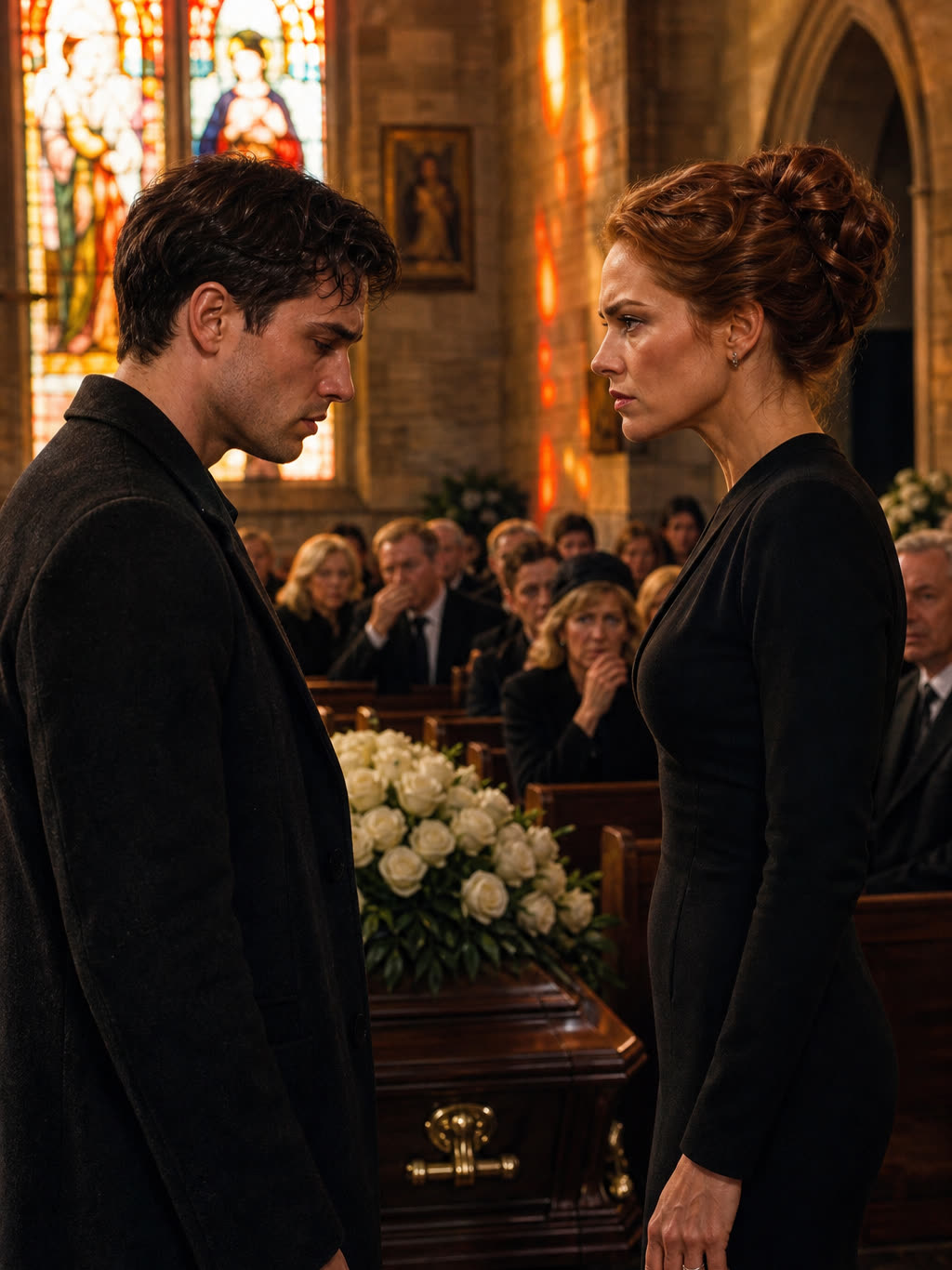
“Of course you wore that.”
“It’s cold.”
“She thought you needed saving.”
“I was her husband.”
“You were the last lonely person she tried to rescue.”
The words were quiet, but they cut. I felt every head in the nearby pews turn, then turn away. I opened my mouth to answer and found there was nothing in it. Sabine looked at me for a long moment, and then she walked to her seat without another word.
I sat in the back pew, alone, my hands pressed between my knees. The organ began to play. Sunlight came through the stained glass in long colored bars, and one of them fell across the casket at the front of the church, painting the polished wood in red and gold.
During the service, people whispered loudly enough for me to hear. They did not seem to care whether I did. Perhaps they wanted me to.
“He was waiting for this.”
“Now he gets the house.”
“Poor Lenora.”
Each phrase landed like a small stone. I kept my eyes on the casket and tried not to flinch. They were saying what I had told myself I deserved to hear, but hearing it aloud in a church, with her body only a few yards away, was something else entirely.
A man at the front spoke about how she had volunteered at the church for thirty years. A woman talked about the soup she used to bring to sick neighbors. Someone read a poem about gardens. And all through it, I kept seeing Lenora in the kitchen, holding the thermos out to me with both hands, saying that I was freezing.
Part of me grieved. That is the part I have trouble explaining. I knew how she hummed while chopping onions. I knew she hated television commercials and muted them with a small, disapproving click of the remote. I knew she always forgot where she had left her glasses and found them, every time, on top of her own head. These were not facts I had collected as a schemer. They were facts I had gathered because I had been living inside her days.
But underneath the grief was another thought, quieter and more shameful, and it would not go away no matter how hard I pushed at it.
The will.
I hated it. I hated that even in that church, with the organ swelling and the roses on the casket, my mind kept sliding toward the house and the savings and the life I might now inherit. I thought of the pale yellow porch, and the warm guest room, and the kitchen with its stove. I thought of the future I had built in my head over so many nights.
When the service ended, people filed out in small clusters, murmuring. No one spoke to me. A few women looked at me with open dislike, and one older man shook his head slowly as he passed. I stayed in the pew until the church was nearly empty, until the light on the casket had moved and faded.
Sabine passed me on her way out. She did not stop, but she did not look away either. Her eyes were red-rimmed and furious and, under the fury, grieving. For a moment I thought she might say something kind. She only said, “Don’t go anywhere,” and left.
I spent that night in Lenora’s house, in the guest room, because I did not know where else to go. I lay awake listening to the old pipes tick and the wind move through the bare roses outside the window. Every sound seemed to carry her absence. The house was too big and too quiet, and I felt like a thief in it.
Twice, I got up and wandered the hallway. I stood outside her bedroom door and could not make myself open it. I stood in the kitchen and looked at the chair where she always sat, and the cup she had left on the table, still rimmed with a dried line of tea. I washed the cup, and then I stood holding it, not knowing where it belonged now.
The next morning, I sat across from Lenora’s attorney, Mr. Hale.
His office was in a narrow brick building near the courthouse, up a flight of creaking stairs. The room smelled of paper and dust and pipe tobacco. Shelves of leather-bound volumes lined the walls, and a tall window behind his desk looked out over rooftops and distant hills, brown and gold with the end of autumn. The light there was thin and clear and unforgiving.
Mr. Hale was a man in his sixties with white hair and round wire glasses. He wore a charcoal suit and moved like a person who had delivered a great many difficult sentences. He did not offer me coffee. He did not smile. He only opened a folder, adjusted his glasses, and looked at me with a calm that felt almost like pity.
Sabine sat in the chair beside mine, rigid, her handbag in her lap. She did not look at me. I could feel her anger like heat from a stove.
“The house goes to Sabine,” he said.
I leaned forward.
“That can’t be right.”
“It is.”
I felt my face go hot, then cold. The room seemed to tilt. All the careful arithmetic of the past months, all the performances and gentle gestures and held hands, collapsed at once. I heard a sound in my own throat that was almost a laugh.
“What about her savings?”
“Most of her liquid assets will fund a community program through St. Matthew’s Church.”
“And me?”
“You receive one personal item.”
Sabine let out a small, disbelieving breath, and I could not tell whether it was a laugh or a sob. Mr. Hale did not look at her. He opened a drawer and drew out a box, and he set it down on the desk between us with great care.
It was an old cardboard box, creased at the corners and soft with age, the kind that might once have held a pair of shoes or a stack of letters. My name was written across the lid in Lenora’s careful handwriting, the loops tidy and slanted, each letter formed with deliberate patience.
I stared at it. It looked so small. It looked so ordinary, resting on that polished desk with the autumn light falling across it, and yet I felt, absurdly, that it might be dangerous.
“What is this?”
Mr. Hale folded his hands.
“She said this was what you really wanted.”
I looked at the box, then at him, then at Sabine, who had gone completely still. My mouth was dry. Outside the window, a flock of birds lifted from a rooftop and scattered across the pale sky, and I remember thinking how easy it would be to simply stand and walk out and never open it.
But my hand was already reaching for the lid.
Part 3: What Lenora Left Me
My fingers shook as I lifted the lid.
The cardboard was soft under my thumbs, and for a moment I smelled something faint and familiar, cinnamon and lemon polish, the scent of her house. I braced for gold, for keys, for an insult written in her tidy hand. I did not brace for what I actually found.
The first thing inside was a printed screenshot of my message to Quentin.
Once she’s gone, I’m finally set.
For several seconds, the words looked as if another man had written them. A stranger, cruel and small, with his thumb hovering over a glowing screen. I read the sentence again and again, waiting for it to change, but it only stared back at me in plain black type, indifferent to my shame.
“Where did she get this?”
“Your phone lit up on the coffee table. She saw the message.”
I thought of that evening, of her book and her reading glasses and the lamplight. I thought of her saying, Something funny? and my reply, and the way she had nodded and turned back to her page. I thought of how long she had held that page without turning it.
She had known. All those days, those mornings of humming and tea and gentle questions, she had known.
Under the paper was a stack of receipts. I lifted them out slowly, as though they might burn. The boots. The coat. A dental bill I had told her not to worry about. A mechanic’s invoice. Two payments toward debt I had told her was already settled.
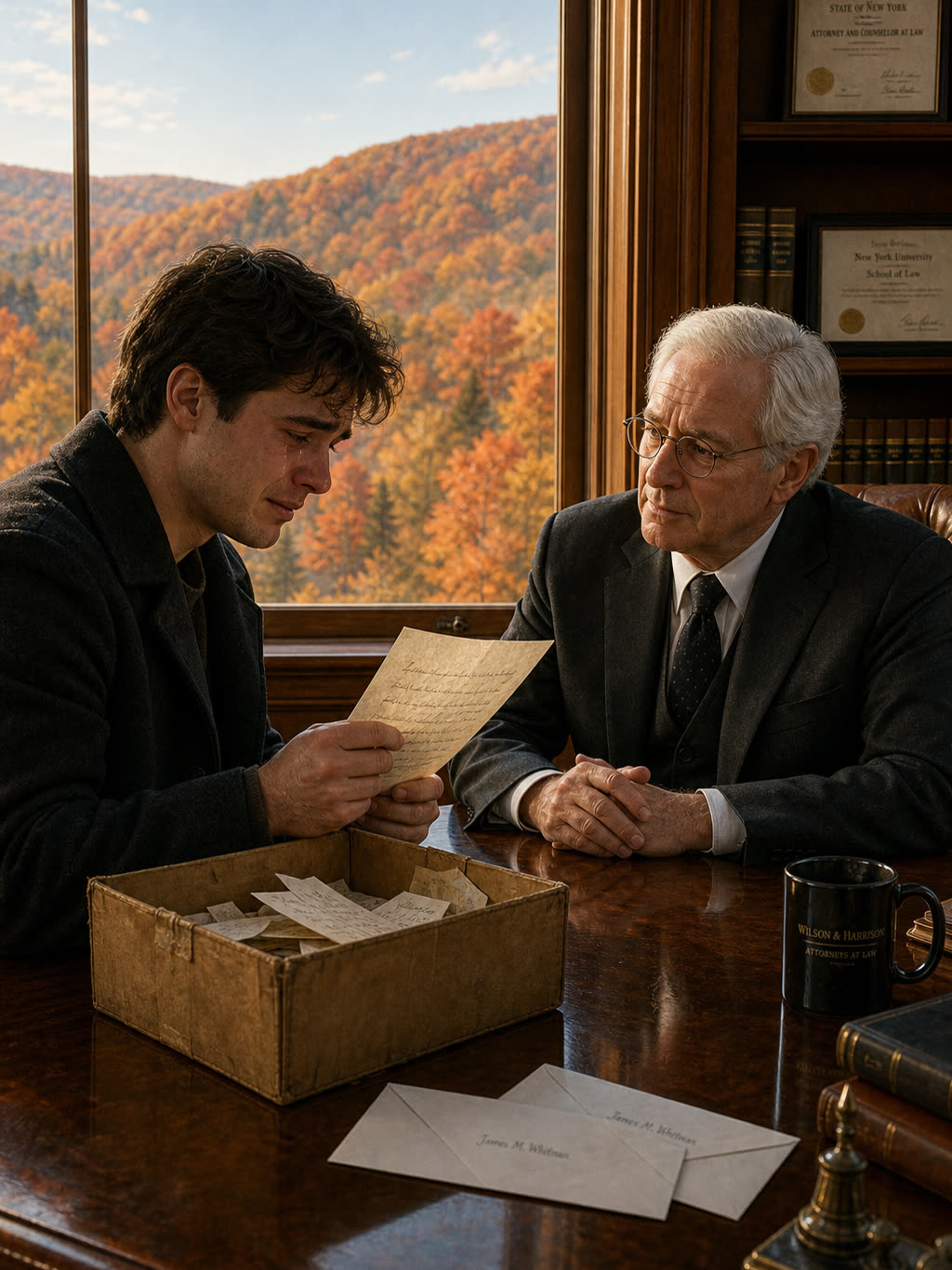
I had lied about that last one. I had said I had paid it off months before, because I could not bear for her to see how deep the hole went. She had paid it quietly, without a word, and kept the receipts.
Lenora had written a note on each one.
You lied about needing this.
You almost thanked me here.
My vision blurred. On the receipt for the coat, she had written a longer line, the ink pressed more firmly into the paper, the letters still tidy:
You looked ashamed when I noticed you were cold. That was the first honest thing I saw on your face.
I put the receipt down very gently, as though it were made of glass. A sound came out of me that I did not recognize. Sabine turned her head and looked at me for the first time since we had entered the room, and her expression had changed. The fury was still there, but something else moved beneath it now, something unsteady.
“Was she collecting evidence against me?” I asked.
“No,” Mr. Hale said. “She was trying to understand you.”
The words were so gentle that I almost could not stand them. I had braced for accusation. I had no defense against understanding.
He handed me an envelope.
It was thick, cream colored, sealed with a small crease along the flap. My name was written on the front in the same careful hand. I turned it over once, twice, and then I slid my thumb under the seal and drew out the letter.
Inside was a letter.
Merrick,
You probably believe I left you nothing. I left you the one thing you avoided from the day we met: the truth.
I knew you did not marry me because you loved me. I saw how you looked at the house, the pantry, and my medicine bottles. I knew you were waiting for my life to become yours.
And I saw the message you sent Quentin.
It hurt more than I ever told you.
But I saw other things too. You repaired Mrs. Bell’s porch and refused her money. You sat through my hospital appointments even when you hated being there. You made terrible tea when my hands shook, and for ten minutes, I forgot I was old and afraid.
You were not the husband I deserved. But you were not empty.
I married you because I was lonely. You married me because you were frightened. We both took something from the other and called it enough.
It was not enough.
Take this box and leave town, or come to the church tomorrow and tell the truth in front of the people who loved me.
I am not asking them to forgive you. I am asking you to stop hiding.
Lenora
I read the letter twice.
The second time, the words blurred so badly that I read them mostly from memory. I thought of Mrs. Bell’s porch, a crooked thing in the spring, and how I had fixed it on a Saturday and waved off her crumpled bills because it had felt like the only clean thing I had done in months. I had not known anyone was watching. I had not known it mattered.
I thought of the terrible tea. She had never said it was terrible. She had held the cup in both shaking hands and said it was exactly what she needed. I had thought she was only being polite.
Outside the window, the hills had gone dull gold in the afternoon light, and the sky above them was enormous and pale and clear. I looked at that sky for a long time, because I could not look at Sabine, and I could not look at the letter, and I could not look at the man I had been.
Mr. Hale placed two envelopes on the desk.
They were plain white, each marked with a single word in his own handwriting. He lined them up with the edge of the blotter, precisely, the way a man sets out cards he has been told to deal.
“If you choose the first, you leave with the box and nothing more is said. If you choose the second, you attend tomorrow’s luncheon for Lenora’s new fund. Speaking will be your decision.”
“Everyone will hate me.”
“That may happen.”
He did not soften it. I appreciated that, in a strange way. I had spent my whole life hearing comfortable lies, and I had told more of them than I could count. A hard truth, delivered simply, felt almost like relief.
I sat there with my hands on my knees. For years, I had blamed hunger, debt, and fear for every cruel thing I did. I had told myself that a man in my position had no choice, that decency was a luxury for people with warm beds. And Lenora had seen all of it. She had seen the worst of it, in plain type on a screen, and still she had believed there was something in me worth calling forward.
I did not sleep that night. I walked the halls of the yellow house until the sky began to pale. In the kitchen, I stood a long while by the window, watching the first light touch the bare rose stems, and I thought of everything I had taken from her and everything she had left me anyway.
I did not choose the first envelope.
The next afternoon, I entered the church basement.
It was a long, low room with folding tables and a linoleum floor and a smell of coffee and sugar cookies. Dozens of people stood in clusters with paper cups in their hands. The talk dropped away as I came through the door, not all at once, but in a widening ripple, until the whole room was watching me.
Sabine stood the moment she saw me.
“You should not be here.”
“I’m not here to take anything.”
“That would be new.”
“I know.”
The two words came out smaller than I intended. I did not defend myself. I did not argue. I only stood there with my hands open at my sides, in the dark wool coat she had given me, and let her look.
Something in her expression flickered. She did not soften, not exactly, but she did not order me out either. She turned and sat down slowly, her eyes still on me, as though she were waiting to see what I would do next.
Mr. Hale approached the microphone at the front of the room. He tapped it once, and the sound rang faintly through the basement. A hush settled. He took a folded page from his jacket pocket and read Lenora’s final statement in his steady, measured voice.
“This fund is for people who are one bad month away from becoming someone they no longer recognize. Merrick knows what fear can make a person do. I ask him to prove my kindness did not end with me.”
Every face turned toward me.
I felt the weight of all those eyes, the neighbors and churchwomen and old friends who had loved her. My heart was pounding so hard I could hear it. Every instinct told me to run. I had been running my whole life, from hunger, from creditors, from the mirror, from the truth.
I stood before I could run.
The chair scraped loudly against the floor. My knees felt unsteady, and my mouth was dry, and for one terrible second I thought I would only stand there in silence. Then I opened my mouth, and something true came out.
“She knew why I married her,” I said. “I was broke and scared. I wanted her house. I watched every doctor’s appointment and wondered how long I would have to wait.”
Someone near the back muttered angrily. A chair creaked. I felt the heat rise up my neck, but I did not stop, because I knew that if I stopped I would never start again.
I kept going.
“I sent a message saying I would be set once she was gone. Lenora saw it. She never confronted me. She gave me the chance to tell the truth myself.”
Sabine covered her mouth. Her shoulders trembled. In the silence, I could hear a spoon ringing softly against a paper cup somewhere, and the hum of the old refrigerator in the corner, and my own breathing.
When I finished, no one clapped. No one forgave me. I had not expected them to, and I understood that was not why I was standing there.
Mr. Hale then announced that Lenora had requested the fund carry both our names.
“No,” I said.
He frowned.
“That was her instruction.”
“Then I’m asking you not to do it.”
“You understand that was the only public honor she left you?”
“I haven’t earned honor.”
The room remained silent. A woman near the front lowered her cup, and an old man by the wall looked at me with an expression I could not read. Sabine stared as if she were seeing someone she had not expected to meet.
“Use her name,” I said. “Mine should not be attached to anything good until I have done something good.”
I sat down. My hands were shaking so badly that I pressed them flat against my knees. No one spoke to me for the rest of the luncheon. But when I finally stood to leave, one of the old women in a tidy hat gave me a very small nod, and I carried that nod out into the cold like a coal.
Six months later, I was unloading canned food behind the church when Sabine came outside with a clipboard.
The morning was bright and sharp, and the maples along the lot had begun to turn red and orange, a blaze of color against a sky so blue it hurt to look at. My breath hung in the air. My hands were scraped from the cardboard boxes, and I had been at it since dawn.
“You’re early,” she said.
“My truck started.”
I handed her an envelope. Inside was my first payment toward the boots, coat, dental bill, and truck repair. It was not much. It was the first money I had ever set aside for someone else, counted out in small bills from a job I had worked for weeks.
“Lenora never asked you to repay this,” Sabine said.
“I know.”
“Then why are you doing it?”
“Because she is not here to make me.”
Sabine looked at the envelope for a long time, and then at me. She did not smile, and I did not expect her to. But she tucked the envelope under the clip of her board, and she said, quietly, “There’s another pallet by the door,” and I understood it was the closest thing to welcome she could offer.
That evening, I visited Lenora’s grave with the printed message in my wallet. The cemetery lay quiet under a sky streaked with orange and violet, and the grass was damp with early frost. Her headstone was simple, gray granite, her name carved in clean letters. Someone had left a few white roses at its base.
I knelt there for a long time. Then I took the paper from my wallet and tore it into small pieces, slowly, one tear at a time. I did not leave them there. I closed my hand around them, because they did not belong on her grave.
“You carried enough of me while you were alive,” I whispered.
The wind moved through the cemetery grass, and somewhere far off a bird called once and fell silent. I stayed until the last light left the sky, and the coat kept me warm, and I thought that I had never said thank you the way I should have.
I said it then, out loud, to the stone and the dusk and the roses.
I had married Lenora because I wanted the safety of her life without earning any part of it. I had taken her kindness and called it survival. By the time I understood what she had truly given me, she was gone, and what she had given me was not a house or a fortune. It was a mirror, and the courage to look into it.
The next morning, I returned to the church.
The sun was just clearing the rooftops, and the air smelled of cold leaves and coffee. There were boxes waiting to be unloaded, people waiting for help, and a debt that would take years to repay. I stood at the door a moment, breathing in the cold, and thought of a woman in a long coat holding out a thermos of soup.
For once, I did not look for the easiest way out.
Disclaimer: This story is a work of fiction inspired by real-life themes. Names, characters, places and events are fictionalized, and any resemblance to real persons is purely coincidental. Images are for illustration purposes only.
