


PART 1
“What happens now?”
My voice was calm, colder than I had ever heard it before.
He slid his chair back without offering another word.
Someone at the table, perhaps Mom or one of our cousins, asked, “What’s happening?”
I turned toward them, my expression composed and my voice quiet.
“This is the final time you’ll see us.”
Every face seemed to freeze. Mouths remained slightly open, hands stopped halfway through their movements, and the laughter vanished.
Then I took Olivia’s hand.
She didn’t pull away. She allowed me to lead her from the table, her small fingers trembling against my palm.
We left without another word.
We passed through the kitchen, crossed the dining room where the adults still sat in stunned silence, walked past the Christmas tree with its blinking lights, and stepped into the sharp winter air.
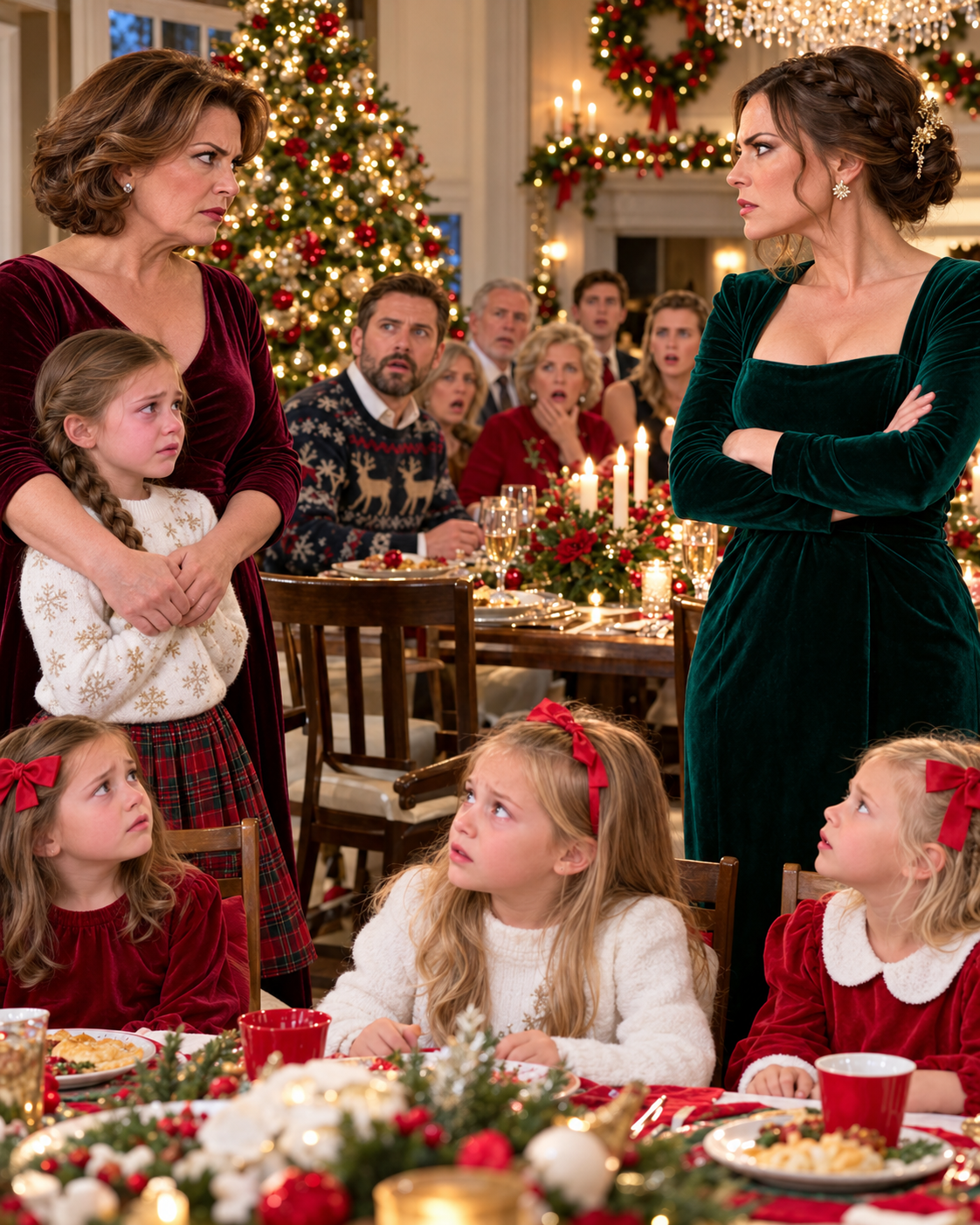
Behind us, the house seemed to hold the lingering sound of their laughter.
The kind of laughter that leaves a wound.
I opened the car door for Olivia and helped her buckle her seat belt.
She looked through the window without speaking, her lips pressed tightly together.
Adam climbed into the driver’s seat and glanced at me.
He didn’t ask anything.
Not yet.
The engine turned over, and we pulled away from the curb.
Only when the house disappeared behind us did I finally manage to breathe.
They thought humiliating my daughter was nothing more than harmless entertainment.
But Monica was about to discover just how wrong she was.
Soon, a letter would arrive at her door.
And after she opened it, nothing would ever feel quite the same again.
If you’ve ever wondered what growing up as the black sheep of a family feels like, I can explain it.
Imagine attending a gathering where everyone else seems to understand a joke you don’t.
And somehow, every time, you are the punchline.
I grew up with two siblings.
My older sister, Monica, and my brother, Daniel.
Between them, they provided our parents with enough reasons to brag for a lifetime.
Monica was the popular one.
The golden child who could walk into any room and immediately become the center of attention.
Daniel was charming, athletic, and naturally confident.
He was the sort of boy parents proudly discussed at dinner parties.
And then there was me.
The nerd.
Not the amusing, quirky kind who could impress people with movie trivia.
I was the serious kind.
I spent hours reading, buried my face in books, and experimented with computers back when most adults still struggled to program their VCR clocks.
My siblings made certain I never forgot how different I was.
When I started wearing glasses, they called me an owl.
They hooted whenever I tried to speak.
Once, during dinner, they pulled my chair away from the table as a prank.
Everyone burst into laughter.
I stood there holding my tray, unable to decide whether I should sit on the floor or disappear altogether.
Whenever I attempted to join a conversation, Daniel would sigh dramatically and announce, “Shh, the encyclopedia is talking.”
But my siblings weren’t the most painful part.
That distinction belonged to our parents.
Mom and Dad rarely participated directly.
They simply allowed it.
Sometimes Dad would chuckle, as though he couldn’t help finding the jokes funny.
Mom would place a hand on my shoulder and say, “Don’t be so sensitive.”
Those four words followed me through childhood.
Don’t be so sensitive when they hid my homework.
Don’t be so sensitive when they made fun of my clothes.
Don’t be so sensitive when they suggested I must have been adopted because there was no other explanation for how different I was.
Sometimes I laughed along.
What else was I supposed to do?
But when I was alone, I knew the truth.
I didn’t really belong.
Not entirely.
And when you grow up feeling unwanted, you often learn to make yourself useful instead.
That’s how I became the family helper.
I washed dishes, carried trays, cleaned up after gatherings, and did whatever I could to keep everyone comfortable.
If I couldn’t earn their love, perhaps I could at least earn their tolerance.
The irony is that everything they mocked me for eventually became the foundation of my success.
The books.
The glasses.
My fascination with computers.
All those things helped me build a career.
I became a senior software engineer with a good salary and excellent benefits.
My husband, Adam, also works in technology.
Two nerds building a happy, nerdy life together.
Our marriage worked.
My family’s relationships were another matter.
And somehow, despite everything, I eventually found myself paying for a house where I didn’t even live.
Five years earlier, when Olivia was six, Monica came to me in tears.
Her husband was supposedly finding himself.
In reality, that meant drifting between classes and part-time jobs without establishing a reliable income.
Monica also worked part-time.
She insisted that raising a child and maintaining a career were simply too difficult to manage together.
Over the years, she had attempted several businesses.
Handmade candles.
An Etsy store.
A fitness coaching venture.
Every attempt ended with more debt.
She told me she wanted stability for Madison.
A secure home where her daughter could grow up without worrying about having to move again.
At first, Monica asked whether I could help with a down payment.
“Just a little boost,” she said.
But eventually, the real financial situation came out.
Her credit had been damaged by unpaid credit cards and loans.
No lender would approve her for a mortgage.
So I did what I believed a loving sister should do.
I bought the house in my own name and let Monica’s family move in.
It was supposed to be temporary.
Six months.
Perhaps a year.
Just long enough for Monica and her husband to straighten out their finances.
That was five years ago.
They paid for water and electricity.
Nothing more.
I paid the mortgage every single month.
And somewhere along the way, Monica stopped treating the arrangement as a favor.
In her mind, the house became hers.
Something she was entitled to.
My name was on the deed, but to her, I was simply the nerd who had enough money to cover the bills.
Once, when I mentioned a project at work, Monica remarked, “Must be nice. Just sitting at a computer all day. You wouldn’t even know what to do with that money if you weren’t helping us.”
I dismissed the comment.
That was what I always did.
But later that night, lying awake and staring at the ceiling, I wondered, “Maybe she’s right. Maybe I’ve been paying for acceptance this entire time.”
I never admitted that thought aloud.
It was easier to tell myself I was being generous.
After all, family members were supposed to help one another.
Weren’t they?
For a while, I managed to convince myself that everything was fine.
Adam never liked the arrangement.
He was too thoughtful to openly accuse my sister of taking advantage of me, but I could read his expression.
Every month, when another mortgage payment left our account, he looked at me.
Every holiday, when we arrived with gifts and Monica barely bothered to thank us, he gave me that same look.
As though he were waiting for me to finally recognize what was happening.
But I continued paying.
Deep down, I still believed that perhaps this was the price of belonging.
By then, Olivia had become old enough to understand the way our family worked.
She and Madison were only a few months apart in age.
They had grown up together.
Olivia was quiet and thoughtful.
She loved reading and could spend hours surrounded by pieces from a Lego set.
She was intelligent, but shy.
Social situations didn’t always come naturally to her.
She reminded me so much of Adam and myself.
Which, unfortunately, made her an easy target in my family.
At first, I tried to convince myself that nothing serious was happening.
Children tease each other.
Relatives sometimes show favoritism.
Surely this wasn’t the same thing I’d experienced growing up.
Except it was.
At Thanksgiving, Olivia started telling everyone about her science fair project.
She was excited.
But before she could finish, Monica interrupted.
“Let Madison finish first.”
Everyone accepted the interruption as perfectly normal.
On another occasion, Olivia brought a robotics kit she’d assembled herself.
She began explaining how its sensors worked.
Her face lit up as she described the project.
Mom smiled and patted her head.
Then she immediately turned toward Madison.
“Show us your cheer routine.”
The room erupted in applause and compliments.
Olivia quietly sat down.
She twisted her hands together and pretended she wasn’t disappointed.
I saw it.
I felt it.
And still, I told myself I was exaggerating.
That I was letting old memories influence my judgment.
That history wasn’t repeating itself.
But Christmas dinner destroyed that illusion.
Something changed inside me that night.
I would never again stand silently holding a tray while my daughter became the family’s newest joke.
Not anymore.
It was ending.
The drive home was filled with a heavy silence.
Not the comfortable quiet of a peaceful evening.
The suffocating kind that comes when everyone knows something terrible has happened, but nobody knows how to discuss it.
Adam kept his eyes on the road.
Olivia watched the passing streets through the window, her breath leaving faint clouds against the glass.
I sat beside Adam with my arms folded so tightly that my fingernails pressed into my skin.
Halfway down the block, he finally spoke.
“What’s going on?” he asked, his voice cautious, like he was carefully testing the temperature of boiling water.
“Later,” I said.
My throat felt too tight for an explanation.
He nodded.
But I could feel his confusion filling the car.
Nobody spoke again.
By the time we reached home, my jaw ached from clenching it.
Inside, Adam dropped his keys into the small dish beside the front door.
Then he turned to me.
“Okay,” he said. “What was that?”
I removed my coat and carefully hung it up.
I moved slowly because I felt as though one sudden motion might cause me to break something.
“They were mocking Olivia.”
Adam frowned.
“Mocking her openly in front of everyone. It wasn’t teasing, Adam. It was deliberate hum!liation.”
His eyebrows rose.
“I didn’t hear anything like that. I honestly thought they were playing some silly game.”
“Exactly.” My voice stayed flat, sharp. “They believed it was a game, too.”
He stared at me.
Adam had always been the person who tried to smooth over uncomfortable situations.
At family gatherings, he kept conversations pleasant while I carried dishes and made everyone comfortable.
He hadn’t understood that we’d just walked out of Christmas dinner because of something he hadn’t fully heard.
Before I could explain further, Olivia finally spoke.
It was the first time she’d said anything since leaving Monica’s house.
Her voice was so faint that I had to lean closer.
“It was just a joke.”
I turned.
She stood beside the couch, still wearing her coat.
Her eyes were fixed on her shoes.
And somehow, those words hurt more than anything Monica had said that evening.
“If I walked away whenever people made jokes about me, I’d have no friends,” she added, almost whispering.
Something inside my chest cracked.
Because I recognized that reasoning.
Every word.
Every thought.
I had been eleven years old once, standing in front of people who mocked me and convincing myself that their cruelty was normal.
Now my daughter was doing exactly the same thing.
Adam rubbed his forehead.
“Olivia, what kind of jokes?”
She hesitated.
Her lower lip began to tremble.
“They said Madison’s smarter than me, funnier, better, that I’m annoying.”
The final word seemed to hang in the room.
Olivia blinked rapidly.
Then she added, “But it’s okay. It’s probably true. She really is smarter than me.”
Her voice broke.
And I nearly broke with it.
I crouched in front of her and took her cold hands.
“None of that is true,” I said, steady but firm. “They weren’t being truthful. They were being unkind. Jokes that hurt people aren’t jokes.”
She shook her head.
Tears gathered in her eyes, but she fought to keep them from falling.
“But if I can’t handle it, maybe I am weak. Maybe they’re right.”
I wanted to scream.
Not at Olivia.
At every adult who had taught her that enduring cruelty was some kind of test of strength.
But I took a breath instead.
“No,” I said as calmly as I could manage. “You are not weak. You are kind. You are brilliant. And people who make you feel small don’t deserve you ever.”
Her lips trembled.
Then the tears finally came.
They fell quickly, as though she’d been holding them back for hours.
She pressed her face against me, her small body shaking.
And I understood what those tears meant.
Relief.
Relief that someone had finally told her she wasn’t the problem.
That she didn’t have to accept being treated that way.
I held her until her breathing slowed.
Until the trembling eased.
Until the worst of the pain began to pass.
Later, I tucked her into bed.
She was still quiet and thoughtful, trying to process everything.
But there was something different in her eyes.
A small change.
The beginning of a new understanding.
When I returned to the kitchen, Adam stood leaning against the counter with his arms folded.
He looked torn between confusion and anger.
“You’ve always said yes to them,” he said. “Always helped, always tried to keep the peace.”
“What changed?”
“That version of me is gone.”
I pulled out a chair and sat down heavily.
“I kept saying yes, hoping someday it would matter. It never did.”
He paused.
“But the house, they’re finished.” My voice was cold. “I want them gone.”
Adam studied my face.
“Are you certain? That’s a major step.”
I looked directly at him.
“I’ve never been more certain about anything.”
For a moment, I thought he might object.
Instead, he sighed and relaxed his shoulders.
“Okay.”
That was all I needed to hear.
I pulled my laptop toward me.
Its screen illuminated the dark kitchen while I began writing.
The letter was short.
Professional.
Unambiguous.
Monica and her family were being given thirty days to leave the house.
Adam stood behind me and read what I’d written.
His lips were pressed together.
He didn’t say a word.
When I finished, we placed the letter in an envelope.
Adam added it to the outgoing mail beside the door.
I stood looking at that envelope for a long time.
It represented much more than a notice.
For the first time in my life, I had drawn a boundary I intended to enforce.
I was no longer the little girl who swallowed every insult until she started believing it.
I was a mother who refused to let her daughter inherit the same pain.
The house was quiet.
Almost unnaturally quiet.
Nobody from my family had called since Christmas.
No apologies.
No explanations.
Perhaps they assumed I wasn’t serious.
Perhaps they expected me to calm down and give in, as I always had.
They were wrong.
Soon, Monica would open that letter.
And the family would discover that I wasn’t bluffing.
PART 2
Three days later, my phone rang.
Monica’s name appeared on the screen.
I already knew what kind of conversation was coming.
She didn’t disappoint me.
“You’ve completely lost your mind,” she snapped through the phone. “30 days. You seriously think you can make us leave like we’re strangers because of a joke? This is ridiculous, Hannah. You’ve always been too sensitive.”
There it was.
That same sentence I’d heard throughout my childhood.
Too sensitive.
The phrase my family used whenever they wanted to avoid taking responsibility for hurting me.
I let Monica finish.
I didn’t interrupt.
I didn’t raise my voice.
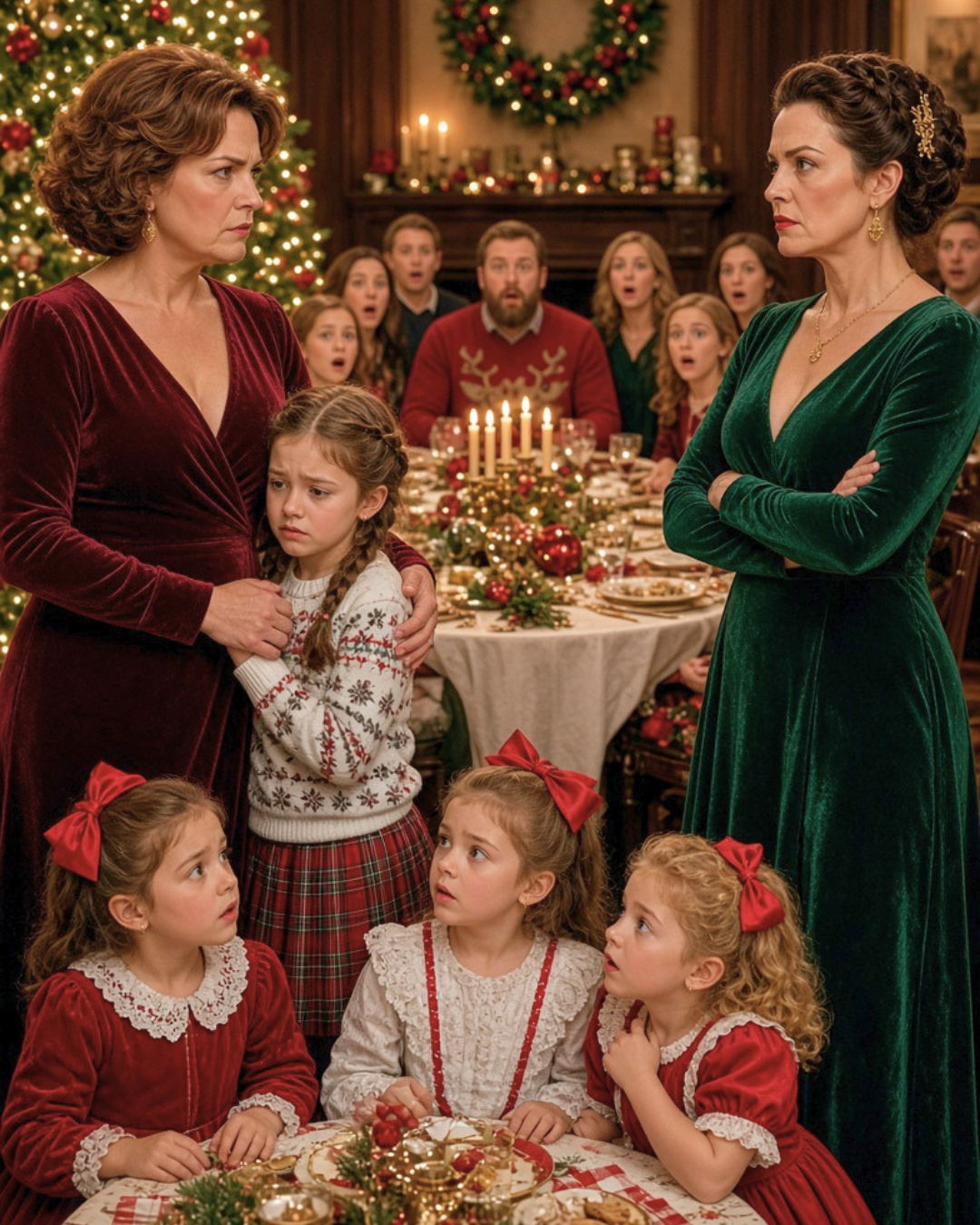
When she finally stopped talking, I answered calmly.
“This isn’t a joke. You have 30 days. I’m selling the house.”
Her response came immediately.
“You can’t sell it,” she shouted. “We live here.”
“My name is on the deed. Not yours.”
She launched into another argument.
I was selfish.
I was cruel.
I was destroying the family.
She accused me of punishing everyone over a harmless Christmas joke.
But she never once acknowledged what she’d said to Olivia.
She never asked how my daughter was feeling.
She didn’t apologize.
Not even indirectly.
Eventually, she hung up.
I sat holding the phone for a moment.
Part of me expected it to ring again immediately.
It didn’t.
Not yet.
Later that evening, though, another call came.
Mom.
Her voice was gentle when I answered.
Almost soothing.
The same voice she had used when putting me to bed as a little girl.
“Hannah, sweetheart, I think everyone should calm down. Don’t make any sudden decisions. Think about Madison. She needs stability. You’ve always been the generous one. Don’t throw that away because of one unfortunate evening.”
I nearly laughed.
Generous.
It was interesting how quickly my generosity became important when I stopped offering it.
“It isn’t about one evening,” I said, my voice even. “It’s about Olivia and years of being treated like we don’t matter. The letter stands.”
Mom tried again.
“Hannah, listen.” Mom continued, sweetness coating every word. “You’ve already helped so much. Can’t we simply move beyond this? You don’t want to pull the family apart.”
I leaned back in my chair.
“This family fell apart a long time ago. I’ve only finally recognized it.”
Silence followed.
For several seconds, she said nothing.
Then her gentle tone vanished.
“You’ll regret this,” she said sharply before ending the call.
So much for the understanding mother who wanted everyone to get along.
The following days passed slowly.
I understood exactly what my family expected.
They would delay.
They would refuse to take the situation seriously.
They would wait for me to become uncomfortable with the conflict.
And eventually, they believed, I would do what I’d always done.
Give in.
But this time, I didn’t.
I contacted a realtor and arranged to list the house for sale.
He explained that Monica might refuse to cooperate with showings.
She might make it difficult for prospective buyers to inspect the property.
“She could make this complicated,” he explained gently, as though I didn’t already understand.
I wasn’t surprised.
Complicating things until I surrendered had been my family’s approach for years.
But I was prepared to handle it differently now.
“Then I’ll follow the proper process,” I said. “Either way, the house belongs to me, and she’s leaving.”
I intended to do everything legally and properly.
I wasn’t going to be drawn into shouting matches.
I wasn’t going to negotiate out of guilt.
And I wasn’t going to allow Monica to turn my generosity into an obligation that lasted forever.
More warnings followed.
They threatened to involve lawyers.
They talked about going to court.
They insisted they would never move.
But beneath all the anger, they understood something important.
I owned the property.
They didn’t.
And prolonging the dispute would only create additional expenses.
For five years, I’d covered the mortgage while Monica and her husband paid only the utilities.
For five years, I’d given them the stability they claimed to need.
And for five years, they’d treated that help as though it was something I owed them.
I thought about all those monthly payments.
All the holidays when I’d arrived with gifts.
All the times I’d swallowed Monica’s comments because I didn’t want to cause trouble.
And I realized how much energy I’d spent trying to maintain relationships that had never offered me the same consideration in return.
Still, the hardest part wasn’t the money.
It was remembering Olivia standing in our living room, telling me she believed Madison was smarter and better than she was.
My daughter was eleven.
She should have been thinking about books, school projects, and the things she loved.
She shouldn’t have been learning to measure her worth against the approval of relatives who enjoyed making her feel inferior.
That was what kept me determined.
Whenever guilt crept in, I remembered her trembling voice.
Whenever I wondered whether I was being too harsh, I remembered the tears she’d tried so hard not to shed.
And whenever I heard my mother’s words in my head, telling me not to be so sensitive, I reminded myself that protecting my daughter wasn’t something I needed to apologize for.
The deadline continued approaching.
I didn’t withdraw the notice.
I didn’t offer an extension simply because the situation was uncomfortable.
I continued with the arrangements to sell the house.
And for the first time, I wasn’t trying to guess what my family wanted me to do.
I was deciding what I was willing to accept.
Day thirty arrived.
The weather was cold and gray.
When I turned onto Monica’s street, I saw a moving truck already parked outside the house.
Her husband was carrying a box down the front steps.
Monica stood nearby giving instructions.
Her face was flushed.
Whenever she wasn’t gesturing at him, she kept her arms tightly folded across her chest.
Mom and Dad were there too.
They moved around the driveway organizing belongings, directing the process as though they were in charge of everything.
I parked and stepped out.
The sound of the moving truck’s rear door closing echoed through the street.
Boxes were stacked along the driveway.
Monica’s husband passed me carrying another load, muttering under his breath.
My parents stood near the entrance, whispering tensely to each other as they moved belongings.
Then they noticed me.
Their expressions changed immediately.
I walked toward the house.
Slowly.
Without rushing.
For a moment, we simply looked at one another.
I stood on the walkway.
They stood near the front steps.
Mom put down the box she was holding and hurried toward me.
Dad followed.
Monica came behind them, her arms crossed and her anger plain to see.
“How could you do this to your own sister?” Mom demanded. “To all of us? Over nothing more than words.”
Monica pointed at me.
“You were always jealous, always different. You never belonged here.”
The words struck a familiar place inside me.
They were painful.
But they weren’t surprising.
I’d heard versions of them my entire life.
In the jokes.
In the laughter.
In the way everyone else was celebrated while I was expected to remain useful and quiet.
I looked at Monica.
Then at our parents.
“So that’s really it?” I asked quietly. “All these years. I never belonged.”
Mom’s expression hardened.
The gentle persuasion she’d used on the phone was gone.
There was no attempt to soften what she was about to say.
“You were never like us. You never fit in. And yes, perhaps you tried to buy your place in this family. But that was your decision.”
For a moment, everything around me seemed to stop.
The moving truck.
The boxes.
The cold air.
The voices around us.
All of it faded behind those words.
I’d suspected the truth for years.
I’d spent my childhood feeling it.
I’d spent adulthood trying to prove it wasn’t real.
And now my own mother had said it plainly.
I’d never belonged.
And in her eyes, the years I’d spent helping Monica were nothing more than my own foolish attempt to purchase acceptance.
I stood a little straighter.
My voice remained steady.
“No, that was me trying to believe I mattered to you. And now I understand. You never valued me the way I hoped, and I’m finally done chasing your approval.”
Nobody answered.
Behind them, the moving truck’s engine started.
Monica’s husband called her name.
I stepped back and rested my hand against the door frame.
“Goodbye,” I said.
Then I closed the door.
For years, I’d imagined what it might feel like to finally tell my family the truth.
I thought I would cry.
I thought I would shout.
I thought I would desperately want them to understand.
But standing there, I realized something.
I no longer needed them to agree with me.
I didn’t need Monica to admit she’d been cruel.
I didn’t need my parents to apologize for the way they’d treated me.
I didn’t need anyone to reassure me that I deserved respect.
I already knew.
And I had a daughter at home who needed me to keep knowing it.
PART 3
Nearly a year passed.
Life continued.
Not perfectly.
Not without difficult memories.
But without the constant pressure of trying to satisfy people who never seemed satisfied.
Then one afternoon, Olivia came home from school.
Her backpack bounced against her shoulder as she walked through the door.
She dropped it beside the entrance and spoke almost casually.
“Remember that friend who was always making little jokes about me?”
I nodded.
Immediately, I prepared myself for another painful story.
But Olivia surprised me.
“I don’t sit with her anymore,” she said. “I realized she wasn’t actually a good friend.”
I looked at her.
Before I could respond, she smiled.
“I spend time with someone new now. She likes the same books I like. She doesn’t laugh at me. She laughs with me.”
I rarely cry easily.
But in that moment, I came close.
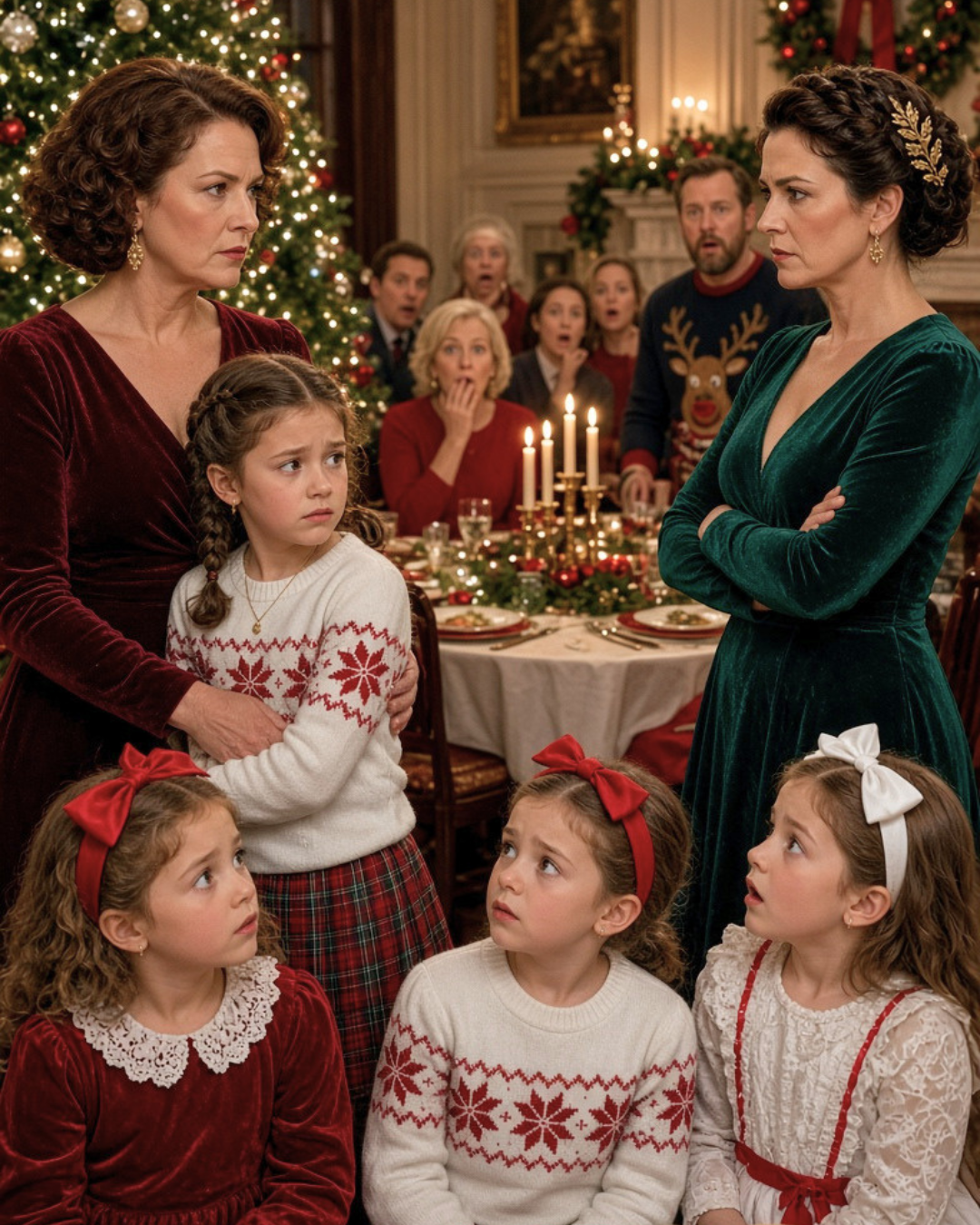
Because my daughter had learned something at eleven that had taken me decades to understand.
You don’t have to keep people close simply because they’ve always been part of your life.
You don’t have to accept unkindness to prove that you’re strong.
And you don’t have to remain in relationships where you’re constantly made to feel small.
You can choose people who respect you.
People who encourage you.
People who enjoy the things that make you different instead of turning those differences into jokes.
For years, I’d believed that being accepted meant changing myself to make others comfortable.
Olivia was learning a better lesson.
She was learning that the right people wouldn’t require her to become someone else.
And that realization mattered more to me than anything my family could have said.
Eventually, news about Monica began reaching me through relatives.
After leaving the house, she and her husband moved in with Mom and Dad.
The arrangement lasted two months.
With so many people living under one roof, disagreements became frequent.
The house grew crowded.
Tensions increased.
And the atmosphere became increasingly unpleasant.
Eventually, Monica’s family moved into a smaller rental in a less desirable part of town.
Their circumstances were very different from the life they’d enjoyed while I paid the mortgage.
The days of experimenting with side businesses and finding yourself were over.
Monica took a full-time job she didn’t enjoy.
Her husband abandoned his creative ambitions for physically demanding work.
He came home exhausted each evening.
Frustrated.
Discouraged.
Money was tight.
They were tired.
And the arguments continued.
Meanwhile, Mom and Dad had become the people helping Monica financially.
They gave her money.
They covered some of her expenses.
They took on responsibilities that had previously been mine.
The same parents who had repeatedly told me I was too sensitive were now carrying the financial burden I’d shouldered for five years.
I couldn’t miss the irony.
They had chosen Monica over me long before the Christmas dinner.
And when I finally stopped paying for that choice, they were left dealing with its consequences.
I didn’t need to celebrate their difficulties.
I didn’t need to call Monica and remind her that the house had never belonged to her.
I didn’t need to tell my parents that they’d been wrong.
The circumstances spoke for themselves.
What mattered was that I was no longer sacrificing my own peace to protect theirs.
One afternoon, I found Olivia curled up on the couch beside her new friend.
They were sharing a book they both loved.
Every so often, one would point to something on the page, and the other would burst into laughter.
Not the laughter I’d heard at Christmas.
Not the kind that singled someone out and made them feel foolish.
This was different.
They were laughing together.
Both of them.
Equally.
Comfortably.
Without fear.
I stood there listening for a moment.
And I realized how long it had been since I’d experienced that feeling.
Peace.
Real peace.
The kind that doesn’t depend on keeping everyone happy.
The kind that doesn’t require you to ignore insults or swallow your feelings.
The kind that comes when the people around you make you feel safe enough to be yourself.
My family had always believed their jokes were harmless.
They thought making fun of me was simply part of growing up together.
They believed I was overreacting whenever I objected.
And when Olivia became their newest target, they expected me to accept it the same way I always had.
But that Christmas changed everything.
Not because of one joke.
Not because of one dinner.
And not even because of the house.
It changed everything because I finally saw the pattern clearly.
The same cruelty I’d learned to tolerate as a child was being passed on to my daughter.
And for the first time, I refused to let it continue.
I had spent years trying to earn a place in a family that treated my love and generosity as obligations.
I’d believed that if I helped enough, gave enough, and remained patient enough, they would eventually see my worth.
But their approval had never been something I could purchase.
Not with kindness.
Not with silence.
And certainly not with five years of mortgage payments.
The moment I stopped trying to win their acceptance, I began protecting something far more important.
My daughter.
My marriage.
My peace.
And my own sense of worth.
Olivia’s laughter drifted across the room again.
I looked at her and smiled.
For the first time, I understood that I hadn’t lost a family by setting boundaries.
I’d stopped allowing people to hurt the family I had built.
They thought humiliating my daughter was just another joke.
They never imagined it would be the moment I finally stopped paying for their comfort.
And in the end, they taught me one final lesson.
I never needed their acceptance in the first place.
THE END
