


PART 1: The Warning That Saved Our Lives
They train you to recognize panic in the spaces between words.
For nine years, I worked as an emergency services dispatcher at the Cuyahoga County Regional Communications Center. My life was measured in frightened breaths, broken sentences, and the terrifying silence that followed someone realizing their world had just collapsed.
I had answered calls from men trapped beneath overturned farm equipment. I had guided desperate mothers through CPR while their babies stopped breathing. I had listened to the sound of vehicles crushing together on frozen highways.
You learn quickly that genuine terror rarely sounds like screaming.
Sometimes it arrives as a whisper.
But nothing in my nine years of emergency dispatching prepared me for 7:12 on that Tuesday morning.
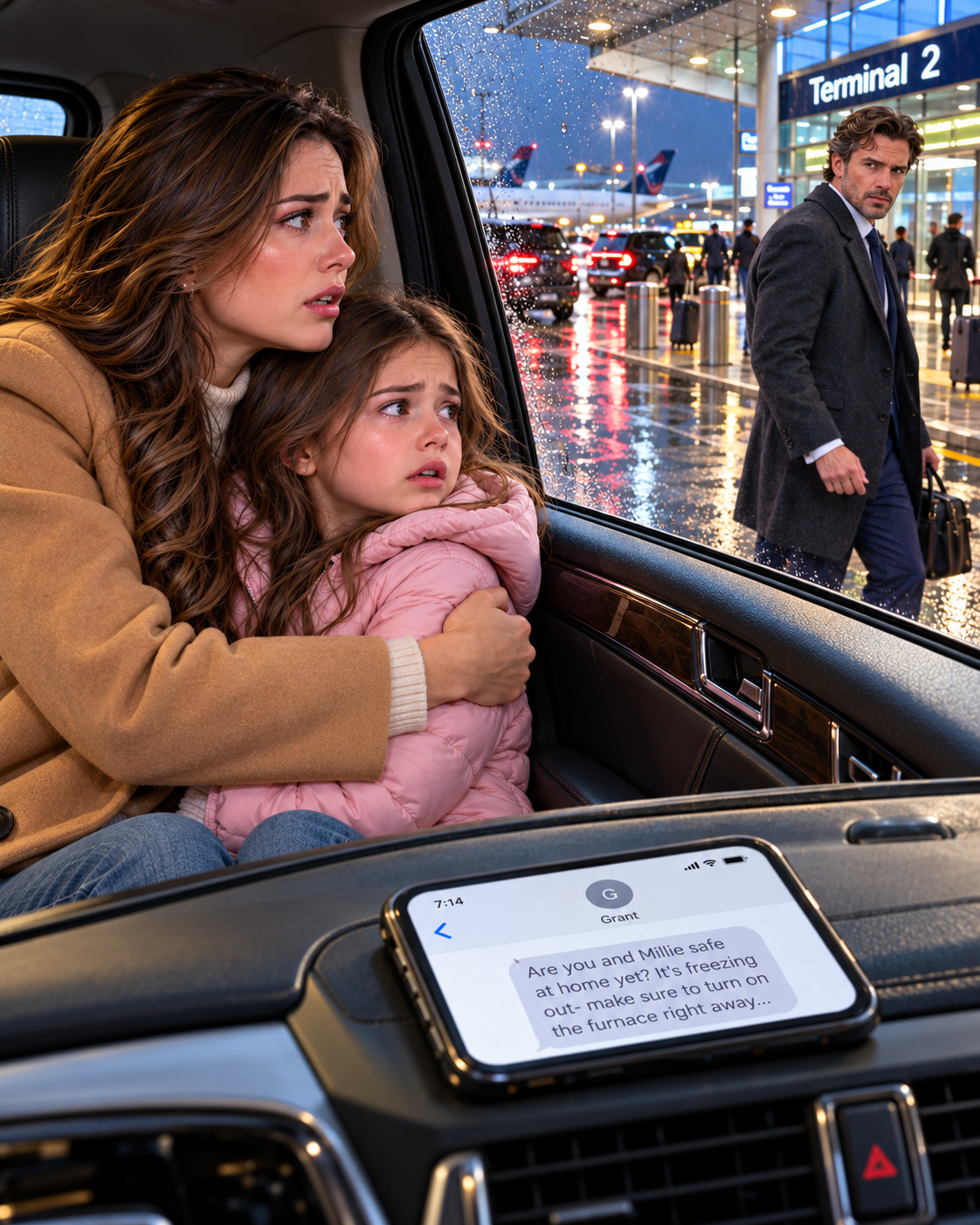
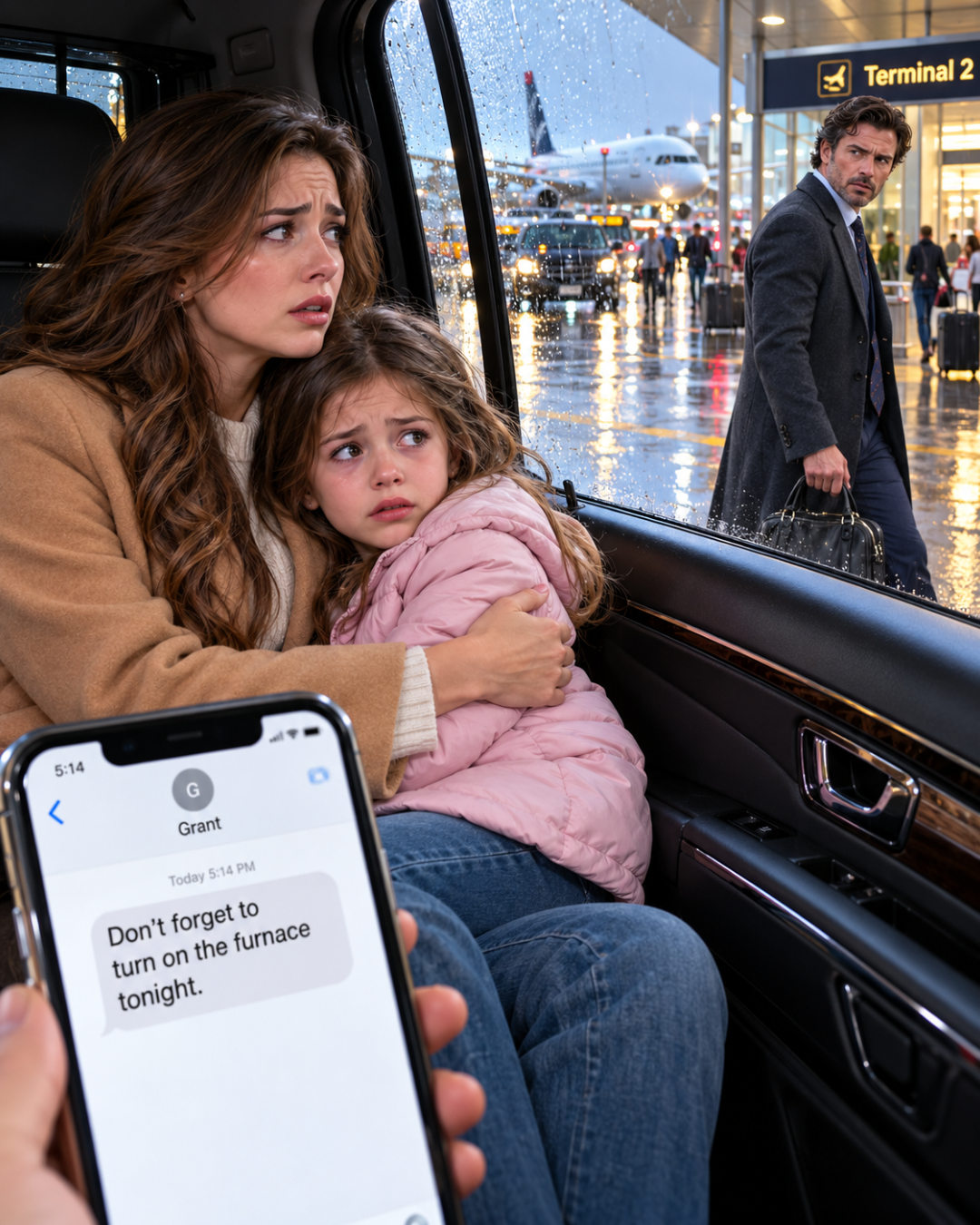
I was sitting outside Terminal 2 at Cleveland Hopkins International Airport, behind the wheel of my silver Subaru Outback.
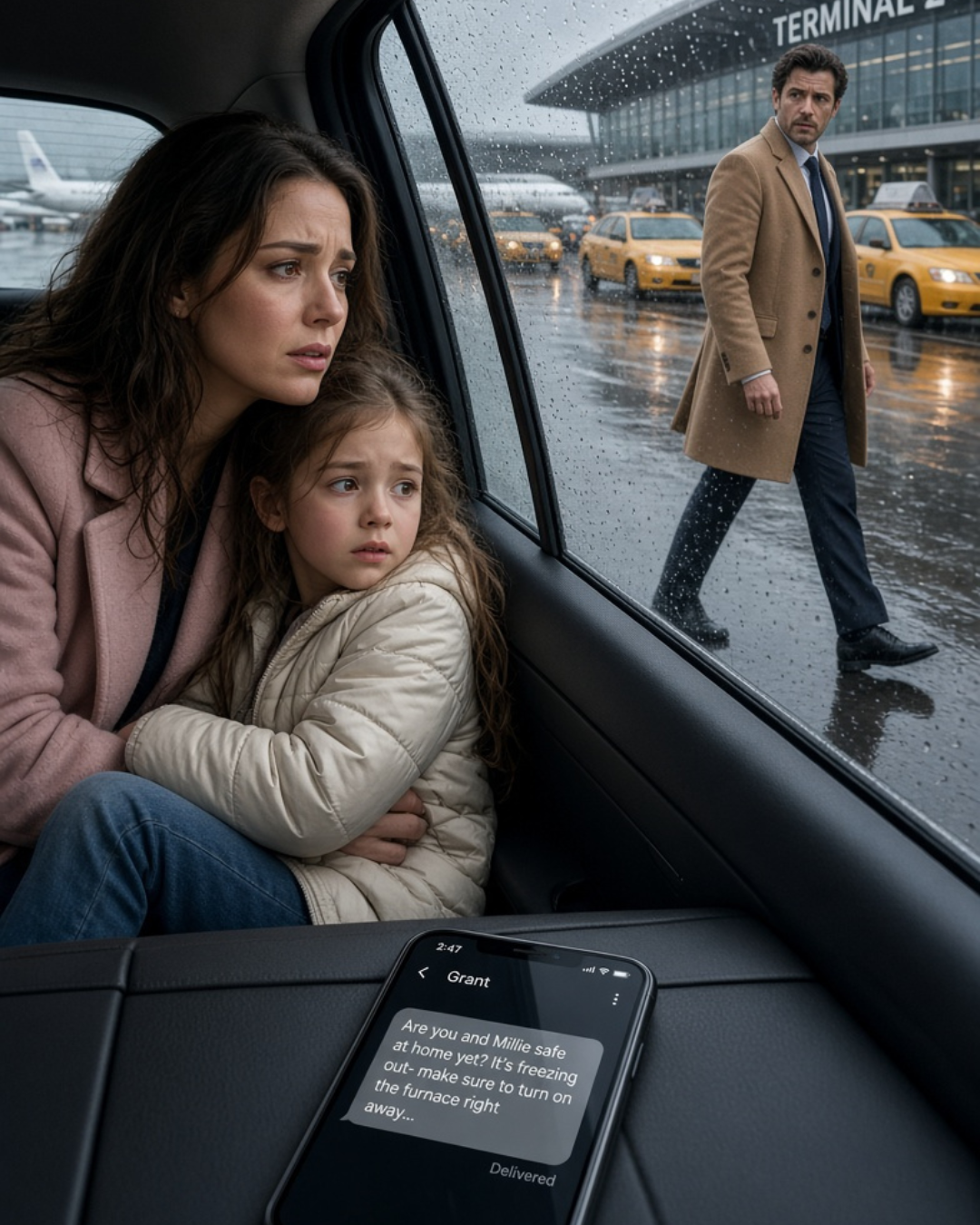
The engine hummed softly. White exhaust drifted into the chilly autumn air.
The sky was gray, and a light Ohio drizzle covered the windshield.
My husband, Grant Mercer, had just disappeared through the automatic terminal doors.
His leather weekender hung over one shoulder, and his trench coat moved behind him as he walked.
He was supposedly flying to Charlotte for an insurance symposium.
I watched the doors close.
Then I reached for the gearshift.
I needed to take our eight-year-old daughter, Millie, to St. Jude Academy before eight o’clock. After that, I planned to return home, shower, and prepare for my four-to-midnight shift.
Then I heard a quiet rustle from the backseat.
“Mom,” Millie whispered.
I glanced into the rearview mirror.
Her normally cheerful face had turned pale.
Millie was the kind of child who loved drawing mythical foxes, inventing stories about stray cats, and asking questions faster than anyone could answer them.
Now she sat rigidly, gripping her canvas backpack so tightly that her knuckles had turned white.
“What’s wrong, sweet pea?” I asked gently. “Did you forget your science folder? We can swing by the locker before the bell—”
“Mom,” she repeated.
Her voice was unnaturally calm.
“We can’t go home.”
My hand stopped on the gearshift.
Outside, airport traffic continued moving. A shuttle bus sounded its horn behind us, and a traffic officer waved another driver away from the curb.
Inside our car, everything seemed to stop.
“What did you say, Millie?”
“We can’t go home,” she repeated.
She met my eyes in the mirror.
“Ever.”
I turned toward her.
“Millie, why would you say that? Dad’s just heading down to Charlotte for the insurance symposium. We’re going to school, and then I have—”
“I heard him,” she interrupted.
She leaned forward, resting her forehead against the passenger headrest.
“Two nights ago. When you were on the midnight shift, Mom. I went downstairs for water because the radiator was hissing in my room.”
My throat tightened.
Two nights earlier had been Sunday.
Grant had claimed he was going to bed early because of a migraine.
When I returned home Monday morning, he had already left for his downtown office.
“What did you hear, baby?”
“He was in the dark in the laundry room,” Millie whispered.
She told me about a second phone.
A small black phone Grant kept hidden in the tool chest behind the paint thinner.
“He didn’t know I was on the stairs. He was talking into his other phone. The little black one he keeps in the tool chest behind the paint thinner. He said… he said that after you dropped him at the airport on Tuesday, the house would be totally empty. He said it would look like the furnace acted up. He said by noon it would all be done, and no one would ever have to worry about the money again.”
The furnace.
Our house on Maplecrest Avenue in Lakewood was a century-old Craftsman bungalow.
It had white oak trim, built-in bookshelves, and an old coal furnace converted to natural gas decades earlier.
Grant had spent the weekend complaining about it.
He claimed he smelled sulfur.
He said the pilot light was behaving strangely.
He warned me not to touch the thermostat until he returned.
Then I remembered the paperwork he had pressured me to sign three weeks earlier.
He had placed a thick stack of insurance documents beside our takeout dinner.
“It’s a transitional term policy, Dana,” he had explained.
Seven hundred and forty-two thousand dollars.
The number had struck me as unusually specific.
But Grant worked in insurance. He understood underwriting, actuarial tables, and financial risk.
He had smiled and assured me the policy was sensible estate planning.
“Given the risks of your job—dealing with psycho callers, shift fatigue, high-stress cardiovascular load—it’s just smart estate planning. For Millie’s trust.”
Then he kissed my temple, handed me his gold Cross pen, and said:
“Sign right on the flag, baby. Keep us safe.”
I had trusted him.
Now my daughter was telling me he had been discussing the furnace and a deadline.
“Millie,” I managed, “Did he say anything else?”
Her first tear slipped down her cheek.
“He laughed, Mom.”
She swallowed.
“He sounded happy. He said, ‘Nobody gets hurt who isn’t supposed to.’”
The shuttle bus sounded its horn again.
I didn’t argue with her.
I didn’t tell her she had misunderstood.
After years of answering emergency calls, I knew that danger didn’t always announce itself with threats or violence.
Sometimes it wore a tailored coat, attended church, and remembered to buy organic milk.
I shifted into drive and turned toward the short-term parking structure instead of the highway.
“Stay down, Millie,” I said. “Slide onto the floorboard. Put your coat over your head.”
“Mom?”
“Do it now, Mildred.”
She obeyed immediately.
I drove up to Level 3, backed into a space overlooking the terminal exit lanes, and switched off the engine.
The dashboard clock read 7:18 AM.
Grant’s flight was scheduled to leave Gate B4 at 8:05.
Boarding had already begun.
I watched the terminal doors.
Then I saw him.
Grant stepped outside only minutes after entering.
His leather weekender was gone.
His trench coat was zipped to his chin.
He walked quickly toward the taxi stand, speaking into his phone.
He had not boarded his plane.
He had entered the terminal, established a record of being there, and immediately returned outside.
I watched him climb into a yellow cab.
And I remembered something my father had taught me.
Arthur Vance had worked for Cleveland Electric Illuminating Company for thirty-four years.
He climbed utility poles, repaired industrial electrical systems, and distrusted anything that promised convenience without reliability.
When I was twelve, I often watched him work from the tailgate of his truck.
“The thing about electricity, Dana,” he once told me, “is that it doesn’t give a damn about your intentions. It doesn’t care if you’re a good man or a thief. It just seeks the ground. It follows the path of least resistance, and it always leaves a burn mark where it entered. Light tells the truth about a house. Remember that. A man can lie with his mouth until his teeth rot, but the circuit never lies.”
Two years before pancreatic cancer took his life, Dad had installed a commercial floodlight on our porch.
Grant had previously attempted to install a cheap motion-activated fixture, but his wiring repeatedly tripped the basement breaker.
Dad removed the faulty connections and replaced them with an industrial-grade cast-aluminum unit.
It had dual quartz-halogen heads, a motion sensor, internal digital storage, and a backup battery.
The integrated camera could record activity near our porch even during a power outage.
Dad had connected it to a dedicated security conduit.
Grant had laughed at the installation.
“A bit paranoid, isn’t it, Art? It’s Lakewood, not the South Side of Chicago. Who’s going to rob a house with an eight-year-old station wagon in the drive?”
Dad had looked at him carefully.
“It’s not about who comes in from the street, son,” he replied. “It’s about knowing who walks up to your threshold when they think the world is asleep. Change the bulb every spring, Dana. Check the ground. The light will keep the house honest.”
Sitting in the Subaru, I remembered every word.
“Mom?” Millie asked from beneath her coat. “Are we going to Grandma’s?”
“No, baby. We aren’t going to Grandma’s.”
Bernice Mercer lived in Rocky River.
She was Grant’s mother, and she defended him no matter what he did.
Six years earlier, when Grant gambled away his first commission check at the Northfield horse tracks, Bernice covered the mortgage.
Then she lectured me about protecting a husband’s reputation.
If Grant was involved in something dangerous, I couldn’t assume Bernice was innocent.
I followed the yellow cab at a distance, keeping other vehicles between us.
We left the airport and headed toward Lakewood.
The streets were wet, lined with bare trees and fallen leaves.
As the cab approached our neighborhood, I slowed.
It stopped three blocks from our house.
I turned into the Hendersons’ empty driveway.
They spent winters in Sarasota, and their property was screened from the street by a tall, overgrown hedge.
From there, I could see our front yard.
Grant climbed out of the cab at the corner of Clifton Boulevard.
He paid the driver in cash.
Then he waited until the taxi disappeared.
When he turned toward our house, I saw the gloves.
Thick yellow leather work gloves.
In one hand, he carried a bright red five-gallon gasoline container.
Under his other arm was a thirty-six-inch steel demolition bar.
A crowbar.
My husband was approaching our house with gasoline and a breaking tool.
I reached for my work phone.
Before dialing 911, I called Bernice.
She answered after three rings.
“Grant? Did you—”
“It’s Dana, Bernice.”
Silence.
Then her voice changed.
“Dana. Why aren’t you on your way to the station? What’s going on? Where are you two?”
“We’re around,” I answered. “Millie forgot her lunchbox.”
“Don’t make a scene, Dana,” she snapped.
Her composure vanished.
“Whatever you think is happening, you don’t understand the pressures he’s been under. You don’t know what it takes to keep a family afloat in this economy! Just… go to work. Take Millie and go to work. Grant will handle it. Don’t make a scene!”
“I didn’t say anything about a scene, Bernice.”
“You just listen to me—”
I ended the call.
Then I dialed 911.
Trina Kowalski answered.
She worked three consoles away from me at the communications center.
“Cuyahoga Regional 911, what is the address of your emergency?”
“Trina,” I said calmly. “It’s Dana Mercer. Console 4. Listen to me very carefully. I am off duty, currently parked at 1482 Maplecrest Avenue. I am witnessing an active burglary in progress at 1490 Maplecrest. Suspect is an adult white male, six-foot-one, approximately one hundred and ninety pounds, wearing a navy wool trench coat and work gloves. Suspect is currently armed with a thirty-six-inch crowbar and carrying five gallons of Class-3 accelerant. Suspect is attempting entry via the rear basement bilco doors.”
“Dana?! Jesus Mary, is that your house? Where are you? Is Grant—”
“Roll two units, Trina. Code three. Authorize forced approach. Have them cut their sirens at the Clifton intersection. If he smells the sirens, he lights the match. Get Detective Marco Ramos on the radio; he’s running the Lakewood sector this morning. Tell him it’s my address.”
“Units rolling, Dana. Lakewood units 204 and 208 are en route. Ramos is acknowledging. ETA three minutes. Dana, get the hell out of there!”
“I’m eighty yards out, secured behind cover. Millie is with me. We are safe for now. Just get them here before he turns my home into an incinerator.”
I ended the call.
Through the hedge, I watched Grant approach the porch.
He glanced down the street.
Then he stepped into the motion sensor’s range.
Click.
The floodlight my father had installed suddenly blazed to life.
Five hundred watts of brilliant white light illuminated my husband.
And the camera hidden inside its housing began recording everything.
PART 2: The Evidence My Father Left Behind
Grant barely reacted when the floodlight came on.
To him, it was simply an irritating fixture installed by a man who had been dead for two years.
He pulled his collar higher and continued toward the back entrance.
From my hiding place behind the Henderson hedge, I watched him lift the gasoline container onto the deck.
Then he took the crowbar.
He didn’t use his house keys.
That detail mattered.
If Grant wanted to enter his own home, he could have unlocked the door.
Instead, he wedged the steel bar between the doorframe and strike plate.
He was creating evidence of a forced entry.
I could already imagine the explanation.
A burglar had broken into the house.
Someone had damaged the furnace.
Perhaps a careless intruder had caused an accidental fire.
Or perhaps Grant would simply claim the old heating system had failed.
He would be on a flight to Charlotte.
His digital boarding records would support his alibi.
And I would be dead.
The doorframe groaned.
Then came a sharp crack.
“Mom?” Millie whispered from the backseat. “Did you hear that?”
“Stay down, Millie. Keep your face covered. Do not look out the window.”
At that moment, Detective Marco Ramos arrived.
His unmarked Ford Explorer moved silently through the mist.
He had turned off his siren and emergency lights before entering the neighborhood.
A marked Lakewood patrol cruiser followed him.
Marco was fifty-two, a former Marine who had served two tours in the Persian Gulf.
He had known my family since I was a teenager.
He was also one of the most experienced investigators I knew.
Grant had forced the back door open several inches.
He reached for the gasoline can.
Then Ramos stepped out of his vehicle.
“Sir!”
His command cut across the wet morning air.
“Step away from the door! Hands where I can see them! Now!”
Grant froze.
The crowbar fell from his hand and struck the deck.
He raised his gloved hands.
“Detective?” he exclaimed. “Marco? What in God’s name is this? Put that gun down! It’s me! It’s Grant!”
Officer Hendricks from Unit 204 approached with his Taser ready.
“Step down off the porch, sir! Face down on the grass! Do it now!”
“Are you insane?!” Grant shouted. “This is my house! I live here! I pay the mortgage on this property!”
“Hands on your head, Mr. Mercer,” Ramos ordered. “Interlace your fingers. Down on your knees.”
Grant began improvising.
“I was broken into!” he stammered. “I came back because… because I realized I left the garage door open! I arrived and found the back door forced! I was trying to secure the residence!”
Ramos looked at the red container.
“With a five-gallon can of high-octane gasoline, Grant? You always do home repairs with an accelerant in your left hand?”
“It’s for the mower!” Grant shrieked. “I bought it last night for the lawnmower!”
The gasoline container tipped against the threshold.
Liquid began seeping across the deck.
I stepped out of my Subaru.
I didn’t run.
I walked toward the officers, keeping my hands inside my jacket pockets to conceal their trembling.
Grant saw me.
His face collapsed.
“Dana?” he breathed.
Then he attempted a smile.
“Dana! Thank God! Baby, tell these cops to stand down! Tell them! Some maniac broke the back door while you were gone. I came back from the airport to check on the house, and these guys—”
“Tell them what, Grant?” I asked.
I stopped behind Ramos.
Rain ran down my hair and collar.
“Tell them what? Tell them your flight to Charlotte boarded at seven-twenty? Tell them you’re supposed to be in seat 14B over the Blue Ridge Mountains right now?”
“I… I missed it,” Grant stammered. “The security line was backed up to the garage, Dana. You know how Hopkins is on a Tuesday! I missed the gate, so I called an Uber to come home and take a shower before I caught the standby at noon—”
Ramos interrupted him.
“You scanned your digital boarding pass at the TSA checkpoint at six-fifty-eight, Grant. Airport security flagged you leaving through the exit lane at seven-oh-four. We already have the surveillance grab from the port authority cameras on my mobile terminal. You were in the terminal for precisely six minutes. Just long enough to establish an electronic presence on the TSA log.”
Grant’s hands began shaking.
“That’s… that’s a mistake. The scanner malfunctioned. I—”
Tires screeched at the end of the driveway.
A silver Buick LeSabre jumped the curb.
Bernice Mercer stumbled out.
She wore an embroidered cardigan that quickly became soaked in the rain.
“Stop this!” she screamed. “Marco Ramos, you stop this right now! This is a private family matter! This is a misunderstanding! Grant, don’t you say another word!”
Officer Hendricks moved between her and the driveway.
“Stay back, ma’am. Do not cross the perimeter.”
“I am his mother!” she cried, grabbing his sleeve.
Then she turned on me.
“Dana, tell them! Tell them to let him go! You ungrateful little bitch, after everything he’s done for you! After he took you out of that run-down lineman’s house and gave you this neighborhood! Is this how you repay him?!”
Ramos’s voice became cold.
“Bernice, if you touch my officer again, you will spend the afternoon in a holding cell at the municipal jail. Back up to your vehicle.”
Grant stared at me.
His frightened-homeowner performance disappeared.
“Dana,” he whispered. “You did this. You followed me. You brought them here.”
“Millie did this, Grant.”
He flinched.
“She was awake,” I continued. “Sunday night. Two-fifteen in the morning. When you were on your burner phone in the laundry room. She heard you say it would look like the furnace. She heard you say it would be done by noon.”
Grant laughed bitterly.
“She’s an eight-year-old child, Dana! She has nightmares! She makes up stories about goblins in the attic! Are you seriously going to let a homicide detective ruin our lives because our kid had a bad dream?!”
“She didn’t dream the crowbar, Grant.”
His anger erupted.
“I have rights! You have no evidence of intent! I have a right to be on my own property! I have a right to carry tools on my own deck! You can’t charge me with a goddamn thing except trespassing on my own lawn!”
Ramos took out his departmental phone.
“We don’t need Millie’s testimony for the warrant, Grant,” he said quietly. “Though God knows she’s braver than you’ll ever be.”
He showed Grant the screen.
“Your father-in-law was a very smart man, Mr. Mercer. When he installed that commercial floodlight on the porch gable, he didn’t just wire it to the light switch. He wired the integrated digital storage module directly into the dedicated municipal security feed my office monitors for neighborhood watch grants. It has an internal microphone. High-fidelity directional condenser.”
Ramos pressed play.
Grant’s recorded voice emerged clearly.
It was from Sunday morning at 2:15, when he had been pacing our porch while talking on his hidden phone.
“…Thursday is too late, I told you. It has to be Tuesday after she drops me at the airport. It’ll look like the old natural gas valve on the furnace failed. By noon, the whole crawlspace will be gone. The payout clears through the corporate umbrella within thirty days. Relax. It’s just a business trip. Nobody gets hurt who isn’t supposed to.”
Nobody spoke.
Even Bernice fell silent.
Grant slowly looked up at the floodlight.
The fixture my father had installed was still shining down on him.
Then his knees weakened.
He slid against the damaged doorframe.
“The money was already gone, Dana,” he whispered. “The Charlotte account… the margin calls on the crypto trust… they were coming for the house on Friday. They were going to take the cars. It was her or the debt. Don’t you understand? It was her or the debt.”
Her.
He meant me.
The seven-hundred-and-forty-two-thousand-dollar insurance policy was intended to erase his debts.
Ramos stepped forward and handcuffed him.
“Grant Mercer,” he said, “You are under arrest for attempted aggravated arson, attempted insurance fraud, and conspiracy to commit aggravated murder. You have the right to remain silent…”
I turned away.
I didn’t want to hear another word.
Bernice collapsed against her Buick, wailing into the rain.
I walked back to the Subaru.
Millie was still curled on the floorboard, covering her ears.
“Millie,” I whispered.
She looked up.
“Is the bad thing gone, Mom?”
I lifted her into my arms.
“The light came on, baby,” I whispered into her hair, finally allowing myself to cry. “The light came on, and the bad thing is gone.”
But the arrest was only the beginning.
By three that afternoon, Maplecrest Avenue was crowded with fire investigators.
County vehicles covered our lawn.
Technicians in protective suits searched the crawlspace with gas detectors and hydrocarbon meters.
They collected soil samples from areas Grant had treated with mineral spirits forty-eight hours earlier.
He had been preparing an ignition path before the morning he intended to start the fire.
Ramos sat at my kitchen table with three evidence bags.
Inside were Grant’s burner phone, the life insurance documents, and his yellow leather gloves.
“The rider was submitted electronically from your home IP address at eleven-forty-eight on Sunday evening,” Ramos explained. “He used a PDF editor to trace your signature from the mortgage refinance papers we did two years ago. The insurance company’s fraud division was already flagging the policy because he listed his own offshore holding company as the secondary contingent beneficiary instead of Millie’s trust.”
I stared toward the stove.
That morning, Grant had made pancakes.
He had stood in our kitchen whistling while flipping batter.
He had handed me my travel mug.
“Take the long way, honey. Get Millie a donut.”
At the time, I thought he was being thoughtful.
Now I understood he had wanted to delay our return.
He needed enough time to prepare the fire, disable the smoke detectors, and leave before anyone noticed.
“What happens to the house?” I asked.
“The basement is structurally sound, but the accelerant soaked through the subfloor near the back threshold,” Ramos replied. “The Fire Marshal will condemn the kitchen and back deck until remediation is complete. You can’t sleep here tonight, Dana. Not with the hydrocarbon levels in the ductwork.”
“We don’t have anywhere to go.”
“Take the county voucher for the hotel by the interchange. Just for seventy-two hours. Let the state’s victim advocacy team handle the paperwork. That’s what they’re there for.”
“No. No vouchers. No county charity.”
Ramos looked at me.
“Your father’s sister. Aunt Clara? Up in Ashtabula?”
“She passed three years ago, Marco. It’s just me. And Millie.”
Officer Hendricks entered with preliminary financial information.
Grant had been operating an unauthorized investment pool using his insurance firm’s client accounts.
A woman named Sasha Vance, unrelated to me despite sharing my maiden name, was connected to an offshore sports-book processing firm in the Bahamas.
Grant had lost three hundred and eighty thousand dollars of client money during an August cryptocurrency decline.
His employer’s audit was scheduled for nine the following morning.
If he couldn’t replace approximately eight hundred thousand dollars in trust escrow by noon Wednesday, the company intended to refer the matter to the FBI.
Grant hadn’t simply wanted insurance money.
He had been racing a financial investigation.
His plan required me to die in what appeared to be an accidental residential fire.
The payout would supposedly clear his debts, protect the mortgage, and allow him to present himself as a grieving widower.
“And his mother?” Ramos asked.
“She’s at the Lakewood precinct right now,” Hendricks answered. “Demanding to speak to the city manager. Claiming that Dana was emotionally abusive and that Grant was having a nervous breakdown brought on by spousal neglect. She already called two local news stations trying to sell a story about a family tragedy caused by police overreach.”
“Let her talk,” Ramos replied. “Every word she says to the cameras is another nail in the conspiracy indictment. The grand jury meets Thursday. Let’s make sure she has an audience.”
I left them and climbed upstairs.
Millie’s bedroom door was closed.
When I opened it, I discovered she had built a fort beneath her pink chenille bedspread.
She had draped it over her desk and chair, holding the corners down with her schoolbooks.
I lifted the blanket and crawled inside.
Millie sat in the shadows with a flashlight.
“Hey, bug,” I said.
She stared at the carpet.
“Are the men in the white suits going to take my drawings?”
“No, baby. They’re just checking the air. Making sure the house is clean.”
“Dad isn’t coming back, is he?”
I pulled her against me.
I didn’t tell her that Grant had made a mistake.
I didn’t claim he loved us in his own way.
I refused to cover the truth with comforting lies.
“No, Millie. He is never coming back to this house. Ever.”
She was quiet for a long time.
Then she whispered:
“I’m glad.”
Those two words told me how deeply frightened she had been.
“Come on,” I said, kissing her hair. “Pack your backpack. Just the clothes you need for three days, your sketchpad, and your colored pencils. We’re leaving.”
“Where are we going?”
“A place with blue shutters,” I answered. “Two streets from the lake. With a porch light that stays on all night.”
I didn’t know whether such a place existed.
But I knew we couldn’t remain in that house.
And for the first time since the airport, I was making a promise about our future that didn’t depend on Grant Mercer.
PART 3: The House Where the Light Stayed On
Six days later, we found the cottage.
It stood on Elmwood Avenue, two streets from Lake Erie.
The narrow two-story saltbox had weathered gray cedar siding, a tin roof, and two slightly crooked shutters painted robin’s-egg blue.
It was wedged between a retired machinist’s bungalow and an overgrown community garden.
The landlord was an eighty-year-old Polish widower named Stanislaw.
His hands were permanently stained with machine oil, and he spoke in short, practical sentences.
When he saw my county badge and Millie’s school uniform, he asked about my father.
“Your father was Arthur Vance?”
“Yes, sir. He was.”
“Good man. Rewired my machine shop in seventy-eight. Never charged me for the conduit. You pay the rent on the first of the month in cash or cashier’s check. You don’t bring no trash to my curb. We get along fine.”
He handed me the brass key without running a credit check.
Our new life wasn’t glamorous.
It was a matter of arithmetic.
Forty-eight hours after Grant’s arraignment, the Cuyahoga County Court of Common Pleas froze our joint accounts.
The money he had handled was entangled in the fraud investigation and potential federal forfeiture claims from the clients whose funds he had misused.
I had three hundred and fourteen dollars in my personal credit union savings account.
My dispatcher salary was twenty-six dollars and forty cents an hour.
The Subaru had an oil leak near the head gasket.
I needed rent, groceries, school supplies, transportation, and a way to keep Millie safe while I worked.
So I accepted every shift the communications center offered.
I worked four-to-midnight rotations on Tuesdays, Wednesdays, and Thursdays.
I took double twelve-hour shifts on Saturdays.
I volunteered for Sunday graveyard duty, when calls surged after the bars closed.
My days became a cycle of caffeine, emergency calls, school pickups, and the cold Ohio wind.
At three in the afternoon, I collected Millie from St. Jude Academy.
We walked to the cottage.
She completed her long division worksheets at the small pine kitchen table while I made hot cocoa on our electric burner.
At 3:45, our neighbor Mrs. Kowalski arrived.
She was eighty-two, baked prune kolaches, and kept an aluminum baseball bat beside her umbrella stand.
She stayed with Millie until my shift ended.
At work, the green and amber dispatch screens glowed in the darkened communications room.
My headset became a kind of armor.
When a caller needed help because someone had been shot on St. Clair Avenue, I couldn’t spend those minutes thinking about my marriage.
When a teenage girl was trapped inside an overturned Honda on Route 2, I had to focus on getting rescue crews to her.
I gave instructions.
I coordinated emergency vehicles.
I stayed on the line until the firefighters reached the people who needed them.
I did my job.
The social consequences of Grant’s arrest arrived quickly.
Within two weeks, the Lakewood Country Club removed him from its membership rolls.
His insurance brokerage issued a short public statement expressing shock and betrayal over the actions of a former independent contractor.
The men who once spent Sundays drinking Bloody Marys on our deck stopped returning my calls.
Some even crossed the street to avoid speaking with me.
I learned how quickly people disappeared when association became inconvenient.
Bernice, however, refused to disappear.
Ramos had obtained a temporary restraining order preventing her from approaching Millie or me within five hundred yards.
Violating it could cost her a five-thousand-dollar bond.
So she began writing letters.
Every Tuesday, an ivory envelope appeared in our mailbox.
The stationery was elegant.
Her handwriting was sharp and heavily slanted.
In the first letter, she wrote:
“Dana. A true Christian woman forgives seventy times seven. Grant is wasting away in the county annex. They don’t give him his heart medication on time. His bail review is next month, and the attorney says if you submit a victim impact statement expressing leniency, the judge will consider house arrest at my property. Think of Millie. A child needs a father, even one who has stumbled. If you proceed with this divorce, God will hold you accountable for the destruction of a consecrated union. The blood will be on your hands.”
I didn’t open the third letter.
Or the fourth.
I placed a galvanized steel trash can beside the front steps.
Every Tuesday, I checked the handwriting on the envelope and dropped it into the trash with the coffee grounds and apple peels.
I wasn’t interested in being lectured about forgiveness by someone who had known what her son intended and told me to go to work anyway.
The winter dragged on.
Snow piled along the sidewalks.
Lake Erie turned gray beneath the freezing sky.
Millie gradually began sleeping through the night.
She still wanted the porch light on.
I left it burning.
Then, by mid-April, the snow and slush finally began melting.
Yellow crocuses appeared in the community garden.
On a Saturday morning, sunlight broke through the clouds and illuminated our blue shutters.
Millie carried a wooden kitchen chair onto the porch.
In her hands was a cardboard box she had found inside my father’s old metal toolbox.
The toolbox had remained in the Subaru since the day we left Maplecrest Avenue.
Inside the box was another industrial-grade cast-aluminum floodlight.
It was identical to the one Dad had installed at our old house.
That original fixture remained in the courthouse evidence locker, marked as a state exhibit.
But Dad had purchased a spare decades earlier and kept it wrapped in oily butcher paper.
“Mom,” Millie said, placing the chair beneath the porch fixture. “Hold the ladder.”
“It’s a chair, sweet pea, not a ladder,” I answered, steadying it. “And you need to make sure the toggle switch on the inside wall is flipped to ‘off’ before you touch the brass leads.”
“I know,” she said.
She concentrated on the fixture.
“Black to brass, white to silver, green to the ground screw. Dad… I mean, Grandpa Art showed me in the basement once.”
She corrected herself without looking away.
I watched her small hands carefully handle the connections.
They reminded me of my father’s hands.
Broad palms.
Long fingers.
A natural understanding of how mechanical things fitted together.
She twisted the wire connectors and wrapped the connections with electrical tape, just as Grandpa Art had taught her.
“Hand me the bulb, Mom.”
I passed her the heavy quartz-halogen lamp.
She carefully fitted it into the socket.
Then she climbed down.
“Okay,” she said. “Go flip the breaker.”
I walked into the cottage, opened the utility closet, and switched the breaker on.
When I returned, Millie stood in the yard, staring at the fixture.
For several seconds, nothing happened.
Then a crow landed near the garden fence.
The motion sensor clicked.
Snap.
The floodlight came on.
Five hundred watts of brilliant white light washed across the porch.
It illuminated the cedar siding, the blue shutters, and Millie’s red canvas sneakers.
Millie threw her arms wide.
“It works, Mom!” she shouted, spinning in a circle. “It works for the porch, it works for the garden, and it works for bad dreams!”
“Does it?” I asked.
“Grandpa Art said light keeps the house honest,” she replied. “This house is totally honest now.”
I sat on the top porch step and cried.
I cried for the years I had mistaken silence for peace.
I cried for the excuses I had made for Grant.
I cried for my father, who had left behind something that helped expose the truth when I needed it most.
Millie sat beside me.
She leaned her shoulder against mine.
We remained there until the floodlight’s timer clicked off.
For the first time in months, the quiet felt peaceful.
Four months later, on a humid Tuesday evening in August, my personal phone rang while I was working at Console 4.
The communications center had been relatively quiet.
We had handled a three-car collision on the Shoreway, a false alarm at a Brooklyn warehouse, and a raccoon trapped in an attic on Detroit Avenue.
The wall clock read 21:42.
My phone displayed a number from the Cuyahoga County Corrections Center.
I stared at it.
Then I accepted the collect call.
“Dana?”
Grant’s voice sounded thin and unfamiliar.
“Dana, please don’t hang up.”
He was breathing heavily.
“The public defender… he says the prosecutor is taking the murder conspiracy charges to trial next month. They’re offering twenty-two years, Dana. Twenty-two years! I’ll be sixty-three when I see a parole board!”
I said nothing.
“Dana, talk to me!”
His voice rose.
“My mother sold the colonial to pay the retainer for the appellate lawyer, but the firm dumped the case after the forensic audit came back! We don’t have anything left! If you… if you could just testify at the sentencing hearing… if you could tell them about my stress, about the debt, about… about how I was having a mental breakdown… they’ll reduce it to attempted destruction of property! They’ll send me to a minimum-security facility in Mansfield!”
I watched the clock.
Then I spoke.
“Grant.”
“Yes! Dana, baby, I’m here! I’m listening!”
“Millie got an A on her science project yesterday,” I said. “She built an electric circuit out of copper tape, a coin battery, and a blue LED. She won the school ribbon.”
A broken sound came through the phone.
“Dana, please… I want to talk to her. Just let me hear her voice. Just thirty seconds. I’m her father, Dana. God gave her to both of us. You can’t cut me out like I never existed!”
I looked at the red End Call button.
“You should have boarded your plane, Grant,” I said softly. “It was just a business trip. Keep that in mind.”
“Dana! Wait! Don’t—”
I ended the call.
I didn’t throw the phone or slam it against the desk.
I opened the call history.
I selected Block This Caller.
Then I switched the phone off and placed it inside my canvas bag.
I adjusted my headset.
“Console 4,” I said into the microphone, my voice clear and steady. “Lakewood units, check in. Status report.”
Outside the communications center, Cleveland stretched beneath the summer sky.
Thousands of homes stood beneath the stars.
Each had its own lights, its own electrical circuits, its own people trying to make it safely through the night.
Somewhere on Elmwood Avenue, our little cottage with blue shutters waited for me.
Millie would be asleep.
Her school ribbon would be on the kitchen table.
The porch light would come on whenever someone approached.
And for the first time in years, I knew exactly what kind of home I was returning to.
One where nobody had to whisper warnings in the backseat.
One where my daughter could sleep without fear.
One where the darkness no longer belonged to someone else.
My father had been right.
The circuit never lies.
And when the light finally came on, it showed me the truth I needed to see.
THE END
