

PART 1
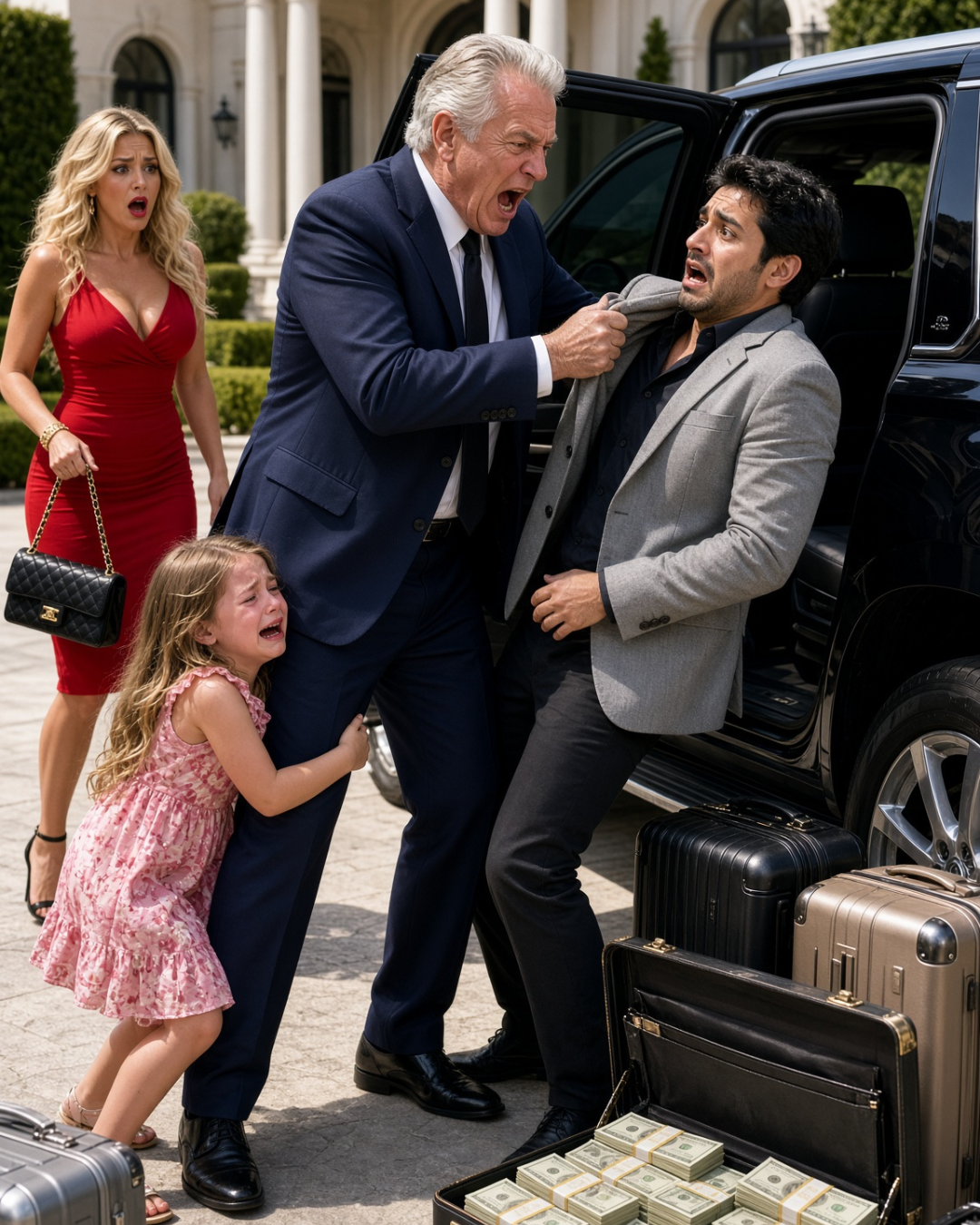
For seven years after my daughter died, I sent her husband $40,000 every January to help raise my granddaughter. I believed I was keeping a promise to my only child.
Then one September afternoon, my seven-year-old granddaughter pulled me aside and whispered, “Grandpa, please stop giving Dad money. Follow him one day, and you’ll see why.”
I had no idea those words would lead me back to the daughter I had buried seven years earlier.
My name is Walter Miller, though everyone calls me Walt. For forty-one years, I had run Miller’s Corner Market, the grocery store my father built. I understood invoices, accounts, and the value of a dollar. But when it came to my family, I had never believed love required an audit.
Laura was my only child.
Before she died, she made me promise one thing.
“Dad, whatever happens, make sure Emma is safe.”
Seven years earlier, Laura had supposedly been killed in a horrific accident on Highway 24. Her car had plunged through a guardrail near Shelton Ravine and caught fire. The police told us the vehicle had burned so severely that there could be no viewing.
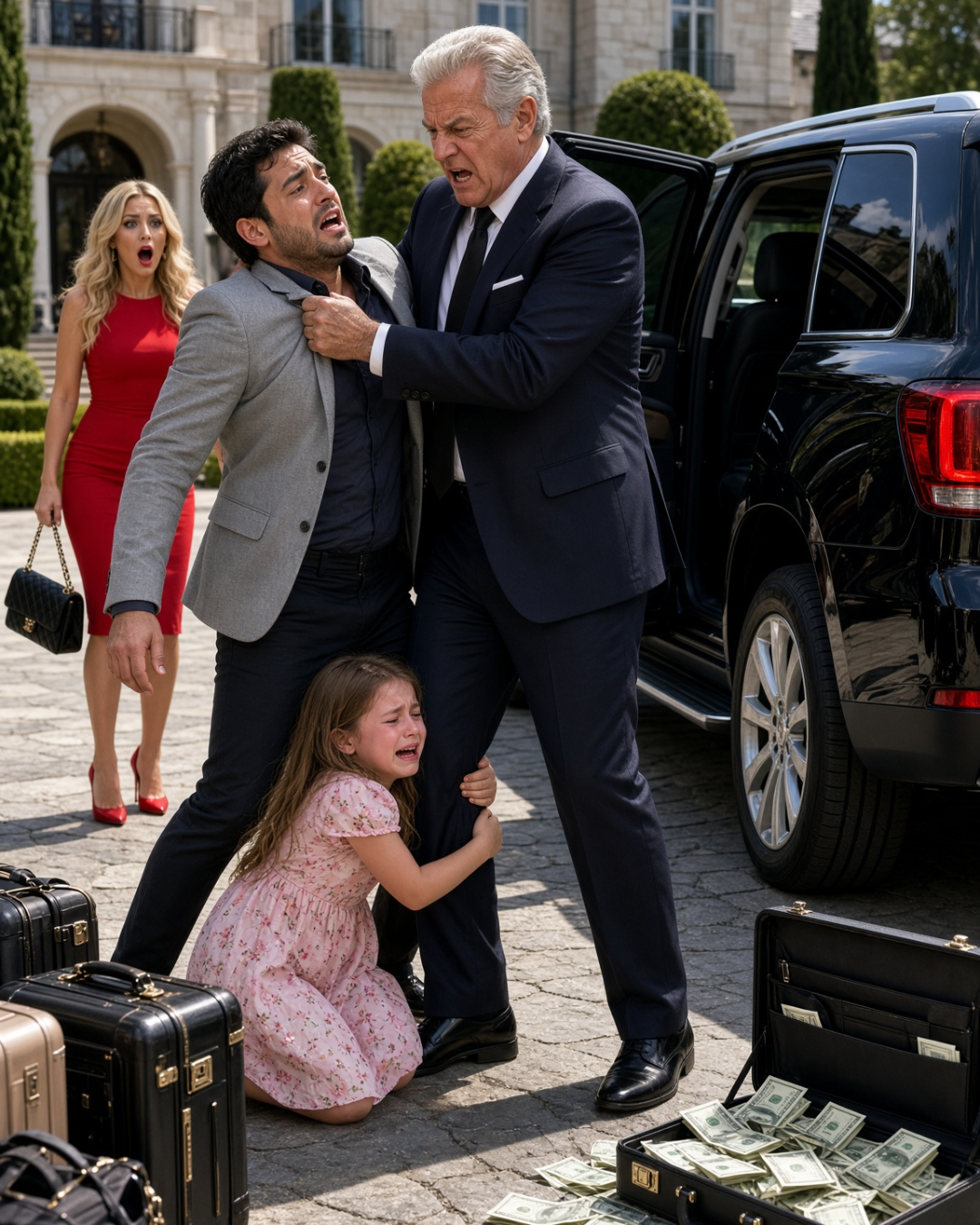
Her husband, Mark Stevens, stood beside my wife Eleanor and me at the funeral. We were given a sealed bronze urn bearing Laura’s name.
Six months afterward, Eleanor died.
The doctors said cardiac arrest.
I called it heartbreak.
With both my wife and daughter gone, my world shrank to the grocery store and my granddaughter, Emma.
Every January, I transferred $40,000 to Mark.
School expenses. Food. Clothing. Anything Emma needed.
That was what I believed the money was buying.
Every other Saturday, I took Emma for ice cream. She always ordered strawberry swirl, and we sat beneath the same old oak tree while she told me about school.
That September afternoon, she had just finished celebrating an A on her spelling test when her expression changed.
“Grandpa?”
“Yes, sweetheart?”
She glanced around, then clutched my sleeve.
“Please stop sending Dad money.”
I stared at her.
“What?”
“The money you give him. Don’t send it anymore.”
I leaned closer.
“Emma, that money is for you.”
She shook her head.
“No, Grandpa.”
Something in her voice frightened me.
“Is your father hurting you?”
Her grip tightened.
“I can’t tell you.”
“Why?”
“He’ll get angry.”
I put my ice cream on the bench. Strawberry swirl began melting onto the wood.
“Emma,” I said, as gently as I’ve ever said anything, “nobody is going to be angry at you for telling the truth. Not while I’m here.”
She looked down at her sneakers.
Only then did I notice how terrible they were. The pink canvas had turned gray with dirt. Both toes were splitting, and her big toe pressed against an opening in the seam. The shoes were at least two sizes too small.
Eight months earlier, I had sent Mark money specifically for school clothes.
“Do your feet hurt in those?”
Emma shrugged.
It was the weary shrug of a child who had learned that complaining accomplished nothing.
“Vanessa says I’m growing too fast on purpose.”
Vanessa.
Mark’s so-called friend had moved into his house about two years earlier. She was tall and blonde, with the upright posture of a nurse and a smile that never quite reached her eyes.
Mark claimed she helped take care of Emma.
I had chosen to believe him. The alternative meant imagining my granddaughter growing up without affection.
“Sweetheart, what does Dad do with the money?”
Emma leaned toward me.
“Vanessa got a new purse. And Dad got the boat. And he goes to the casino with the lights on Friday nights.”
She hesitated.
“And the first Sunday of every month, he drives to the lady place.”
“The lady place?”
She nodded.
“Follow him one day, Grandpa. You’ll see why.”
“Why can’t you just tell me?”
Her chin trembled.
“Because Dad said if I ever told, you wouldn’t be allowed to see me anymore. And the lady would have to go away forever.”
A terrible coldness settled inside me.
“Emma, who is the lady?”
She opened her mouth.
A car horn sounded from the parking lot.
Emma flinched so violently that she almost fell off the bench.
Mark’s silver pickup had arrived early.
He lowered the window and flashed the easy, handsome smile that had charmed Laura when she was twenty-two.
“Hey, Walt! Vanessa needs Emma home for a dentist thing. Sorry to cut it short.”
A dentist appointment on Saturday afternoon.
Emma slipped off the bench. As she passed, she pressed a crumpled piece of paper into my palm, closed my fingers around it, and walked away without looking at me.
She climbed into the pickup.
The little girl who had been excitedly discussing spelling tests minutes earlier sat motionless and silent.
Mark waved.
“Same time in two weeks?”
“Sure,” I answered.
I waited until the pickup disappeared down Maple Street before unfolding the note.
In careful, uneven second-grade handwriting, Emma had written:
WILLOW CREEK. 4410 OLD MILL RD. HARLAN.
Below it, in smaller letters pressed so hard they nearly tore through the paper:
Don’t let him see you. He saw me once.
I drove back to Miller’s Corner Market without turning on the radio.
After closing, I sat alone in the office behind the register. Forty-one years of ledgers surrounded me. On my desk stood a photograph of Laura holding newborn Emma in a yellow blanket.
For the first time in seven years, I examined every payment I had sent Mark.
Two hundred and eighty thousand dollars.
Not once had I requested a receipt.
I had called that trust. Now I wondered whether I had simply been too frightened to question anything connected to the worst night of my life.
I searched for Willow Creek.
Willow Creek Residential Care. Private long-term nursing and rehabilitation. Discreet. Compassionate. Family-centered.
An older brochure listed monthly residency fees beginning at $3,500.
I calculated the annual cost.
Forty-two thousand dollars.
Almost exactly the amount I sent Mark every January.
The first Sunday of October was eight days away.
I spent that week barely sleeping.
I told Daisy Parker, the teenager who worked my register after school, that I would be away Sunday.
Then I borrowed a battered green Buick from my oldest friend, Hank Dawson.
Hank had spent thirty years as a sheriff’s deputy before retiring to fish and complain about the Bengals. He knew Mark would recognize my truck.
When I asked for his keys, Hank studied me.
“You call me if you need me, Walt. I mean it.”
At six-thirty Sunday morning, I parked down the block from Mark’s house, wearing a ball cap pulled low over my forehead.
At 7:14, his garage door opened.
Mark backed out alone, wearing a pressed shirt instead of his usual weekend sweatpants. A thick manila envelope rested on his dashboard.
I followed at a careful distance.
We passed the county line, the grain elevators, and the turnoff toward the lake.
Then Mark took Highway 24.
My chest tightened.
We approached the long curve near Shelton Ravine, where Laura’s car had crashed. A small white cross had once stood beside the guardrail. Weeds had swallowed it.
Mark never slowed.
He did not even glance toward the ravine.
After an hour and forty minutes, we reached Harlan, a town of shuttered storefronts and nearly empty churches.
Mark turned onto Old Mill Road and drove through a stone entrance beneath drooping willow branches.
Willow Creek Residential Care occupied an aging brick building that might once have been a beautiful country inn. Paint peeled from its shutters. The neglected gardens looked as though someone only tended them before inspections.
I parked behind a stand of cedars across the road.
Mark entered carrying the envelope.
Forty minutes later, he emerged without it.
He sat in his truck, forehead against the steering wheel, before finally driving away.
I should have followed him.
Instead, I walked into Willow Creek.
The receptionist was a heavyset woman wearing reading glasses on a beaded chain. Her name tag read BRENDA.
“Can I help you, sir?”
“I’m, uh, looking at facilities. For my sister.”
She handed me a brochure and clipboard.
“We’re full right now, but there’s a waitlist. Dr. Pruitt handles admissions personally. He’s not in on Sundays.”
“Would it be all right if I looked around the grounds? Just to get a feel?”
She hesitated.
“Garden’s open till noon. Don’t go into the residential wings.”
I followed the hallway to the rear garden.
Dry grass surrounded a cracked fountain. Several residents sat beneath trees in wheelchairs while a young aide looked at her phone.
Near a trellis of dying roses, one woman sat alone.
She was painfully thin, with short, bluntly cut brown hair. A pale scar extended from her left temple into her hairline. Her faded blue cardigan was buttoned incorrectly.
She was humming.
I stopped.
Six notes rose and fell in a melody I had not heard since Eleanor died.
It was the lullaby my wife had invented when Laura was a colicky baby.
Not a real song.
Just six notes Eleanor used to sing while rocking our daughter to sleep.
Then I noticed the woman’s hand.
Her fingers tapped the wheelchair armrest.
Thumb. Ring finger. Middle finger. Thumb.
Laura had studied piano from six to sixteen. Whenever she was nervous, she unconsciously played that pattern against tables, chairs, or her own knees.
She did it before school exams, before her wedding, and in the hospital before Emma was born.
My legs nearly failed me.
I stepped closer.
The woman turned slowly toward me.
Her face was thinner and older, marked by suffering I could not imagine.
But her eyes were hazel, with a ring of gold around the center.
Eleanor’s eyes.
Emma’s eyes.
Eyes I had believed were buried seven years earlier.
I stood frozen in the garden, staring at the impossible.
The woman in that wheelchair was my daughter.
PART 2
“Laura?”
Her name escaped my mouth like something being torn from my chest.
The woman blinked.
Her lips parted.
For one suspended instant, recognition seemed to flicker behind her eyes.
Then someone grabbed my arm.
“Sir. Sir! You can’t be back here.”
The young aide had hurried over. Brenda was coming across the garden behind her, visibly furious.
“I told you not to approach the residents!”
“That woman,” I said, pointing with a trembling hand. “What’s her name? Who is she?”
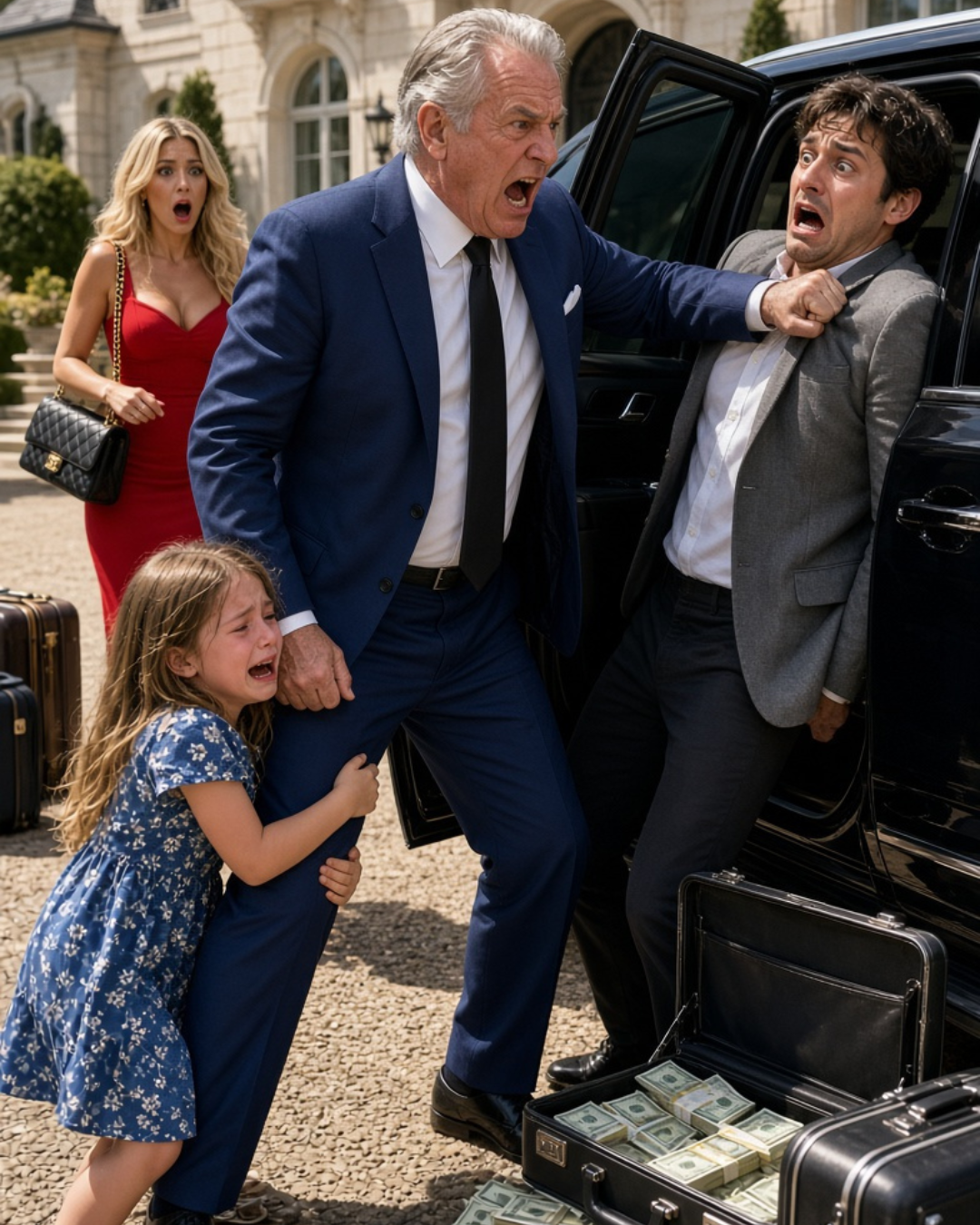
“I can’t give out resident information. You need to leave. Now, or I’m calling the police.”
I almost begged her to call them.
But Emma’s warning stopped me.
Don’t let him see you.
If I created a scene, Brenda might contact Mark. Whatever he had hidden for seven years could disappear before I found the truth.
I allowed them to escort me out.
When I glanced back, the woman was still watching.
Her fingers had stopped tapping.
I barely remember driving home.
Twice, I pulled onto the shoulder because tears blurred the road. At Shelton Ravine, I screamed until my throat hurt.
By nine that evening, Hank was sitting across from me at my kitchen table.
Laura’s bronze urn stood between us.
For seven years, I had dusted it every Sunday. Sometimes I spoke to it.
“Walt,” Hank said carefully, “you’ve been under a lot of strain for a long time. Grief does things. I’ve seen grown men swear they saw their dead wives at the Kroger.”
“She was humming Eleanor’s song, Hank.”
“Lots of people hum.”
“Not that. Nobody hums that.”
I struck the tabletop with my palm.
“And her hands. Her scar. Her eyes. I know my own child.”
Hank remained silent for a moment.
Then he removed his glasses.
“All right. Say it’s her. Then somebody signed a death certificate on a woman who wasn’t dead. That’s not a small mistake. That takes paperwork. That takes people.”
“Then let’s look at the paperwork.”
I brought out a shoebox containing everything from Laura’s funeral: sympathy cards, the funeral program, an insurance letter Mark had briefly shown me, and a copy of the accident report I had never managed to read completely.
Hank examined the report.
“Single-vehicle collision. Driver lost control on the curve, went through the guardrail, rolled into the ravine. Vehicle fire.”
He turned a page.
“Remains recovered at the scene, transported to the county medical examiner. Identification made by personal effects, wedding ring, purse, vehicle registration, and dental comparison conducted by investigator…”
He stopped reading.
“What?”
Hank lowered the paper.
“Investigator D. Stevens.”
I stared at him.
“Stevens,” I said. “Like Mark.”
“Dale Stevens.”
Hank’s expression darkened.
“Walt, I knew Dale. He worked the coroner’s office in this county back then. Death investigator. He’s Mark’s cousin. They grew up together over in Fulton.”
“Why didn’t anybody say anything? About a relative doing the identification?”
“Small county. Short staff. Nobody would’ve thought twice.”
He leaned back.
“But here’s the part that turns my stomach. Two years after your daughter’s accident, Dale Stevens was fired. Quietly. No charges. Rumor around the department was that he’d been falsifying records. Mishandling remains. The county hushed it up because they were terrified of lawsuits.”
I looked at the urn.
It had always seemed too light.
I had convinced myself that was simply how ashes felt.
“Hank,” I whispered, “if that’s not my daughter in there, then who is it?”
Neither of us could answer.
My phone buzzed.
Mark had texted.
Hey Walt. Weird question. Were you in Harlan today? Brenda at a place I volunteer at said an older guy matching your description was asking around. Call me.
I did not call.
At seven the next morning, I replied:
Harlan? Ha. I was home with a stomach bug all weekend. Talk soon.
Then Hank and I returned to Willow Creek.
We waited behind the cedars until the afternoon shift change.
At three, a woman in teal scrubs emerged from a side door and lit a cigarette near the dumpsters. She looked to be in her late fifties, with a gray braid and exhausted eyes.
Hank nodded toward her.
“That one’s been here a while. She’s the one.”
Her name was Teresa Gomez.
She had worked at Willow Creek for eleven years.
Initially, she refused to discuss any residents.
Then I showed her the photograph I always carried: Laura at twenty-eight, laughing on our porch with baby Emma on her hip.
Teresa stared until her cigarette burned almost to her fingers.
“Ay, Dios mío,” she whispered. “Anna.”
“Anna?”
“That’s what we call her. Anna Reyes. That’s the name on her chart.”
She glanced toward the building.
“Not here. There’s a diner off Route 9. Thirty minutes.”
At the diner, Teresa told us what she knew.
Anna Reyes had been admitted seven years earlier, in October, three days after Laura’s funeral.
She had a severe traumatic brain injury, a fractured pelvis, and burns on her left arm.
The paperwork described her as Mark Stevens’s cousin, an out-of-state woman who had lost everything, including identification, in a house fire.
Mark was listed as her legal guardian.
“The nurse manager who admitted her,” Teresa said, “was Vanessa Cole.”
Hank and I exchanged a look.
“Vanessa,” I said. “Blonde? Tall?”
“You know her.”
“She lives with my son-in-law. She’s raising my granddaughter.”
Teresa crossed herself.
Vanessa had left Willow Creek two years earlier. Before that, she had written Anna’s care notes.
According to Teresa, Dr. Pruitt approved whatever the nurse manager submitted, provided the payments continued.
“Anna is on very heavy medication. Sedatives. Antipsychotics. Doses I would never give a woman her size. I questioned it once. Vanessa told me Anna had violent delusions.”
“What kind of delusions?” Hank asked.
Teresa looked directly at me.
“She believes she has a baby daughter named Emma. And that someone took her.”
I stumbled out of the diner.
In the parking lot, I held a lamppost and struggled to breathe.
When I returned, Teresa had tears in her eyes.
She explained that Willow Creek reduced Anna’s medication every spring before the state inspection.
Whenever the doses decreased, Anna became more communicative.
Last April, she had spoken about a store.
And strawberries.
“I wrote it down. I’ve been writing everything down for six years. In a notebook at home. Because something always felt wrong.”
“Can I see her?” I begged. “Please. Just for a minute.”
Teresa hesitated.
“Tomorrow. My night shift. Ten o’clock. Use the laundry entrance.”
The following night, Teresa led me through a dim corridor smelling of bleach and overcooked green beans.
Room 14.
A narrow bed.
A window that would not open.
A plastic cup of water.
Laura lay on her side, awake, staring at the wall.
I sat beside her.
“Hi, sweetheart,” I whispered. “It’s Dad.”
She did not respond.
From my coat, I removed a small paper cup of strawberry swirl ice cream from Miller’s Corner Market.
It had been Laura’s favorite long before Emma was born.
I placed it on the nightstand and lifted the lid.
Slowly, her head turned.
Her eyes moved from the ice cream to my hands.
My old, scarred grocer’s hands.
Her lips trembled.
“…Miller’s…”
I held my breath.
“…Corner…”
Tears streamed down my face.
“That’s right, baby. Miller’s Corner Market. You used to stock the candy rack. You used to—”
Her fingers touched my wrist.
Thumb. Ring. Middle. Thumb.
Then Teresa’s phone buzzed.
She read the message, and her face went pale.
“That was Brenda,” she whispered. “Mr. Stevens just called the front desk. He’s transferring Anna out. Tomorrow morning. Six a.m. A private transport is coming to take her to a facility across the state line.”
She stared at me.
“Someone told him you were here.”
We rushed toward town after midnight.
Hank finally broke the silence.
“It was me, Walt.”
I turned toward him.
“Not on purpose.”
He explained that he had contacted the county records office the previous week about Dale Stevens’s dismissal.
The clerk he had spoken to was Dale’s former sister-in-law.
He had only just discovered the connection.
“Small towns,” Hank muttered. “I’m sorry. Thirty years a cop, and I tipped him like a rookie.”
“It doesn’t matter now. What matters is six a.m.”
“We go to the state police. Tonight.”
At one in the morning, we entered the state police barracks on Route 33.
The desk sergeant listened to my story with obvious skepticism.
A grieving father claiming his supposedly dead daughter was alive in a nursing facility under another name.
I could see him deciding I was confused.
Then Hank placed his retired badge on the counter.
“Retired deputy, Brandt County. Get me whoever’s on call from investigations. And tell them it’s about falsified death records.”
Detective Rosa Alvarez arrived at 2:15 a.m., hair still damp from a shower, carrying two travel mugs of coffee.
She listened carefully.
I told her about the $280,000, Emma’s warning, the scar, Eleanor’s lullaby, Dale Stevens, Vanessa Cole, and Teresa’s six years of notes.
When I finished, Alvarez tapped her pen.
“Mr. Miller, I want to believe you. But a judge isn’t going to sign a warrant at three in the morning because a grieving father recognized a hum.”
“Then what do I do? Watch them drive her away?”
She considered the situation.
“A transport across state lines of a patient whose guardianship might be fraudulent, while there’s an active complaint pending…”
She stood and grabbed her jacket.
“That I can stop. Temporarily. A welfare check. If she’s not who the paperwork says, the paperwork can’t move her.”
At 5:40 a.m., we waited near Willow Creek’s entrance.
Alvarez’s unmarked sedan.
A county deputy’s cruiser.
Hank’s Buick.
I sat trembling in the passenger seat.
At 5:52, an unmarked white medical van approached.
The driver stopped when he saw the cruiser blocking the gate.
Alvarez spoke to him.
He raised his hands in frustration and reached for his phone.
Inside the facility, Teresa had alerted Dr. Pruitt that a state detective was waiting outside.
Pruitt appeared in a bathrobe, complaining about patient privacy and lawsuits.
Then he saw Alvarez’s badge.
His protests stopped.
At 6:30, two legitimate paramedics brought Laura out on a stretcher.
She was being transferred to the regional medical center for examination and DNA testing.
As the stretcher passed, Laura turned her head toward me.
“…Dad…”
The ambulance doors closed.
I sank onto the curb.
For the first time in seven years, I allowed myself to hope.
Alvarez crouched beside me.
“DNA will take forty-eight to seventy-two hours. Until then, I need you to go home and act normal. If Mark Stevens is what you think he is, he’s going to panic. People who panic do stupid things.”
Hank drove me home.
I should have gone directly to Emma’s school.
Instead, I showered, changed clothes, and sat trying to steady my hands around a cup of coffee.
At 11:47, my phone rang.
Mrs. Patterson, Emma’s second-grade teacher, sounded frightened.
“Mr. Miller? I’m sorry to bother you. Emma’s father came and signed her out about an hour ago. Said it was a family emergency. I just…”
She hesitated.
“I just wanted to check, because she was crying. She didn’t want to go with him. And she kept saying your name.”
Mark had taken Emma. And nobody knew where he was going.
PART 3
By one o’clock, Detective Alvarez had issued an alert for Mark’s silver pickup.
By two, deputies had searched his home on Linden Street.
Closets had been partly emptied.
The gun safe stood open.
Every weapon was gone.
The boat remained in the driveway.
Vanessa Cole had disappeared too.
I paced the back office at Miller’s Corner Market while Daisy operated the register, occasionally looking toward me with red eyes.
Hank sat beside my desk, listening to a police scanner.
“He’s got four hours on us,” he said. “If he’s smart, he’s already over the state line.”
“Mark’s not smart,” I answered. “He’s scared.”
“Scared is worse.”
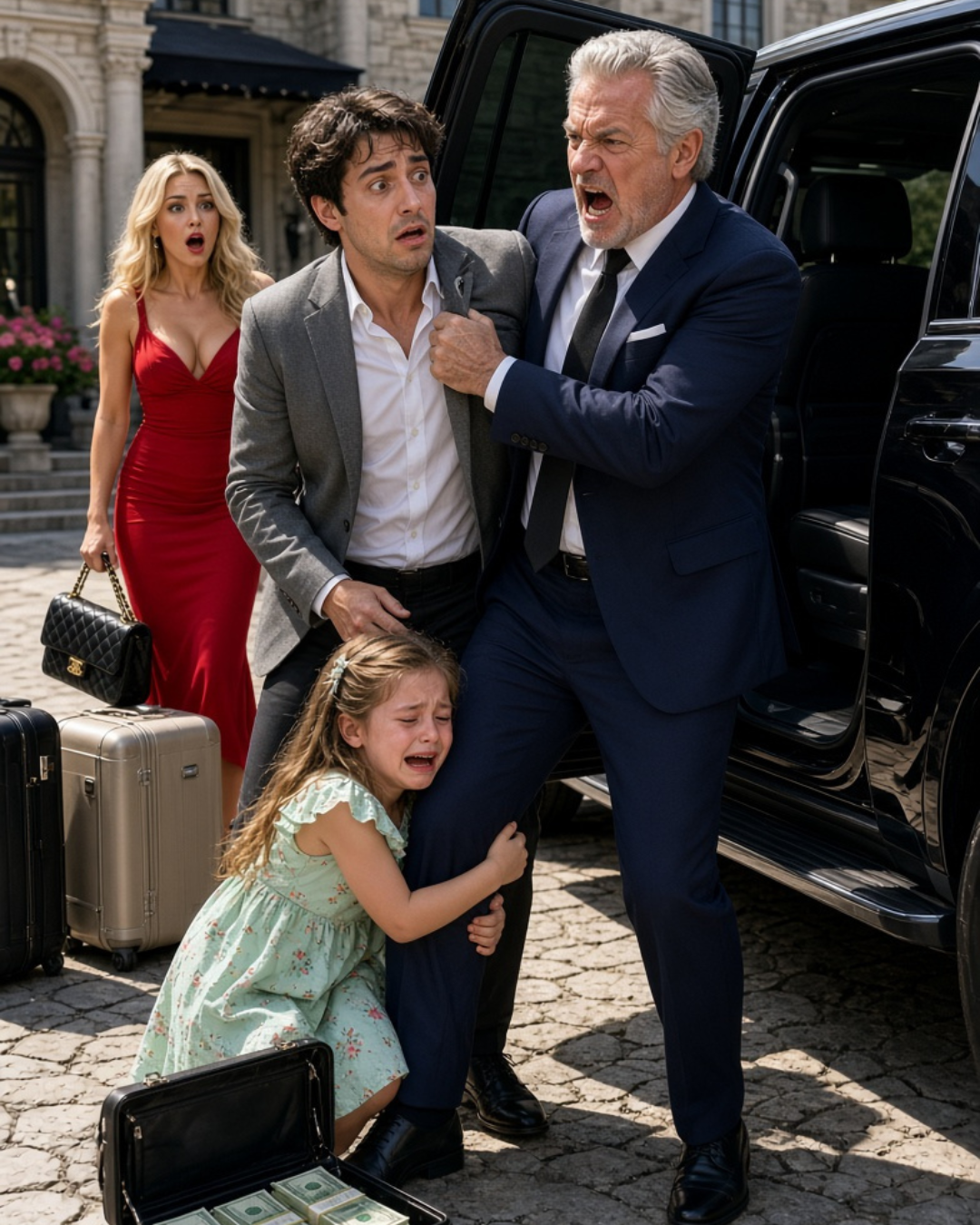
At 4:20, Alvarez called.
“Mr. Miller. Vanessa Cole just walked into a sheriff’s office in Clayton County with a lawyer.”
“Is Emma with her?”
“No. She says she and Mark split up this morning outside a truck stop on I-70. He took Emma. She took the cash.”
Alvarez paused.
“And she wants a deal. She’s offering to tell us everything about the night of the accident.”
“Everything?”
“Mr. Miller,” she said quietly, “according to Ms. Cole, the crash on Highway 24 wasn’t an accident.”
I dropped into my chair.
Over the following hour, Alvarez relayed Vanessa’s statement.
Seven years earlier, Laura had discovered that Mark had forged her signature on two loans against their home to cover gambling debts.
She had also found his messages with Vanessa.
That evening, Laura left baby Emma at our house.
“Dad, whatever happens, make sure Emma is safe.”
Then she returned home, confronted Mark, and told him she was leaving and seeking full custody.
She drove away.
Mark followed in his pickup.
Near Shelton Ravine, he drove close behind her, flashing his headlights and demanding that she stop.
When she refused, he struck her rear bumper.
Laura’s car broke through the guardrail and plunged into the ravine.
Mark later insisted he had only intended to force her to pull over.
Perhaps he even believed that.
But what happened next was deliberate.
He climbed into the ravine and pulled Laura from the wreckage.
She was unconscious and bleeding.
Seconds later, the car caught fire.
He could have called 911.
He could have saved her life and told the truth.
Instead, he considered what Laura would reveal if she survived: the forged loans, the affair, the custody battle, and his gambling debts.
There was also a $750,000 life insurance policy he had taken out on her the previous year.
He called Vanessa, who was a nurse.
Then he contacted his cousin Dale, the death investigator on duty at the coroner’s office.
While I listened to Alvarez, the store telephone rang.
Daisy answered.
A moment later, she screamed.
“MR. MILLER! It’s Emma! It’s Emma on line one!”
I rushed from the office.
“Emma? Emma, baby, it’s Grandpa.”
Her voice was frightened and hurried.
“Grandpa, I’m in the bathroom at a gas station. Dad’s paying for gas. I took his phone out of the cup holder. I called the store number. The one from the song you taught me.”
Years earlier, I had invented a silly jingle to help her remember the store’s number.
Five-five-five, Miller’s alive, two-oh-eight-oh, come say hello.
I never imagined she would need it to save herself.
“Smart girl. So smart. Where are you, sweetheart? Can you see a sign?”
“It’s a big orange ball. It says Gulf. And there’s a motel across the street with a cowboy on it.”
Hank was already relaying the information to Alvarez.
“Emma, listen to me. Stay in that bathroom. Lock the door. Don’t come out until a police officer knocks and says the word strawberry. Okay? Only strawberry.”
“Okay.”
She paused.
“Grandpa? Did you go to the lady place?”
My throat tightened.
“I did, baby.”
“Is she Mommy?”
Daisy covered her mouth.
“I think she is, sweetheart. I think she really is.”
The call disconnected.
Police identified the Gulf station in Vandalia, sixty miles east, opposite the Lone Star Motor Inn and its neon cowboy sign.
Two highway patrol units arrived eleven minutes later.
They found Mark pounding on the locked restroom door, begging Emma to come out.
When officers drew their weapons, he dropped to his knees on the oily concrete and surrendered.
A female trooper approached the bathroom.
“Strawberry.”
The lock clicked.
Three hours later, a patrol car stopped outside Miller’s Corner Market.
Emma emerged wearing a trooper’s jacket that reached her knees.
She ran into my arms.
I held her on the sidewalk in front of the store my father built.
For a long time, I could not let go.
That night, Emma slept in Laura’s old bedroom.
Then Alvarez called again.
“The DNA is back early. I pushed the lab.”
She paused.
“It’s her, Mr. Miller. The woman at Willow Creek is Laura Miller Stevens.”
I pressed my fist against my mouth.
“There’s something else,” Alvarez continued. “We pulled the county’s cremation records from that October. And the remains Dale Stevens processed under your daughter’s name…”
Her voice became careful.
“They were human, Mr. Miller. Somebody’s in that urn. And we don’t know who.”
The next morning, the doctors began reducing Laura’s sedatives.
Dr. Priya Raman, her neurologist, explained that Laura had suffered a genuine severe brain injury.
Some effects were permanent.
Her left side was weak, and her speech might never completely recover.
But much of her confusion and inability to communicate appeared to have been caused by years of unnecessary medication.
“She has been kept in a fog. As the medication clears, I expect we’ll see her come back. Not all at once. In pieces.”
“How long?”
“Weeks. Maybe months.”
Dr. Raman smiled sadly.
“Mr. Miller, she’s already asking for you.”
During the first week, Laura slept most of the time.
Whenever she woke, she found my hand.
Thumb. Ring. Middle. Thumb.
During the second week, she began speaking.
Her sentences were slow and broken, sometimes clouded by the medication.
But fragments of memory returned.
“Dark,” she said one afternoon. “Lights behind me. Bright. So bright.”
“Headlights?”
“Mark’s truck.”
Her face crumpled.
“He hit my car, Dad. I saw his face in the mirror.”
I held her while she cried.
Something inside me that had remained shattered for seven years began slowly coming together.
On the fourteenth day, Dr. Raman said Laura was ready to see Emma.
My granddaughter had asked every morning.
Can I see Mommy today?
Each day I had promised her it would be soon.
Now I walked with her down the hospital corridor.
She wore new sneakers, white with purple laces, in the correct size.
Outside Laura’s room, she stopped.
“Grandpa, what if she doesn’t know me? I was a baby.”
I knelt beside her.
“Emma, your mama has been asking for you for seven years. They told her she was sick for asking. She never stopped.”
Emma drew a deep breath and opened the door.
Laura sat upright in bed, wearing a pale yellow sweater I had brought from home.
She had been watching the doorway for an hour.
For a moment, mother and daughter stared at each other.
Then Laura lifted her arms.
Her left arm trembled, but she held it out.
“Emmy,” she whispered. “My Emmy.”
It was the same name Emma had heard in the Willow Creek garden and carried in frightened silence for months.
Emma climbed carefully onto the bed and rested her head against her mother’s chest.
Laura wrapped both arms around her daughter.
Her whole body shook.
“I found you,” Emma whispered into the yellow sweater. “I found you, Mommy.”
I stepped into the hallway and gently closed the door.
Teresa Gomez stood nearby.
She had driven over on her day off.
Without speaking, she handed me a tissue and took another for herself.
That evening, after Emma left with Daisy’s mother, Laura and I sat together.
She asked about Miller’s Corner Market.
About the oak tree.
Then she asked the question I had dreaded.
“Where’s Mom?”
I told her Eleanor had died six months after the supposed accident.
Laura turned toward the window.
For a long time, she said nothing.
Then she whispered, “She knew.”
“What?”
“Mom came, Dad. To Willow Creek. Once. I think. I don’t know when. It’s all fog.”
She closed her eyes.
“But I remember a woman crying. Holding my hand. Saying my name. And then nurses pulled her away. I thought it was a dream.”
That night, I opened the cedar chest at the foot of Eleanor’s side of our bed.
Her belongings were still folded exactly as she had left them.
At the bottom, wrapped in a silk scarf, lay her journal.
The final entries were written in an unsteady hand.
I don’t care what they say. A mother knows. I called the coroner’s office again to ask for DNA. The investigator, Mark’s cousin, was so rude. Said the case was closed.
On the last page, Eleanor had written:
Today I followed Mark to a place in Harlan. I saw her. Walt, I saw our girl through a window. They wouldn’t let me in. Mark found me in the parking lot and told me I was losing my mind, that if I told you, it would kill you, that you’d never survive losing her twice. He said he would take Emma far away where we’d never see her again. I don’t know what’s real anymore. I’m so tired. I’ll tell Walt tomorrow. I’ll find the words tomorrow.
Eleanor never found that tomorrow.
Her heart stopped two nights later.
I sat on our bedroom floor holding her journal until sunrise.
At seven, Alvarez called.
“Mr. Miller, Mark Stevens is being arraigned this morning. He’s pleading not guilty to everything. And his attorney has just filed an emergency motion.”
Her voice hardened.
“As Emma’s legal father, he’s demanding she be placed with his mother in Fulton until trial. And he’s claiming your daughter’s testimony is worthless. That a brain-damaged woman medicated for seven years can’t be trusted to remember anything.”
I stared at Eleanor’s final words.
Mark had stolen seven years from Laura.
He had frightened my wife into silence.
He had taken my granddaughter from school.
And now, even from a jail cell, he was trying to take Emma away again.
PART 4
Nine days later, we entered family court for Emma’s custody hearing.
Mark’s mother, Judith Stevens, sat behind the defense table in a navy suit, her lips pressed together.
I had eaten Thanksgiving dinner in her home. She had held my hand at Laura’s funeral.
Now she would not look at me.
Mark appeared by video from county jail, wearing orange prison clothes.
He was unshaven and hollow-eyed.
His attorney, Garrett Lyle, a polished lawyer from Columbus, addressed Judge Harold Whitfield.
“Your Honor, my client has been Emma’s sole parent for seven years. Whatever allegations exist, he has not been convicted of anything. Mr. Miller is a seventy-one-year-old widower. And the mother,” he paused delicately, “is a woman with a documented traumatic brain injury and a long history of psychiatric medication. Her memories are clinically unreliable. She cannot be trusted with this child.”
Beside me, Gloria Bennett placed a hand on my arm.
Gloria was our attorney, a sharp-tongued woman who had once coached Laura’s high school debate team.
“Wait,” she whispered.
Judge Whitfield looked toward her.
“Ms. Bennett?”
Gloria stood.
“Your Honor, Mr. Lyle wants to talk about clinical reliability. Let’s talk about it. Laura Miller was ‘psychiatrically medicated’ because Vanessa Cole wrote in her chart that she suffered from a delusion. The delusion was that she had a daughter named Emma.”
She let the words settle.
“That’s not a delusion. That’s the child sitting outside that door.”
Gloria presented a thick spiral notebook.
“This is six years of contemporaneous notes kept by Teresa Gomez, a licensed practical nurse at Willow Creek. Every dose. Every time the patient asked for her baby. Every time the patient said the words ‘Miller’s Corner’ or ‘Highway 24’ or ‘Mark’s truck.’ Written long before anyone knew who she was.”
Garrett Lyle began objecting.
Gloria raised her hand.
“And one more item.”
The courtroom door opened.
A deputy escorted Dale Stevens inside.
He wore a cheap suit and looked like a man who had not slept properly in weeks.
Mark’s face went white on the video screen.
Dale had been arrested four days earlier.
Within six hours, he had requested a plea agreement.
Gloria did not call him to testify at the custody hearing. His testimony would come during the criminal trial.
Instead, she submitted his sworn statement and requested that the clerk play Exhibit 14.
Dale had kept a voicemail for seven years as insurance against Mark.
It was recorded at 11:52 p.m. on the night of Laura’s crash.
Mark’s voice filled the courtroom.
Wind roared behind him.
Flames crackled.
“Dale, pick up. Pick up. She’s alive, man. I pulled her out. She’s breathing. I didn’t mean it, I swear to God, I just wanted her to stop. But if she wakes up, she’ll tell everyone. I’ll lose everything. Emma. The house. Everything. You work the night shift. You’ve got access to the morgue. You’ve got unclaimed bodies. Please, Dale. Help me make her disappear without… without hurting her. I can’t hurt her. I just need her gone. Call me back.”
The recording ended.
The courtroom was utterly silent.
Judith Stevens made a broken sound and covered her face.
Mark stared at the camera, his lips moving without audible words.
Judge Whitfield removed his glasses.
“Motion denied,” he said. “Temporary custody of Emma Stevens is granted to her grandfather, Walter Miller, pending the restoration of her mother’s legal status and full parental rights. Supervised visitation for the respondent is suspended indefinitely.”
He looked directly at Mark’s image.
“Mr. Stevens, I’ve been on this bench nineteen years. I hope I never hear anything like that again.”
In the hallway, Judith approached me.
Her hands were trembling.
“Walter. I didn’t know. As God is my witness, I didn’t know.”
“I believe you, Judith.”
“Every Christmas he told me Laura’s parents had turned their backs on him. That you blamed him for the accident.”
Tears filled her eyes.
“He used me. He used all of us.”
I held her hand.
Whatever Mark had done, Judith had lost something too.
Two weeks later, the mystery of the urn was finally solved.
A new county medical examiner arranged DNA testing on the cremated remains Dale had falsely identified as Laura.
They matched a missing-person report filed eight years earlier in Kentucky.
The woman’s name was Corinne Walsh.
She had been thirty-four, struggled with addiction, and lost contact with her family.
She died alone from an overdose in a motel in our county.
Her body remained unclaimed at the county morgue for three weeks.
Dale Stevens had signed it out under Laura’s name.
Corinne’s mother, Ruth Walsh, had searched for her daughter for eight years.
I drove the urn to Bowling Green myself.
Ruth was seventy-four, small and white-haired, living in a brick house with wind chimes on the porch.
When I placed the urn in her hands, she pressed it to her chest and rocked gently.
“Every morning, I dusted that urn,” I told her. “Every Sunday, I talked to it. I told it about my store, my granddaughter, the weather. I’m sorry it wasn’t your girl’s name I said. But she wasn’t alone, Mrs. Walsh. For seven years, somebody loved her every day.”
Tears ran down Ruth’s cheeks.
“Thank you for keeping her warm.”
On my drive home, Gloria sent me a message.
Criminal trial starts Monday. One problem. Mark’s lawyer has filed a motion to call Emma as a defense witness.
But Emma never had to testify.
Judge Margaret Okafor summoned both attorneys into chambers after reviewing the motion.
According to Gloria, she listened for two minutes before saying:
“Mr. Lyle, you want to put a seven-year-old on the stand to cross-examine her about the night her father kidnapped her from school? Not in my courtroom.”
The motion was denied.
Mark Stevens’s criminal trial lasted eleven days.
Vanessa Cole testified first.
She wore a gray sweater, her blonde hair pulled back, and spoke without much emotion.
She had pleaded guilty to fraud, false imprisonment, and reckless endangerment and would serve nine years.
She described the crash, the fraudulent admission documents, the years of medication, and the way Mark’s gambling had worsened.
During the final two years, Vanessa had pressured him to “make Anna go away permanently.”
When the prosecutor asked why Mark had not done it, Vanessa shrugged.
“Mark’s a coward. He couldn’t do anything himself. That’s why he needed everybody else.”
Dale Stevens testified next.
Then Dr. Lyle Pruitt, who had surrendered his medical license.
He confirmed that Mark delivered $3,500 in cash every first Sunday of the month, in a manila envelope.
He had done so for seven years.
The prosecutor displayed my bank records beside Willow Creek’s payment ledger.
“Mr. Miller wired the defendant forty thousand dollars every January. The defendant paid Willow Creek forty-two thousand a year to keep his wife sedated, under a false name, ninety miles from her own child.”
She faced the jury.
“He used her father’s love to pay for her prison.”
I forced myself to look at Mark.
He stared down at the table.
Teresa Gomez testified.
Brenda testified.
Detective Alvarez testified.
Hank Dawson testified too.
When Garrett Lyle tried to portray Hank as a confused retired deputy with a personal grudge, Hank leaned toward the microphone.
“Counselor, I may be old, but I can still recognize a liar. I’m looking at two of them right now.”
Judge Okafor struck the remark from the record.
Three jurors smiled anyway.
On the ninth day, Laura took the witness stand.
She walked slowly with a cane, dragging her left foot slightly.
She wore her pale yellow sweater.
Her hair had grown longer, and Daisy had trimmed it into a soft bob.
For weeks, Mark’s lawyer had described her as unreliable, damaged, and confused.
Laura spoke for two hours.
Sometimes she paused to find the right word.
Her speech remained slow.
But she never lost her story.
She described discovering the forged loans, reading Vanessa’s messages, confronting Mark in their kitchen, and driving away.
She remembered the headlights in her rearview mirror.
Mark’s face illuminated by his dashboard.
The impact of his truck against her bumper.
The terrible sound of the guardrail breaking.
Then she revealed something nobody had heard before.
“I woke up once,” she said quietly. “In the ravine. Before Willow Creek. I was lying in the grass, and the car was burning, and Mark was standing over me on the phone. I tried to say his name. He looked down at me.”
Her voice trembled, then steadied.
“He said, ‘Go back to sleep, Laura.’ And then he turned away and kept talking.”
Silence filled the courtroom.
Garrett Lyle stood for cross-examination.
He looked at Laura.
Then at the jury.
Finally, he said:
“No questions, Your Honor.”
He sat down.
The jury deliberated for less than four hours.
Guilty of attempted murder.
Guilty of kidnapping Laura and Emma.
Guilty of insurance fraud, wire fraud, forgery, and conspiracy to falsify death records.
One month later, Judge Okafor sentenced Mark Stevens to forty-two years in prison.
Before deputies led him away, Mark requested permission to speak.
He turned toward Laura and me.
“Laura, I never stopped… I visited every month. I could have… I didn’t…”
Laura rose, leaning against her cane.
“You visited your crime, Mark,” she said. “You didn’t visit me. You never once brought me my daughter.”
Mark had no answer.
The deputies took him away.
It took another four months to have Laura legally declared alive again.
There was paperwork for that, apparently.
Gloria handled every document without charging us, though she complained about each page.
The insurance company, facing its own fraud lawsuit, quietly agreed to a settlement.
Most of the money went into a trust for Emma.
Laura insisted that the remainder support two causes.
The first was a scholarship for nursing students in Teresa Gomez’s name.
The second was a fund to help families recover and bring home unclaimed loved ones.
Ruth Walsh joined its board.
Laura returned home in the spring.
She took over the office at Miller’s Corner Market.
Her left hand would probably never play piano scales again, but her right hand managed the bookkeeping faster than mine ever had.
She attended physical therapy twice a week and speech therapy every Thursday.
She also laughed more often than almost anyone I knew, despite having every reason to be bitter.
Emma began third grade that fall, right on schedule.
Her shoes fit.
On the first Saturday in May, almost exactly a year after Emma first saw the woman in the Willow Creek garden, the three of us visited Eleanor’s grave.
I had struggled to remain there for long ever since my wife died.
But that day, Laura sat on the bench beside her mother’s headstone.
She placed Eleanor’s favorite white peonies against the granite.
Then she began humming.
Six notes.
Rising and falling like breathing.
Emma climbed onto the bench and joined her.
Laura had taught her the melody that winter.
I stood behind them, thinking about Eleanor’s final journal entry.
I’ll find the words tomorrow.
“You were right, Ellie,” I whispered. “A mother knows. I’m sorry I didn’t.”
Afterward, we drove to the ice cream stand on Maple Street.
We sat beneath our familiar oak tree.
Three strawberry swirls.
Emma talked excitedly about her science project.
Laura listened with her chin resting on her hand, watching her daughter as though she still could not believe they were together.
Perhaps she never would.
Perhaps that was what happened when life returned something you thought you had lost forever.
You never took it for granted again.
People sometimes ask whether I feel foolish.
Two hundred and eighty thousand dollars.
Seven years.
Not one receipt.
Not one difficult question.
I tell them the truth.
I did not send that money because I was foolish.
I sent it because I loved Emma and trusted that her father loved her too.
Love itself was not the mistake.
But I learned that love without courage is incomplete.
Real love does more than give.
It pays attention.
It asks questions that might hurt.
It follows the truth, even when that truth leads down a highway you swore you would never travel again.
My granddaughter taught me that.
She was seven years old, frightened of her father, and wearing shoes that hurt her feet.
Yet she found the courage to speak to the one person she trusted.
Family is not determined by who sends the checks or whose name appears on legal documents.
Family is determined by who refuses to stop looking for you.
Laura reached across the bench and took my hand.
Thumb.
Ring.
Middle.
Thumb.
“Dad,” she said, “you kept your promise. Emma is safe.”
I looked at Emma, who had strawberry ice cream on her chin.
“No, sweetheart,” I said. “She kept us both safe.”
Emma grinned.
“Can we come back next Saturday?”
Laura smiled at her daughter.
“Every Saturday,” she said. “For the rest of our lives.”
THE END
