

PART 1
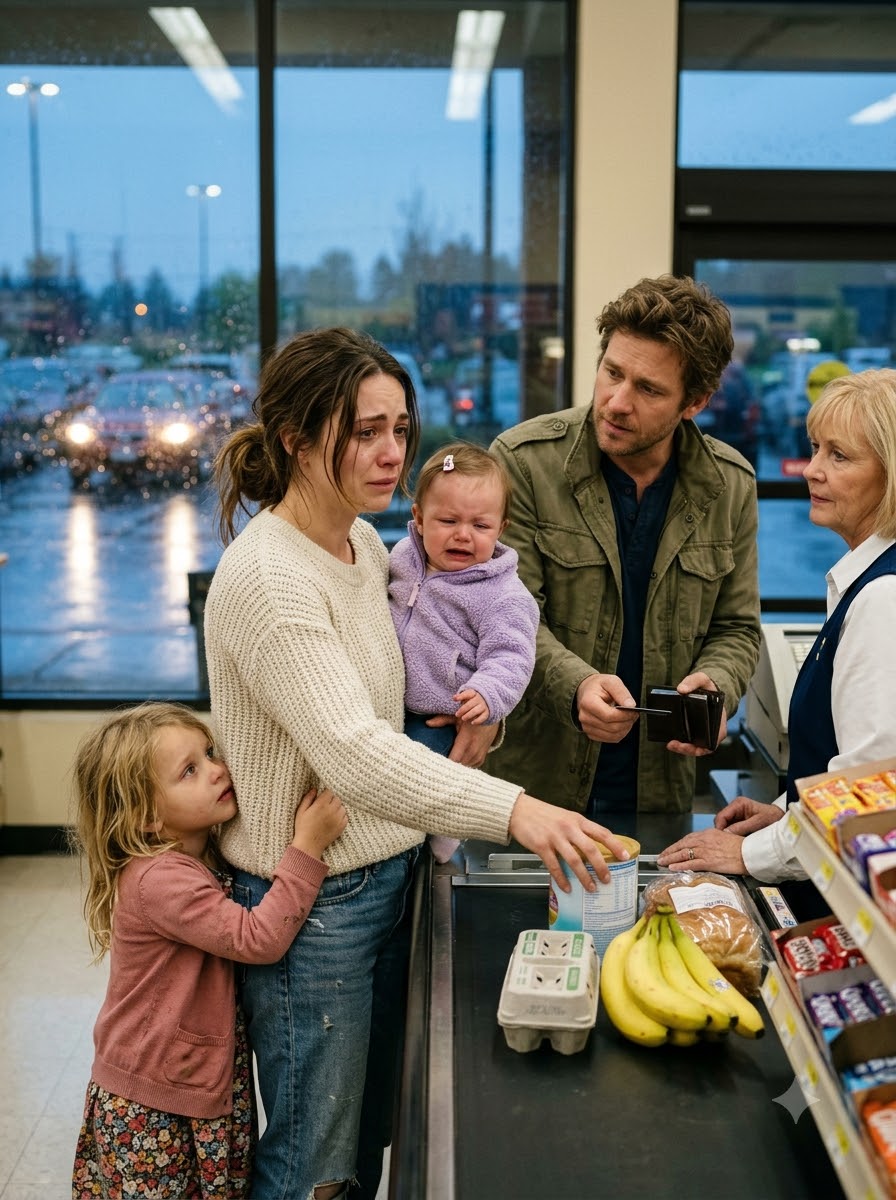
I stood at the supermarket checkout holding my hungry five-month-old daughter when the cashier informed me that my payment had been declined. My three-year-old watched silently as I asked the cashier to put the baby formula back on the shelf. “Mommy, does that mean Rosie won’t have milk tonight?” she whispered. Before I could respond, a stranger wearing an expensive coat stepped forward. What happened next would transform the lives of all four of us.
My name is Claire Whitmore. I was thirty-two, living in a modest apartment on the outskirts of Lancaster, Pennsylvania, and struggling to raise my two young daughters by myself.
Their father had abandoned us while I was pregnant with Rosie, leaving behind unpaid bills and promises he had never intended to honor.
For a while, I managed to support us through my job at a dental practice. But when the office unexpectedly shut down, my only source of income disappeared almost immediately.
I submitted applications for every suitable position I could find. Unfortunately, rent, childcare, and groceries consumed what remained of my savings long before I received a single invitation to interview.
That Thursday evening, my checking account contained exactly $38.62.
At the supermarket, I carefully placed diapers, bread, eggs, several affordable meals, and a container of Rosie’s formula into my cart.
I checked the prices twice, convinced that the money in my account would be enough.
Then the payment terminal flashed red.
“Would you like to try again?” the cashier asked kindly.
I swallowed my humiliation and nodded, even though I already suspected what would happen.
The second attempt failed too.
“Could you take off the formula?” I whispered. “I’ll figure something out tomorrow.”
My oldest daughter, Ellie, gently pulled at my sweater.
“But Rosie needs her milk.”
“I know, sweetheart.”
I forced myself to smile, although my throat felt painfully tight.
Rosie had begun fussing against my shoulder, and the possibility of returning home without enough formula to feed her filled me with panic.
Then a man’s voice sounded behind me.
“Excuse me, ma’am. May I pay for that?”
I turned around.
The stranger appeared to be in his mid-forties. He wore a dark wool coat and held a small shopping basket containing only coffee and a frozen meal.
There was no criticism in his expression, just genuine, quiet concern.
“That’s very generous,” I replied, “but I couldn’t ask you to do that.”
“You’re not asking. I’m offering.”
I glanced helplessly toward the formula.
“Just the one can, please.”
He nodded, then instructed the cashier to ring up all my remaining groceries along with two extra containers of formula.
“Sir, that’s too much,” I protested.
He regarded me with gentle understanding.
“Then consider the extra cans a little breathing room.”
I wanted to insist that he stop, but Rosie was crying more loudly, and Ellie was staring at me with anxious eyes.
At last, I managed to whisper, “Thank you.”
While the cashier bagged our purchases, Ellie walked toward the stranger.
“Are you a helper?”
He crouched until his eyes were level with hers.
“I’m trying to be.”
“I’m Ellie,” she announced. “That’s my mommy, and that’s Rosie. She’s little, so she cries a lot.”
The man chuckled.
“Well, Ellie, I think being little is a pretty good excuse.”
His name was Nathaniel Brooks.
Outside, heavy rain swept across the supermarket parking lot.
When Nathaniel realized we were walking toward the bus stop, he offered to arrange transportation through a professional car service equipped with appropriate child seats.
I was reluctant at first, but after independently checking the arrangements, I agreed.
Nathaniel drove separately and followed us to our apartment so he could help bring the grocery bags upstairs.
Our home was small and furnished almost entirely with secondhand pieces. Even the kitchen table rocked whenever someone leaned too heavily against it.
I couldn’t help noticing the difference between our surroundings and the expensive watch around Nathaniel’s wrist.
Yet he showed no interest in judging where we lived.
Instead, he noticed Ellie’s colorful drawings attached to the refrigerator and asked her about them while I prepared a bottle for Rosie.
When my baby finally began drinking, the relief was so overwhelming that tears slipped down my face.
Embarrassed, I quickly turned away.
Nathaniel respectfully gave me a few moments to compose myself.
Before leaving, he offered me his business card.
It listed him as the owner of a commercial property management business.
“If you’d like someone to review your résumé or help you prepare for an interview, I’d be happy to assist.”
I examined the card with curiosity.
“You own a company, and you were buying a frozen dinner at nine-thirty at night?”
A faint smile appeared on his face.
“I’m much better at managing buildings than managing my evenings.”
There was something unexpectedly sad about his expression, and it prompted me to ask something I normally would have considered too personal.
“Do you live alone?”
His smile slowly disappeared.
“Since my wife passed away nineteen months ago.”
“I’m sorry.”
“Her name was Margaret. We were married fourteen years.”
Neither of us spoke for a few seconds.
Then Nathaniel glanced toward Ellie, who was playing on the rug beside her baby sister.
“My wife always believed that if you had the ability to help someone, you shouldn’t wait for a special occasion.”
I thanked him once more and accompanied him toward the front door.
But just before leaving, Nathaniel opened his briefcase and took out a checkbook.
He filled out a check, carefully tore it free, and handed it to me.
I looked down at the amount.
$12,000.
My breath caught in my throat.
“Nathaniel, I can’t accept this.”
He didn’t appear upset by my reaction.
“I understand. You don’t have to decide right now.”
“Why would you give a stranger twelve thousand dollars?”
He looked toward my daughters.
“Because sometimes what a family needs most isn’t another encouraging word. It’s enough time to get back on its feet.”
I stood staring at the check, barely able to process what was happening.
I had expected sympathy, perhaps a little help buying formula.
Never had I imagined that someone I had just met would offer enough money to free me from the constant fear of what tomorrow might bring.
And I certainly wasn’t prepared for what Nathaniel said afterward.
“Claire, there’s something you should know about why I was in that grocery store tonight.”Nathaniel remained in my apartment doorway, his briefcase in hand, while I stood holding the $12,000 check with trembling fingers.
“There’s something you should know about why I was in that grocery store tonight,” he said.
I looked up at him, uncertain what he meant.
“All right.”
He briefly glanced toward my daughters before speaking more quietly.
“Nineteen months ago, my wife died. Since then, I’ve spent almost every evening at work because I can’t stand going home to an empty house.”
His confession took me completely by surprise.
Nathaniel explained that he and Margaret had spent fourteen years creating a life together.
They owned a beautiful house outside Lancaster, traveled whenever his business schedule permitted, and frequently discussed the possibility of becoming parents.
But they had always found reasons to postpone starting a family.
Initially, they wanted his company to become financially secure.
Then they decided to renovate their home.
Afterward, another obligation always seemed to arise, demanding their attention before they could move forward.
“And suddenly,” he said, “we didn’t have any more time.”
I could see how hard he was struggling to keep his emotions under control.
“I’m so sorry, Nathaniel.”
He gave a small nod.
“Tonight, I was driving home when I realized I hadn’t spoken to anyone about anything personal all day. I stopped at the grocery store because I couldn’t face another evening sitting alone at my kitchen table.”
His eyes moved toward Ellie, who was quietly lining up her stuffed animals beside Rosie’s blanket.
“Then I heard your daughter asking whether her baby sister would have milk.”
His voice became softer.
“I couldn’t ignore that.”
I lowered my gaze to the check once more.
“Helping us with groceries was already more than enough.”
“I know. And if accepting anything else makes you uncomfortable, I understand.”
He wasn’t asking for praise or attempting to make himself appear heroic.
Somehow, that made his generosity even more difficult to turn down.
After a moment, I set the check on the kitchen counter.
“I need some time to think about this.”
“Of course.”
As Nathaniel prepared to leave, Ellie hurried toward him.
“Bye, Mr. Helper!”
He laughed, and for a brief moment, the grief that had shadowed his expression seemed to lift.
Three days afterward, I sent Nathaniel a message.
I explained that I had decided to accept his financial help. I had used part of the money to settle two months of overdue rent, bought the necessities my daughters needed, and saved the remainder to support us while I continued looking for employment.
Then I made him a promise.
I won’t waste the opportunity you’ve given us.
His response appeared almost instantly.
I never thought you would. How is the job search going?
I admitted that an interview had been scheduled, but I was anxious about how to explain the interruption in my employment history.
Nathaniel suggested that we meet at the public library so he could help improve my résumé.
The following afternoon, I arrived with Ellie, Rosie, and a folder containing copies of every job application I had submitted.
For almost two hours, Nathaniel questioned me about my responsibilities at the dental practice.
“You supervised the front desk?”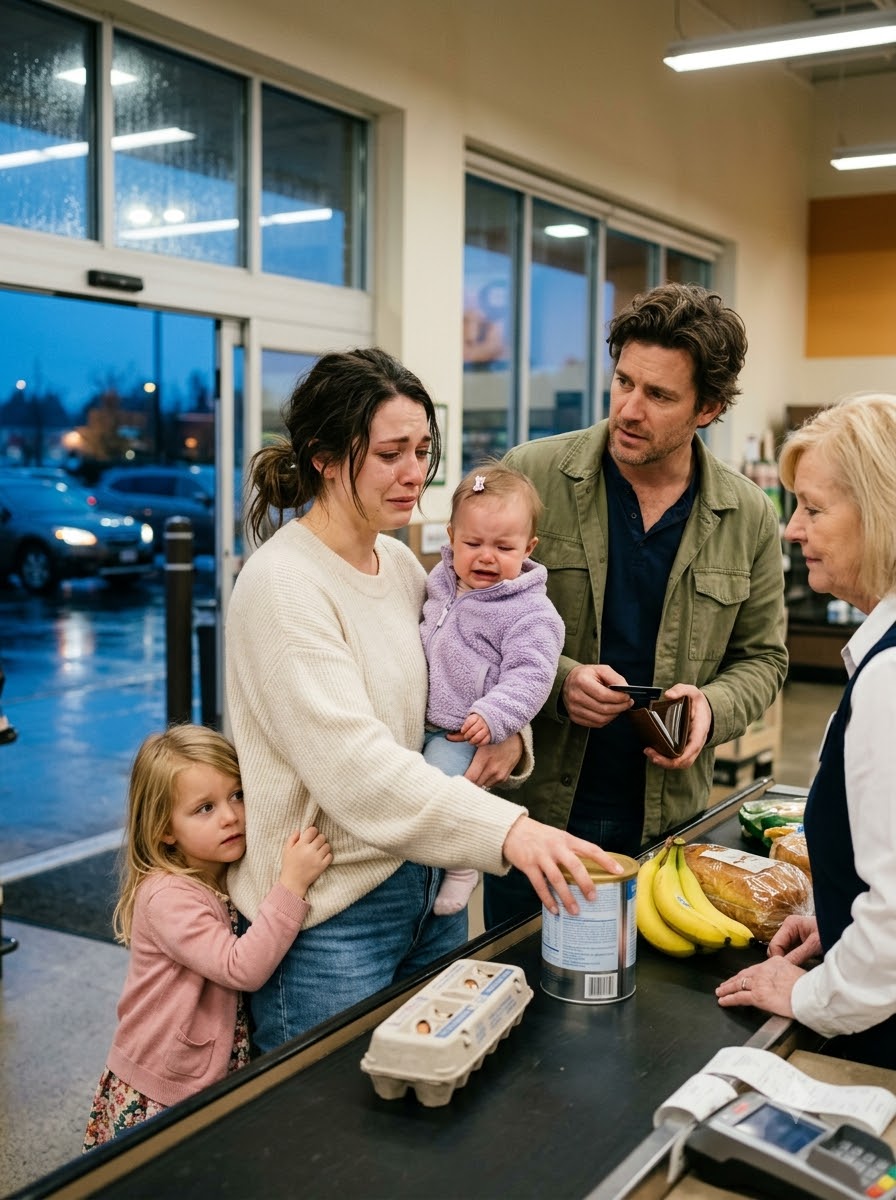
“Yes.”
“Managed appointment schedules and coordinated with suppliers?”
“Every week.”
“Handled patient complaints?”
“More often than I’d like to remember.”
He placed his pen on the table.
“Claire, you’ve been doing administrative management for years. Why does your résumé make it sound as though you only answered telephones?”
I looked at him in surprise.
“Because that was my job title.”
“Your job title isn’t the same as your experience.”
For the first time in several months, I began to believe that I possessed skills an employer might genuinely value.
Together, we rewrote my résumé, rehearsed answers to common interview questions, and considered positions that would provide reliable working hours.
Nathaniel never offered to employ me himself or promised to pressure anyone into giving me preferential treatment.
PART 2
Instead, he helped me understand the professional experience I had already accumulated.
Three weeks later, a medical equipment company offered me a position as an office coordinator.
The pay exceeded what I had expected, and the schedule made it possible to arrange childcare for both Ellie and Rosie.
Nathaniel was the first person I called.
“I got the job!”
He remained silent for a moment.
Then he laughed with delight.
“Claire, that’s wonderful!”
I found myself laughing and crying simultaneously.
“Thank you for believing in me.”
“You earned this. Don’t forget that.”
As the following weeks passed, Nathaniel and I began communicating more regularly.
Sometimes I sent him pictures of Rosie as she learned to sit without support.
Other times, Ellie insisted on recording voice messages describing her latest drawings or the things she’d done at daycare.
Nathaniel always made time to reply.
One Saturday, I invited him to our apartment for lunch as a modest gesture of appreciation.
“Nothing fancy,” I warned. “Just homemade chicken and dumplings.”
“That sounds better than anything I’ve eaten all week.”
When he arrived, he was carrying two beautifully wrapped presents.
I folded my arms and gave him a disapproving look.
“Nathaniel, I invited you to lunch, not to sponsor Christmas.”
He seemed genuinely sheepish.
“I may have overdone it.”
Ellie appeared from behind me.
“I like presents.”
All three of us burst into laughter.
Nathaniel ended up spending almost four hours with us that afternoon.
He listened patiently to Ellie’s endless stories, entertained Rosie by pretending her little plastic spoon was a microphone, and even helped wash the dishes without waiting to be asked.
When he eventually said goodbye, the apartment seemed unexpectedly silent.
And that was when I realized something had changed.
For an entire afternoon, I had enjoyed another person’s company without constantly calculating bills, worrying about expenses, or wondering how I would survive the next month. A few days afterward, Nathaniel invited the girls and me to have dinner at his home.
My first instinct was to decline.
A man as wealthy as Nathaniel belonged to a world completely different from mine. I worried that Ellie and Rosie might become emotionally attached to someone who could eventually grow tired of our simple, everyday lives.
But he sounded so genuinely happy when I accepted his invitation that I found myself smiling.
The following Saturday, we drove through an elegant neighborhood lined with beautiful houses before arriving at a large stone residence surrounded by towering maple trees.
Nathaniel opened the front door before we had even reached the entrance steps.
He welcomed Ellie and Rosie affectionately, then moved aside so we could come inside.
The house was stunning, with soaring ceilings, gleaming hardwood floors, and enormous windows overlooking a beautifully maintained garden.
Yet something about the place seemed incomplete.
There were no scattered toys, no photographs of children, and hardly any evidence of the ordinary routines that make a house feel like a family home.
Then Ellie spotted a framed photograph resting on the fireplace mantel.
She pointed toward the smiling woman standing beside Nathaniel.
“Is that your wife?”
He nodded gently.
“That’s Margaret.”
Ellie examined the photograph for a few seconds.
“She looks nice.”
“She was.”
My daughter reached for his hand.
“Do you miss her?”
Nathaniel lowered his eyes toward her, and tears began gathering in them.
“Every day.”
Ellie gently tightened her grip around his fingers.
Then she asked something neither Nathaniel nor I could have anticipated.
“Does that mean nobody hugs you when you’re sad?”
“Does that mean nobody hugs you when you’re sad?”
My three-year-old asked the question with such innocent sincerity that Nathaniel Brooks appeared completely speechless.
We stood together in the living room of his magnificent Pennsylvania residence, looking at a framed picture of his deceased wife, Margaret.
For nineteen months, Nathaniel had been living by himself in that enormous home. Suddenly, I understood why he had chosen to spend so many hours at work rather than return to it.
He slowly knelt in front of Ellie.
“Well, Ellie, I suppose I haven’t had many hugs lately.”
My daughter thought carefully about his response.
Then, without hesitation, she slipped her small arms around his neck.
“You can have one of mine.”
Nathaniel closed his eyes.
For several long seconds, he simply embraced her.
I turned my face away, struggling to keep my tears from falling.
When Ellie finally stepped back, she gently patted his shoulder.
“There. Now you don’t have to be sad all the time.”
Nathaniel gave a quiet laugh.
“Thank you, sweetheart.”
That evening, we shared dinner in an enormous dining room with enough seating for twelve guests.
Nathaniel had arranged for a nearby restaurant to prepare the meal, admitting that his own cooking abilities rarely went beyond making scrambled eggs.
Ellie insisted on sitting next to him.
Meanwhile, Rosie spent much of the meal repeatedly dropping her spoon and bursting into delighted laughter whenever Nathaniel bent down to retrieve it.
By the time dessert was finished, the grand house no longer seemed nearly as lonely.
While I collected the girls’ belongings, Nathaniel waited beside the front entrance.
“Thank you for coming, Claire.”
“We had a wonderful evening.”
He looked toward the living room, where Ellie was quietly saying goodbye to Margaret’s photograph.
“I haven’t heard this much laughter in here for a long time.”
There was something deeply moving about the way he said those words.
I thought about them throughout our journey home.
Over the next several months, our friendship grew through the small, ordinary moments of everyday life.
Saturday lunches gradually became a regular tradition.
Sometimes Nathaniel came to our apartment. On other weekends, we visited his house or spent the afternoon walking through a nearby park.
He discovered that Ellie couldn’t stand peas, Rosie was fascinated by birds, and I was practically incapable of starting a workday without a cup of coffee.
In return, I learned that Nathaniel enjoyed gardening because Margaret had taught him to care for roses.
He disliked being described as a millionaire, and he still kept his late wife’s favorite cookbook in the kitchen.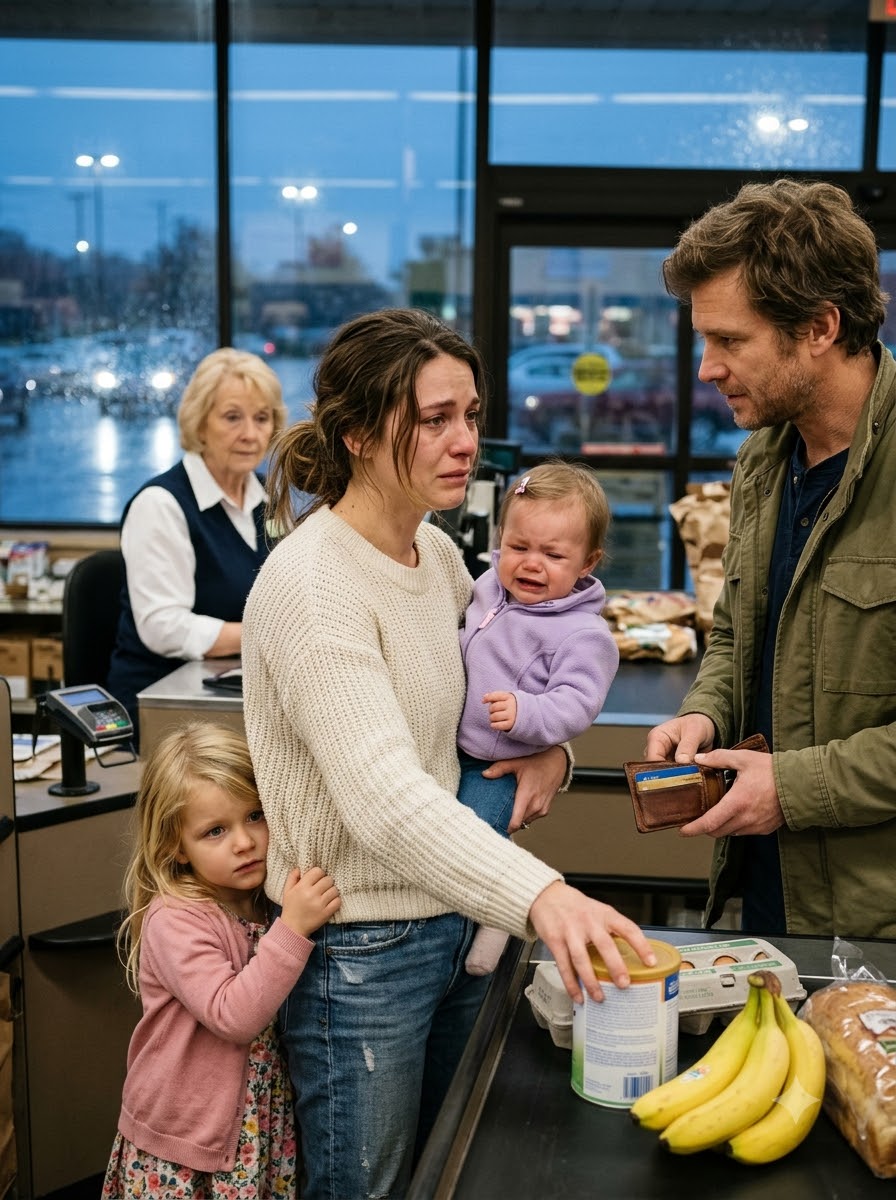
But one issue began to trouble me.
Nathaniel was constantly trying to purchase things for us.
One afternoon, he appeared at our apartment with a brand-new stroller after noticing that one of the wheels on ours was damaged.
On another occasion, he offered to replace my aging vehicle.
I was grateful for his thoughtfulness, but the repeated offers were beginning to make me uneasy.
“Nathaniel, we need to talk.”
Concern immediately crossed his face.
“Did I do something wrong?”
“You’re a wonderful friend, but you can’t keep solving every problem with money.”
He glanced toward the stroller.
“I thought it would make things easier.”
“It does. But I don’t want you believing you have to buy your place in our lives.”
He looked at me in surprise.
“I don’t believe that.”
“Then come over next Saturday without bringing anything.”
“Not even dessert?”
I couldn’t help smiling.
“Dessert is negotiable.”
Nathaniel laughed, although I could tell that my words had made an impression on him.
After that conversation, he made a sincere effort to honor the boundaries I had established.
He continued offering assistance whenever I requested it, but he also learned that simply spending time with us was more than enough.
Six months after our first encounter at the grocery store, I found a larger apartment much closer to my new workplace.
It had two bedrooms, a small balcony, and a grassy shared courtyard where Ellie could run and play.
Nathaniel offered to cover the security deposit.
I agreed only after he accepted my proposal to repay the amount through monthly installments.
“You know I don’t need the money,” he said.
“I know. But I need to know I can take care of my daughters.”
He nodded in understanding.
“Then we’ll do it your way.”
When moving day arrived, Nathaniel helped carry boxes, put together furniture, and spent almost an hour struggling to secure a particularly stubborn bookshelf against the wall.
After the final box had been emptied, we stood together in the living room while Ellie constructed a tall tower from her building blocks.
“You changed our lives,” I told him.
Nathaniel shook his head.
“You found the job and made this home for your girls. I just helped you get started.”
“You did more than that.”
He looked at me for a quiet moment.
“You changed my life, too.”
I wanted desperately to believe him.
But a question had been weighing on my mind for several weeks, and I could no longer ignore it.
“Nathaniel, can I ask you something difficult?”
“Of course.”
“Are we important to you because helping us makes you feel better about losing Margaret?”
His expression shifted.
For an instant, I wished I hadn’t asked.
Then he sat down beside me.
“At first, helping you reminded me that I could still do something worthwhile,” he admitted. “But that isn’t why I keep coming back.”
“Then why?”
“Because I want to hear about your day. Because Ellie makes me laugh. Because I love watching Rosie discover the world.”
He fell silent briefly before continuing.
“And because being with you makes me feel like I’m part of life again.”
My heartbeat quickened.
I glanced toward my daughters before looking back at him.
“Nathaniel, I need you to understand something. The girls have already lost one father. I can’t let them grow attached to someone who might suddenly disappear.”
He didn’t immediately offer an easy reassurance.
Instead, he considered my words carefully before responding.
“You’re right to protect them, Claire. And I can’t promise that life will never change. But I can promise that I won’t make commitments to your family lightly.”
Tears welled in my eyes.
For the first time since the girls’ father had walked out on us, I felt that someone genuinely understood how terrifying it was to place my trust in another person.
Later that evening, after Nathaniel had gone home, Ellie climbed onto my lap.
“Mommy, is Uncle Nate going to come back?”
“Of course, sweetheart. He’s coming for lunch on Saturday.”
She smiled with relief.
“Good. Because I think he likes being our family.”
I wrapped my arms around her and held her close.
I thought so too.
And realizing how much I wanted that frightened me more than I was ready to admit.
Several days later, Nathaniel called and asked whether we could share dinner together without the children.
There was an unfamiliar nervousness in his voice.
“Claire, there’s something I’ve been wanting to tell you for a long time.”
Standing in my kitchen, I tightened my grip on the phone.
“Is everything all right?”
“Yes,” he answered. “But I think our friendship is changing, and I don’t want to pretend I haven’t noticed.”
I closed my eyes.
Because deep down, I knew he was right.
I had noticed the change as well.
When Nathaniel invited me to dinner without Ellie and Rosie, I understood that our relationship was approaching an important turning point.
For months, he had been the most compassionate person in our lives.
He had helped me regain my confidence after losing my employment, encouraged me to rebuild my financial independence, and treated my daughters with a gentleness their biological father had never given them.
But somewhere along the way, my feelings for Nathaniel had grown into love.
And that realization terrified me.
I asked my sister to care for the girls and arranged to meet Nathaniel at a peaceful restaurant just outside Lancaster.
He rose from his chair as soon as I approached the table, looking noticeably more anxious than usual.
“You look beautiful, Claire.”
“Thank you. You look like you’re about to negotiate a difficult business contract.”
He laughed nervously.
“That might actually be easier.”
We ordered our meals, but neither of us appeared especially hungry.
After several minutes of ordinary conversation, Nathaniel placed his glass on the table.
“There’s something I need to tell you.”
I folded my hands together beneath the table.
“I’m listening.”
He drew a slow breath.
“When I first met you, I was barely living. I worked, paid bills, and went home to a house that reminded me of everything I’d lost.”
His voice became gentler.
“Then Ellie asked whether I helped people. I didn’t know how to answer because I’d spent so long thinking only about my own grief.”
PART 3
My thoughts returned to that rainy evening in the supermarket, when he had stepped forward to pay for Rosie’s formula.
“You helped us when we desperately needed it.”
“And you three gave me something I hadn’t expected to feel again.”
“What was that?”
“A reason to look forward to coming home.”
Tears gathered in my eyes.
Nathaniel slowly extended his hand across the table, then paused, giving me the freedom to decide whether I wanted to accept it.
I reached forward and took his hand.
“Claire, I’ve fallen in love with you.”
For several seconds, I couldn’t find the words to respond.
“I didn’t plan for it,” he continued. “And I know your daughters come first. I’m not asking you to change that.”
I lowered my eyes toward our intertwined hands.
“I love you too,” I whispered.
The transformation in his expression was so immediate and genuine that I nearly laughed through my tears.
“But Nathaniel, I need us to be careful. Ellie already asks about you every day. Rosie reaches for you whenever you visit.”
“I know.”
“They’ve experienced enough uncertainty.”
He nodded slowly.
“Then we take our time. No pressure, no promises we aren’t ready to keep.”
I smiled at him.
“That sounds like a good place to start.” Over the next several months, Nathaniel and I took our time allowing our relationship to grow naturally.
He never attempted to take the place of the girls’ biological father through extravagant gifts or dramatic displays of affection. Instead, he gradually became a dependable presence in our everyday lives.
He came to Ellie’s preschool events, supported me whenever Rosie developed a fever, and even taught himself to prepare pancakes because my daughters were convinced that Saturday breakfast tasted better when he made it.
He also never stopped talking openly about Margaret.
One evening, as we sat together on his porch, Nathaniel showed me a photograph of the garden his late wife had created.
“Sometimes I worry that loving someone again means I’m leaving her behind,” he admitted.
I gently placed my hand over his.
“You don’t have to stop loving Margaret to love me.”
The gratitude in his eyes told me just how desperately he had needed someone to say those words.
As one season gave way to another, Nathaniel’s beautiful house slowly began to transform.
A basket filled with children’s toys appeared in the living room. Colorful drawings decorated part of the refrigerator, and Ellie decided that a bright guest bedroom was her favorite place to play.
Rosie took her first hesitant steps while gripping Nathaniel’s fingers.
He was so overwhelmed with excitement that he called me into the room as though he had just witnessed something extraordinary.
For the first time in years, I could genuinely picture a future in which all four of us belonged together.
Then, one Sunday afternoon, Ellie surprised us with a question neither of us had anticipated.
We were relaxing in Nathaniel’s garden when she climbed onto his lap.
“Uncle Nate, are you going to be our daddy?”
Nathaniel became completely motionless.
My stomach tightened with anxiety.
“Ellie, sweetheart—”
He gently shook his head, silently asking me to allow him to respond.
“Would you like that?” he asked her.
She nodded eagerly.
“Because you always come back.”
Those four simple words nearly shattered my heart.
Nathaniel drew her closer.
“Ellie, being someone’s daddy is a very important promise. Your mommy and I need to make sure we understand what that means before we say anything.”
She thought about his explanation.
“Okay. But I think you’d be good at it.”
He pressed a gentle kiss against the top of her head.
“Thank you, sweetheart.”
Later that night, after both girls had fallen asleep, Nathaniel and I sat quietly in the living room.
“I’ve been thinking about what Ellie said,” he admitted.
“So have I.”
He turned to face me.
“Claire, I don’t want to be someone who visits your family forever. I want to build a life with you and the girls.”
My pulse began racing.
“Nathaniel…”
“I’m not asking you to answer tonight. I just want you to know that when I imagine my future, the three of you are in it.”
I rested my head against his shoulder.
For years, the idea that someone might willingly choose my daughters and me, then remain by our side, had seemed impossible to trust.
But now, little by little, I was beginning to believe that Nathaniel meant exactly what he said.
Several weeks afterward, he asked me to take a walk with him through Margaret’s rose garden.
The spring afternoon was beautiful, and the first flowers were beginning to open.
Nathaniel paused beside a wooden bench.
“Margaret used to sit here and tell me that the happiest homes weren’t necessarily the biggest or most expensive ones.”
I smiled warmly.
“She sounds like a wise woman.”
“She was.”
He reached for both my hands.
“Claire, I spent years believing I’d already had my chance at a family. Then you and the girls came into my life.”
His voice trembled with emotion.
“I can’t promise that every day will be easy. But I can promise that I’ll keep showing up, even when things are difficult.”
Then he slipped one hand into his coat pocket.
The moment I saw the small velvet box, I stopped breathing.
Nathaniel lowered himself onto one knee.
“Claire Whitmore, will you marry me?”
Tears streamed down my cheeks.
Every part of me wanted to answer yes without hesitation.
But before the word could leave my mouth, one important thought held me back.
Getting married wouldn’t affect only my future.
It would change Ellie’s and Rosie’s lives as well.
And before I accepted, I needed to know that Nathaniel understood he was making a promise to all three of us.
Nathaniel knelt before me in Margaret’s blooming rose garden, holding a small velvet ring box as he asked me to become his wife.
For several moments, I couldn’t find my voice.
Just one year earlier, I had stood helplessly at a supermarket checkout, wondering how I would feed my infant daughter after my debit card was repeatedly declined.
Now, the man who had treated my children with more compassion than their own father was asking me to marry him.
But there was something I needed to ask before giving him my answer.
“Nathaniel, do you understand that marrying me means becoming part of Ellie’s and Rosie’s lives every single day?”
He lifted his eyes toward mine.
“Yes, Claire.”
“Not just the birthdays and happy afternoons. There will be sick nights, difficult mornings, and times when the girls need more attention than either of us has left to give.”
He gave me a gentle smile.
“I know.”
“And if we disagree about something, we can’t simply walk away. They’ve already experienced that.”
Nathaniel closed the velvet box and rose to his feet.
“Claire, I don’t want a perfect family. I want a real one. I want to be there when Ellie loses her first tooth, when Rosie starts school, and when both girls have problems we can’t solve with money.”
Tears filled my eyes.
“I want to be there for you, too,” he continued. “Not because you need rescuing, but because I love the life we’re building together.”
I stepped forward and wrapped my arms tightly around him.
“Then yes,” I whispered. “I’ll marry you.”
He embraced me, holding me close.
For a long time, neither of us moved.
We shared the news with the girls that same evening.
Ellie’s first question was whether she could wear a princess dress to the ceremony.
Rosie was still too young to understand what was happening, but she clapped enthusiastically because everyone around her was smiling.
A few months later, Nathaniel and I exchanged vows in a small country chapel near Lititz, Pennsylvania.
Ellie wore a lovely lavender dress and carried a little basket filled with flower petals.
She took her flower-girl duties so seriously that she asked the wedding coordinator if she could walk down the aisle a second time because she had accidentally missed several places.
Rosie wore a soft pink dress.
The moment she spotted Nathaniel waiting near the altar, she stretched out her arms toward him.
He picked her up, making our wedding guests laugh.
I walked toward them with tears shining in my eyes.
For years, I had believed that the end of my previous relationship meant my daughters and I would always have to face life alone.
Instead, we were becoming a family in a way I could never have imagined.
Our first year of marriage was far from flawless.
Some mornings began with Ellie being unable to find her shoes.
Other evenings ended with Rosie stubbornly refusing to go to sleep.
We disagreed about ordinary things, from organizing household routines to deciding how much dessert the girls should be allowed before bedtime.
Nathaniel quickly discovered that managing a thriving company had done little to prepare him for persuading a determined four-year-old to put on her winter coat.
And after years of managing every responsibility myself, I learned that sharing those responsibilities required patience and a willingness to trust.
But Nathaniel remained dependable.
Whenever Ellie became sick, he stayed awake beside her bed.
Each time Rosie learned a new word, he celebrated as though she had achieved something extraordinary.
He attended preschool performances, prepared lunches, and even watched instructional videos so he could learn to braid Ellie’s hair.
One evening, I walked into the living room and discovered Nathaniel sitting on the floor while Rosie covered his face with brightly colored stickers.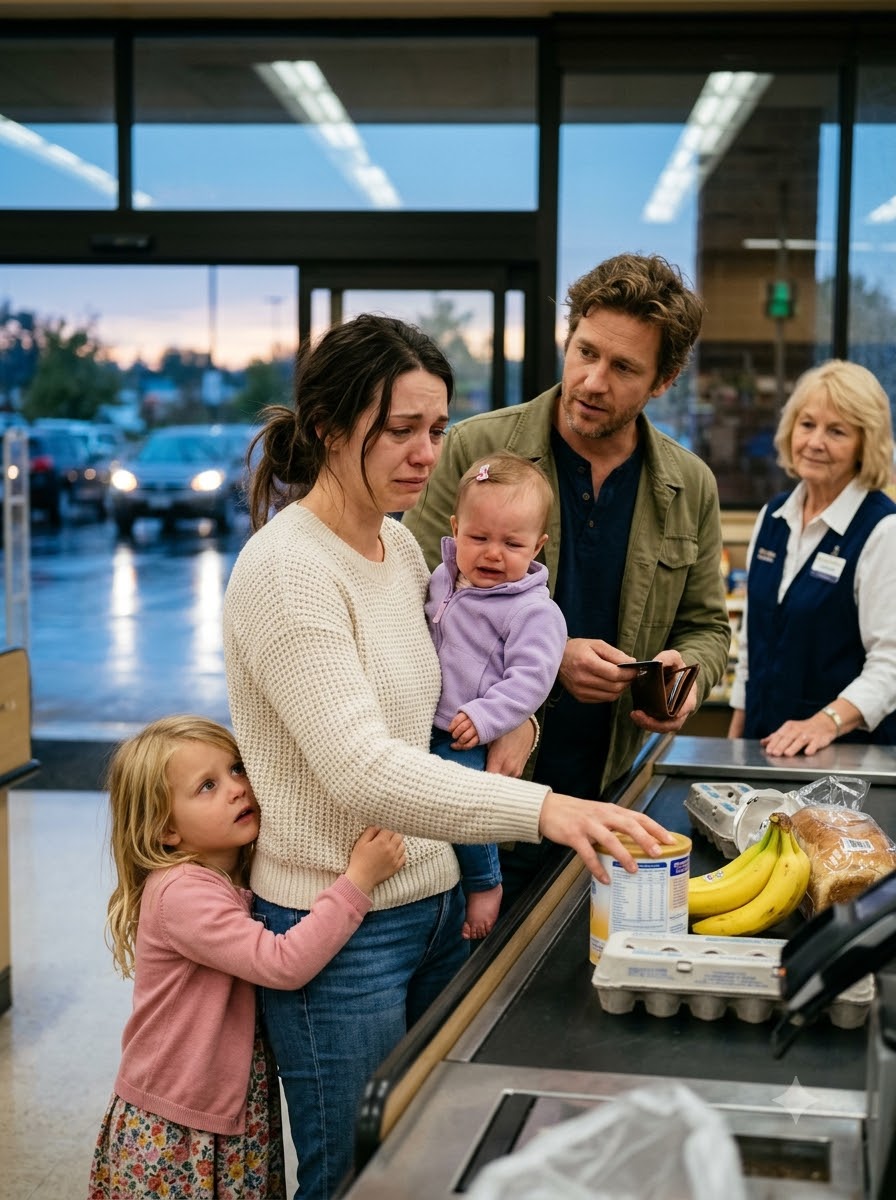
He looked up at me with an expression of complete helplessness.
“Apparently, I’ve been promoted to princess.”
I laughed so hard that I had to sit down.
Several months later, Nathaniel asked whether we could begin discussing the possibility of legally adopting the girls.
Their biological father had remained absent, but I understood that adoption involved significant legal and emotional considerations.
We met with a family lawyer, completed the necessary procedures, and made certain that every decision prioritized the children’s well-being.
When the adoption was finally approved, Ellie rushed into Nathaniel’s arms.
“Does this mean you’re really our daddy now?”
He knelt down beside her.
“I’ve loved being your daddy for a long time, sweetheart. Today just makes it official.”
She hugged him even more tightly.
Rosie joined them, and before long, all three were sitting together on a courthouse bench, laughing happily.
I stood a short distance away, overwhelmed by the realization of how completely our lives had changed.
On our first wedding anniversary, I handed Nathaniel a small gift wrapped with care.
Inside was a framed photograph taken on our wedding day.
Beneath the picture, I had preserved an old supermarket receipt.
Nathaniel stared at it in astonishment.
“Claire, is this from the night we met?”
I nodded.
“I found it in one of the shopping bags a few weeks afterward. I couldn’t bring myself to throw it away.”
He gently ran his finger along the edge of the receipt.
“All I wanted that night was a frozen dinner.”
“And all I wanted was enough formula to feed Rosie.”
We exchanged a smile.
“Neither of us knew what was coming,” he said.
“No,” I replied. “But I’m glad you were there.”
In the years that followed, Nathaniel and I began supporting other families struggling through temporary financial hardship.
Sometimes we provided groceries.
On other occasions, we contributed toward childcare costs or helped parents prepare for employment interviews.
Rather than approaching strangers with extravagant promises, we partnered with local organizations dedicated to supporting families.
I insisted that every person receiving assistance be treated with dignity and respect, without publicity or any expectation of gratitude.
I never forgot the humiliation of standing at that grocery checkout, convinced that everyone around me was watching me fail as a mother.
I didn’t want another woman to believe that accepting help meant sacrificing her self-respect.
Each year, on the anniversary of the evening Nathaniel and I first met, we donated diapers, infant formula, and other necessities to a nearby family resource center.
Ellie and Rosie helped us organize and pack the supplies.
As they grew older, we shared the story of that rainy grocery-store evening and explained how our family had first come together.
One afternoon, several years after our wedding, Nathaniel and I sat in the backyard watching the girls play.
He reached across and gently took my hand.
“Do you ever think about what would have happened if I’d walked past you that night?”
I looked toward Ellie, who was helping Rosie create a small garden beside the patio.
“Sometimes.”
“I probably would’ve gone home, eaten my dinner alone, and returned to work the next morning.”
I squeezed his fingers.
“And I would’ve spent another night worrying about how to feed my daughters.”
He turned toward me thoughtfully.
“That night, I thought I was helping you.”
“You were.”
“But I didn’t realize how much I needed someone to notice me, too.”
I leaned against his shoulder.
For years, Nathaniel had believed that his wealth could shield him from nearly every difficulty in life, except the unbearable loneliness left behind by Margaret’s death.
Meanwhile, I had convinced myself that asking for assistance was the same as admitting I couldn’t provide for my children.
We had both misunderstood something important.
Nathaniel hadn’t rescued me from my own life, and I hadn’t taken the place of the wife he had lost.
We had simply encountered each other during two painful periods of our lives and gradually created something neither of us had ever expected.
As the evening sun began sinking toward the horizon, Ellie came running across the lawn.
“Daddy, come see what Rosie made!”
Nathaniel immediately got to his feet.
“I’m coming!”
He followed our daughters into the garden, listening attentively as they excitedly described their latest creation.
I watched the three of them laughing together and remembered the night Ellie had first called him Mr. Helper.
Back then, a moment like this would have seemed impossible.
Our family hadn’t started with a lavish present or an extraordinary promise that everything would always be perfect.
It began when a stranger noticed a mother struggling to care for her children, offered compassion without asking for anything in return, and continued being present long after she no longer depended on his financial assistance.
And years later, whenever I looked at the man my daughters proudly called Daddy, I understood that Nathaniel’s greatest gift to us had never been the $12,000 check.
It was the promise he continued to honor, every single day, simply by being there.
