

PART 1
The bridal suite at the Parador de Cádiz reeked of a suffocating mix of white lilies and Atlantic salt spray.
Yet what stole my breath was not the crushing weight of my wedding dress, but the fingers of my stepsister Irene, ruthlessly tightening the corset laces at my back.
“Relax, Sara,” she whispered, offering me a smile so cloying it chilled my blood. “You’ve always been a porcelain creature. I’m only trying to make this family jewel look flawless on your big day.”
“Stop, Irene! The stays are digging into my spine… If you pull once more, you’ll snap my backbone!”
“Please, darling. Don’t be melodramatic. They’re nothing but old whalebone.”
Irene wrapped the raw silk ribbon around her fist and yanked with the full force of her body.
CRACK!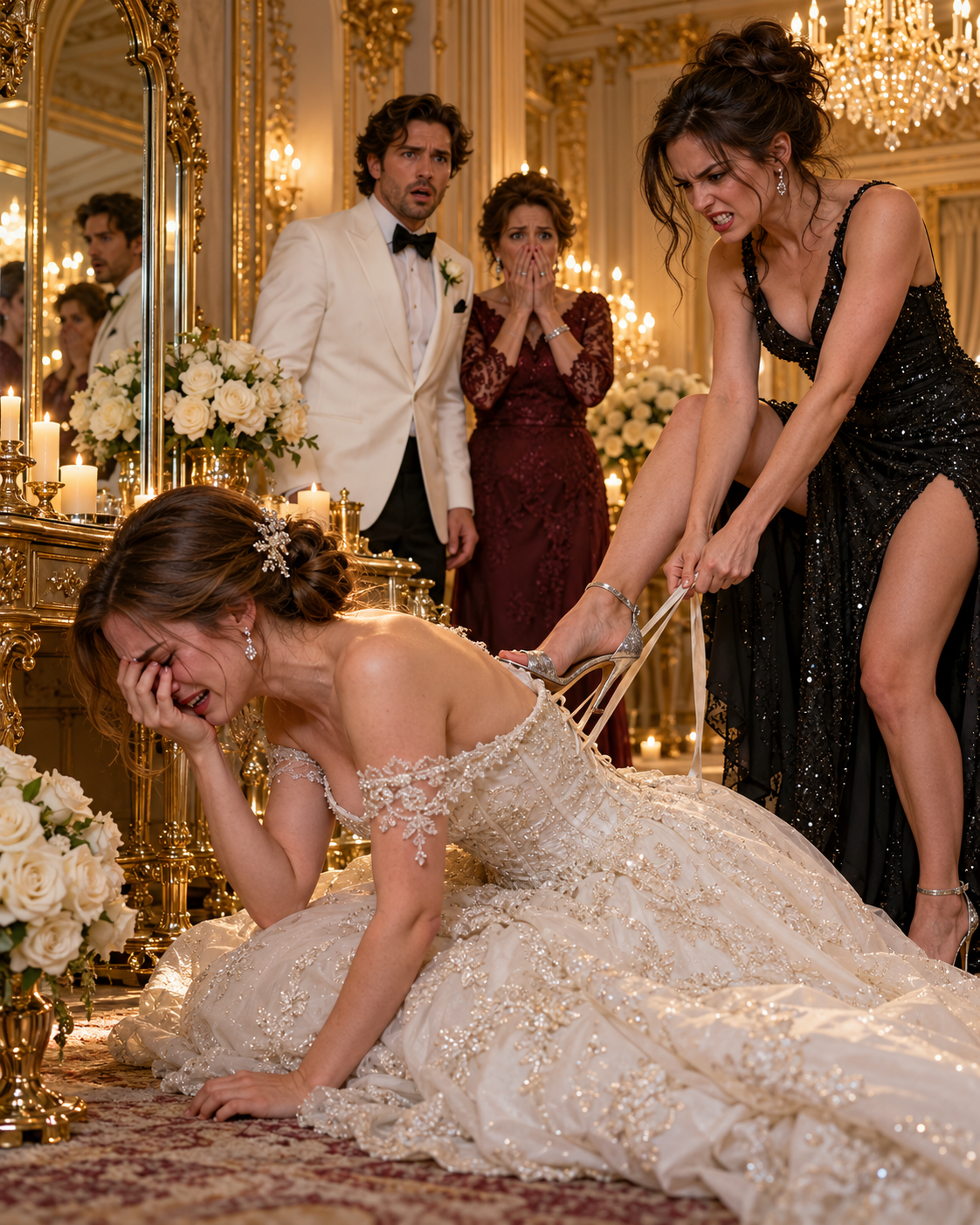
A dry, metallic, violent burst echoed through the walls.
A searing flash of pain tore through my marrow and, in a fraction of a second, every trace of feeling below my waist vanished into nothing.
I collapsed face-first onto the carpet; I tried to push myself up with my elbows, but my legs lay dead like two inert logs.
“Irene… I can’t feel my legs. For God’s sake, cut the laces! Cut them now!”
I looked up at her searching for the slightest flicker of panic, a desperate apology, the anguish of an unforeseen accident.
Instead, Irene leisurely smoothed the wrinkles from her emerald-green dress.
“You’ve always been a pathetic waste, Sara,” she murmured, fixing me with eyes empty of all pity. “Dad should have handed the management of the family properties to someone with the necessary backbone.”
At that precise moment, Mateo’s impatient voice boomed from the hallway.
“Sara, my love? The photographer is waiting for us in the gardens!”
In a theatrical blink, Irene threw herself to her knees on the floor, pouring out a torrent of hysterical tears as if she were the one bleeding out.
“Mateo! Call an ambulance! The whalebone of the corset has snapped… Sara has collapsed!”
The heavy oak door flew open.
Frantic footsteps, stunned shouts, and Mateo’s desolate howl flooded the room in a whirlwind of chaos.
Sprawled and helpless against the cold of the floorboards, my mind fought feverishly to piece together the puzzle of the disaster.
After fifteen years working as a forensic expert in destructive testing and mechanical failure analysis of materials, my ear was trained to decode the acoustics of any structural fracture.
And there was one atrocious detail that kept hammering at my skull:
Biological whalebone stays never explode with the sharp, steely, clean snap of high-carbon tool steel when it fails under bending overload.
The paramedics arrived within twelve minutes. I counted them in the haze of shock, each second stretching like a wire under tension. Mateo knelt beside me, his hands hovering over my shoulders as if he were afraid to touch anything that might shatter further. His face had gone the color of old parchment. “Sara, stay with me. They’re coming. Just breathe.”
I tried. Each inhalation scraped against the broken stays still embedded beneath the silk. The corset had not been removed; the emergency technicians had stabilized my spine on a rigid board before cutting the laces with shears that flashed cold against my skin. Even then, the metal fragments remained lodged. I felt the pressure of them, a foreign hardness pressing against bone that no longer answered my commands.
In the ambulance the saline drip cold in my arm, I watched the ceiling lights streak past and forced myself to catalogue the fracture signature again. High-carbon tool steel. Not whalebone. Not even the polymer-reinforced substitutes modern couturiers used. The sound had been crystalline, almost musical in its violence—exactly the tone I had recorded a hundred times in the lab when a specimen reached its ultimate bending moment and failed catastrophically. Someone had replaced the ancestral stays. Someone who knew the precise angle at which a tight corset would drive the broken ends inward.
Irene rode in the front seat with the driver. I heard her voice through the partition, high and trembling for the benefit of the paramedics. “She insisted on wearing the old piece. I told her it was fragile. I begged her to let me loosen it.”
Mateo’s hand found mine. “Don’t talk,” he said. “Save your strength.”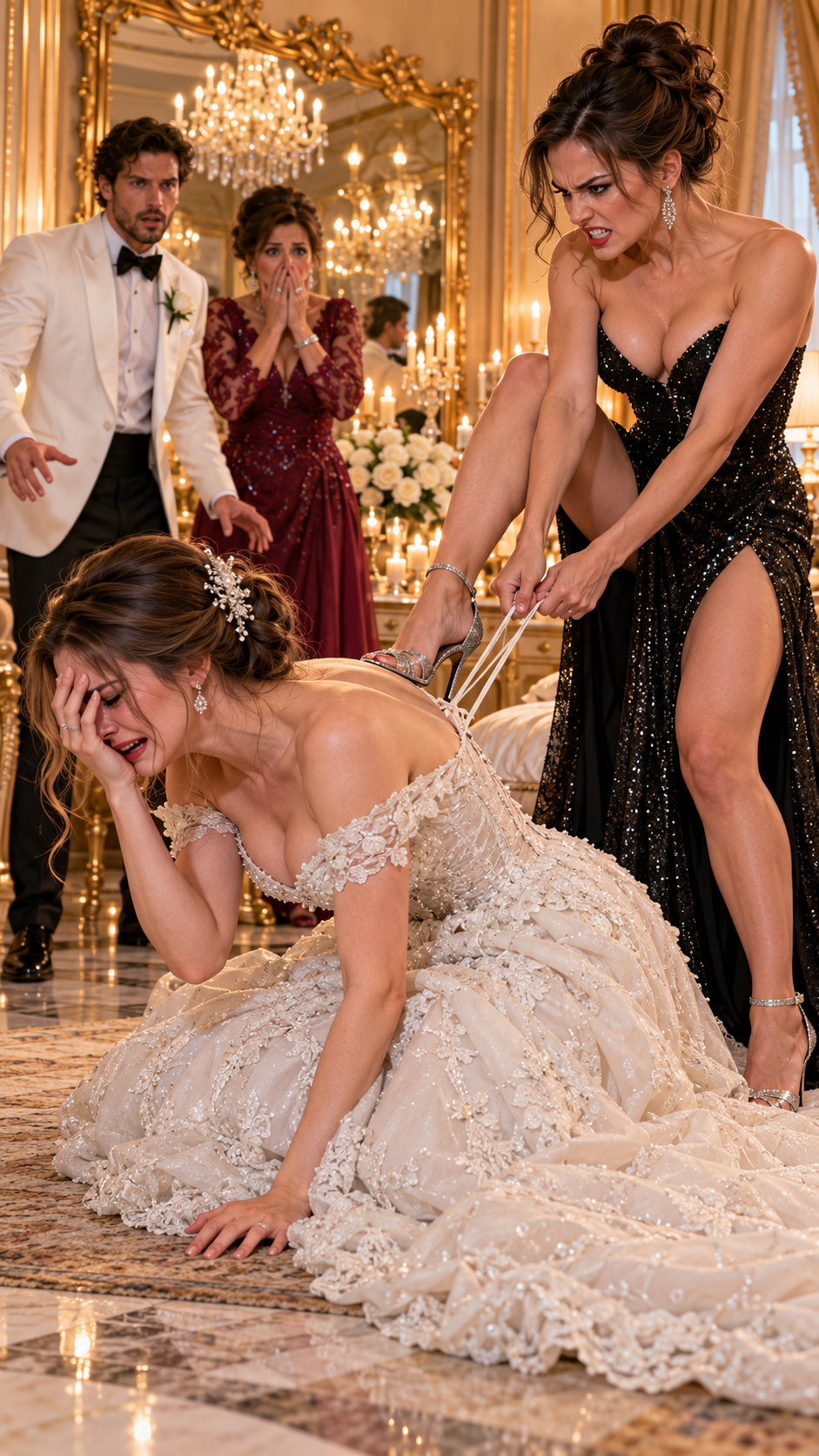
But I had already begun the mental reconstruction. The corset had arrived three days earlier in a cedar box lined with tissue paper that smelled of my late stepmother’s perfume. Irene had collected it from the family vault in Madrid and brought it south herself, claiming she wanted to “help with the final fittings.” She had supervised the dressmaker’s last adjustments. She had been alone with the garment for nearly an hour while the seamstress fetched more silk ribbon.
At the hospital in Cádiz the neurosurgeons moved with the controlled urgency of people who already knew the window was closing. They explained, in careful Spanish and then again in slower English when they saw my confusion, that imaging showed metallic fragments adjacent to the spinal canal at T12-L1. One shard had nicked the thecal sac. Another had compressed the cord. They would operate at once.
Before they wheeled me into theater, Mateo leaned over the gurney. His eyes were red-rimmed. “I’ll be right here when you wake up.”
“The stays,” I managed. “Keep them. Don’t let anyone throw them away. Tell the police they’re evidence.”
He nodded, though I could see he did not yet understand. Irene stood a few meters behind him, arms folded, her expression the perfect mask of worried sister. When our eyes met she allowed the smallest upward twitch at the corner of her mouth. Then the doors closed and the anesthesiologist’s voice counted backward.
I surfaced hours later into a room that smelled of antiseptic and orange blossom air freshener. Pain lived in a narrow band across my mid-back; everything below it remained a distant rumor. A nurse adjusted the morphine pump and told me the surgery had gone as well as could be hoped. The fragments had been extracted and bagged for the forensic laboratory. Sensation might return. It might not. The next forty-eight hours would tell them more.
Mateo slept in the chair beside the bed, still wearing the morning suit he had put on for the photographs that never happened. When he woke he kissed my forehead and said nothing about the wedding guests who had been sent home, the photographer who had packed his lights, the priest who had offered prayers in the empty chapel. He only asked whether I needed water.
On the second day the lead neurosurgeon, a woman named Dr. Elena Vázquez, sat at the foot of the bed with a tablet. She showed me the post-operative scans and then, more carefully, the photographs of the extracted material.
“These are not whalebone,” she said. “The lab confirmed high-carbon steel, heat-treated to approximately 60 Rockwell. Someone scored the inner faces so they would fracture under modest tensile load and drive the points medially. The placement was deliberate.”
I closed my eyes. The sound returned: that clean, steely snap. “I know the alloy. We use a similar grade in the lab for calibration bars.”
Dr. Vázquez’s eyebrows rose. “You work with materials?”
“Destructive testing. Failure analysis. I can write a preliminary report from this bed if you need one for the police.”
Mateo stirred. “Police?”
“Attempted murder,” I said. The words felt smaller than the reality. “Irene replaced the stays. She knew exactly what the tension of a wedding corset would do.”
He went very still. For a long moment the only sound was the soft click of the IV pump. Then he stood, walked to the window that overlooked the Atlantic, and placed both palms against the glass as if he needed its coolness to remain upright.
“She told everyone you insisted on the heirloom piece,” he said at last. “She cried in the waiting room. She asked the nurses if she could donate blood.”
“She’s good at scenes,” I answered. “She’s been practicing since we were children.”
By the fourth day sensation had begun to return in my left foot—pins and needles at first, then a dull ache when the physiotherapist flexed the ankle. The right leg remained silent. Dr. Vázquez called it incomplete spinal cord injury, ASIA C. With intensive rehabilitation I might walk with aids. Without it I would not. The family properties in Madrid, the olive groves in Jaén, the apartment blocks in Seville—all of them had been placed under my management by our father’s will two years earlier. Irene had contested the codicil and lost. Now she had tried a different method.
I dictated the materials report from the hospital bed while Mateo typed. I described the acoustic signature, the probable heat-treatment temperature, the scoring pattern that would produce medial migration under 40–50 newtons of lace tension. I requested that the original cedar box and any remaining tissue paper be preserved for fiber and adhesive analysis. When the detective from the Policía Nacional arrived on the fifth morning, I handed him the printed pages and the chain-of-custody forms Mateo had already prepared.
Inspector Rivas was a compact man with a notebook that looked older than the hospital. He listened without interrupting while I explained the difference between baleen and tool steel. He photographed the surgical specimens through their evidence bags. Before he left he asked one question.
“Did your stepsister have access to a machine shop or a supplier who works with high-carbon stock?”
PART 2
“She manages the restoration side of the family holdings,” I said. “Antique furniture, architectural salvage. She has accounts with three metalworking firms in Madrid. One of them specializes in custom hardware for period pieces.”
He wrote the names down. “We’ll start there.”
That night Mateo brought me the messages that had accumulated on my phone. Condolences from guests. A cancellation notice from the florist. And one text from Irene, sent the evening of the surgery: *I’m praying for you every hour. Please let me know if there’s anything I can do. Love, I.*
I showed it to Mateo. He read it twice, then deleted the thread without asking permission.
On the seventh morning Inspector Rivas returned with a second officer and a warrant. They had traced a purchase order, dated eleven days before the wedding, from Irene’s restoration company to a small forge outside Toledo. The order was for six lengths of 1095 high-carbon steel, 4 mm by 12 mm, heat-treated and tempered, with a note requesting “period-appropriate scoring for flexible antique stays.” The forge owner remembered the woman who collected the order herself. He had thought she was restoring a corset for a museum display.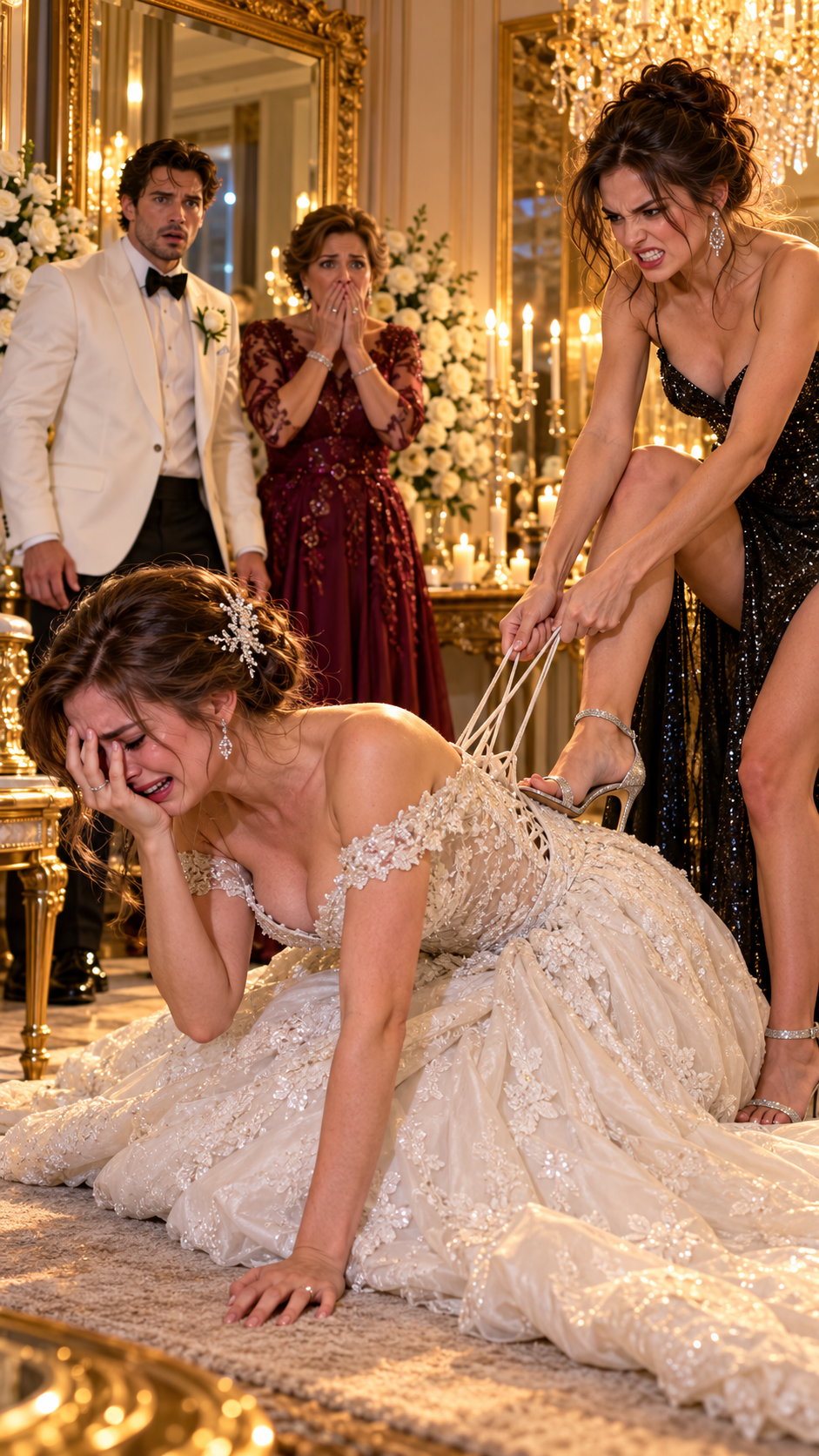
“She’s at her apartment in Madrid,” Rivas said. “We’re executing the search this afternoon. Given the medical evidence and the purchase records, we expect to make an arrest.”
I asked whether I could be present. He shook his head. “You’re still a patient. We’ll record the interview. If she asks to speak with you, we’ll consider it later.”
Mateo stayed with me while the hours passed. We watched the light move across the wall and did not talk about the wedding that had not happened or the life that might still be possible. At four o’clock Rivas called. The search had yielded the remaining lengths of steel, a set of scoring files that matched the pattern on the fragments, and a deleted email in which Irene had written to a colleague: *Once the porcelain doll is out of the way the properties revert to joint administration. Father always meant for both of us to have a voice.*
“She’s in custody,” Rivas said. “When we asked her about the material found beside your spine, she went white and stopped speaking. Her lawyer arrived twenty minutes later.”
I closed my eyes. The morphine pump clicked. Somewhere below the band of pain, my left toes curled against the sheet of their own accord.
The trial would take months. Irene’s defense would claim the steel had been ordered for a different project and that the substitution was an accident of careless storage. The scoring files and the email would make that argument difficult. In the meantime the family board, acting under the terms of the trust, suspended her management authority and confirmed mine. Mateo hired a rehabilitation specialist who traveled from Barcelona twice a week. By the third month I could stand between parallel bars for ninety seconds. By the sixth I could walk the length of the hospital corridor with a single cane and Mateo’s hand at my elbow.
We married in October in a small civil ceremony at the same Parador, with only the witnesses required by law and Dr. Vázquez as an unexpected guest. I wore a simple ivory dress that required no corset. When the officiant asked whether anyone objected, the Atlantic wind answered by rattling the windows. No one else spoke.
After the papers were signed we walked—slowly—to the edge of the gardens where the photographer had once waited. Mateo stopped and turned me toward the sea.
“You kept the fragments,” he said.
“They’re in the lab in Madrid. Catalogued. I’ll use them the next time I teach failure analysis. Students should know what deliberate overload looks like.”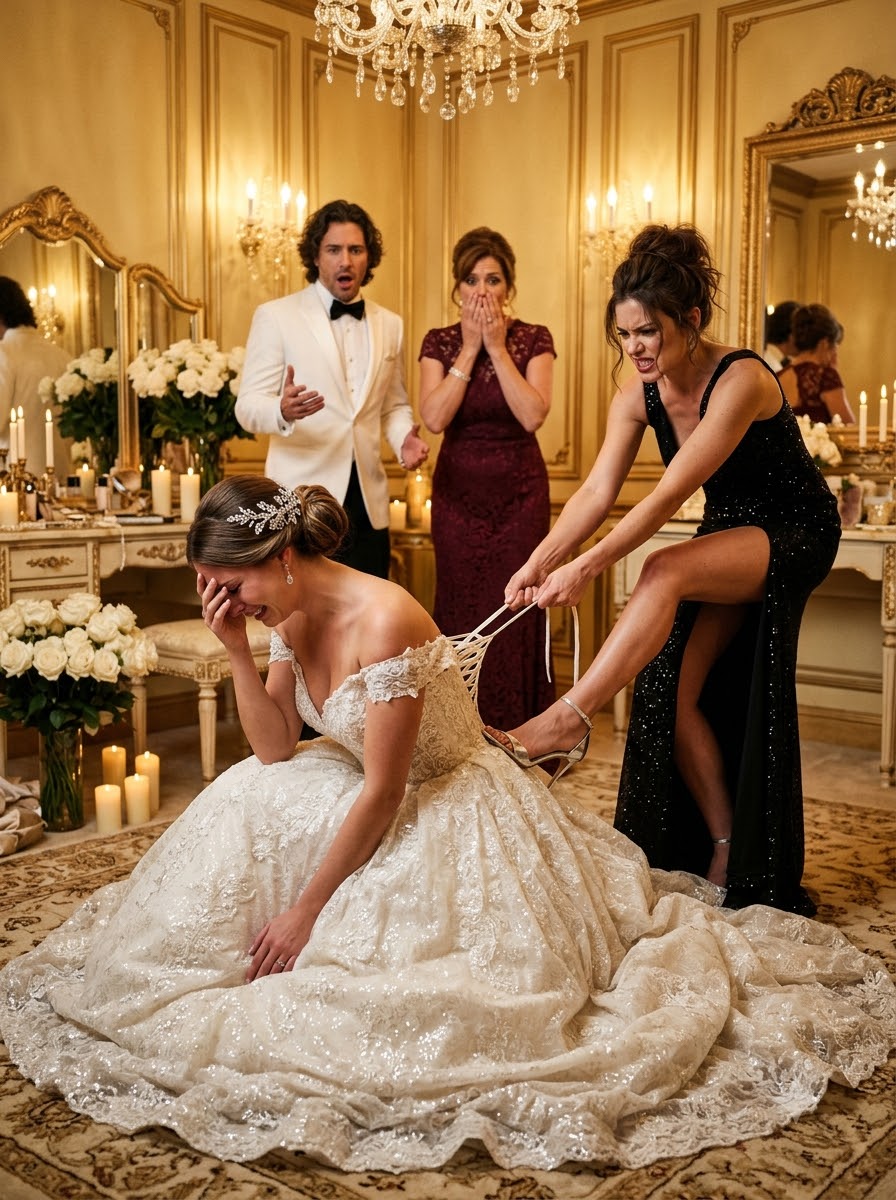
He was quiet for a moment. “And Irene?”
“She’ll serve whatever sentence the court decides. The properties stay in the trust. The board has already voted to exclude her permanently.”
Below us the water shifted from green to slate as a cloud crossed the sun. I shifted my weight onto the cane and felt the faint, reliable ache that had replaced the old silence in my right leg. It was not the life I had planned on the morning I stepped into the pearl corset. It was, however, a life that still contained the sound of the sea, the steadiness of Mateo’s hand, and the precise knowledge of how steel fails when someone decides it must.
We turned back toward the hotel. Somewhere in a Madrid evidence locker the scored lengths of 1095 waited for the next hearing. Somewhere in a rehabilitation gym a woman who had once been called porcelain practiced the next ten steps. The wind carried the salt inland, and for the first time since the crack of the stays I did not flinch at the sound of anything breaking.
