

PART 1
WHAT HE LEFT BEHIND
My name is Martha, and for the past two years, I’ve been learning how to live with less.
Not because I suddenly embraced minimalism or decided that a simpler life was somehow more meaningful. I learned because I had no other choice.
By the time my divorce was finalized, I understood that the life I had spent more than twenty years building had depended on financial decisions I had barely understood.
I had trusted my husband, Daniel, to manage the money.
The accounts.
The mortgage.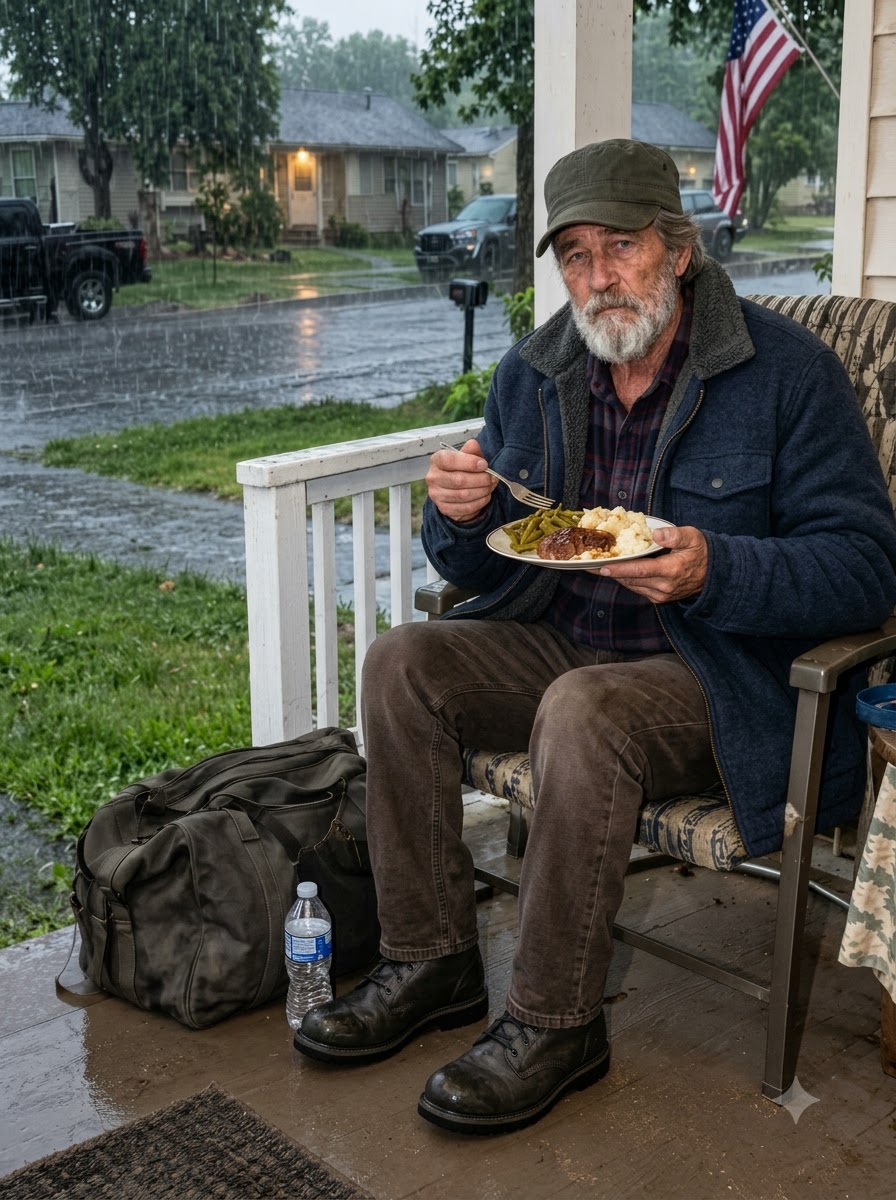
The paperwork.
I took care of Lily, our daughter, the house, the schedules, school activities, appointments, meals, and all the invisible things that kept a family functioning.
For twenty-one years, that division of responsibility had seemed reasonable.
Until it wasn’t.
When the marriage ended, I learned that trust and protection were not the same thing.
Daniel had prepared for the divorce long before I even realized our marriage was ending.
He had the better attorney.
He knew where the money was.
He understood which documents mattered.
I did not.
By the time everything was settled, my eight-year-old daughter and I had about eight hundred dollars, a car with two years left on the loan, and nowhere permanent to live.
Daniel kept the house.
Continuing the legal fight would have cost more than I could afford, and my attorney eventually told me something I already suspected.
Even if I continued fighting, I might spend more than I could ever recover.
So I stopped.
Not because it felt fair.
Because sometimes survival means knowing when fairness has become too expensive.
I found a small duplex in late October.
The landlord, Grace, was a practical woman who had owned the property for years. Instead of looking only at my credit score, she listened when I explained what had happened.
I told her I had recently divorced.
I told her most of our financial history had been under Daniel’s name.
I told her I worked in the administrative office of the local school district and that, as long as nothing unexpected happened, my income was enough to cover the rent.
Grace rented the duplex to me.
I have never forgotten that kindness.
The place wasn’t large.
Two bedrooms.
One bathroom.
A narrow kitchen.
A modest living room.
And a covered porch stretching across the front.
That porch became my favorite part.
On warm Friday evenings, Lily and I would carry our dinner outside and sit together, watching cars pass beneath the old elm trees lining the street.
Our new life was smaller.
But it belonged to us.
There was something unexpectedly peaceful about that.
Two years passed.
Lily was ten now.
She had adjusted better than I feared she would.
She had friends at school, a teacher she adored, and a bedroom she had decorated in several carefully chosen shades of purple.
She rarely asked about Daniel.
When she did, I gave her the truth a ten-year-old could carry.
Her father loved her.
Adults sometimes made decisions that hurt people.
And somehow, our new life would still become a good one.
I hoped that last part was true.
One Thursday evening near the end of summer, a storm rolled into town.
It had been unbearably humid all afternoon.
By dinner, the sky had turned that strange yellow-green color that warned something serious was coming.
The wind picked up.
Tree branches twisted.
Then the rain began.
Lily was spending the weekend with Daniel, so the duplex felt unusually empty.
I was moving from room to room closing windows when I noticed someone across the street.
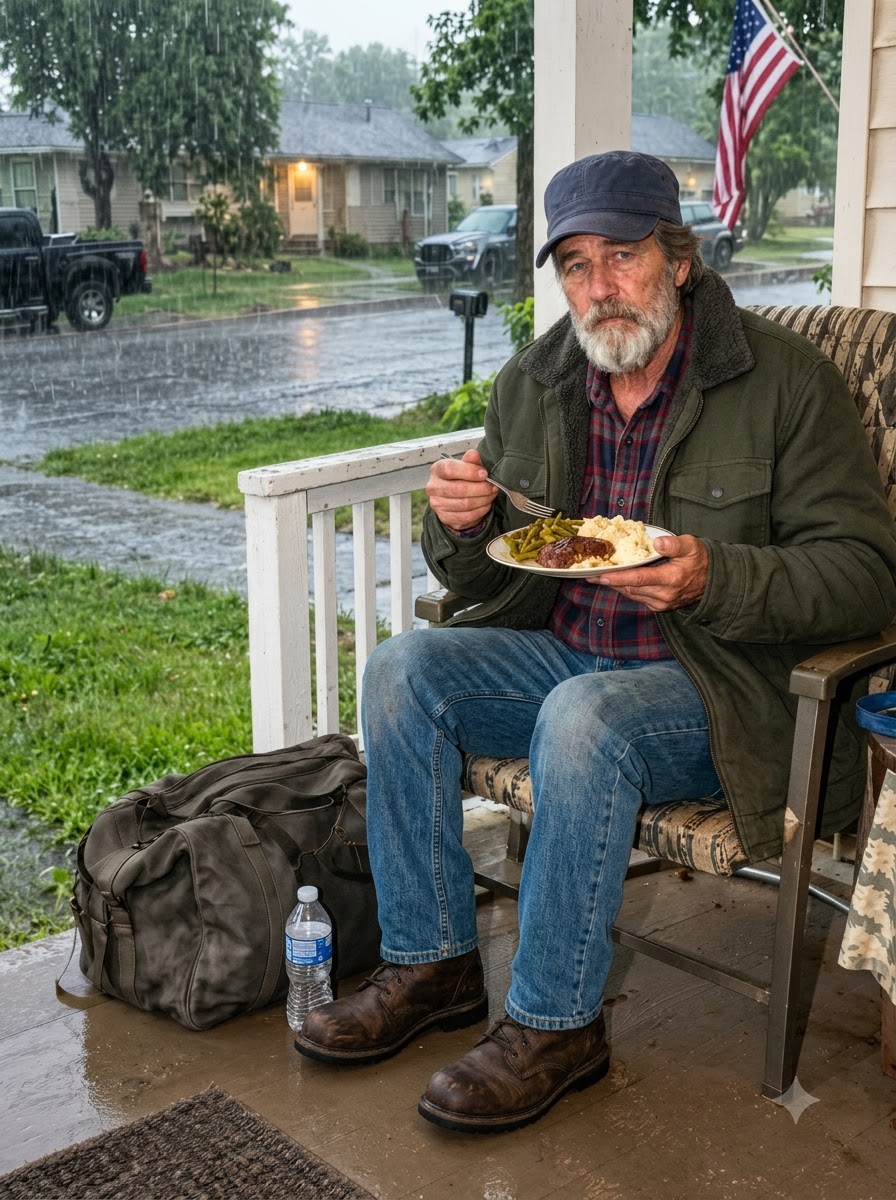
An elderly man stood beneath one of the elm trees.
Even from my window, I could tell he was probably in his seventies.
His shoulders were slightly bent, and he stood with the careful stillness of someone trying not to be noticed.
He was completely soaked.
The rain had already been pouring heavily for nearly twenty minutes.
HE HELD AN OLD BACKPACK TIGHTLY AGAINST HIS CHEST.
Something about the way he guarded that backpack told me it contained nearly everything important to him.
I opened the front door.
“Sir?”
He looked up.
For a moment, he seemed unsure whether I was actually speaking to him.
“You can come inside,” I called. “I have a couch.”
He shook his head.
I offered again.
He refused again.
He wasn’t rude.
Quite the opposite.
There was something painfully polite about him, as though years of hardship had taught him to apologize simply for existing in someone else’s space.
Then he glanced toward my porch.
“Would you mind if I stayed there until the rain lets up?”
The porch was covered.
At least he would stay dry.
“Of course.”
I brought him two cushions, a towel, and the warmest blanket I owned.
It was a quilt my mother had made years earlier, one of the few things from my old life that had unquestionably belonged to me after the divorce.
Then I went back inside and warmed some chicken soup I had cooked that afternoon.
Cooking had become one of the things I did when loneliness felt too loud.
When I carried the bowl outside, he stared at it for several seconds before accepting it.
Then he looked at me.
“You’ve probably got enough problems without taking care of an old man.”
He wasn’t wrong.
Rent was due soon.
The car payment was coming.
Lily needed school clothes.
Rumors about budget cuts had started circulating at work, and I had no idea whether my position was secure.
Still, I smiled.
“Tonight,” I said, “I have enough for both of us.”
And I meant it.
Later, I went inside.
I read for a while before bed while rain drummed against the porch roof.
I kept thinking about the stranger outside.
A bowl of soup.
A dry porch.
A blanket.
None of it was much.
But it was something I could give.
That night, strangely enough, I slept better than I had in weeks.
The next morning, I made coffee and poured an extra cup.
I opened the front door expecting to find him sitting outside.
The porch was empty.
My mother’s quilt rested neatly folded on the doormat.
Not casually folded.
Precisely folded.
The corners were carefully aligned.
The fabric had been smoothed flat.
I bent down to pick it up.
That was when I noticed an envelope beneath the mat.
On the front, someone had written one word.
Martha.
Inside was a single sheet of paper.
Wrapped inside that paper was an old brass key.
A small cardboard tag was tied to it with twine.
There was an address written on the tag.
A town about forty minutes away.
Underneath it were five words.
Small box. Bottom shelf.
I sat down on the porch steps and unfolded the letter.
The man’s name was Albert.
He explained that he had spent the previous eight months moving between shelters, porches, and places outdoors after his daughter-in-law changed the locks on the house where he had been staying.
His son had not stopped her.
Albert wrote that he wasn’t telling me because he wanted sympathy.
He simply wanted me to understand that he had not always been a man carrying his life inside an old backpack.
For forty years, he had owned a small hardware store.
Nothing glamorous. Just the kind of neighborhood store where customers knew each other by name and broken things were fixed whenever possible.
Then his wife, Estelle, became ill.
Albert sold the business to help pay expenses that insurance wouldn’t cover.
He wrote that he had never regretted it.
They had been married for forty-three years.
Estelle died two years earlier.
Afterward, his relationship with his son became complicated.
His daughter-in-law had never particularly liked him.
Eventually, she changed the locks.
Albert decided not to fight because he didn’t want to force his son to choose between his father and his wife.
His son never asked him to return.
So Albert kept moving.
Then he explained the key.
Before Estelle died, they had rented a storage unit.
Albert continued paying for it afterward because he could never bring himself to sort through what was inside.
Even while sleeping in shelters and outdoors, he kept paying the monthly bill.
He simply wasn’t ready to let go of Estelle’s belongings.
But while sitting beneath my porch and listening to the storm, something changed.
He became ready.
There was nothing inside the storage unit that he believed he needed anymore.
But there was something he thought I might need.
A leather notebook.
Estelle had kept it for decades.
She called it her recipe book, although according to Albert, recipes were only one part of what she had written inside.
The notebook contained everything she knew about getting through difficult times.
How to stretch money.
How to cook when the pantry was nearly empty.
How to keep going when everything felt uncertain.
How to make something useful from almost nothing.
Albert wrote that if I had a daughter, maybe she would want the notebook someday too.
The storage unit was already paid through the end of the year.
Everything inside could be kept, donated, discarded, or given away.
Then came the line that stopped me.
He wrote that I had shown him kindness without knowing anything about him.
And kindness offered without knowing whether someone can repay it, he believed, was the purest kind.
He ended the letter with five words.
I hope your worries get smaller.
Albert.
I sat on the porch for a long time.
The storm had passed.
Sunlight clung to drops of water on the elm leaves.
Neighbors walked dogs.
Cars drove past.
Everything looked completely ordinary.
Yet I was holding a key left behind by a seventy-four-year-old man who had spent eight months carrying his life in a backpack.
That morning, I drove to the address.
The town was small, the kind of place modern highways had mostly passed by.
The storage facility stood near the edge of town behind a chain-link fence.
Rows of orange doors stretched across the property.
I FOUND ALBERT’S UNIT.
The key fit perfectly.
When I rolled open the door, morning sunlight poured into a space about eight feet by ten feet.
There wasn’t any treasure inside.
There were wooden chairs.
Boxes of books.
Old kitchen items.
A sewing machine inside a wooden case.
Household objects from a life that had once occupied more space.
Then I noticed several boxes labeled in handwriting different from Albert’s.
Smaller.
Faster.
More compact.
I knew immediately.
Estelle.
On the bottom shelf sat a small wooden box.
I opened it.
Inside was the notebook.
Burgundy leather.
Soft from years of use.
Thick with handwritten pages.
I opened the cover.
The first page read:
If you are reading this, I hope you needed it.
