

Every Friday at exactly nine in the morning, $550 left my checking account.
The first time I set up that transfer, I cried.
Not because I regretted helping them.
Because I believed I was finally giving something back.
When Dad’s hours were reduced and Mom’s salon slowed down, I never hesitated. Family helps family. That was what I told myself.
Three years later, helping them had come at a price my own family could barely afford.
Lily’s sneakers were being held together with tape. Our rent was overdue. Groceries were going onto credit cards. Marcus was working extra shifts until his hands cracked from cardboard, cold air, and warehouse dust.
One night, he placed the bank statement on the table and stared at the same number I had learned to ignore.
“Just one month, Sarah. Ask them if they can take a little less.”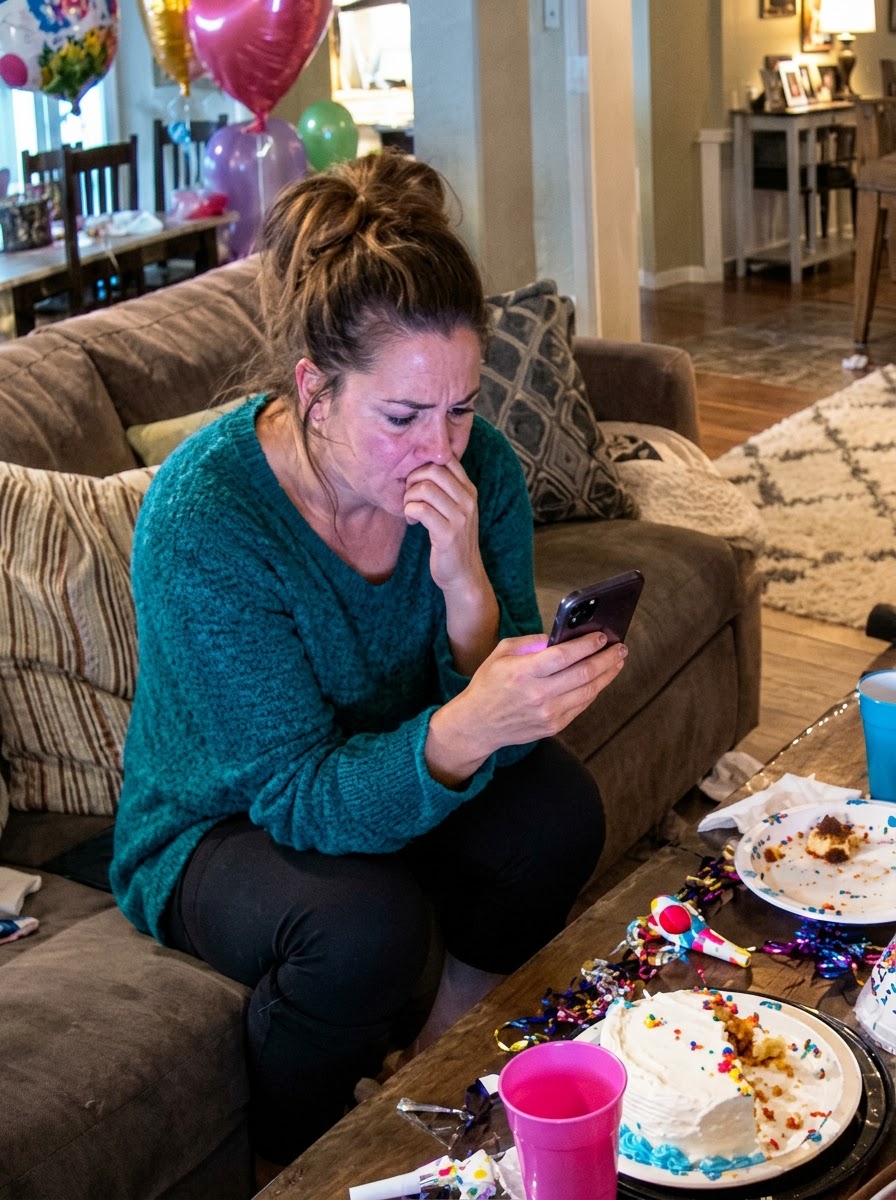
I kissed his knuckles.
“They need it.”
He looked at me for a long moment.
“And what do we need?”
I had no answer.
Mom had promised they would come to Lily’s birthday.
“We wouldn’t miss it for anything,” she said.
I believed her.
Saturday came with dollar-store balloons, a chocolate cake covered in pink frosting, and Lily running around the living room in a purple dress she had picked out herself.
She kept asking when Grandma and Grandpa would arrive.
“They’re coming,” I told her.
At two, the party began.
At three, their unopened gift was still sitting on the couch.
Lily kept looking toward the driveway.
By four, everyone else had left.
They still hadn’t arrived.
I called Dad.
Laughter and the clinking of glasses filled the background.
“Today?” he said. “We’re over at Danny’s.”
“You knew it was today.”
He sighed.
“We can’t drop everything for every little thing, Sarah. We have other grandkids. It’s easier over here.”
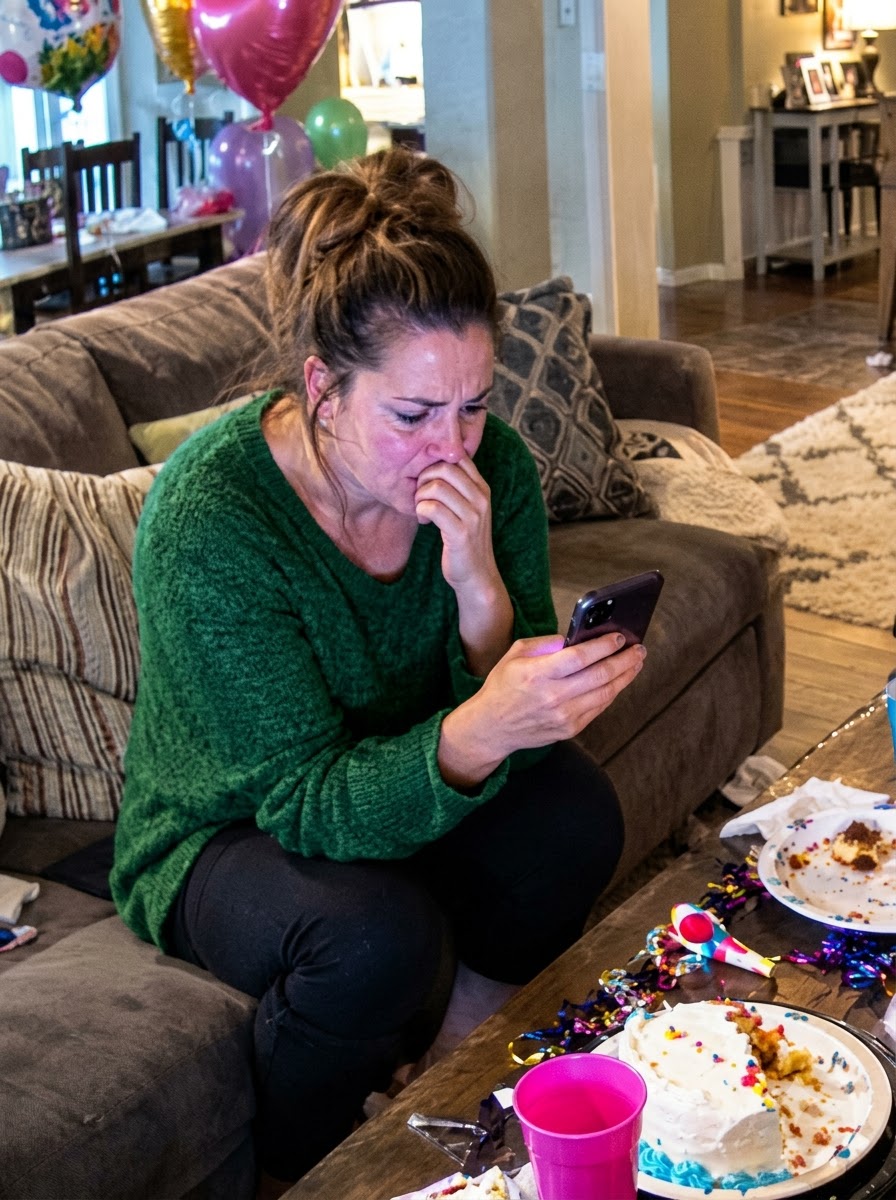
I stared at the untouched slice of cake in front of Lily.
“And how did you pay for the trip?”
“We saved,” he snapped. “What we do with our money is our business. You offered to help. Nobody forced you.”
Then he said it.
“We don’t count your family the same. Danny’s family is more… secure. You understand.”
I hung up before Lily could hear me break down.
The kitchen became silent.
The banking app glowed on the counter.
Marcus stood beside the empty plates.
From the hallway came one tiny sob.
I canceled the transfer.
Then I began cutting every financial tie.
The car loan I had co-signed.
The two extra phone lines.
The emergency credit card they used for takeout and luxuries.
Gone.
Frozen.
Removed.
Fifteen minutes erased three years of obligation.
Mom called almost immediately.
“What did you do? That money was ours!”
I looked at Lily’s crayon crown, the leftover cake, and the photograph on the refrigerator of my daughter smiling with a sparkler.
For the first time in years, something heavy lifted from my chest.
I opened my photos.
Screenshots of every transfer.
Mom’s promise that they were coming.
Dad’s old “not our problem” message from when our car broke down.
A picture of Lily in her purple dress, smiling toward a front door that never opened.
Then I opened the family group chat.
The cousins.
The aunts.
Danny.
Everyone who always stayed conveniently uninvolved.
I typed two sentences.
Clear.
No insults.
No apology.
No bridge back.
Then I attached the screenshots, the bank PDF, and the photo of Lily’s birthday cake with two empty chairs behind it.
Marcus looked at me.
“Are you sure?”
I looked down the hallway, where my daughter had fallen asleep with glitter still stuck to her cheek.
My thumb came down on Send.
For several seconds, nothing happened.
Then the little notification appeared.
Delivered.
I set the phone down.
I expected to feel guilty.
Instead, I felt strangely calm.
Marcus sat beside me.
Neither of us spoke.
Then his phone buzzed.
He looked at the screen.
“Danny.”
I didn’t ask what he said.
A second later, another message came through.
Then another.
The family group chat had exploded.
Mom wrote first.
“How dare you embarrass us like this?”
Dad followed.
“You have no right to discuss our private finances with the entire family.”
I stared at those words.
Private finances.
The same finances they had expected me to fund every Friday.
Then Aunt Linda wrote:
“Sarah, is this true?”
Before I could answer, Mom replied.
“She is twisting everything. We never demanded anything from her.”
I almost laughed.
Not because it was funny.
Because I suddenly realized how much I had trained myself to stay quiet.
For three years, every transfer had been accompanied by a little message.
“Thank you, sweetheart.”
“Things are tight this month.”
“Could you possibly send it a day early?”
“Your father needs new tires.”
“The salon is slow.”
“We’re short for groceries.”
I had believed every word.
So I opened the folder on my phone.
There were three years of screenshots.
Three years of receipts.
Three years of messages.
I selected the most important ones and sent them.
Mom’s own words appeared in the chat.
“Your money is the only thing keeping us comfortable.”
Then:
“Don’t worry, we’ll make it up to you someday.”
Then:
“Of course we’ll be there for Lily. She’s our granddaughter.”
I added one final screenshot.
It was from Dad.
It had been sent almost a year earlier, when Marcus and I had needed help after an unexpected car repair.
Dad had responded with four words.
“Not our problem, Sarah.”
The group went silent.
Then Danny finally wrote.
“I didn’t know about the $550.”
I stared at his message.
Of course he didn’t.
Why would he?
I had never told anyone.
I didn’t want my parents to look bad.
I didn’t want the family to think I was keeping score.
I didn’t want anyone to know that while I was sending them $550 every Friday, my own daughter was wearing shoes held together with tape.
I had protected them from the consequences of their choices.
And in doing so, I had made myself responsible for them.
Mom called again.
I let it ring.
Then Dad.
Then Mom again.
Marcus reached for my hand.
“You don’t have to answer.”
“I know.”
And for once, I believed it.
The next morning, I woke up before Lily.
For the first time in months, I didn’t immediately check my banking app to make sure the Friday transfer had gone through.
Instead, I opened our family budget.
The difference was shocking.
$550 every week.
More than $2,000 a month.
Thousands of dollars every year.
Money we could use for rent.
Groceries.
Lily’s clothes.
Savings.
A little breathing room.
I sat there staring at the numbers until Marcus came into the kitchen.
He poured himself coffee.
“What are you thinking?”
“I think I forgot what our money was supposed to do.”
He sat across from me.
“What’s that?”
“Take care of us.”
He nodded.
Neither of us said anything else.
That afternoon, Lily woke from her nap and came into the kitchen.
“Mommy?”
“Yeah, baby?”
“Are Grandma and Grandpa mad at me?”
My heart cracked.
“No.”
“Then why didn’t they come?”
I pulled her onto my lap.
“Because sometimes grown-ups make choices that have nothing to do with you.”
She looked at me.
“Did I do something bad?”
“No.”
I held her tighter.
“You didn’t do anything wrong.”
She thought about that for a moment.
“Can we still have cake?”
I smiled.
“Absolutely.”
We sat at the table and ate the leftover birthday cake straight from the container.
Lily got frosting on her nose.
For the first time all weekend, she laughed.
Three days later, Mom showed up at our house.
She didn’t call first.
She knocked hard enough to make Lily jump.
I looked through the window.
Mom stood on the porch with her arms crossed.
Behind her was Dad.
I opened the door but didn’t step aside.
Mom looked past me.
“Where’s Lily?”
“Inside.”
“She needs to see her grandparents.”
I kept my voice steady.
“You should have come Saturday.”
“We already explained that.”
“No,” I said. “Dad explained that you don’t count my family the same.”
Dad’s face hardened.
“You took that out of context.”
“What context makes that okay?”
He didn’t answer.
Mom stepped forward.
“We raised you.”
“And I spent three years helping you.”
“That was your choice.”
“Yes.”
I nodded.
“And stopping is mine.”
Mom stared at me as though she had never considered that possibility.
“You can’t just cut us off.”
“I already did.”
“You’re our daughter.”
“And Lily is your granddaughter.”
Mom looked away.
Dad sighed.
“This is ridiculous. You’re making a huge issue out of one missed birthday.”
“One missed birthday?”
My voice finally broke.
“No. It was one birthday after three years of being told your problems mattered more than mine.”
Dad started to respond.
I held up my hand.
“I don’t want to fight.”
That stopped him.
“I don’t want revenge. I don’t want anyone punished. I don’t even want you to feel ashamed.”
Mom’s eyes narrowed.
“Then what do you want?”
“I want my family to stop being the family you remember only when you need something.”
Neither of them spoke.
I continued.
“I’ll never regret helping you when you needed it. But I regret teaching myself that helping you meant sacrificing my own child.”
Mom’s expression changed.
For a second, I thought she might cry.
Instead, she said quietly:
“So you’re choosing Marcus and Lily over us.”
I looked at her.
“No.”
I shook my head.
“I’m choosing all of us to live within our own means.”
Dad scoffed.
“You’ve changed.”
“Maybe.”
I looked down the hallway.
“Maybe I just finally noticed what was happening.”
They left without another word.
That night, I thought the worst was over.
It wasn’t.
The following Friday, I received a message from Dad.
“Your mother has a medical bill. You can’t abandon your parents over a birthday.”
I stared at the screen.
My first instinct was to send the money.
Three years of habit moved faster than reason.
My banking app was already open.
Then I remembered Lily’s purple dress.
The empty driveway.
The two empty chairs behind the cake.
I closed the app.
I replied:
“I hope Mom gets the care she needs. I am not going to fund your household anymore. If there is a genuine emergency, contact the appropriate services or discuss payment arrangements with the provider. I cannot be your financial plan.”
I put my phone away.
That was the hardest message I had ever sent.
Not because it was cruel.
Because it was the first time I had allowed a boundary to remain a boundary.
Weeks passed.
The family group chat became quieter.
Some relatives supported me.
Some said I should forgive my parents.
Some said I should give them another chance.
I didn’t argue with any of them.
I simply stopped explaining.
Danny eventually called.
“I owe you an apology,” he said.
I didn’t know what to say.
“For what?”
“For not knowing.”
“You couldn’t know what I didn’t tell you.”
He was silent.
Then he said:
“Dad told me you were helping because you wanted to. He never told me how much.”
I leaned against the kitchen counter.
“Do you believe me now?”
“I saw the statements.”
He paused.
“And Sarah?”
“Yeah?”
“I’m sorry about Lily.”
That sentence meant more than he probably realized.
Months later, Lily needed new shoes.
Not shoes held together with tape.
Real shoes.
We went to the store together.
She chose a pair with purple stars.
She ran around the aisle wearing them.
“Mommy, look!”
I laughed.
“I see you.”
She jumped.
“I can run fast!”
“You sure can.”
I paid for the shoes without checking my balance three times.
That small moment felt bigger than any gift my parents could have given her.
Our finances didn’t magically become perfect.
Marcus still worked hard.
I still watched our spending.
We still had bills.
But there was no longer a $550 transfer every Friday.
Instead, that money stayed in our home.
Some went toward debt.
Some went into savings.
Some went toward Lily.
And one Friday, I moved $550 into an account with her name on it.
Marcus looked at the confirmation.
“What is that?”
“Her future.”
He smiled.
“That’s a pretty good Friday tradition.”
I smiled back.
A year after Lily’s birthday, Mom sent me a message.
It was short.
“I understand now that what your father said was wrong. I am sorry I wasn’t there for Lily.”
I read it twice.
Then I put my phone down.
I didn’t answer immediately.
I didn’t owe anyone an instant response anymore.
Eventually, I wrote back.
“I appreciate the apology. I hope you mean it.”
A few minutes later, she replied.
“I do.”
That was all.
There was no dramatic reconciliation.
No perfect family dinner.
No sudden transformation.
And maybe that was okay.
Because I had finally learned that forgiveness didn’t require me to reopen the door to the same arrangement.
A few weeks later, Mom asked if she could see Lily.
I told her she could, but only if she respected our boundaries.
She agreed.
When Lily saw her grandmother, she hesitated.
Mom crouched down.
“Hi, sweetheart.”
Lily looked at me.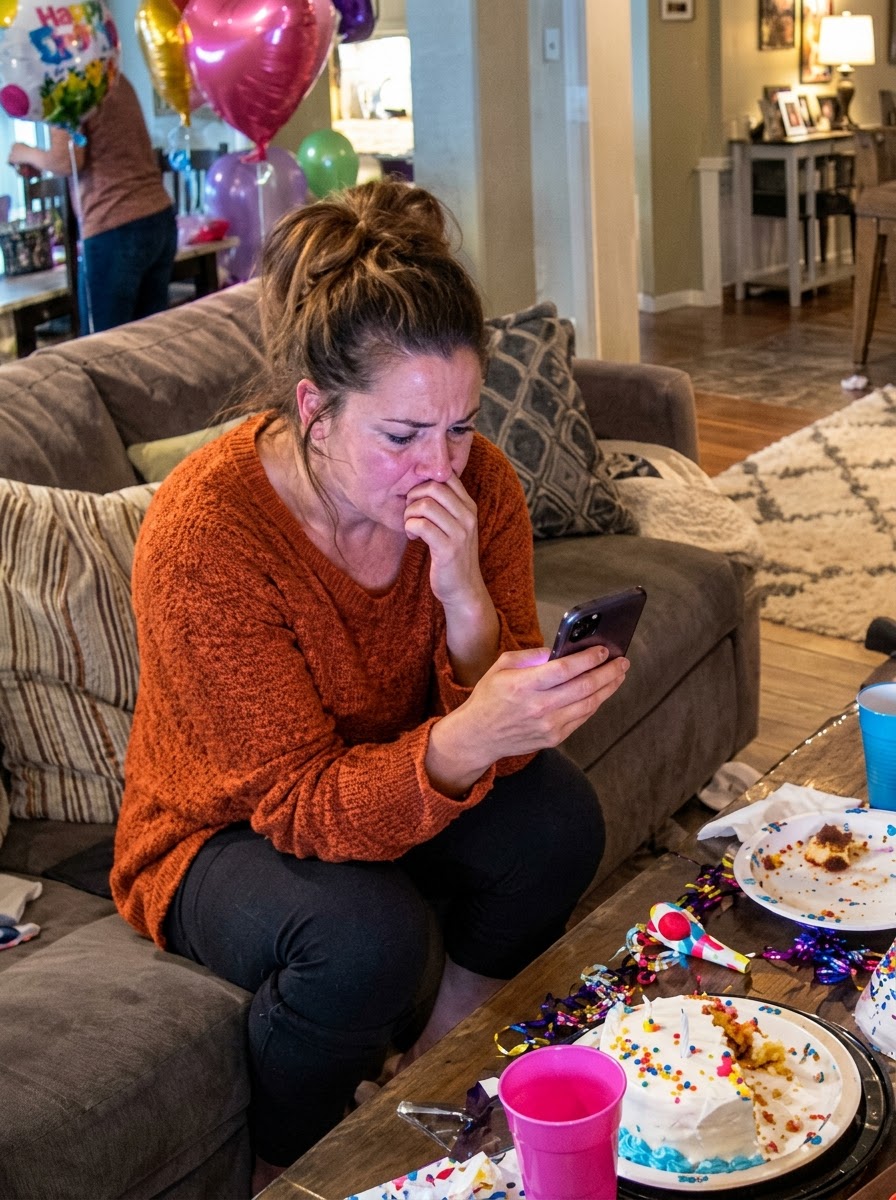
I nodded.
She walked forward.
Mom hugged her.
I watched them quietly.
There were still things to repair.
Trust doesn’t return because someone says sorry.
It returns through what people do afterward.
My parents never received another $550 every Friday.
They had to change how they lived.
So did I.
I had to learn that being a good daughter didn’t mean being an endless source of money.
I had to learn that saying no wasn’t betrayal.
And most importantly, I had to learn that my daughter’s childhood was happening right now.
Not someday.
Not after my parents were comfortable.
Not after everyone else was taken care of.
Now.
On Lily’s next birthday, there were balloons again.
There was another chocolate cake.
There was music in the living room.
And this time, there were no empty chairs.
Lily blew out her candles while everyone sang.
When she finished, she looked around the room.
Then she smiled.
“Mommy?”
“Yeah?”
“This is the best birthday ever.”
I looked at Marcus.
He smiled.
I looked at my daughter.
Then I looked at the two chairs beside the table.
They weren’t empty anymore.
And I realized something.
The message I had sent that night hadn’t destroyed my family.
It had simply forced everyone to decide what kind of family we were going to be.
For three years, I thought love meant giving until there was nothing left.
Now I knew better.
Love could mean helping.
Love could mean forgiving.
Love could mean showing up.
And sometimes, love meant finally saying:
“This is where my responsibility ends.”
I had spent three years sending $550 every Friday because I thought I owed my parents a comfortable life.
But my daughter had taught me something far more important.
I didn’t owe anyone my family’s future.
I owed my family my presence.
And this time, I wasn’t going to miss it.
