

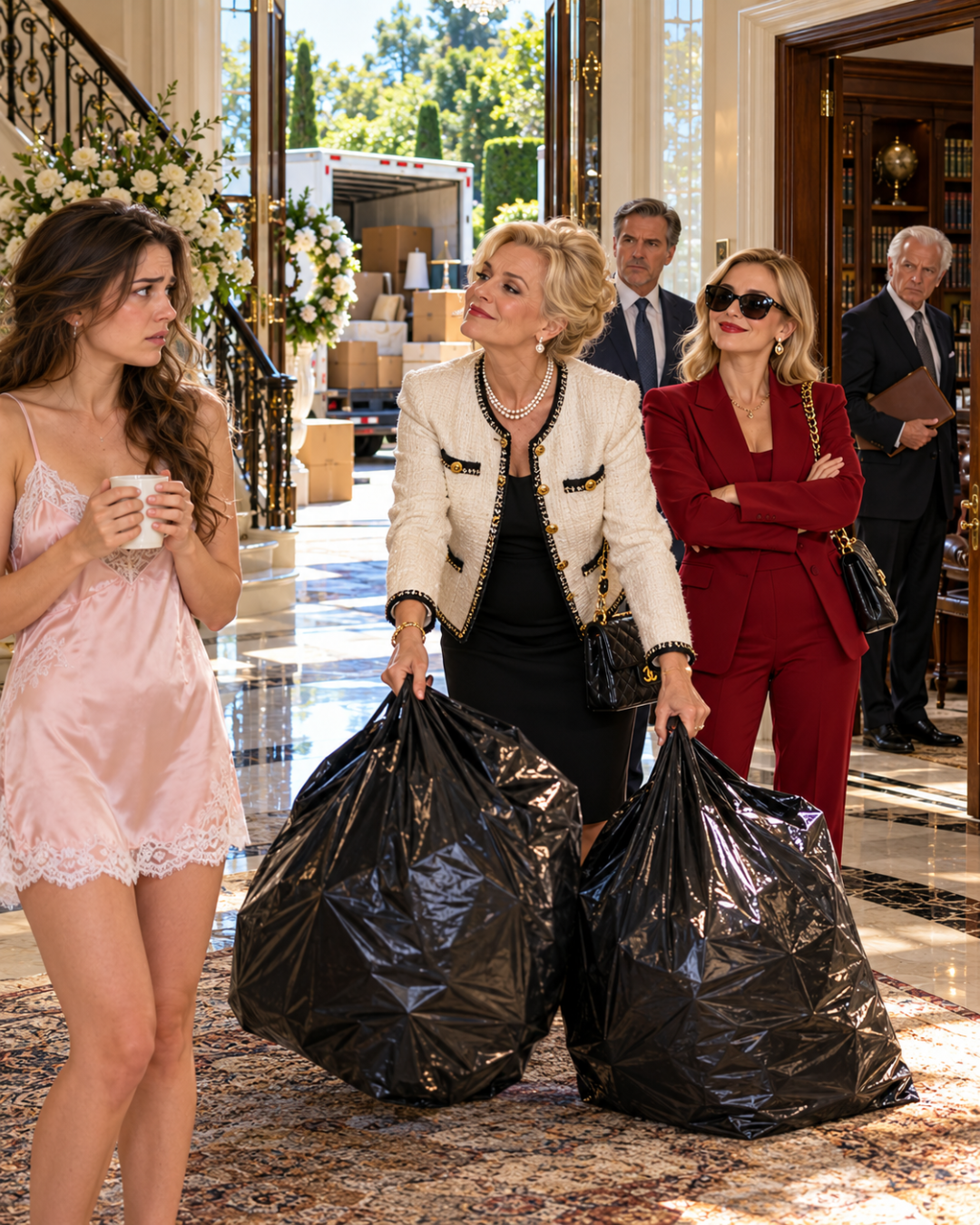
My parents left me with Grandpa when I was five and never came back. The morning after his funeral, they returned with a moving truck. My sister walked in and announced, “I’m taking the master bedroom.” Mom shoved garbage bags into my hands and said, “You were his responsibility. This house belongs to us now.” I didn’t argue. I had already done exactly what Grandpa told me to do before he died. Then the door to his study opened, and the bags slipped from Mom’s hands.
They had told him it was only for the weekend.
I remember the porch more clearly than I remember their faces. A backpack with a broken zipper. A stuffed rabbit with one ear folded wrong. Mom’s hand on my shoulder, light as a receipt, and her voice saying she needed two days to sort things out. Dad stayed by the car. Brianna waved from the back seat, nine years old, a field-trip wristband still on her arm. I waved back. I thought Sunday had a shape. I thought people who said they would come back were telling the truth, because Grandpa’s bedtime stories were full of people whose word meant something.
Sunday came. Then another. Then the tomatoes ripened and were put up in jars, and no one called.
There were no birthday cards. No Christmas mornings that belonged to anyone but the two of us. No explanation that arrived later and made the first one kinder. Grandpa raised me on pension checks, vegetables from the garden, secondhand furniture, and the stubborn idea that a child left on a porch was not a burden. He was a burden’s opposite. He was the reason the window eventually stopped being a place I watched.
He stopped smoking ten years before he died, but the pipe tobacco never quite left his coat pockets, or the study, or the flannel shirts I started wearing when his shoulders became too narrow for them. Yesterday I buried him. The funeral lilies were still in the front room. The black wreath was still on the door. The house smelled like flowers, damp autumn, and the last of him.
This morning they came for what was left.
Brianna stepped out behind our parents in expensive sunglasses, glanced past the wreath, and smiled as if the porch were a listing she had already toured.
“I’m taking the master bedroom.”
I stood with a cup of coffee I had not touched. Mom came up the steps the way she used to cross hotel lobbies, certain every board beneath her already agreed with her.
“You look terrible, Emily.”
She said it the way someone criticizes an outfit. Dad did not hug me. He did not say he was sorry. He turned to the movers and pointed at the house.
“Start with the furniture upstairs.”
Brianna brushed past me into the foyer and wrinkled her nose.
“Seriously? It smells like an old man in here.”
Something in me went still. Not soft. Still.
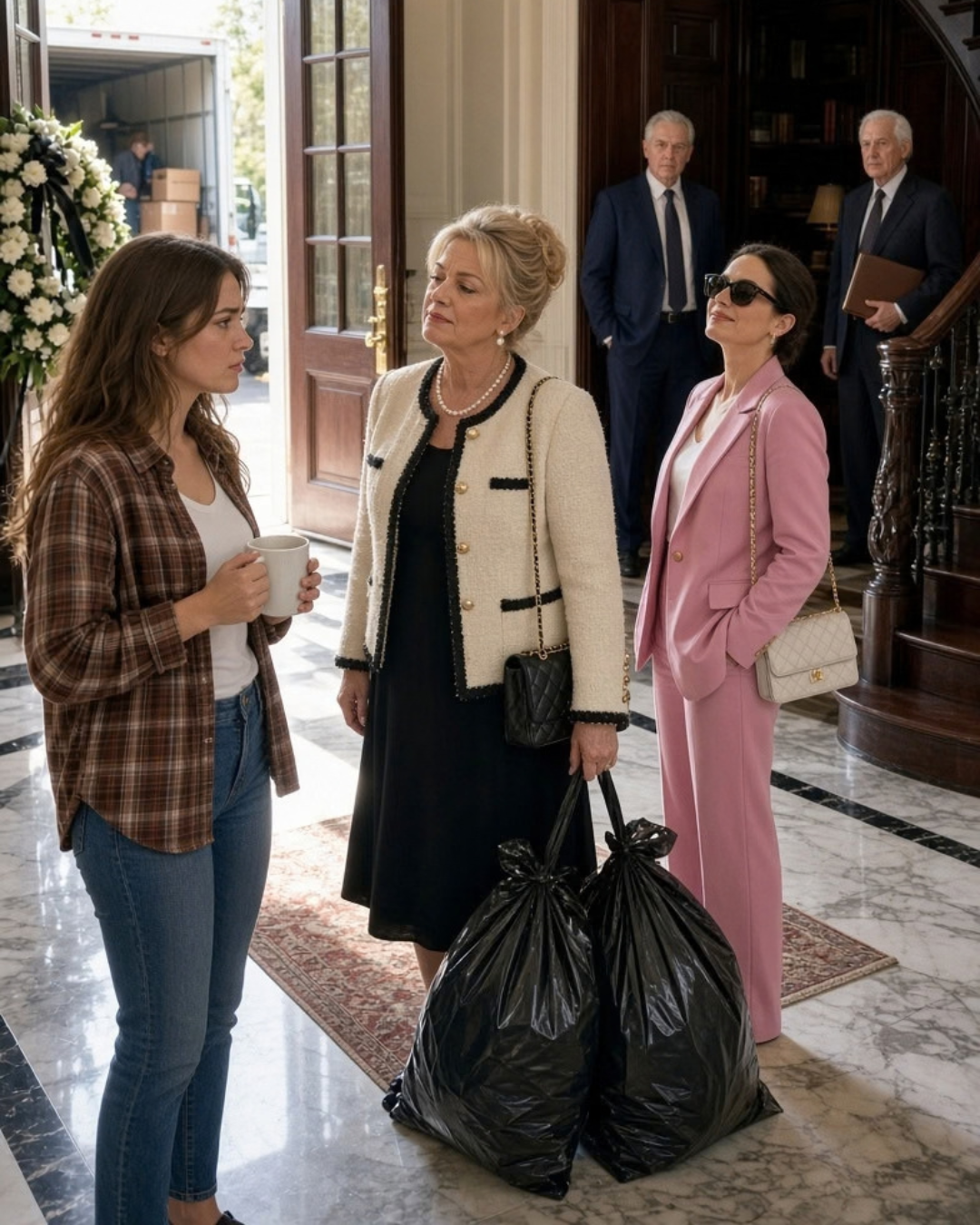
Mom snapped her fingers in front of my face and pushed two black garbage bags into my arms.
“Pack whatever belongs to you. Your clothes, toothbrush, that awful quilt—whatever little things you have.” She lowered her voice, as if kindness and cruelty used the same careful tone. “You were Grandpa’s burden, Emily. Now that he’s gone, this house belongs to us.”
From upstairs, Brianna called, “Mom! Can I paint the master bedroom white? All this dark wood is depressing.”
Dad finally looked at me.
“Don’t make this harder than it needs to be. Your grandfather always wanted this property to stay in the family.”
I almost laughed.
Family.
Instead I set the bags neatly on the floor, because I remembered the hospital.
A few days before he died, Grandpa’s hand was thin around mine, but his voice was not. “When they come, don’t argue with them at the door.”
“When who comes?”
“Your parents.” He had known. He squeezed once. “Let them inside. Let them talk. Let them show everyone exactly who they are.”
“And then?”
His eyes met mine. “Open my study.”
So I did not fight the movers. I did not yell. I did not correct Mom when she called me a burden, or Brianna when she claimed rooms, or Dad when he issued instructions as if grief were a scheduling problem. I let them walk through the house where I had done my homework, learned to boil beans, and waited at a window until waiting became a habit I had to unlearn. I let them show the porch, the wreath, and Mrs. Alvarez’s fence exactly who they were.
Then something clicked at the end of the hallway.
Everyone stopped.
The study door opened.
Mr. Harlan stood inside, Grandpa’s attorney, glasses already adjusted, a tablet under one arm. Beside him were two uniformed deputies, a woman holding a camera, and Mrs. Alvarez from next door, who had brought casseroles almost every night of the last month and had never once called me a burden.
Mom took one step back. One of the garbage bags slipped from her hand and slumped against the baseboard.
“What is this?”
“Good morning, Linda. Robert. Brianna. Emily.” Mr. Harlan’s voice was the same one he used for deeds and funerals. “Your father gave me a key, written authorization, and very specific instructions.”
Dad’s jaw tightened. “You had no right to enter this house.”
“I had every right.”
Brianna came down the stairs too fast. “Wait. Is this about the will?”
Mom recovered the way she always did, with the smile she used on bank managers. “This is a family matter. Emily is emotional. She doesn’t understand property law.”
Mr. Harlan looked at me. “Emily understands more than enough.”
Dad laughed once, sharp. “She’s a kid.”
“I’m twenty-two,” I said.
Brianna rolled her eyes. “A twenty-two-year-old who still lives in Grandpa’s house.”
I let her say it. I let Mom smirk. I let Dad stand with his arms folded, waiting for the room to take his side. Then Mr. Harlan tapped the tablet, and Grandpa’s voice filled the hallway.
“If you’re hearing this, then my daughter finally came home for what she could take.”
Mom went pale.
On the screen he sat behind the desk, thinner than the man who had taught me to stake tomatoes, eyes still sharp. “Linda, you left your child on my porch with one backpack and a stuffed rabbit. You said you needed one weekend.” He paused, and the pause had seventeen years in it. “You took seventeen years.”
“Turn it off,” Mom whispered.
He did not. “Robert, you signed away guardianship because you didn’t want the financial responsibility. Brianna, you knew Emily existed, and you still told people you were an only child.”
Brianna’s mouth fell open. “That’s private.”
“No,” Mr. Harlan said. “That is evidence.”
Dad’s eyes flicked to the camera. “Evidence of what?”
I stepped forward. My voice stayed level. “Of abandonment. Of financial fraud. Of attempting to claim property you don’t own. And, as of this morning, of trying to remove me from my legal residence.”
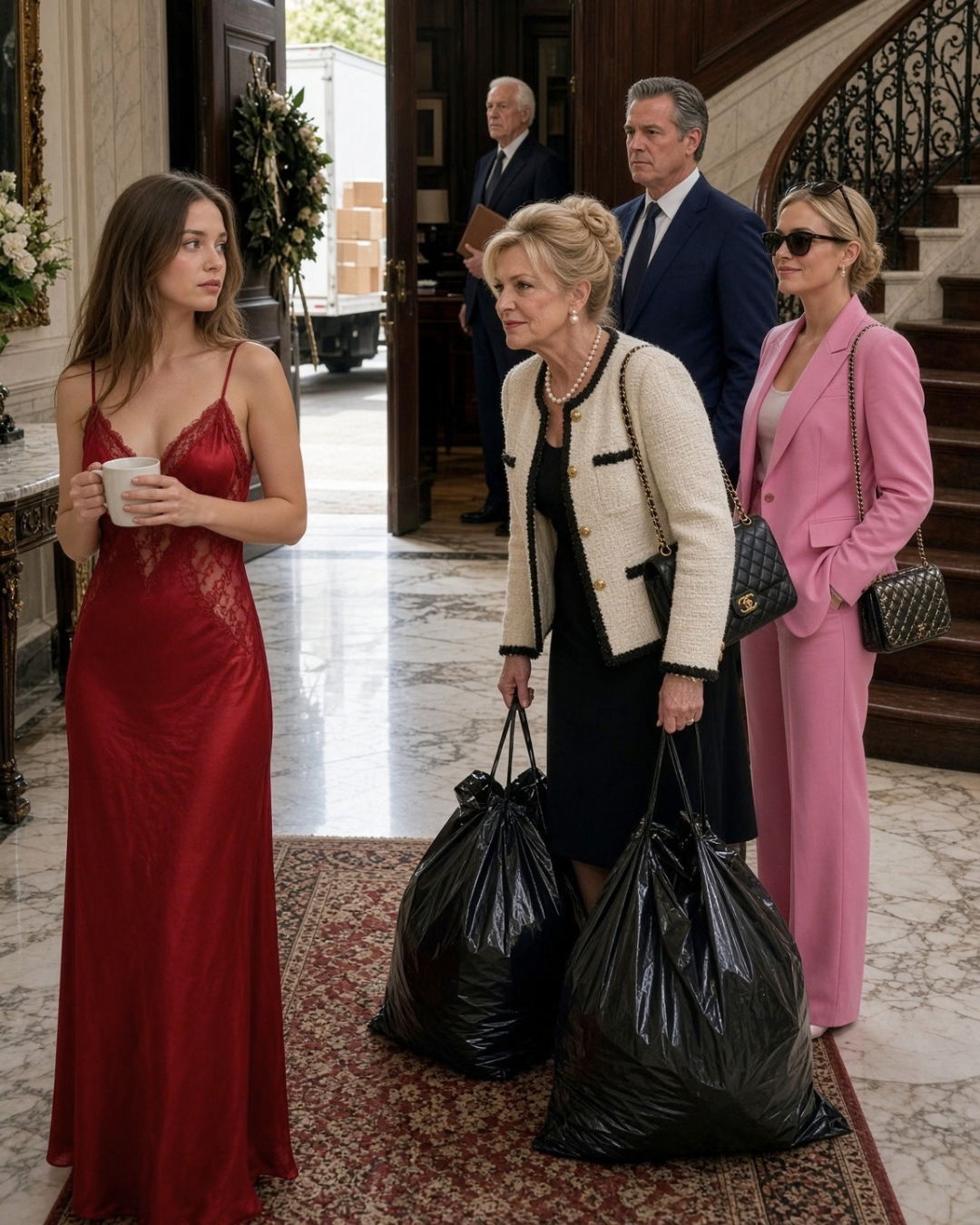
Mom gave a brittle laugh. “Legal residence? Sweetheart, you don’t even have money for an attorney.”
Mr. Harlan opened a folder. “Emily doesn’t need to hire me. Your father retained my firm to represent her.”
Rain ticked the windows. No one filled the silence.
“And the house?” Dad said.
“The house was transferred into an irrevocable trust six months ago.” Mr. Harlan turned to me. “Emily is the sole beneficiary, trustee, and resident owner. The farmland, the bank accounts, the investment portfolio, the vehicles, and the business shares were assigned to her as well.”
Brianna grabbed the banister. “No. Grandpa wouldn’t give everything to her.”
The tablet answered before I could. “I gave everything to the only person who never left.”
Mom moved toward the study. “That old man was sick. He didn’t know what he was signing.”
The deputies stepped in before she reached the desk. Mr. Harlan set another document on the table, calm as a man laying a placemat.
“He passed two separate competency evaluations. Both were documented. He also anticipated this accusation.”
Dad looked at the page. His face changed.
“What is that?” Brianna asked.
“A repayment demand,” I said.
Mom turned. “Repayment for what?”
“For every check Grandpa sent you during the years you claimed I was living with you. School assistance. Medical reimbursements. Dependent tax benefits. Emergency loans.” I held her gaze. “You told him you were helping support me. You weren’t.”
Mrs. Alvarez made a small sound by the door. She had seen the porch. She had seen the years after it.
Dad’s voice dropped. “Emily, think carefully. Family matters should remain private.”
I smiled, and it surprised me that I could. “You taught me I wasn’t family.”
Mr. Harlan handed copies to the deputies. “We have bank records, signed correspondence, tax documents, and recorded calls. Mr. Whitaker spent the final year of his life organizing everything.”
Mom stared at me as if I had become a stranger in his shirt. “You knew?”
“I helped him scan the files.” My throat hurt, and I kept going. “I helped label the recordings. I helped him build the timeline.”
“You little snake,” Brianna said.
“Ma’am,” one of the deputies said, “lower your voice.”
A mover appeared in the open front door, cap in his hands. “Sir? Are we still unloading?”
“Get back in the truck,” Dad shouted.
“No.”
They turned. I walked onto the porch, into the cold wet morning, and pointed at the truck. “Unload nothing. Take it away.”
The driver looked at the deputies, then nodded and was glad, I think, to have an order that made sense.
Mom broke then. “You ungrateful brat! That house should’ve been mine!”
“It was never yours.” I did not match her volume. “It was Grandpa’s. Now it’s mine.”
Mr. Harlan came to stand beside me. “Linda and Robert Whitaker, you are formally notified that you are no longer permitted on this property. Any further entry will be treated as trespassing. Civil action regarding the financial records begins today.”
Dad took Mom’s arm. Brianna cried, but not the way people cry when they are sorry. She cried the way people cry when a room they have already redecorated in their head is taken off the market. At the bottom of the steps Mom turned.
“You’ll regret this.”
For the first time that morning, I raised my voice. “No.”
She stopped.
“I regretted waiting at the window when I was five. I regretted believing you were coming back. I regretted asking Grandpa if I had done something wrong.” I shook my head. “This is the first thing I don’t regret.”
They drove away behind the empty truck. The wreath knocked once against the door in the wind. Mrs. Alvarez touched my sleeve and did not say she was sorry, because sorry belonged to other people. She said she would bring soup. She did.
Three months later, another truck came up the road. It did not carry my parents’ furniture. It carried boxes of donated books, new curtains, and a grand piano Grandpa had ordered in March, when he could still sign his name without resting. Mr. Harlan set the invoice on the desk and said Grandpa had not wanted me to hear about it until the case was finished. He had not wanted a gift confused with a bribe.
By then the judgment had come in. My parents were ordered to repay almost everything. Dad’s partners began answering his calls through other people. Mom sold jewelry, then the car. Brianna moved into a rented room off Maple and posted, for a while, vague sentences about betrayal that never named what had been taken, or from whom.
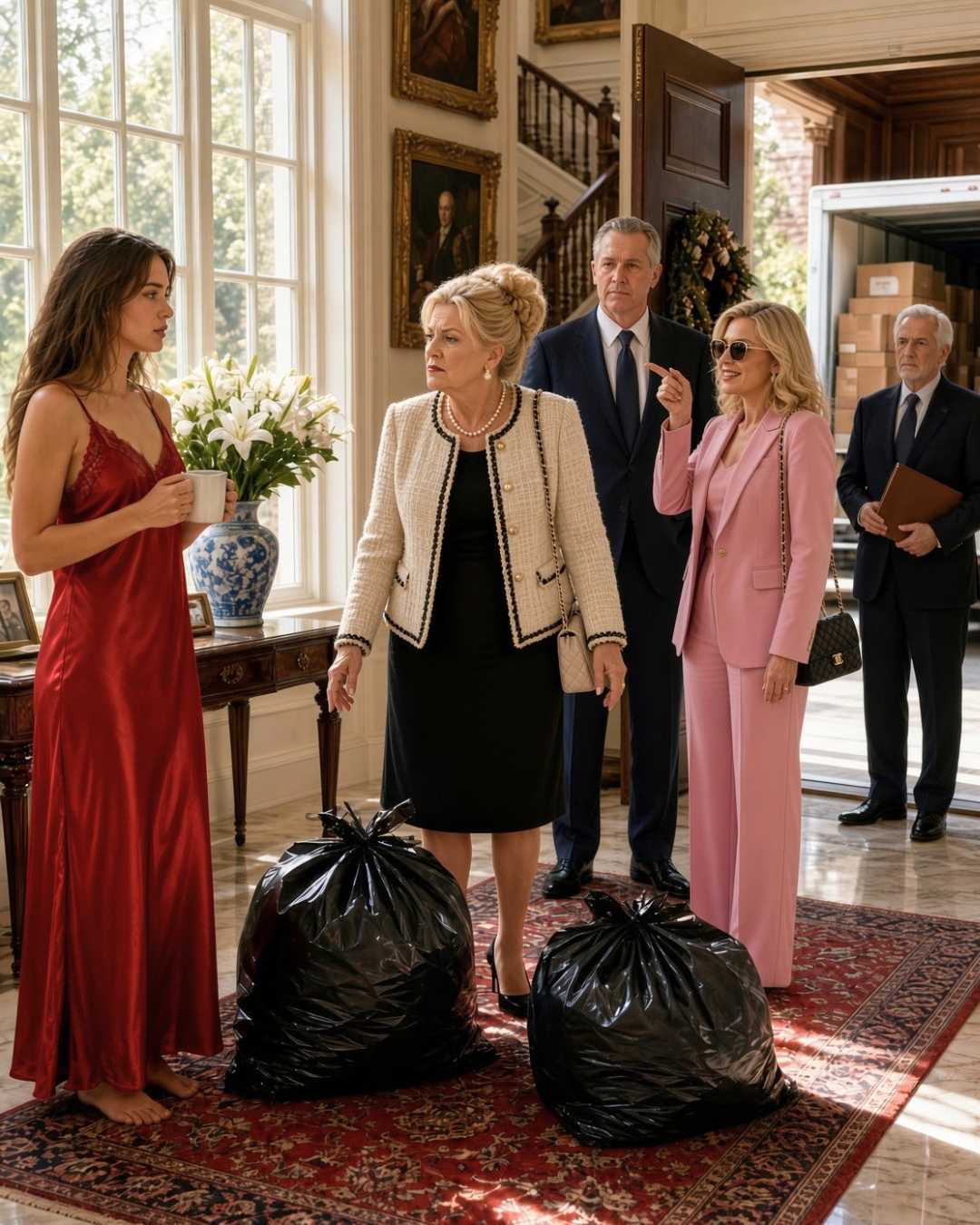
I stayed. I restored the garden. I opened the study every morning. Beside his photograph I kept the last note he had written to me.
Let them come for the house. Then show them who built a home.
The piano arrived on a Thursday. Two men from the music store carried it up the porch in quilted blankets, pausing where the wreath had been. The lilies were gone. The tomato stakes were back. Mrs. Alvarez watched from the fence with a casserole she no longer needed as an excuse.
I was reading the note when a car door closed at the curb.
Brianna did not bring sunglasses. She did not bring a truck. She stood at the bottom of the steps in a coat too thin for November, a manila envelope held to her chest.
“I’m not here for the bedroom,” she said.
“Good. It isn’t available.”
She nodded as if she had practiced being smaller. “Harlan’s office sent me something. They said I could only have it after the judgment. I didn’t open it. I thought if I opened it here, you couldn’t say I forged it.”
I looked at her hands. They were shaking, and not only from the cold. “You can come as far as the kitchen. The study stays locked unless I open it.”
She stopped at the stairs the way people stop in a room they once meant to take. Upstairs, the master bedroom door was shut. I had not moved into it. I still slept in the small room at the back, under the slanted ceiling, where a five-year-old had waited with a stuffed rabbit.
In the kitchen I put the kettle on because Grandpa would have.
“They told me you helped him build the timeline,” she said.
“I did.”
“So you knew about the checks.”
“I knew what the bank knew. What the school knew. What the tax forms knew.” I met her eyes. “I knew you told people you were an only child. He didn’t invent that.”
Her mouth tightened. “Mom said if anyone asked, it was easier. She said you were fine. She said Grandpa wanted you. I was nine. I came home from a field trip and your bed was stripped, and she was already telling the neighbor you’d gone to stay with family. After a year she stopped saying your name. After three she corrected people. ‘Just the one,’ and her hand on my shoulder like I’d won something.”
The kettle clicked off. Neither of us poured.
“That is an explanation,” I said. “It isn’t the same as not knowing I existed.”
“I knew.” The word cracked. “I knew, and I still let her say it. When we got out of the car that morning, I had already decided the big room was mine. I didn’t ask if you were all right. He was buried the day before, and I asked about paint.”
She pushed the envelope across the table. “If it’s another recording, I should hear it in front of you. If it’s money, I don’t want it. Dad’s lawyer said anything with my name on it can be attached to the judgment.”
I broke the seal. There was no check. There was a letter in his tired handwriting, and a smaller envelope with my name.
Brianna, he had written. If you are reading this, the house has already told the truth, and you have had time to decide what to do with it. I am not leaving you the property. I am leaving you the record of the day your mother put your sister on my porch and told me she would be back Sunday. You were in the car. You waved. You may not remember. Emily does. She asked me that night if she had been bad. I told her no. I am telling you now: she was not bad, and you were not the reason she was left. You were a child who was taught that love had a favorite. That is a theft too. It is not the same theft. Do not come for what was never yours. If you come to learn the difference, Emily will decide whether the door opens. I already taught her she does not have to.
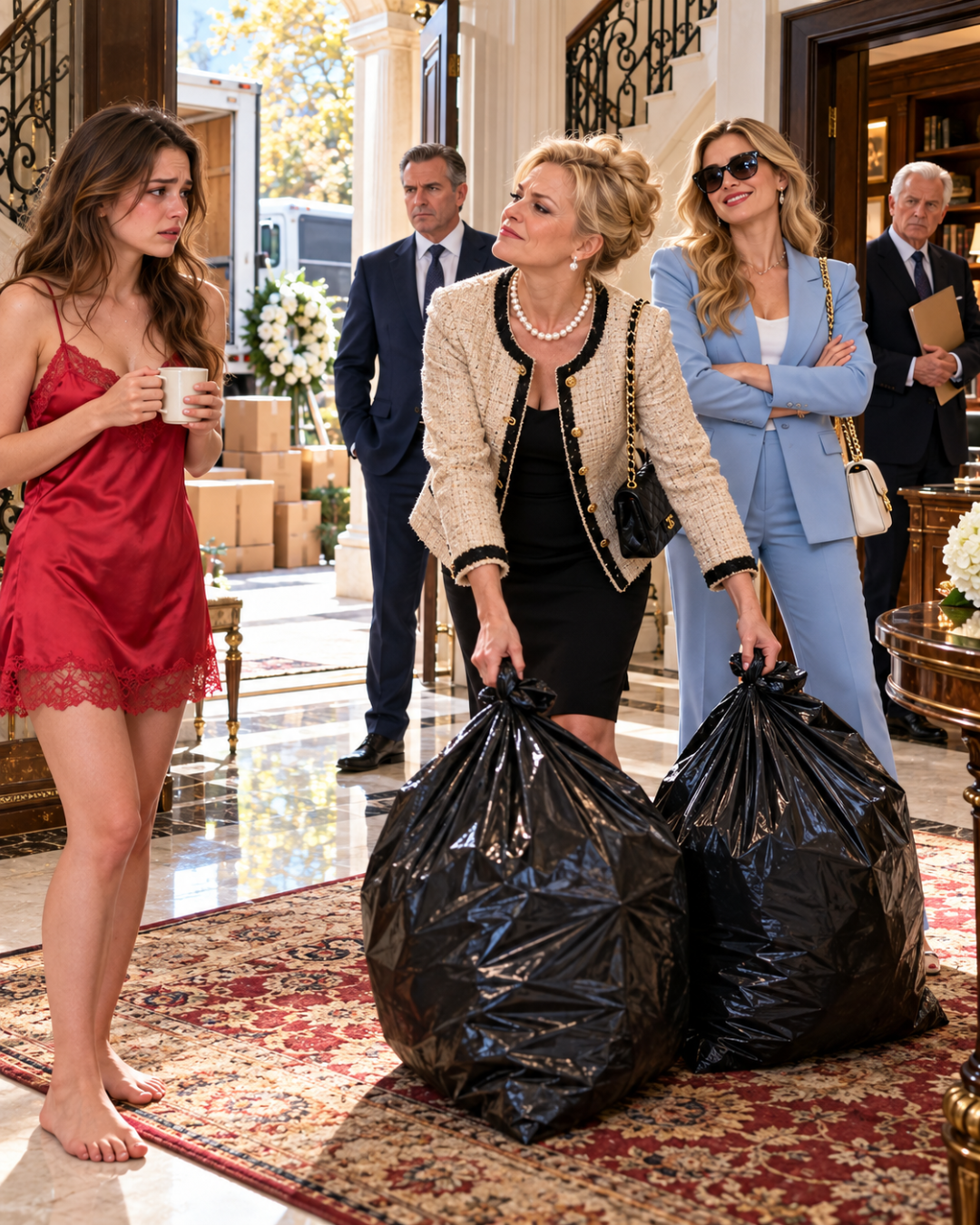
Under it, smaller: I kept your school drawings. They are in the green box. They were never a claim on the house. They were proof you were real to me, even when your parents preferred you not be real to her.
Brianna covered her mouth. I did not reach across the table. Some honesty does not need an audience touching it.
My letter was shorter.
Emily. When they come, you will want the ending to be the door closing. Let it close. That part is justice, and justice is not cruelty. After it closes, do one thing I did not have the years to finish. The repayment, when it comes, is not a prize. It is money that should have fed you, schooled you, and taken you to a dentist when your molar cracked at eleven. Keep what steadies the house. The rest, if you can bear it, put where another child is waiting by a window. Mrs. Alvarez has a name. She has been waiting to tell you. You do not owe your parents softness. You owe the five-year-old you were a house that does not only win.
I read it twice.
“What does it say?” Brianna asked.
“That the door was mine to open,” I said. “And that winning was not the whole instruction.”
Mrs. Alvarez came at dusk with the green box from her hall closet, where Grandpa had asked her to keep it in case my parents arrived before the will was read. Inside were Brianna’s drawings, a cracked school photograph, and a cassette labeled PORCH. SUNDAY. NEVER CAME. We did not play it. Some evidence has already done its work.
What she had waited to tell me was a boy on her street. Mateo, ten, left with his grandmother in August when his mother went west for a job that became a man and then became silence. The grandmother cleaned rooms at the motel off the highway. She was not dying. She was tired. After school the boy had started walking to our fence, because Grandpa, in the last month he could sit outside, had let him pick the late tomatoes and told him the rule: you may eat what you pick, and you put the basket back.
“He asked me yesterday if the man with the pipe was coming back,” Mrs. Alvarez said. “I didn’t know how to answer.”
I thought of the note. Let them come for the house. Then show them who built a home.
“He can come on Saturdays,” I said. “The garden still needs hands. He eats what he picks. He puts the basket back. If his grandmother agrees, he can use the piano bench for homework. Not the bedroom. Not a replacement. A place that stays.”
Brianna was still at the table. She had not touched the tea. “I could drive him,” she said, then heard herself. “If you ever wanted. I have the evenings. I stopped posting the quotes. They were for Mom’s friends. She still calls the judgment a misunderstanding.”
“What do you call it?”
“True,” she said. “Late.”
That was as much as I had for her. Forgiveness is not a room you paint because the wood depresses you. It is a door that might open later, on terms that do not require a child to disappear.
The rest came as winter, not as a speech. Mom called Mr. Harlan’s office to ask whether an apology could reduce the figure. He told her an apology could be written down. It could not be invoiced. She did not write it.
On the first Saturday, Mateo came with his grandmother, who looked at the house the way people look at a place they have been warned not to want. I told her the rule. She told me his shoe size. Brianna stayed in the car until I waved, and even then she did not go upstairs. She tied the tomato stakes wrong. Mateo corrected her. Grandpa would have liked that more than the apology we never got.
In the spring I opened the study before the garden and before the piano, the way I always did. The photograph had not changed. The note had not changed. What had changed was the sound down the hall: a scale, uneven, stopping, starting again, and a boy asking whether the man with the pipe had really meant the basket rule for everyone.
I answered from the doorway.
“Yes,” I said. “Especially for everyone.”
No moving truck came back for the furniture. The house did not become a symbol. It became what Grandpa had paid for with pension checks and patience: a place where a promise lasted longer than a weekend. The people who came for the rooms left with empty hands. The people who came to learn the garden were allowed to stay until the light changed.
On the desk, I left his last instruction where the truth could find it.
Let them come for the house. Then show them who built a home.
I had done the first thing the morning after the funeral.
I was learning, slowly, how to do the second.
