

I stood beside the witness box with one hand wrapped tightly around the wooden railing because the courtroom refused to stay still.
The fluorescent lights above me hummed relentlessly. Every whisper sounded amplified. My heartbeat seemed to pound in places where I could feel it, but I could not understand what it was doing.
Judge Richard Hanley looked over his glasses.
“Are you able to continue?”
I desperately wanted to say yes.
Daniel had spent the entire morning making it clear that, in his mind, weakness meant dishonesty. If I admitted that I could not continue, I knew he would treat it as another piece of evidence against me.
The custody hearing had already become a nightmare.
Daniel’s attorney had spent months gathering every emergency-room visit, every appointment, every complaint of dizziness, every episode of exhaustion and every unexplained blackout, then presenting them as proof that I was unstable.
Because several doctors had been unable to identify a definite cause, Daniel insisted there was nothing physically wrong with me.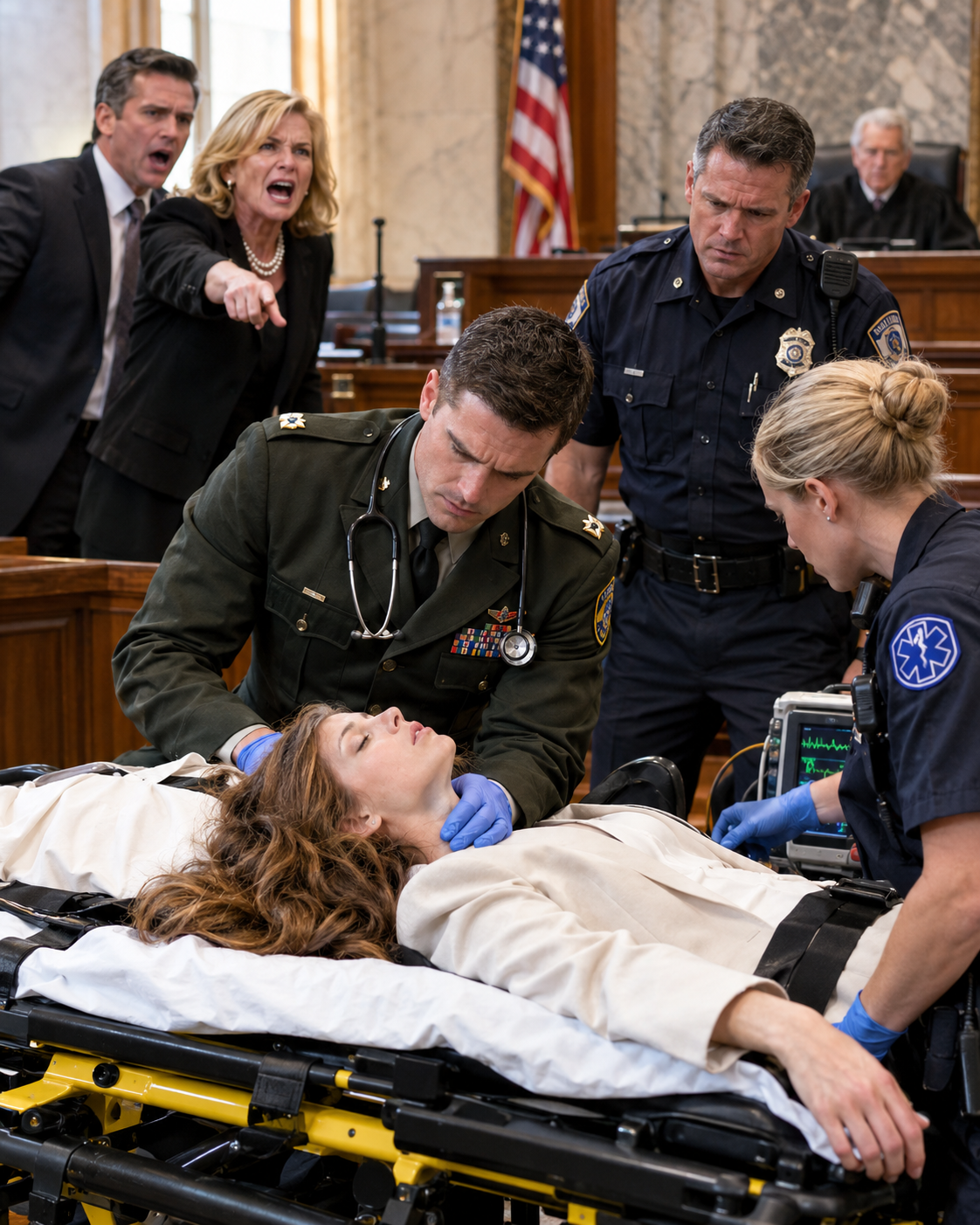
Patricia, his mother, sat behind him and nodded along as though every terrifying episode I had experienced was merely another act she had finally exposed.
The worst part was that I had come to court by myself.
My attorney had withdrawn two weeks earlier after Daniel drained our joint account, leaving me unable to cover the retainer. I had spent the previous night going through documents at my kitchen table, trying to understand legal language I had never expected to have to interpret alone.
That morning, I had been trying to explain why our seven-year-old daughter, Lily, cried before going to Daniel’s house.
I had tried to explain why she had started hiding her backpack whenever a transition day approached.
I had tried to explain why she sometimes stood silently at the front door, gripping my hand so tightly that her knuckles turned pale.
Every time I spoke about Lily’s fear, Daniel’s lawyer objected.
Every objection made me feel as though my daughter was disappearing behind legal phrases I had no ability to challenge.
Then the floor moved beneath me again.
“Your Honor, I need a minute.”
Daniel gave a quiet laugh, as if my words had just confirmed everything he had been saying.
Patricia shook her head.
“Drama.”
Judge Hanley reminded me that the court had already been patient.
I looked toward Daniel.
For one strange second, I saw two versions of him.
Then three.
The railing slipped from my fingers.
My shoulder struck the floor, but the pain barely registered.
Voices stretched and blurred around me. Chairs scraped backward. Someone shouted for help.
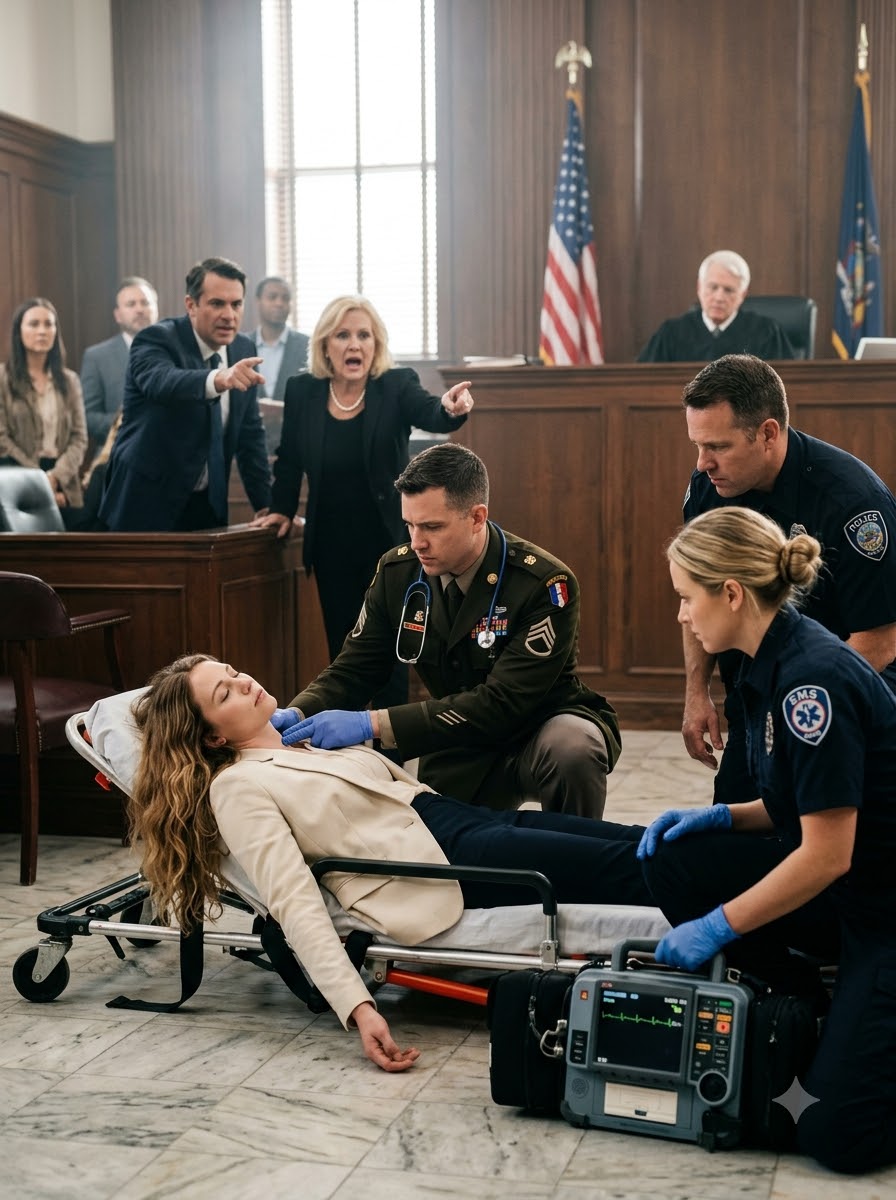
Then a tall man wearing a dark green uniform dropped to his knees beside me.
He placed two fingers against my neck.
His name tag read CARTER.
The calm expression on his face disappeared almost immediately.
“Ma’am, can you hear me?”
I tried to answer.
My tongue felt heavy.
My lips barely moved.
Behind him, Daniel stood.
“She’s fine. She does this.”
The man looked over his shoulder.
“I’m Colonel Aaron Carter, U.S. Army Medical Corps,” he said in a voice that immediately silenced the room.
Patricia scoffed.
“He doesn’t know her.”
Colonel Carter ignored her.
He checked my pulse again, lifted one eyelid, watched my breathing, and asked how long I had been experiencing dizziness and blackouts.
“Months.”
The word barely escaped me.
His expression changed.
Then he looked toward the judge.
“She needs an ambulance.”
Nobody moved quickly enough.
Maybe everyone was stunned.
Maybe they had become so accustomed to hearing Daniel and Patricia describe me as dishonest that they had forgotten what a genuine medical emergency looked like.
Colonel Carter’s voice suddenly filled the courtroom.
“CALL 911!”
The bailiff grabbed the phone.
Judge Hanley stepped down from the bench.
Patricia stopped talking.
Within minutes, paramedics rushed inside carrying equipment.
Oxygen.
A blood-pressure cuff.
Monitoring leads.
A portable monitor.
One paramedic stared at the screen.
“Heart rate thirty-six.”
Another called out my blood pressure.
The numbers were so low that even through my confusion, I understood something was seriously wrong.
Daniel stood several feet away.
“Is she actually—”
He never finished the question.
Colonel Carter looked directly at him.
“Sir, she is not pretending.”
Those four words somehow hurt almost as much as hitting the floor.
For an entire year, I had begged doctors, relatives, and eventually myself to believe that something real was happening inside my body.
Daniel had told me I was anxious.
Patricia had called me dramatic.
Every normal test had strengthened their version of who I was.
Now a stranger who had known me for less than five minutes had been the first person to say what I had nearly stopped believing myself.
Judge Hanley immediately suspended the hearing.
Daniel tried to object.
The judge stopped him.
“Custody will be discussed only after she is medically capable of participating.”
As the paramedics lifted me onto the stretcher, I looked toward Patricia.
She was standing beside her son.
For the first time that day, neither of them looked certain.
At the hospital, I woke beneath a ceiling of white panels with wires attached to my chest.
A nurse told me a cardiologist wanted to speak with me.
Dr. Priya Shah pulled a chair beside my bed.
She asked whether the blackouts had always happened without warning.
I told her about the muffled hearing.
The narrowing vision.
The strange sensation of my heart racing and then suddenly slowing.
She listened without interrupting.
Then she glanced at the monitor.
“That is exactly why this has been so easy to miss.”
I stared at her.
I was afraid to ask what she meant.
Dr. Shah explained that several of my earlier ECGs could have appeared normal because whatever was happening inside my heart was not occurring continuously.
Continuous monitoring had captured what previous appointments had missed.
She turned the screen slightly toward me.
Then she spoke carefully.
“Your heart is periodically beating dangerously slowly.”
I stared at the monitor.
For a few seconds, I could not process the words.
Then I asked the only thing I could think of.
“So I wasn’t imagining it?”
Dr. Shah’s expression softened.
“No.”
That single word broke something open inside me.
I covered my face with both hands.
I cried.
Not because I was relieved to be sick.
Not because I wanted sympathy.
I cried because for so long I had been defending the reality of my own body.
Dr. Shah waited quietly.
Eventually, I lowered my hands.
“What happens now?”
She explained that the cardiology team needed additional testing to determine exactly what was causing the abnormal rhythm and how best to treat it.
She did not promise that everything would immediately be fixed.
She did not pretend there was one simple answer.
But she told me there was evidence.
Evidence that something physical had been happening.
Evidence that my symptoms were connected.
Evidence that I had not invented them.
For the first time in months, I felt as though I had been handed something more valuable than an explanation.
I had been handed credibility.
That afternoon, Colonel Carter came to the hospital.
I recognized him immediately.
He stood at the doorway holding his military cap under one arm.
“You saved me,” I said.
He shook his head.
“I happened to be there.”
“You knew something was wrong.”
“I knew what I saw.”
He pulled a chair closer.
“I’ve worked around enough medical emergencies to know that a person collapsing with those symptoms should never be dismissed simply because previous tests were inconclusive.”
I looked down at the blanket.
“I thought maybe they were right.”
“Who?”
“My husband. His mother.”
Colonel Carter was quiet for a moment.
“Being unable to diagnose something immediately does not mean nothing is wrong.”
I nodded.
Those words stayed with me.
The next morning, Dr. Shah came back with the cardiology team.
They ran additional monitoring and reviewed the records from my previous emergency-room visits.
The pattern became clearer.
Episodes of dizziness.
Sudden exhaustion.
Near-blackouts.
Periods when my heart rate dropped dramatically.
Then moments when it accelerated again.
The earlier doctors had not necessarily done anything wrong.
They simply had not captured the abnormal rhythm at the right moment.
The problem had been intermittent.
That distinction mattered.
A test could be normal at nine in the morning and abnormal at three in the afternoon.
My body had been changing from moment to moment.
Eventually, the doctors determined that I needed treatment to prevent the dangerous slowdowns and reduce the risk of another collapse.
I signed the necessary consent forms with shaking hands.
Then I called my sister.
She answered on the second ring.
“Are you okay?”
I started crying before I could respond.
She immediately knew something was wrong.
“They found it,” I whispered.
“What did they find?”
“The reason I kept passing out.”
There was silence.
Then she asked the question I had been waiting to hear from someone I loved.
“Do you need me there?”
“Yes.”
She came that night.
She brought clothes.
A phone charger.
My favorite sweater.
And a photograph of Lily.
I stared at the picture for a long time.
My daughter was smiling at the camera, missing one of her front teeth.
I touched the glass over her face.
“I almost missed everything,” I whispered.
My sister sat beside me.
“You’re here.”
I nodded.
But I knew something had changed.
Not only medically.
Emotionally.
For months, I had been trying to prove that I deserved to be believed.
Now I realized I should never have had to earn that basic dignity.
Two days later, Daniel came to the hospital.
He did not come alone.
Patricia was with him.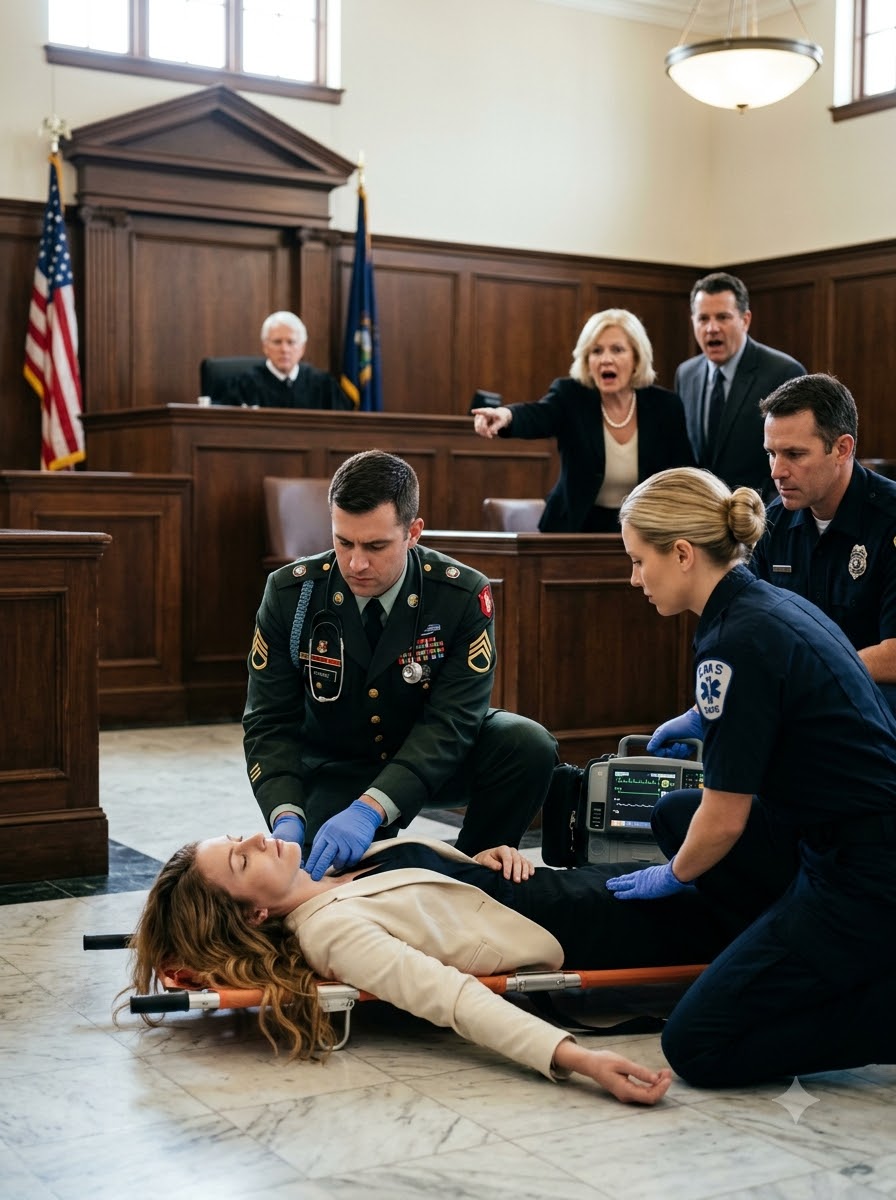
I was sitting upright when they entered.
Daniel looked uncomfortable.
Patricia looked angry.
Neither looked at the monitor.
Neither asked how I was feeling.
Daniel stood at the foot of the bed.
“We need to talk about the custody hearing.”
My sister immediately stood.
“She just got through a medical procedure.”
Daniel ignored her.
“The judge still needs to hear my side.”
I looked at him.
“You told everyone I was faking.”
“I was wrong about some things.”
“Some?”
He hesitated.
“I didn’t know.”
I almost laughed.
“You didn’t know because you decided you already knew.”
Patricia stepped forward.
“We were concerned about Lily.”
I looked at her.
“You called me dramatic.”
“I was frustrated.”
“You pointed at me in open court.”
Patricia folded her arms.
“I didn’t understand what was happening.”
“No,” I said quietly. “You didn’t want to understand.”
Daniel’s jaw tightened.
“We’re not here to fight.”
“Then why are you here?”
He looked away.
Neither of us answered.
Finally, he said, “The court wants updated medical information.”
“That is reasonable.”
He nodded.
Then he added, “But your medical issues don’t automatically make me an unsafe parent.”
“I never said they did.”
That seemed to surprise him.
I realized then that the argument had changed.
I wasn’t trying to destroy Daniel.
I wasn’t trying to keep Lily from him because I was angry.
I wanted our daughter protected from a conflict neither of us had handled well.
And I wanted the court to evaluate the situation based on evidence instead of accusations.
Daniel eventually left.
Patricia stayed behind for another moment.
She looked at me.
For once, she had nothing to say.
Then she walked out.
The following week, the custody case resumed.
This time, I had medical records.
The hospital provided documentation of the abnormal heart rhythms.
Dr. Shah submitted a medical summary explaining that my symptoms had been consistent with an intermittent cardiac condition and that the episodes of dizziness and blacking out were not fabricated.
Colonel Carter also provided a statement describing what he personally observed in the courtroom.
He did not take sides in the custody dispute.
He did not call Daniel a liar.
He simply described the medical emergency he witnessed.
That mattered.
Judge Hanley read through everything.
Then he asked Daniel’s attorney whether he still intended to argue that my collapse had been an act.
The attorney paused.
“No, Your Honor.”
I looked down.
There was no satisfaction in hearing that.
Only exhaustion.
The judge then turned to the larger issue.
Lily.
Her fear.
Her transition between homes.
The reports from her school.
The changes in her behavior.
And the fact that both parents had been so consumed by the dispute that neither had fully recognized how much the conflict was affecting her.
The court ordered additional evaluation.
Lily was given an opportunity to speak with a qualified child specialist in an appropriate setting.
I was not present.
Daniel was not present.
Neither was Patricia.
That was important.
For once, Lily didn’t have to choose which adult to please.
Weeks later, the specialist’s report became part of the case.
It did not contain the dramatic accusations Daniel had feared.
It also did not contain the absolute vindication I might once have wanted.
Instead, it described a little girl who loved both parents but was frightened by the tension between them.
A child who had begun associating custody exchanges with conflict.
A child who needed predictability.
That report changed the case more than any argument could have.
Judge Hanley established a temporary custody arrangement designed around Lily’s stability while requiring both parents to follow specific communication and transition guidelines.
There was no triumphant moment.
No dramatic courtroom speech.
No punishment.
Just a series of decisions intended to reduce the chaos surrounding our daughter.
Daniel was required to communicate with me through a structured parenting system.
I had to follow the same rules.
We both had responsibilities.
And for the first time, the case began moving away from accusations and toward Lily’s actual needs.
My recovery took time.
There were days when I felt strong.
There were days when simply walking across the room exhausted me.
I had to learn how to listen to my body again.
For months, I had trained myself to ignore it.
If I felt dizzy, I told myself I was being dramatic.
If I was tired, I forced myself to continue.
If my heart felt strange, I convinced myself it would pass.
Now I had to do the opposite.
I had to pay attention.
Rest when necessary.
Attend appointments.
Take my medication exactly as prescribed.
Follow the cardiologist’s instructions.
And accept help.
That last part was the hardest.
I had spent so long trying to prove I could handle everything alone that accepting help felt like admitting weakness.
Dr. Shah eventually corrected me.
“Needing help during recovery is not failure.”
I remembered that sentence.
I wrote it on a piece of paper beside my bed.
Lily came to visit me one afternoon.
She climbed carefully onto the chair beside me.
“Are you sick?”
I nodded.
“A little.”
“Are you going to get better?”
“I am working on it.”
She studied my face.
“Daddy said you were okay.”
I took a slow breath.
I knew exactly what I wanted to say.
I also knew what I shouldn’t say.
I didn’t want Lily caught in the middle.
So I told her the truth without making her carry the adult conflict.
“Sometimes grown-ups don’t understand things right away.”
She nodded.
“Like when my teacher doesn’t know where my pencil is?”
I smiled.
“Something like that.”
She leaned against me.
“I’m glad you didn’t disappear.”
My throat tightened.
“I’m glad too.”
She stayed beside me for a while.
Then she asked whether she could see the monitor.
I showed her.
She watched the numbers for a few seconds.
“Your heart is still working.”
“Yes.”
“Good.”
She rested her head against my shoulder.
And for the first time in months, I allowed myself to believe that our family could become something different.
Not perfect.
Not unchanged.
Different.
Daniel changed slowly.
At first, he only followed the court orders because he had to.
Then something unexpected happened.
During one scheduled exchange, Lily dropped her backpack and started crying.
Daniel called me.
He could have blamed me.
He could have accused Lily of being manipulated.
Instead, he said, “She doesn’t want to go.”
I was silent.
“What do you want me to do?” he asked.
I looked at Lily.
“Give her a minute.”
There was a pause.
Then Daniel said, “Okay.”
It was a tiny moment.
But it mattered.
He sat with her.
He didn’t force her.
He didn’t call me names.
He didn’t tell her that she was being difficult.
Eventually, Lily picked up her backpack.
She went with him.
When he brought her back two days later, he told me something I never expected to hear.
“I think I handled this badly.”
I looked at him.
He stared at the floor.
“I thought if I admitted you were sick, I’d lose everything.”
I said nothing.
“I was angry,” he continued. “And I convinced myself that if your symptoms weren’t diagnosed, they weren’t real.”
I swallowed.
“That hurt.”
“I know.”
“No,” I said. “I don’t think you do.”
He looked at me.
“You didn’t just doubt me. You taught me to doubt myself.”
His face changed.
“I’m sorry.”
It wasn’t enough to erase what happened.
But it was the first apology that sounded like he understood the damage.
I didn’t forgive him immediately.
I didn’t think forgiveness should be treated like a switch.
Some wounds need time.
Some trust has to be rebuilt through behavior rather than promises.
So I told him exactly that.
“I don’t need you to convince me you’re sorry. I need you to show me.”
He nodded.
And over the following months, he did.
Not perfectly.
But consistently.
He stopped discussing court matters around Lily.
He stopped using my medical condition as an argument.
He followed the parenting plan.
When Lily was anxious, he listened.
When I had appointments, he respected the schedule.
When I needed to change a transition time because of a medical visit, he worked with me instead of treating every adjustment as an attack.
Patricia was different.
She never apologized.
For a while, I thought that bothered me.
Eventually, I realized it didn’t.
I had spent too much energy waiting for people to validate what had happened.
I didn’t need Patricia to admit she had been wrong.
I knew.
The doctors knew.
The court record knew.
Most importantly, I knew.
One afternoon, months after the courtroom collapse, I received a letter from Judge Hanley’s office informing me that the temporary custody arrangement would be reviewed.
I expected to feel anxious.
Instead, I felt strangely calm.
I had medical care.
I had legal representation again.
I had records.
I had support.
And most importantly, I had learned that I didn’t have to shout to make the truth real.
At the hearing, Judge Hanley reviewed the progress.
Lily had become more comfortable with transitions.
Her school reported improvement.
Daniel had complied with the parenting requirements.
I had continued treatment.
There was still tension between us, but the crisis had eased.
The judge kept the basic structure in place while allowing greater flexibility as long as both parents continued cooperating.
When the hearing ended, Daniel approached me.
“You okay?”
I nodded.
He looked toward the courthouse doors.
“I’ll take Lily tomorrow.”
“I know.”
“And I’ll bring her back Sunday.”
“I know.”
He gave a small smile.
Then he left.
I stood there for a moment.
Months earlier, I had collapsed in that building because my body had finally reached a point where it could no longer compensate for what was happening.
But that collapse had also forced everyone to stop.
Stop arguing.
Stop assuming.
Stop dismissing.
Stop pretending the problem was simply my personality.
My illness had not been a moral failure.
My symptoms had not been manipulation.
My exhaustion had not been laziness.
And my inability to explain what was happening did not make what was happening less real.
I still thought about Colonel Carter sometimes.
A stranger.
A military doctor who had walked into a courtroom expecting nothing more than to observe a hearing and instead became the person who recognized my emergency before anyone else did.
I sent him a thank-you letter.
He replied several weeks later.
His message was brief.
He told me he was glad I had received proper care.
Then he wrote something I kept.
“Trust what your body is telling you, and keep asking questions when something doesn’t make sense.”
I put that letter in the same drawer where I kept Lily’s first school picture.
Months later, I saw Colonel Carter again.
Not in a courtroom.
Not in a hospital.
At a small community event.
He recognized me immediately.
“How are you doing?”
“Better.”
He smiled.
“Good.”
I told him Lily was doing better too.
He nodded.
“That’s what matters.”
I thanked him again.
He waved it away.
“You don’t have to thank me for doing what anyone should have done.”
I looked at him.
“That’s exactly why I’m thanking you.”
He smiled.
Then we went our separate ways.
I never forgot that day.
Not because I enjoyed remembering the humiliation.
Not because I wanted revenge on Daniel or Patricia.
I remembered it because it taught me something I had needed to learn much earlier.
A normal test doesn’t mean you’re imagining your symptoms.
An unanswered question doesn’t mean there is no answer.
And someone else’s certainty about your body doesn’t make them right.
For months, Daniel and Patricia had told me I was performing.
The truth was much simpler.
I had been sick.
I just hadn’t known why.
And the moment my body finally forced the truth into the open, the person who believed me first was not my husband.
Not my mother-in-law.
Not someone who had known me for years.
It was a stranger who saw me collapse and paid attention.
That experience changed how I approached everything afterward.
I stopped apologizing every time I needed rest.
I stopped explaining my symptoms to people who had already decided not to listen.
I stopped measuring my worth by how much discomfort I could tolerate without complaining.
And most importantly, I stopped teaching Lily that she had to ignore her own instincts just to keep other people comfortable.
One evening, she was sitting at the kitchen table doing homework.
She looked up suddenly.
“Mom?”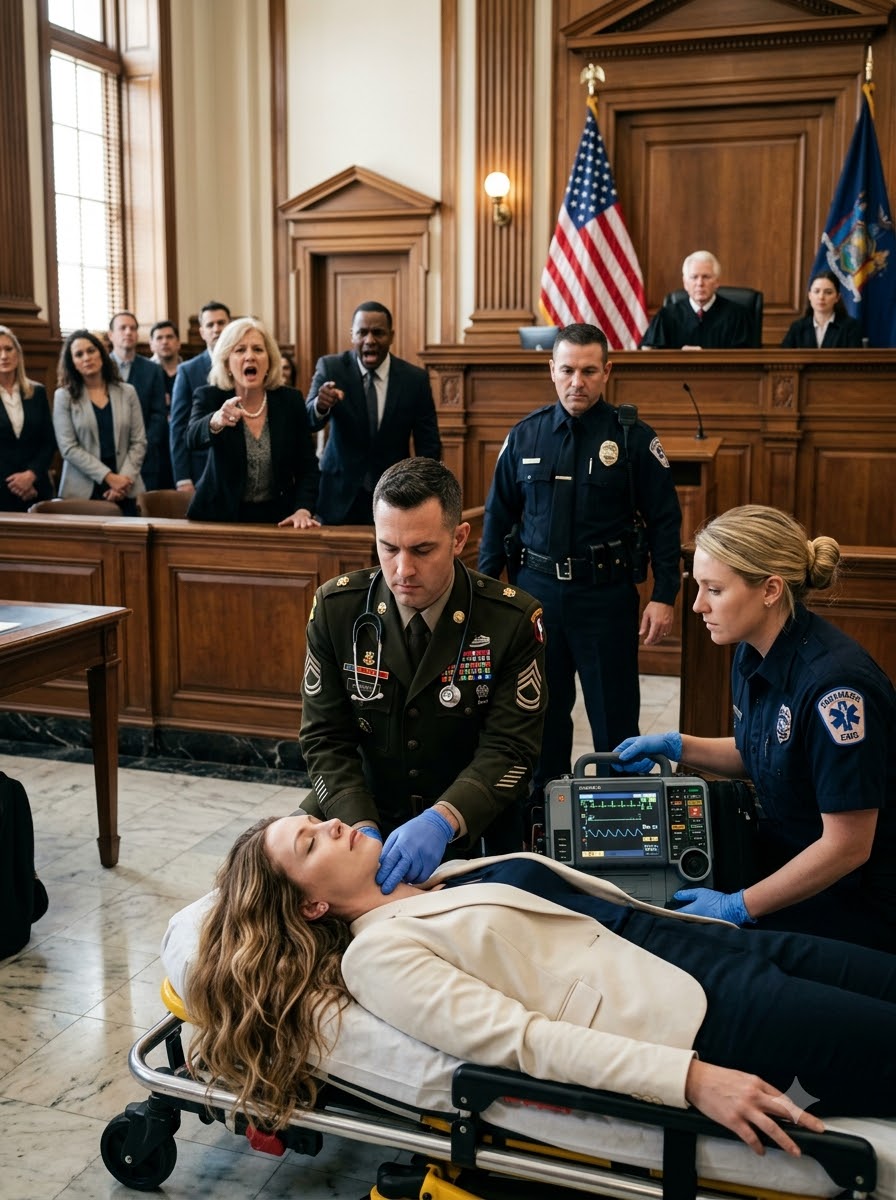
“Yes?”
“What if somebody doesn’t believe you?”
I put down what I was holding.
“What do you mean?”
She shrugged.
“Like when you were sick.”
I thought carefully before answering.
“Sometimes people don’t believe things they don’t understand.”
“What do you do?”
I smiled.
“You keep telling the truth.”
She considered that.
“And then?”
“You ask for help from people who listen.”
She nodded.
Then she went back to her homework.
I watched her for a moment.
The house was quiet.
For once, quiet didn’t feel frightening.
It felt peaceful.
My life wasn’t exactly the one I had imagined.
The marriage had changed.
The custody arrangement had changed.
My health had changed.
I had changed.
But there was something strangely freeing about no longer needing to prove that I deserved to be heard.
The woman who had stood in that courtroom gripping the railing had been terrified.
She had been exhausted.
She had been alone.
She had been trying desperately to convince everyone that something was wrong.
The woman sitting at that kitchen table months later was different.
She still had difficult days.
She still had medical appointments.
She still had fears about the future.
But she trusted herself.
That mattered.
I eventually understood that the courtroom had never been the place where my truth began.
It had existed long before that.
It existed every time I woke up dizzy.
Every time my vision narrowed.
Every time my heart felt wrong.
Every time I wondered whether I was losing my mind.
The courtroom only happened to be where someone finally saw it.
And sometimes, that’s all it takes.
One person paying attention.
One person asking the right question.
One person refusing to dismiss what everyone else has decided is inconvenient.
My mother-in-law had pointed at me and said, “SHE’S FAKING IT.”
My husband had smirked and told the judge I did it whenever I didn’t get my way.
But less than a minute later, my body answered for me.
My legs gave out.
My heart slowed.
And the truth became impossible to ignore.
I never wanted to be sick.
I never wanted a diagnosis.
I never wanted my daughter to watch her mother collapse.
But if there was one thing I carried forward from that terrible day, it was this:
I no longer needed someone else to believe me before I believed myself.
And when Lily eventually grew old enough to understand the whole story, I knew exactly what I would tell her.
Not that her father was a villain.
Not that her grandmother was cruel.
Not that she should take sides.
I would tell her that sometimes people get things wrong.
Sometimes fear makes people defensive.
Sometimes pride makes people refuse to admit they don’t understand.
But none of that changes the truth.
And if something inside you tells you that something isn’t right, you deserve to listen.
You deserve to ask questions.
You deserve to seek help.
And you deserve to be heard.
Because I had spent almost a year wondering whether I was imagining everything.
Then I collapsed in open court.
And a stranger looked at me for less than five minutes and said the words I had needed someone to say all along:
“She is not pretending.”
That was not the end of my story.
It was the moment my real recovery began.
