

The first impact of the battering ram sent a tremor through the hallway, making the framed photographs along the wall rattle against their hooks.
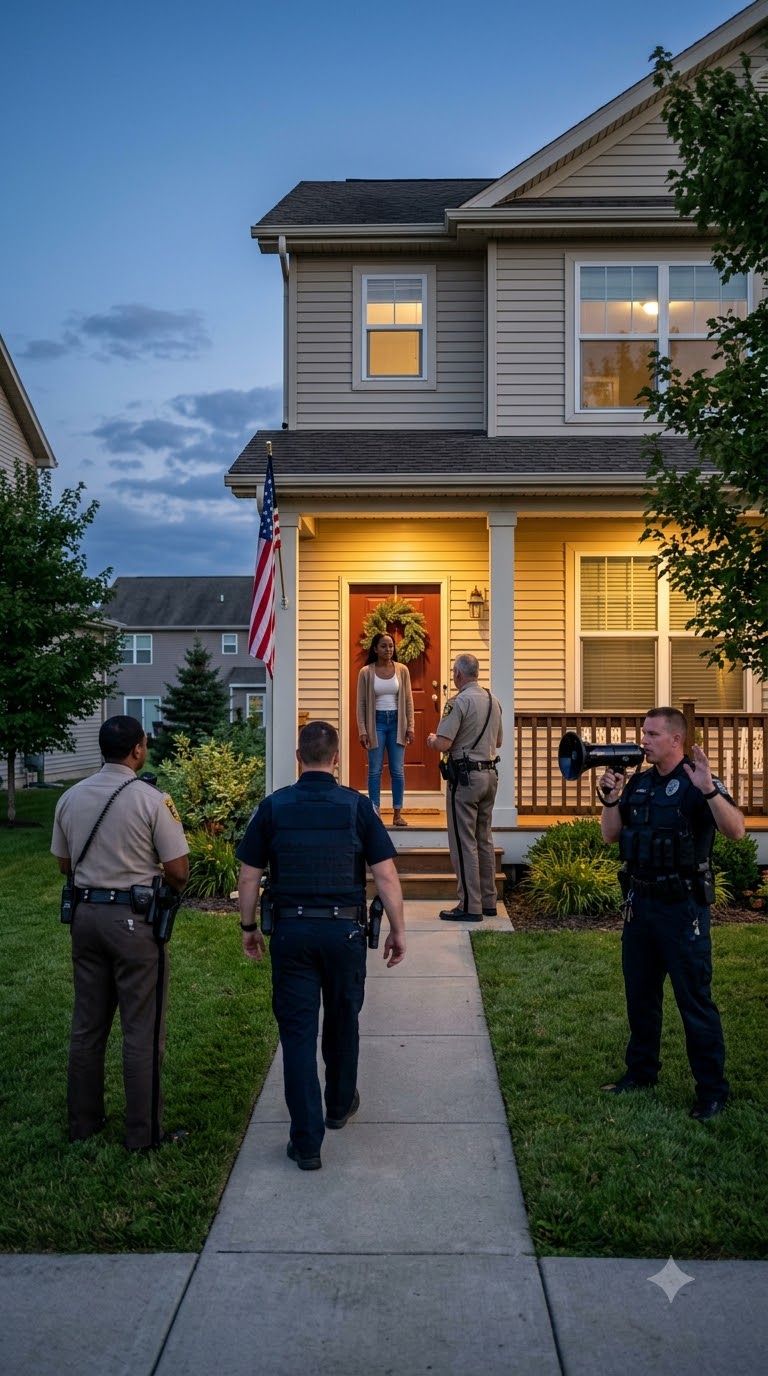
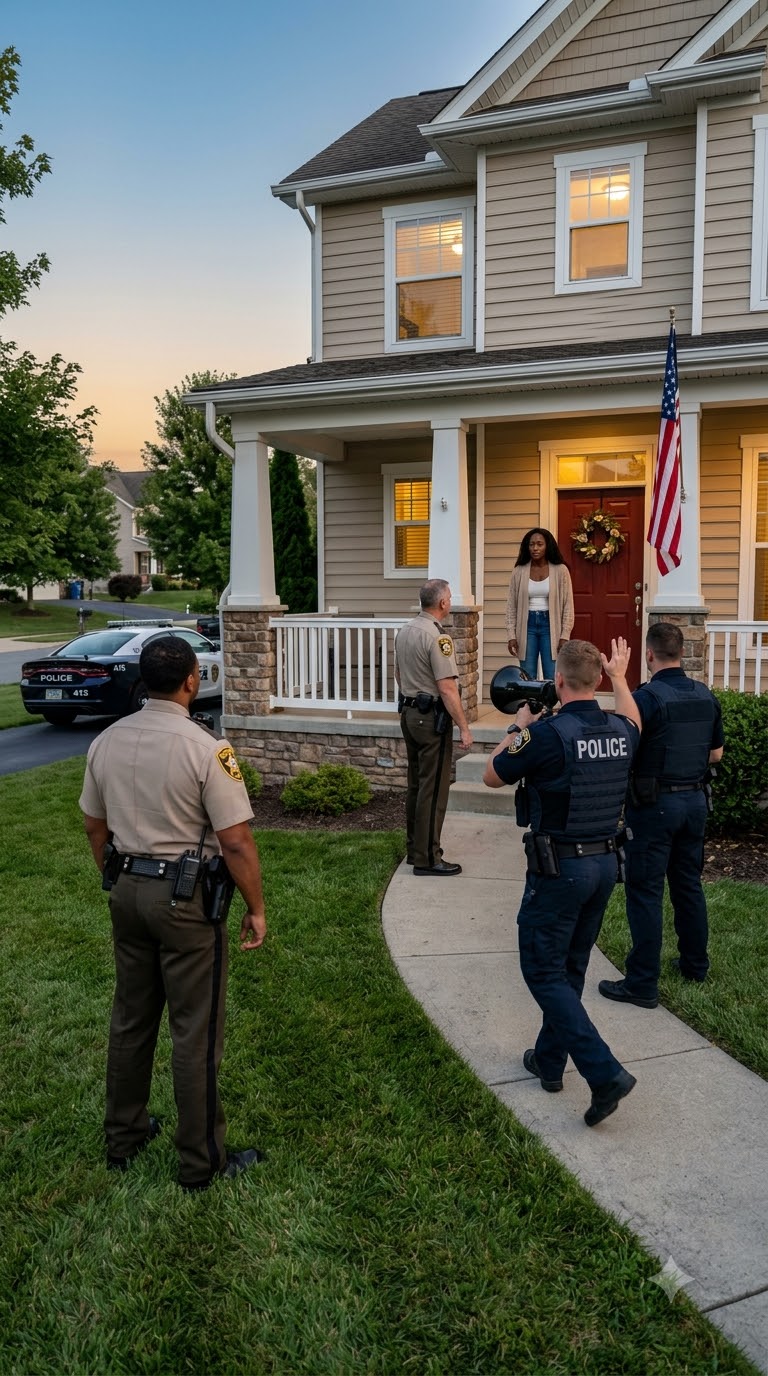
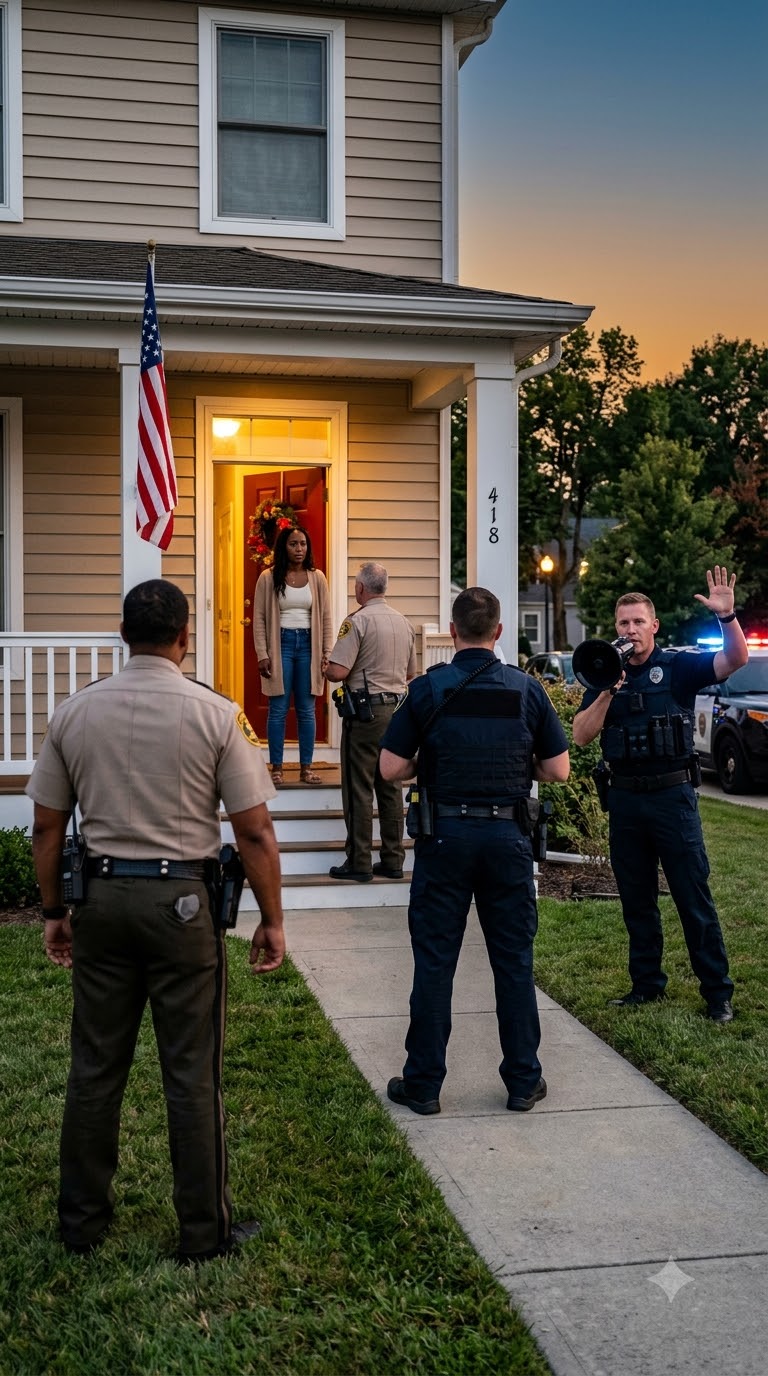
Danielle Brooks stood barefoot in the center of her father’s old house, watching one of the photographs tilt sideways from the force of the blow. Outside, fifteen armed deputies had positioned themselves across the lawn, driveway, side entrance, and rear alley. Neighbors stood behind patrol vehicles, their phones raised as they recorded everything.
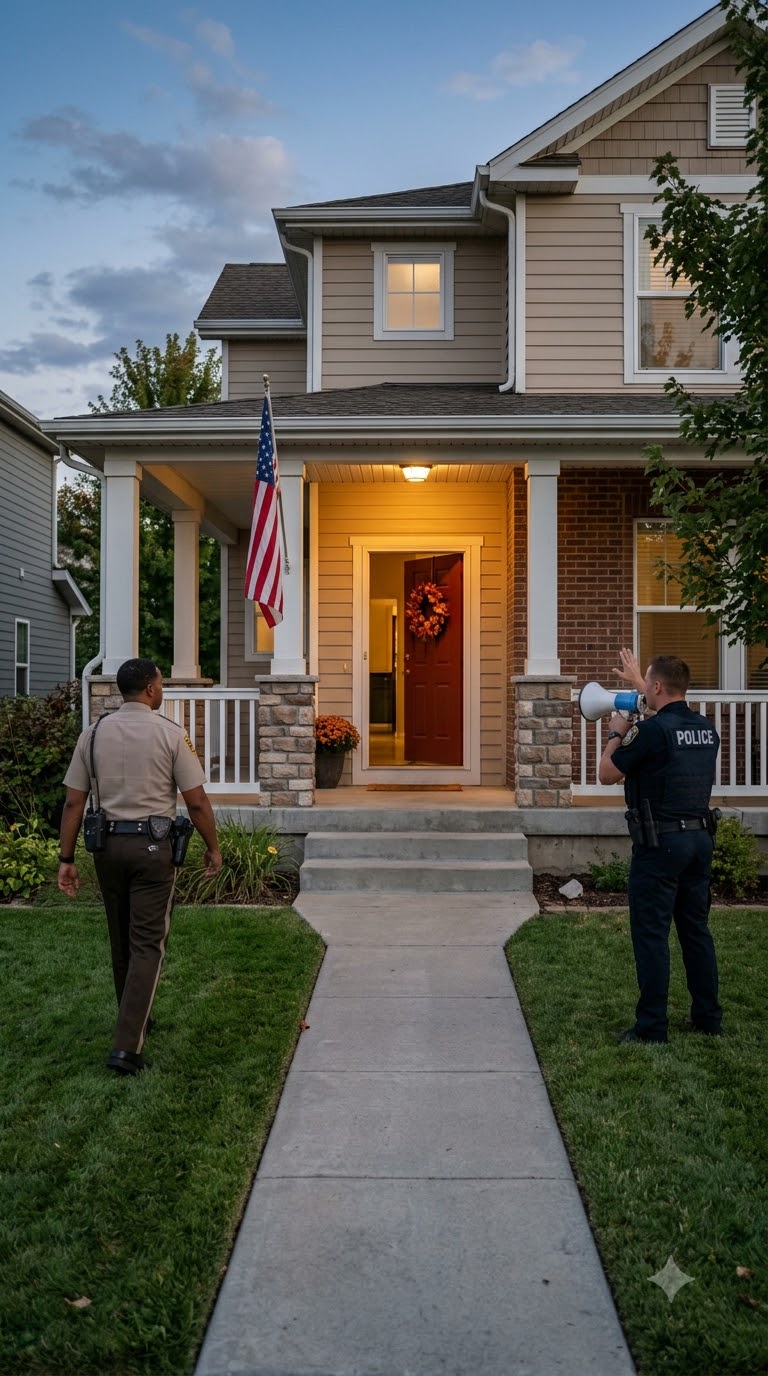
Captain Douglas Crane lifted a megaphone toward the front windows.
“Open this door now, or we will come through it.”
Danielle did not move toward the entrance.
Instead, she picked up her phone.
“Time is 10:43 a.m.,” she said calmly into the camera. “Fifteen armed county officers are surrounding my residence. No warrant has been presented.”
Another blow struck the door.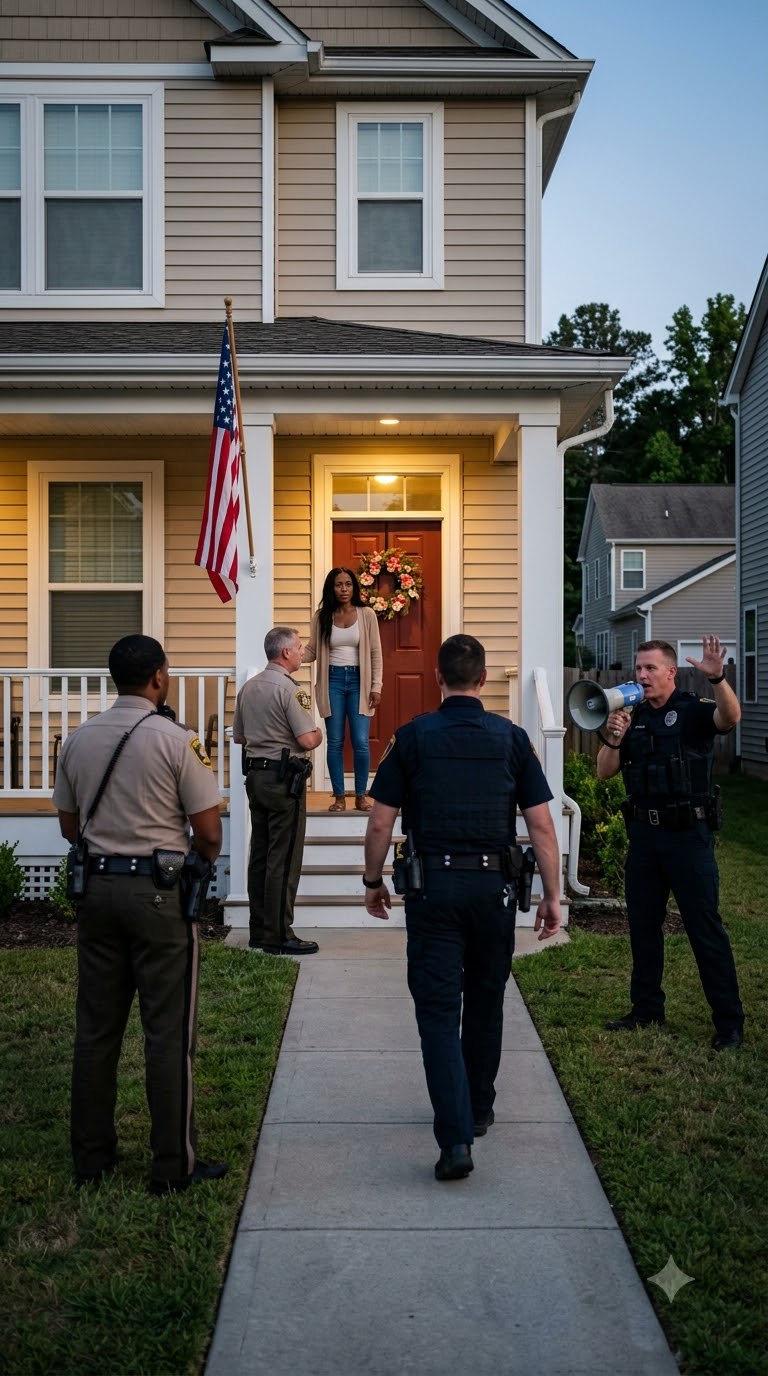
The frame shuddered.
Danielle kept recording.
At forty-three, she had spent nineteen years as an Army logistics officer. She had coordinated medical evacuations, convoy routes, disaster-response operations, and supply chains in places where losing control could cost people their lives.
She had left military service five years earlier.
The uniform was gone.
The discipline was not.
Outside, Captain Crane was beginning to lose his patience.
“Ms. Brooks!” he shouted. “You are interfering with an active federal investigation.”
Danielle peered through the blinds.
There were no federal vehicles.
No federal agents.
No visible federal credentials.
Standing beside Crane was Maple Grove County Sheriff Caleb Mercer, his hands resting comfortably on his belt. He wore the patient expression of a man who had spent three decades learning how to appear reasonable while other people carried out unreasonable orders.
Danielle raised the phone.
“Captain Crane has now claimed federal authority.”
She checked the time.
“10:44.”
“No federal personnel are visible.”
Across the property line, eighty-year-old retired federal judge Eleanor Whitman emerged from her brick house with pruning shears still in one hand.
Eleanor lived alone next door.
She had spent more than two decades on the federal bench before retiring to Maple Grove, where she devoted her mornings to tomatoes, roses, and arguing with anyone who suggested she was too old to climb a ladder.
Today, she stared at the officers covering Danielle’s property.
Then she reached for her phone.
“Sheriff,” Eleanor called.
Mercer turned toward her.
“Judge Whitman.”
“You have a warrant?”
Mercer smiled.
“Sensitive matter, Judge.”
“That was not my question.”
Crane turned toward the retired judge.
“Ma’am, please remain inside your home.”
Eleanor’s expression became colder.
“I spent twenty-three years telling armed men when they could enter houses.”
She lifted her phone.
“I think I’ll stay right here.”
Several deputies glanced at one another.
Danielle noticed.
Witnesses changed behavior.
Not always.
But sometimes.
Two minutes later, Danielle saw her daughter’s car appear at the end of the street.
Twenty-year-old Maya Brooks had left her morning university class after receiving a text from a neighbor.
Her blue Honda Civic still had the dent in its rear bumper from an accident when she had been seventeen.
As soon as she tried to enter the block, a deputy stepped into the street and stopped her.
Danielle’s chest tightened.
Maya climbed out.
“That is my house.”
“Stay behind the perimeter.”
“My mother is in there.”
“Ma’am, get back in your car.”
“I live there!”
Danielle moved closer to the window.
She forced herself to remain where she was.
They wanted confusion.
They wanted emotion.
They wanted movement they could later describe differently.
She lifted her phone.
“My daughter has been prevented from reaching her residence.”
Time.
Location.
Officer positions.
Everything was being documented.
Maya pulled out her own phone.
She had inherited her mother’s stubbornness and her grandfather’s instinct for keeping records.
She began livestreaming.
“My mother is inside that house.”
Her voice shook, but she continued.
“They have shown no warrant.”
A deputy reached toward her phone.
Maya stepped backward.
“Do not touch me.”
The words carried across the street.
Several neighbors heard them.
More doors opened.
More phones appeared.
The atmosphere changed.
Sheriff Mercer noticed it too.
He raised both hands toward the gathering crowd.
“Folks, please stay back.”
His tone was warm.
Almost paternal.
“This is a lawful operation involving potentially stolen federal property.”
From her yard, Eleanor Whitman called out.
“Then show the warrant.”
Mercer ignored her.
Danielle almost smiled.
Then Captain Crane said something that erased the expression from her face.
“Cut the power.”
She froze.
A deputy near the side yard acknowledged the order.
Minutes later, the air conditioner stopped.
The kitchen lights disappeared.
The refrigerator fell silent.
The house that had sheltered four generations of the Brooks family became unnaturally quiet.
Danielle raised her phone.
“10:51 a.m.”
“Captain Crane has ordered utilities interrupted.”
“No warrant has been shown.”
She uploaded the recording to cloud storage.
Then she duplicated it.
Her father had taught her the importance of redundancy long before she understood why.
One copy was convenience.
Two copies were preparation.
Three copies meant someone had to work to erase you.
Her father, Master Sergeant Raymond Brooks, had died eighteen months earlier.
He had lived in this house for forty-one years.
The hardwood floors beneath Danielle’s feet had been refinished by his hands.
The built-in bookshelves had been measured, cut, and installed by him.
The garden outside had survived drought, hail, grandchildren, and a Labrador that had considered every vegetable an enemy.
Danielle had moved back after his death because she couldn’t bring herself to sell the house.
She told people it was practical.
Maya’s university was nearby.
The property taxes were manageable.
The house was paid off.
The real reason was simpler.
Sometimes grief needed an address.
Outside, Crane’s megaphone sounded again.
“FINAL WARNING.”
The words traveled through the hallway and past the old family photographs.
Her father in uniform.
Her mother at church.
Danielle at her commissioning ceremony.
Maya as a toddler asleep against her grandfather’s chest.
“You are obstructing a federal investigation.”
Danielle spoke into her phone.
“No federal credentials have been presented.”
Then something caught her attention.
A deputy near the driveway was speaking into his radio.
His terminology sounded wrong.
Not merely casual.
Wrong.
Danielle had heard people imitate expertise before.
The language was a costume.
She recorded it.
Next door, Eleanor was making calls.
Danielle could see her pacing across the lawn.
“Reverend James, get people down here.”
She paused.
“Yes, now.”
Another pause.
“No, I am not exaggerating.”
She glanced toward Crane.
“I have seen unlawful raids before.”
Danielle’s phone vibrated.
MAYA: **Mom I’m okay. Recording everything. Don’t come out.**
Danielle immediately replied.
**Stay visible. Stay with Judge Whitman. Do not argue.**
Then another strike slammed into the front door.
Harder.
The lock held.
For now.
Danielle walked toward her father’s study.
The room had remained almost untouched since his death.
Military books lined the shelves.
Old photographs filled the walls.
A heavy oak desk stood beneath a framed American flag.
Three medals sat inside a glass case, medals her father had always refused to discuss.
Near the center of the wall was his Bible.
Danielle remembered watching him read from it every morning.
The week before he died, he had said something that had seemed strange at the time.
“If armed men ever come to this house in daylight, don’t assume the uniforms mean the authority is real.”
Danielle had stared at him.
“Dad, what are you talking about?”
He had smiled.
“Old man talking.”
“Then stop talking like a spy movie.”
“I’m serious.”
He had pointed toward the Bible.
“If it ever happens, open the front cover.”
Danielle had laughed.
He had not.
Now, with fifteen armed deputies surrounding his house, she took the Bible from the shelf.
Her fingers suddenly felt unsteady.
Outside, Crane shouted something she could barely hear.
Danielle opened the cover.
Behind the dedication page was a thin sealed envelope.
Her name was written across it.
**DANIELLE — ONLY IF THEY COME FOR THE HOUSE.**
Her breathing stopped for a moment.
She opened the envelope.
Inside was a telephone number.
There was no agency name.
No explanation.
Beneath the number were six words.
**Ask for Defense Oversight. Give my service ID.**
Danielle stared at the page.
Her father had spent his final years insisting that parts of his career were “complicated.”
He occasionally mentioned procurement fraud.
Missing military technology.
Private contractors.
Then he would abruptly stop talking.
Danielle had assumed retirement had left him with too much time to revisit old battles.
Now she dialed the number.
One ring.
Two.
Three.
“Office of Defense Special Oversight.”
Danielle straightened.
“My name is Danielle Brooks.”
She read her father’s service number.
There was a pause.
Then the woman on the other end said, “Repeat the name.”
“Master Sergeant Raymond Brooks.”
Another pause.
Longer this time.
“Ms. Brooks, what is happening?”
Danielle looked toward the front windows.
“My residence is surrounded by county law enforcement.”
“How many?”
“Approximately fifteen.”
“Federal personnel?”
“None visible.”
“Warrant?”
“None presented.”
“Have they attempted entry?”
“Yes.”
“Utilities?”
“Cut.”
The voice changed.
Not into panic.
Into urgency.
“Are you recording?”
“Yes.”
“Upload everything.”
“Already done.”
Another pause.
“Ms. Brooks, do not surrender documents or property until federal authority is independently verified.”
Danielle swallowed.
“You know why they’re here.”
“We know why someone might want to enter Raymond Brooks’s home.”
That answer struck her harder than the battering ram.
“What did my father do?”
“Not over this line.”
Outside, Captain Crane shouted, “Bring the cutters!”
Danielle raised her phone.
“Captain Crane is preparing forced entry.”
The woman on the secure line responded immediately.
“State investigators have been notified.”
“To who?”
“People Sheriff Mercer will recognize.”
Outside, another deputy approached the front steps.
Danielle looked through the blinds.
The man was carrying a heavy set of bolt cutters.
She tightened her grip on the phone.
“You need to understand.”
The woman on the line became very precise.
“If they enter before the federal team arrives, do not physically resist them.”
Danielle stared at the door.
“Understood.”
“Protect yourself. Protect the recordings. And keep that envelope.”
“Why?”
“Because your father knew this day was possible.”
The line went quiet.
Danielle looked at the envelope again.
For the first time, the situation outside no longer felt like a search.
It felt like a race.
Someone wanted something inside this house.
And someone else had been waiting years for the Brooks family to discover what it was.
The bolt cutters rose.
Then Danielle heard a sound.
Not from outside.
From beneath her father’s desk.
A faint mechanical click.
She turned.
The bottom drawer had shifted open by less than an inch.
Danielle walked toward it.
She pulled.
The drawer opened.
Inside were folders.
Dozens of them.
Each marked with a date.
The earliest was twenty-seven years old.
She grabbed the top folder.
Across the cover was a handwritten note.
**PROJECT ORION — INVENTORY DISCREPANCIES.**
Her pulse accelerated.
She opened it.
Inside were photographs.
Shipping containers.
Military warehouses.
Serial numbers.
Invoices.
Names.
Company names.
Government contractors.
And repeated references to equipment that had officially been listed as destroyed.
Danielle turned another page.
There was her father’s handwriting.
**THE NUMBERS DON’T MATCH.**
She opened the next folder.
Then another.
The pattern became impossible to ignore.
For years, equipment had been reported as lost, damaged, or destroyed.
But according to the records in her father’s possession, some of it had never disappeared.
It had been diverted.
Sold.
Moved through shell companies.
And someone had apparently been using the Brooks property as the final repository for evidence.
Danielle’s eyes moved down the page.
Then she saw a familiar name.
Caleb Mercer.
Not as sheriff.
As a county attorney’s liaison twenty-three years earlier.
She stared at the page.
Mercer had been involved from the beginning.
The realization made her stomach turn.
Outside, Eleanor shouted.
“Put those cutters down!”
Crane snapped back.
“Judge Whitman, this is your final warning.”
Eleanor stepped forward.
“No. That is yours.”
The deputy with the cutters hesitated.
Crane pointed toward the door.
“Do it.”
Before the deputy could move, several unmarked SUVs turned onto the street.
They did not stop behind the sheriff’s vehicles.
They drove straight through the perimeter.
The deputies immediately began stepping aside.
Mercer’s smile disappeared.
Three federal officials emerged.
Behind them came state investigators.
A woman in a dark suit walked toward Crane.
“Captain Douglas Crane?”
Crane straightened.
“Yes.”
She displayed her credentials.
“I’m Special Counsel Miriam Cole, Department of Defense Office of Special Oversight.”
Crane’s face changed.
“I wasn’t informed of your involvement.”
“That is because you were not supposed to be conducting this operation.”
Sheriff Mercer stepped forward.
“Counsel, we received information concerning stolen federal property.”
Miriam looked at him.
“From whom?”
Mercer hesitated.
“An ongoing source.”
“Name?”
“I can’t disclose—”
“You just authorized armed officers to surround the private residence of a decorated former service member based on information you now refuse to identify.”
Mercer stopped speaking.
Miriam turned toward Crane.
“Who authorized the warrant?”
Crane’s jaw tightened.
“We have emergency authority.”
“Show it.”
Crane reached inside his jacket.
He produced a document.
Miriam took it.
She studied the first page.
Then the second.
Her expression hardened.
“This is not a federal warrant.”
Mercer stepped forward.
“It was signed by a county judge.”
Miriam looked at him.
“And where is the federal authorization?”
Mercer said nothing.
Eleanor laughed once from across the lawn.
Not because anything was funny.
Because the answer was finally becoming obvious.
Miriam handed the document back.
“Stand down.”
Crane hesitated.
“I said stand down.”
The battering ram lowered.
The deputy holding the cutters stepped away from the door.
Inside the house, Danielle remained motionless.
The federal official looked directly toward the window.
“Ms. Brooks?”
Danielle opened the front door only after Miriam had identified herself again.
She did not step outside.
Miriam approached slowly.
“My name is Miriam Cole. I need to speak with you about your father.”
Danielle held up the envelope.
“First, tell me what this is.”
Miriam’s expression changed when she saw it.
“Where did you find that?”
“My father’s Bible.”
Miriam looked toward the house.
“Then we need to talk.”
Danielle glanced at the fifteen deputies.
“No.”
She looked toward the neighbors.
“First, they need to explain why they were here.”
Miriam nodded.
“That is exactly what will happen.”
Sheriff Mercer immediately objected.
“This is an active investigation.”
Miriam turned.
“No, Sheriff.”
She held up the warrant.
“This is now an investigation into your investigation.”
The street fell silent.
Maya stood beside Eleanor, still holding her phone.
Her livestream had thousands of viewers.
She whispered to the judge.
“Did she really say that?”
Eleanor smiled.
“She did.”
Within minutes, state investigators separated the deputies and began taking statements.
The operation that had begun with fifteen armed officers surrounding Danielle’s home was unraveling in real time.
One deputy admitted he had never seen a federal warrant.
Another said Crane had instructed everyone to refer to the operation as federal.
A third acknowledged that Mercer had personally ordered them to remain silent about the purpose of the search.
Then came the most important revelation.
The deputy who had been carrying the bolt cutters had recorded Crane’s briefing before they arrived.
In the recording, Crane could be heard saying that the objective was not merely to search the house.
They were looking for a specific storage device.
Something small.
Something hidden.
Something Raymond Brooks had apparently refused to surrender.
Danielle remembered her father’s final words.
Open the front cover.
But the envelope had contained only a phone number.
She returned to the study.
Miriam followed.
Danielle placed the Bible on the desk.
“What storage device?”
Miriam looked at the folders.
“We don’t know yet.”
“You came here because you suspected it was in this house.”
“Yes.”
“And Crane came here because he wanted it first.”
Miriam did not answer immediately.
That silence was enough.
Danielle opened another folder.
At the bottom was a photograph of her father standing beside a younger man.
She recognized him immediately.
Caleb Mercer.
Twenty-three years younger.
Beside them stood two executives from a defense contractor.
On the back of the photograph, her father had written:
**THEY KNOW.**
Danielle looked up.
“Was my father investigating them?”
Miriam nodded.
“He was part of an internal logistics review.”
“How serious?”
“Serious enough that people lost careers.”
“Only careers?”
Miriam’s eyes lowered.
“Not always.”
Danielle felt the weight of the answer.
She turned another page.
A list of storage locations appeared.
Most had been crossed out.
One remained.
**BROOKS RESIDENCE — BASEMENT WALL.**
Danielle looked toward the floor.
“We don’t have a basement.”
Miriam stared at the note.
“Your father built one.”
Danielle frowned.
“What?”
“Not a full basement. A concealed compartment.”
She looked at the wall behind the bookshelf.
Her father had always told her that the shelf was too heavy to move.
Danielle and Miriam pushed together.
The bookcase shifted.
Behind it was a narrow section of wood.
Danielle touched the panel.
Nothing.
Then she remembered something.
Her father had once told her that every good hiding place required something ordinary to protect it.
She looked at the floor.
One floorboard was slightly darker than the others.
She knelt.
Pressed it.
A section released with a soft click.
Inside was a steel box.
Miriam crouched beside her.
“That’s it.”
Danielle opened the box.
Inside was a small encrypted storage device.
There were also handwritten pages.
And one final envelope.
Danielle opened it.
Her father’s handwriting appeared again.
**If you are reading this, they came before the truth was ready.**
Danielle’s eyes filled with tears.
She continued.
**I spent years believing the system would eventually correct itself. I was wrong. Systems protect themselves when good people stay silent.**
She stopped.
Miriam waited.
Danielle kept reading.
**I did not hide this because I wanted revenge. I hid it because evidence disappears when the people looking for it know exactly where it is.**
Danielle wiped her eyes.
The final line was shorter.
**Trust the person who asks for proof, not the person who asks for obedience.**
Danielle closed the letter.
Outside, Sheriff Mercer was being escorted toward a state vehicle.
Captain Crane was standing beside another investigator.
Neither man looked toward the house.
Maya entered the study.
“Mom?”
Danielle looked at her daughter.
“It’s okay.”
Maya stared at the box.
“What is it?”
Danielle looked at the device.
“The reason they came.”
Maya stepped closer.
“And Dad knew?”
“He knew someone would eventually come looking.”
Maya looked toward the window.
“Are we safe?”
Danielle glanced at Miriam.
Miriam nodded.
“For today.”
That answer was honest.
And Danielle preferred honesty.
The storage device was transferred into federal custody under documented chain-of-custody procedures.
The files were preserved.
The recordings from Danielle’s phone, Maya’s livestream, Eleanor’s calls, and the deputies’ body cameras were all secured.
Within days, investigators began tracing the records.
The evidence did not disappear.
Neither did the story.
The fifteen deputies were no longer surrounding Danielle’s house.
They were answering questions.
Captain Crane was placed on administrative leave pending investigation.
Sheriff Mercer resigned before the investigation was completed.
The defense contractor named in the documents denied wrongdoing.
Several former officials denied knowledge of the scheme.
Investigators continued examining the records.
No one publicly claimed that every allegation in Raymond Brooks’s files had been proven.
But enough of the evidence was independently verified to trigger a much larger investigation.
And the one thing everyone agreed upon was this:
The original raid had not been what it appeared to be.
Danielle’s house had not been surrounded because she was considered dangerous.
It had been surrounded because someone believed her father’s evidence was still inside.
Months later, Danielle stood in the same hallway where the first battering ram had struck.
The photograph had been rehung.
The wall had been repaired.
The front door had been replaced.
Maya was sitting on the floor nearby, sorting through old family photographs.
Eleanor stood in the doorway holding a basket of tomatoes.
“I brought too many again.”
Danielle smiled.
“You always bring too many.”
“That is because you keep pretending you don’t want them.”
Maya laughed.
For the first time in months, the house felt like a home again.
Not a crime scene.
Not a target.
Not an evidence locker.
A home.
Danielle walked to the photograph that had fallen sideways during the first strike.
It showed her father holding Maya when she was a toddler.
She straightened the frame.
Maya looked up.
“Mom?”
“Yes?”
“Do you think Grandpa knew you would find everything?”
Danielle considered the question.
“I think he hoped.”
Maya smiled.
“That’s different.”
“Very.”
Danielle touched the edge of the photograph.
Her father had spent years believing that evidence could outlive fear.
That day, she finally understood what he had been trying to teach her.
Courage wasn’t always standing in front of danger.
Sometimes it was staying calm long enough to document it.
Sometimes it was asking for proof when everyone else demanded obedience.
And sometimes it was making one phone call.
The call that had changed everything.
The call that had brought federal oversight to a quiet suburban street.
The call that had stopped fifteen armed deputies from tearing apart a family’s home.
The call that had exposed what they were really looking for.
Years later, people would remember the photographs from that morning.
Fifteen deputies.
Patrol vehicles.
A battering ram.
A Black woman standing behind her front window with a phone in her hand.
But Danielle remembered something else.
The sound of her father’s voice.
Old man talking.
She smiled.
“No, Dad,” she whispered.
“You were preparing me.”
Then she turned off the hallway light and walked into the kitchen, where Maya and Eleanor were arguing over tomatoes.
For the first time since Raymond Brooks died, Danielle did not feel like she was living inside the place he had left behind.
She felt like she was carrying forward what he had started.
And outside, the street was quiet.
No sirens.
No shouting.
No battering ram.
Just neighbors returning home.
Just a family rebuilding.
And one old house that had finally told its secret.
