

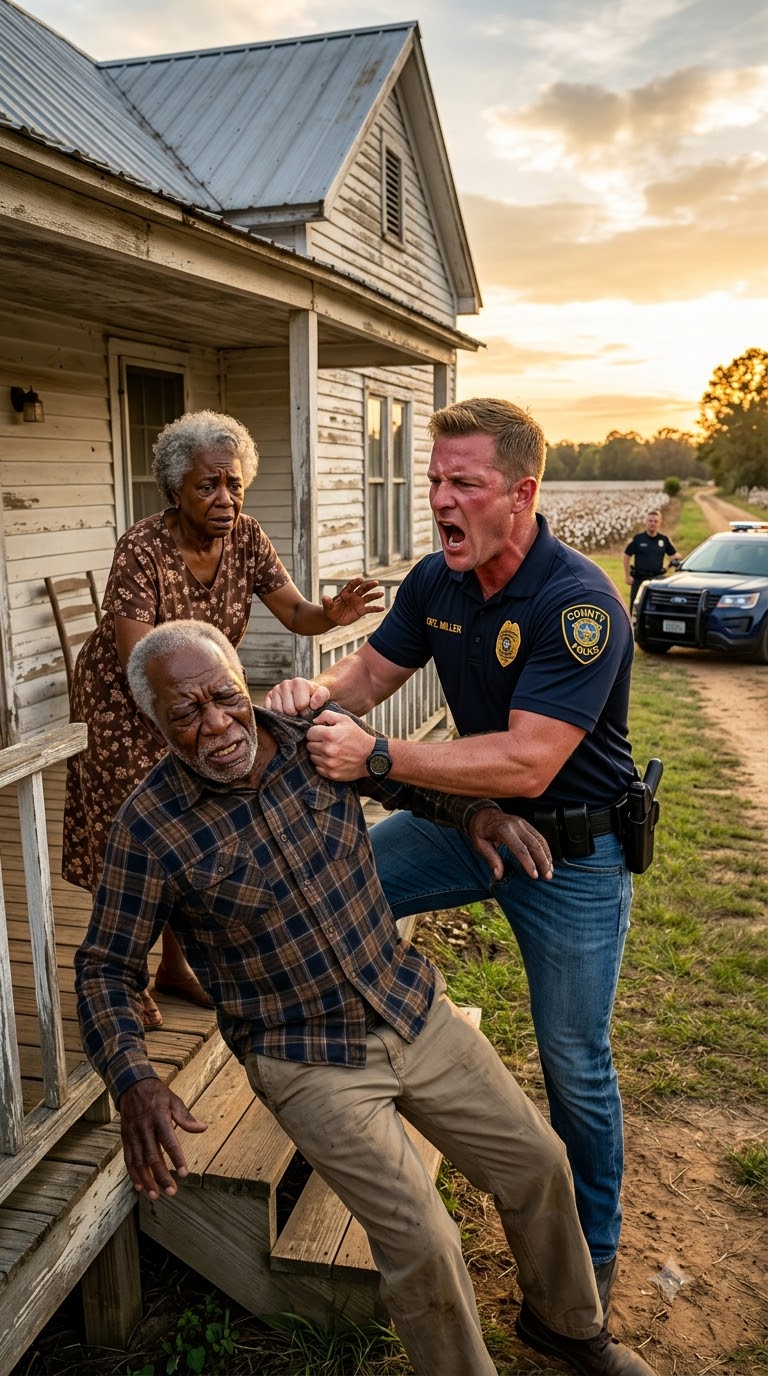
The Alabama sun hung low in the afternoon sky, bathing the sprawling Johnson family farm in a warm golden glow. The air carried the rich scent of freshly turned soil and growing crops, a familiar comfort that had remained on the land for generations. The weathered farmhouse stood quietly among rows of corn and cotton, its wooden porch creaking softly in the breeze.
The elderly Mr. and Mrs. Johnson moved through their chores with practiced ease, following the steady rhythm of a life deeply rooted in the land beneath them. Mr. Johnson, tall with silver-streaked hair and deep lines carved by years of hard work, examined a section of cotton plants, his fingers gently brushing the white bolls. Beside him, his wife Clara hummed an old gospel tune while gathering eggs from the henhouse.
Their presence reflected endurance, a legacy built through sweat, sacrifice, and resilience.
The peaceful afternoon was broken only by the distant rumble of tractors and the soft cooing of doves perched along the fence posts. Their son, Tyron Johnson, was nowhere around. He had left the farm years earlier to find work in the city, a decision that left his parents with mixed emotions. They missed having him nearby, but they understood his desire to build a life beyond the fields that had defined their family for generations.
Tyron’s military background was rarely discussed at home. It was a chapter they considered closed, quietly stored away with the old photographs lining the mantel.
As Clara carried a basket of freshly picked vegetables toward the kitchen, the sharp sound of tires grinding across gravel shattered the calm.
A convoy of local police vehicles appeared at the edge of the property, their arrival sudden and unwelcome. Three officers stepped out, their faces stern against the peaceful countryside. Their leader, a burly man with a thick mustache, approached the farmhouse with deliberate steps.
“Afternoon,” he called out, voice carrying a hint of impatience. “We’re here about a complaint regarding trespassing on disputed land,
Mr. Johnson straightened, his posture becoming rigid as he faced the officer.
“This is our land,” he replied quietly, though the tension in his voice revealed his unease.
Clara joined her husband on the porch, narrowing her eyes slightly.
“We’ve lived here for over 50 years. This farm belongs to the Johnson family.”
The officers exchanged cold glances. The leader moved closer, dismissing the family’s objections.
“We have reports that you’re encroaching on property claimed by the neighboring development company. We are here to investigate and ensure the law is upheld.”
The words settled heavily over the porch, carrying an accusation that felt both unfamiliar and threatening. The Johnsons exchanged uneasy looks, sensing that this was about more than a simple property dispute. Something deeper was beneath the confrontation, an old tension that had been simmering throughout the community.
Sir,” Clara said, her voice steady but firm.
“We’ve paid our taxes, tended this land, and preserved it for decades. We have every right to be here.”
The officer’s eyes moved toward the barn and then across the fields, as though searching for something concealed. His presence felt intrusive, violating the quiet dignity the Johnson farm had maintained for generations.
As the confrontation continued, several neighbors gathered cautiously at a distance, concern visible on their faces. Word had spread quickly about growing tensions between law enforcement and Black farmers in the area.
Whispers about intimidation and pressure to sell land had become increasingly common, but few had been willing to speak openly.
Mrs. Johnson lowered her voice when she noticed the gathering crowd.
“We’ve seen others harassed, threatened with losing their homes. This isn’t just about land.
It’s about something more.”
The officer’s jaw tightened.
“We’re just doing our job. If you have nothing to hide, there’s no reason to resist.”
But the Johnsons and their neighbors understood what was at stake.
The farm represented their heritage, a symbol of surviving hardship and systemic barriers. Giving up the property would mean surrendering part of their identity. Their history was woven into every furrow and every weathered fence post.
Inside the farmhouse, fear settled heavily in the air. Mr. Johnson glanced toward the old family Bible resting on the windowsill, a quiet symbol of faith and perseverance.
Clara gripped the edge of the kitchen table and whispered, “We have to stand our ground.”
Outside, the officers began documenting the property and taking photographs. Their movements were methodical but cold. The Johnson children, now grown and scattered, were nowhere nearby to defend the family’s legacy.
Tyron’s absence was especially noticeable. The son who had once represented the family’s hope for protection and change was far away.
Still, despite the threat and uncertainty surrounding them, the Johnson family refused to retreat.
Their eyes were tired, but a spark of defiance remained. They were determined not to be erased or pushed aside.
As the sun sank lower and shadows stretched across the fields, the farm seemed to hold its breath. The land had witnessed generations of planting and harvest, and now it stood at the edge of another battle.
This one would test not only the Johnsons’ resolve, but the strength of their entire community.
The officers’ visit was only the beginning, a harsh reminder that the struggle for justice and recognition was far from finished.
For the Johnson family, the farm was more than soil and crops. It was a living legacy, a testament to endurance through adversity.
And beneath the fading light, the seeds of resistance were quietly taking root.
The sun disappeared below the horizon, and twilight settled over the Johnson farm in a cool hush.
Inside the modest farmhouse, tension remained as Mr. and Mrs. Johnson sat at the worn kitchen table. A kerosene lamp provided the only light, casting moving shadows across walls lined with photographs of family gatherings and past harvests.
The day’s confrontation with the police still weighed heavily on them.
Clara reached across the table and covered her husband’s hand.
“We can’t just stand by and let this happen,” she said, her voice low but steady. They think they can come here, threaten us, and take what’s ours without question. We have to be ready for whatever comes next.
Mr. Johnson nodded slowly, his expression distant but determined.
You’re right. But we need to be careful. These officers aren’t just here by chance. They’re part of something bigger. We’ve heard the rumors other families have been pressured, harassed, even forced off their land.
We’re not the only ones.
Outside, the night carried the soft chirping of crickets and the rustling of leaves stirred by a gentle breeze. The surrounding community remained tightly connected through shared history and mutual respect.
Yet during the past several months, whispers of tension had grown louder. Neighbors exchanged worried looks, held quiet conversations at church, and increasingly sensed that something was changing beneath the surface.
The following Sunday, the local Baptist church was more crowded than usual.
Parishioners gathered not only for worship but also to discuss the troubling developments affecting their community.
Reverend Thomas, a tall and dignified man with a commanding voice, addressed the congregation from the pulpit.
We are facing challenges that go beyond our fields and homes, he said solemnly. Our brothers and sisters who have farmed this land for generations are being threatened by those who seek to take what is rightfully theirs. It is our duty to stand with them to protect our heritage and our neighbors.
Several farmers nodded in agreement, while others wiped tears from their eyes.
The church had long served as more than a place of worship. It was also where the community gathered to organize, support one another, and confront difficult problems.
That day, it felt like the front line of a growing struggle.
Back at the Johnson farm, Clara called a small meeting with several trusted neighbors. The kitchen table was moved aside, chairs were arranged in a circle, and the group gathered beneath the glow of a single overhead bulb.
Maps, documents, and photographs covered the table.
There were records of suspected encroachment, survey notices, and letters from local officials.
“We can’t let this intimidation continue,” Clara said firmly. “If they think we’ll back down, they’re wrong. We need to document everything.
Police visits, any threats, anything suspicious. The more information we have, the better prepared we’ll be.
One neighbor, Mrs. Jenkins, an elderly woman with sharp eyes and a quick wit, nodded.
“I’ve seen it myself.
Farmers from down the road have had their land appraised way below market value, then pressured to sell. It’s a pattern, and it’s happening all over.”
Mr. Johnson added, “It feels like a coordinated effort. Police developers, maybe even some local officials working together to push us out. The group discussed ways to organize watch shifts, maintain detailed records of every interaction with law enforcement, and contact civil rights organizations for assistance. They also talked about holding community meetings to spread awareness and strengthen solidarity.
As the night grew later, the conversation turned toward Tyron. Although he had been gone for years, his name continued to come up in quiet conversations, representing hope and strength.
“Tyron always had a sharp mind,” Mr. Johnson said quietly. “He was different, disciplined, focused. I sometimes wonder if he could help us now.”
Clara smiled wistfully.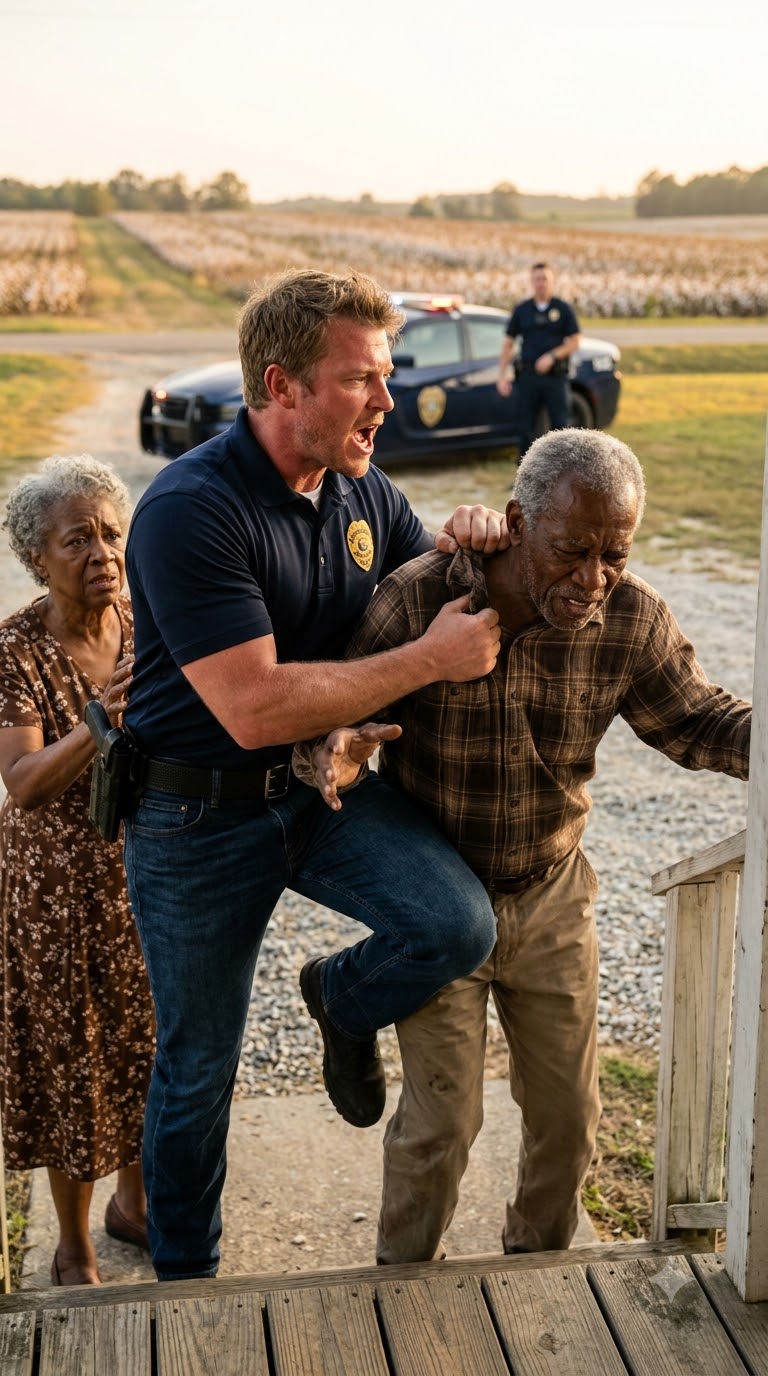
“He’s a Marine. We don’t talk about it much, but his training could make a world of difference.
Maybe it’s time to reach out to him.”
Outside, neighbors gathered quietly beneath the streetlights, exchanging information and offering support. The strength of the community was unmistakable, along with a shared determination to confront the growing pressure together.
Over the following days, the Johnson family and their neighbors worked relentlessly.
They created detailed records of every encounter with law enforcement, documenting license plates, officer names, and exact times. They photographed survey markers placed suspiciously near property boundaries and gathered statements from farmers who had experienced similar harassment.
At the same time, Clara organized informal meetings at the church and community center. Flyers circulated throughout the area, inviting others to tell their stories and learn how to protect their rights.
Word traveled quickly, and more people began coming forward. Their accounts revealed a troubling pattern of intimidation aimed at forcing Black farmers throughout the county from their land.
One afternoon, while Clara was returning from a meeting, a local reporter stopped her, eager to learn more about what was happening. The reporter asked direct but respectful questions, trying to understand the broader significance of the situation.
“We’re just trying to hold on to what’s ours,” Clara explained. “This land represents more than crops. It’s our history, our family, our future, and we’re not going to give it up without a fight.”
The reporter promised to cover the story, creating the possibility that greater media attention would bring much-needed scrutiny to the escalating tensions.
Meanwhile, Mr. Johnson spent long hours in the fields, working beside his neighbors to repair fences and maintain the farm. His manner remained calm but purposeful, reflecting the discipline Tyron had helped instill in him during his son’s younger years.
The family still faced fear and uncertainty, but their determination continued to grow.
At night, Clara often sat beside the window, looking across the darkened fields.
She thought about Tyron, wondering whether he knew what was happening back home and whether he would return to stand beside them.
The quiet farm seemed filled with unanswered questions and the possibility of change.
Throughout the community, the land dispute had sparked a wider discussion about justice, equality, and the right to preserve one’s heritage. Local leaders began paying attention, while whispers of support from veterans’ groups and civil rights advocates suggested that outside assistance might be possible.
As the days passed, the Johnson family found themselves at the center of a growing movement powered by courage, unity, and an unwavering determination to protect their home.
The threat of police intimidation remained.
So did the strength of a community prepared to stand together.
During the quiet moments between work and meetings, Clara reminded her husband,
“We’re not alone in this. Our neighbors, our church, even strangers who believe in what’s right, they’re all with us.”
Mr. Johnson nodded, a faint smile breaking through his exhaustion.
“And soon maybe Tyrone will be with us, too.”
Outside, the moon climbed high above the farm, its pale light spreading across the fields. It watched silently as determination continued to grow within the Johnson family and their neighbors.
The battle lines were forming, but for now, the unity and hope created that evening offered a fragile yet necessary shield against the storm ahead.
The first light of dawn appeared over the Johnson farm, casting a gentle glow across the fields stretching toward the horizon. The morning air was crisp, carrying the scent of damp earth and dew-covered cotton.
Inside the modest farmhouse, an unusual energy filled the rooms. Hope mingled with tension as the family prepared for a day that seemed destined to bring change.
A knock at the door startled Clara as she gathered the breakfast dishes.
She opened it and found a tall man in uniform standing on the porch.
His presence was commanding yet familiar.
Then recognition dawned.
Tyron Johnson, their son, had returned.
Clara’s eyes filled with tears as she threw her arms around him.
“Tyrron, you’re home.
“I’m here, Ma,” he replied, his voice steady but warm. “I heard what’s been happening. I’m ready to help.”
Tyron’s arrival changed the atmosphere inside the farmhouse. The uncertainty that had lingered for weeks gave way to a renewed sense of purpose.
Tyron, a highly decorated Marine commander, brought more than the skills developed through rigorous training. He also carried a strategic mind shaped by years of leadership in difficult environments.
At the kitchen table, Tyron listened carefully as his parents and neighbors described the increasing pressure from law enforcement and local officials.
Maps, documents, and photographs covered the table, showing evidence of harassment and intimidation aimed at forcing the Johnson family and other farmers from their land.
“This isn’t just random,” Tyron said, his eyes narrowing as he traced the lines on a survey map. “It’s coordinated. The police, developers, maybe even some officials, they’re trying to push you out for commercial gain.”
Mr. Johnson nodded grimly.
“We suspected as much, but hearing it from you, it changes things.”
Tyron rose and began laying out a plan.
We need to take control of the narrative and the situation. First, we deescalate any immediate confrontations with the officers. I’ll meet with them directly. Show them we’re organized and prepared.
But make no mistake, we won’t back down.
Over the next several days, Tyron moved with precision. He contacted community leaders, veterans’ organizations, and civil rights advocates, building a coalition determined to protect the farming community.
His military background brought credibility and discipline to the effort, giving those around him renewed confidence.
One afternoon, Tyron arranged a meeting with the local officers involved in the land disputes.
The sheriff’s office conference room was tense when Tyron entered. His posture remained calm and commanding as the officers listened.
“I’m Tyron Johnson,” he began, his voice steady. I’m here to make it clear that my family and community know their rights and will defend them. We’re not looking for conflict, but we won’t be intimidated.
It’s in everyone’s best interest to resolve this peacefully and lawfully.
The officers exchanged uneasy looks.
Tyron’s confidence and understanding of legal rights changed the balance in the room. The usual methods of aggression and dismissal faltered under his steady presence.
“We want to work with you, not against you, Tyrone continued.
But if this escalates, be assured we have the means and support to defend our land.”
Back at the farm, news of Tyron’s negotiations spread quickly, lifting morale throughout the community. Neighbors who had previously felt isolated began organizing patrols to observe police activity and share information more openly.
But as Tyron investigated further, more troubling information surfaced.
Records obtained through allies in local government and veterans’ networks revealed a broader scheme: a coordinated attempt to displace Black farmers and clear the way for commercial development.
Contracts, emails, and financial transactions suggested collusion between developers and certain officials, with law enforcement being used to intimidate farmers and seize land.
“This goes beyond harassment,” Tyron told the family one evening.
The room grew heavy with the weight of the discovery.
Its systematic corruption designed to erase our community.
The revelation strengthened the coalition.
Tyron worked with legal advisers and civil rights groups to prepare for a wider fight involving legal challenges, public awareness efforts, and strategic advocacy aimed at exposing and dismantling the corrupt network.
Community meetings became more urgent.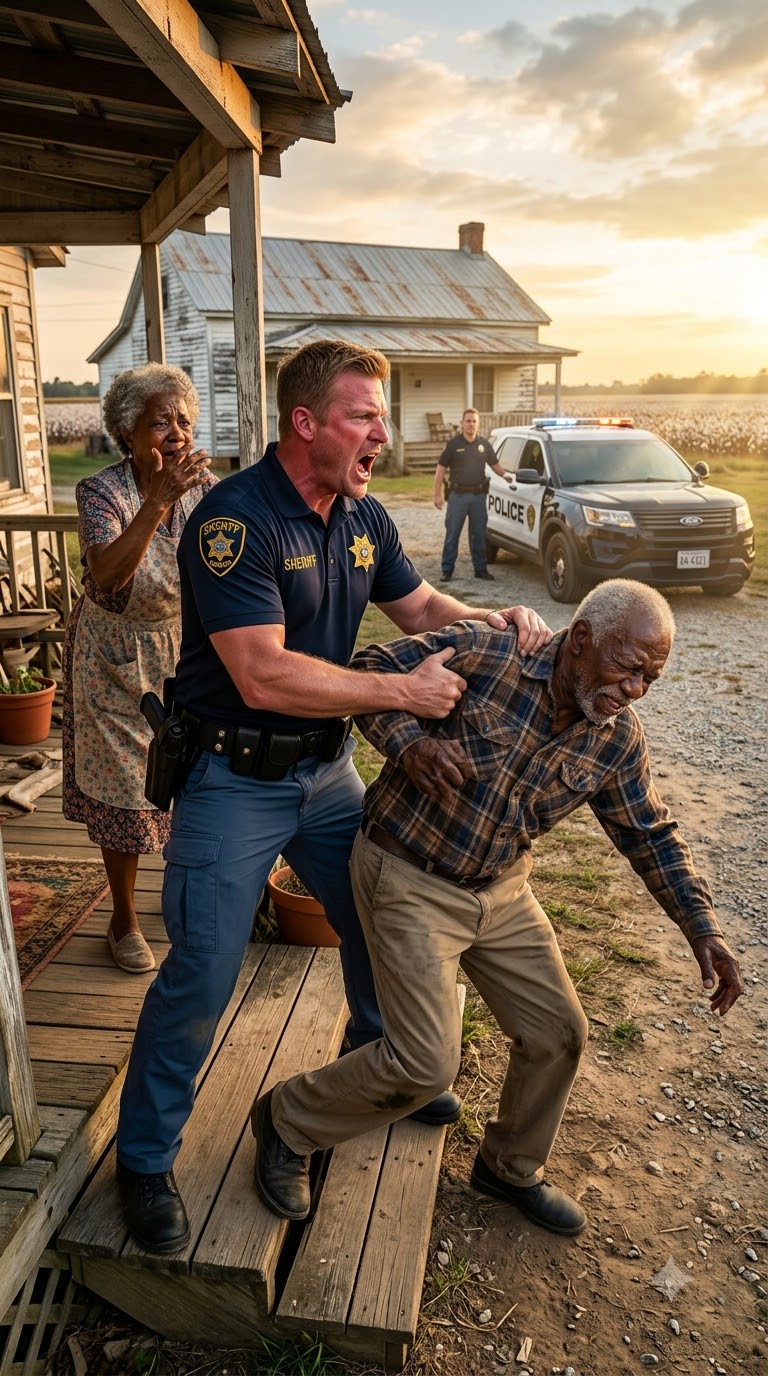
At one gathering in the church fellowship hall, Tyron spoke passionately to a crowd of farmers, neighbors, and supporters.
“We have the truth on our side,” he said firmly. “But truth alone isn’t enough.
We must be vigilant, united, and ready to act. This farm, this land is our heritage, and we will defend it.”
Applause erupted throughout the room, a powerful sign of their shared determination.
Despite the increasing pressure from outside forces, the Johnson family drew strength from Tyron’s leadership. His military discipline brought strategic clarity to their efforts, turning fear into organized action.
One evening, as the sun disappeared behind the cotton fields, Clara found Tyron standing on the porch, staring across the land.
“Thank you for coming back,” she said softly.
Tyron turned with a determined smile.
“I never left in my heart. This is home.”
As the days continued, the farm became a center for coordinated resistance. Surveillance teams monitored suspicious activity, legal filings challenged unlawful actions, and media outreach brought wider attention to their situation.
Through it all, Tyron remained steady, calm, determined, and unwilling to surrender.
His return meant more than simply coming home.
It became the turning point in a struggle that had once seemed impossible to overcome.
The Johnson family, once isolated and vulnerable, now stood at the center of a movement determined to protect not only their land, but also the dignity and rights of their entire community.
The road ahead remained difficult.
But with Tyron’s leadership and the collective strength of their neighbors, they were prepared for whatever came next.
The days after Tyron’s return became a blur of activity. The Johnson farm had transformed into a command center, with the kitchen table covered in maps, legal documents, and communication devices.
The air carried a quiet urgency as neighbors, veterans, and civil rights advocates moved in and out, united by one purpose: protecting their land, heritage, and community.
Tyron moved among them with deliberate focus, coordinating everything with the precision developed through years of military service.
His calm exterior concealed the seriousness of what was at stake, but everyone around him felt his leadership as a stabilizing force. One afternoon, Tyron called a meeting in the old barn, which had been transformed into a makeshift strategy room. The group formed a loose circle, their faces showing both determination and exhaustion. Veterans in camouflage jackets sat beside farmers in work boots, lawyers carrying briefcases, and church leaders dressed in their Sunday best. It was a diverse coalition united by a shared resolve. “We’re setting up a monitoring network,” Tyrone explained, his hands tracing routes across a large map pinned to the wall. “Vunteers will patrol property lines, report any suspicious activity, and document interactions with law enforcement. Every detail counts.”
A young man raised his hand. “What about the legal side? Are we ready if this goes to court?” Tyrone nodded. “We’ve partnered with civil rights attorneys who specialize in land rights and police misconduct. They’re preparing filings to challenge any illegal actions, but evidence is key. We need detailed logs, photos, and witness statements.”
Claraara, sitting beside Tyron, added, “Community meetings will continue. We’ll keep neighbors informed and engaged. Public support can put pressure on officials who might otherwise ignore us.” The coalition’s efforts reached far beyond the farm. Tyron contacted veterans groups across the state, many of whom had faced similar struggles while defending their rights and communities. Their involvement provided not only manpower but also valuable intelligence and resources.
At night, small teams rotated shifts, patrolling the farmland and surrounding roads. Their quiet vigilance served as a deterrent against covert attempts to seize property or intimidate residents. Radios crackled softly in the darkness as volunteers communicated sightings and updates. Inside the farmhouse, Claraara organized a system to gather and catalog every report, her meticulous nature ensuring that nothing was overlooked.
She worked closely with community leaders to organize public forums where stories of harassment and resilience could be shared openly. One such gathering drew a large crowd to the local church’s fellowship hall. The room was packed, voices rising with shared frustration and hope. Tyrone addressed the assembly with quiet authority. “We’re not just fighting for land,” he said. “We’re standing against a system that seeks to erase our history and silence our voices. But together, we have the power to change that.”
The crowd responded with applause and renewed energy. Stories poured out—farmers describing late-night visits from officers, neighbors forced to sell under duress, and families afraid for their future. The collective testimony painted a picture of systemic injustice that could no longer be ignored.
Meanwhile, Tyron’s coalition began documenting patterns of police activity, uncovering evidence of coordinated harassment tactics. Surveillance footage captured unmarked vehicles near farms at unusual hours. Phone records revealed contacts between developers and officials. Financial documents suggested kickbacks and bribery.
The group meticulously compiled the information, preparing dossiers to present to state investigators and the media. Tyron coordinated with journalists who had begun taking an interest, understanding the power of exposure. One evening, as Claraara reviewed a stack of testimonies, she looked up and saw Tyron entering the room, his expression serious but hopeful. “We’re ready to take this public,” he said. “The evidence is strong and the community is united. This needs to be more than a local fight. It’s a matter of justice.”
Clara nodded, pride shining in her eyes. “It’s time.”
The Johnson farm became a beacon of resistance, drawing attention from civil rights organizations, legal advocates, and veterans networks across the nation. Support poured in through financial aid, legal council, and volunteers eager to stand alongside the farmers.
Despite the mounting pressure, the coalition remained disciplined. Tyron emphasized the importance of non-violence and strategic action, drawing on his military experience to navigate the complicated dynamics. Together, they planned a town hall meeting, inviting local officials, media, and community members to hear firsthand accounts and demand accountability. Flyers were distributed, social media posts shared, and phone calls made to rally support. As the day of the meeting approached, anticipation grew.
The church sanctuary was prepared to hold a large crowd, its walls soon to echo with voices demanding justice. On the morning of the event, tyrants stood outside the church, watching neighbors arrive. Farmers in worn hats, families with children in tow, and veterans in uniform gathered with a shared purpose. Claraara joined him, her gaze steady. “Look at them,” she said softly. “This is what we’re fighting for.”
Tyrone smiled. “And we’re stronger than ever.”
Inside, the meeting began with prayers and hymns, grounding the community in faith and solidarity. Then came the testimonies, raw, honest, and powerful. One by one, farmers spoke about threats, intimidation, and the pain of watching their land being targeted.
Tyron took the stage last, his presence commanding silence. “We stand here not just as individuals, but as a community united,” he declared. “We will not be pushed out or silenced. Our land is our legacy, and we will defend it with every resource at our disposal.”
The crowd erupted in applause, the sound reverberating through the sanctuary like a collective heartbeat.
Outside, reporters gathered, capturing the moment as cameras flashed and microphones recorded. The story was spreading beyond the county, exposing the corruption and injustice faced by the Johnson family and their neighbors. As the meeting concluded, Tyrron and Clara exchanged a glance, their faces reflecting a mixture of exhaustion and determination. The road ahead remained uncertain and filled with challenges, but the foundation had been laid.
In the days that followed, the coalition’s efforts intensified. Legal actions were filed, investigations launched, and community support continued to grow. The Johnson family’s fight had become a movement fueled by courage, unity, and the unyielding belief that justice would prevail.
Under Tyrron’s leadership, the community prepared for the battles still to come. Armed with truth, strategy, and an unwavering commitment to protect their land and future, the courthouse steps filled with a sea of faces. Farmers, neighbors, veterans, and allies had come from near and far to witness a pivotal moment in the fight that had gripped the county.
Banners fluttered in the spring breeze, carrying messages of justice and solidarity. The Johnson family stood near the front, their expressions reflecting pride, relief, and cautious hope. Inside the courtroom, the atmosphere was charged with anticipation. The evidence gathered over months—detailed logs, photographs, financial records, and testimonies—was presented meticulously by the coalition’s legal team.
Prosecutors laid bare the extent of the corruption: sheriffs and deputies colluding with developers, using intimidation tactics to seize land from black farmers and undermine their rights and heritage with calculated precision. Tyron sat beside his parents, his posture straight and unwavering. The courtroom had become an arena not only for legal proceedings, but also for the affirmation of dignity and justice long denied.
Every word spoken carried the weight of years of struggle, the nights spent organizing, and the unwavering resolve of a community that refused to be broken. Outside, the press captured the unfolding drama, broadcasting live to a nation increasingly aware of the systemic injustice faced by the Johnson family and their neighbors.
The story had become emblematic of a broader fight, one that resonated far beyond the county’s boundaries. As the indictment was read aloud, naming the sheriff and several deputies on charges of conspiracy, corruption, and abuse of power, a collective exhale swept through the courtroom. The weight of years of fear and intimidation began to lift, replaced by cautious optimism.
After the hearing, the Johnson family returned to their farm, welcomed by neighbors who had stood beside them through every trial. There were embraces, handshakes, and tears—a community bound together by shared sacrifice and triumph.
“Elijah Johnson,” the family patriarch, addressed the gathering beneath the sprawling oak tree near the farmhouse. “This victory is not just ours,” he said, his voice steady and strong. “It belongs to every farmer, every neighbor who refused to be silenced. We have reclaimed our land and our dignity.”
Claraara stood beside him, her eyes bright with unshed tears. “Our journey isn’t over. We must continue to protect what’s ours and help others who face similar battles.”
Community initiatives blossomed in the weeks that followed. Educational programs on land rights were established. Legal clinics offered assistance, and farmers formed cooperative networks to strengthen their collective voice.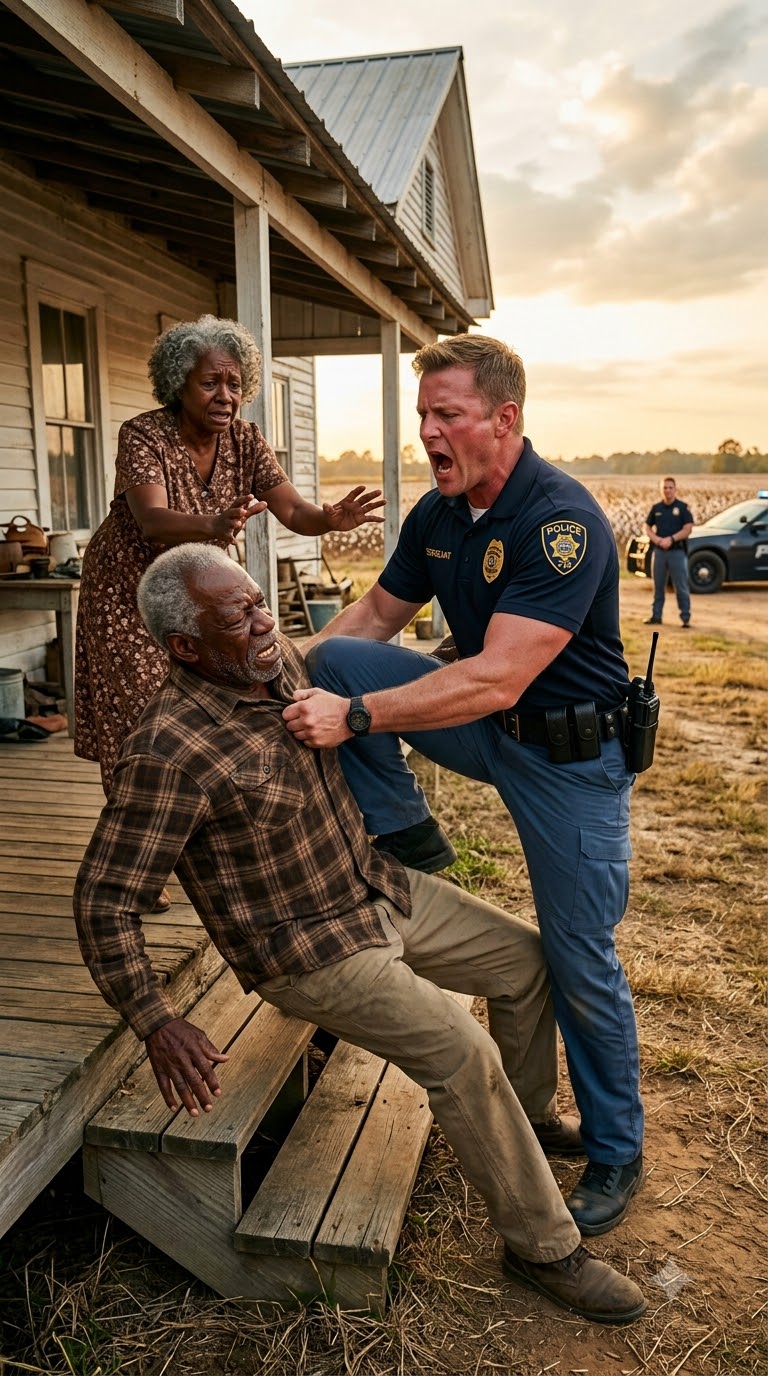
The church hosted regular meetings, becoming a center of empowerment and resilience. Tyron worked closely with veterans groups and civil rights organizations to develop training for communities facing harassment, sharing strategies that had proven effective in their fight. His leadership extended beyond the farm, inspiring others to stand against oppression.
One evening, as the sun dipped low over the cotton fields, the Johnson family gathered on the porch of their farmhouse. Laughter and conversation flowed easily, a stark contrast to the tension that had once filled the air. Children played nearby, their joyful shouts carried by the breeze.
Denise, Tyron’s wife, prepared to speak at an upcoming agricultural justice conference, eager to share their story and advocate for farmers across the nation. Her voice was earnest, fueled by the conviction that change was possible through unity and courage.
Elijah looked out over the land, a deep sense of fulfillment settling over him. “We fought not just to keep this farm,” he said quietly. “But to honor those who came before us and to protect the future for those who will come after.”
The Johnson family stood together, a symbol of resilience and hope. As twilight faded into night, the farm rested peacefully, its fields a testament to endurance, justice, and the unbreakable spirit of community.
