

The first rays of sunlight slipped through Harold Tate’s bedroom window, casting warm bands across his worn quilt. He had been awake for hours, lying quietly in the darkness while his thoughts turned over the testimony he would give that day. At seventy-six, Harold no longer needed an alarm clock. His body knew when morning had arrived. With a quiet groan, he pushed himself upright.
The hardwood floor was cool beneath his feet, anchoring him in the familiar rhythm of his mornings. He put on his robe, the soft flannel one his late wife Martha had given him years ago, and walked toward the bathroom. In the mirror, he studied his reflection. Deep brown eyes looked back at him, surrounded by the lines of decades spent confronting injustice. His silver hair, freshly trimmed the previous day, framed a face that had witnessed too much unfairness but had never surrendered its dignity.
“Today’s the day, Martha,” he murmured, touching the wedding band he still wore. Another fight for justice, just like the old days.
The kitchen was quiet when he entered. Harold moved carefully through breakfast, measuring coffee into the filter and filling the pot with water. Soon, the familiar aroma of brewing coffee filled the room, bringing the comfort he had depended on through countless difficult mornings.
While his oatmeal heated on the stove, Harold walked into the living room and stopped before the wall covered with photographs. Dozens of simple frames filled the space, but his eyes settled on one in particular.
Malcolm’s graduation from the FBI Academy.
His son stood tall and proud in his dark suit, with Harold and Martha smiling beside him. Even in the photograph, Martha’s smile seemed capable of brightening the room.
“You’d be proud of our boy, Martha,” Harold said softly, touching the frame. “Standing up for what’s right, just like we taught him.”
The morning newspaper sat outside, protected from the dew by plastic wrapping. Harold settled into his favorite armchair, which faced his small garden, and unfolded it. The headline immediately caught his attention.
Officer Maddox’s misconduct trial continues. Key witness to testify.
His hands tightened slightly around the paper as he read. The article summarized the accusations against Officer Brent Maddox: racial profiling, excessive force, multiple incidents that had been pushed aside, and a pattern of harassment the community had discussed in whispers for years but had been too frightened to confront.
Until now.
Harold put the paper aside and stirred his oatmeal, adding a small drizzle of honey, another habit Martha had taught him.
The kitchen clock moved steadily toward the time he needed to leave. Harold ate slowly, knowing he would need his strength.
After breakfast, he went to his bedroom closet. His gray suit was already hanging there, pressed and ready. It wasn’t his newest suit, but it was the one he trusted most, the suit he had worn into countless courtrooms throughout his career.
There was slight wear around the elbows, but it still fit perfectly. When Harold slipped it on, its familiar weight settled across his shoulders like armor. He tied his dark blue tie with practiced hands and checked the knot in the mirror. Martha had always said that tie brought out his eyes.
The gold tie pin, given to him after his first major civil rights victory, caught the morning light.
Harold packed his briefcase carefully: reading glasses, a small notebook, and his favorite pen. Every item had its place, just as every piece of evidence had its purpose. Preparation had always been one of his greatest strengths, in court and in life.
He gave himself one last look in the hallway mirror.
Gray suit. Pressed white shirt. Blue tie.
Exactly what he wanted the court to see.
A dignified professional who deserved respect.
But beyond the clothing and appearance, Harold saw the man Martha had always seen: someone who refused to stop fighting for what was right.
A car horn sounded outside.
Two short beeps.
Right on time.
Harold took his briefcase and walked to the front door. He paused with his hand on the knob, drew a deep breath, straightened his shoulders, and stepped outside to meet whatever the day held.
Lewis Carter’s old Buick waited at the curb, its dark blue paint shining beneath the morning sun. Harold recognized his friend’s familiar silhouette behind the wheel and descended the front steps, gripping the iron railing Martha had insisted they install the previous year.
“Morning, Mr. Tate,” Lewis said, stepping out to open the back door.
His weathered face tightened with concern. “How you feeling today?”
“Ready as I’ll ever be, Lewis,” Harold replied, settling into the back seat.
The leather was cool against his back, and the car carried the familiar scent of Lewis’s pine air freshener. Lewis returned to the driver’s seat and adjusted the mirror so he could keep Harold in view.
“Been hearing things, Mr. Tate. Maddox’s people been stirring up trouble since yesterday, talking about making sure you don’t get to testify.
Harold nodded slowly as the familiar streets passed outside the window.
“They’ve been trying to silence the truth for years, Lewis. Today won’t be any different.”
“Yes, sir.”
Lewis tightened his hands around the steering wheel.
“These folks mean business. Saw some of them at the diner this morning talking loud about teaching certain people their place. The way they looked at me.”
He shook his head.
They turned onto Main Street, where the morning crowd was already gathering. Harold noticed conversations stopping as the Buick passed. Faces turned toward them, some curious, others openly hostile.
Outside Thompson’s Hardware, several men leaned against pickup trucks, their eyes following the Buick with unmistakable hostility.
“Towns changed,” Lewis said quietly. “Or maybe it hasn’t changed enough.”
“It’s always been here, Lewis,” Harold replied, watching a mother pull her children closer as they passed, hiding better on some days than others.
The courthouse appeared ahead, its red-brick facade towering above the surrounding buildings. Even from two blocks away, the growing crowd on the steps was visible.
Signs rose above the heads of protesters.
Support our police on one side.
Justice for all on the other.
Lewis slowed the Buick, carefully working through the crowd. Someone recognized the vehicle and shouted.
The crowd separated just enough to create a narrow route toward the courthouse steps.
“You tell them, Mr. Tate.”
“Go home, old man.”
“We’re with you, Harold.”
“Back off, race traitor.”
The voices struck the windows like hail.
Lewis pulled as close to the steps as possible, giving Harold the shortest walk to the entrance.
“Miss Gloria said she’d meet you in the lobby,” Lewis said, turning toward him. “You want me to walk with you?”
Harold patted his friend’s shoulder.
“No need to put yourself at risk, Lewis. I’ve walked through worse crowds than this.”
“That’s what worries me, sir. You shouldn’t have to keep doing this.”
“Some fights are worth having more than once,” Harold said, straightening his tie.
He took his briefcase and reached for the door.
Lewis stopped him.
“Mr. Tate, Martha would be proud of you today. Real proud.”
Harold smiled, though hearing his wife’s name brought the familiar ache.
“Thank you, Lewis. I’ll see you after.”
The moment Harold stepped from the Buick, the noise hit him.
The summer air was already heavy with humidity, and the crowd pressed closer, signs waving overhead. Harold kept his gaze ahead and climbed the courthouse steps at a measured pace.
“Justice for Harold Tate,” someone shouted from his left.
“Remember your place,” someone answered from the right.
Harold kept climbing.
Neither faster nor slower.
Each step carried memories. How many times had he climbed these same stairs? How many battles for justice had begun in this building?
The courthouse doors were open, guarded by stone columns and stern-faced deputies. Their hands rested near their weapons as Harold approached. He nodded to them as he passed, noticing that neither acknowledged him.
Inside, the air conditioning washed over him, offering relief from the heat outside.
The marble floor echoed beneath his shoes as whispered conversations filled the lobby.
Then a familiar voice broke through the murmur.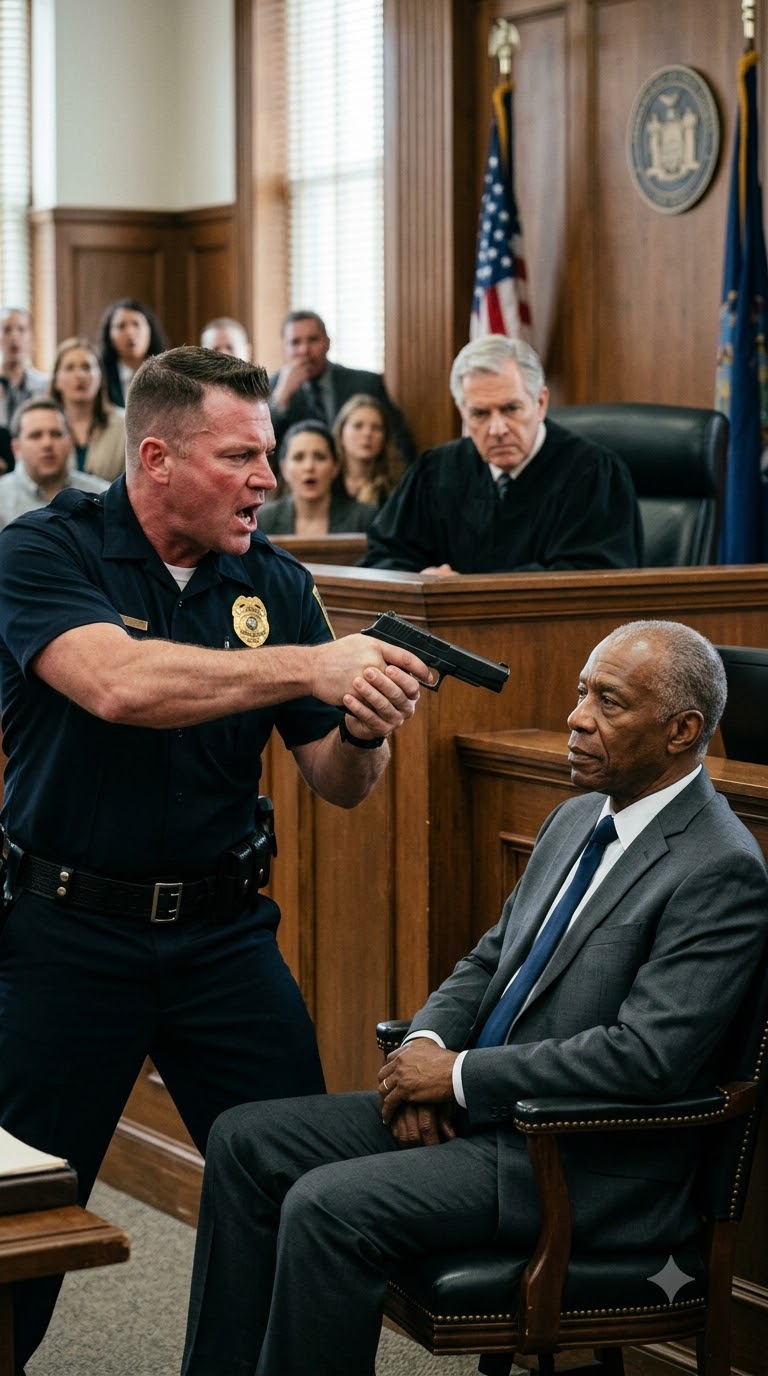
Gloria Simmons walked toward him, her heels clicking against the marble. Her dark suit was immaculate, and her expression carried the same focused energy Harold remembered from the countless cases they had handled together.
“Gloria,” he said, smiling warmly.
“Right on time, as always.”
She took his arm firmly.
“These fools think they can scare us with their little show outside. Please, I’ve seen scarier crowds at a church bake sale.”
Harold chuckled.
“How’s it looking in there?”
“Packed house,” Gloria replied, guiding him toward the courtroom doors. “Maddox’s supporters got here early, took up most of the gallery. But we’ve got the truth on our side, and that’s all that matters.”
They stopped before the heavy wooden doors. The low rumble of voices came from inside.
Gloria gently squeezed his arm.
“You ready for this, old friend?”
Harold thought of Martha, Malcolm, and every person who had stood where he stood now.
He thought about the angry faces outside, the hopeful ones, and every mile that had brought him to this moment.
“Yes,” he said simply. “I’m ready.”
Together, they pushed open the courtroom doors.
Silence fell.
Every head turned.
The whispers disappeared.
Harold walked down the center aisle, feeling the weight of every gaze. To his right, Maddox’s supporters filled the gallery, many wearing blue ribbons in support of the police. To his left, a smaller group of community members watched Harold with worried expressions.
At the defense table, Officer Brent Maddox sat in his pressed uniform while his attorney whispered beside him. Maddox’s jaw tightened as Harold passed, his cold eyes following him.
Judge William Carson sat above them, his lined face unreadable beneath steel-gray hair. Harold had appeared before him many times, but he had never been certain where the judge’s sympathies truly rested.
“All rise,” the bailiff called.
At that same moment, outside in the parking lot, Malcolm Tate sat inside his unmarked FBI vehicle, an earpiece in place and his phone filled with messages from Gloria’s assistant.
His fingers tapped against the steering wheel as he listened to the proceedings begin.
Inside, Harold took his seat in the witness chair and adjusted his tie while he was sworn in.
Prosecutor Sarah Chen approached with deliberate steps.
She began with simple questions.
Harold answered each one clearly.
She asked where he had been on the night of the incident. He explained where he had stood, what he had seen, and what Maddox had done. She moved carefully through the timeline, allowing Harold’s testimony to establish the pattern without exaggeration.
Maddox sat rigidly at the defense table.
His attorney occasionally leaned toward him, whispering instructions.
Then Sarah reached the part that mattered most.
She placed several photographs on the evidence table.
“Mr. Tate, can you identify these?”
Harold looked at them.
The first showed a bruised man outside a convenience store.
The second showed a woman beside a patrol car.
The third showed an elderly man standing beside a vehicle with his hands raised.
Harold recognized every face.
He had represented some of them.
He had spoken to others.
And he remembered the stories behind all of them.
Harold nodded.
The courtroom became increasingly still.
Sarah asked about the complaints filed against Maddox. Harold explained what had happened when citizens tried to report him, how complaints disappeared into internal reviews, and how people eventually stopped believing anyone would listen.
Then Sarah asked the question that changed the room.
“Mr. Tate, why did you continue?”
Harold looked toward the gallery.
Then toward Maddox.
Finally, he touched the gold tie pin on his lapel.
“Because silence was exactly what they were counting on.”
No one spoke.
Even the defense attorney stopped writing.
Harold continued his testimony, describing the intimidation that had followed the investigation. He did not exaggerate. He didn’t need to.
The truth was enough.
Outside, Malcolm’s phone vibrated.
A message from Gloria’s assistant appeared.
Maddox’s attorney just objected to the threat evidence.
Malcolm read it and looked toward the courthouse.
Another message followed.
Harold is handling it.
Malcolm exhaled slowly.
Then he heard something through his earpiece.
A disturbance near the west entrance.
His posture changed immediately.
He stepped out of the vehicle.
Inside the courthouse, Sarah was preparing to introduce another piece of evidence when shouting erupted outside.
The courtroom doors opened.
A deputy rushed in.
“Everyone remain seated.”
Judge Carson struck the gavel.
“Order.”
Harold turned toward the doors.
Then came another sound.
A sharp metallic click.
The courtroom froze.
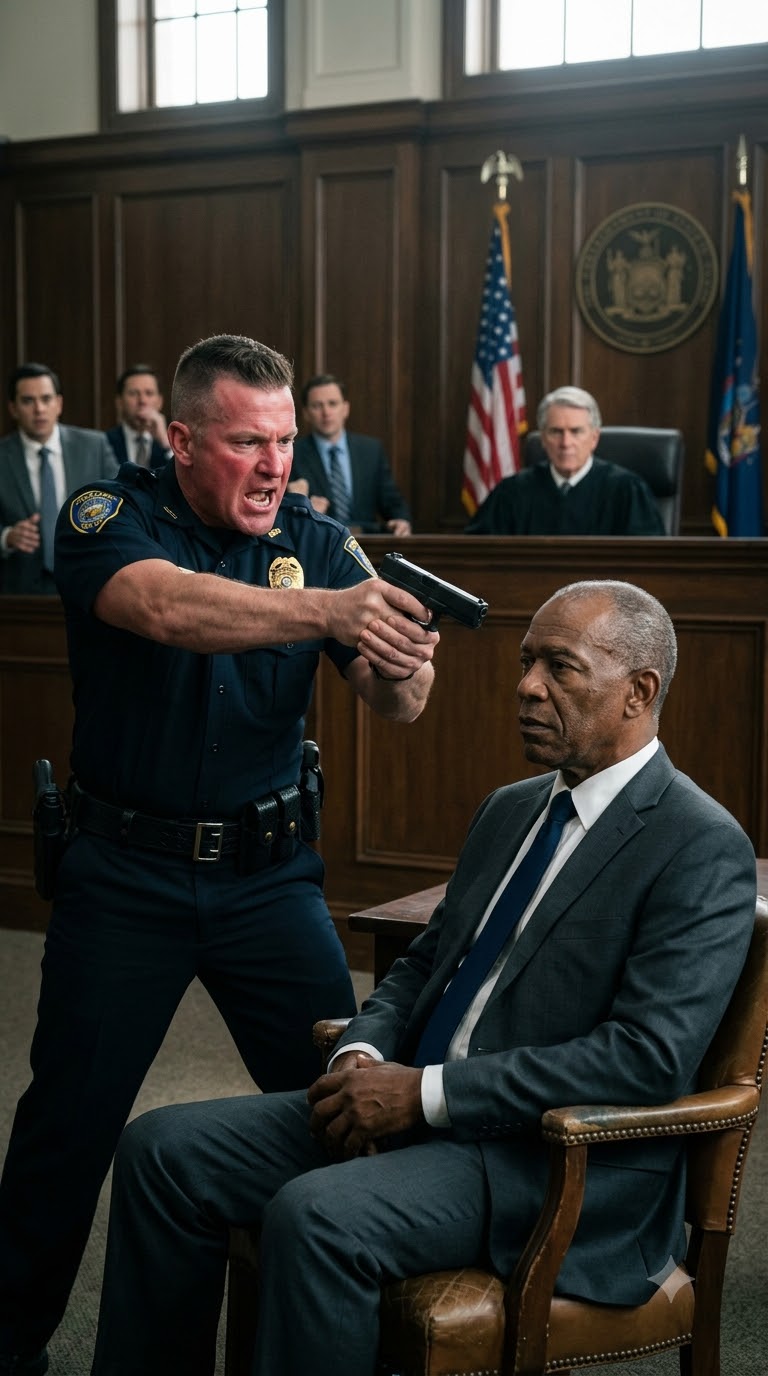
Maddox had risen from the defense table.
One hand was moving toward his waistband.
The deputy nearest the aisle reached for his weapon.
“Officer Maddox, don’t.”
Maddox pulled his gun.
Everything happened at once.
People screamed.
The gallery surged backward.
Gloria grabbed Harold’s arm.
Sarah stepped away from the evidence table.
Maddox raised the weapon toward Harold.
Then the courtroom doors burst open.
Malcolm entered.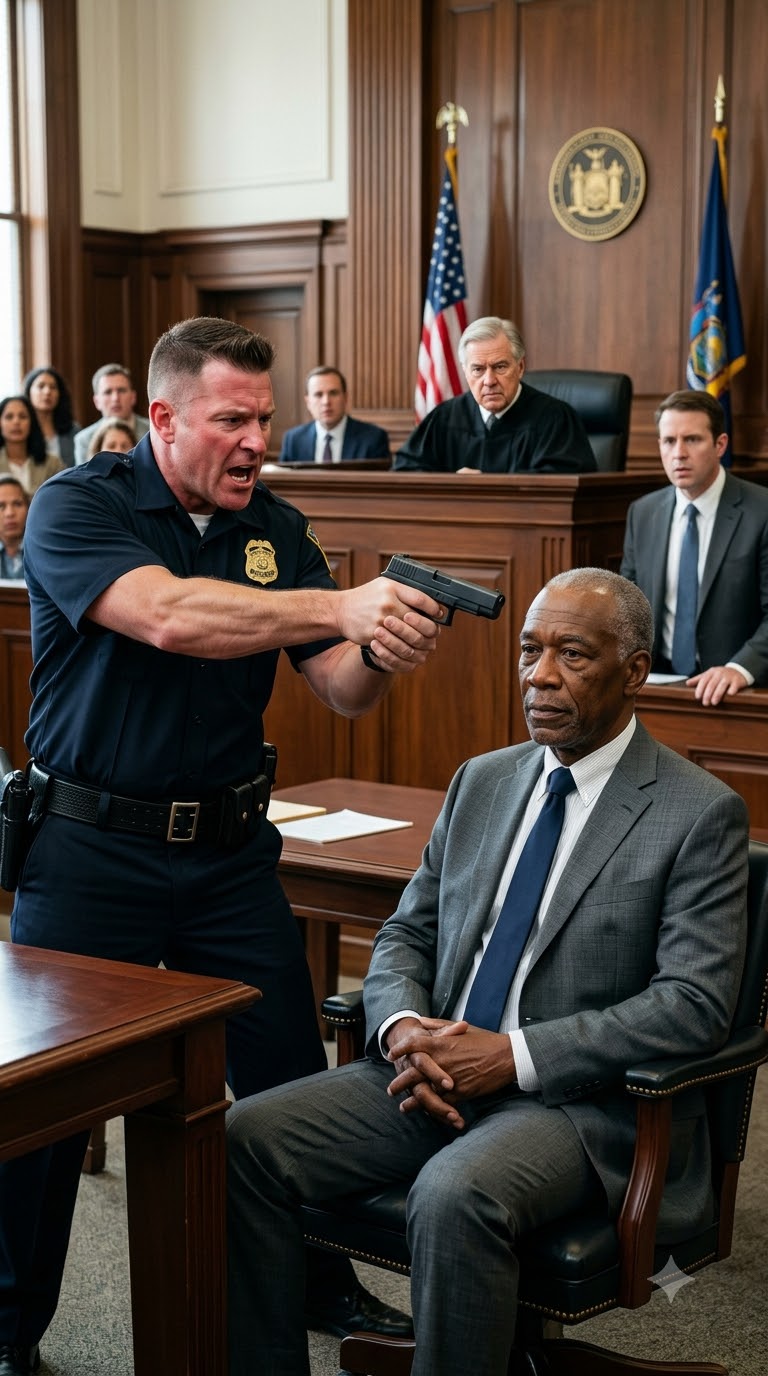
His FBI credentials were already in his hand, his eyes fixed on the gun.
He recognized his father’s position instantly.
And his voice tore across the courtroom.
“DROP IT!”
Maddox froze.
For one second, nobody moved.
Malcolm stood between the gun and his father, his posture rigid, his hand near his own weapon but not drawing it.
“Officer Maddox,” he said, his voice controlled, “put the weapon down.”
Maddox’s eyes shifted toward him.
“You stay out of this.”
Malcolm didn’t move.
“This is your last chance.”
Harold remained seated.
His face was calm, but his eyes never left the weapon.
Maddox’s hand trembled.
Then the judge spoke.
“Officer Maddox, lower the weapon immediately.”
Maddox looked around.
There was nowhere left to turn.
Deputies had surrounded the courtroom.
The gallery was silent.
His own attorney had backed away from him.
Even the people who had spent the morning supporting him were staring in disbelief.
Maddox slowly lowered the gun.
A deputy moved forward.
“Put it on the floor.”
Maddox hesitated.
Then he released it.
The weapon struck the courtroom floor.
Two deputies rushed forward and secured him.
The courtroom remained frozen for several seconds.
Malcolm didn’t look at Maddox.
He looked at his father.
Harold was still sitting in the witness chair.
Alive.
Unhurt.
Malcolm finally let out the breath he had been holding.
Harold met his son’s eyes.
No words were needed.
Sarah Chen moved toward the judge.
“Your Honor, I believe the court has just witnessed an attempt to intimidate a protected witness in open court.”
Judge Carson’s face had changed.
For the first time that morning, his expression revealed something beyond neutrality.
Anger.
“Remove Officer Maddox.”
Maddox was escorted out.
His blue supporters sat in stunned silence.
The same courthouse that had seemed divided only an hour earlier was now united by the undeniable reality of what had happened inside it.
Harold remained in the witness chair.
The judge looked at him.
“Mr. Tate, do you need a recess?”
Harold shook his head.
“No, Your Honor.”
The judge studied him for a moment.
“Are you certain?”
Harold nodded.
“I’ve waited too long for this testimony to stop now.”
The courtroom remained silent.
Judge Carson nodded.
“Proceed.”
Sarah returned to the evidence table.
She didn’t need to ask Harold to explain what the gun had meant.
Everyone understood.
She continued with the evidence.
The investigation expanded immediately.
Security footage was preserved. The weapon was entered into evidence. Maddox’s communications were examined, and investigators discovered messages showing that people connected to him had discussed ways to prevent Harold from testifying.
What had been treated as an individual misconduct case became something much broader.
Other victims came forward.
Then more.
Within days, investigators received complaints from people who had been too frightened to speak before. Some had been stopped. Some searched. Some threatened. Some had simply been ignored when they asked for help.
Harold read every name that came across his desk.
He didn’t celebrate.
He listened.
Because he knew what it meant to finally be believed.
The trial continued.
The evidence against Maddox grew stronger.
His attorney attempted to challenge the testimony, but the courtroom footage, police records, witness accounts, and newly uncovered communications told a consistent story.
Eventually, the verdict came.
Guilty.
Harold sat quietly as the decision was read.
He didn’t smile.
He simply closed his eyes for a moment.
Martha came to mind.
So did every person whose name had appeared in those old complaints.
Outside the courthouse, reporters waited.
Harold stepped onto the courthouse steps beside Gloria and Malcolm.
Questions came from every direction.
“Mr. Tate, are you satisfied?”
“Do you believe justice was served?”
“Did you ever think about giving up?”
Harold raised one hand.
The noise gradually faded.
“I didn’t do this because I wanted to win,” he said. “I did it because people deserve to know that their voices matter.”
He looked at Malcolm.
His son stood beside him, no longer simply an FBI agent protecting his father, but a man who had watched his parents spend a lifetime teaching him what courage meant.
Then Harold looked toward the courthouse doors.
“I hope the next person who walks through those doors doesn’t have to be as old as I am before somebody listens.”
Malcolm placed a hand on his father’s shoulder.
Harold covered it with his own.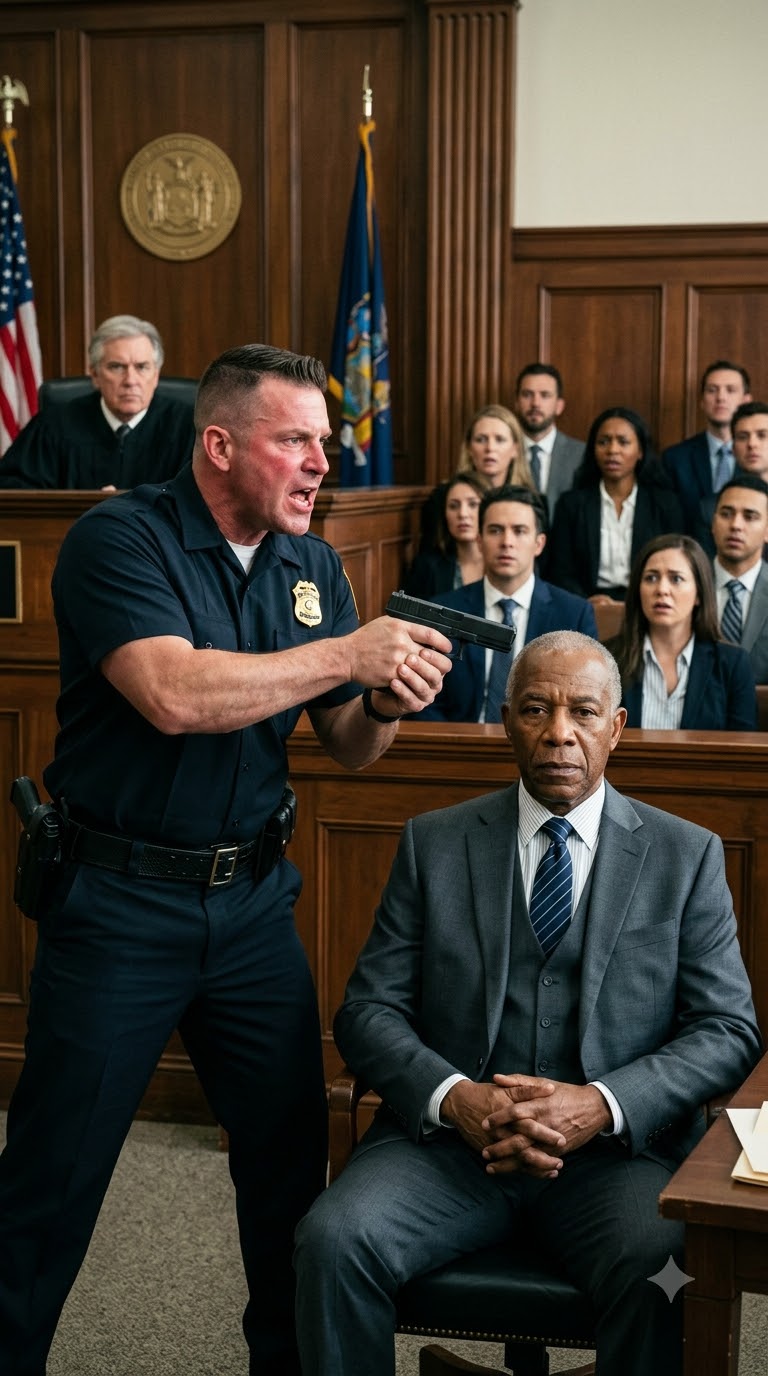
That evening, they returned home.
Lewis dropped them at the curb, then waited until Harold reached the front steps safely.
Before Harold went inside, Malcolm stopped him.
“Dad.”
Harold turned.
Malcolm looked at the old house, the quiet street, and the wedding photograph visible through the window.
“You think Mom would have been proud?”
Harold smiled.
“She already was.”
Malcolm nodded.
For a moment, neither spoke.
Then Harold looked toward the photograph of Martha.
He touched the wedding band on his finger.
The fight had not ended.
There would be more hearings.
More investigations.
More names.
More people who would need someone willing to stand beside them when doing so was difficult.
But Harold understood something that evening.
Justice was rarely one dramatic moment.
It was a collection of ordinary decisions made by people who refused to look away.
A witness who finally spoke.
An officer who finally admitted what he had seen.
A lawyer who refused to stop asking questions.
A son who stepped through a courtroom door when his father needed him.
And an old man who kept walking forward long after the world had given him reasons to stop.
Harold entered the house.
The photograph of Martha waited on the living room wall.
He stood before it for a long moment.
“Made it through, Martha,” he whispered.
The house remained quiet.
But for the first time in a long while, the silence didn’t feel empty.
It felt like peace.
And somewhere beyond that quiet house, other people were beginning to speak.
This time, someone was listening.
