

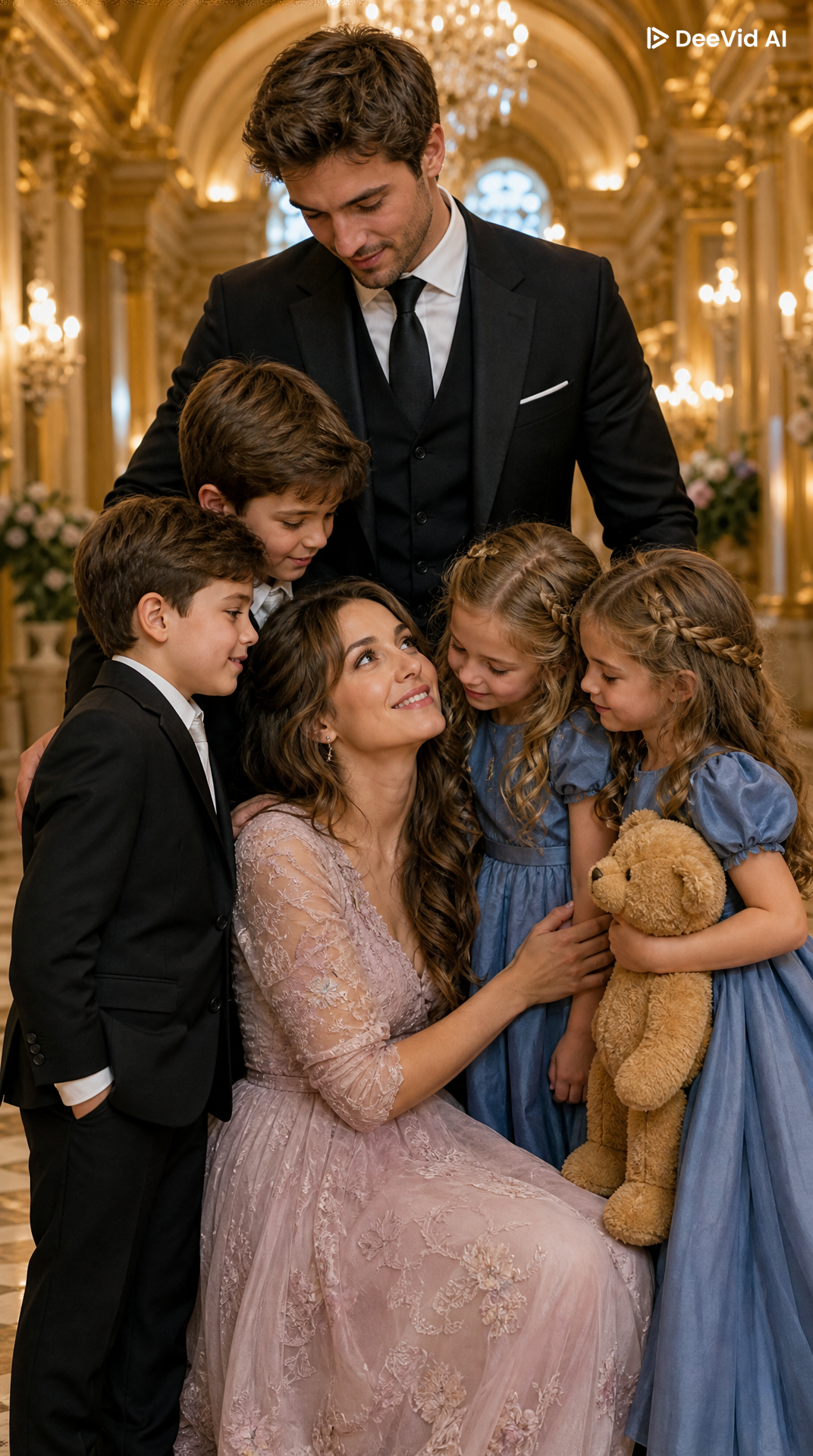
PART 1 — THE PRICE OF A DAUGHTER
My father sold me for three million dollars because I couldn’t have children.
He didn’t whisper it.
He didn’t apologize.
He stood beneath the stained industrial lights of a smoke-filled warehouse while a scarred stranger held my chin between his fingers and examined me as if I were livestock.
Then Frank Rossi looked away from my face and said, “The girl is yours.”
My knees nearly gave out.
“Dad?”
He tightened his grip on the leather folder containing his canceled debts.
“Do whatever you want with her.”
There were eight men in the warehouse.
Not one of them looked surprised.
That was how I understood the arrangement had been completed long before I entered the room.
I had not been brought there for a negotiation.
I was the payment.
Two weeks earlier, I had still believed my parents loved me.
I had been sitting on the paper-covered examination table of an Upper East Side clinic, my hands clasped tightly in my lap, when Dr. Hartman placed my test results on the desk.
The office smelled of disinfectant and artificial lavender. Beyond the window, yellow taxis moved through Manhattan traffic while ordinary people continued living ordinary lives.
Dr. Hartman removed his glasses.
“Meline,” he said gently, “I’m sorry.”
Doctors used that voice when they already knew the truth would divide your life into a before and an after.
“Just tell me.”
He explained the scarring first.
Severe endometriosis.
Then the uterine anomaly.
Then the complications.
His sentences were careful, but one line swallowed everything else.
“You will not be able to conceive naturally, and carrying a pregnancy would be medically impossible.”
I stared at him.
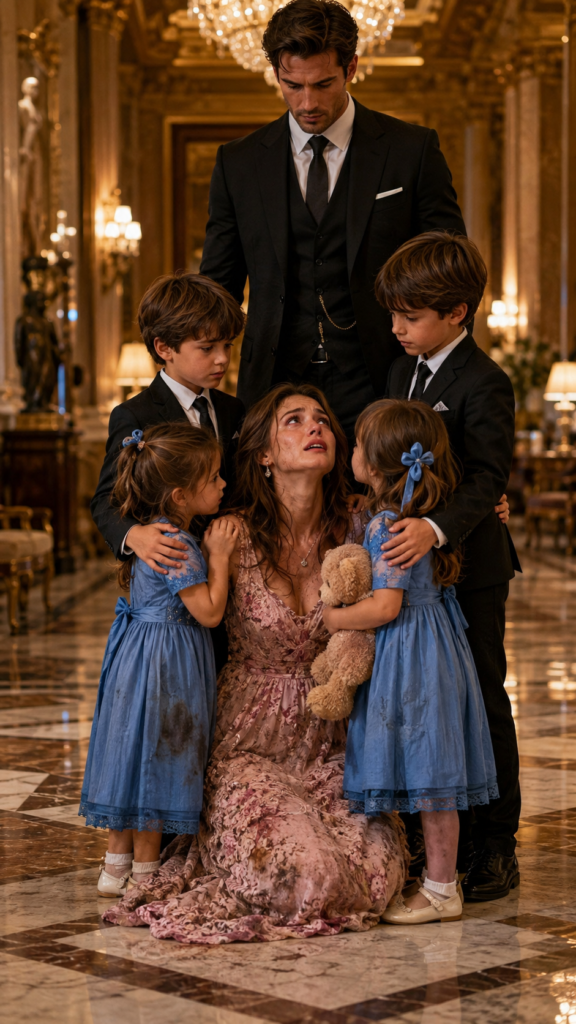
The clock above the door continued ticking.
I watched its second hand move three times before I remembered to breathe.
“I’m twenty-three.”
“I know.”
“I’m getting married in June.”
His eyes softened.
“I know.”
I thought of Vincenzo Moretti.
His hand resting possessively on my waist at parties. His mother discussing christening gowns before we had chosen wedding flowers. His father joking that the first son would inherit both families.
At dinners, Vincenzo sometimes pressed his palm against my stomach and smiled.
“Our first boy will have my eyes,” he would say.
Everyone found that romantic.
No one ever asked whether I wanted children.
No one asked whether I wanted Vincenzo.
Daughters in families like mine were not raised to discover themselves. We were polished, dressed, educated and displayed until the correct man arrived with a surname powerful enough to justify surrendering our own.
I had accepted that future because resistance had never seemed possible.
Now even obedience would not save me.
When I returned to the Rossi estate in New Jersey, rain was beginning to fall across the long gravel drive. The iron gates closed behind my car with a metallic finality that made me glance back.
My father was waiting in his study.
Frank Rossi stood near the fireplace with my medical report in one hand and a glass of scotch in the other. He was a broad man with silver beginning at his temples and a voice that could make grown men lower their eyes.
My mother, Helen, stood beside the window.
She wore a pearl-gray dress and no expression.
I looked at her first.
“Mom?”
She turned toward the rain.
My father lifted the report.
“Is this true?”
“I was going to tell you.”
“Is it true?”
“Yes.”
The crystal glass left his hand.
It struck the fireplace and exploded.
I flinched as amber liquid ran down the stone.
My father looked at me with an expression I had never seen before.
Not grief.
Not concern.
Calculation.
“Worthless.”
The word was almost quiet.
That made it worse.
“What?”
“Twenty-three years.” His face tightened. “Twenty-three years of food, clothes, tutors, security, holidays. And you cannot perform the one duty for which you were raised.”
I felt as though the floor had shifted beneath me.
“I didn’t choose this.”
“You think that matters?”
“Dad—”
“Vincenzo called.”
My heart stopped.
“He knows?”
“He ended the engagement.”
I turned toward my mother.
“Did you tell him?”
She still would not look at me.
My father laughed once, a dry, ugly sound.
“He said he does not buy broken merchandise.”
Something inside my chest cracked.
I waited for my father to defend me.
He had threatened men for insulting the quality of wine served at his table. He had once broken a businessman’s jaw for making a joke about my mother.
But when another man called his daughter broken merchandise, Frank Rossi had apparently listened.
“Get out of my study,” he said.
I barely remember reaching my bedroom.
I remember closing the door.
I remember sliding down against it.
I remember holding both hands over my mouth because the sound trying to escape me frightened me.
By the following morning, my credit cards had stopped working.
My driver was reassigned.
The jewelry box my grandmother had given me was gone.
A housekeeper entered my room after lunch and began removing dresses from my wardrobe.
“What are you doing?”
She folded a silk gown without meeting my eyes.
“Mr. Rossi’s orders.”
“They’re my clothes.”
She paused.
Then she whispered, “I’m sorry, Miss Meline.”
No one else apologized.
My father did not speak to me for four days.
My mother spoke only when necessary.
But the house changed around me.
Doors closed when I approached. Conversations stopped. Men I had known since childhood began watching me with guarded expressions.
Late one night, I heard my father arguing in his study.
“You will get what you are owed.”
Silence followed.
Then his voice again.
“I said I found another solution.”
I stood barefoot in the corridor, cold spreading across my skin.
The study door opened.
My mother stepped out.
For one brief second, guilt flashed across her face.
“What solution?” I asked.
“Go to bed.”
“What is he doing?”
“You are imagining things.”
She attempted to pass me, but I caught her wrist.
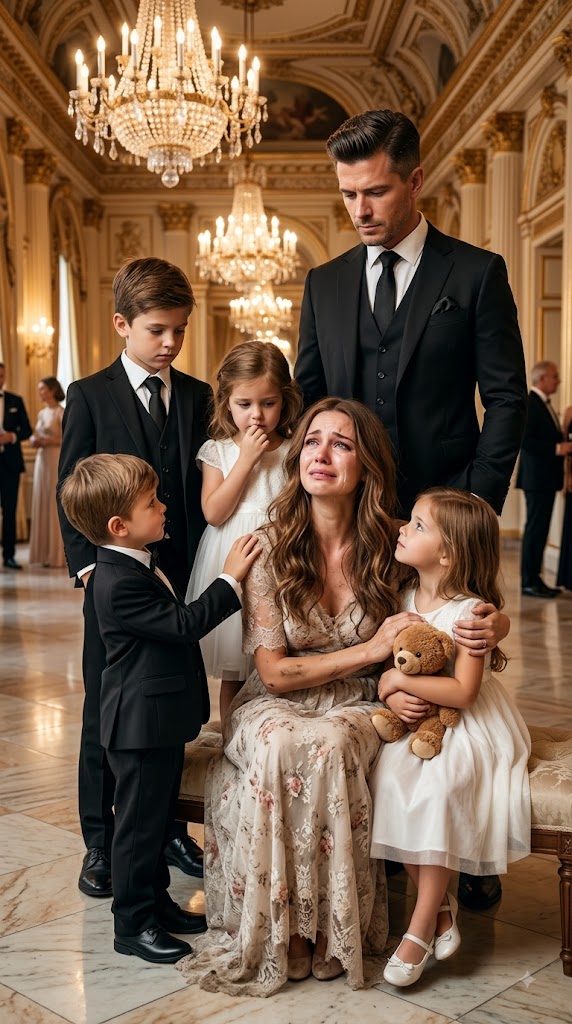
My mother looked down at my hand as though touching her without permission were an act of rebellion.
“Please,” I whispered. “Tell me whether I am in danger.”
Her face became hard.
Then she pulled free.
“You should have considered what this diagnosis would cost your father.”
She walked away.
I stood alone in the corridor long after her footsteps disappeared.
Three nights later, my father ordered me to wear a plain black dress.
No handbag.
No jewelry.
No telephone.
“Where are we going?”
He did not answer.
The Lincoln Town Car waited outside in the rain.
I climbed into the back seat because some small, foolish part of me still believed fathers did not destroy their daughters.
As we drove toward Queens, elegant neighborhoods gave way to crowded avenues, then silent industrial roads. Restaurants vanished. Apartment buildings disappeared. Finally, there were only chain-link fences, loading docks and black windows reflecting the rain.
My father sat beside me.
He stared straight ahead.
His hands were trembling.
Frank Rossi’s hands never trembled.
Not during police searches.
Not at funerals.
Not when rival families surrounded his restaurant with armed men.
But that night his fingers shook against his knees.
“Dad?”
He closed his eyes.
The car stopped outside an abandoned shipping warehouse.
He opened the door.
“Get out.”
Inside, cigar smoke drifted beneath industrial lamps. Men stood along the walls in dark coats. Rainwater leaked through the roof and struck the concrete in slow, hollow drops.
At the back of the room, Arban Hoxha rose from a leather chair.
Everyone in our world knew his name.
Hoxha controlled ports, shipments and debts that could not be settled in courtrooms. A pale scar crossed his face from his temple to the corner of his mouth, pulling his smile slightly sideways.
He approached me.
His eyes moved over my dress.
I stepped backward.
My father blocked my path.
Arban took my chin in one hand.
His thumb pressed into my cheek.
“Let go of me.”
He smiled.
I looked at my father.
“Tell him.”
Frank said nothing.
“Dad, tell him to let me go.”
Arban glanced toward him.
“Three million.”
My blood turned cold.
Frank forced a nervous laugh.
“The debt is cleared.”
“No,” I whispered.
Arban released my chin and dragged a leather satchel onto a rusted table. He unzipped it.
Inside were loan agreements.
Signed promises.
Records of interest.
My father’s name appeared across every page.
Three million dollars.
Arban looked at me again.
“A fair exchange.”
Then my father said the words that killed the last piece of me still waiting to be loved.
“The girl is yours. Do whatever you want with her. I wash my hands of the disappointment.”
For one insane second, I waited for him to laugh.
To reveal that this was a loyalty test.
To call his men from the shadows.
Instead, he took the papers.
Arban’s crooked smile widened.
“A barren woman for three million dollars.”
My father did not correct him.
He turned toward the exit.
I closed my eyes because I could not bear to watch him leave.
Then the warehouse fell silent.
Not gradually.
Instantly.
Arban’s hand dropped away from me.
A man near the entrance whispered one name.
“Romano.”
The iron doors opened.
Dominic Romano entered alone.
He wore a charcoal suit beneath a black overcoat. Rain darkened his hair at the temples. He carried no visible weapon and moved without urgency.
Yet every dangerous man in that warehouse became careful.
Dominic Romano was not the loudest syndicate leader on the eastern seaboard.
He did not need to be.
His reputation had been built through absences: men who disappeared from negotiations, businesses that changed ownership overnight, enemies who suddenly discovered the wisdom of retirement.
His wife, Camila, had died two years earlier.
Since then, people said grief had turned him colder.
He also had four children.
Four children growing up inside a fortified estate without their mother.
Dominic’s blue eyes moved from Arban to the open satchel.
Then to my father.
Finally, they settled on me.
On my black dress.
On the red mark Arban’s hand had left along my jaw.
“Rossi,” Dominic said.
My father visibly flinched.
“I hear you are settling a debt.”
Frank forced a smile.
“This is a private matter.”
Dominic kept looking at me.
“Not anymore.”
Arban stepped forward.
“With respect, Romano, the agreement is complete.”
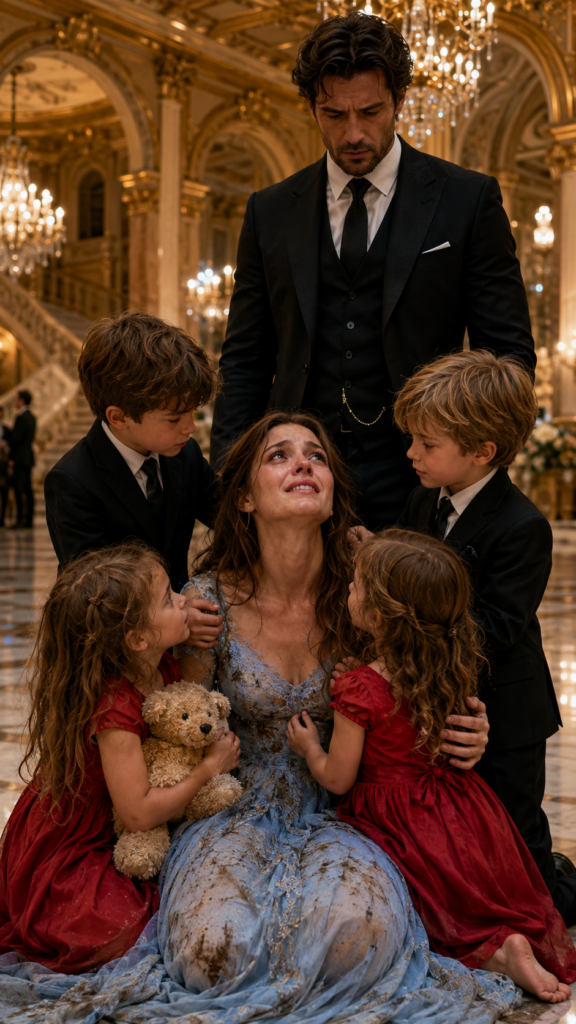
Dominic finally faced him.
“The girl comes with me.”
“She belongs to me.”
Dominic’s expression became completely still.
“I was not making a bid.”
The silence tightened.
Arban’s pride fought visibly with his fear.
Dominic adjusted one cuff.
“If you wish to debate ownership of a human being, we can continue outside.”
His gaze did not shift.
“But only one of us will return.”
Arban raised both hands.
“She is yours.”
I should have felt relief.
Instead, sickness rolled through me.
I had been passed from my father to Arban and from Arban to Dominic in less than five minutes.
Dominic turned to Frank.
“Your debt to Hoxha is cleared.”
My father exhaled.
“Thank you.”
Dominic’s eyes hardened.
“You misunderstand. You now owe me three million dollars.”
The color left Frank’s face.
“You have thirty days.”
Dominic walked toward me.
I tried to step away, but the table struck the back of my legs.
He stopped before touching me.
Then he removed his cashmere overcoat.
I flinched.
He noticed.
Something painful crossed his face before vanishing.
He placed the coat over my shoulders without allowing his hands to brush my skin.
“Walk,” he said.
Outside, rain struck the pavement in silver sheets.
A black armored SUV waited beyond the loading dock. Ten minutes later, I sat pressed against one door, clutching Dominic’s coat around my body.
He sat opposite me.
Neither of us spoke until the warehouse was far behind us.
“Why?” I finally asked.
He looked up.
“Why would a man like you take a woman who cannot give him an heir?”
His jaw tightened.
“My father announced it loudly enough. You heard him. I’m defective.”
“You are not defective.”
“If you took me for leverage, children or marriage, you wasted three million dollars.”
Dominic poured water into a glass and placed it in front of me.
“I did not buy you, Meline.”
“Then what did you do?”
“I rescued you.”
I almost laughed.
The sound broke in my throat.
“Why?”
He looked toward the rain-streaked window.
When he spoke again, the feared Dominic Romano sounded less like a king and more like a father who had not slept properly in two years.
“I have four children. Every woman introduced to me since Camila died has wanted something from them.”
“What?”
“My sons are seen as obstacles to power. My daughters are treated as competition for affection. Some women wanted children of their own and expected mine to move aside.”
Understanding came slowly.
Painfully.
Dominic leaned forward.
“Your father called you defective.”
My throat closed.
“I call you perfect.”
I could not move.
He continued before I could mistake his meaning.
“Not because you cannot conceive. Because you know what it means to be valued only for what your body can provide.”
His eyes held mine.
“You would never do that to a child.”
“What do you want from me?”
His answer came quietly.
“I need you to become their mother.”
My breath caught.
“Your wife?”
“Not unless you choose it.”
He placed a telephone, a passport and a small envelope on the seat between us.
My belongings.
“My estate has a guest wing. The door locks from the inside. Tomorrow, my lawyer will explain every option available to you.”
“And if I leave?”
“My driver will take you anywhere you request.”
“You would let me walk away after paying three million dollars?”
Dominic’s expression darkened.
“I paid a debt to stop a crime. I did not purchase a person.”
The car passed through tall iron gates.
A stone mansion appeared beyond rows of rain-darkened trees.
Lights glowed in several windows, warm and distant.
I looked at the home of the most feared man in New York and understood that freedom had never looked so much like another prison.
Then the front door opened.
A little girl in white pajamas stood beneath the porch light, clutching a stuffed rabbit by one ear.
She could not have been older than four.
When she saw Dominic, she ran through the rain.
He was out of the car before the driver could open his door.
The child crashed into him.
Dominic dropped to one knee and gathered her against his chest.
“Bianca.”
“You left.”
“I told you I would return.”
“You always say that.”
The words struck him harder than an accusation from any enemy.
Then Bianca saw me.
Her small face changed.
Not curiosity.
Fear.
She tightened her arms around her father’s neck and whispered, “Is she another lady who wants us to go away?”
Dominic looked at me.
I looked at the child trembling against him.
And for the first time since the clinic, my own pain moved aside.
“No,” I said.
Bianca watched me carefully.
“I’m just the woman your father brought in from the rain.”
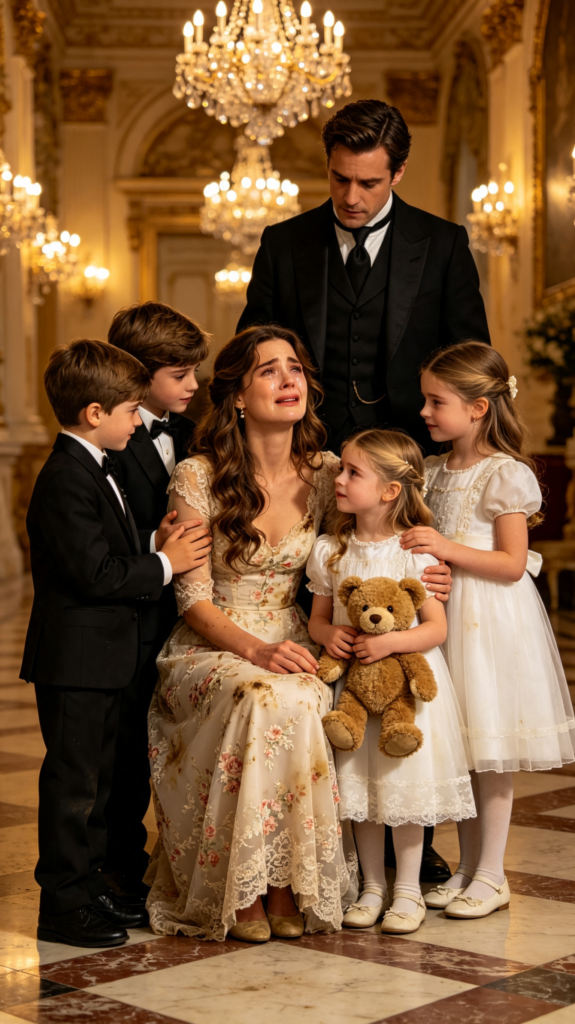
PART 2 — THE HOUSE THAT DID NOT WANT A MOTHER
The Romano estate was not a home.
Not yet.
It was a beautiful building full of guarded rooms, locked cabinets and children who had learned to listen for footsteps.
The eldest, Luca, was twelve.
He had Dominic’s stillness and Camila’s dark eyes. He greeted me the following morning at breakfast without smiling.
“My father has brought three women here.”
Dominic lowered his coffee cup.
“Luca.”
“He should know we remember.”
I met the boy’s gaze.
“What happened to them?”
“The first one said Bianca cried too much. The second wanted Sophia sent to boarding school. The third called Matteo violent.”
Across the table, nine-year-old Matteo stabbed a fork into his eggs.
“I threw a shoe at her.”
“It was a lamp,” Luca corrected.
“She moved.”
Six-year-old Sophia sat silently beside them, arranging blueberries into a perfect line. She had not spoken since I entered the room.
Bianca remained hidden behind Dominic’s chair.
Luca folded his arms.
“So which one are you?”
“I’m not any of them.”
“You’re sleeping here.”
“For one night.”
“My father gave you Mother’s room.”
Dominic’s expression sharpened.
“No. The guest suite.”
Luca stared at him for several seconds before looking back at me.
“If you touch our mother’s things, I will know.”
“I won’t touch them.”
“If you try to make Bianca call you Mama, I will make her stop.”
“I won’t ask her to call me anything.”
“If you marry him—”
“Luca.”
Dominic’s voice cracked across the room.
The boy stood so quickly his chair scraped the floor.
“You keep bringing strangers into her house!”
He walked out.
Sophia’s blueberries remained perfectly aligned, but her lower lip began to tremble.
Dominic closed his eyes.
“This is what I meant.”
“No,” I said. “This is grief.”
He looked at me.
“There is a difference.”
That afternoon, Dominic’s attorney arrived with documents explaining that I had no debt to the Romano family, no obligation to remain and no restriction on accessing my identification or finances.
There was also a bank statement.
An account had been opened in my name.
The balance was five hundred thousand dollars.
I pushed it back across the desk.
“I don’t want his money.”
The attorney adjusted his glasses.
“Mr. Romano anticipated that response.”
“Then why is it here?”
“Because dependency is another form of captivity.”
Dominic stood near the window.
“You need resources your father cannot cancel.”
“I don’t need half a million dollars.”
“Use none of it.”
His voice remained calm.
“But know that no man can ever strand you again by freezing a card.”
That night, I packed the clothes the housekeeper had placed in my room.
I planned to leave after breakfast.
At three seventeen in the morning, someone scratched softly at my door.
I opened it.
Bianca stood in the hallway with her stuffed rabbit.
Her cheeks were wet.
“I had the fire dream.”
“What fire?”
She shook her head.
“Can I sit on your floor?”
“You can sit anywhere.”
She climbed onto the rug while I returned to the bed.
For several minutes, neither of us spoke.
Then she asked, “Do you have babies?”
“No.”
“Why?”
“My body cannot make them.”
She considered this with the solemn concentration children give to facts adults believe will destroy them.
“Does it hurt?”
“Sometimes.”
“My mama’s body got sick too.”
“I’m sorry.”
“She left.”
“I know.”
“Will your body make you leave?”
The question sliced through me.
I lowered myself onto the rug beside her.
“No.”
“How do you know?”
“Because staying is not something my body decides.”
Bianca leaned against my arm.
Her rabbit rested between us.
We fell asleep on the floor.
When I opened my eyes at dawn, Dominic stood in the doorway.
He looked at his daughter curled against me.
Then at the packed suitcase beside the bed.
“You were leaving.”
“I was.”
“And now?”
Bianca’s fingers were wrapped around mine.
I looked down at them.
“Now I’m having breakfast first.”
Breakfast became lunch.
Lunch became another night.
Then one week.
I did not become the children’s mother.
I became the person who did not ask them to stop missing theirs.
When Sophia refused to speak, I did not demand words. I bought a stack of colored index cards and left them beside her breakfast plate.
Green meant yes.
Red meant no.
Blue meant afraid.
Yellow meant angry.
The following morning, she placed a yellow card beside Dominic’s coffee.
He stared at it.
“What did I do?”
Sophia added a blue card.
Dominic’s face changed.
He crouched beside her chair.
“Are you afraid of me?”
She shook her head and pointed toward the front door.
“You’re afraid when I leave?”
A green card.
Dominic sat on the floor in his suit.
He remained there until Sophia reached out and touched his hair.
Matteo tested me differently.
He broke rules with the precision of a scientist.
He poured orange juice into a flower vase.
He released a frog inside the dining room.
He told his tutor I had died, resulting in a condolence basket being delivered to the estate.
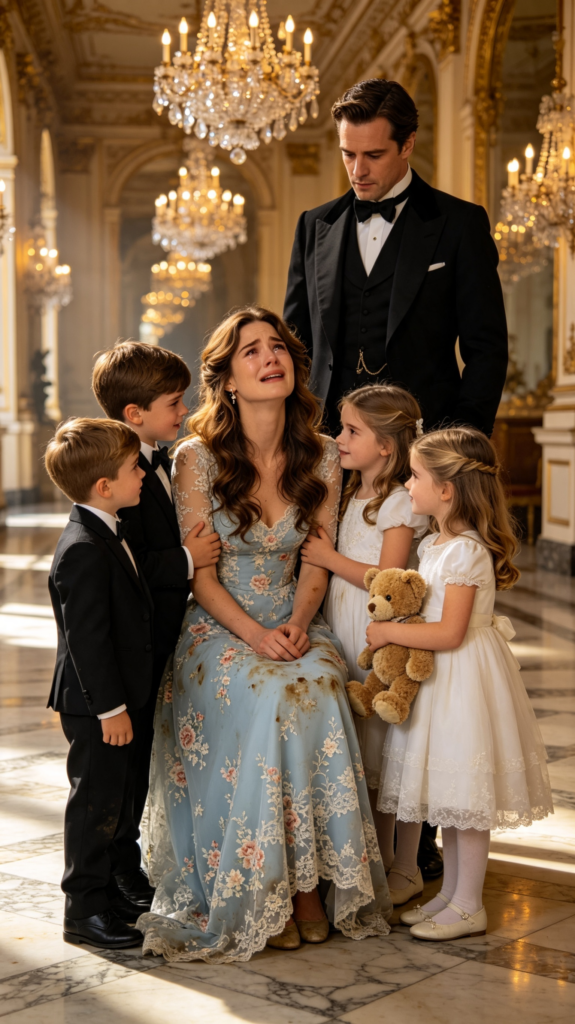
I made him write an apology for that one.
“You’re not my mother,” he said.
“No.”
“You can’t punish me.”
“Correct.”
He smiled.
“But I can inform your father that you used his private telephone to order six hundred dollars of sympathy flowers.”
His smile vanished.
“You wouldn’t.”
I raised Dominic’s number on my screen.
Matteo seized a pen.
“What do I write?”
Luca remained the hardest.
He watched me constantly.
One afternoon, I found him standing inside Camila’s untouched dressing room. Her perfume bottles lined the vanity. A silk scarf lay across the chair as though she might return at any moment.
“You said you wouldn’t come in here,” he said.
“I heard something fall.”
A photograph frame lay facedown on the carpet.
I picked it up.
Camila stood on a beach with all four children crowded around her. Dominic was behind them, one hand resting lightly against his wife’s back.
They looked unguarded.
Happy.
Luca snatched the photograph away.
“You think he stopped loving her?”
“No.”
“You think he’ll love you?”
“I don’t know.”
The honesty surprised him.
I looked around the room.
“Would it upset you if this room remained exactly as it is?”
His jaw tightened.
“Everyone says we should pack it.”
“I didn’t ask what everyone says.”
His eyes filled, but he refused to blink.
“Yes.”
“Then we won’t pack it.”
“You don’t own this house.”
“No. But neither does grief.”
He stared at me.
I continued softly.
“Your mother’s room belongs to the people who still need it.”
That evening, Luca joined us for dinner without being called.
Months passed.
Winter gave way to a damp, reluctant spring.
I rented an apartment in Manhattan with money from a trust account my attorney established. I visited it twice.
Each time, the silence felt wrong.
At the Romano estate, silence had become rare.
Bianca sang badly while eating cereal.
Matteo argued about homework.
Sophia began whispering single words.
Luca started leaving books outside my door when he believed I might enjoy them.
Dominic remained careful with me.
He never entered my room without permission.
Never touched me unexpectedly.
Never used the debt as a claim.
Late one night, I found him alone in the kitchen warming milk for Bianca.
He wore a white shirt with the sleeves rolled to his forearms. Without his jacket and guards, he looked younger.
More tired.
“You have staff for that,” I said.
“She knows when someone else makes it.”
“Impossible.”
“She says it tastes abandoned.”
I laughed before I could stop myself.
Dominic looked at me.
It was the first time he had heard me laugh.
His expression made the sound disappear from my throat.
“What?”
“Nothing.”
“That was not nothing.”
He poured the milk into a pink cup.
“I had forgotten what the house sounded like when someone laughed without permission.”
The tenderness in his voice frightened me more than his power ever had.
“Dominic…”
“I know.”
“What do you know?”
“That you are not ready.”
He moved past me.
Then stopped.
“I am not asking you to be Camila.”
“I couldn’t.”
“No one could.”
His voice lowered.
“But I am beginning to ask myself whether you might become something else.”
The following week, my father called.
I almost ignored the number.
Then I answered.
“Meline.”
Hearing his voice brought the warehouse back—the smoke, the leather satchel, Arban’s fingers against my face.
“What do you want?”
“Romano has demanded payment.”
“That sounds like your problem.”
“I am your father.”
“You sold your right to say that.”
Silence.
Then his voice hardened.
“You are living under another man’s roof, caring for his children like a servant, and you think you have won?”
“I survived you.”
“You are embarrassing this family.”
“You told a criminal to do whatever he wanted with me.”
“I was desperate.”
“So was I.”
“You do not understand what was at stake.”
“Three million dollars.”
“My life.”
I closed my eyes.
“And you decided mine was worth less.”
He began shouting.
I ended the call.
My hands shook for twenty minutes afterward.
Dominic found me sitting on the library floor.
He said nothing.
He lowered himself beside me and waited.
“I hate that his voice still makes me feel twelve years old.”
Dominic rested his forearms on his knees.
“Fear remembers ages the body has outgrown.”
I turned toward him.
“Did Camila fear anything?”
“Yes.”
“What?”
“Leaving the children with me.”
I stared at him.
He looked toward the dark window.
“She knew I could protect them from bullets, rivals and courts. She was not convinced I could protect them from becoming like me.”
“Did she say that?”
“On the last night she was conscious.”
The words settled between us.
“What did you tell her?”
“I lied.”
“What was the lie?”
“That she was not going to die.”
His face remained composed, but one tear slid slowly down his cheek.
I reached for him before thinking.
My fingers touched his hand.
Dominic went still.
Then he turned his palm upward and closed it around mine.
He did not kiss me.
That would have been easier.
Instead, he allowed me to hold his grief.
Three days later, he proposed.
Not with a diamond.
Not on one knee.
He placed a legal document beside my breakfast plate while all four children watched him suspiciously.
“This is deeply unromantic,” I said.
“It is a draft.”
“Of what?”
“A marriage agreement.”
Matteo choked on his juice.
Bianca clapped.
Luca became pale.
Dominic looked directly at him.
“No one will sign anything unless every person at this table is heard.”
Luca stared at me.
“Do you want to marry him?”
I considered lying.
Instead, I said, “I don’t know yet.”
Dominic nodded.
The agreement gave me separate assets, complete freedom of movement and the right to dissolve the marriage without his consent.
It gave me no obligation to bear children.
No obligation to share a bedroom.
No obligation to surrender my name.
In return, Dominic asked me to become the children’s legal guardian if he died.
I read the final page twice.
“You trust me with everything.”
“With everyone.”
Luca left the table without speaking.
That evening, he found me in the greenhouse.
“You’ll leave when you get tired of us.”
“Maybe.”
His face tightened.
“Everyone leaves.”
“I might die. Your father might decide he hates the way I organize books. You might grow older and ask me to go. I cannot promise that life will never separate us.”
“Then what can you promise?”
I looked at the boy who had been forced to become a shield for three younger children.
“I will never disappear without telling you the truth.”
His eyes filled.
“Even if the truth hurts?”
“Especially then.”
Luca wiped his face roughly.
“Father is terrible at pancakes.”
“I know.”
“He burns them.”
“I’ve seen.”
“And Bianca’s hair needs to be braided before school.”
“I’m learning.”
“Sophia only eats toast if it’s cut diagonally.”
“I know.”
His shoulders trembled.
Then he whispered, “You can marry him.”
I pulled him into my arms.
For one rigid second, he resisted.
Then the boy collapsed against me and cried for the mother he had lost, the father he feared losing and the woman he was finally allowing himself to love.
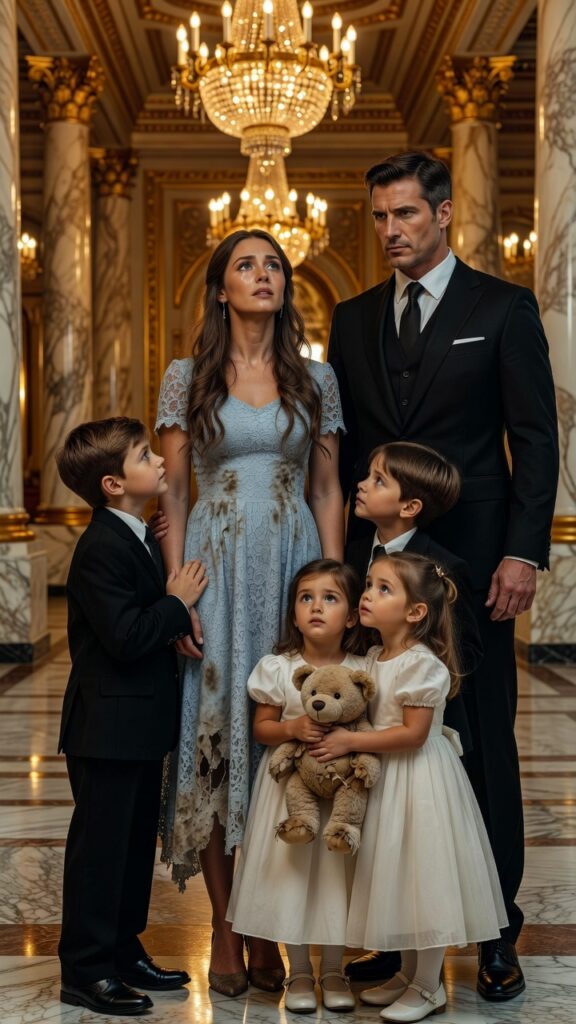
PART 3 — THE WOMAN WHO CHOSE ME FIRST
Dominic and I married on a rainy Thursday morning.
There were no reporters.
No syndicate leaders.
No jeweled ballroom.
Only a judge, Dominic’s sister, our attorney, the children and an elderly housekeeper who cried before the ceremony began.
I wore an ivory dress.
Bianca scattered flower petals in aggressive handfuls.
Matteo carried the rings and announced to everyone that one could probably be sold for a speedboat.
Sophia spoke loudly enough for the entire room to hear.
“Don’t lose it.”
Everyone froze.
She had not spoken above a whisper in two years.
Matteo stared at her.
Then he began crying so violently that Luca had to hold the ring box.
Dominic looked at me.
His composure broke.
The judge waited while we gathered ourselves.
When Dominic placed the ring on my finger, his hand trembled.
I remembered his steady hands in the warehouse.
His control before dangerous men.
He had not trembled when threatening Arban Hoxha.
He trembled while promising to love me.
“I cannot give you children,” I whispered when the judge asked for my vow.
Dominic’s eyes remained on mine.
“You gave me mine back.”
The judge pronounced us married.
Bianca wrapped both arms around my legs.
“Can I call you Mama now?”
The room went silent.
I knelt.
“You can call me whatever feels true.”
She touched my cheek.
“Mama feels true.”
Happiness entered me so suddenly that it hurt.
For one bright, impossible moment, the clinic disappeared.
The warehouse disappeared.
My father’s voice disappeared.
I was not barren.
I was not broken.
I was surrounded.
That night, after the children slept, Dominic and I stood alone on the terrace.
Rain whispered against the garden.
He kissed me slowly, giving me time to move away.
I did not.
For the first time in my life, desire did not feel like an obligation being collected.
It felt like a door opening from the inside.
Then the telephone rang.
Dominic answered.
His expression changed.
“What happened?” I asked.
He ended the call.
“Someone entered your parents’ estate.”
“My father?”
“He was arrested forty minutes ago.”
I stared at him.
“For what?”
“Trafficking. Extortion. Financial conspiracy.”
“Who gave the police evidence?”
Dominic looked toward the doorway.
A woman stood there.
My mother.
Helen’s gray dress was wrinkled. Her hair had loosened around her face. She looked smaller than I remembered.
Older.
In one hand, she held my missing jewelry box.
In the other, a small blue key.
I stepped backward.
“You knew.”
Her face crumpled.
“Meline—”
“You knew he was taking me to that warehouse.”
“Yes.”
The word struck like a slap.
Dominic moved toward me.
I raised one hand.
“No.”
He stopped.
I looked at my mother.
“You stood in the study while he called me worthless.”
“I know.”
“You let him take my clothes.”
“Yes.”
“You looked me in the face and told me to think about what my diagnosis cost him.”
Tears filled her eyes.
“I know what I said.”
“Why?”
She placed the jewelry box on the table.
“Because your father had cameras in the house. He recorded every corridor outside his study. He had men following me.”
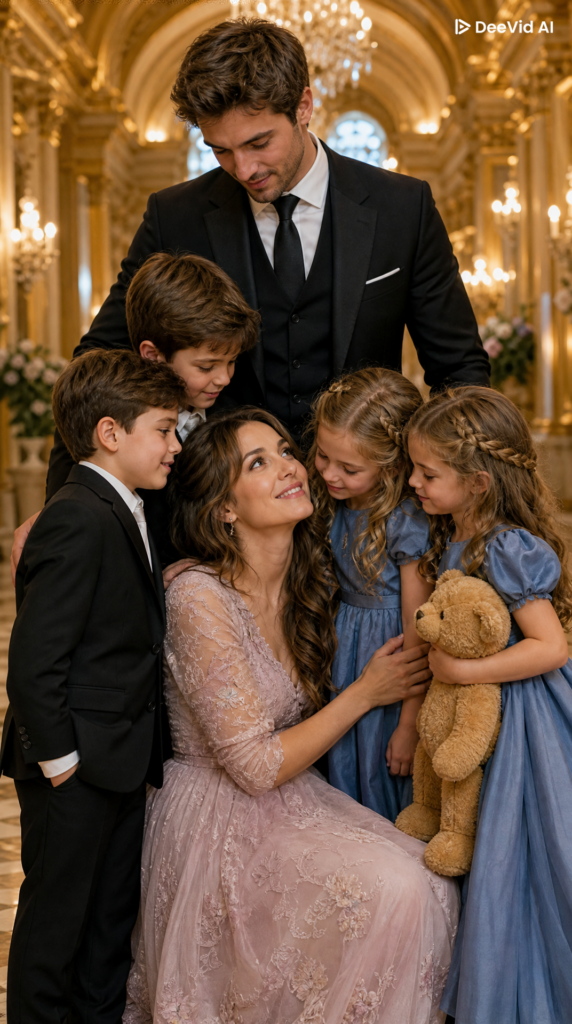
I stared at her.
“He believed I might warn you. If I had shown sympathy, he would have changed the location or sold you through someone Dominic could not reach.”
My eyes moved toward my husband.
“You knew?”
“Not at first.”
My mother held out the blue key.
“I sent Dominic the warehouse address.”
The terrace seemed to tilt.
Dominic spoke quietly.
“An anonymous message reached my security chief thirteen minutes before Frank arrived.”
I could barely breathe.
“You let me go inside.”
Helen’s tears spilled over.
“I needed Frank to say the words.”
“What?”
“To prove it.”
Her voice broke.
“I spent two weeks collecting his calls, copying his accounts and recording his meetings. But every time he discussed you, he used codes. He called you an asset. A solution. A transfer.”
She pressed one hand to her mouth.
“The authorities said they needed evidence of intent. Dominic said Arban would deny everything unless the exchange happened in front of witnesses.”
“You used me as bait.”
“I saved you the only way I could.”
“You let Arban touch me.”
A sound escaped her.
“I was listening through Dominic’s receiver. When he put his hand on you, I begged them to go in.”
Dominic’s face darkened with the memory.
“My men were already surrounding the building.”
“But you entered alone.”
“I needed Arban’s men to surrender rather than begin shooting around you.”
My mother stepped closer.
I moved away.
Her face collapsed.
“I know you may never forgive me.”
“You were my mother.”
“I am your mother.”
“A mother does not stand beside a window while her husband destroys her daughter.”
“No.”
Helen’s voice became firmer through her tears.
“A frightened woman does.”
The honesty silenced me.
She looked down at the key.
“I was frightened for twenty-three years.”
Then she held it toward me again.
“This opens a safe-deposit box in Manhattan. Your jewelry is there. So are the recordings, bank documents and a trust your father never knew existed.”
“I don’t want his money.”
“It was never his.”
Something in her tone made me look up.
Helen’s fingers tightened around the key.
“There is one more document inside.”
“What document?”
Her lips trembled.
“Your adoption certificate.”
The rain continued falling.
Somewhere inside the house, a clock struck midnight.
I heard every chime.
“I’m adopted?”
Helen nodded.
“Your father agreed because Vincenzo’s family wanted a future alliance, and we needed a daughter of the appropriate age.”
The words entered slowly.
“You used me for an alliance before I could walk.”
“Frank did.”
“And you?”
She closed her eyes.
“I could not have children.”
My breath stopped.
“The doctors told me when I was nineteen. The same words they later told you. Different condition. Same verdict.”
She looked at me with a grief so naked that I suddenly saw the woman beneath the pearls, the silence and the fear.
“Frank called me defective too.”
I could not speak.
“He married me because my father’s shipping business was useful. When I failed to conceive, he made me pay for it every day.”
Helen reached into the jewelry box and removed a faded photograph.
A younger version of my mother sat in a wooden chair, holding a baby wrapped in a yellow blanket.
Me.
Her face in the picture was wet with tears.
But she was smiling.
“I found you at Saint Agnes Children’s Home,” she whispered. “You were six months old. Everyone kept choosing the quiet babies.”
A strange pressure filled my chest.
“You screamed whenever anyone put you down.”
Despite everything, a broken laugh escaped her.
“The sisters apologized. They said you were difficult.”
“What did you say?”
“I said I wanted the child who already knew how to demand love.”
My eyes burned.
She handed me the photograph.
On the back, in blue ink, she had written a date and five words.
The day my life began.
“Your father never wanted you,” Helen said. “But I did.”
“Then why didn’t you leave him?”
“I tried once.”
“What happened?”
“He showed me photographs of you walking home from school. He told me accidents happened to children whose mothers became disloyal.”
Dominic’s jaw tightened.
Helen continued.
“So I stayed. I learned his accounts. I learned his enemies. I learned where he hid documents. And I waited for the day I could destroy him without placing you beneath the wreckage.”
“You knew he might sell me?”
“I knew he would eventually use you.”
“From the beginning?”
She nodded.
That was the truth behind her silence.
My mother had known.
Not because she agreed with him.
Because she had spent my entire life preparing for the moment his conditional love expired.
“I removed your jewelry because Frank planned to give it to Arban,” she said. “I froze the cards before he could trace where you tried to run. I transferred the money into the trust Dominic’s lawyers protected.”
Her voice cracked.
“And that night in the corridor, Frank was standing behind the study door.”
I remembered catching her wrist.
Begging her to tell me whether I was in danger.
I remembered the cruelty in her face.
You should have thought about what this diagnosis would cost your father.
“It was a warning,” I whispered.
Helen nodded.
“I needed you to understand that the danger was your father without telling him I had warned you.”
All the moments I had carried like knives changed shape.
Not harmless.
Never harmless.
But different.
“You could have trusted me.”
“You were still searching his face for the man who carried you on his shoulders.”
Her voice softened.
“I was afraid you would confront him. I was afraid he would take you somewhere none of us could follow.”
Dominic stepped beside me.
He did not touch me.
Not until I reached for his hand.
My mother watched our fingers intertwine.
“I contacted Dominic because Camila once helped me hide money for you.”
Dominic looked sharply at her.
“Camila knew?”
“She knew everything.”
The pain on his face returned.
Helen nodded toward the house.
“Your wife knew what Frank was. She told me that if the day ever came when I could not protect Meline, I should call you.”
Dominic stared into the rain.
“She never told me.”
“She believed you would try to act too early.”
A faint, devastated smile touched Helen’s mouth.
“She said you had never been good at waiting when someone was in danger.”
Dominic closed his eyes.
My mother turned back to me.
“I did not know he would choose you for his children. I only asked him to get you out.”
“Why did you come tonight?”
“Because Frank knows I betrayed him. The police can hold him, but his remaining men may come for me.”
“You need protection.”
“I need to testify.”
Dominic nodded.
“You will have both.”
Helen looked at him.
“I am not asking for mercy.”
“You will receive security, not absolution.”
“That is fair.”
She turned to leave.
“Mom.”
She stopped.
The word had come out before I decided to say it.
Her shoulders began shaking.
I walked toward her.
For several seconds, I stood close enough to see the fine lines around her eyes and the bruise where fear had lived for years.
“I don’t forgive you yet.”
“I know.”
“I may be angry for a long time.”
“You should be.”
“But you chose me.”
Her face folded.
“Every day.”
I placed my arms around her.
She held me with the desperation of a woman who had once lifted a screaming baby from a crib and silently promised never to put her down.
Behind us, the terrace doors opened.
Luca stood there with Matteo, Sophia and Bianca.
They had been listening.
Bianca rubbed one eye.
“Is she your mama?”
I looked at Helen.
“Yes.”
“Did she pick you?”
“Yes.”
Bianca considered this.
Then she walked forward and took Helen’s hand.
“I picked her too.”
Helen fell to her knees.
The children surrounded us.
Luca stood back at first, fighting tears because he still believed someone had to remain strong.
I reached for him.
He came.
Dominic wrapped his arms around all of us.
There were no shared features among us.
No matching eyes.
No inherited smiles.
There was a widower who believed grief had made him incapable of tenderness.
A frightened woman who had survived twenty-three years beside a monster.
Four children who had lost one mother and feared accepting another.
And me.
The daughter purchased for an alliance.
The woman priced according to her fertility.
The bride who would never carry a child.
Frank Rossi had believed blood created family, pregnancy created value and money created ownership.
He had been wrong about all three.
Six months later, he was sentenced in federal court.
Arban Hoxha testified in exchange for a reduced sentence. Vincenzo’s family fled the country after investigators discovered they had helped Frank obtain my private medical records.
My mother entered witness protection after her testimony.
Before leaving, she gave me the yellow blanket from the orphanage.
It was thin, faded and frayed at the corners.
I kept it inside Camila’s room.
We never packed that room away.
Instead, the children and I slowly opened it.
We placed Camila’s photographs in albums. Sophia kept one of her scarves. Matteo took the old music box. Bianca chose a silver hairbrush.
Luca asked whether I wanted the room for myself.
“No,” I told him. “I have my own.”
He nodded.
Then he placed the photograph from the beach on the mantel.
One year after the warehouse, Dominic and I petitioned the court for me to become the children’s legal mother.
The judge asked each child whether they understood what adoption meant.
Luca answered first.
“It means she can leave, but she chooses not to.”
Matteo said, “It means she has to attend parent-teacher conferences even when I behave.”
Sophia said, “It means two mothers can both be real.”
Bianca climbed into my lap.
“It means Mama picked us.”
The judge signed the papers.
Four children crowded around me as Dominic placed the yellow blanket across all our knees.
And as their hands closed over mine, the empty place my father had valued at three million dollars finally became the place where five abandoned hearts learned how to stay.
