

CHAPTER 1: THE MIDNIGHT CALL
A doctor showed me an X-ray of my daughter’s face and quietly explained that her jaw had been shattered in six separate places. Just hours earlier, she had been a normal college student, but now she lay in a hospital bed unable to speak and completely unable to explain what had happened. I had survived war zones and battlefield chaos, yet nothing in my experience could have prepared me for the night I learned someone had nearly beaten my little girl to death.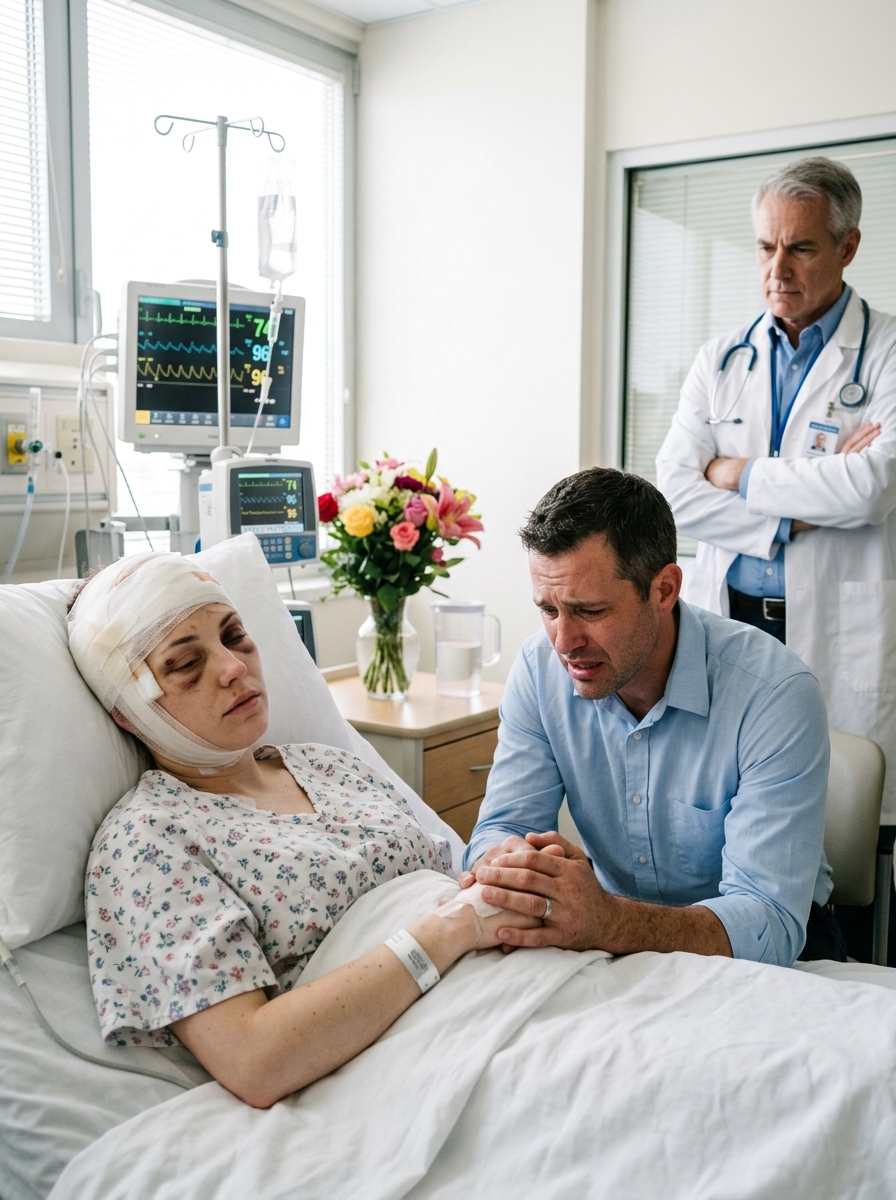
My name is Frank Anderson, though most people simply call me Frank. That is who I have been since leaving the service a decade ago. To the people in our quiet town of Crestwood, I am just a retired military veteran living a slow life, fixing things around the house and drinking too much coffee. I have a habit of calling my daughter, Maya, more often than she thinks is necessary because she is only twenty and a sophomore at Ashford University. She is the brightest part of my life, and on one rainy Thursday night, everything I knew shattered in an instant.
The call came precisely at 11:47 p.m., a detail I remember because I had just turned off the television and was heading toward the kitchen when my phone vibrated across the table. It was an unknown number, and under normal circumstances I would have ignored it, but something instinctive told me to answer.
“Hello?” I asked, keeping my voice steady despite the sudden rise of anxiety in my chest.
The voice on the other end was calm—almost unnaturally calm—and the man asked if he was speaking to Frank Anderson.
“Yes, that’s me. Who is calling?” I replied, leaning against the counter.
“This is Crestwood Central Hospital. I am calling to inform you that your daughter, Maya Anderson, has been admitted to our emergency department,” the voice said, and my stomach tightened immediately.
“What happened to her?” I demanded, my pulse hammering at my temples.
A long, uncomfortable silence followed before he told me I needed to come to the hospital right away.
“I am asking you what happened to my daughter,” I repeated, my voice rising with urgency.
The woman who eventually took the call hesitated before speaking the words that froze my blood.
“Sir, I am so sorry, but your daughter was found outside and she was attacked,” she whispered.
The drive to the hospital felt endless, rain striking the windshield as my hands locked so tightly around the steering wheel that my knuckles turned white. Every worst-case thought ran through my mind as I sped through empty streets, and by the time I arrived, I could barely breathe.
The hospital doors slid open with a soft hiss, and the sharp smell of antiseptic hit me immediately as nurses moved quickly through the bright corridors. Machines beeped in the distance, and somewhere behind a curtain someone was crying—an awful reminder that life continued for everyone else while mine had just stopped.
“I am looking for Maya Anderson,” I said at the front desk, and the nurse looked up at me with tired eyes. The moment she saw my face, her expression softened into something close to pity.
“You need room 305,” she said, and I didn’t wait another second before moving down the hallway.
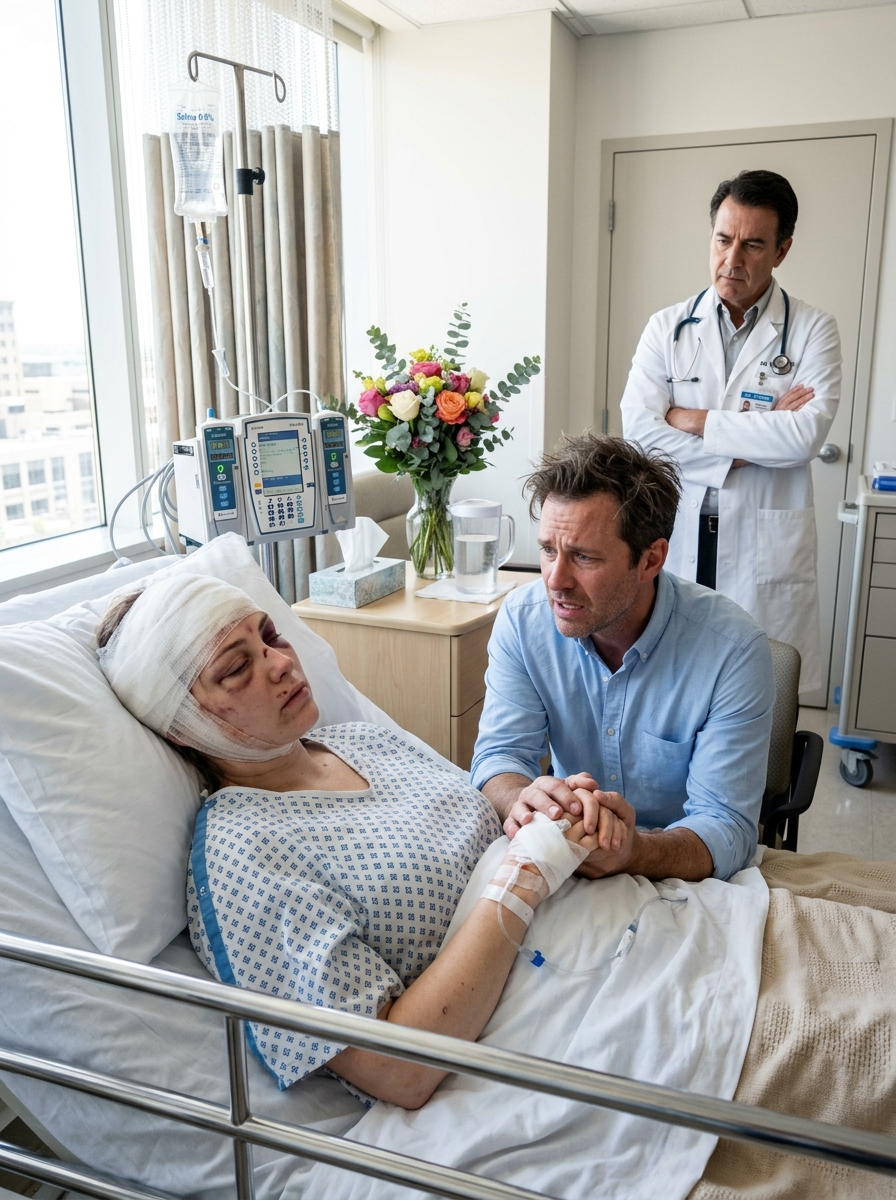
When I reached the room and pushed the door open, I froze. Nothing in my military past had prepared me for seeing my daughter lying motionless under white hospital sheets. Bandages wrapped her head and jaw, one eye was swollen shut, and the other barely opened. Bruises spread across her face, and an IV line fed medication into her arm.
On a nearby chair sat a clear evidence bag containing her favorite blue hoodie—the one I had bought her for Christmas—and the sight of it nearly broke me. I stepped closer and whispered her name, and her fingers twitched faintly, the only sign she was still there.
“Sweetheart, I am here now. You are safe,” I said as I lowered myself into the chair beside her bed.
A single tear rolled down her bruised cheek, and something inside me cracked after years of holding firm. Moments later, a surgeon entered carrying X-ray films. His exhausted expression told me everything before he even spoke.
“How bad is it, Doctor?” I asked, staring at the images he placed on the light board.
I looked at the screen and saw fractures running through her jaw like shattered glass.
“There are six separate breaks here,” he said quietly, and I could not look away.
“Six different breaks in her jaw?” I asked, my voice shaking with restrained rage.
The doctor nodded and pointed again. “One near the hinge and several along the lower jaw, indicating severe trauma.”
His voice lowered as he added that whoever did this used extreme force.
“Will she recover from these injuries?” I asked, holding my breath.
“We believe so, but she will need multiple reconstructive surgeries to restore function,” he said carefully.
I swallowed hard and asked the question that mattered most.
“Who did this to her, and why?”
The doctor exhaled and shook his head. “We do not know. The police have not given us a name yet.”
“What do you mean you do not know?” I asked, rising to face him.
“Campus security found her unconscious near the science building on the north side of campus,” he explained.
I stared at him, unable to understand how this could happen in a place meant to be safe.
“Are you telling me a university full of students and nobody saw anything?” I asked.
The doctor looked away, and for the first time that night, I felt something deeply wrong that I could not yet define. Campuses are full of phones and witnesses—things like this do not happen without someone knowing the truth. As I looked at Maya lying helpless in that bed, one thought consumed me: who was trying so hard to make sure the truth never came out?
### CHAPTER 2: THE SECRET AND THE SHADOW
By morning, the rain had stopped, but everything outside Maya’s window still looked heavy and gray. A police officer arrived at 6:20 a.m., young and visibly nervous, holding a thin notebook he barely used.
“Mr. Anderson, we are currently treating this as an aggravated assault case,” he said, shifting uneasily.
“You are treating it, or actually doing something about it?” I asked sharply.
He stared at the floor. “We are waiting for campus footage to be released.”
“You mean footage that should already exist?” I asked, crossing my arms.
His eyes flicked downward, and I knew immediately he was hiding something. I had spent years reading fear in men’s faces, and I recognized when truth was being buried.
“What are you not telling me?” I asked, stepping closer.
He swallowed hard. “Two cameras near the science building were not working at the time.”
“Not working?” I asked, my voice lowering.
“Yes, sir. They were under maintenance,” he said.
“On the same night my daughter was attacked, the cameras just happened to be off?” I asked.
He did not answer. I understood then that he had been ordered into silence. Before anything else could be said, Maya made a faint sound from the bed, and I turned immediately. Her good eye had opened slightly, and her fingers moved weakly against the hospital blanket.
“Sweetheart, take it easy, do not try to talk yet,” I said as I leaned over her.
Her hand trembled while she reached for the nurse’s clipboard and a pen. Maya’s fingers curled around it, and with each movement she seemed to weaken further, but she still managed to scratch out one uneven word.
MASON.
The officer leaned closer, his attention sharpening. “Is Mason the person who attacked you?”
Maya’s hand shook violently as she wrote again: NOT HIM.
Then beneath it: HE SAW.
My breath caught as I stared at the name.
“Who is Mason?” I asked the officer.
The officer frowned. “Mason Foster. He is a junior, and the son of Senator Gregory Foster.”
The room seemed to drop several degrees. Even before he continued, I understood everything—the dead cameras, the missing witnesses, the silence. A senator’s son. A prestigious campus. A girl with a shattered jaw. And a silence thick enough to carry the weight of influence and money.
By noon, a woman from the university arrived in a tailored gray suit, wearing a practiced sympathetic smile that did not reach her eyes.
“Mr. Anderson, I am Dean Pamela Clark, and I want to express how deeply sorry we are for what happened,” she said.
“Do not,” I said, raising a hand.
She blinked, caught off guard. “Excuse me?”
“Do not begin with apologies if you are only here to manage me,” I said.
Her smile tightened. “We are fully cooperating with the authorities, I assure you.”
“Were the cameras working that night, Dean?” I asked.
“That is currently under technical review,” she replied.
“Was Mason Foster questioned about my daughter?” I asked.
“I cannot discuss other students,” she said, her tone cooling.
“Was my daughter found alone, or was someone else there?” I asked.
“Campus security located her. That is all we can confirm,” she said.
“That is not what I asked, and you know it,” I said, stepping closer.
Dean Clark glanced toward Maya’s bed, then back at me. “Mr. Anderson, emotions are high, and I understand that, but public speculation could damage your daughter’s future.”
I let out a short, humorless laugh. “You think I am worried about speculation? My daughter cannot speak because someone shattered her face, and you are concerned about headlines affecting the school.”
Her expression hardened briefly before she delivered the line that confirmed everything.
“Powerful families are involved in this, so you should think very carefully before making wild accusations,” she said.
There it was. Not concern. Not support. A warning.
“I have buried men in places you could not even locate on a map,” I said, my voice turning to ice. “I have watched armed men lie far better than you ever will, so listen closely, Dean Clark. I am not making accusations. I am making a promise.”
That afternoon, I went to the campus. It looked calm under the pale daylight—wet sidewalks, brick buildings, students moving with coffee cups and backpacks, the kind of place parents trusted their children would be safe. Near the science building, yellow tape shifted in the wind, and a security guard stepped into my path.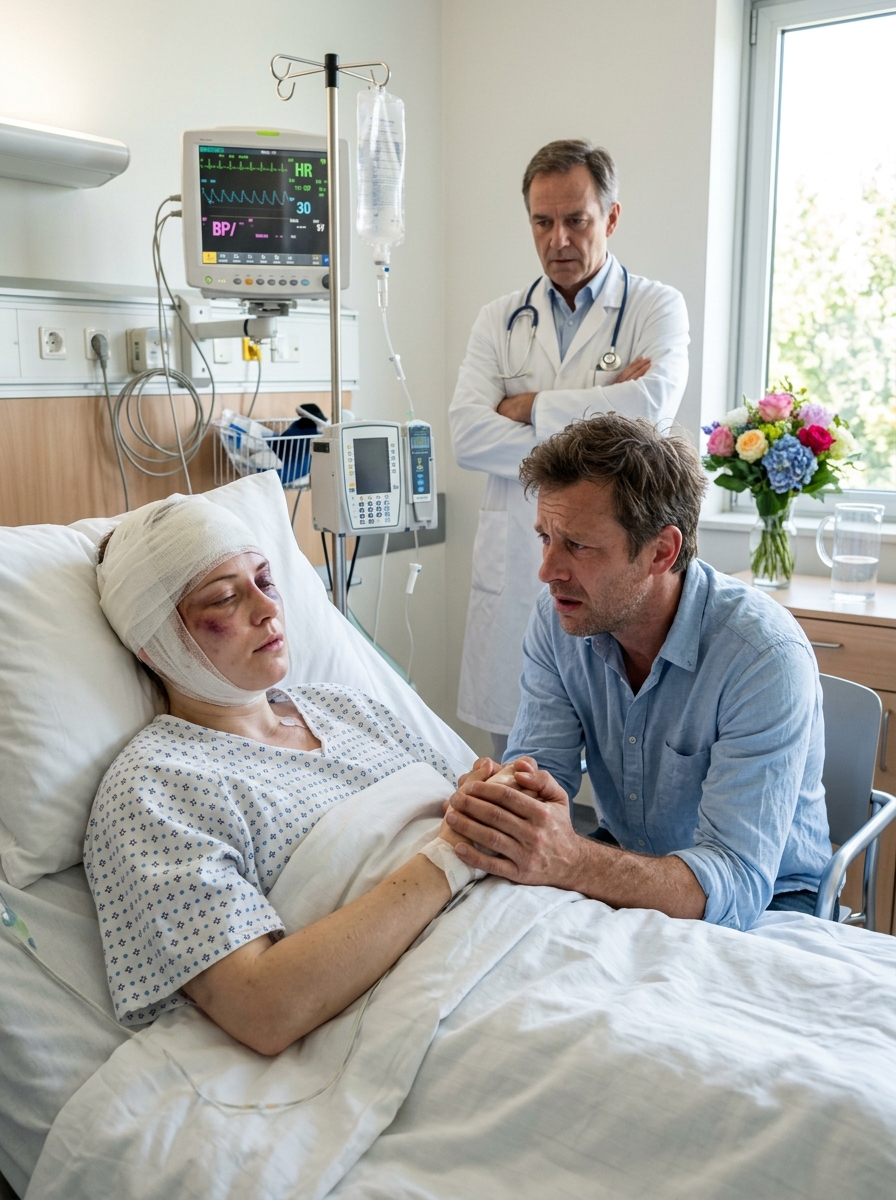
“The area is restricted,” he said, trying to sound firm.
“I am Maya Anderson’s father,” I said, and his face immediately changed to panic.
“I am sorry, sir, but you need to leave,” he said quickly.
“Who told you to say that?” I asked, looking past him.
His eyes flicked toward a black SUV parked nearby, and inside it, a man in a dark coat watched me. I recognized the posture immediately—private security, not campus police. I walked toward the SUV, and the man stepped out before I reached it, polished and professional.
“Mr. Anderson, I suggest you go home,” he said.
“You know my name,” I said, stopping in front of him.
“People are concerned,” he replied.
“About my daughter, or about this becoming public?” I asked.
I glanced past him at the science building, and then I saw it—a security camera above the loading entrance angled downward, not one of the supposedly “down” ones.
“Is that camera down too?” I asked, pointing up.
His jaw tightened. That was all I needed.
I turned away before he could stop me, but I did not go home. I went to a small bar two blocks from campus, ordered coffee, and made a call I had sworn I would never make again.
The line clicked. A rough voice answered. “Anderson?”
“Hello, Ghost,” I said.
A pause stretched across the line, then he asked if I was dead or retired.
“I am retired,” I said.
“No retired man calls me at this hour,” he replied.
“My daughter was attacked,” I said, and the humor vanished instantly.
“Send me everything,” he said.
“I do not have everything, but I know where to look,” I replied, and I gave him the names, the times, and the camera location.
Ghost listened without interruption, and when I finished, he said I was walking straight into a political battlefield.
“No,” I replied. “They stepped into my daughter’s hospital room. Now they will pay for it.”
That night, Ghost sent a single file—a grainy recording from a private delivery camera positioned across the alley behind the science building. The timestamp read 10:36 p.m. Maya appeared first, running desperately. Her blue hoodie was torn, and rain clung to her hair as it stuck to her face. Behind her came two young men and one woman, and when one of the men grabbed her arm, she fought with everything she had.
The woman struck Maya hard enough to spin her sideways, and then another figure rushed into frame. Mason Foster appeared, shoving the attackers back and shouting for them to stop. A taller student in a varsity jacket suddenly swung a metal object, and Mason collapsed. Maya screamed, and a second blow struck her down. I stopped breathing, but I forced myself to keep watching. I saw the attackers drag Mason toward the loading dock. I saw the woman take Maya’s phone. I saw the boy in the varsity jacket lean over Maya as she lay on the ground.
His mouth moved—something the camera could not capture—and then he kicked her once before running. I replayed it again and again until the rage inside me hardened into something precise and controlled. The attacker was not Mason Foster—he had tried to stop it. The one who nearly killed my daughter wore a jacket with a stitched name across the back:
CLARK.
Dean Clark’s son.
### CHAPTER 3: THE TRUTH UNFOLDS
By morning, every local news outlet had received the same anonymous clip—just enough to expose everything. By 8:05 a.m., Bradley University’s official narrative collapsed. By 8:30, Senator Gregory Foster appeared on camera, pale with controlled fury.
“My son is not a suspect,” he said. “My son is in a private hospital with a fractured skull because he tried to protect Maya Anderson from these thugs.”
At 9:12, Dean Clark called me, but her voice had lost all composure.
“You do not understand what you have done to this institution,” she said.
I sat beside Maya’s bed, watching her sleep as I spoke into the phone.
“No, you do not understand what I still have,” I said.
“You leaked private material to the press,” she said, voice shaking.
“I revealed the truth,” I replied.
“My son made a mistake,” she said.
I closed my eyes, thinking of my daughter’s shattered jaw. “Tell your son to run, Dean,” I said quietly.
Silence followed. Then she asked if that was a threat.
“No,” I said. “It is fatherly advice.”
Matthew Clark was arrested that afternoon at a luxury apartment near campus while cameras recorded it all. He wore sweatpants and the same entitlement of someone who had never been refused in his life. Farrah Mitchell was taken into custody an hour later, and Jacob Turner surrendered before evening, immediately seeking a deal.
But the case was still not complete. That night, Ghost sent another file—audio extracted from Maya’s damaged phone. The screen had been destroyed, the device recovered from a storm drain, but she had triggered emergency recording before running. Her voice came first—breathless, terrified, begging them to stop.
“Matthew, stop, I am going to report you for this,” Maya cried out.
Then Matthew Clark, cold and dismissive: “You did not see anything, so shut up.”
“I saw you spike her drink, Matthew,” Maya said.
A female voice—likely Farrah—snapped for her to hand over the phone. Mason shouted for them to leave her alone, and then only rain, footsteps, and Maya’s broken breathing remained. Finally, Matthew spoke again—the words that made my blood turn to ice.
“My mother will bury this story before the sun comes up tomorrow.”
I looked at Maya’s hospital bed. Her eye was open. She had heard everything. Tears slipped silently into her hair. I squeezed her hand.
“You tried to protect someone,” I whispered.
Her fingers tightened back around mine.
Later, the full truth emerged. The girl Matthew had drugged was Elena Scott, who had left a fraternity gathering disoriented and barely conscious. Maya had seen him spike Elena’s drink, followed them, recorded everything, and threatened to call police. Mason Foster had followed because he recognized danger. Maya was not attacked for carelessness.
She was attacked for courage.
The trial became national news. Dean Clark resigned before dismissal. Her emails revealed she had instructed campus security to delay outside cooperation until she could consult legal counsel, and she referred to the camera outage as a “fortunate technical issue.” That phrase ended her career.
Witnesses testified one by one. Farrah cried on the stand, saying she only took the phone because she feared Matthew. Jacob admitted Matthew carried a heavy metal flashlight that night. Mason Foster entered court with a scar along his temple and looked directly at Maya before speaking.
“She saved Elena,” he said. “I only tried to save her.”
Matthew’s defense tried to frame Maya as unreliable and emotional, but the prosecution played the recording. The courtroom heard her say, “I saw you spike her drink,” and Matthew’s voice replying, “My mother will bury this before sunrise.”
The jurors flinched visibly. Matthew Clark lowered his gaze for the first time.
When the verdict came, the courtroom went silent.
“Guilty,” the foreman announced.
Aggravated battery. Witness intimidation. Evidence tampering. Conspiracy. Obstruction.
Elena Scott sobbed into her mother’s shoulder. Mason closed his eyes in relief. In the back row, Dean Clark sat motionless, her hands shaking as something inside her finally broke.
But the real ending came six months later.
Not in court. Not on television. Not in revenge.
On a quiet spring morning, Maya returned to campus. She insisted on finishing her degree despite my objections. She wrote on a whiteboard at home that she would not let him own the place where she survived.
I drove her back.
The campus had changed—new lighting, new cameras, emergency stations throughout. The loading dock had been removed and replaced with a small garden and stone bench.
Maya walked slowly, scars faint but visible, shoulders steady. Elena Scott arrived first. Then Mason Foster joined them. For a moment, all three stood in silence—young people shaped too early by one night.
Then Maya reached into her bag and pulled out the blue hoodie—the same one from evidence storage. Cleaned, repaired, but still torn at the sleeve. She handed it to me.
“Dad,” she said, voice rough but certain. “I want you to stop thinking of this as the night I almost died.”
I could not answer. She touched the torn sleeve.
“This is the night I saved someone,” she said.
Elena broke into tears. Mason turned away, wiping his face. I stood there—once a soldier who had survived war—finally undone by the quiet strength of my own daughter.
I thought the story ended with justice. I was wrong.
A year later, Maya changed her major to criminal justice. Three years later, she stood on a graduation stage in a black gown, scars faint, smile bright. The entire auditorium rose when her name was called.
Not because they knew everything. Not because they understood the pain. But because some truths do not need explanation to be felt.
She crossed the stage, accepted her diploma, and looked at me.
“I am still here,” she mouthed.
That was the ending no one expected.
Not prison.
Not downfall.
Not the collapse of powerful families.
The real ending was this: they tried to silence her by breaking her jaw, but she turned silence into testimony. Every person who tried to bury the truth learned the same lesson.
You can break bone. You can steal phones. You can shut off cameras.
But you cannot bury the truth when the person you tried to destroy chooses to live loudly enough for the world to hear.
THE END.
