

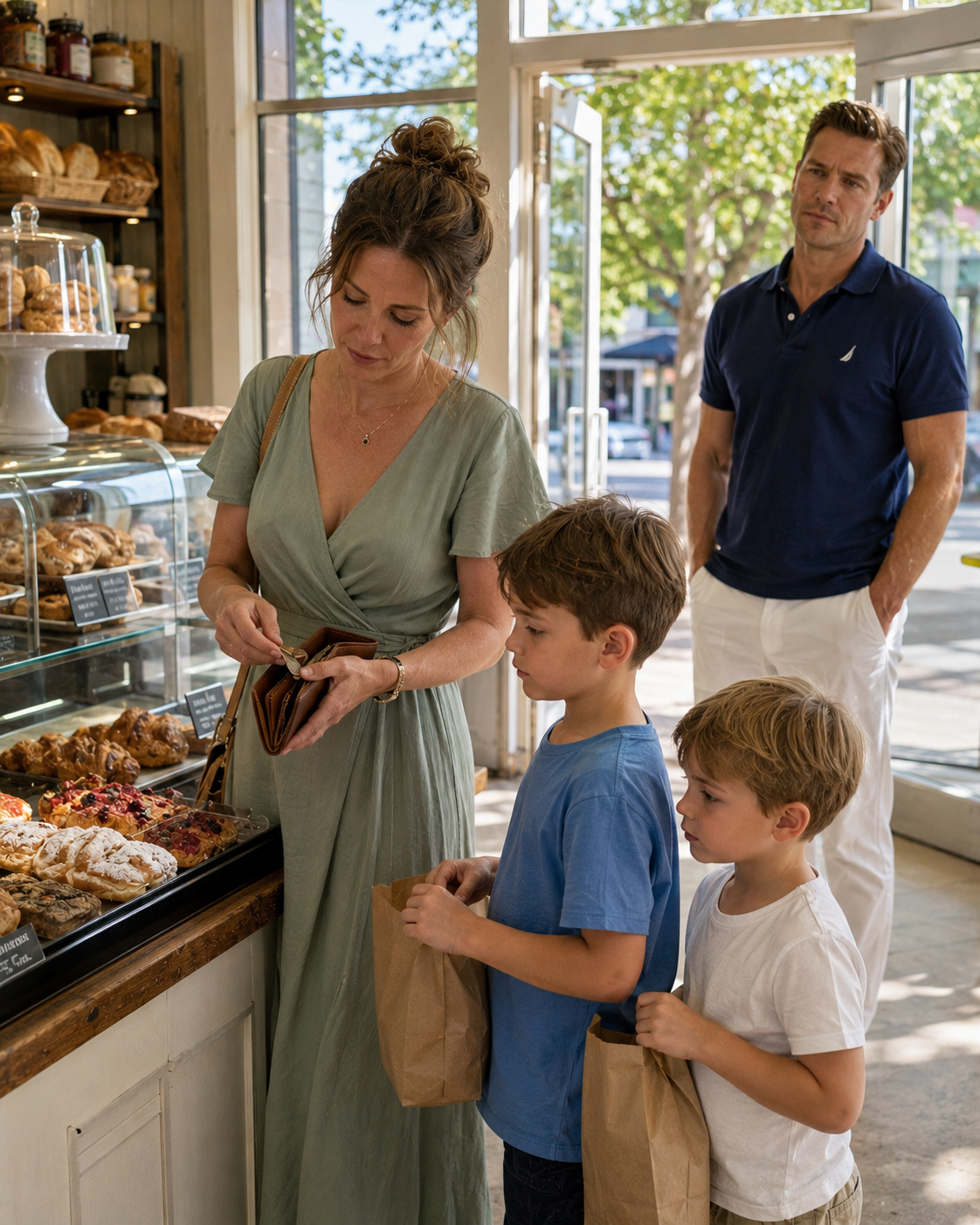
THE DAY HE SAW HER COUNTING COINS
Whitman Cross had spent most of his adult life constructing towers that seemed to touch the sky. In Dallas, his name was recognized before his face ever was. His company acquired aging city blocks, transformed them into glass skyscrapers, and sold them off to investors before construction paint had even dried. He had private elevators, exclusive restaurants reserved after hours, and assistants who reorganized his schedule before he ever requested it.
To the outside world, Whitman appeared to have everything.
But on a warm Friday afternoon in Fort Worth, Texas, he stepped into a small bakery and realized there was still an entire part of life he had never truly seen.
He had only intended to buy coffee.
His driver missed a turn near Magnolia Avenue, and Whitman chose to step out instead of sitting through traffic. The bakery smelled of butter, cinnamon, and fresh bread—the kind of place he normally passed without a second thought.
**Advertisements**
Then he saw her.
Lillian Moore.
His ex-wife.
For a brief moment, he thought his mind was deceiving him. Six years had passed since their divorce, and the woman standing near the counter no longer resembled the polished figure who once stood beside him at charity events.
Her hair was pulled back loosely. Her sweater was plain. Her shoes showed the wear of long days spent working.
But it was her eyes that stopped his breath completely.
They carried a kind of exhaustion that no amount of money could conceal.
Beside her stood two small boys.
They were identical—sandy brown hair, bright curious eyes, and small backpacks resting on their shoulders. One boy stared at the cinnamon rolls behind the glass. The other clutched a notebook filled with drawings of rockets, planets, and stars.
The boy holding the notebook looked up at Lillian and whispered, “Mom, we don’t have to get anything sweet. Bread is enough.”
Lillian bent down and gently touched his cheek with a tenderness Whitman had not seen in years.
“There is enough, sweetheart,” she said softly. “We just have to choose carefully.”
The other boy nodded, trying to appear brave.
Whitman stood motionless by the door.
He had negotiated billion-dollar deals without hesitation. He had faced hostile investors, demanding lawyers, and powerful competitors.
But watching Lillian count coins at a bakery counter left him completely unsteady.
The owner, an older man with gentle eyes, placed two small pastries into the paper bag.
“House special today,” he said warmly.
Lillian looked uncomfortable. “Mr. Bell, I can’t keep accepting extras.”
The man smiled kindly. “Then don’t call it extra. Call it me needing honest reviews from two young food critics.”
The boys smiled widely.
Lillian offered a small, grateful smile, though Whitman could see the strain behind it.
Before she turned and noticed him, he stepped back outside.
The Texas sun felt sharper than before. The street noise felt louder. He stood near the curb with his coffee untouched, replaying the moment again and again.
Lillian.
Two small boys.
Coins in her hand.
Something about it refused to make sense.
That night, Whitman sat alone in his office on the forty-second floor, staring out over downtown Dallas. The city sparkled below, yet all he could see was Lillian’s exhausted face and the two boys beside her.
Eventually, he picked up his phone and called his chief assistant.
“I need information on Lillian Moore,” he said.
A pause followed.
“Sir… your former wife?”
Whitman closed his eyes briefly.
“Yes.”
The report arrived the following morning.
Lillian was working as a science teacher at a public middle school in Fort Worth. She lived in a modest apartment. She took the bus most days. There were no luxury purchases, no travel records, no signs of the life she once shared with him.
Then Whitman saw the line that made his hand go still.
Two children.
Twin boys.
Five years old.
Their names were Owen and Miles.
Born seven months after the divorce.
Whitman stared at the words until they blurred.
Seven months.
His sons.
**THE TRUTH HE NEVER ASKED FOR**
Whitman did not call Lillian immediately.
That was his first mistake.
Instead, he did what powerful men often do when they are afraid of emotion.
He tried to fix it with money.
Three days later, Lillian’s school received an unexpected donation large enough to rebuild the entire science wing. New lab tables. New computers. New books. New safety equipment. Everything her students had lacked for years.
Whitman ensured his name did not appear anywhere in the announcement.
But secrets rarely stay hidden for long.
One afternoon, Lillian overheard a contractor speaking in the hallway.
“Yes, Mr. Cross,” the man said into his phone. “Ms. Moore was very grateful. She has no idea you funded the entire project.”
Lillian stopped walking.
That night, after Owen and Miles were asleep, her phone rang.
Whitman’s name lit up the screen.
She answered on the second ring.
“Lillian,” he said carefully.
Her voice was steady, but cold. “Come upstairs.”
Whitman drove to her apartment without his driver.
The building was simple but clean. No doorman. No marble lobby. No valet. Just families, bicycles, laundry baskets, and softly lit windows.
When Lillian opened the door, she did not immediately step aside.
“The boys are asleep,” she said.
“I understand.”
“You will not wake them.”
“I won’t.”
“You will not ask to hold them, take pictures, or make promises you have not earned the right to make.”
Whitman swallowed. “I understand.”
Only then did she let him in.
The apartment was small but alive. Children’s drawings covered the refrigerator. Tiny shoes rested by the door. A cardboard solar system hung above the kitchen table.
There was no expensive art.
No luxury furniture.
No silence.
For the first time in years, Whitman understood that wealth was not measured in space or marble.
Lillian crossed her arms.
“How long have you been investigating my life?”
Whitman lowered his gaze. “I saw you at the bakery.”
“So you looked into me?”
“I needed to know what happened.”
Her eyes hardened. “No, Whitman. You needed information. That is not the same as caring.”
He had no response.
Because she was right.
The first thing he had done was not apologize. Not ask if she was okay. Not ask what she needed.
He had ordered a report.
Like she was an asset to evaluate.
Finally, he asked the question he could no longer hold back.
“Why didn’t you tell me?”
Lillian’s expression changed.
Not with guilt.
But with disbelief.
“You really don’t remember, do you?”
Whitman frowned slightly.
She let out a quiet, painful laugh.
“Three weeks after our divorce, I found out I was pregnant.”
His chest tightened instantly.
“Lillian…”
She lifted a hand to stop him.
“No. You need to hear this.”
She moved toward the kitchen table and rested one hand on the back of a chair.
“Do you remember the last real conversation we had before everything fell apart?”
He remembered.
He wished he didn’t.
They had argued inside their old Highland Park home. Lillian had asked if he ever imagined children in their future.
Whitman had been impatient. Distant. Certain.
He had told her, “I never wanted children, and I never will.”
At the time, he believed ambition required sacrifice.
Now he understood some sacrifices never stop costing you.
Lillian’s voice shook, but she did not cry.
“I thought about calling you. I really did. Then I remembered your face when you said you didn’t want a family.”
Whitman whispered, “I was wrong.”
“You were absent,” she said. “There is a difference.”
Then she told him everything.
The difficult pregnancy.
The fear.
The early delivery.
The long hospital nights.
The medical bills after every visit.
The mornings she went to work on only two hours of sleep.
Owen asking why other kids had fathers at school events.
Miles once drawing a faceless man and saying maybe that was his dad.
Whitman stood there absorbing a life he had never lived.
Every word hit harder than the last.
When she finished, he said, “Let me fix this.”
Lillian shook her head immediately.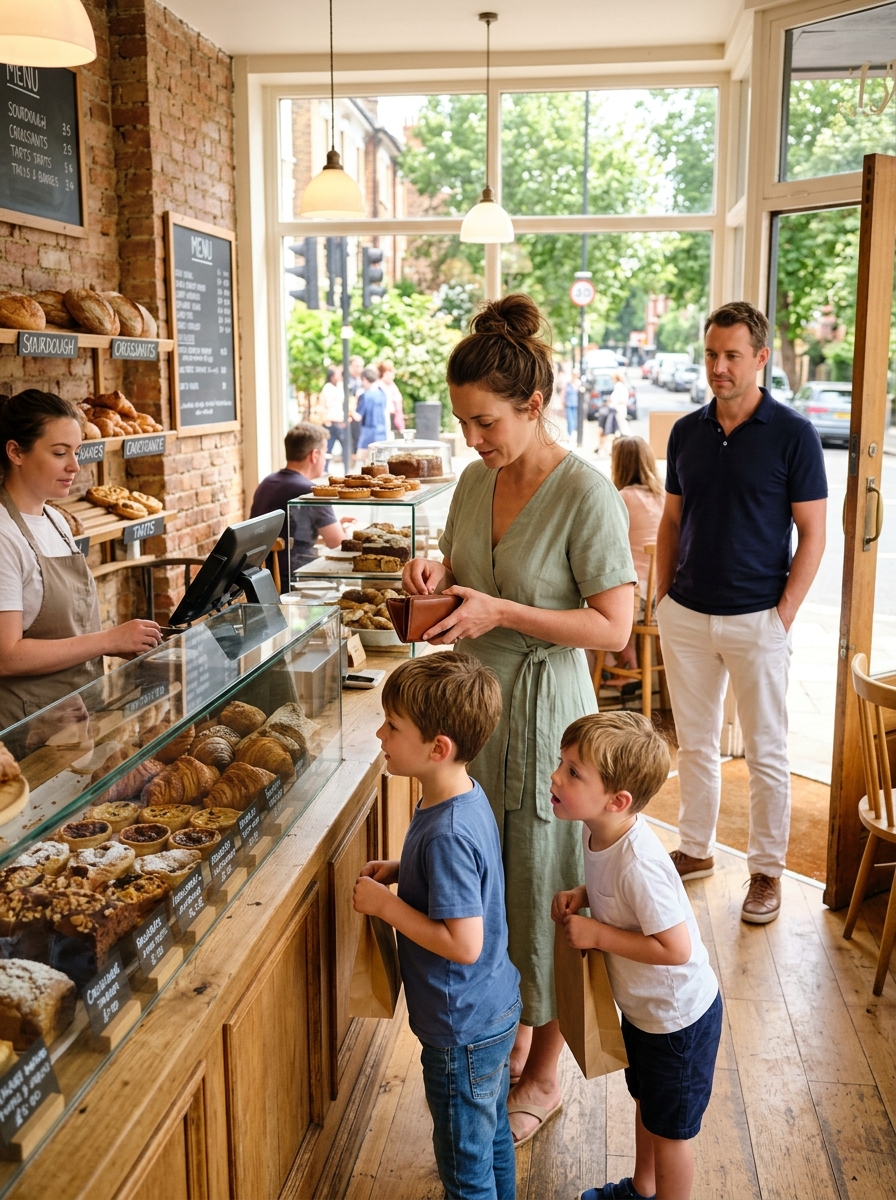
“This is not a building, Whitman.”
“Then tell me what to do.”
Her answer came quietly.
“Do nothing quickly.”
**FIVE MINUTES IN THE HALLWAY**
Lillian did not allow him to meet the boys that night.
Not properly.
But after a long silence, she walked toward the hallway.
“You can see them,” she said.
Whitman looked at her, stunned.
“Only for a minute. They are asleep. You do not speak. You do not touch them. You only look.”
He nodded.
The boys’ room glowed with a soft moon-shaped nightlight. Owen slept curled under a blue blanket. Miles held a stuffed dinosaur close, his open notebook resting beside him.
Whitman lowered himself slowly to one knee.
His sons.
Not names on a file.
Not a consequence of the past.
Real children.
His children.
Owen had the same small crease between his eyebrows that Whitman had carried since childhood. Miles had Lillian’s gentle hands resting open, as if he had fallen asleep mid-dream.
Whitman pressed one hand over his mouth.
For years, he believed he was building something important.
But here, in a quiet bedroom, he understood he had missed the most important creation of all.
A family had been built without him.
And it was beautiful.
Back in the living room, his voice came out barely audible.
“Do they know about me?”
Lillian glanced toward the hallway.
“They used to ask.”
The words landed heavily.
“And now?”
She looked at him.
“Now they ask less.”
That answer hurt more than anything before it.
Children do not stop asking because they forget.
They stop because waiting becomes too painful.
Whitman nodded slowly.
“I want to earn my place.”
Lillian studied him carefully.
“Then start small.”
“Anything.”
“Their school is having a family science night next Friday. You can come.”
Hope rose in him so fast it almost unsettled him.
Then she added, “Not as their father. Not yet.”
He nodded.
“No expensive gifts. No grand gestures. No press. No trying to impress anyone.”
“I understand.”
“Just show up.”
For the first time, the instruction felt harder than any deal he had ever closed.
Because showing up meant more than entering a room.
It meant returning.
Again.
And again.
Even when it was uncomfortable.
Even when no one welcomed him.
Even when there was no applause for what should have been done long ago.
At the door, Lillian spoke once more.
“Biology may explain who you are to them, Whitman. But it does not decide what you become.”
He turned back.
Her eyes were tired, but steady.
“Being a father is not a title you take. It is a promise you keep.”
**THE NIGHT HE FINALLY SHOWED UP**
The school gym was crowded when Whitman arrived the following Friday.
Parents moved between display tables. Children stood proudly beside posters made with glue, markers, and imagination. Volcanoes, paper rockets, painted planets, and uneven cardboard robots filled the space with color.
Whitman wore a simple navy jacket instead of a tailored suit.
For the first time in years, he did not want to be noticed.
He only wanted two small boys to understand that he had kept his promise.
He spotted Lillian near the far side of the gym.
Owen and Miles stood in front of a display board labeled “Life Beyond Earth.” Their planets were neatly painted, and their rocket was built from paper towel tubes wrapped in silver foil.
Lillian noticed Whitman first.
For a brief moment, she stayed still.
Then she gave a slight nod.
**Advertisements**
Permission.
Whitman approached slowly.
Owen looked up. “Mom, who is that?”
Lillian inhaled softly.
“This is Mr. Cross. He is a friend.”
Friend.
The word stung.
But Whitman accepted it without protest.
Miles tilted his head. “Do you like space?”
Whitman lowered himself slightly.
“I’m learning.”
Owen smiled with pride. “Then you should start with Mars.”
For the next twenty minutes, the boys explained their project in full. They spoke about oxygen, gravity, water, and whether tomatoes could grow on another planet.
Whitman listened closely to every word.
He did not reach for his phone.
He did not interrupt.
He did not pretend knowledge he did not possess.
When Miles asked, “Do you know what a habitat dome is?” Whitman replied honestly, “Not well enough. Can you teach me?”
Miles smiled.
That smile stayed with Whitman long after.
When the awards were announced, Owen and Miles placed second.
They jumped with excitement as if they had won everything.
Lillian clapped, tears quietly gathering in her eyes.
Whitman clapped as well, though something deep inside him cracked open.
He had missed their first steps.
Their first words.
Their first birthdays.
But he was here now.
And this moment, at least, would not become another empty gap in their story.
After the event, Owen walked over.
“Are you coming next time?”
Whitman glanced at Lillian before answering.
“If your mom says it’s okay.”
Miles held his ribbon tightly.
“I think you should. You listen good.”
Whitman managed a small smile, though his throat tightened.
“Thank you, Miles. That means a lot.”
Lillian had heard everything.
She did not fully smile.
But her expression softened.
And for Whitman, that was enough.
### THE SLOW ROAD BACK
Whitman did not become a father in a single moment.
He became one slowly, week by week.
At first, he was allowed to attend school events. Then museum visits on weekends. Then quiet homework afternoons at Lillian’s kitchen table.
He learned that Owen loved dinosaurs but pretended not to because Miles preferred space.
He learned that Miles refused carrots unless they were cut into perfect little circles.
He learned that both boys grew quiet when adults raised their voices.
He learned that Lillian drank her coffee cold because she always forgot it while taking care of everyone else.
Most importantly, he learned to ask before acting.
When he offered to pay medical bills, Lillian refused.
So he waited.
When he tried to buy new bicycles, Lillian told him they needed time more than possessions.
So he took them to the park and taught them how to fly kites instead.
When he suggested moving them into a larger apartment, Lillian said, “You are not here to rescue us. You are here to respect us.”
That sentence stayed with him.
Slowly, he stopped trying to overwrite the past with grand gestures.
He began bringing groceries only after asking.
He arrived early to school events and sat quietly in the back.
He learned the names of teachers.
He kept extra crayons in his car.
He built model rockets on the living room floor and let the boys laugh when his first attempt collapsed.
One evening, nearly a year after the bakery, the four of them sat on a bench by White Rock Lake.
The sky was soft pink. The boys ate ice cream. Lillian sat beside Whitman with her hands folded calmly in her lap.
Owen leaned first against Whitman’s shoulder.
A simple, sleepy motion.
Then Miles leaned against his other side.
Whitman did not move.
He barely breathed.
Lillian noticed.
For the first time in a long while, she smiled at him without sadness.
Whitman looked out over the lake and understood something he should have understood years before.
His buildings had filled the skyline.
But love had filled the space beside him.
And nothing he had ever owned mattered more than that.
He once believed legacy meant his name on towers.
Now he understood differently.
Legacy was two small boys trusting him enough to fall asleep against him.
Legacy was a woman strong enough to survive without him, yet generous enough to let him earn his way back.
Legacy was not what he built in the city.
It was what he chose not to abandon again.
Sometimes the most costly mistake is not losing money, but losing years with the people who needed presence more than success.
A parent is not defined by paperwork, but by the daily decision to show up when no one is watching.
Money can pay bills, but it cannot instantly repair broken trust.
Those who survive without you may still allow you back in, but only if you return with humility instead of control.
Children remember who keeps promises, especially the small ones adults tend to forget.
Years cannot be repaired with a single grand gesture; they are rebuilt through patience, honesty, and consistency.
A strong mother does not need saving, but she deserves respect for what she carried alone.
Sometimes life offers a second chance not because it is owed, but because someone is brave enough to leave the door slightly open.
The richest man in the room is still poor if no one trusts his heart.
Family is not created through comfort or convenience; it is built through staying, listening, learning, and loving even when the road back is long.
