

PART 1: THE SISTER WHO HELD US TOGETHER
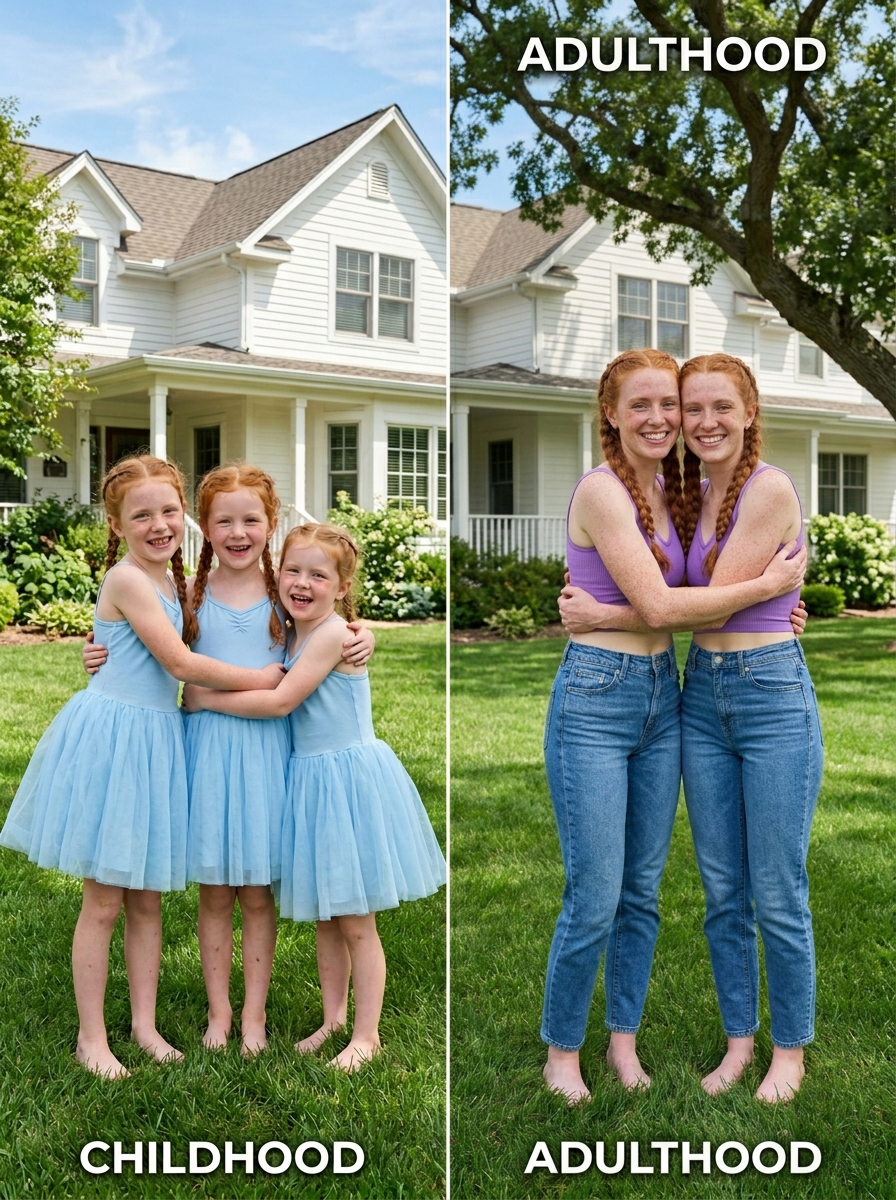
There were once three sisters.
Me, Leila, and Nora.
People often believe time heals everything, but some losses only learn how to hide under the surface. Ours was one of those.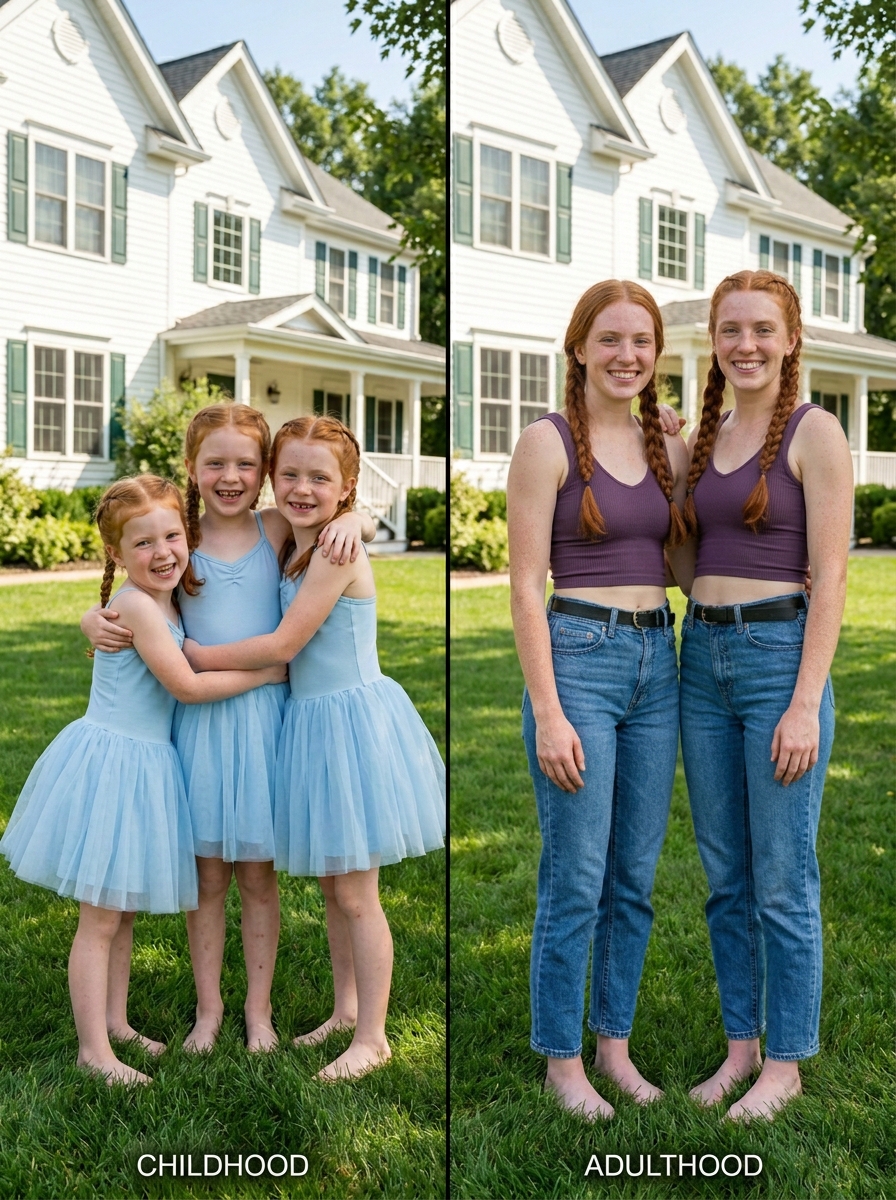
After Nora died, strangers began calling Leila and me twins. It was simpler for them that way. Easier than admitting there had once been three little girls instead of two.
But Leila and I never felt like twins.
We felt like pieces of something that had been torn apart.
Nora was seven minutes older, a fact she treated as if it gave her lifelong authority over us.
“I’m the oldest,” she would say proudly. “That means I make the decisions.”
Leila would groan every time.
“Seven minutes isn’t being older.”
“It absolutely is,” Nora would answer with a grin.
Those arguments became the rhythm of our childhood.
Laughter filled the halls. Pillows flew across bedrooms. Crayons somehow ended up on walls despite our exhausted mother’s repeated warnings.
Whenever Leila and I fought over toys, clothes, or seats at the table, Nora stepped in like a tiny mediator.
“She had it yesterday,” Leila would complain.
“And you can have it tomorrow,” Nora would say calmly. “Today it’s Gia’s turn.”
“You always take her side.”
“No,” Nora insisted. “I take the side of peace.”
Then she would pull a ridiculous face until we both laughed.
That was Nora.
She carried sunlight wherever she went.
She tied our shoes when we were late. She saved Leila’s favorite candies in secret. During thunderstorms, she always slept between us because she believed she had to protect both sides.
One stormy night, thunder shook the windows so hard the whole house trembled.
Leila climbed into Nora’s bed first.
I followed after.
Without opening her eyes, Nora pulled up the blanket.
“You two are terrible at pretending to be brave,” she muttered.
Leila curled against one side.
I settled on the other.
“You’re scared too,” I whispered.
“No,” Nora said sleepily. “I’m responsible.”
She was only a child.
Yet somehow she spent her life taking care of everyone else.
Then everything changed.
At first, adults whispered in corners.
They believed lowering their voices could hide the truth.
But Nora always understood more than anyone thought.
Her first hospital stay felt unreal.
The sharp smell of disinfectant.
Lights that never turned off.
Bright stickers on the walls that tried—and failed—to make the room feel cheerful.
Leila kept tugging at her sleeve.
“What’s wrong with Nora?” she asked.
Mom forced a smile.
“She’s just tired.”
Nora rolled her eyes.
“I’m not a baby, Mom.”
For a moment, everyone laughed.
But something had already shifted.
Nora looked smaller in that hospital bed.
Her wrists too thin.
Her smile harder to hold.
Still, she worried more about us than herself.
“Stop looking so worried,” she teased. “You both look weird.”
Leila cried immediately.
I stood frozen beside her, gripping the bed rail so tightly my hands hurt.
I thought holding on could stop what was coming.
I was wrong.
No matter how tightly we held on, we couldn’t stop it.
PART 2: THE BOX THAT WAITED TEN YEARS
When Nora died, silence moved into our home.
It filled every room.
Her slippers stayed untouched in the hallway.
Her toothbrush remained beside ours.
Her empty bed was the first thing I saw each morning and the last thing I saw each night.
Birthdays became the hardest days.
There were still cakes.
Still candles.
Still decorations.
But always one missing chair.
Every year, Leila and I counted three places in silence, even though only two of us remained.
Over time, grief changed us.
Leila grew distant and sharp.
I grew quiet.
Pain didn’t bring us closer.
It pushed us apart.
By twenty-one, we barely knew how to speak to each other anymore.
That morning, Mom called us home for breakfast.
The dining room was filled with balloons and streamers.
A small birthday cake sat on the table.
And there were three place settings.
Neither of us commented.
Then Mom entered holding a small wooden box.
Something inside me tightened instantly.
She placed it between us.
On top lay an old envelope.
The handwriting stopped my heart.
I knew it immediately.
Nora’s.
Across the front were four words:
OPEN ON OUR 21ST BIRTHDAY.
Leila dropped her fork.
Mom’s eyes filled with tears.
“She made this before she passed,” Mom whispered. “She asked me to keep it safe until today.”
For years, Mom had never opened it.
Not once.
We said nothing.
Finally, my trembling hands lifted the lid.
Inside were three bundles tied with faded purple ribbon.
One for me.
One for Leila.
One for both of us.
I opened mine first.
Inside was a friendship bracelet, a childhood photo, and a handwritten letter.
As I unfolded it, it felt like Nora had stepped back into the room.
“Dear Gia,
If you’re reading this, you’re twenty-one now. That sounds very old, but Mom says twenty-one is still young, so don’t act like you know everything.”
A laugh broke through my tears.
She remembered everything.
My drawings of flowers everywhere.
The songs I sang when I thought no one could hear.
The way I hid my feelings when I was hurt.
“People who love you should know where it hurts,” she wrote.
I pressed the letter to my chest.
Even after ten years, Nora still understood me better than anyone.
Then Leila opened hers.
Inside were small childhood treasures and another letter.
As she read, tears streamed down her face.
“You are not mean,” Nora had written.
“You are scared. There’s a difference.”
Leila broke completely.
For years, I had mistaken her anger for resentment.
I thought she blamed me.
Instead, she had been grieving alone.
Finally, she looked at me.
“I missed her so much.”
“I know.”
Her voice cracked.
“I missed you too.”
Those words broke something between us.
I moved around the table and hugged her.
For the first time in years, neither of us let go.
PART 3: NORA’S FINAL GIFT
When we finished reading, one package remained.
The one addressed to both of us.
Inside were photographs, a folded paper crown, and a final envelope.
Across the front, Nora had written:
READ THIS OUT LOUD.
Leila let out a tearful laugh.
“Still bossy.”
“She was older,” I said.
“By seven minutes.”
For the first time in years, we smiled at the memory.
The letter began light, teasing us about adulthood exactly like she always did.
Then it turned serious.
“Please don’t let me become the space between you.
I’m afraid that after I’m gone, you’ll only see what’s missing when you look at each other.
But you’re not the sisters who stayed behind.
You’re Gia and Leila.
You’re my favorite people.”
Tears blurred every word. She asked us to keep celebrating birthdays.
To laugh.
To argue over small, meaningless things.
To live fully.
Then she gave us one final tradition.
“Every birthday, save me one slice of cake.
Then tell each other one good thing that happened that year.
Not the sad things.
The good things.
I want to know you lived.”
At the bottom of the page was one last instruction.
LOOK UNDER THE PAPER CROWN.
Beneath it was a small cassette tape.
Mom gasped.
“I completely forgot about this.”
We hurried to find an old cassette player.
The moment the tape started, static filled the room.
Then a voice none of us had heard in ten years filled the space.
Nora.
Small.
Fragile.
Alive.
“Hi, Gia. Hi, Leila. Hi, Mom.”
Leila immediately grabbed my hand.
Nora let out a soft laugh.
“If this recording works, I’m basically a genius.”
For several minutes, her voice spoke straight to us.
She said she wasn’t angry.
She said she loved being our sister.
Then she shared something she had kept to herself.
“I heard both of you crying when you thought I was asleep.
Gia, you prayed you could take my place.
Leila, you wished you were the sick one because you thought you were stronger.”
I stopped breathing.
Neither of us had ever said those thoughts out loud.
“You were both wrong,” Nora said gently.
“Nobody should have taken my place.
You have lives to live.
You have to stay for me.”
The tape clicked softly.
Then came her final words.
“I loved you first.
I loved you last.
And I am still your sister.”
The recording ended.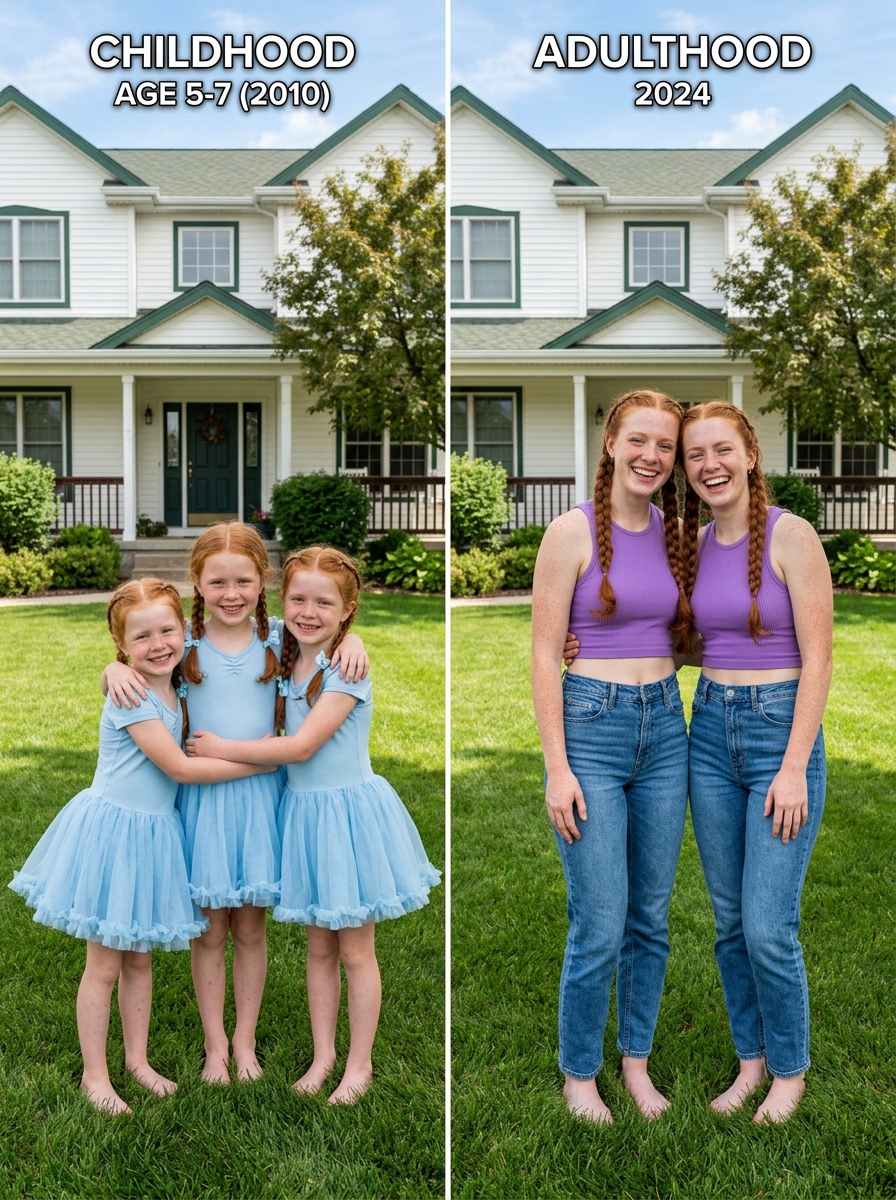
No one spoke.
We just held each other and cried.
Later that afternoon, we cut three slices of birthday cake.
One for Leila.
One for me.
And one for Nora.
For the first time since losing her, the empty chair no longer felt like a reminder of death.
It felt like a place reserved for love.
