

The Night My Son Picked Up the Phone
The night everything changed, I learned that courage does not always come from the loudest person in the room.
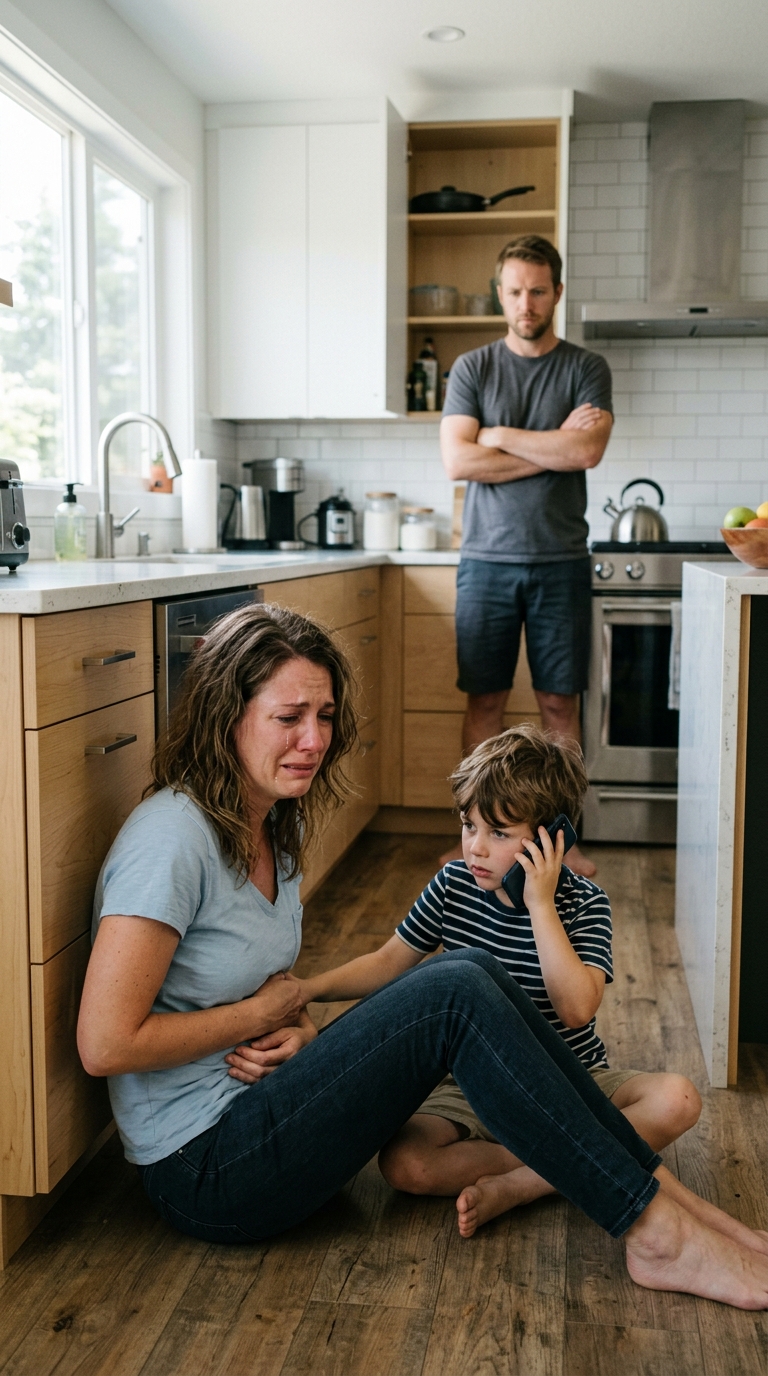
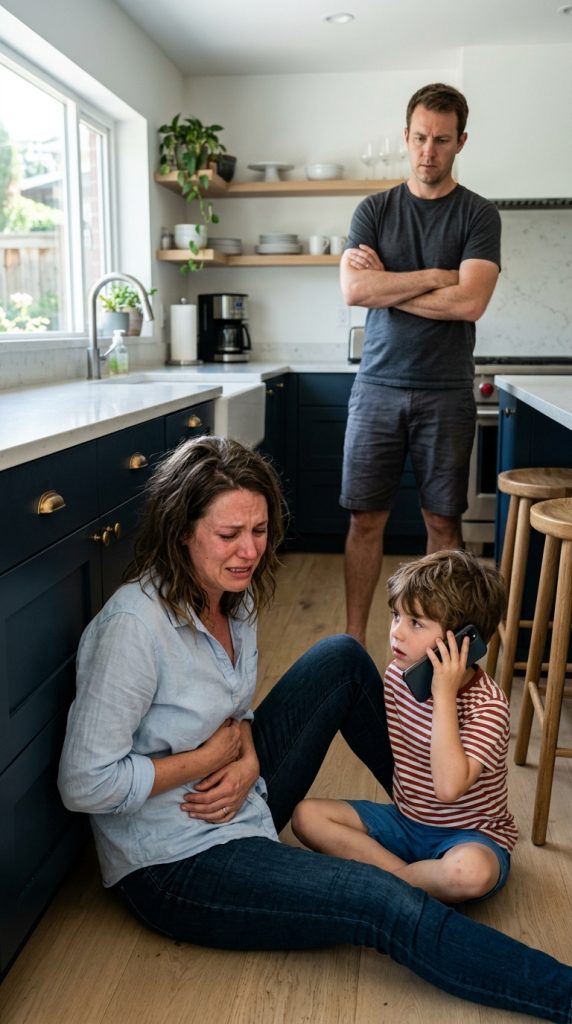
Sometimes, courage is a five-year-old boy standing barefoot on the kitchen floor, holding a phone with both hands, trying not to cry while his mother tells him to stay calm.
My name is Marissa Vale, and for years, I believed I could keep my home together if I stayed patient enough, quiet enough, and forgiving enough. I told myself that every hard season passed. I told myself that my husband, Daryl Price, was only tired from work, only angry for the moment, only lost in a version of himself he would eventually leave behind.
But that evening in our small house outside Columbus, Ohio, I finally understood something I should have understood long before.
Love should never make a child afraid.
And love should never leave a mother lying on the living room floor, trying to breathe without frightening her son.
The Argument That Went Too Far
It started with a simple disagreement.
Daryl had come home later than usual, carrying the sharp mood that always seemed to enter the house before he did. His keys hit the entry table too hard. His boots dragged across the floor. His face already looked irritated before I even asked if he had eaten dinner.
I had spent the day working, cleaning, helping our son, Mason, with his little preschool drawings, and trying to keep the house peaceful. All I wanted was a calm evening.
But peace was becoming harder to find in our home.
Daryl snapped about bills. Then about dinner. Then about the laundry basket near the hallway. Every small thing became proof, in his mind, that I was failing him.
I kept my voice low because Mason was in his bedroom with his toy trucks.
“Daryl, please,” I said softly. “Not tonight. Mason can hear us.”
That should have mattered.
It did not.
His anger rose like a storm that had been waiting all day for a reason to break. I stepped back, not because I wanted to fight, but because I knew that look. I had seen it before. The tight jaw. The cold eyes. The way he acted as if the whole world had wronged him, and I was the only person close enough to blame.
Then everything happened too fast.
I do not want to remember every second of it, and I will not describe it in a way that gives the pain more space than it deserves. What I remember most is the sound of Mason’s bedroom door opening.
My little boy stood in the hallway, wearing dinosaur pajamas, his brown hair messy from playing on the carpet.
His eyes were wide.
“Mommy?” he whispered.
That one word broke me more than anything else.
A Little Boy Who Refused To Freeze
Daryl turned toward the door as if Mason’s voice had interrupted him. For one terrible moment, the room went still.
I forced myself to lift my head.
“Mason, sweetheart,” I said, trying to keep my voice steady. “Go get my phone from the kitchen.”
Daryl’s face changed.
“No,” he said quickly. “He doesn’t need to do anything.”
But Mason had already understood enough. Maybe not everything, but enough.
He looked at me, then at his father, then back at me.
There are moments when children should not have to be brave. That night, my son became brave anyway.
He ran to the kitchen counter where my phone was charging. His small fingers shook as he pulled the cord free. I could hear him breathing too fast.
Daryl took a step toward him.
“Put that down,” Daryl ordered.
Mason held the phone tighter.
I do not know where his courage came from. Maybe from love. Maybe from fear. Maybe from the little lessons my father had taught him every Sunday afternoon when they built birdhouses in the garage.
My father, Russell Vale, had always told him, “If something feels wrong, you find a safe grown-up. You never stay silent just because someone tells you to.”
That night, Mason remembered.
He tapped the screen and found Grandpa’s picture.
Grandpa, Please Come
The call connected on speaker.
My father answered after the second ring.
“Hey, buddy,” he said warmly. “You calling to tell me about your truck collection again?”
Mason’s voice cracked.
“Grandpa,” he whispered, “Mommy needs you.”
There was no pause after that.
My father’s voice changed instantly.
“Mason, where are you standing?”
“Kitchen.”
“Is your mom close?”
Mason looked at me.
“She’s on the floor.”
I heard my father inhale sharply, but he kept his voice calm for Mason.
“Listen to me, champ. I’m coming right now. Stay near your mom, but keep space between you and anyone who is angry. Do you understand?”
Mason nodded before remembering Grandpa could not see him.
“Yes.”
Daryl stared at the phone, his anger mixing with something else now. Uncertainty. Fear. The realization that this night was no longer under his control.
“Hang up,” he said.
Mason did not.
My son, five years old, stood in the kitchen with tears on his cheeks and refused to hang up.
The Siren In The Distance
I gathered every bit of strength I had left and looked at Daryl.
“Leave,” I said. “Please just leave us alone.”
My voice was weak, but the words were clear.
For years, I had begged for peace. That night, I asked for distance.
Daryl looked toward the front window. Somewhere outside, a siren began to rise in the distance. It was not loud at first, but it was close enough to change the air inside the house.
Mason heard it too.
He knelt beside me, still holding the phone.
“Grandpa’s coming, Mommy,” he whispered. “He said he’s coming.”
Daryl muttered something under his breath and grabbed his jacket from the chair. He looked at Mason one last time, then at me.
There had been a time when I would have searched his face for regret.
That night, I only wanted him gone.
The front door opened hard and slammed shut behind him. A moment later, his truck started outside. Tires scraped against the driveway, and then the sound faded down the street.
The house became quiet.
Not peaceful.
Just quiet.
My Father Walked Through The Door
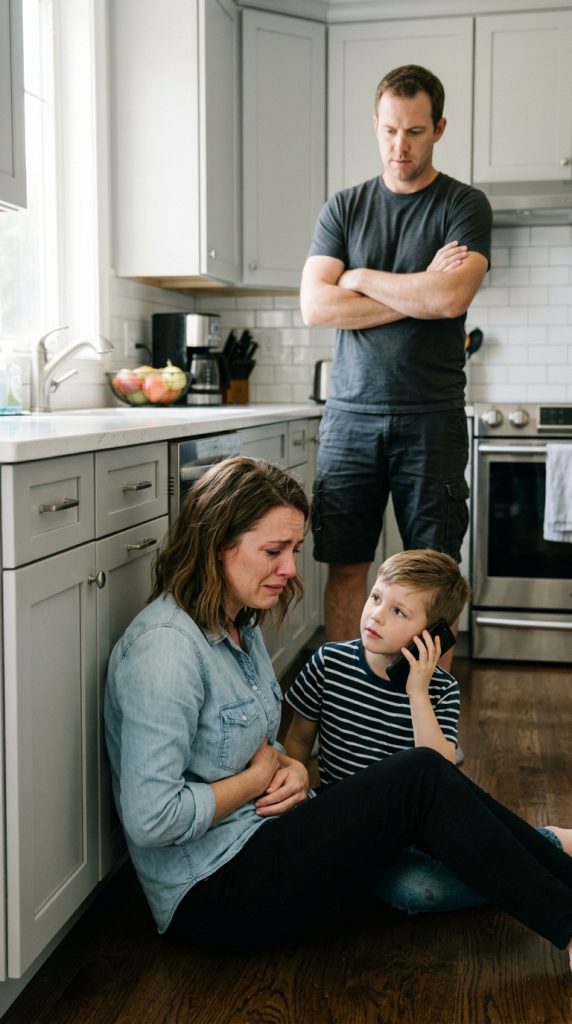
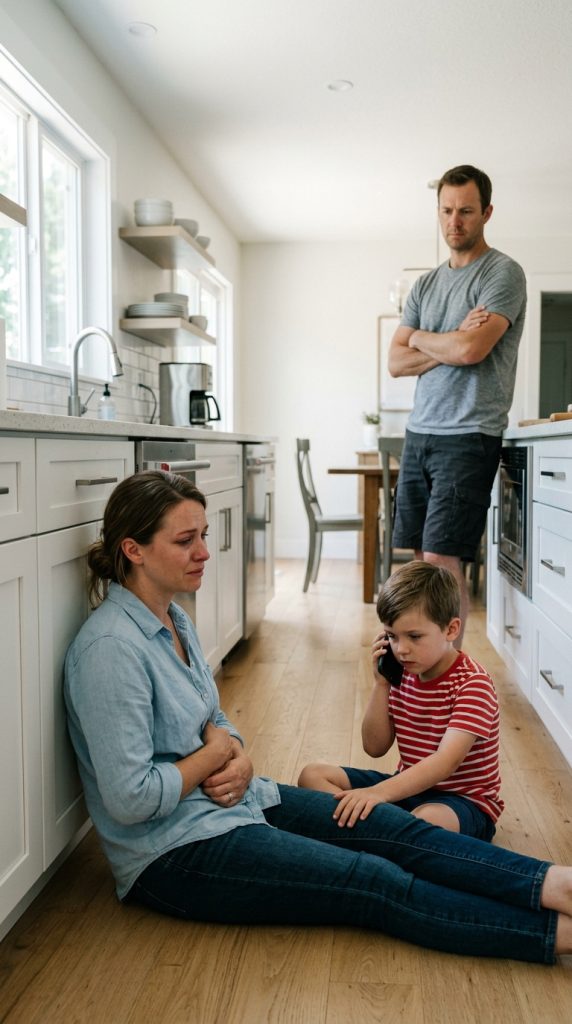
Mason stayed beside me, his little hand resting on mine.
“Did I do good?” he asked.
I wanted to pull him into my arms, but moving hurt too much. So I curled my fingers around his.
“You did more than good,” I whispered. “You helped Mommy.”
Before long, the front door opened again.
This time, it was my father.
Russell Vale was sixty-two, a retired school maintenance supervisor with silver hair, strong shoulders, and the kind of steady presence that made people feel safe. But when he saw me, something in his face nearly broke.
He crossed the room quickly and knelt beside me.
“Marissa,” he said, his voice low and careful. “I’m here. Help is coming. You just keep looking at me.”
Mason ran into his arms for half a second, then pulled back as if he remembered he was supposed to stay strong.
My father placed one hand on Mason’s shoulder and one near mine.
“You were brave, buddy,” he said. “But now you let Grandpa handle the grown-up things.”
Mason nodded, his lips trembling.
Help Arrived
When the paramedics arrived, they moved with calm purpose. Their voices were gentle. Their hands were careful. They asked me questions, checked me over, and helped me onto a stretcher.
I remember the ceiling lights passing above me.
I remember Mason standing beside my father, holding the sleeve of his jacket.
I remember feeling ashamed for a moment, not because I had done anything wrong, but because pain has a cruel way of making people feel exposed.
Then my father leaned close.
“Look at me, sweetheart,” he said. “None of this is your fault.”
I closed my eyes.
I needed to hear that.
Maybe I had needed to hear it for years.
As they wheeled me toward the ambulance, Mason stepped closer.
“Mommy?”
I turned my head.
“I’ll stay with Grandpa,” he said, trying so hard to sound grown. “And I’ll feed Oliver.”
Oliver was our orange cat, who had hidden under the couch during the chaos.
Even then, my son was thinking about who needed care.
“Thank you, baby,” I whispered. “I love you so much.”
“I love you more,” he said.
The First Safe Night
At the hospital, everything felt bright and unfamiliar. Nurses asked questions. A doctor spoke gently. My father stayed with Mason in the waiting area until my sister arrived to take him home for the night.
I wanted to be with my son. I wanted to hold him until neither of us felt afraid anymore.
But I also knew something else.
Being strong for Mason no longer meant pretending everything was fine.
Being strong meant telling the truth. It meant accepting help. It meant building a life where my little boy did not have to listen for footsteps or read the mood of a room before he felt safe.
Later that night, my father came into my hospital room and sat beside the bed.
For a long moment, he said nothing.
Then he reached for my hand.
“You’re coming home with us when they release you,” he said.
I looked at him through tired eyes.
“Dad, I don’t want to bring trouble to your door.”
His expression hardened, but his voice stayed gentle.
“You are not trouble, Marissa. You are my daughter. Mason is my grandson. My door was built for you to come through.”
That was when I finally cried.
Not loudly. Not dramatically.
Just enough to let go of the silence I had been carrying.
Starting Over Was Not Easy
The next few weeks were not simple.
Healing was slow. Some days, I felt strong. Other days, a sound outside the window made my chest tighten. Mason started sleeping with a night-light again. He asked questions I wished he never had to ask.
“Is Daddy mad at us?”
“Are we going back to the old house?”
“Did I make him leave?”
Each time, I answered as gently and clearly as I could.
“No, sweetheart. You did not make anyone leave. Grown-ups are responsible for their own choices. You helped keep us safe.”
My father became Mason’s anchor. He took him to the park. He made pancakes shaped like bears. He let Mason help him paint an old wooden chair in the garage.
At night, when Mason finally slept, Dad and I talked at the kitchen table.
We talked about legal steps. We talked about finding a new apartment. We talked about counseling for Mason and for me. We talked about how to make the future feel less frightening.
But more than anything, we talked about peace.
Not the fake peace that comes from staying quiet.
Real peace.
The kind that lets a child laugh without checking someone’s face first.
Mason’s Small Brave Heart
One Saturday morning, about a month after that night, I found Mason sitting with my father on the back porch.
They were watching birds hop across the grass.
Mason held a cup of apple juice. My father held coffee.
I stayed near the doorway, listening.
“Grandpa?” Mason asked.
“Yeah, buddy?”
“Was I scared?”
My father looked at him carefully.
“Yes,” he said. “I think you were.”
Mason looked down.
“But I still called you.”
My father smiled, though his eyes were wet.
“That’s what brave means,” he said. “It doesn’t mean you weren’t scared. It means you did the right thing while your heart was shaking.”
Mason thought about that for a moment.
Then he nodded.
I stepped outside and sat beside them. Mason climbed into my lap carefully, still gentle with me even though I was healing.
The sun was warm on our faces.
For the first time in a long time, I felt something I almost did not recognize.
Safety.
The Home We Built After
Six months later, Mason and I moved into a small apartment with big windows and a maple tree outside the living room.
It was not fancy.
The kitchen cabinets were old. The hallway light flickered sometimes. The carpet had a stubborn stain near the bedroom door.
But it was ours.
No slammed doors.
No heavy silence.
No fear hiding under normal family routines.
My father helped us move in. Mason carried one pillow and declared himself the “moving boss.” Oliver the cat explored every corner as if he had personally purchased the place.
That first night, Mason and I ate pizza on the living room floor because the table had not arrived yet.
He looked around, smiling.
“Mommy,” he said, “it feels quiet here.”
I froze for half a second.
Then I realized he did not mean the bad kind of quiet.
He meant peaceful.
I reached over and brushed his hair from his forehead.
“Yes,” I said. “It does.”
He leaned against my shoulder.
“Can Grandpa come tomorrow?”
I smiled.
“He already asked what time breakfast starts.”
Mason giggled, and the sound filled the room like music.
What I Know Now
I used to think leaving meant losing everything.
I was wrong.
Sometimes leaving is how you save what matters most.
I did not save my marriage. I saved my son’s childhood. I saved my own future. I saved the parts of me that still believed a home could be gentle.
Mason should never have had to pick up that phone. No child should have to become brave in that way.
But he did.
And because he did, I found the courage to stop calling fear “family.”
My father once told me that a safe home is not measured by the size of the house, the price of the furniture, or the pictures people post online.
A safe home is measured by how freely a child can breathe inside it.
Today, Mason breathes easier.
So do I.
And every time my phone rings and my father’s name appears on the screen, I remember the night my son called him with shaking hands.
That call did not just bring help to our door.
It opened the door to the rest of our lives.
Sometimes the bravest person in the room is not the strongest adult, but the child who still believes help will come when someone safe hears the truth.
A home should never be a place where love feels like walking carefully around someone else’s anger, because real love gives peace instead of fear.
If a child becomes quiet, watchful, or too grown for their age, that silence may be carrying a story they do not yet know how to explain.
Starting over can feel terrifying at first, but a small peaceful apartment is better than a beautiful house where your heart never feels safe.
The people who truly love you will not ask why you stayed so long; they will open the door and remind you that you still belong somewhere.
Healing does not happen all at once, but every calm morning, every honest conversation, and every safe night becomes a brick in the new life you are building.
Children do not need perfect parents, perfect homes, or perfect families; they need safety, truth, warmth, and adults who choose their well-being first.
Walking away from a painful life is not weakness, failure, or shame; sometimes it is the first strong decision that gives your child permission to breathe again.
A good grandfather, father, friend, or neighbor can become a lifeline when the world feels too heavy, because love often arrives through the people who simply show up.
If your heart has been living in survival mode for too long, please remember that peace is not asking too much; it is the beginning of the life you were always meant to have.
