

The evening had begun with such ordinary promise. My husband, Andrés, had called earlier that afternoon, his voice warm and familiar over the phone. “Come over for dinner tonight, Valeria. Mom’s been asking about you and Santiago. It’s been too long.” I smiled as I hung up, balancing our two-year-old son on my hip while stirring a pot of soup for our own quick lunch. Santiago, with his dark curls and bright eyes that mirrored his father’s, clapped his hands at the mention of “Abuela.” Family dinners at the Robles home in Guadalajara were usually loud affairs—filled with the aroma of mole simmering on the stove, laughter echoing off the tiled walls, and stories passed around the heavy oak table like heirlooms.
I dressed carefully that evening, choosing a simple navy blouse and jeans that felt comfortable after a long day. Santiago was already drowsy from his afternoon nap, his small head nestled against my shoulder as I carried him into the car. The drive through the bustling streets of Guadalajara felt routine: vendors calling out from street corners, the distant spires of the cathedral piercing the twilight sky, and the warm breeze carrying hints of jasmine from neighborhood gardens. I replayed in my mind the little things I loved about these gatherings—the way Andrés’s father, Don Miguel, would sneak extra churros to Santiago, or how his sister, Elena, always had a new joke to share. Little did I know that this night would unravel everything I thought I knew about trust and belonging.
When I pulled up to the modest two-story house on a quiet cul-de-sac, the usual glow from the windows was absent. The porch light flickered weakly, casting long shadows across the cracked concrete steps. I adjusted Santiago in my arms, his breathing soft and even, and pushed open the front door. The air inside was thick with tension, not the savory scents of home-cooked meals. The dining table, normally set with colorful placemats and steaming dishes, stood bare. Andrés’s family was gathered in the living room—his parents, his sister, and a few aunts and uncles I recognized from past Christmases. Their faces were stone-hard, eyes fixed on me as if I were an intruder.
Andrés stood near the doorway, his broad shoulders tense under a faded button-down shirt. He didn’t smile or reach out to take our son. Instead, he extended a yellow envelope toward me, his hand trembling slightly. “Read it, Valeria,” he said, his voice low and strained, devoid of the affection I had come to expect.
Before I could even set Santiago down on the nearby couch, my mother-in-law, Carmen, exploded from her seat. She was a formidable woman in her late sixties, with sharp features etched by years of sharp opinions and unwavering control over her family’s affairs. Her silver-streaked hair was pulled back tightly, and her eyes blazed with fury. “That child is not my son’s!” she spat, jabbing a finger in my direction. “Take off that ring and get out of this house with your son. That test proved you betrayed my family.”
The words hit me like a physical blow. I clutched Santiago closer, feeling his warm weight as a fragile anchor in the storm suddenly swirling around us. My mind raced, trying to make sense of the scene. What test? What betrayal? I had been married to Andrés for four years, a union built on shared dreams of building a life in this vibrant city, raising Santiago amid the love of extended family. We had met at university—me, the quiet literature student from a small town in Michoacán, and him, the ambitious engineering graduate with big plans for the family construction business. Our courtship had been tender, filled with stolen moments by the Chapala Lake and promises whispered under starlit skies.
Now, the room erupted. Voices overlapped in accusation. “How could you do this to us?” one aunt hissed. Elena, Andrés’s sister, shook her head in disgust. “We welcomed you in. And this is how you repay us?” Andrés remained silent, his gaze fixed on the floor. He didn’t defend me. He didn’t pull me aside to explain. The betrayal in that moment cut deeper than any words from Carmen.
With shaking fingers, I opened the envelope. Inside were official-looking documents from a local laboratory. The results were stark: Probability of paternity—0%. My breath caught in my throat. Santiago stirred slightly at my gasp, his tiny hand gripping my shirt. Tears blurred my vision as the accusations flew thicker. Carmen advanced, her voice rising to a fever pitch. “I always knew something was off. The way he doesn’t look exactly like the Robles side. You think you could fool us forever?”
I wanted to scream, to demand explanations, but shock had stolen my voice. Santiago, sensing the distress, began to whimper softly. I rocked him gently, my mind flashing back to the day of his birth—the overwhelming joy in the delivery room, Andrés’s tears as he held our son for the first time, whispering promises of protection and love. How had we arrived at this nightmare?
Just as the chaos peaked, the doorbell rang. A man in a crisp suit entered, carrying a briefcase. He looked professional, out of place amid the domestic fury. “I’m Dr. Rafael Mendoza, supervisor from the laboratory,” he announced, his tone calm but authoritative. The room quieted slightly as all eyes turned to him.
He cleared his throat and addressed the group. “I’m here because there’s been a serious irregularity with the test you received. The sample collection was improper—no verified chain of custody, no proper identification protocols followed. In short, the process was compromised. The sample attributed to Mr. Andrés Robles may not even belong to him. This result is invalid.”
A stunned silence descended. Carmen’s face paled, but she quickly recovered, sputtering defenses. “I only wanted the truth for my son!” But Dr. Mendoza continued, unflinching. He explained how Carmen had insisted on rushing the results, bypassing standard procedures despite multiple warnings from the lab staff. She had personally overseen the swab collection at home, pressuring the technician and dismissing concerns about documentation. The tampering, whether intentional or through negligence, had tainted everything.
My heart pounded as Dr. Mendoza opened a second envelope from his briefcase. “We conducted a proper verification test this afternoon, with full protocols. Probability of paternity: 99.99%. Andrés Robles is the biological father of Santiago Robles.”
The words hung in the air like a verdict reversed. No one spoke. The aunts exchanged uneasy glances. Elena looked away, ashamed. Andrés’s father, Don Miguel, sat heavily in his armchair, rubbing his temples. Carmen’s lips pressed into a thin line, but she offered no immediate apology. Santiago, now fully awake, looked around the room with wide, innocent eyes. In the quiet, he pointed toward Andrés and whispered softly, “Daddy…”
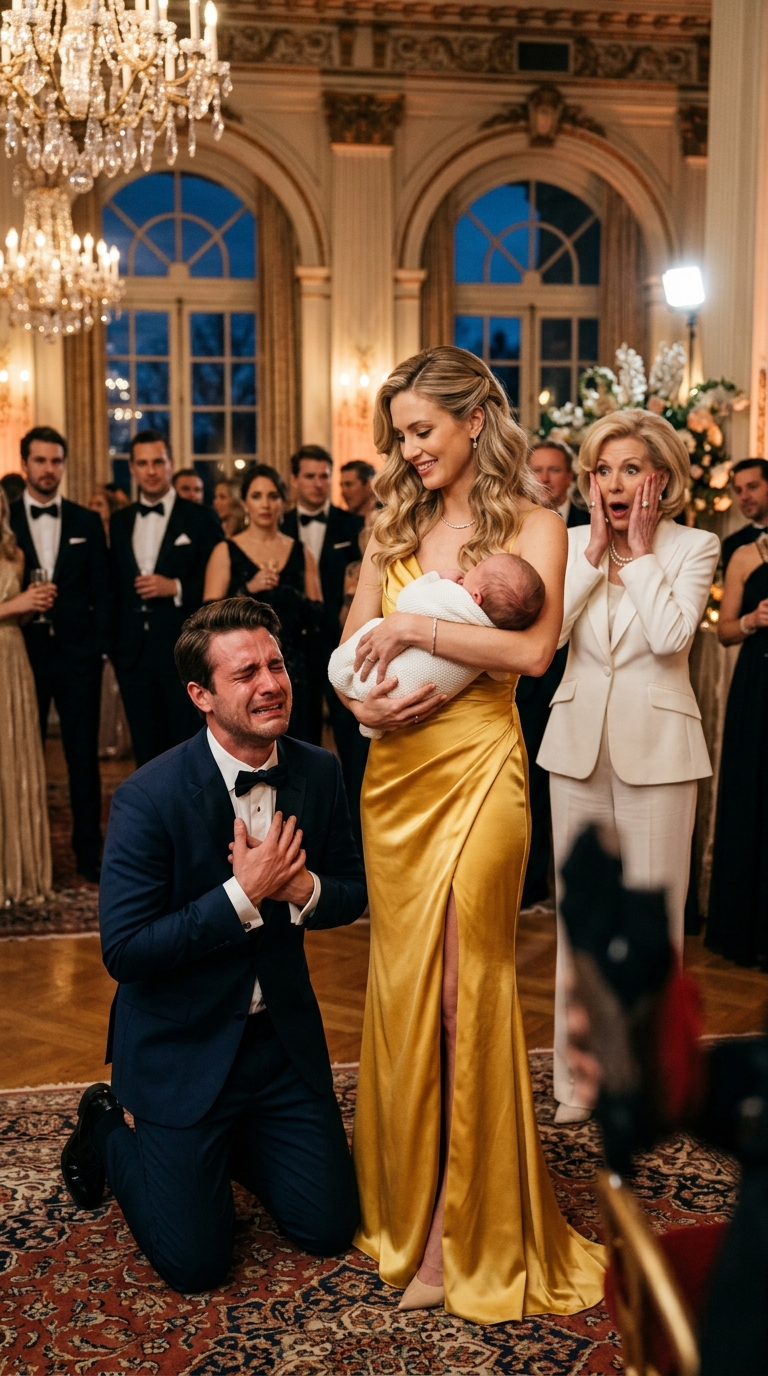
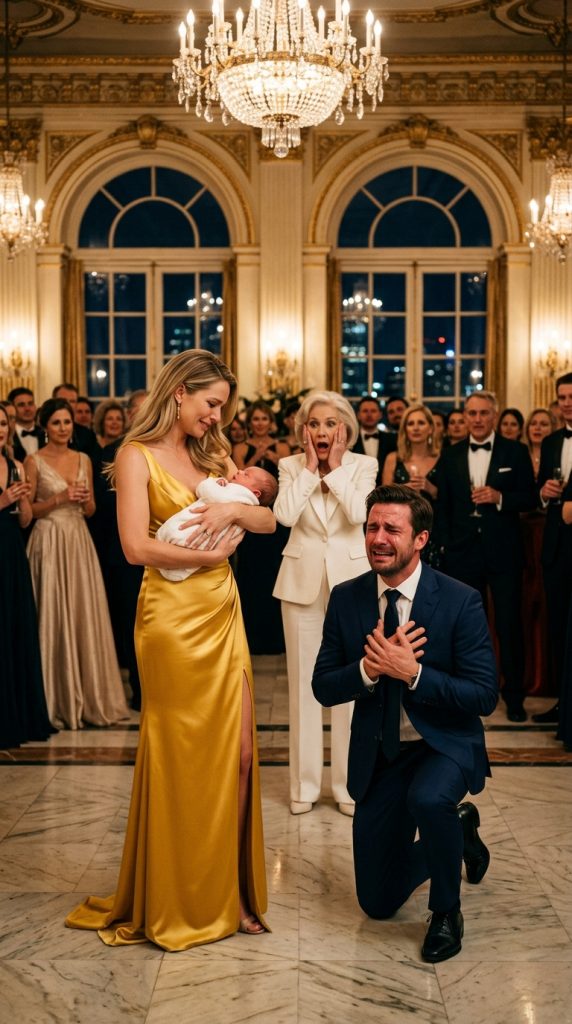
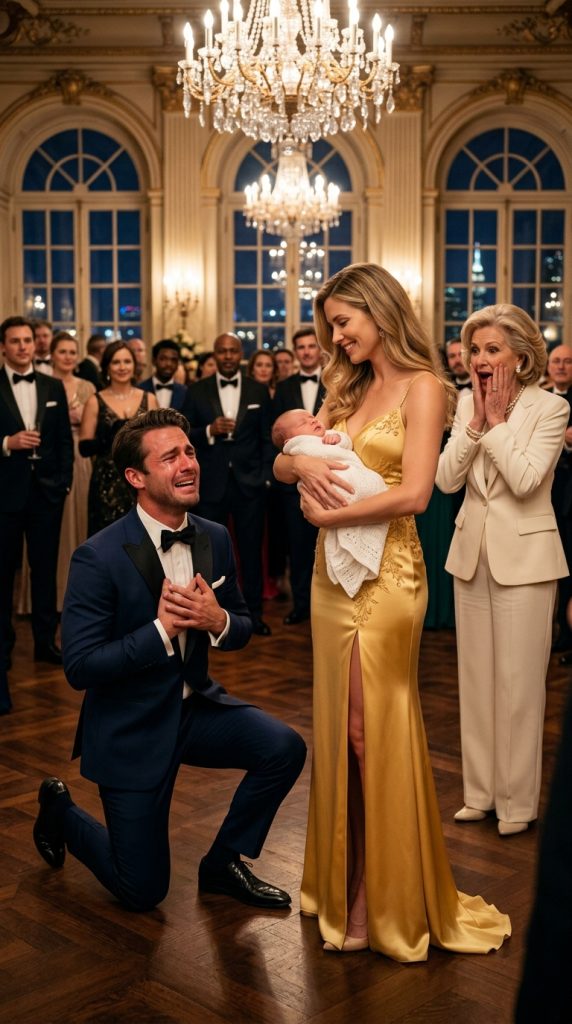
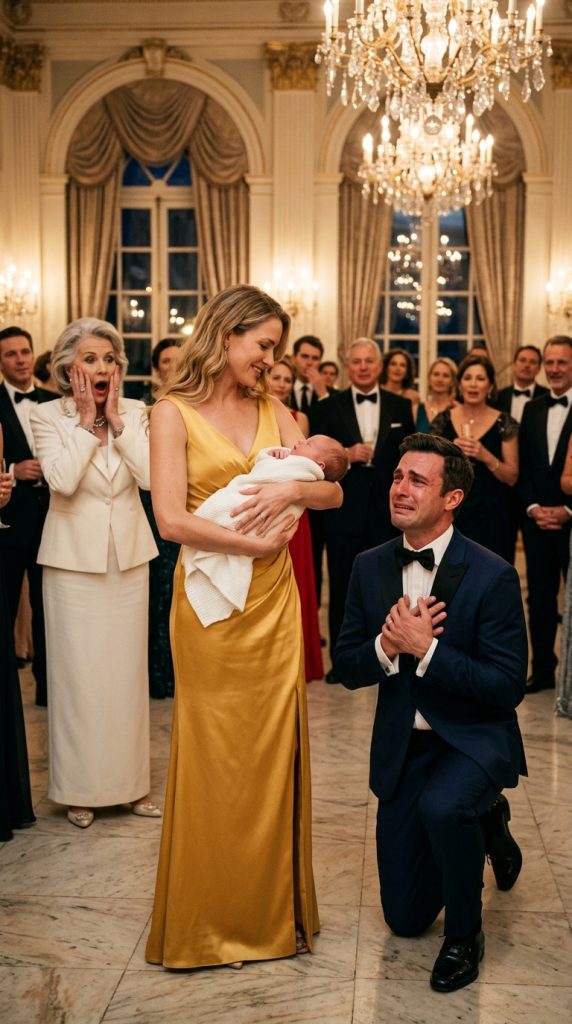
The single word shattered the remaining tension. Andrés’s face crumpled. Tears welled in his eyes as he took a hesitant step toward us, arms outstretched. “Valeria…” But I stepped back instinctively, my body rigid with the pain of the last hour. Too much had been broken in those moments—the trust I had placed in him, the sanctuary of our family. Repair could not happen in an instant, no matter how genuine his remorse appeared.
“No,” I said firmly, my voice steadier than I felt. Santiago clung to me, his small frame a reminder of what truly mattered.
“Valeria, please forgive me. I didn’t know,” Andrés pleaded, his voice cracking.
“Yes, you did,” I countered, the words spilling out from the raw hurt inside. “You knew I was your wife. You knew that little boy called you Dad every night before bed, that we built this life together through laughter and struggles. You simply chose to believe your mother over everything we shared.”
He lowered his head, shoulders slumping. “She confused me. She planted doubts over the months—little comments about how Santiago favored your side of the family, how our marriage had been so quick after university.”
“And you let her,” I replied, the accusation heavy but true. Over the past year, I had noticed Carmen’s growing interference: unsolicited advice on parenting, subtle jabs at my career as a part-time teacher, her insistence on family decisions that should have been ours alone. Andrés had always smoothed things over, calling it “her way of showing love.” Now, that love had nearly destroyed us.
Carmen tried to justify herself, stepping forward with hands raised. “I did it for you, mijo. For certainty. A mother protects her son.”
“For your pride,” I shot back, meeting her gaze without flinching. “Because you can’t stand losing control over his life, over this family you rule like a queen. Santiago isn’t a pawn in your games.”
For the first time that evening, Andrés turned fully toward his mother. “You knew this test could be wrong. The lab warned you.”
“I just wanted certainty,” she repeated, though her voice wavered.
“You wanted to destroy her,” Andrés answered quietly, the realization dawning on him. The silence that followed was absolute, broken only by the distant hum of traffic outside and Santiago’s soft babbling as he played with a button on my blouse.
I gathered my things, adjusting Santiago’s blanket around him. “I’m leaving. I’m staying at a hotel tonight.”
“Please come home,” Andrés begged, following me to the door. His eyes were desperate, filled with the man I had fallen in love with—the one who had stayed up nights studying with me, who had danced with me in our tiny apartment kitchen during rainy evenings.
“I will not live under the same roof as a man who needed a DNA test to trust me,” I said, pausing at the threshold. The cool night air brushed against my skin, a stark contrast to the suffocating atmosphere inside. “Santiago is coming with me. You’ll still be able to see him, of course. But your mother stays away until she offers a genuine apology—not one forced by circumstance.”
Carmen protested from the living room, her voice rising again in indignation. But Andrés stood firm this time, blocking her path. “Mom, if you can’t respect my wife, you won’t be part of my son’s life.” His words carried a new resolve, born from the wreckage of the evening.
That night, I checked into a modest hotel near the city center, the kind with clean rooms and a small balcony overlooking the illuminated streets. Santiago fell asleep quickly in the unfamiliar bed, but I lay awake for hours, replaying every moment. The doubts Carmen had sown had found fertile ground in Andrés’s insecurities—perhaps from the pressures of the family business, or the weight of being the only son. I thought of our early days: stolen weekends exploring the colorful markets of Tlaquepaque, dreaming of the future while sipping horchata under the sun. Those memories felt distant now, shadowed by tonight’s cruelty.
Weeks passed in a blur of single-mother routines and quiet heartache. I focused on Santiago—his first full sentences, his delight at the hotel pool, the way he asked for “Papá” each evening during video calls with Andrés. My husband visited daily when he could, bringing small gifts and earnest conversations. We talked through layers of pain: his guilt, my lingering anger, the ways family dynamics had poisoned our foundation. Slowly, he began setting firmer boundaries with Carmen, attending counseling sessions alone at first, then with me.
One afternoon, as I sat in a sunlit café near the hotel, sipping café de olla and watching Santiago chase pigeons in the plaza, Carmen appeared. She looked smaller somehow, her usual commanding presence tempered by regret. She approached hesitantly, clutching her purse.
“Valeria,” she began, her voice soft. “I was wrong. Deeply wrong. I let my fears and pride blind me. Santiago is my grandson, and you are part of this family. I hope one day you can forgive an old woman’s mistake.”
I didn’t soften my expression immediately. The wound was still fresh. “My son isn’t something you get to accept or reject whenever it’s convenient,” I replied evenly. “Trust isn’t rebuilt with one conversation. It takes time, consistency, and respect.”
She nodded, tears glistening in her eyes, and left without pressing further. It was a start, but not a cure.
Andrés and I stayed together, but everything had irrevocably changed. We moved back into our apartment eventually, but with new rules: weekly family meetings to air concerns openly, limited visits from Carmen supervised at first, and a couples’ therapist who helped us navigate the debris. Dates became intentional again—quiet evenings recreating our university romance with picnics in the park or walks along the Atemajac River. I returned to teaching part-time, reclaiming pieces of my identity that had been overshadowed. Andrés threw himself into balancing work and home, proving through actions what words alone could not.
Santiago thrived amid the healing, his laughter filling the spaces once occupied by doubt. He learned to ride a tricycle in our courtyard, calling out for both parents with equal joy. Through it all, I learned a profound truth: Blood may prove paternity on a laboratory report, but trust is the invisible thread that weaves a family together. It is fragile, easily torn by suspicion and interference, yet resilient when mended with honesty, patience, and love.
In the end, our story wasn’t defined by that shattering accusation or the invalid test. It was shaped by the choice to rebuild—not perfectly, but authentically. Guadalajara’s lights still twinkled at night, a city of resilience and second chances, mirroring the life we were forging anew. And in quiet moments, holding my husband’s hand while our son slept peacefully, I felt the first tender shoots of that trust taking root once more.
