

THE NIGHT I STOPPED WAITING FOR HIM
The night I learned I was pregnant, my husband was downstairs planning a future with another woman. I stood in the upstairs bathroom of our Portland, Oregon home, holding a small pregnancy test in both hands. My fingers shook so violently I had to press against the marble sink just to steady myself.
Two lines.
After years of appointments, silent prayers, medical visits, and disappointment, they were finally there.
For a moment, I couldn’t breathe.
Then I laughed. Then I cried. Then I covered my mouth, because the sound that came out of me felt too large for the quiet house.
A baby.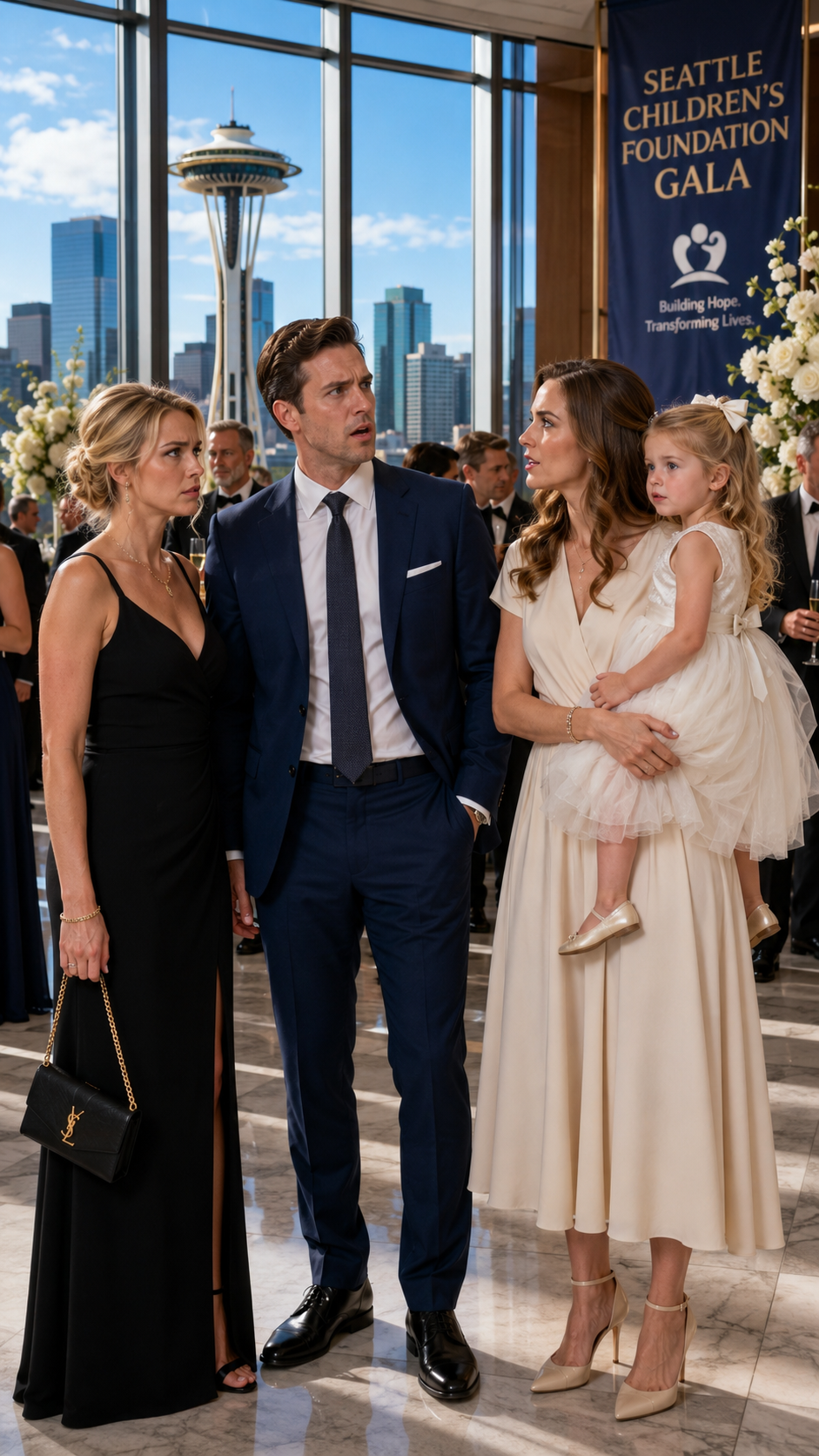
Our baby.
The child we had waited for was finally real.
I slipped the test into my robe pocket and hurried down the hallway. I wanted to find my husband, Graham Whitlock. I wanted to see his reaction when I told him. I wanted him to hold me and say everything we had endured had been worth it.
But before I reached the stairs, I heard his voice.
Low. Careful. Soft in a way he hadn’t spoken to me in months.
“I’m telling her tonight, Paige. I already spoke with my attorney.”
I froze.
Paige Landon.
His polished, beautiful marketing director. The woman I had welcomed into our home for dinner. The woman I had once defended when people at Graham’s company whispered she was too close to him.
My hand slowly moved to my stomach.
Then Graham spoke the words that changed everything.
“I want the divorce finalized quickly. I can’t keep pretending I’m happy in a marriage built around a child we’ll never have.”
A child we would never have.
The test in my pocket suddenly felt heavy against my skin.
I could have gone downstairs. I could have shown him the truth. I could have watched his face collapse under what he had just done.
But I didn’t move.
Because then I heard him say, “I choose you.”
And in that moment, something inside me went still.
Not broken.
Clear.
THE CONVERSATION HE THOUGHT HE CONTROLLED
Twenty minutes later, Graham entered our bedroom.
He looked regretful, but not surprised. His sadness was too precise. Too rehearsed. He had already played this moment in his mind.
“Sadie,” he said quietly, “we need to talk.”
I turned away from the window.
“No,” I said. “You need to talk. I need to decide what kind of woman I’m going to be after tonight.”
His expression shifted.
“You heard me.”
“I heard enough.”
He lowered his gaze for a brief moment, then tried to slip into the version of himself that always sounded reasonable.
“I never wanted to hurt you.”
“People always say that after they’ve already chosen the knife.”
He flinched.
“I’ve been lonely.”
“So was I.”
“You never told me.”
“You stopped listening long before I stopped speaking.”
For the first time, he looked uncertain. He had expected tears, questions, begging. He had expected me to fight for a marriage he had already left behind.
Instead, I stood there with one hand in my pocket, touching the secret that could have changed everything.
His eyes dropped.
“What are you hiding?”
I felt the test between my fingers.
For one fragile second, I almost told him.
Not because he deserved it.
But because I remembered the man who once held my hand in waiting rooms and whispered, “One day, Sadie. One day we’ll bring our baby home.”
That man wasn’t there anymore.
The man in front of me had already chosen someone else before he even knew hope had returned.
So I let the test go.
“Nothing you need to worry about,” I said.
His jaw tightened.
“You’re not going to ask me to stay?”
I looked at him.
“No.”
“That’s it?”
“Call your attorney, Graham.”
The color drained from his face, as though my calmness unsettled him more than anger ever could.
That night, he slept in the guest room.
By morning, he was gone. THE SECRET I CHOSE TO PROTECT
The next day, I sat alone in my kitchen and called my doctor.
Two weeks later, an ultrasound confirmed what the test had already shown.
I was pregnant.
The heartbeat was small and rapid, like a tiny light flickering in the darkness.
I cried the moment I heard it.
My doctor asked gently, “Do you have support at home?”
I almost said yes automatically.
Then I remembered the empty closet, the missing suitcase, and the note Graham had left on the kitchen counter.
I hope one day you understand that I had to choose happiness.
I set that sentence aside in my mind and answered truthfully.
“I have my older brother and my mother. That will be enough.”
And it was.
My brother, Owen, arrived with groceries, prenatal vitamins, and the restrained anger of a man trying very hard not to say everything on his mind.
“I’m only going to say this once,” he said.
“Then don’t say it loudly.”
He set a bag of oranges on the counter.
“Graham has the emotional depth of a parking ticket.”
Despite everything, I laughed.
Then I cried again.
Owen pulled me into a hug and said, “You are not doing this alone. Not for a single day.”
My mother said the same thing, with fewer jokes and more tears.
The divorce progressed swiftly. Graham wanted clean paperwork, clean separation, and a clean start with Paige. He didn’t fight for the house. He didn’t ask many questions. He almost seemed relieved that I made everything simple. He never knew that while I signed the final papers, my other hand rested under the conference table on the small curve of my belly. My attorney had warned me the truth would matter someday.
“You cannot hide a father forever,” she said.
“I’m not hiding him forever,” I replied. “I’m giving my child a peaceful beginning before the world turns her into a legal dispute.”
THE DAUGHTER HE NEVER KNEW
My daughter was born on a rainy April morning.
I named her Rosie Mae Whitlock.
She arrived loud, furious, and perfect.
She had Graham’s dark hair and my steady gray eyes. When the nurse placed her on my chest, it felt like my old life quietly slipped away, like something I no longer needed.
“Hi, Rosie,” I whispered. “You are so loved.”
New motherhood was never graceful. It was exhausting, beautiful, terrifying, and sacred in the smallest ways.
Rosie hated socks. She loved music. She smiled at ceiling lights before she smiled at people. She grew into a toddler who believed blueberries were essential, bath time was suspicious, and every dog on the street deserved a personal greeting.
She did not know Graham.
Not yet.
But I never wanted his name to become a closed door.
Sometimes I would say, “Your father used to live in this house.”
She was too young to understand.
Still, I wanted the truth to grow gently around her, not crash down on her all at once.
I returned to work when Rosie was six months old. I had been a residential designer before everything changed, but motherhood reshaped how I saw homes. I noticed how light fell across nursery floors. I noticed whether doorways could fit strollers. I learned that a home was not just walls and windows.
It was where people endured.
Eventually, I opened my own small design studio in Portland.
Work came slowly at first. Then one project changed everything.
A local foundation asked me to redesign a family support center for parents starting over. I created warm children’s rooms, private counseling offices, a kitchen large enough for shared meals, and quiet corners where exhausted people could breathe.
That building healed something in me.
It reminded me that painful endings can still leave behind something meaningful.
THE GALA WHERE EVERYTHING RETURNED
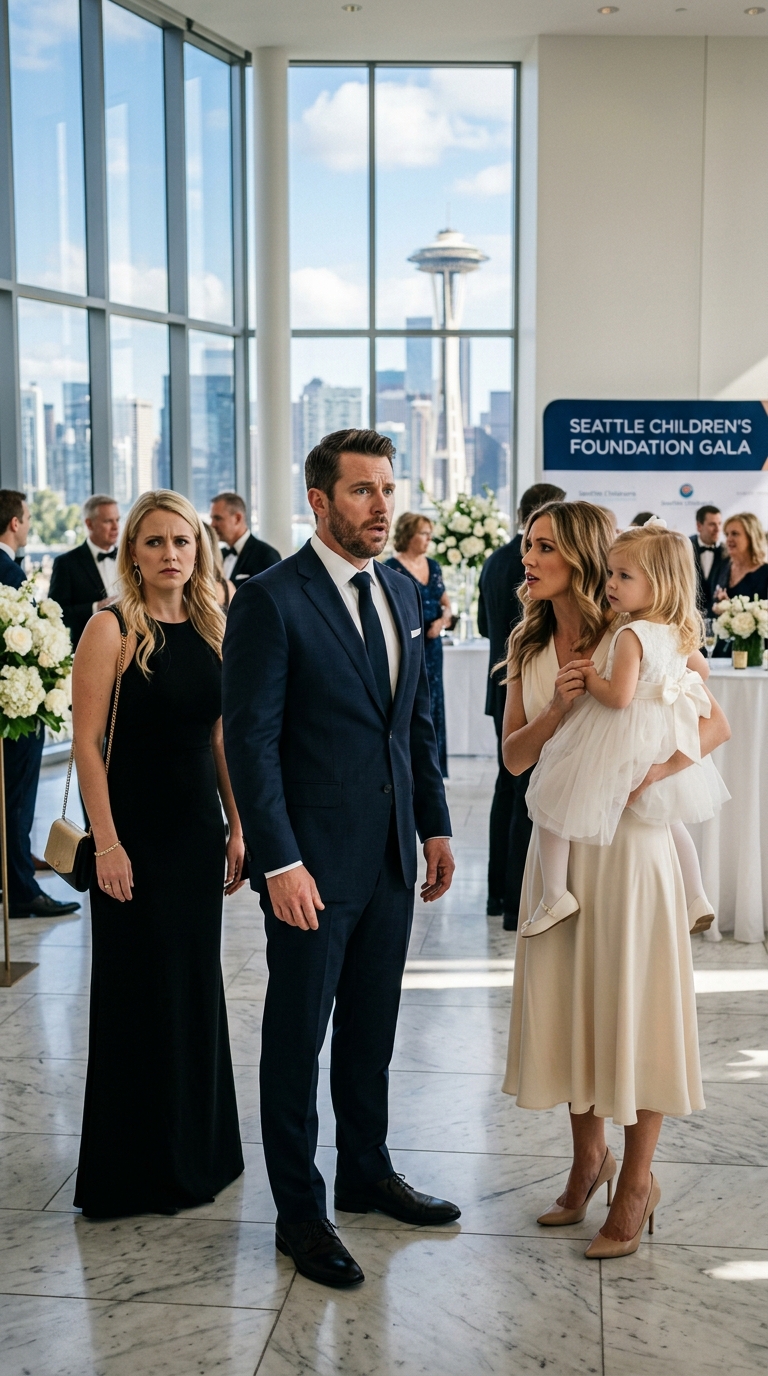
Two years later, the foundation invited me to its annual charity gala at The Sentinel Hotel in downtown Portland.
I almost declined.
I had no interest in gowns, donors, or polite conversations over sparkling water. But the foundation director insisted.
“Sadie, you designed the center we are honoring,” she said. “You belong in that room.”
Then she added, “Bring Rosie. There will be an early family reception.”
So I did.
Rosie wore a pale yellow dress with tiny white flowers and silver shoes she chose herself because, according to her, “shiny shoes walk better.”
I wore a deep navy gown, simple earrings, and the quiet confidence I had built over two years.
The ballroom shimmered with chandeliers and soft evening light. People smiled, music played gently, and Rosie held my hand while scanning the room like she had been invited to inspect everything.
Then I heard my name.
“Sadie?”
I turned.
Graham stood a few feet away in a black tuxedo.
Paige was beside him.
She looked elegant, tense, and suddenly uncertain.
Graham’s eyes moved from me to Rosie.
And stayed there.
Rosie pressed closer to my side and whispered, “Mama, who is that man?”
The question was soft, but it changed everything around us.
Graham’s face paled.
He studied Rosie’s dark curls, her age, her features, her eyes. I could see him calculating, trying to rewind time.
Two years.
The divorce.
That night.
The test.
His voice came out strained.
“What is her name?”
I held Rosie’s hand tighter.
“Rosie.”
Paige’s grip tightened around her clutch.
Graham swallowed.
“How old is she?”
Before I could answer, Rosie lifted her chin.
“I’m two. Almost three after more sleeps.”
Graham closed his eyes for a brief moment.
When he opened them again, they were wet.
THE QUESTION HE FINALLY ASKED
Later that evening, after my presentation about the family center, Graham found me near a quiet corner of the ballroom.
Rosie was with Owen by the dessert table, carefully negotiating for a second cookie.
Graham didn’t hesitate.
“Is she mine?”
I looked at him.
“Yes.”
His hand pressed against the back of a chair, as if he needed something to steady himself.
“You were pregnant that night?”
“Yes.”
“You knew?”
“I found out minutes before I heard you tell Paige you chose her.”
His face tightened with pain.
“Why didn’t you tell me?”
I had asked myself that question many times. At first it was anger. Then fear. Then protection.
Now the answer was simple.
“Because you had already chosen your life, and I had to protect hers.”
His voice sharpened slightly.
“She is my daughter.”
“She is not a punishment, Graham. She is not leverage. She is not proof you should have loved me differently. She is a little girl.”
He looked toward Rosie.
She was laughing because Owen had put a napkin on his head just to make her giggle.
Graham’s eyes filled again.
“I would have come back.”
“I know.”
And that answer surprised him. “Then why keep it from me?”
“Because guilt is not the same as love. Responsibility is not the same as devotion. You would have come back because of the baby, and one day you might have looked at me like I had trapped you with the miracle we both once prayed for.”
He had no response.
Before either of us could speak again, Rosie ran back in and stopped when she saw him.
Graham crouched slowly. “Hi, Rosie.”
She looked at me first.
I gave a small nod.
“Hi,” she said carefully.
“My name is Graham.”
She studied him with serious toddler suspicion.
“Do you like blueberries?”
A short, broken laugh left him.
“Yes. I do.”
“Good,” she said. “Peas are not good.”
He nodded as if she had delivered a profound truth.
“I agree.”
It was such a simple exchange.
And somehow, it hurt more than anything else.
Because I watched him meet his daughter through blueberries and peas, while the woman he had chosen stood across the room and realized what his choice had cost.
THE BEGINNING AFTER THE DAMAGE
The next morning, Graham called me.
I almost didn’t answer.
Then I looked at Rosie stacking blocks on the living room floor and picked up.
Before he could say anything, I said, “You will not come to my house. You will not confuse her. You will not turn her life into chaos because you are surprised.”
Silence.
Then Graham said, “Okay.”
I had expected resistance.
“Okay?” I repeated.
“Okay,” he said again. “I don’t want to scare her. I don’t want to scare you.”
His voice sounded different. Stripped down. Exhausted.
He told me Paige had moved out.
I didn’t celebrate it.
Pain remained pain, even when it finally reached the person who helped create it.
A week later, we met at the family center I had designed.
Graham arrived early, in jeans and a gray sweater, holding a children’s book about a bear building a house.
Rosie hid behind my leg.
“You don’t have to take it,” he said gently. “But I brought this for you.”
Rosie peeked out.
“A bear book?”
“Yes.”
“Bears don’t build houses.”
“This one tries.”
That caught her attention.
Their first hour together was awkward, careful, and strangely tender in a way that made my chest ache. Graham sat on the floor while Rosie instructed him on how to build a block tower.
“No, the blue block goes there because it is lonely.”
“Of course,” he said softly. “I should have noticed.”
I watched from a chair near the window.
Regret is not a bridge.
But sometimes it is the first stone.
THE SECRET THAT WAS NOT MINE
Over the next month, Graham saw Rosie several more times at the center.
He didn’t push. He wasn’t late. He listened when I explained her routines. He wrote down her favorite snacks, her bedtime songs, and the fact that sudden loud noises made her cry.
One afternoon, the foundation director called me into her office.
A folder was already waiting on her desk.
“Sadie,” she said, “Graham made a significant donation to expand the children’s wing.”
I exhaled.
“Let me guess. He wants it named after Rosie.”
Her expression softened.
“He asked. I told him that would require your approval.”
“The answer is no. My daughter is not a monument to his guilt.”
“I agree,” she said quietly. “But that is not why I called you.”
She handed me a document that had been mistakenly included in the donation paperwork.
It came from a Whitlock family trust.
At first, the wording meant little.
Then I saw a reference to the fertility clinic Graham and I had used years ago.
My breath caught.
After the divorce, I had been told our remaining embryos had been destroyed according to signed consent forms.
But this document suggested something different.
Something had been preserved.
Something had been transferred into a family trust.
Something Graham had never told me.
My phone buzzed.
A message from him lit the screen.
Sadie, there is something about the clinic I need to explain before you hear it from anyone else.
I looked down at the paper in my hand.
For two years, I believed Rosie was the only secret between us.
Now I understood I had only been carrying the one I knew about.
Sometimes the person who walks away believes they are leaving behind emptiness, but they do not realize that the quietest rooms can still hold the most life.
A woman is not weak for choosing silence for a season; sometimes silence is the only shelter she can build while protecting herself and her child.
Love is not proven by panic after loss; it is proven by presence before damage, by loyalty when life is heavy, and by gentleness when no one is watching.
A child should never be treated as evidence in an adult’s regret, because every child deserves to enter the world as a blessing, not a consequence.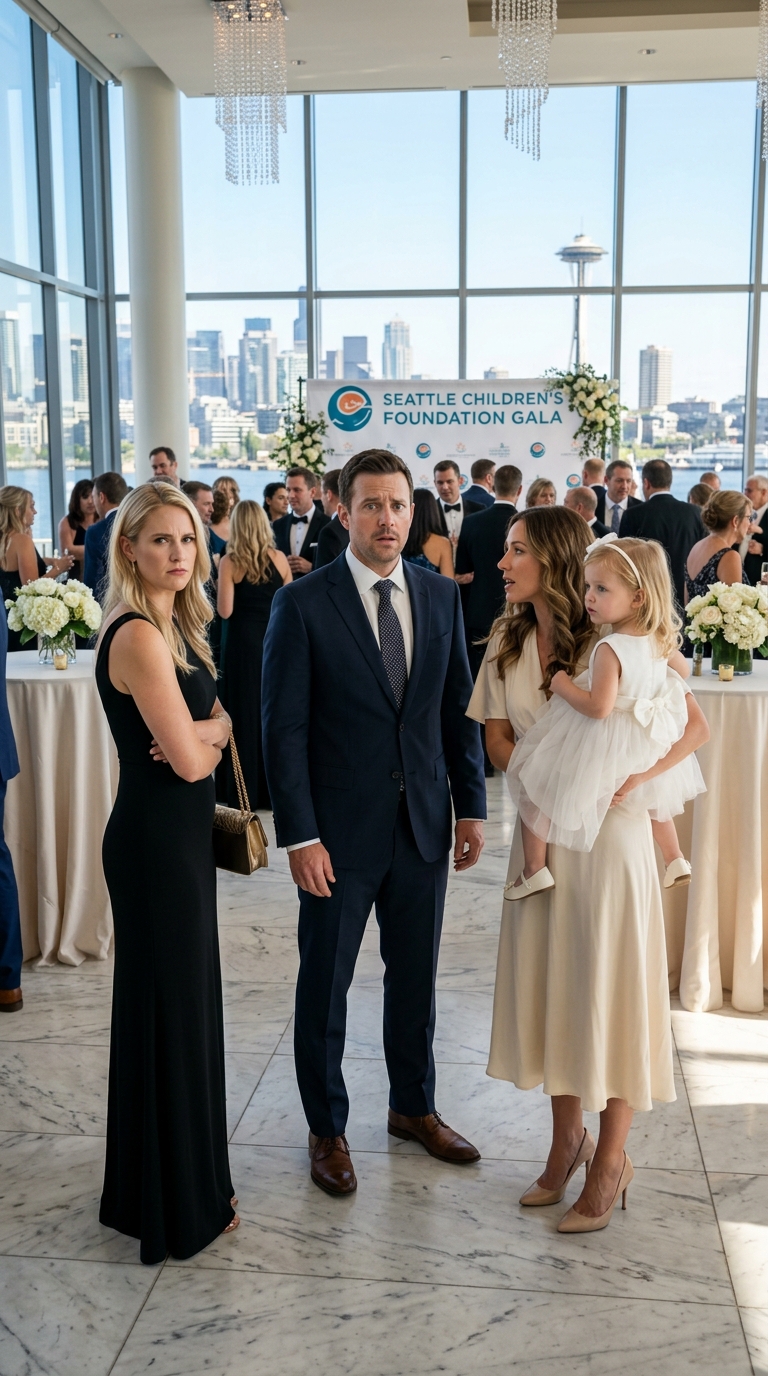
Some apologies arrive too late to repair what was broken, but they can still mark the beginning of doing less harm.
Betrayal does not erase every good memory, but it teaches the heart to stop confusing history with safety.
When someone claims they chose happiness, they should understand that happiness built on someone else’s pain eventually comes due.
Healing does not always look like reunion or forgiveness; sometimes it looks like a mother holding her daughter’s hand and refusing to let chaos in.
The truth has a way of waiting quietly until everyone is finally in the same room, and when it arrives, it doesn’t need to shout to change everything.
If life has ever made you carry joy and heartbreak at the same time, you are not broken for feeling both. You are human—and you are still worthy of a new beginning.
