

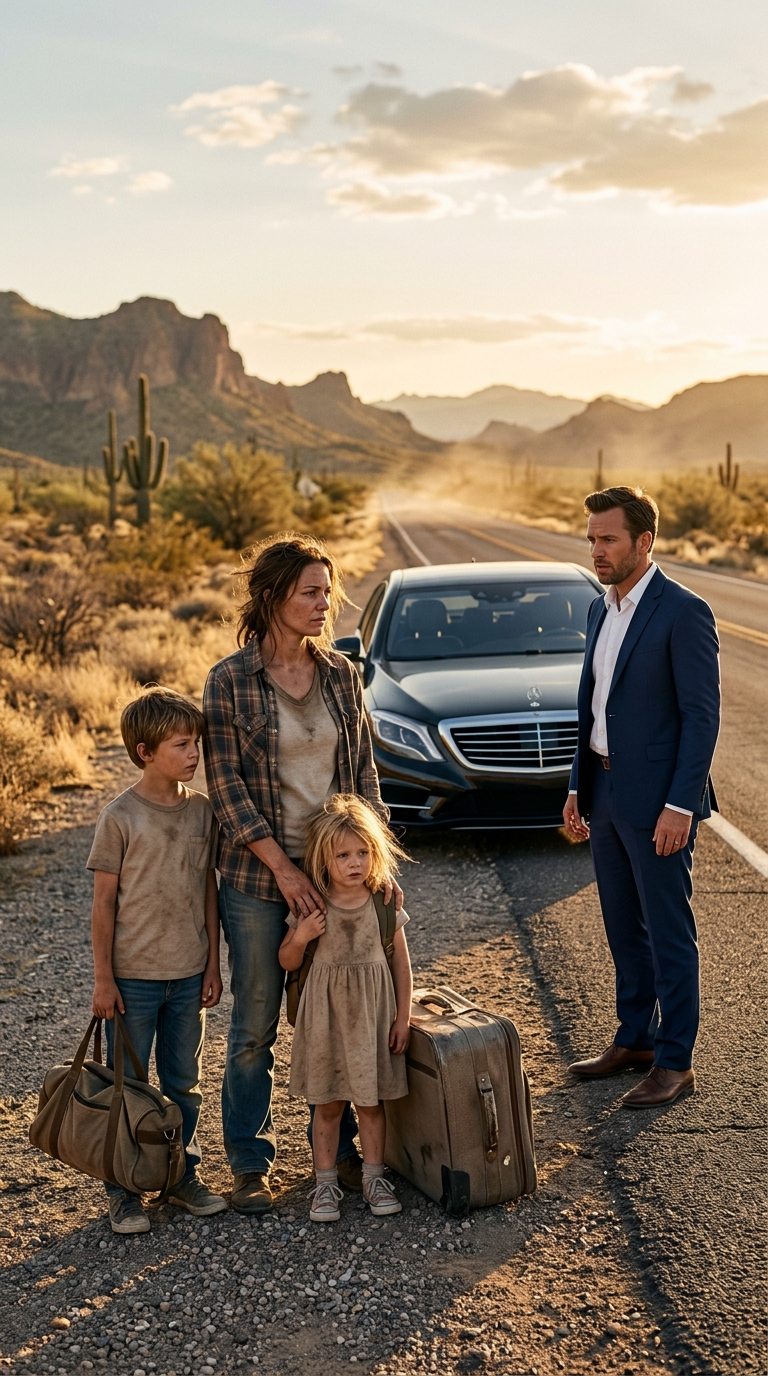
“Tell me the truth, Mommy… are we going to sleep on the side of the road tonight?”
The question struck deeper than the scorching Arizona sun ever could.
I stood on the shoulder of a deserted highway outside Tucson with my two children, two battered suitcases, a torn cloth bag, and exactly forty-seven cents to my name.
The evening sun was sinking, but the heat still clung to the asphalt like a punishment that refused to end.
Seven-year-old Noah stood beside me, dusty, exhausted, and trying far too hard to be brave.
“We can walk,” he said quietly. “I can carry one of the bags.”
My chest tightened.
“No, sweetheart,” I whispered. “You’ve done enough.”
Beside him, Lily sat on a suitcase, opening and closing an empty lunchbox as though food might magically appear inside.
“Is the bus coming soon?” she asked.
I forced a smile I didn’t feel.
“Soon.”
The lie tasted bitter.
We had been waiting for hours.
Cars streaked past in flashes of chrome and heat, never slowing, never stopping.
Then one finally did.
A sleek black sedan glided onto the shoulder and came to a halt beside us.
Every instinct in me flared.
I stepped protectively in front of my children.
The tinted window lowered.
A man looked out.
He appeared to be in his early forties, dressed in a perfectly tailored dark suit despite the oppressive heat.
His expression was calm, controlled, impossible to read.
“Do you need help?” he asked.
“We’re waiting for the bus,” I replied.
His gaze drifted down the empty highway.
“There hasn’t been a bus on this route in three days.”
My stomach dropped.
“What?”
“The company shut down service.”
The words shattered the last fragile piece of hope I’d been holding onto.
No bus.
No money.
No shelter.
No plan.
The man stepped from the car.
“My name is Nathan Brooks.”
“Emily Parker. These are my children, Noah and Lily.”
His expression softened when he looked at them.
“How long have you been out here?”
“Since morning.”
His jaw tightened.
“Where are you headed?”
“Anywhere there’s work.”
“What kind?”
“Cleaning. Cooking. Childcare. Anything honest.”
Then Noah narrowed his eyes.
“Are you a bad man?”
Nathan blinked, almost smiling.
“I’m trying not to be.”
For the first time all day, hope stirred.
“There is work,” he said.
My pulse quickened.
“What kind of work?”
Nathan held my gaze.
“My mother is dying. My family wants control of everything I built. Before the next board meeting, I need a wife.”
I stared at him.
“A legal marriage,” he continued. “A home. Security. Food. School for your children. Medical care. In return, you help me protect my company.”
The world seemed to tilt beneath my feet.
I looked at Lily’s pale face.
At Noah’s worn shoes.
Then back at the billionaire standing before me with an offer so impossible it felt unreal.
Nathan opened the car door.
And with my children watching, I had one second to decide whether to keep waiting for a future that no longer existed or step into a stranger’s car and become his wife.
I stepped into Nathan Brooks’s car because I had run out of ways to keep my children safe.
That was the truth.
Not courage.
Not romance.
Not some wild belief in destiny.
Just hunger. Heat. Desperation. And the sound of my daughter’s empty lunchbox clicking open and shut like a tiny clock counting down the end of us.
The moment the black sedan door closed behind Lily, the world outside changed.
The roaring highway became a muffled blur. The brutal Arizona sun became a copper smear across tinted glass. The cracked shoulder of the road, where we had stood like unwanted luggage, slipped behind us.
Noah sat stiffly beside me, one hand clutching his backpack, the other wrapped around Lily’s wrist.
Lily, too tired to be afraid, leaned her head against my arm.
Nathan Brooks sat in the driver’s seat, silent.
He did not turn on music. He did not speak. He simply guided the car back onto the road with the controlled calm of a man who had never had to choose between pride and survival.
I stared at the back of his head.
Dark hair. Strong neck. Expensive suit. A life so far from mine that we might as well have belonged to different planets.
Finally, I found my voice.
“Where are you taking us?”
“My home,” he said.
His answer was simple.
Too simple.
I swallowed. “And what exactly happens when we get there?”
His eyes flicked to mine in the rearview mirror.
“You eat. You shower. Your children sleep. Tomorrow, we discuss terms.”
“Terms,” I repeated.
Noah leaned forward. “Like rules?”
Nathan glanced at him.
“Yes. Rules.”
Noah’s face hardened in a way that broke my heart. Seven years old, and already he had learned that every gift came with teeth.
“What kind of rules?” he asked.
Nathan did not smile.
“No lying to the press. No wandering into private areas of the house. No speaking to my relatives alone until I know which ones can be trusted.”
I frowned. “Which ones can be trusted?”
“Possibly none.”
The car went quiet again.
Outside, the desert rolled past in waves of rust and gold. The sky darkened slowly, purple bleeding into orange, then into ash. My stomach cramped with hunger, but fear kept it tight.
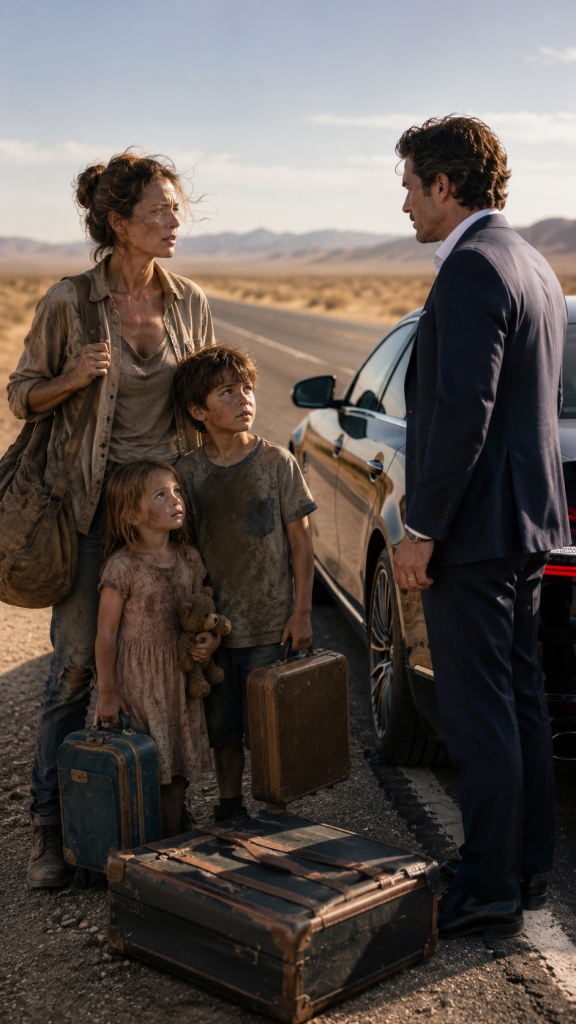
Lily’s small voice rose beside me.
“Do you have cereal?”
Nathan blinked, as though no one had ever asked him such a thing.
“Yes,” he said after a moment. “I believe so.”
“What kind?”
“I don’t know.”
She sighed. “Grown-ups never know the important things.”
A sound escaped Nathan.
Not quite laughter.
But close.
I looked at him sharply.
For half a second, the ice around him cracked. Then his expression closed again.
An hour later, the city lights of Tucson thinned behind us, and the road curved toward the foothills. Massive iron gates appeared between two stone pillars. Cameras turned silently as the sedan approached.
The gates opened.
Lily sat up.
Noah’s mouth fell open despite himself.
The driveway wound through an estate that looked less like a house and more like a kingdom hidden in the desert. Palm trees lined pale stone paths. Water shimmered in a fountain shaped like a silver crescent. The house rose ahead, all glass, white walls, and sharp angles, glowing under soft golden lights.
It was beautiful.
So beautiful it felt cruel.
I had spent the morning wondering whether my children would sleep under a highway overpass. By nightfall, we were standing before a mansion with more windows than I had hopes left.
Nathan parked in front of wide steps.
Before I could open my door, a woman in a gray dress hurried outside. She was short, round-faced, and perhaps in her sixties, with silver hair pinned neatly behind her ears.
Her eyes went first to the children.
Then to me.
Then to Nathan.
“Oh,” she said softly.
Nathan stepped out. “Maria, this is Emily Parker. Her children, Noah and Lily. They’ll be staying here.”
Maria’s expression changed only slightly, but I saw it.
Surprise.
Concern.
Questions.
Then warmth.
“Of course,” she said. “Come inside, babies. You look half-baked by that sun.”
Lily slid from the car with instant trust.
Noah did not.
He stayed close to me as we climbed the steps. Nathan walked ahead, but not too far. He kept enough distance to seem formal, yet near enough that if I stumbled, he would know.
Inside, the air smelled of lemon polish, cold marble, and money.
Everything gleamed. The floors. The chandelier. The dark wood staircase curling up like something from an old movie. Our dusty shoes looked obscene against the polished stone.
Maria noticed.
She said nothing.
That kindness nearly broke me.
She led us to a kitchen large enough to hold the entire apartment we had lost two weeks earlier.
Within minutes, plates appeared.
Chicken soup. Bread. Fruit. Milk.
Lily reached for the bread with both hands.
I caught her wrist automatically. “Slowly, sweetheart.”
Nathan watched from the doorway.
Noah stared back at him.
“Aren’t you eating?” Noah asked.
“I ate earlier.”
“No, you didn’t.”
Nathan’s brow lifted.
Noah pointed at him. “You look like my mom when she says she already ate.”
My face burned.
Nathan said nothing.
Then he crossed the kitchen, sat down at the table, and took a piece of bread.
“Better?”
Noah nodded once, still suspicious.
We ate.
And with every spoonful of soup, my body remembered it was human.
Lily finished first. Her eyelids drooped halfway through her second glass of milk. Maria carried her upstairs while Noah followed, refusing to let his sister out of his sight.
I stood to go after them, but Nathan spoke.
“Emily.”
His voice stopped me.
I turned.
He stood beside the kitchen island, hands resting lightly on the marble. Under the bright lights, I noticed the faint shadows beneath his eyes.
He looked exhausted.
Not physically.
Spiritually.
“Your children will be safe here tonight,” he said.
“People keep saying that right before they prove they can’t promise it.”
His jaw tightened.
“Fair.”
The word surprised me.
So did the silence that followed.
I folded my arms. “Tell me what this really is.”
“I already did.”
“No. You told me the surface.”
Nathan looked toward the dark window over the sink. For a moment, his reflection stared back at us—two strangers framed in glass, connected by a bargain neither of us fully understood.
“My mother built Brooks International with my father,” he said. “When he died, she kept the family from tearing it apart. She gave me control when I was thirty. My relatives have resented it ever since.”
“And now she’s dying.”
“Yes.”
“I’m sorry.”
His face did not move.
But something in his eyes did.
“She changed her will six months ago,” he continued. “If I am unmarried when she dies, my uncle receives voting control of her shares until the board names a permanent successor.”
“Why would she do that?”
“She didn’t.”
I went still.
Nathan looked at me.
“Her signature is on the document. Her mind was not.”
I felt cold despite the air-conditioning.
“You think someone forced her?”
“I think someone drugged her, isolated her, and convinced the attorney she was lucid.”
“Then go to the police.”
“I have. Quietly. Nothing sticks. My uncle has doctors, lawyers, board members, and half the local charity circle eating out of his hand.”
“And marrying me stops him?”
“For now. My mother’s original trust protects direct family spouses from hostile transfer clauses. If I marry before her death, my position stabilizes long enough to contest the forged amendment.”
I laughed once.
A brittle, humorless sound.
“So you need a wife like someone needs a lock on a door.”
“Yes.”
At least he did not lie.
“And why me?” I asked. “You’re rich. You could find anyone.”
“No,” he said. “I could find many women willing to marry my money. I need someone my family won’t expect.”
“That makes no sense.”
“It makes perfect sense. They track everyone in my circle. They know every woman I’ve dated. Every employee. Every consultant. Every person who could be pressured, bribed, or threatened.”
“And I’m what? Too poor to threaten?”
His eyes sharpened. “Too invisible to have been planted.”
The words struck deep.
Invisible.
I wanted to resent him for saying it.
But he was right.
Men like Nathan Brooks did not see women like me unless their car broke down, their office needed cleaning, or their coffee arrived late.
“What do I get?” I asked quietly.
He did not hesitate.
“A legal contract. One year minimum. Separate bedrooms. Full support for you and your children. Education trust for Noah and Lily. Medical coverage. A salary under a consulting agreement. At the end, a settlement large enough to start over anywhere.”
“And what do you get?”
“My company.”
The answer was too fast.
Too rehearsed.
I stepped closer. “No. What do you get besides that?”
For the first time, Nathan looked away.
Then he said, “Time.”
The word hung in the kitchen.
Not money.
Not power.
Time.
Before I could ask what he meant, a sharp voice sliced through the room.
“Well. Nathan. You certainly do bring home interesting strays.”
I turned.
A woman stood beneath the archway.
She was stunning in the way a knife is stunning when light catches the blade. Tall, elegant, dressed in cream silk, with blond hair swept into a perfect knot. Diamonds flashed at her ears.
Her smile did not reach her eyes.
Nathan’s expression hardened.
“Victoria.”
She looked me over slowly.
Dusty jeans. Faded shirt. Hair tangled from the wind. One suitcase in the hall behind me with a broken zipper.
Her smile widened.
“This must be charity.”
I lifted my chin.
“No. This is business.”
Something flickered across her face.
Interest.
Then amusement.
“How adorable.”
Nathan’s voice turned cold. “Leave.”
“I live here.”
“For now.”
The sweetness vanished from her expression.
“You can’t throw me out of Mother’s house.”
“This is my house.”
“Everything you own exists because our family allowed it.”
Nathan stepped forward. “You mean because Mother allowed it.”
Victoria’s eyes flashed.
Then she looked back at me.
“Did he tell you he destroys everything he touches?”
I said nothing.
“Did he tell you his fiancée left him because she discovered what he really is?”
Nathan’s jaw flexed.
A pulse beat in his temple.
Victoria noticed. She leaned into the wound with visible pleasure.
“No? How careless of him.”
My stomach tightened.
Nathan turned to me. “Go upstairs. Maria will show you the rooms.”
I did not move.
Victoria laughed softly.
“Oh, she has spirit. That won’t last.”
The silence that followed was poisonous.
Then Noah appeared at the top of the stairs in pajamas too big for him, hair damp from a shower.
“Mom?”
I moved toward him instantly.
Victoria’s gaze lifted to my son.
Her expression changed.
Not softened.
Sharpened.
“Well,” she murmured. “He has your eyes.”
Nathan turned.
“What did you say?”
Victoria’s smile returned.
“Nothing.”
But I had heard it.
He has your eyes.
Not mine.
Not “pretty eyes.”
Your eyes.
Nathan’s eyes?
My pulse stumbled.
Noah glanced between us, confused.
“Mom?”
“I’m coming, sweetheart.”
I climbed the stairs quickly, but Victoria’s words followed me like a hand around my throat.
That night, Maria showed us to adjoining guest rooms larger than any place I had ever rented. Lily fell asleep before I finished tucking the blanket beneath her chin. Noah stayed awake.
He sat cross-legged on the bed, wearing borrowed pajamas, staring at the door.
“Are we really staying?” he asked.
“For tonight.”
“And tomorrow?”
“I don’t know yet.”
He lowered his voice. “That lady is mean.”
“Yes.”
“Is Mr. Nathan mean?”
I sat beside him.
“I don’t know.”
Noah picked at a loose thread on the blanket.
“He looks sad.”
The observation startled me.
Children notice what adults hide from themselves.
“He does,” I admitted.
“Are you going to marry him?”
My throat tightened.
“I might have to.”
Noah looked up fast. “Because of us?”
I took his face in my hands.
“No. Because of me. Because I need to make choices that keep this family alive.”
His eyes filled, but he did not cry.
“I can get a job.”
“You are seven.”
“I’m almost eight.”
I pulled him against me.
He held himself stiff for one second, then collapsed into my arms.
That was when I nearly broke—not on the highway, not in the stranger’s car, not under Victoria’s cruelty, but in a mansion bedroom while my son tried to become a man because life had not allowed him to be a child.
After he fell asleep, I stood by the window overlooking the courtyard.
Down below, Nathan walked alone beside the fountain.
He had removed his suit jacket. His shirt sleeves were rolled to his forearms. He stood in the blue-white moonlight like a man waiting for a sentence.
A door opened softly behind me.
I turned.
Maria stood there holding folded clothes.
“I thought you might need these for tomorrow.”
“Thank you.”
She placed them on a chair.
Then she hesitated.
“Mr. Brooks is not careless,” she said.
I studied her. “Did he ask you to say that?”
“No. He would hate that I did.”
“Then why?”
Maria looked toward the sleeping children.
“Because this house eats people who do not know where the teeth are.”
I went still.
“What does that mean?”
“It means Mrs. Brooks—the elder Mrs. Brooks—is upstairs in the east wing. Very ill. It means Miss Victoria smiles before she strikes. It means Mr. Conrad, Nathan’s uncle, arrives tomorrow. And it means you should lock your door tonight.”
My blood chilled.
“Why?”
Maria’s expression softened with pity.
“Because they will test you.”
She left before I could ask more.
I locked the door.
Then I pushed a chair against it.
I slept badly.
Near dawn, I woke to a sound.
A soft click.
My eyes opened.
The room was gray with early light.
The door handle turned.
Once.
Twice.
The chair scraped faintly against the wood.
I held my breath.
On the other side, someone stood perfectly still.
Then a whisper came.
“Emily.”
Not Nathan.
A man’s voice.
Low.
Almost amused.
“Welcome to the family.”
Then footsteps retreated down the hall.
I did not sleep again.
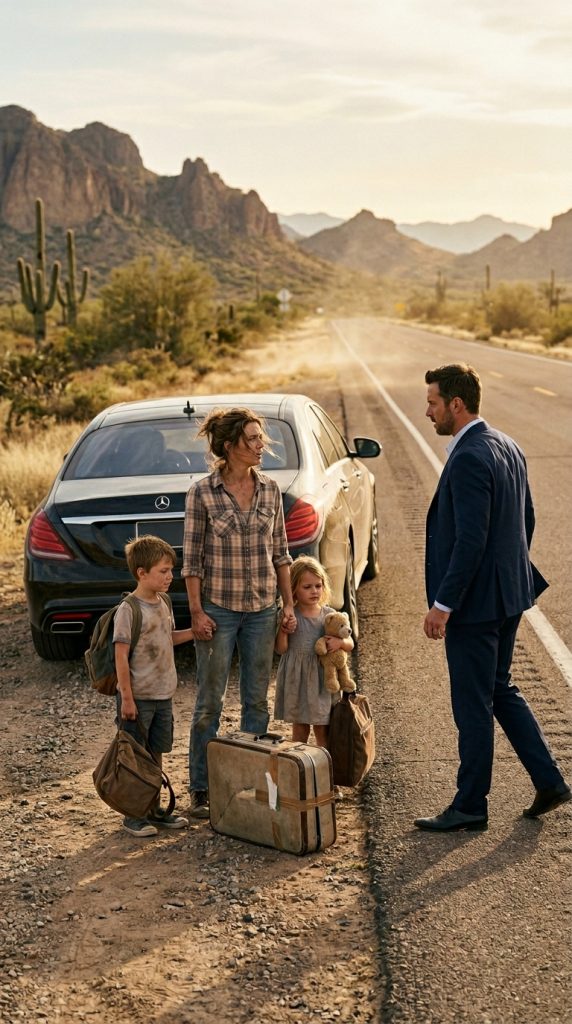
By breakfast, Nathan knew something had happened. He saw it on my face before I spoke.
“Who came to my door last night?” I asked quietly while the children ate pancakes at the far end of the table.
His expression changed.
“How do you know it wasn’t me?”
“Because I would have recognized your voice.”
The words left my mouth before I realized what they meant.
Nathan stared at me.
Then he turned to Maria.
“Where is Conrad?”
Maria’s face went pale.
“He arrived at six.”
Nathan’s chair scraped backward.
“Stay with the children,” he told me.
“Nathan—”
But he was already gone.
Noah watched him leave.
“Is the bad man here?”
I touched his shoulder.
“I don’t know.”
Lily, mouth sticky with syrup, whispered, “There are too many bad people in this house.”
She was not wrong.
At ten that morning, a lawyer arrived.
At eleven, Nathan brought me into a sunlit office with glass walls overlooking the desert. Papers waited on the desk.
Marriage agreement.
Confidentiality agreement.
Financial provisions.
Guardianship protections.
Education funds.
Medical coverage.
Everything written in clean legal language that made madness look ordinary.
I read every page.
Nathan sat across from me, silent.
Finally, I looked up.
“No physical expectations?”
His face remained steady.
“None.”
“Separate rooms?”
“Yes.”
“My children are protected even if something happens to you?”
His eyes sharpened.
“Yes.”
“And if your family accuses me of being a gold digger?”
“They will.”
“That wasn’t the question.”
“I will protect you publicly.”
“Will you protect me privately?”
A flicker crossed his face.
“Yes.”
I signed.
My hand shook only once.
Nathan signed after me.
When it was done, he closed the folder and said, “The ceremony is at four.”
I blinked.
“Today?”
“The board meets tomorrow.”
Of course.
A wedding born not of love, but urgency.
Maria found me a dress.
Not white.
Champagne silk, simple, soft, with long sleeves and a neckline that made me look like someone who belonged in rooms where crystal glasses chimed and secrets wore perfume.
Lily gasped when she saw me.
“Mommy, you look like a princess.”
Noah frowned. “Princesses get trapped.”
Lily considered this.
“Then she looks like a queen.”
That made Noah nod.
“A queen can fight.”
At four o’clock, under the arch of a private garden, I married Nathan Brooks.
There were no flowers except the desert blooms already clinging to life around us.
No music.
No guests except Maria, the lawyer, my children, and three people who looked like they had come to watch an execution.
Victoria stood in cream silk again, smiling.
Beside her stood a thin older man with silver hair and pale eyes.
Conrad Brooks.
He watched me with the same calm amusement I had heard outside my door.
Next to him was a young man with nervous hands and a beautiful face—Elliot Brooks, Nathan’s cousin, though no one introduced him until later.
Nathan stood beside me in a dark suit.
The officiant spoke.
I answered.
Nathan answered.
Then came the kiss.
For one suspended second, I panicked.
Nathan turned toward me slowly.
His eyes asked permission in front of everyone.
That almost undid me.
I nodded once.
He leaned down and kissed my cheek.
Not my mouth.
My cheek.
A small, respectful touch.
But to the watchers, it said enough.
Lily clapped.
Noah did not.
Conrad’s smile thinned.
Victoria’s eyes glittered.
And somewhere above us, behind a second-floor window, a curtain moved.
I saw it.
So did Nathan.
His face went white.
“Mother,” he whispered.
After the ceremony, he disappeared upstairs.
I followed before anyone could stop me.
The east wing was colder than the rest of the house. The hallway smelled of medicine and roses dying in a vase. At the far end, two nurses sat outside a closed door.
Nathan ignored them.
One rose. “Mr. Brooks, your mother is resting.”
“She was at the window.”
“That’s impossible.”
He opened the door.
The room beyond was dim, curtains half drawn. Machines hummed softly. An elderly woman lay in a bed near the window, thin as paper, white hair spread across the pillow.
Margaret Brooks.
Her eyes were closed.
Nathan approached carefully.
“Mother?”
No response.
He touched her hand.
I stood in the doorway, feeling like an intruder in something sacred.
Then Margaret’s fingers moved.
Nathan froze.
Her eyelids fluttered.
For a moment, I saw her eyes.
Clear.
Fierce.
Terrified.
She looked past Nathan.
At me.
Her lips parted.
No sound came.
Nathan leaned closer. “Mother? What is it?”
Her fingers twitched against the blanket.
I stepped forward without thinking.
Margaret’s gaze locked onto mine.
Then, with immense effort, she whispered one word.
“Run.”
The machines continued their soft mechanical rhythm.
Nathan went still.
“What?”
Margaret’s eyes rolled shut.
The nurse rushed in.
“She needs rest.”
Nathan didn’t move.
“She spoke.”
The nurse’s face tightened. “Sometimes patients vocalize without meaning.”
“She said run.”
“Mr. Brooks—”
He turned on her with a coldness that made the room seem smaller.
“Leave us.”
The nurse hesitated.
“Now.”
She left.
Nathan looked at me.
Neither of us spoke.
My new mother-in-law had awakened just long enough to tell me to run from the house I had married into.
That night, the mansion changed.
Or maybe I finally saw it clearly.
The hallways seemed longer. The mirrors darker. Every servant looked away too quickly. Every closed door felt less like privacy and more like concealment.
At dinner, Conrad raised a glass.
“To the bride,” he said. “May she enjoy everything she has earned.”
Nathan’s hand tightened around his fork.
I smiled.
“To family,” I replied. “May they become what they pretend to be.”
Maria coughed into her napkin.
Elliot looked down, hiding a smile.
Victoria did not bother hiding her hatred.
After dinner, Nathan led me to the library.
“You shouldn’t provoke Conrad,” he said.
“He came to my door last night.”
“I know.”
“And you didn’t tell me he was dangerous.”
“I didn’t know he would move that quickly.”
“That isn’t comforting.”
“No,” he said. “It isn’t.”
I turned toward the shelves. Hundreds of leather-bound books rose to the ceiling.
“Your mother told me to run.”
“She may have meant from Conrad.”
“Or from you.”
Silence.
When I looked back, Nathan’s face was unreadable.
“My sister said your fiancée left because she discovered what you really are.”
“Victoria likes cruelty.”
“That’s not an answer.”
“No.”
He walked to the window.
Outside, the desert was black beneath a starless sky.
“Her name was Caroline,” he said. “We were engaged five years ago. She died before the wedding.”
The air left my lungs.
“I’m sorry.”
“Don’t be. You don’t know the story.”
“Then tell me.”
His reflection stared back from the glass.
“She found documents proving someone inside Brooks International was laundering money through medical subsidiaries. She called me the night she died. Said she had proof. Said she knew who it was.”
“What happened?”
“Her car went off a mountain road.”
I pressed a hand to my stomach.
“And they blamed you?”
“They didn’t have to. The rumors did enough.”
“Did you love her?”
He turned.
The question had been too intimate.
Too sudden.
Yet he answered.
“Yes.”
Something in his voice made my chest ache.
Not jealousy.
Recognition.
The sound of someone who had lost a future and kept walking because stopping would kill him.
Before I could speak, a crash echoed upstairs.
We both ran.
Lily’s scream tore through the hallway.
I reached the children’s room first.
She stood on the bed, sobbing, while Noah held a lamp like a weapon.
The window was open.
Curtains whipped inward.
On the floor lay Lily’s lunchbox.
The empty one from the highway.
But it was no longer empty.
Inside sat a dead black scorpion.
Beside it was a folded note.
Nathan picked it up.
His face darkened as he read.
I took it from him.
There were only six words.
Poor girls should not marry kings.
My vision blurred red.
I gathered Lily into my arms, feeling her whole body shake.
Noah looked at Nathan.
“You promised.”
Nathan’s face changed.
Not anger.
Something worse.
Shame.
“I know.”
“You said we’d be safe.”
“I know.”
Noah’s eyes filled with tears he refused to shed.
“Then make it true.”
Nathan knelt in front of him.
He did not speak like a billionaire then.
Not like a man used to command.
He spoke like someone accepting a debt.
“I will.”
Security doubled before midnight.
Cameras were checked.
Staff questioned.
Doors locked.
Nathan moved the children into rooms connected directly to mine, then stationed two guards in the hall.
But I did not sleep.
At two in the morning, I left my room.
Nathan sat alone in the library, a glass of untouched whiskey beside him.
“You should be asleep,” he said.
“So should you.”
He looked tired beyond words.
“I brought you into this.”
“I got into your car.”
“I made the offer.”
“I accepted.”
“You accepted because you were desperate.”
I walked closer.
“Yes.”
He flinched faintly.
“But desperation doesn’t make me stupid,” I said. “I know this is dangerous. I knew it when I signed.”
“No, Emily. You didn’t.”
The way he said my name made something in me still.
He opened a drawer and removed a folder.
Inside were photographs.
My breath caught.
Me at a diner months ago.
Noah walking home from school.
Lily at a playground.
My old apartment building.
I stumbled back.
“What is this?”
Nathan stood quickly. “I can explain.”
“You knew me?”
“No.”
I grabbed the photo of Lily. “You had pictures of my children.”
“I didn’t take them.”
“Then who did?”
He hesitated.
That was enough.
I slapped him.
The sound cracked through the library.
Nathan did not raise a hand to his face. He accepted it like punishment he had earned.
“Tell me,” I whispered.
He picked up one photograph.
“I found these in my mother’s private safe two weeks ago.”
My anger faltered.
“What?”
“There was a file with your name on it. Your children’s names. Your last address. Employment history. Medical records. Everything.”
My knees weakened.
“Why would your mother have that?”
“I don’t know.”
“You’re lying.”
“I swear I don’t know.”
“Then why were you on that highway?”
His silence roared.
My heart began beating so hard it hurt.
“Nathan.”
He looked at me.
“I was looking for you.”
The room tilted.
“Because of the file?”
“Yes.”
“You said I was invisible. You said your family wouldn’t expect me.”
“They wouldn’t.”
“But your mother did.”
He closed his eyes briefly.
“I think she wanted me to find you.”
I stepped away from him.
Every piece rearranged itself into something darker.
The car stopping.
The offer.
The marriage.
My children in this house.
Margaret telling me to run.
“Why?” I asked.
“I don’t know.”
But then the library door opened.
Conrad stood there in a burgundy robe, smiling.
“Oh, Nathan,” he said softly. “Still pretending ignorance? How noble.”
Nathan moved between us.
“Leave.”
Conrad ignored him.
His pale eyes fixed on me.
“Did he tell you the most interesting part, Emily?”
My skin prickled.
“Don’t,” Nathan warned.
Conrad smiled wider.
“The boy.”
My hands went cold.
Noah.
“What about my son?”
Conrad stepped into the room.
“Seven years old. Dark hair. Gray eyes. Born in Phoenix after his mother spent one unforgettable summer working as a temp in a Brooks charity office.”
Nathan turned slowly toward me.
I stared back, confused.
Then horrified.
“No,” I whispered.
Conrad tilted his head.
“You never told her, Nathan?”
Nathan looked as though he had been struck.
“I don’t know what you’re talking about.”
But Conrad laughed.
It was quiet.
Satisfied.
“Of course you don’t. That was always Margaret’s favorite kind of secret.”
My pulse thundered.
I remembered that summer.
A temporary job.
A charity office.
A staff party I barely attended.
A kind young executive who gave a speech, then left before dessert.
No.
No, it was impossible.
Noah’s father had been Daniel Reeves, a charming liar who disappeared before I realized I was pregnant. At least, that was the story I had been told by the woman who introduced us.
A woman named Caroline.
Nathan’s dead fiancée.
The room spun.
Nathan’s face had gone bloodless.
“Emily,” he said carefully, “look at me.”
I couldn’t.
Conrad reached into his robe pocket and withdrew an envelope.
He tossed it onto the table.
It slid across the polished wood and stopped against Nathan’s glass.
“DNA doesn’t care about romance,” Conrad said.
I stared at the envelope.
Nathan opened it with stiff fingers.
His eyes moved across the page.
Once.
Twice.
Then he looked at me.
Something devastating broke open in his expression.
I knew before he spoke.
Noah was Nathan Brooks’s son.
The world went silent.
Not quiet.
Silent.
The kind of silence that exists after an explosion, when the body has not yet realized it is bleeding.
“No,” I said.
Nathan’s voice was barely audible.
“I didn’t know.”
I backed away.
“No.”
“I swear to you, I didn’t know.”
Conrad sighed as if bored.
“Touching. Truly. But now you understand the problem. Emily was never random. Margaret found the child. She hid him. Then, when she realized what I had done to her will, she tried to bring him back into the line before I could take control.”
I grabbed the edge of a chair.
“What you had done?”
Conrad’s smile vanished.
There it was.
The confession.
Too casual.
Too proud.
Nathan stepped forward.
Conrad lifted a hand.
“Careful. The house cameras are temporarily down. Tragic, isn’t it? So many accidents happen in old homes.”
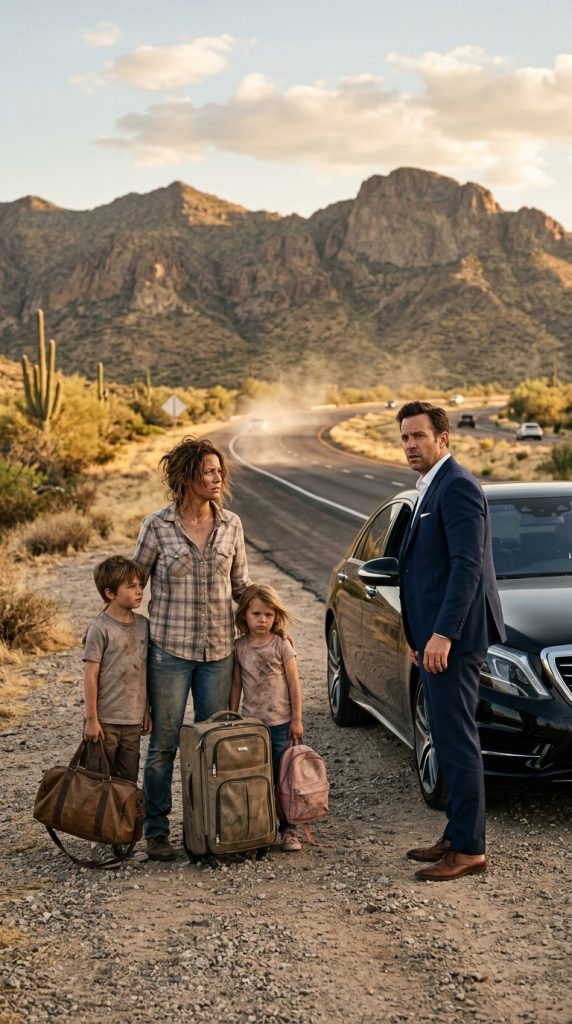
Nathan’s voice was deadly calm.
“You drugged my mother.”
“I preserved the company.”
“You forged her will.”
“I corrected her sentimentality.”
“You killed Caroline.”
The words landed like thunder.
Conrad smiled again.
“She was inconvenient.”
My stomach turned.
Nathan lunged.
But Conrad moved faster than he looked.
A gun appeared in his hand.
I froze.
Nathan stopped instantly.
Conrad pointed the weapon at him, then lazily toward me.
“Let’s not ruin the evening.”
My breath came thin and sharp.
“You won’t get away with this,” Nathan said.
“People always say that right before I do.”
Then footsteps sounded in the hallway.
Small.
Bare.
Noah appeared in the doorway.
“Mom?”
Everything inside me died.
Conrad turned.
His eyes lit with wicked recognition.
“Well,” he whispered. “There’s the little prince.”
Nathan moved.
Conrad raised the gun.
I screamed.
But before he could fire, another sound cracked through the library.
Not a gunshot.
A voice.
Weak.
Ragged.
Furious.
“Conrad.”
Everyone turned.
Margaret Brooks stood in the doorway, trembling in a white nightgown, one hand gripping Maria’s arm, the other clutching a small black device.
Her face was gray with illness.
Her eyes burned like fire.
Conrad’s smile collapsed.
“Margaret.”
She lifted the device.
A recorder.
“You always talked too much.”
Conrad stared.
Then his expression twisted.
Nathan took one step toward his mother.
“Mom.”
Margaret’s gaze moved to Noah.
Her eyes filled.
“My grandson,” she whispered.
Noah stood frozen, too frightened to understand.
Conrad’s hand tightened around the gun.
“No,” he said. “No, no, no.”
Then Victoria appeared behind Margaret.
For one wild second, I thought she had come to help.
She had not.
She pressed a silver letter opener against Margaret’s throat.
“Drop the recorder,” Victoria said.
Nathan stopped breathing.
Maria cried out.
Margaret did not move.
Victoria’s face was pale, her eyes shining with panic.
“I’m sorry,” she whispered. “I’m sorry, Nathan. He said she was going to cut me out. He said you would send me away.”
Nathan’s voice broke.
“Victoria, let her go.”
“You always got everything!” she screamed. “The company. Mother’s trust. Father’s respect. Even now—her secret grandson, her perfect little bloodline miracle!”
Lily began crying somewhere down the hall.
The sound sliced through me.
Noah turned toward it.
Conrad saw the distraction.
He grabbed Noah.
My son shouted.
Nathan surged forward.
Conrad pressed the gun to Noah’s temple.
The room froze.
My heart stopped.
There is no fear in the world like seeing a weapon held to your child’s head. Everything human in you burns away until only one instinct remains: take me instead.
“Let him go,” I said.
My voice sounded strange.
Calm.
Dead.
Conrad looked at me.
“Emily, dear, you have been useful beyond expectation. But this child complicates everything.”
Nathan’s face was carved from terror.
“Conrad. Take the company. Take all of it. Just let him go.”
Conrad laughed softly.
“You still think this is about the company?”
Margaret’s eyes widened.
“What did you do?”
Conrad smiled at her.
“What I should have done years ago.”
Then the house lights died.
Darkness swallowed the room.
Lily screamed.
Noah shouted.
Someone crashed into the table.
The gun fired.
Once.
The sound tore the world apart.
When the emergency lights flickered on, red and dim, Conrad was on the floor.
Blood spread beneath him.
Nathan stood over him, breathing hard, the gun in his hand.
Noah was in my arms.
Alive.
Shaking.
Alive.
Victoria had dropped the letter opener and fallen to her knees.
Margaret sagged against Maria.
For a moment, no one moved.
Then Conrad laughed.
A wet, broken laugh.
His eyes found Nathan.
“You still don’t understand.”
Nathan stared down at him.
Conrad’s hand twitched toward his robe pocket.
Nathan kicked the gun away.
But it wasn’t a gun Conrad reached for.
It was a phone.
The screen glowed.
A video call was active.
On it was a face I recognized from photographs Nathan had shown me.
Caroline.
Not dead.
Older. Pale. Wearing a hospital gown.
But alive.
My blood turned to ice.
Nathan saw her.
The gun slipped from his hand.
“Caroline?”
On the screen, Caroline’s eyes filled with tears.
“I’m sorry,” she whispered.
Then the call cut off.
Conrad smiled with blood on his teeth.
“She was never dead,” he rasped. “And neither was the first child.”
Nathan’s face emptied.
“What first child?”
Conrad’s smile widened.
Then his eyes rolled back.
The phone went black.
Sirens wailed in the distance.
Margaret collapsed.
Victoria screamed.
Nathan stood in the center of the shattered library, staring at the dead phone as if it had opened a door beneath his feet.
I held Noah so tightly he whimpered.
Outside, desert wind struck the windows.
And somewhere in the house, behind the wall of books, a lock clicked open.
Slowly.
Quietly.
The hidden door creaked wider, revealing a narrow passage lined with dim emergency lighting. Dust motes danced in the red glow. A small figure stepped forward— a boy, no older than six, with tousled dark hair and wide, frightened eyes the exact shade of stormy gray that matched Noah’s. He clutched a ragged stuffed bear, its ear nearly torn off from years of desperate holding.
“Daddy?” the boy repeated, his voice trembling but hopeful, scanning the room until his gaze locked on Nathan.
Nathan staggered as if the ground had split beneath him. The gun slipped from his fingers entirely, clattering forgotten onto the bloodstained floor. “Theo?”
The name fell from his lips like a prayer he’d long since stopped believing in. Caroline’s son. Their son. The child Conrad had stolen, hidden, and used as leverage in a game of inherited monsters.
I clutched Noah tighter, my heart fracturing for this new innocent caught in the same web. Lily’s cries echoed faintly from the hallway where Maria had pulled her to safety, but in that moment, the library felt like the eye of a storm—fragile, temporary, heavy with truths too long buried.
Conrad’s laugh gurgled into a death rattle on the floor, his eyes fluttering shut as blood pooled beneath him. Paramedics and police would be here soon; sirens grew louder outside. But justice, real justice, would take longer than flashing lights.
Victoria crumpled against the wall, sobbing incoherently, her perfect facade shattered like the crystal decanter that had smashed during the chaos. “I didn’t know about the boy… Conrad said it was just the company…”
Margaret, still propped against Maria, summoned a final thread of strength. Her voice was a whisper, but it carried the weight of a dying matriarch who had fought in shadows for years. “Conrad took him the night Caroline’s car ‘crashed.’ Faked her death. Kept Theo sedated, isolated… to control Nathan if the will failed.” She looked at me, her eyes softening with regret and something like gratitude. “I found the records too late. I tried to bring you and Noah here… to balance the scales before it was too late. Forgive an old woman her calculations.”
Tears burned my eyes. This family’s love had been twisted into strategy, protection into predation. Yet here, in the ruins, something human persisted. Nathan dropped to his knees beside Theo, reaching out slowly, as if afraid the boy might vanish like smoke. Theo hesitated, then stumbled forward into his father’s arms, burying his face in Nathan’s shoulder.
“I waited,” Theo mumbled. “The man said you’d come. Mommy Caroline said you’d come.”
Nathan’s shoulders shook with silent sobs—the first real emotion I’d seen crack his controlled exterior so completely. He held his lost son as if the world could end around them and it wouldn’t matter. Noah, still trembling in my arms, watched with wide eyes. Two brothers, bound by blood and betrayal, meeting in the ashes of their grandfather’s empire.
“I’m here now,” Nathan whispered to Theo, his voice rough. “I’m never leaving again. You’re safe. All of you.”
I stepped closer, lowering Noah to the floor but keeping a hand on his shoulder. The boys regarded each other warily—strangers who shared a father, a legacy of pain, and now, perhaps, a chance at healing. Noah, ever the protector, offered his small hand. “I’m Noah. I have a sister, Lily. We can share my toys… if you want.”
Theo peeked out, then took the hand. A tiny bridge in the darkness.
Hours blurred into a whirlwind of statements, medical checks, and flashing cameras kept at bay by Nathan’s remaining loyal staff. Conrad was pronounced dead at the scene—self-defense ruled swift and clear once the recorder’s contents spilled everything: forged wills, laundered funds, Caroline’s imprisonment in a private facility, Theo’s hidden upbringing under false identities. Victoria was taken into custody, her betrayal laid bare not just by words but by years of financial trails Margaret had secretly documented.
Caroline, we learned later, had been kept compliant through threats to Theo. She would recover, slowly, in a hospital far from this poisoned house. Nathan arranged it all with quiet fury, vowing to dismantle every corrupt thread of Brooks International.
In the quiet aftermath, as dawn painted the desert in soft golds and lavenders, we gathered in the garden where we had said our hollow vows. The children—Theo, Noah, and Lily—played near the fountain under Maria’s watchful eye, their laughter a fragile but growing melody. Scars would remain, but so would resilience.
Nathan stood beside me, his hand brushing mine—not possessive, but seeking. “I didn’t plan any of this,” he said softly. “Not Noah. Not you. But I’m grateful. You walked into hell for your children… and somehow pulled us all toward light.”
I looked at him—truly looked. The man who had offered a bargain on a scorching highway wasn’t a savior or a villain. He was human, flawed, fighting his own buried ghosts. “We protect what’s ours now,” I replied. “No more secrets. No more running. These children deserve a family that chooses them every day—not out of desperation or power, but love.”
He nodded, pulling me gently into his side. For the first time, the mansion felt less like a cage and more like a beginning. We would sell the estate, rebuild the company with transparency, fund shelters for families like the one we had been. Margaret’s final lucid hours had ensured the trusts protected the children first. Humanity, not inheritance, would define the next chapter.
As Lily toddled over, dragging Theo and Noah by the hands, she held up a desert wildflower. “For Mommy and Daddy,” she said proudly.
Nathan smiled—a real one, weary but warm—and accepted it. “Thank you, sweetheart.”
In that small, ordinary gesture, the weight of the night lifted. We had survived not by wealth or schemes, but by the stubborn, fierce love of parents who refused to let their children be buried by the past. The road ahead would be long—court dates, therapy, rebuilding trust—but we would walk it together.
No more empty lunchboxes. No more hidden doors. Only open hands, honest truths, and the quiet promise that even in the harshest deserts, life could bloom again.
