

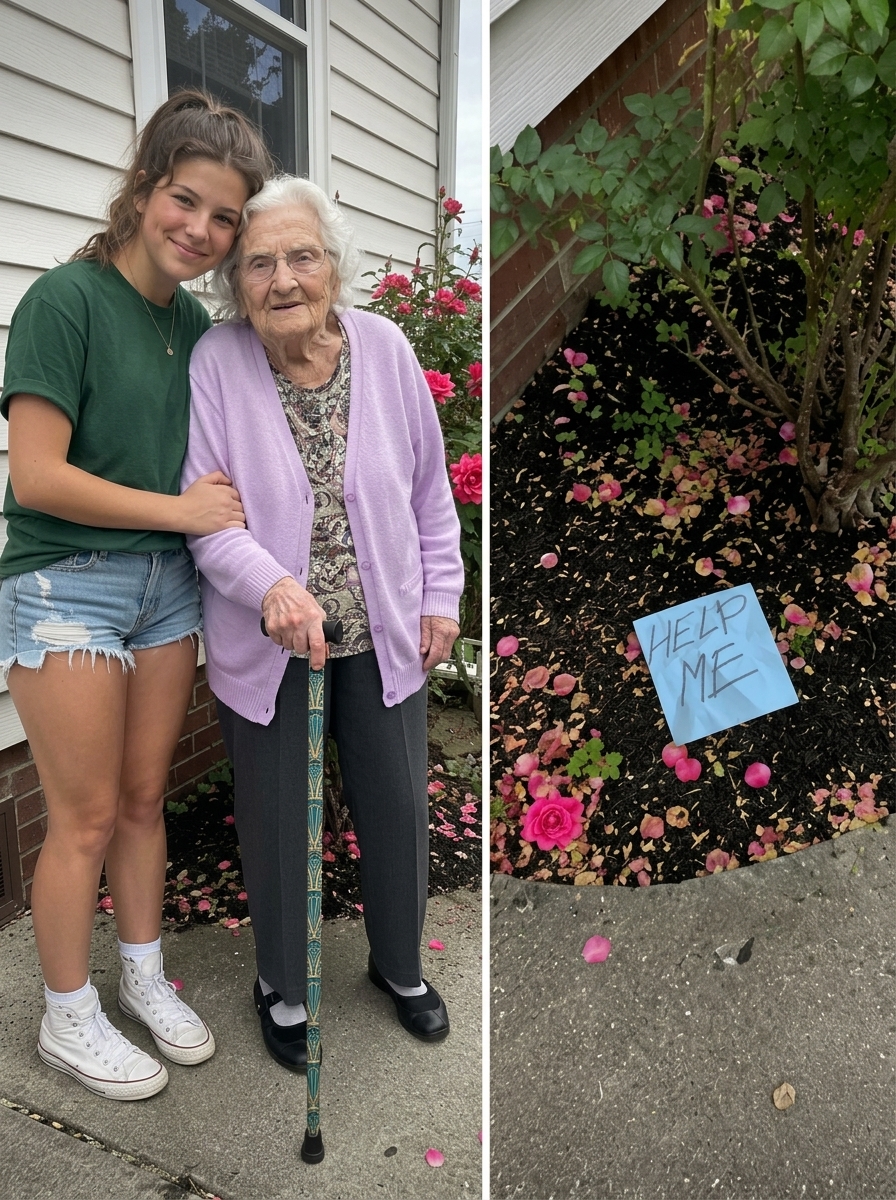
I noticed the girl long before she ever asked for my help, and something about what I saw stayed with me. When things finally went too far, ignoring it was no longer possible.
A family moved into the house across the street from mine a few months ago. I watched them from my window more often than I’d like to admit.
There was the father, Jim. The mother, Carla. A teenage daughter named Eva. And a baby boy who seemed to cry constantly.
From the outside, they appeared to have the perfect family.
But it didn’t take long for me to notice the fractures beneath the surface.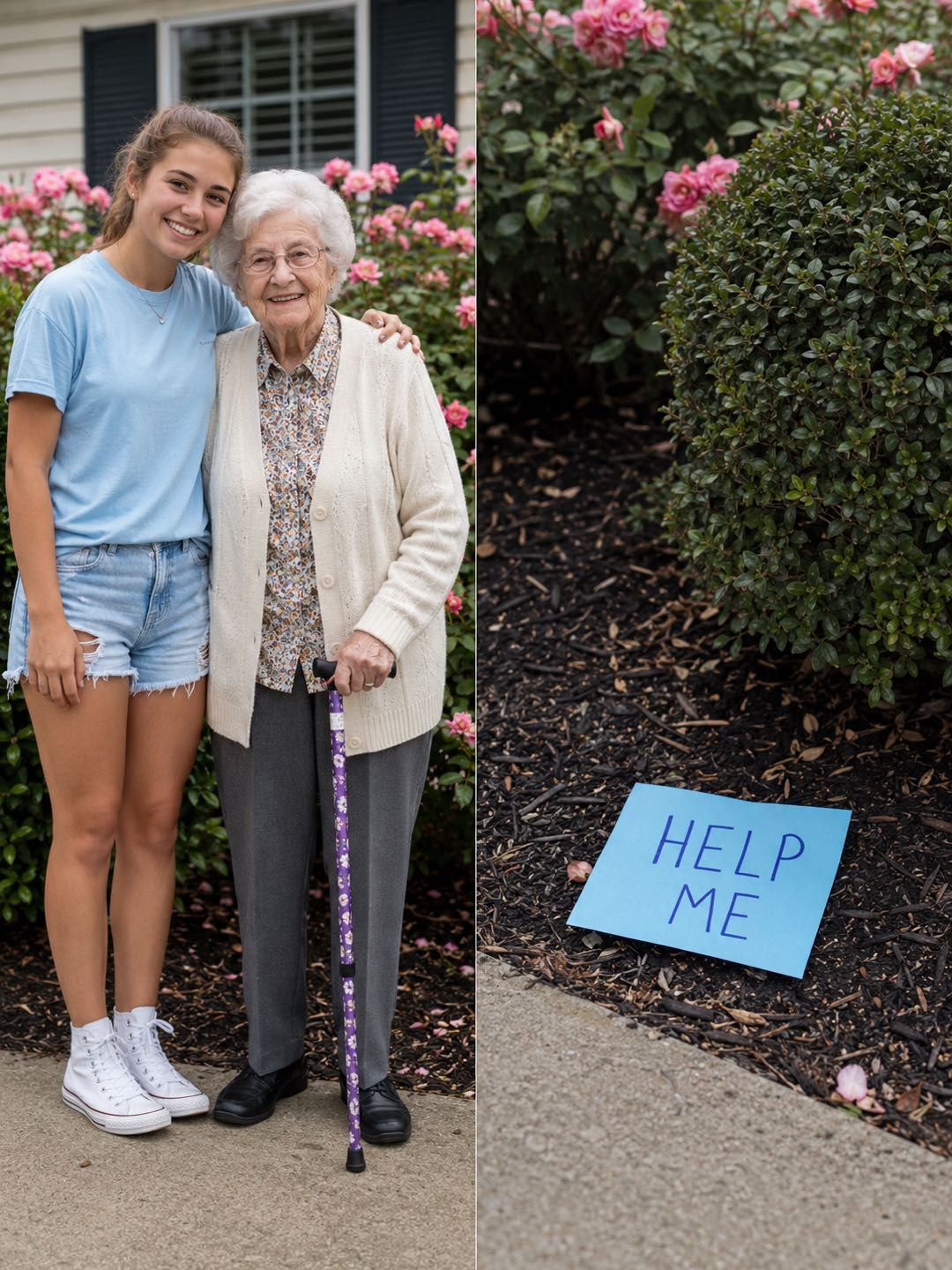
More than once, I saw Jim speaking to Eva in the driveway. His voice wasn’t loud, but it carried.
Sharp.
Cold.
The kind of voice that left no room for a reply.
It bothered me.
Jim always seemed far too eager to embarrass her over the smallest things.
One afternoon, Eva’s father escorted her across the street and up to my front porch.
“Would you mind letting Eva give you a hand with your garden?” he asked with a chuckle. “She’s lazy. A little work might do her good.”
I looked at the girl standing beside him.
Her shoulders were straight.
Her eyes stayed down.
Her hands were clasped obediently in front of her.
I’m eighty years old now, and ever since my husband passed away, my home has felt far too quiet.
So I agreed.
And after that very first afternoon, I knew something wasn’t right.
Eva wasn’t lazy.
Not even remotely.
She worked carefully, paid attention to details, and asked thoughtful questions. She treated every flower and every task in my garden as though it truly mattered.
After that, Eva came by every Tuesday.
We trimmed hedges, pulled weeds, and cared for the roses together.
When we finished, I’d hand her a few dollars and insist she come inside.
I’d make tea, offer her something sweet, and give her a peaceful place where nobody was watching her every move.
“You’re such a good girl. How do you manage to do it all? Get straight A’s, keep up with dance, and still help your parents?” I asked her.
She offered a small smile that never quite reached her eyes.
But she didn’t answer.
Even so, those visits became the brightest part of my week.
Then one day, something changed.
We had just finished watering the roses when Eva set down the hose and suddenly blurted out, almost too fast,
“I wish I could live with you instead of at home. I feel so calm with you.”
I turned toward her.
“Is it really that bad at home?” I asked, genuinely surprised.
Once again, she said nothing.
But tears filled her eyes.
That was all the answer I needed.
A few minutes later, she left.
As I always did, I walked her to the door, watched her cross the yard, and waited until she went back inside her house.
Then I turned toward my garden.
That’s when I noticed it.
A small folded note tucked beneath one of my rose bushes.
It hadn’t been there earlier.
I would have seen it.
My hands trembled as I bent down and picked it up.
“HELP ME! EVA.”
For a moment, I couldn’t breathe.
I looked back toward the house across the street.
No one had been near that flowerbed except Eva.
I knew because I had checked the roses myself.
I thought about the tremor in her voice.
I thought about the tears in her eyes.
And I thought about the way she seemed afraid of her father.
Before I could convince myself not to act, I went back inside, grabbed my cane, and headed straight across the street.
But when I got there, I didn’t need to knock.
The front door was already open.
A loud voice echoed from somewhere inside.
I stepped into the hallway.
What I saw made my heart stop.
Eva stood motionless in the living room.
Jim sat across from her in a chair, holding a notebook.
He was reading from it the way a teacher might review a report card.
Except it wasn’t schoolwork.
It was a list.
The times Eva woke up.
What she ate.
How long she practiced dance.
Notes about her posture.
Notes about her tone of voice.
Even records of how much time she spent brushing her teeth.
Neither of them noticed me.
Eva didn’t move.
She didn’t react.
She simply stared ahead as though she were waiting for the ordeal to end.
I didn’t stop to think.
I walked farther into the room and said,
“Hi Jim. Sorry for coming in unannounced; the door was open. Eva, I need your help with the roses. Right now.”
He looked up, startled.
For a brief moment, something flashed across his face.
Then he smiled.
“We’re in the middle of something.”
“I won’t be long,” I replied, already turning toward the door as though the matter had already been decided.
It was a risk.
The truth was, I had no authority in that house, but I didn’t give him the opportunity to object.
I stepped back outside and waited.
A few moments passed.
Then I heard footsteps behind me.
Eva came out.
We didn’t say a word until we reached my yard.
The moment we did, everything spilled out.
Eva explained that her father had been keeping those records for years. At first, it focused on small things—grades at school, hours spent practicing.
Then it expanded.
Meals.
Sleep.
Free time.
Tone of voice.
Facial expressions.
Jim told her it was preparation for “real life” because it “demanded discipline.”
But the rules never stopped changing, and no matter what she did, it was never enough.
“And my mom…” Eva said, her voice shaking. “She won’t say anything. She just… lets it happen.”
She quickly wiped away her tears.
That was when I realized the note she’d left me wasn’t only about fear.
It was about exhaustion.
Being watched constantly.
Measured.
Corrected.
Controlled down to the smallest minute of her day.
I let her speak until she had nothing left to say.
Then I rested a hand gently on her shoulder.
“Listen to me,” I said gently. “For now, you keep doing what you need to do. Stay steady. I’ll figure something out.”
She nodded.
But I could tell she didn’t truly believe anything would change.
The following Tuesday, Eva didn’t show up.
I waited longer than I should have, standing beside the roses with my gardening gloves on, pretending I wasn’t watching the clock.
When she still didn’t come, I decided to make the next move myself.
That afternoon, I crossed the street and knocked on their door.
Jim answered.
“I was hoping you might come over for tea,” I said, forcing a smile. “I could use some advice. You seem like a very… organized man.”
That caught his interest immediately.
He agreed.
Later that day, I watched Jim walk into my house.
The tea was already prepared.
I had even moved my phone closer to the edge of the table, the screen dark and positioned just right.
He sat down and glanced around as though inspecting the room.
“You keep things nice,” he said.
“I try. But I imagine I could learn a thing or two from you.”
Jim leaned back in his chair, relaxed enough to start talking.
I began with simple questions.
How he balanced his schedule and managed everything with both a job and a family.
“It’s all about structure,” he said. “People think discipline is harsh, but it’s not. It’s necessary.”
I nodded as if I completely agreed.
“And what about your teenage daughter? She seems like a hard worker.”
“She wasn’t always,” Jim said quickly. “Kids need guidance. Left alone, they waste time. You have to shape them early.”
I let him continue.
The more he spoke, the more comfortable he became.
He described his “system,” explaining how he tracked habits and corrected behavior before it could become a problem.
“Consistency builds success. Pressure is part of that.”
“And Carla?” I asked, slowly stirring my tea. “Does she help with all this?”
“She doesn’t have the mindset for it. She’s too… soft.”
I kept my expression calm.
“It must take a lot of effort to maintain that level of oversight.”
“It does. But it’s worth it. You’ll see the results in a few years.”
I nodded again.
All the while, my phone sat quietly on the table, recording every word.
The next morning, I called my friend Sarah.
We had known each other for years.
She worked in family services.
I told her everything.
About Eva.
The note.
The notebook.
The way Jim spoke.
And Carla’s silence.
Then I told her about the recording.
“You did the right thing calling me,” Sarah said. “Send it over.”
“I don’t want to cause trouble, Sarah. I just… I want that girl to breathe a little.”
“I understand. Let me look into it first.”
I sent her the file.
Then I waited.
—
The next two days felt endless.
I kept watching the house across the street.
Curtains shifted.
Lights switched on and off.
Life continued as though nothing had happened.
But I never saw my young friend.
By the third morning, I started wondering whether I had made things worse.
Then my phone rang.
Sarah.
“I found something. Jim was married before and has a child from that marriage. Same pattern. Strict control. Monitoring. His ex-wife documented everything before she left. It was enough for her to walk away with the child.”
I closed my eyes.
“So he’s done this before?”
“Yes,” Sarah said. “And he hasn’t changed.”
“What happens now?” I asked.
“That depends. If we step in directly, it could escalate things at home. If we’re careful, we might be able to support Carla in taking control of the situation herself.”
That made sense.
“And the recording?” I asked.
“It helps, but timing matters.”
I thanked her and ended the call.
Then I looked out the window.
Jim’s car wasn’t parked in the driveway.
That gave me an idea.
Eva had once mentioned something casually.
Jim followed a routine.
Every few days, he went out to bet on horse races.
So I grabbed my cane, crossed the street, and knocked on the door.
Carla answered, clearly surprised to see me.
“Mrs. Anderson?” she said.
“Hello, Carla. May I come in for a moment?”
She hesitated.
Then she stepped aside.
We sat together in her kitchen.
“Is Eva okay?” I asked.
Carla nodded quickly.
“She’s at school.”
Good.
That meant we had time.
“I know about Jim’s first marriage and that ‘notebook’,” I said, getting straight to the point.
Carla looked stunned.
I reached into my bag and placed my phone on the table between us.
“I recorded my conversation with him, where he explained everything about his ‘system’ himself.”
Her eyes lifted to meet mine.
“I’m not here to cause problems. I came because your teenage daughter asked for help.”
I watched Carla’s shoulders shift.
“My friend can help you,” I added. “You don’t have to handle this alone.”
She remained silent for a long time.
Then she said something I never expected.
“Send me the recording.”
I blinked.
“Just send it to me, and don’t do anything else. Please.”
That wasn’t the response I thought I would get.
But there was something in her voice.
Something calm.
Something certain.
I nodded, sent her the recording, and then went home.
The next several days passed quietly.
Eva didn’t come by.
I began to wonder if I had misunderstood the situation entirely.
Then one afternoon, there was a knock at my front door.
When I opened it, Eva was standing there.
And it wasn’t Tuesday.
No one had sent her.
The moment she stepped inside, she wrapped her arms around me.
“Thank you,” she said.
I hugged her back.
“What happened?”
She pulled away, and her eyes looked clearer than I had ever seen them before.
“I don’t know the details, but something changed.”
She told me that her mother had finally talked to Jim.
Really talked to him.
It happened while Eva was at school.
When she came home, the notebook was gone.
The endless rules were gone too.
And the house felt… different.
“My mom told me to come here and say something to you. She said, ‘Tell Mrs. Anderson that her visit and bravery saved my life.'”
For the first time, I felt genuine relief.
A few days later, Carla stopped by on her own.
She sat across from me at the kitchen table, both hands wrapped around a cup of tea.
“I confronted him,” Carla said. “I told him I knew about his past and his first marriage. I played part of the recording you sent me. He tried to deny it at first. So, I told him I’d leave, take the kids, and this time, I’d make sure everyone knew exactly why. That’s when he got quiet.”
“And?” I asked.
“He’s agreed to get therapy as one of the conditions for us to stay. It’s not perfect. But it’s a start.”
I nodded.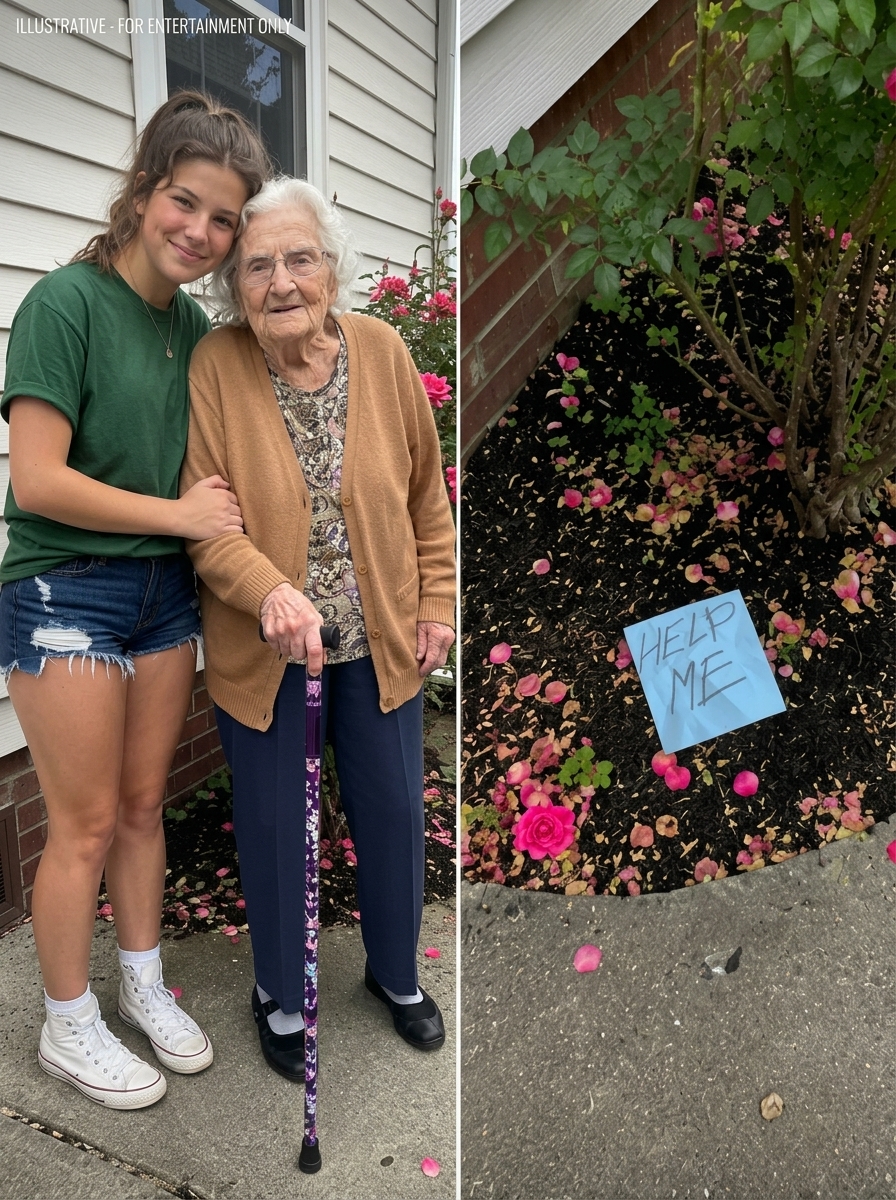
Sometimes a beginning is all you can ask for.
Life didn’t transform overnight.
But it changed direction.
Eva returned the following Tuesday.
And every other day after that.
She still worked hard in the garden.
But now she laughed.
Not carefully.
Not quietly.
Freely.
And no one kept track of her time anymore.
