


An old Southern snack tradition is once again making waves across the internet: pouring salted peanuts into a bottle of Coca-Cola.
To anyone encountering it for the first time, the pairing may seem unusual, even a little bizarre.
Yet for many Americans, especially across the South, this simple combination carries more than a unique flavor—it represents a piece of cultural history that has endured for generations.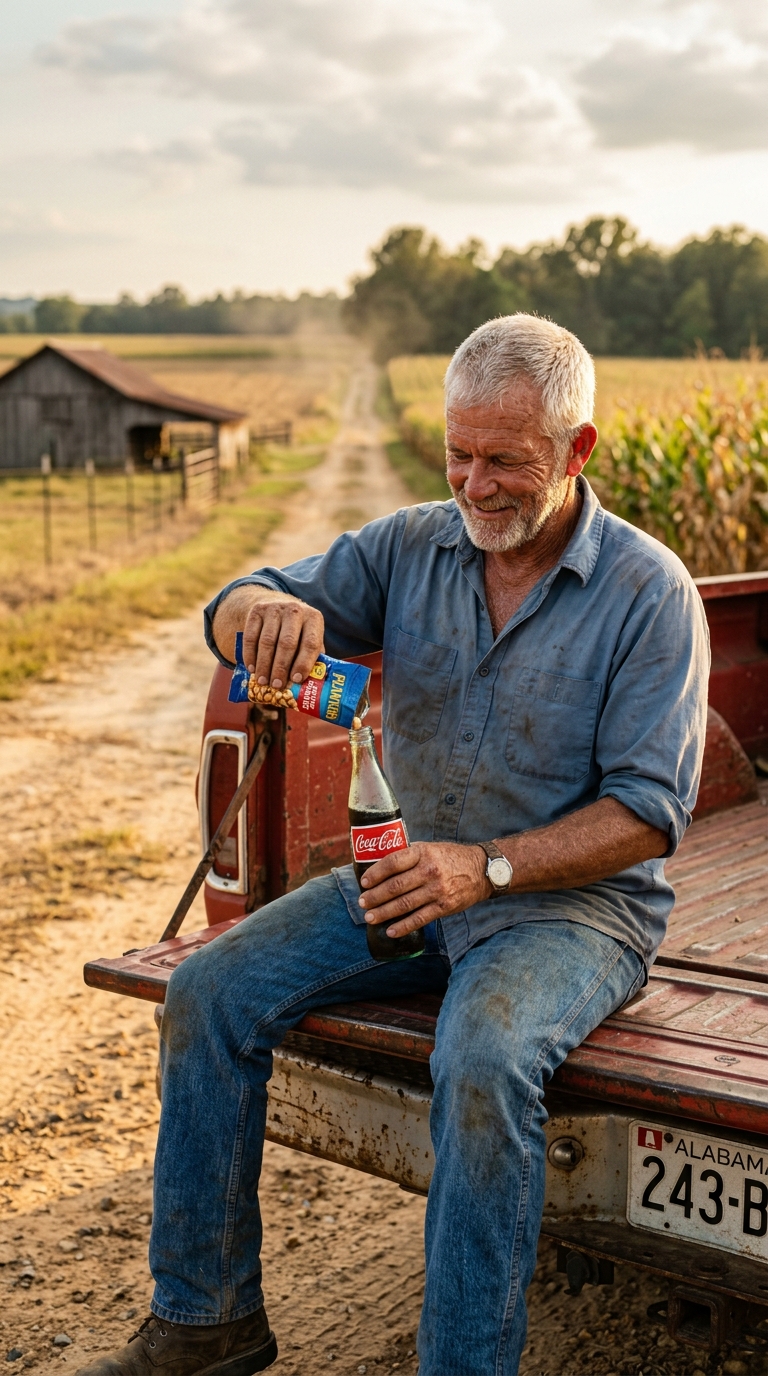
The custom is believed to have originated in the early twentieth century among hardworking laborers, including farmers, factory employees, mechanics, and truck drivers.
During long workdays, they needed something inexpensive, satisfying, and convenient.
Eating snacks with dirty hands was not always practical, so workers came up with a clever solution.
After taking a few swallows from a glass bottle of cola, they would pour a packet of salted peanuts directly inside.
The result was a portable combination of drink and snack that could be enjoyed without stopping work.
The tradition survived for another reason as well: people genuinely liked the taste.
The rich sweetness of the cola blends with the salty crunch of the peanuts, creating a contrast that many describe as surprisingly addictive.
As the peanuts soak in the soda, they soften slightly while still retaining enough texture to provide a satisfying bite.
The carbonation helps enhance the sweet-and-salty balance, making each sip different from the last.
For countless Southerners, however, the appeal goes far beyond flavor.
Peanuts in Coke are tied to memories of simpler times—family road trips stretching across rural highways, quick stops at small-town gas stations, hot summer afternoons, and traditions passed down from parents and grandparents.
That deep sense of nostalgia is one of the main reasons the trend repeatedly finds new audiences online.
Those who grew up with the custom often insist there is a proper way to enjoy it:
• An ice-cold glass bottle
• Salted peanuts
• Traditional cola
• Pour the peanuts directly into the bottle after taking a drink
Although the combination may appear strange to outsiders, peanuts in Coke is not merely a novelty.
It is a practical, affordable, and comforting tradition that has managed to survive for more than a hundred years.
As social media videos featuring the snack began spreading again, curiosity exploded. Millions of viewers watched people recreate the unusual combination.
Some reacted with skepticism, while others rushed to local stores to try it themselves.
The comments quickly filled with debate.
Some people declared it sounded terrible.
Others insisted they had been enjoying it for decades.
Many younger viewers admitted they had never heard of it before and wondered how such a simple tradition had remained largely regional for so long.
Soon, videos appeared from every corner of the country.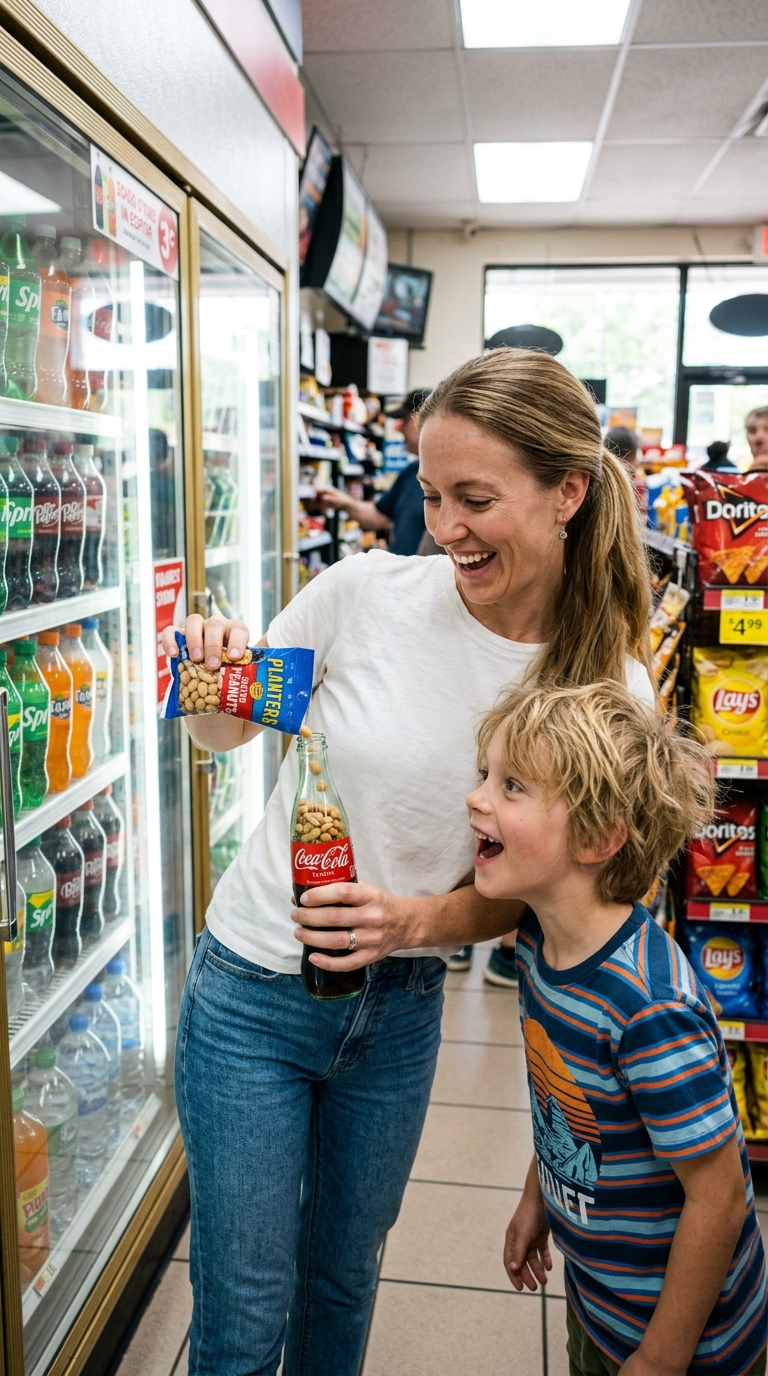
College students tested it in dorm rooms.
Families tried it during backyard barbecues.
Travelers purchased glass bottles specifically to recreate the experience as authentically as possible.
To the surprise of many first-time tasters, the reaction was often the same.
They expected something strange.
Instead, they found something familiar.
The combination reminded people of popular sweet-and-salty snacks they already loved.
The contrast between flavors felt balanced rather than overwhelming.
Some compared it to chocolate-covered pretzels, kettle corn, or salted caramel.
Food historians also began sharing stories about how regional traditions survive through ordinary people.
Unlike recipes found in cookbooks, customs such as peanuts in Coke are often passed along through conversations, family gatherings, and shared experiences.
A grandfather teaches his grandson.
A truck driver introduces it to a coworker.
A parent hands a bottle to a curious child during a summer road trip.
Over time, those small moments become traditions.
In many Southern towns, older residents smiled as they watched younger generations discover something they had known all their lives.
For them, the renewed attention was about more than a snack.
It was proof that everyday history still matters.
One retired farmer interviewed about the trend laughed when asked whether he ever expected peanuts in Coke to become famous online.
He explained that when he was young, nobody considered it unusual. It was simply what people did.
They worked hard.
They found practical solutions.
And sometimes those practical solutions happened to taste good.
As the trend continued growing, local diners and small convenience stores even began promoting the tradition.
Some displayed signs encouraging visitors to try it. Others offered packets of peanuts next to refrigerated bottles of cola.
Tourists loved it.
Locals loved seeing visitors embrace a piece of their culture.
What started as a simple habit from decades ago suddenly became a bridge between generations.
Parents shared memories.
Grandparents told stories.
Children listened.
The snack sparked conversations that might never have happened otherwise.
One family described how a viral video inspired three generations to sit together and try the tradition for the first time in years. What began as a joke turned into an evening filled with laughter, storytelling, and memories.
The grandparents recalled long drives across country roads.
The parents remembered buying peanuts and soda after school football games.
The children discovered a new favorite snack.
By the end of the night, everyone agreed on one thing: the experience had been worth sharing.
Perhaps that is the real secret behind the tradition’s longevity.
It is not only about peanuts.
It is not only about Coke.
It is about connection.
In a world where trends often disappear within days, peanuts in Coke has survived for more than a century because it offers something deeper than novelty. It represents resourcefulness, community, family, and the simple pleasures that bring people together.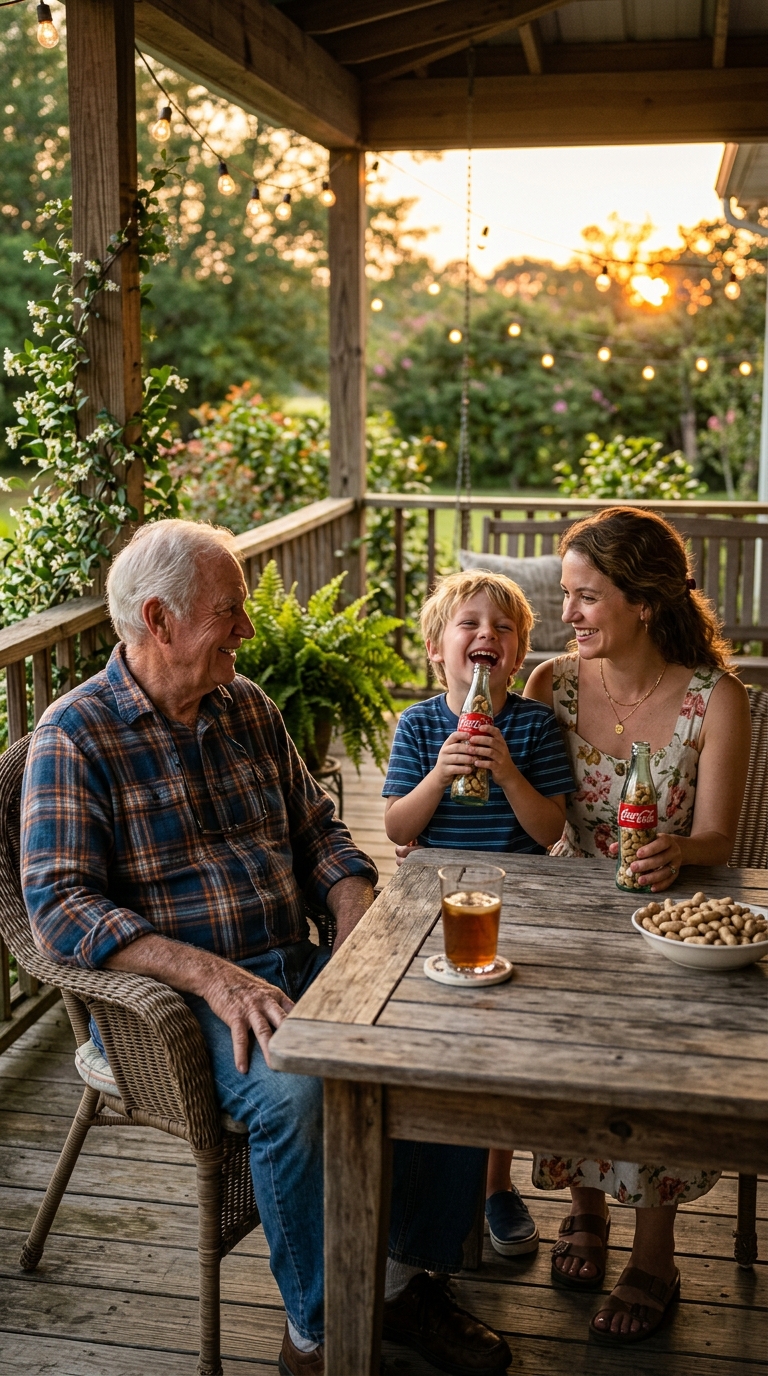
Today, whether someone discovers the combination through a social media video, a family member, or a roadside convenience store in the South, they are participating in a tradition that has traveled across generations.
And while opinions on the taste may still vary, one thing is certain: the old custom continues to create smiles, spark conversations, and bring people together.
For a snack born from practicality over one hundred years ago, that may be the sweetest ending of all.
