

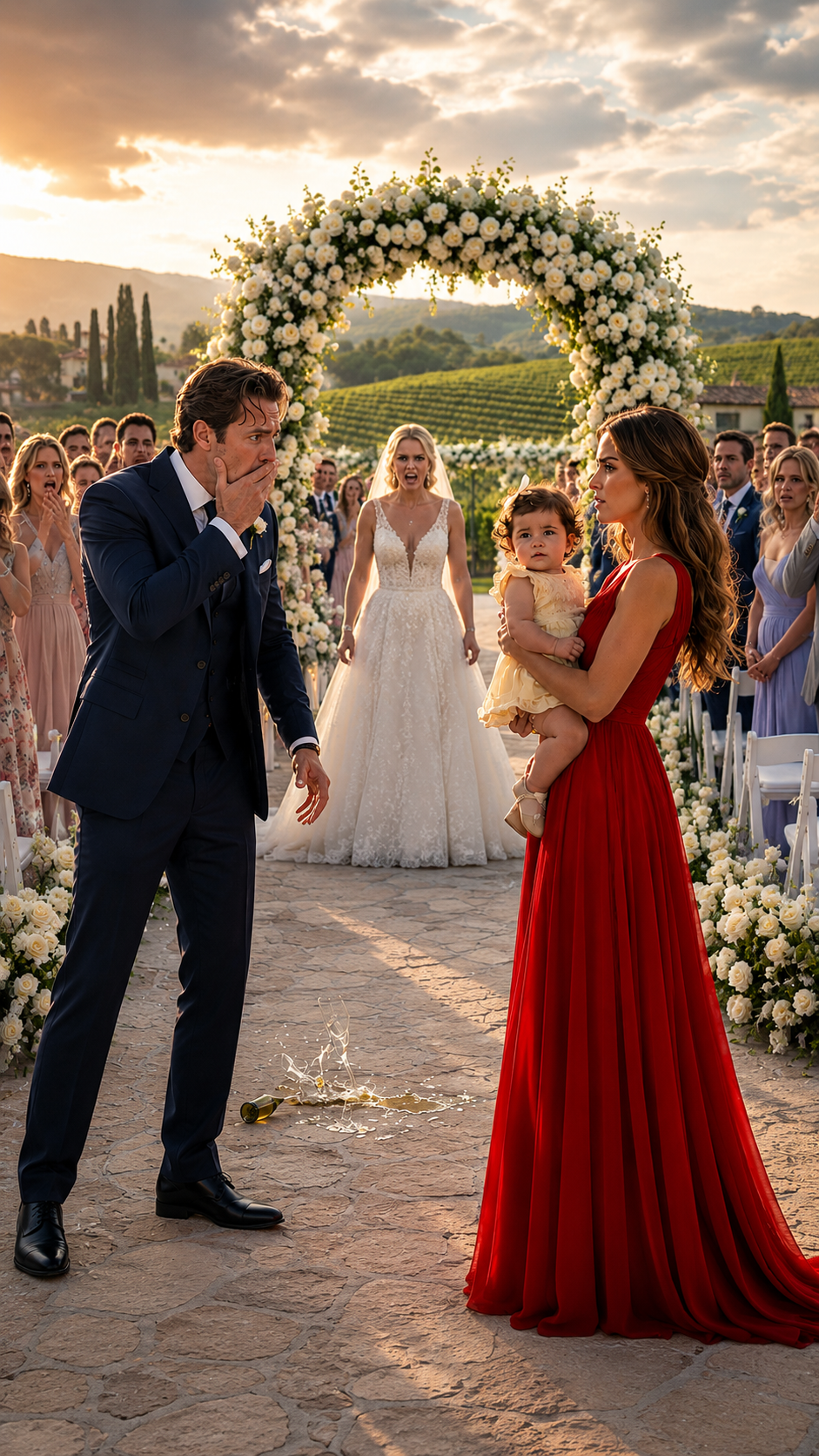
The champagne flute slipped from Bennett Hawthorne’s fingers the moment he saw his ex-wife step out of the black town car with a baby on her hip.
It shattered against the flagstone path beside the vineyard lawn, sending pale gold champagne across his Italian shoes and glittering shards into the afternoon light. Nobody heard it over the string quartet warming up beneath the white rose arch, or the laughter of old money guests pretending not to study each other’s clothes, marriages, divorces, and fortunes. Nobody looked at the broken glass.
Bennett did.
Because that was exactly how his life sounded when Claire Ellison turned toward him in the California sun.
Broken.
She stood near the entrance of Briarvale Estate, her honey-brown hair pinned loosely at the nape of her neck, one hand steadying the small child against her shoulder. The baby wore a pale yellow dress, tiny white shoes, and a pink bow that had already begun sliding sideways over a head of dark curls.
Dark curls like Bennett’s when he had been young.
A small mouth shaped like Claire’s.
And eyes.
Bennett’s breath left him.
Gray-blue eyes, stormy and serious, looking straight at him as if the baby had known him before he knew himself.
For a second, the entire wedding blurred. The vineyard rows, the guests in linen suits and floral dresses, the waiters moving trays of champagne, the bride’s cousins taking photos near the fountain, the investors Bennett had been charming all morning—everything dissolved into a dull ringing silence.
Claire had brought a baby.
Claire had brought his baby.
His hand tightened around nothing.
Twenty-two months had passed since he had walked out of their Pacific Heights home and told her he needed air. Twenty months since the divorce papers had been signed. Twenty-three months since he had stood in the kitchen while rain hit the windows and said the coldest sentence of his life.
“I don’t want a family, Claire. Not now. Maybe not ever.”
He had said it with the arrogance of a man who believed freedom meant belonging to no one.
Now she was walking toward him with the family he had thrown away.
Claire stopped five feet from him.
“Hello, Bennett.”
Her voice was calm, but he had loved her too long once not to see the strain beneath it. He saw the tightness in her fingers around the baby’s back. He saw the quick pulse in her throat. He saw the fierce brightness in her green eyes, the look of a woman who had rehearsed courage all the way here and was determined not to let it fail in public.
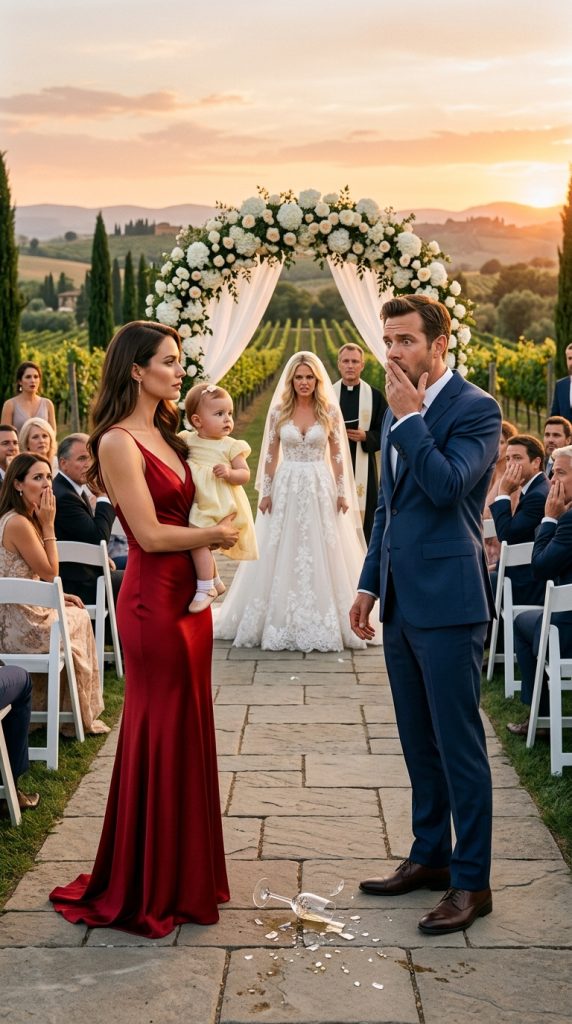
Bennett opened his mouth.
Nothing came out.
The baby stared at him with grave curiosity, one fist caught in the delicate gold chain around Claire’s neck.
Bennett recognized the necklace.
A thin gold crescent moon.
His first anniversary gift to Claire.
The only thing of his she had kept.
His voice finally returned, rough and uneven.
“What’s her name?”
Claire swallowed.
“Willa Rose.”
Rose.
Claire’s middle name.
Bennett felt something inside him give way.
“How old is she?”
“Ten months.”
Ten months.
The calculation struck him like a physical blow. They had separated in February. The divorce became final in July. Willa must have been born the following winter. That meant Claire had been pregnant when he left, or soon after.
It meant that while Bennett had been drinking expensive bourbon in glass towers, flying to New York for acquisitions, giving interviews about empire building, and appearing with women whose names he barely remembered, Claire had been carrying his daughter.
Alone.
The word almost buckled his knees.
He looked from Claire to the baby, then back again.
“Is she mine?”
Claire’s face tightened as if the question hurt more than she wanted to admit.
“Yes.”
The vineyard seemed to tilt.
Guests moved around them in soft colors, smiling and murmuring. Somewhere nearby, a woman laughed too loudly. Someone called for the groom. White petals trembled in the breeze. And Bennett Hawthorne—billionaire hotel developer, ruthless negotiator, a man famous for never blinking first—reached blindly for the side of a parked car because his legs had forgotten how to hold him.
“Why didn’t you tell me?” he asked.
Claire lifted her chin. It was the same look she used to give him when she was about to say something true, something he would not enjoy hearing. “Because the last thing you told me was that a family would suffocate you.” He flinched. “You should have told me anyway.” “I tried.” The words were quiet, but they cracked through him. “You tried?” Her eyes shone, but no tears fell. “I called your office. Twice. I sent a letter to the house in Pacific Heights before it sold. I wrote a Christmas card after Willa was born.” Claire gave a small, humorless laugh. “I wrote, ‘Merry Christmas from the family you said you never wanted.’ Then I tore it up before mailing it because I thought maybe that was cruel.” Bennett stared at her. “I never got any of that.” Claire’s expression changed, not with relief but with exhaustion. “I don’t know what you got, Bennett. I only know what I lived through.” The baby shifted in Claire’s arms and reached toward his silver tie, fascinated by the shine. Bennett’s chest constricted. “Can I hold her?” For one terrible moment, he thought Claire would say no. He would have deserved that. He would have deserved worse. But Claire looked at Willa, then at him. Slowly, carefully, she placed the baby in his arms. The instant Willa’s small body settled against his chest, something inside Bennett opened so violently he almost made a sound. She was warm, real, surprisingly heavy in the way babies were, trusting with a calm that humbled him. Her fingers curled into his jacket. She smelled like lavender soap, milk, and that soft mysterious sweetness that belonged only to babies. “Hi,” Bennett whispered. Willa blinked. Then she smiled. Not politely. Not uncertainly. Fully. As if she had been waiting for him. Tears blurred Bennett’s vision before he could stop them. “Oh, God,” he breathed. “Claire…” Claire looked away, but not before he saw her own tears. “She has your serious face,” Claire said quietly. “When she’s thinking.” “She looks like you.” “She has your stubbornness.” A broken laugh escaped him. “Poor kid.” For a moment, silence stood between them. Not empty silence, not the frozen quiet of their last months together, but something full and trembling. It held everything he had lost, everything he had been too proud to ask for, and everything he suddenly wanted with a desperation that frightened him. Before he could speak again, a bright voice called from the lawn. “Bennett! Claire!” Laurel Monroe, the bride, hurried toward them in a cloud of lace, perfume, and nervous joy. She was one of Claire’s oldest friends and one of the few people from their married life who had refused to choose sides after the divorce. “Oh, thank God, you came,” Laurel said, hugging Claire with one arm before noticing the baby. “And who is this angel?”
Claire opened her mouth.
But Bennett spoke first.
“My daughter.”
The word landed among them like thunder.
Laurel froze.
“Your… what?”
Bennett looked down at Willa, then back at Claire. He was still holding the baby as if someone might take her away.
“My daughter,” he repeated, softer this time. “I have a daughter.”
Laurel’s face went pale with shock, then grief, then a tenderness she could not hide.
“Oh, Claire.”
“It’s all right,” Claire said quickly.
But it was not all right.
Everyone could see that.
A few guests had begun to notice. A pair of venture capitalists near the fountain pretended to talk while staring too hard. Two women by the cocktail table lowered their voices behind their glasses. At weddings like this, gossip traveled faster than wine, and Bennett Hawthorne was too famous to be overlooked.
The cold billionaire.
The man on magazine covers.
The ex-husband who once told a financial reporter that “family obligations were emotional debt.”
Now he was standing at a wedding, nearly crying, holding a baby with his eyes.
Laurel pressed her lips together.
“The ceremony starts in fifteen minutes,” she said gently. “Sit wherever you feel comfortable. I’ll keep everyone busy.”
Then she leaned closer to Claire and whispered something Bennett could not hear.
Claire nodded once.
When Laurel left, Bennett and Claire remained by the cars like survivors of the same crash.
“We need to talk,” Bennett said.
“After the ceremony.”
“Claire.”
“Not here.” Her voice was steady, but her eyes flicked toward the guests. “Not while everyone is watching.”
He followed her to the ceremony lawn, walking beside her like a stranger.
Maybe he was one.
There had been a time when he knew everything about Claire Ellison. How she drank coffee with too much cream. How she hummed old Fleetwood Mac songs when she painted. How she touched his wrist under dinner tables whenever she sensed his anxiety rising. How she dreamed of children not as a demand, but as a hope she held out gently, trusting that someday he might want it too.
And he had mistaken her hope for a cage.
They sat in the back row.
Claire chose the aisle seat because Willa might fuss. Bennett noticed that now. He noticed everything. The diaper bag under the chair. The little crackers in a plastic cup. The stuffed rabbit clipped to Willa’s dress. The spare pacifier attached to Claire’s wrist with a pink ribbon. A whole language of motherhood he had never bothered to learn.
The music began.
Guests turned.
Miles Monroe, the groom, stood under the white rose arch, looking like a man trying not to cry before the bride had even appeared. Bennett had known Miles since Stanford. Solid. Loyal. Present. The kind of man who returned calls, showed up at hospitals, remembered birthdays, and never made love feel like a negotiation.
Then Laurel came down the aisle.
Everyone stood.
Bennett stood too, but his eyes remained on Willa.
She sat in Claire’s arms now, chewing on her fingers, occasionally glancing at him from beneath her crooked bow. Each time she looked, Bennett felt another piece of himself break open.
He missed the vows.
He heard only fragments.
“In sickness…”
“For better…”
“Choose you…”
The words became accusations.
He remembered Claire in their kitchen years before, barefoot in one of his shirts, telling him she had dreamed of having a little girl with his eyes. He remembered laughing it off because he had a call in twelve minutes and a merger to close by Friday. He remembered the way her face had fallen—not dramatically, not enough for him to stop, just quietly, like a lamp dimming in a room he was already leaving.
Willa made a small sound.
Bennett looked over.
Claire was bouncing her gently, whispering against her hair.
The baby calmed immediately.
Of course she did.
Claire knew everything.
Bennett knew nothing.
When the crowd applauded and Laurel and Miles kissed beneath the arch, Bennett clapped because everyone else did. But he felt no joy, no irritation, no impatience. Only a strange and humbling terror. The life he had spent building seemed suddenly thin, all marble lobbies and glass towers and echoing penthouses, while the life he had rejected sat beside him in a yellow dress, leaning against the woman he had failed.
After the ceremony, the guests moved toward the reception terrace. The vineyard glowed golden in the late afternoon. Waiters passed trays of crab cakes and smoked salmon. A jazz trio replaced the quartet. Everyone smiled a little too brightly, because people always smiled when they sensed a scandal and wanted to look innocent of enjoying it.
Bennett waited until Claire had adjusted Willa’s bow and given her a cracker.
Then he said, “Can we walk?”
Claire hesitated.
“Only where people can still see us.”
He deserved that too.
They walked along the edge of the vineyard, close enough to the reception for safety, far enough for privacy. Bennett carried the diaper bag without being asked. It was the first useful thing he had done for his daughter, and the smallness of it shamed him.
Willa rode on Claire’s hip, watching him.
Bennett looked at her tiny shoes.
“Does she walk?”
“Only when she feels brave.”
“Does she talk?”
“She says ‘mama.’ And ‘light.’ And ‘dog.’”
“Dog?”
Claire almost smiled.
“She loves dogs.”
Willa reached toward him again, this time touching his nose with one soft finger.
Bennett closed his eyes.
It was too much. Too small. Too innocent. Too perfect.
“Claire,” he said, his voice breaking. “I swear to God, if I had known—”
She stopped walking.
“I know what you’re going to say.”
“No, you don’t.”
“I do.” Her tone was not cruel, only tired. “You’re going to say you would have come. You would have helped. You would have done the right thing.”
“I would have.”
“Maybe.” She looked over the vineyard rather than at him. “But Bennett, when I needed to believe that, I couldn’t. Not after the way you left. Not after you looked me in the eye and told me love had become another obligation.”
He inhaled sharply.
“I was wrong.”
“Yes.”
The simplicity of the word cut deeper than anger.
He nodded slowly.
“Yes,” he said. “I was.”
Claire’s shoulders softened a fraction, but her guard remained.
“I almost died when she was born.”
The world seemed to stop again.
Bennett stared at her.
“What?”
“Preeclampsia. Emergency C-section at thirty-four weeks.” Claire’s voice stayed even, but he could hear the memory underneath it. “One minute I was telling the nurse I had a headache, and the next they were running me down a hall. Willa spent three weeks in the NICU.”
Bennett’s throat closed.
“And I wasn’t there.”
Claire said nothing.
She did not need to.
The guilt hit him so hard he had to look away. For years, Bennett had considered regret an inefficient emotion. He had believed it changed nothing, repaired nothing, produced nothing. Now he understood that regret could have weight. It could sit inside the chest like broken glass.
“Who was with you?” he asked.
“A nurse named Rosa held my hand.”
Bennett pressed his eyes shut.
A stranger had stood where he should have been.
“I’m sorry,” he whispered.
Claire took a long time to answer.
“I believe you’re sorry now.”
The phrase hurt because it was fair.
Regret was often honest.
It was also late.
Willa yawned and leaned her head against Claire’s shoulder. Bennett watched the small motion with aching wonder.
“Where do you live?”
“Sacramento.”
“Alone?”
“Yes.”
The word pierced him.
Alone.
While he slept in empty penthouses and bought ridiculous watches to fill silences he refused to understand, Claire had been alone with their daughter.
“Do you work?”
“I design websites from home while Willa sleeps.”
“You should have had help.”
Claire’s eyes sharpened.
“Be careful.”
He understood too late how it sounded.
“I didn’t mean—”
“I know what you meant. But you don’t get to arrive ten months late and immediately decide what I should have had.”
Bennett lowered his head.
“You’re right.”
That seemed to surprise her more than any apology.
Before either of them could speak again, a woman’s voice cut through the air.
“Bennett.”
His body tensed.
Vivian Carlisle was walking toward them from the terrace, tall and elegant in champagne silk, with a diamond bracelet flashing on her wrist and controlled anger in every step. She was not his fiancée, no matter what the gossip columns had implied, but she had been close enough for people to assume she would become the next Mrs. Hawthorne.
Bennett had not invited her to the wedding.
He had invited Claire.
At the time, he had told himself it was because Claire knew Laurel, because she would keep the day peaceful, because appearing with his ex-wife might soften the headlines after his latest brutal acquisition. It had been selfish even before he knew about Willa.
Vivian stopped when she saw the baby.
Then she looked at Claire.
Then at Bennett.
“What is going on?”
Bennett drew a slow breath.
“Vivian, this is Willa.”
Vivian’s eyes narrowed.
“And Willa is?”
“My daughter.”
The silence that followed was brutal.
Vivian laughed once, incredulous and cold.
“I’m sorry. Your what?”
“I just found out.”
Vivian looked at Claire as if a bomb had been rolled onto the lawn.
“Your ex-wife had your baby and forgot to mention it?”
Claire stiffened.
Bennett felt the change immediately.
“Don’t attack her.”
Vivian turned on him.
“Excuse me?”
“You don’t know anything about this.”
“I know I came to my friend’s wedding and found you holding a secret baby while looking at your ex-wife like she’s the last woman on earth.”
Several guests nearby were now openly watching.
Claire took a step back.
“I don’t want to cause a scene.”
Vivian’s laugh was sharp.
“A little late for that.”
Something rose in Bennett then, unfamiliar but clear.
Anger.
Not at Claire.
At Vivian.
Because Claire had nearly died alone. Because she had carried the weight of fear, childbirth, bills, and public shame without calling him a monster in front of anyone. Because she had walked into this wedding prepared to be judged just so she would not have to lie about Willa forever.
Vivian, meanwhile, was worried about humiliation.
“That’s enough,” Bennett said.
Vivian stared at him, and in that instant she understood what he had not yet said aloud. She saw the way he looked at Claire. She saw how carefully he had kept the diaper bag over one shoulder. She saw how his face changed whenever Willa moved.
“Oh my God,” she whispered. “You’re still in love with her.”
Bennett did not answer.
Not because he was uncertain.
Because the truth had suddenly become impossible to hide.
Vivian’s mouth trembled, but she covered it with a cruel smile.
“Incredible.”
She turned and walked back toward the terrace, leaving behind a trail of perfume and speculation.
Claire closed her eyes.
“I didn’t come here to ruin your life.”
Bennett gave a humorless laugh.
“You didn’t.”
“Then who did?”
He looked at Willa.
“I did. A long time ago.”
The reception began with forced cheer.
Laurel and Miles were announced as husband and wife, and the crowd applauded as if applause could drown curiosity. Bennett sat beside Claire at a table near the back, though three separate ushers tried to guide him to the front where the major donors and family friends were seated. He refused politely each time.
Willa sat between him and Claire in a borrowed high chair, banging a spoon against the tray with the solemn concentration of a tiny judge.
Bennett watched her as if she were a miracle.
Claire watched Bennett as if he were a dangerous weather pattern.
Dinner was served. Speeches began. People laughed when Miles’s brother told a story about a disastrous camping trip. Laurel’s father cried during his toast. The sun sank behind the vineyard, turning the sky apricot and rose.
For almost an hour, Bennett let the wedding happen around them.
He asked Claire quiet questions, and she answered cautiously.
Willa hated peas but loved blueberries. She slept with one hand under her cheek. She cried whenever Claire vacuumed. She liked to press her forehead against the window when it rained. She had been premature but was healthy now. She had one small scar from an IV line on her foot that Claire still kissed sometimes when she changed her pajamas.
With every answer, Bennett gained a detail and lost a piece of his pride.
He had built hotels in nine states. He had purchased failing resorts and turned them into monuments. He had once negotiated a nine-hundred-million-dollar deal over a weekend and celebrated by sleeping twelve hours in a suite overlooking Central Park.
But he had not known his daughter liked blueberries.
This story was written by the author “hoanganh1” – if you see any account copying it, please report it to respect the author. Thank you very much, readers!!
That fact destroyed him more completely than any business failure could have.
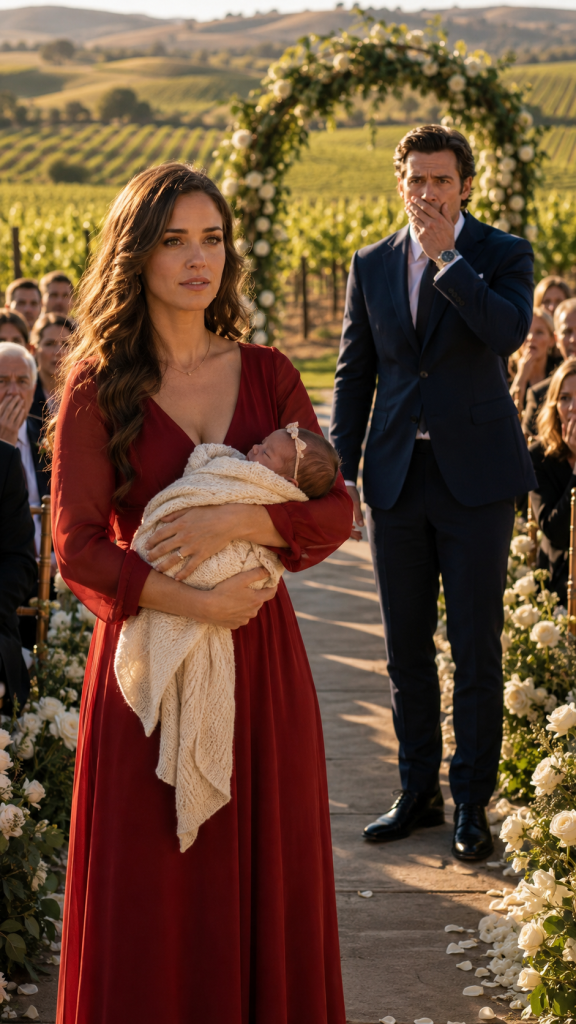
When the first dance began, Claire lifted Willa from the high chair and bounced her gently to the music. Bennett watched them sway beneath the lights strung between olive trees.
“You can dance with her,” Claire said after a moment.
He looked up, startled.
“With Willa?”
Claire gave him a tired look.
“I meant with the governor, Bennett. Yes, with Willa.”
The joke was small. It nearly undid him.
He stood carefully and took Willa into his arms. The baby came willingly, gripping his jacket with one hand and the stuffed rabbit with the other. Bennett moved slowly at the edge of the dance floor, awkward at first, terrified of holding her wrong.
Willa looked up at the lights.
“Light,” she said.
Bennett stopped breathing.
Claire’s face changed.
“She said it,” he whispered.
“She says it all the time.”
“Not to me.”
Willa patted his chest.
“Light.”
A laugh broke out of Bennett, so raw that several people turned. He did not care. He held his daughter under the glowing strings of bulbs and felt something inside him begin, not heal exactly, but turn toward healing.
Then he saw his mother.
Evelyn Hawthorne stood near the terrace doors in a silver dress, her white-blond hair swept into a perfect knot. She had the stillness of a woman accustomed to being obeyed before she spoke. Next to her stood Gerald Pike, the family attorney, a narrow man with a red face and a folded document in his hand.
Bennett felt the first true chill of the evening.
His mother had not been invited.
Laurel’s family knew better.
Yet there Evelyn was, looking not shocked, not confused, but furious.
Claire saw her too.
The color drained from her face.
Bennett turned to her.
“What is it?”
Claire’s lips parted, but before she could answer, Evelyn crossed the lawn with Gerald at her heels.
“Bennett,” she said.
“Mother.”
Evelyn’s eyes dropped to Willa. For the briefest second, something like recognition flickered across her face.
Bennett saw it.
His blood went cold.
“You knew,” he said.
Evelyn’s expression did not change.
“This is neither the time nor the place.”
“You knew.”
Claire whispered, “Bennett…”
But he was already stepping closer.
“How long?”
Evelyn glanced around at the guests. People had begun to watch again, drawn by the scent of scandal like moths to flame.
“Lower your voice.”
“How long?” Bennett repeated.
Gerald Pike cleared his throat.
“Bennett, there are legal considerations—”
Bennett turned on him.
“If you speak before my mother answers me, I’ll make sure your name never appears on another corporate account in California.”
Gerald closed his mouth.
Evelyn’s face hardened.
“I knew there was a claim.”
“A claim?” Bennett looked down at Willa, who was blinking sleepily against his shoulder. “She is my daughter.”
“That remains to be established.”
Claire flinched.
Bennett moved instinctively, placing himself between Claire and his mother.
“Don’t.”
Evelyn’s gaze sharpened.
“So this is how she chose to do it. A wedding. A public ambush. Very tasteful, Claire.”
Claire’s voice was low.
“I didn’t know you’d be here.”
“No, I imagine you hoped for something more dramatic.”
Bennett had heard enough.
“Mother, stop.”
Evelyn ignored him.
“You should have taken the money when it was offered.”
Every sound around Bennett seemed to fall away.
Claire went very still.
Bennett looked from his mother to Claire.
“What money?”
Claire’s face was pale, but her eyes burned.
“I never took a dime from your family.”
Evelyn smiled faintly.
“That is not what your signature says.”
Gerald unfolded the document.
Bennett snatched it from his hand before the lawyer could object.
The paper was a settlement agreement. Confidential. Cold. Legal. It stated that Claire Ellison acknowledged uncertainty regarding the child’s paternity, agreed not to contact Bennett Hawthorne regarding the pregnancy, and accepted two million dollars in exchange for silence.
At the bottom was Claire’s name.
A signature.
Bennett stared at it.
Then he looked at Claire.
Her lips trembled—not with guilt, but with fury.
“That is not my signature.”
Evelyn sighed.
“Of course.”
Claire stepped forward.
“I never signed that. I never saw that. I was in a hospital bed trying not to die when your lawyer was apparently busy forging my name.”
Gerald flushed.
Evelyn’s eyes flashed.
“Be careful, young lady.”
Bennett looked at the signature again.
He had signed hundreds of contracts. He knew signatures. Claire’s real signature looped the C in a wide, careless arc and crossed the double Ls as if she were painting. This one was neat. Controlled. Wrong.
“Who signed this?” he asked.
Gerald said nothing.
Evelyn’s silence answered.
A chair scraped nearby. Someone gasped. Vivian had returned to the edge of the crowd, watching with a pale, unreadable face.
Bennett lifted his eyes to his mother.
“You kept my daughter from me.”
Evelyn’s mask cracked.
“I protected you.”
“From my child?”
“From ruin!” she snapped, too loudly.
Now everyone heard.
Laurel had stopped near the dance floor. Miles moved beside her, his protective hand at her back. The jazz trio faltered, then stopped playing altogether.
Evelyn realized too late that the audience she feared was already hers.
She lowered her voice, but the damage was done.
“You were about to close the Royce Meridian deal,” she said. “You were finally stepping beyond hotels into global holdings. Your image mattered. Stability mattered. You had divorced this woman. She had no right to drag you backward with a pregnancy she chose to conceal until it benefited her.”
Claire laughed once, and the sound was devastating.
“Benefited me? I almost died. I spent three weeks sleeping in a vinyl chair beside an incubator because my baby was too small to come home. I sold my car. I designed websites at two in the morning while she slept on my chest because she cried when I put her down. What benefit, Mrs. Hawthorne? The privilege of hearing strangers ask if her father was dead because it was easier than explaining that he had said he didn’t want a family?”
Bennett’s face twisted.
Evelyn looked briefly unsettled, but pride returned fast.
“You could have contacted Bennett directly.”
“I did.”
“Once.”
“Four times,” Claire said. “And then I received a letter on Hawthorne letterhead telling me that if I attempted further contact, Bennett would seek a restraining order and challenge custody aggressively.”
Bennett’s heart stopped.
“What letter?”
Claire looked at him.
“You really didn’t know?”
“No.”
For the first time that day, her anger faltered into something more painful.
She reached into the diaper bag with shaking hands and pulled out a folded envelope, worn soft at the edges from being opened too often. She handed it to him.
Bennett recognized the paper. The Hawthorne crest. The legal tone. Gerald Pike’s formatting.
But the signature at the bottom was his mother’s.
Not his.
Evelyn Hawthorne, acting on behalf of Bennett Hawthorne.
Bennett read the words once, then again, because his mind refused to accept them.
Any further attempt to involve Mr. Hawthorne in this matter will be considered harassment.
Any claim of paternity will be disputed.
Any attempt to use a child for financial leverage will be met with the full resources of Hawthorne Holdings.
He looked at his mother.
“You threatened the mother of my child while she was pregnant?”
Evelyn’s jaw tightened.
“I did what had to be done.”
“No,” Bennett said. His voice was quiet now, and because it was quiet, it carried. “You did what you have always done. You mistook control for love.”
Evelyn recoiled as if he had slapped her.
“You ungrateful boy.”
“I’m forty-one years old.”
“You were drowning after the divorce. You stopped coming to board meetings. You drank. You almost walked away from everything your father built.”
“My father built a company,” Bennett said. “You built a cage and called it a legacy.”
Evelyn’s eyes filled suddenly, but no one would have mistaken the tears for surrender.
“Your father walked away from us.”
“No,” Bennett said. “He walked away from you.”
The cruelty of it startled even him, but it was not entirely cruelty. It was truth he had spent years avoiding. His father had left when Bennett was twelve, not because he hated his son, but because Evelyn made love feel like litigation. Bennett had grown up believing abandonment was inherited, that sooner or later every family became a courtroom and every promise became evidence.
So when Claire wanted children, Bennett panicked.
He had called it freedom.
It had been fear.
Evelyn stepped closer, lowering her voice.
“Think carefully. The Royce family is here. Your board is here. Reporters are outside the gate. If you turn this into a public confession, you will hand your enemies a knife.”
Bennett looked around.
Walter Royce, the investor whose signature could double Hawthorne Holdings in a year, stood near the bar with his wife, watching in stern silence. Board members whispered. Vivian stared at the ground. Guests held their breaths.
The old Bennett would have calculated risk.
The old Bennett would have moved the conversation indoors.
The old Bennett would have asked Gerald for a strategy and Claire for discretion.
The man holding Willa did none of that.
“My enemies can wait,” he said. “My daughter already did.”
Evelyn’s face went white.
Claire made a small sound.
Bennett turned to her.
“I need to say something publicly.”
“No.” Claire’s eyes widened. “Bennett, don’t make her a spectacle.”
“I won’t.” His voice softened. “But my mother made you look like a liar in front of half of California. I won’t let the first public story about Willa be that she was a scandal.”
Claire searched his face.
For the first time, she seemed unsure what to expect from him.
Bennett handed Willa gently back to her.
Then he walked to the bandstand.
The crowd parted without being asked.
Laurel looked frightened for him. Miles nodded once, as if to say, if you’re going to do this, do it right.
Bennett took the microphone.
For several seconds, he said nothing. He looked at the vineyard, the lights, the guests, his mother, the woman he had loved badly, and the baby he had loved too late.
Then he spoke.
“I owe the bride and groom an apology,” he said. “Laurel, Miles, I am sorry that my family has brought pain into your beautiful day.”
Laurel’s eyes glistened.
“But I also owe someone else the truth.” Bennett looked toward Claire. “Today I met my daughter for the first time.”
A ripple moved through the crowd.
Bennett held the microphone tighter.
“Her name is Willa Rose Ellison. She is ten months old. She likes lights and dogs and blueberries. She has her mother’s courage and, unfortunately for her, my serious face.”
A few people gave nervous, emotional laughs.
Bennett’s voice roughened.
“I did not know she existed. That is not because her mother failed her. It is because I failed her mother long before Willa was born. I left a marriage because I was afraid of becoming the kind of husband and father I had seen destroy people. I called that fear ambition. I called it freedom. I called it honesty. It was cowardice.”
Claire’s hand flew to her mouth.
Bennett looked directly at Evelyn.
“And when Claire tried to reach me, people acting in my name silenced her. Threatened her. Humiliated her. That ends tonight.”
Gerald Pike began moving toward the exit.
Miles quietly blocked him.
Bennett continued.
“I don’t know what kind of father I can become. I only know what kind I have already been, and it is not enough. Claire owes me nothing. My daughter owes me nothing. But from this day forward, I will spend my life earning whatever place they allow me to have.”
He paused, letting the words settle.
“And for anyone concerned about Hawthorne Holdings, the Royce deal, or tomorrow’s headlines, here is my official statement. I am not ashamed of my daughter. I am ashamed that she had to be introduced to me in front of strangers because the people who should have protected her protected my reputation instead.”
The silence after that was enormous.
Then Laurel started clapping.
Miles joined.
Then others.
The applause spread slowly, awkwardly at first, then stronger. Not everyone clapped. Evelyn did not. Walter Royce did not. Vivian did, once, then stopped and wiped her eyes as if angry at herself for having any.
Bennett placed the microphone down.
When he returned to Claire, he did not ask if he had done well.
That would have made it about him.
Instead, he said, “I’m sorry I used her name without asking.”
Claire looked at him for a long moment.
Then she said, “She does like blueberries.”
He almost smiled.
It was the smallest mercy.
He would take it.
The rest of the wedding unfolded in strange fragments.
Laurel insisted the cake cutting continue, because she said if her wedding was already going to be famous, at least the cake should be remembered too. Miles kept Gerald Pike in polite but firm conversation until a private security guard escorted the lawyer from the property. Evelyn left without saying goodbye, her silver dress flashing like armor beneath the terrace lights.
Vivian approached Claire just before dessert.
Bennett saw her coming and stood, but Claire touched his arm.
“I can handle this.”
Vivian stopped in front of her. For once, she looked less polished than human.
“I owe you an apology,” Vivian said.
Claire waited.
“I knew there had been… something,” Vivian continued. “Not a baby. Not for certain. But last winter Evelyn told me a woman was trying to use Bennett, and I believed her because it was easier than wondering why he still looked like a man living in a house after the lights had been turned off.”
Bennett looked down.
Vivian’s voice trembled.
“I wanted to be chosen. That made me cruel.”
Claire studied her.
“Wanting love doesn’t make you cruel. What you do when you don’t get it can.”
Vivian nodded once, absorbing the blow because it was deserved.
“I’m sorry,” she said again.
Then she looked at Bennett.
“You were never going to marry me.”
“No,” he said softly. “I’m sorry.”
“At least now I know I wasn’t losing to a ghost.” Vivian glanced at Willa, who was asleep against Claire’s shoulder. “I was losing to the truth.”
She left before either of them could answer.
Later, when the stars had come out and most guests had drifted into dancing or drunken confession, Bennett found Claire standing near the vineyard fence. Willa slept in her stroller, one hand curled around the stuffed rabbit.
Bennett stopped a few feet away.
“May I stand here?”
Claire nodded.
They looked over the dark vines together.
For a while, neither spoke.
Then Claire said, “Your speech was brave.”
He shook his head.
“No. Brave would have been answering the phone twenty months ago. Brave would have been admitting I wanted children but was scared I would fail them. Brave would have been going to therapy instead of buying another building.”
Claire’s mouth twitched.
“That last one is very specific.”
“I have a lot of buildings.”
“I know. I used to receive the property tax notices.”
The joke landed gently between them.
Bennett leaned his forearms on the fence.
“I want to take a paternity test. Not because I doubt you. Because I don’t want anyone else to have room to.”
Claire considered that.
“All right.”
“I want to pay back every medical bill, every expense, every cost you carried alone.”
Her shoulders tensed.
“Bennett—”
“Not to buy forgiveness. Not to control you. Because I should have carried half from the beginning.”
Claire looked at him carefully.
“I’ll let my lawyer handle that.”
“Good.”
“And custody?”
The word changed the air.
Bennett turned toward her fully.
“I will not fight you. I will not punish you for surviving without me. I want to know Willa, but only in a way that makes her feel safe and keeps your life stable. We can start with visits. With you present. Whatever you decide.”
Claire’s eyes filled.
“You’re saying all the right things.”
“I know.”
“That scares me.”
“It should.”
He did not try to defend himself. That mattered more than any defense could have.
Claire looked down at Willa.
“For months, I imagined you finding out. Sometimes I imagined you angry. Sometimes I imagined you indifferent. Sometimes I imagined you showing up with lawyers and taking her because you could afford better everything.”
“I can afford more,” Bennett said quietly. “Not better.”
Claire’s face softened before she could stop it.
Then she looked away.
“I also imagined you would hold her once and suddenly want us back.”
Bennett’s heart ached.
“I do want you back.”
She closed her eyes.
“But wanting isn’t the same as deserving.”
“I know.”
“And I’m not the woman you left.”
“I know that too.”
“No, Bennett. I don’t mean I’m stronger now, though I am. I mean I’m tired in places you can’t see. I mean I learned how to go to sleep without waiting for your key in the door. I learned how to make decisions without wondering if they would scare you away. I learned how to become a mother in a room where your absence was so loud I sometimes hated you just to have something to hold on to.”
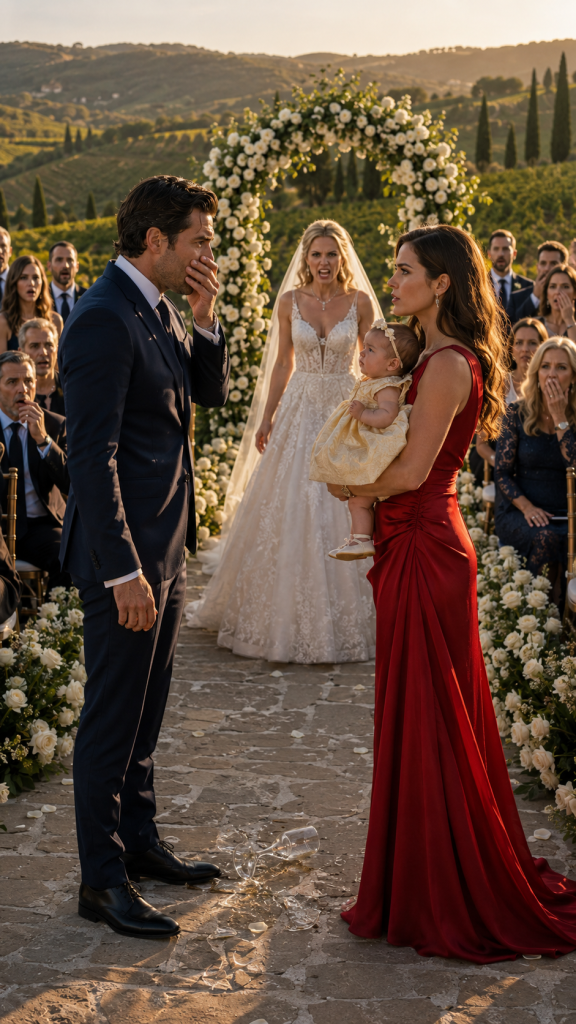
Bennett gripped the fence.
“You had every right.”
“I don’t want to hate you anymore.”
His eyes burned.
“That’s more than I deserve.”
Claire looked at him then.
“I’m not promising anything.”
“I’m not asking you to.”
“We can start with Sunday.”
He went very still.
“Sunday?”
“You can come to the park in Sacramento. Willa likes the ducks. She won’t remember today, but she’ll remember patterns. If you come, come on time. If you can’t come, tell me before I pack her bag. If you say something, mean it.”
Bennett nodded, unable to speak.
Claire’s voice softened.
“And don’t bring a gift that costs more than my car.”
A rough laugh escaped him.
“What about a stuffed dog?”
“She has six.”
“Seven won’t ruin her.”
“Spoken like a billionaire.”
“Spoken like a desperate beginner.”
That made Claire smile.
A real smile this time, small but unmistakable.
Bennett carried that smile home like a sacred thing.
The next morning, the headlines came.
Billionaire Bennett Hawthorne Reveals Secret Daughter at Sonoma Wedding.
Hawthorne Family Feud Explodes Over Hidden Baby.
Heiress Bride’s Wedding Overshadowed by Billionaire Paternity Scandal.
Bennett read every headline in his kitchen at dawn, sober and sickened, then called his communications director and gave one instruction: no attacks on Claire, no denial of Willa, no mention of custody, no anonymous sources.
At nine, Walter Royce withdrew from the Meridian deal.
At nine-thirty, two board members requested an emergency meeting.
At ten, Evelyn called seventeen times.
Bennett answered the eighteenth.
“You have destroyed everything,” she said.
“No,” Bennett replied. “I inconvenienced a deal. You damaged a child.”
“You are being emotional.”
“For once.”
“You think that woman loves you? She has waited for the perfect moment to humiliate us.”
“She nearly died giving birth to my daughter while you threatened her with lawyers.”
Evelyn’s breathing sharpened.
“I did what I did because I love you.”
Bennett looked across his empty kitchen. For years, he had mistaken his mother’s intensity for devotion. But devotion did not require erasing other people.
“Then learn to love me differently,” he said. “Until you can, you will have no contact with Willa.”
His mother went silent.
“You don’t mean that.”
“I do.”
“She is my granddaughter.”
“She is Claire’s daughter first. Mine second. Yours only if you become safe.”
Evelyn hung up.
The board meeting was worse.
Men and women who had praised Bennett’s instincts for fifteen years now looked at him as if fatherhood were a contagious liability. One director suggested a temporary leave. Another suggested a controlled reconciliation with Evelyn to calm investors. A third, foolishly, suggested that Claire sign a fresh NDA.
Bennett listened.
Then he resigned as CEO.
Not because he was ashamed. Not because they forced him. Because he realized he had built a life in which every emergency was measured by stock price, and he needed to become a man who measured emergencies by the people hurt.
He remained chairman. He retained ownership. He appointed his long-overlooked chief operating officer, Denise Alvarez, interim CEO. Denise had three children, a ruthless mind, and no patience for men who believed humanity weakened leadership.
“You finally made a decision I respect,” she told him after the meeting.
“That bad?”
“That late.”
He accepted that too.
Sunday came.
Bennett arrived at McKinley Park in Sacramento twenty minutes early with coffee for Claire, a small stuffed dog for Willa, and a terror in his chest no hostile negotiation had ever created.
Claire arrived exactly on time, pushing Willa in a stroller.
Willa saw him, stared seriously, then lifted one hand.
Bennett nearly cried in front of a duck pond.
He did not rush. He did not grab. He crouched several feet away and said, “Hi, Willa. I’m Bennett.”
Claire watched him.
“Not Dad?”
His throat tightened.
“I’ll let her decide when that word belongs to me.”
Claire looked away quickly, but not before he saw tears.
The paternity test came back two weeks later.
Probability of paternity: 99.9998%.
Bennett framed nothing. Posted nothing. Announced nothing. He sent Claire a message: Thank you for letting me know her.
Claire replied three hours later: Sunday at 10 again.
So he came Sunday at ten.
Then Wednesday afternoon.
Then Saturday morning.
He learned the stroller straps. He learned the snack cup. He learned that Willa threw blueberries when she was done with them and that “all done” sounded like “ah-da.” He learned that babies could become furious because a leaf was too wet, then delighted because a dog barked three blocks away. He learned that Claire sang when she was tired and denied it every time.
He also learned that repair was not romantic.
Repair was consistency.
It was showing up when traffic was terrible. It was not arguing when Claire corrected how he held the sippy cup. It was leaving after two hours because that was the boundary, even when everything in him wanted to stay. It was texting, “I’m running twelve minutes late because of an accident on I-80,” instead of assuming his importance excused delay.
It was therapy on Thursdays with a man named Dr. Feld who asked Bennett why love felt like a trap.
It was answering honestly.
Months passed.
Evelyn sent gifts. Claire returned them. Bennett supported the decision. Evelyn requested visits. Bennett said no. Evelyn wrote letters explaining herself. Bennett read them, then put them in a drawer because explanation was not accountability.
In autumn, Evelyn finally asked to meet Claire.
Claire agreed only because Bennett promised to leave the moment Claire wanted.
They met in a quiet café in Davis. Willa stayed home with Rosa, the retired nurse who had held Claire’s hand during the emergency C-section and had somehow become family afterward.
Evelyn looked smaller without diamonds.
She did not apologize well at first. People accustomed to power rarely did.
She said she had been afraid.
Claire said fear did not forge documents.
Evelyn said Bennett had been fragile.
Claire said she had been cut open six weeks early.
Evelyn cried then. Not elegantly. Not usefully. But honestly enough that Claire did not leave.
“I thought if he became a father, he would disappear like his father,” Evelyn whispered.
Claire looked at her for a long time.
“So you made sure he did.”
Evelyn covered her mouth.
That was the first true crack.
Forgiveness did not happen that day. But something else did. Evelyn stopped defending herself.
It was a beginning, and beginnings were all any of them deserved.
Willa turned one in December.
Claire held the party in her backyard, under paper lanterns and a rented canopy because rain threatened all morning. Rosa made tamales. Laurel and Miles brought a cake shaped like a duck. Vivian sent a small card with no return address and a donation receipt to a NICU charity tucked inside.
Bennett arrived with seven balloons and the stuffed dog he had bought months earlier, now worn soft from Willa’s hands.
When Willa saw him, she shouted, “Da!”
The yard went still.
Bennett froze at the gate.
Claire turned from the cake table.
Willa bounced in Rosa’s arms and shouted again.
“Da!”
Bennett looked at Claire as if asking permission to breathe.
Claire’s eyes filled, but she smiled.
“Well,” she said softly, “don’t just stand there.”
He crossed the yard and took his daughter into his arms.
Willa patted his face with both hands, then offered him a half-chewed cracker as if bestowing a kingdom.
Bennett accepted it solemnly.
“Thank you.”
Claire laughed.
For a moment, everything was simple.
Not fixed. Not perfect. Not erased.
Simple.
After cake, when guests drifted into warm conversations and Willa fell asleep against Rosa’s shoulder, Bennett found Claire on the back porch. Rain tapped softly on the canopy. The yard smelled like frosting, wet grass, and candle smoke.
“I have something for you,” he said.
Claire’s expression sharpened with old caution.
“It’s not expensive,” he added quickly.
“That’s exactly what a billionaire thinks before giving someone a horse.”
He smiled.
“No horse.”
He handed her a small envelope.
Inside was a photograph.
Claire stared at it.
It had been taken at Laurel’s wedding, during the first dance. Bennett was holding Willa beneath the string lights, his face tilted down in wonder. Claire stood a few feet away, watching them. She was not smiling exactly. She looked frightened, tired, and hopeful despite herself.
“I found the photographer,” Bennett said. “I asked for the picture because it was the first time I understood what I had lost.”
Claire touched the edge of the photo.
“Why give it to me?”
“Because it was also the first time you let me hold her.”
Claire looked at the picture for a long time.
Then she said, “I hated you that day.”
“I know.”
“I wanted you to hurt.”
“I did.”
“I know.” Her voice softened. “That scared me too.”
Bennett leaned against the porch railing, leaving space between them.
“I love you,” he said.
Claire closed her eyes.
He continued before she could answer.
“I’m not saying that because I expect you to say it back. I’m not saying it because Willa said ‘Da’ and I suddenly think we’re a family in a Christmas commercial. I’m saying it because I should have learned how to say true things without making them demands.”
Claire’s lips trembled.
“I loved you so much, Bennett.”
“I know.”
“No,” she whispered. “You knew I stayed. You knew I forgave. You knew I hoped. But I don’t think you knew how much it cost me.”
He took that in.
“You’re right.”
She looked at the sleeping baby through the porch door.
“I don’t know if I can be your wife again.”
“I’m not asking tonight.”
“But I think…” Claire folded the photograph carefully and held it against her chest. “I think I can let you take us to the zoo next Saturday.”
Bennett smiled, and it broke open every guarded place in him.
“The zoo is a serious commitment.”
“She likes dogs. We’ll see how she feels about giraffes.”
“I’ll prepare emotionally.”
Claire laughed softly.
Then she reached for his hand.
It was not a promise of forever.
It was not forgiveness wrapped in music.
It was one hand choosing not to pull away.
For Bennett Hawthorne, who had once believed freedom meant belonging to no one, it felt like the beginning of a life.
A year later, people still talked about the Sonoma wedding where a billionaire discovered he had a daughter. They told it like a scandal because scandals were easier to understand than repentance. They remembered the broken champagne glass, the public speech, the furious mother, the forged agreement, the crying bride who somehow still got everyone dancing after dessert.
But Bennett remembered different things.
He remembered Willa touching his nose.
Claire saying, “She has your stubbornness.”
The first Sunday at the duck pond.
The first time Willa fell asleep in his arms without reaching for Claire.
The day Evelyn sat on Claire’s porch and said, with no excuses left, “I am sorry I made my fear more important than your pain.”
The evening Claire kissed him in her kitchen after Willa’s bedtime, then immediately told him it did not mean he could move in.
He remembered earning every inch.
And on a bright spring afternoon, when Willa was nearly two, Bennett stood again beneath a white rose arch. There were no reporters this time, no investors, no board members, no society guests pretending not to stare. Just a small garden in Sacramento, a few friends, Rosa crying into a handkerchief, Laurel holding Miles’s hand, and Evelyn sitting quietly in the second row because that was where Claire had placed her.
Claire walked toward him in a simple ivory dress, carrying Willa on her hip.
Willa wore a yellow ribbon.
It was crooked.
Bennett laughed through tears before the ceremony even began.
When Claire reached him, she looked into his eyes and said softly, “Still scared?”
“Terrified.”
“Good,” she said. “That means you understand what matters.”
Willa reached for his tie.
This time it was navy blue.
This time Bennett did not feel his life shatter.
He felt it settle.
Claire handed him their daughter, and Willa pressed her sleepy head into his shoulder as if she had always belonged there.
Bennett looked at Claire, then at the child who had turned his empire into something small enough to hold and large enough to save him.
“I once thought family would take my freedom,” he said during his vows. “But I had mistaken emptiness for freedom. You and Willa did not trap me. You found me.”
Claire cried then.
So did he.
Nobody pretended not to notice.
And when the ceremony ended, Willa clapped at the wrong time, Rosa laughed too loudly, Evelyn wiped her eyes without hiding, and Claire kissed Bennett like a woman who had not forgotten the past but had decided the future deserved a chance.
The old headlines faded.
The buildings remained.
The money remained.
But Bennett no longer measured his life by what he owned, acquired, or controlled.
He measured it by Sunday mornings, tiny shoes by the door, blueberry stains on his shirts, Claire’s laughter from the kitchen, and a little girl with storm-gray eyes who called him Dad not because blood gave him the right, but because love had finally taught him how to stay.
THE END
