

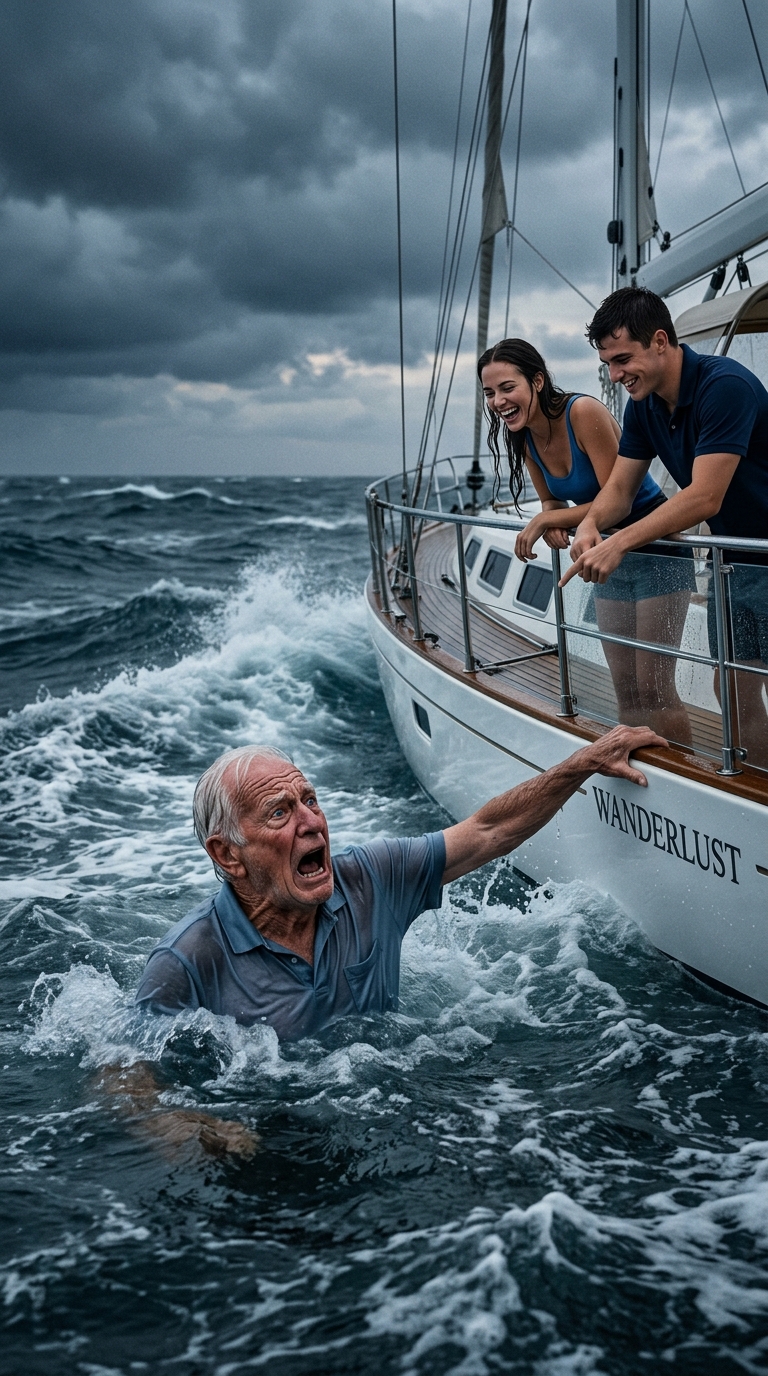
An elderly man named Daniel had lived a modest but honest life. He worked as a fisherman, understood the sea better than anyone, and always placed his family before himself.
After losing his wife, he was left alone raising three children — Mark, Alex, and Sofia.

He gave them everything he had: the house by the shore, his savings, his strength, and the best years of his life. But as time passed, gratitude slowly disappeared and was replaced by cold anticipation — waiting for the moment everything would finally belong to them.
The eldest son, Mark, spoke more and more often about selling the house, about money, about how “it was time to move on.” But Daniel refused. That home was not just a building — it carried his entire life inside it.
Then Mark suggested a “family trip” on the boat, supposedly to honor the memory of their mother. Alex remained silent, Sofia felt something was wrong, but she still agreed to go.
That day, the sea was dark and heavy.
The boat drifted far from shore.
At one moment, Mark stepped behind his father and suddenly shoved him into the water.
Daniel didn’t even understand immediately what had happened.
The freezing sea struck his body, stole his breath, and waves swallowed him whole. He struggled desperately to stay above the surface, flailing his arms, shouting, calling out to his children, but the boat had already begun turning away.
He saw their faces.
Frightened.
Confused.
And one face cold and determined.
Daniel fought for as long as he could, until his strength slowly began fading away. His final thought was not about himself, but about them — that they would not destroy their own lives with such an unforgivable act.
But he did not drown.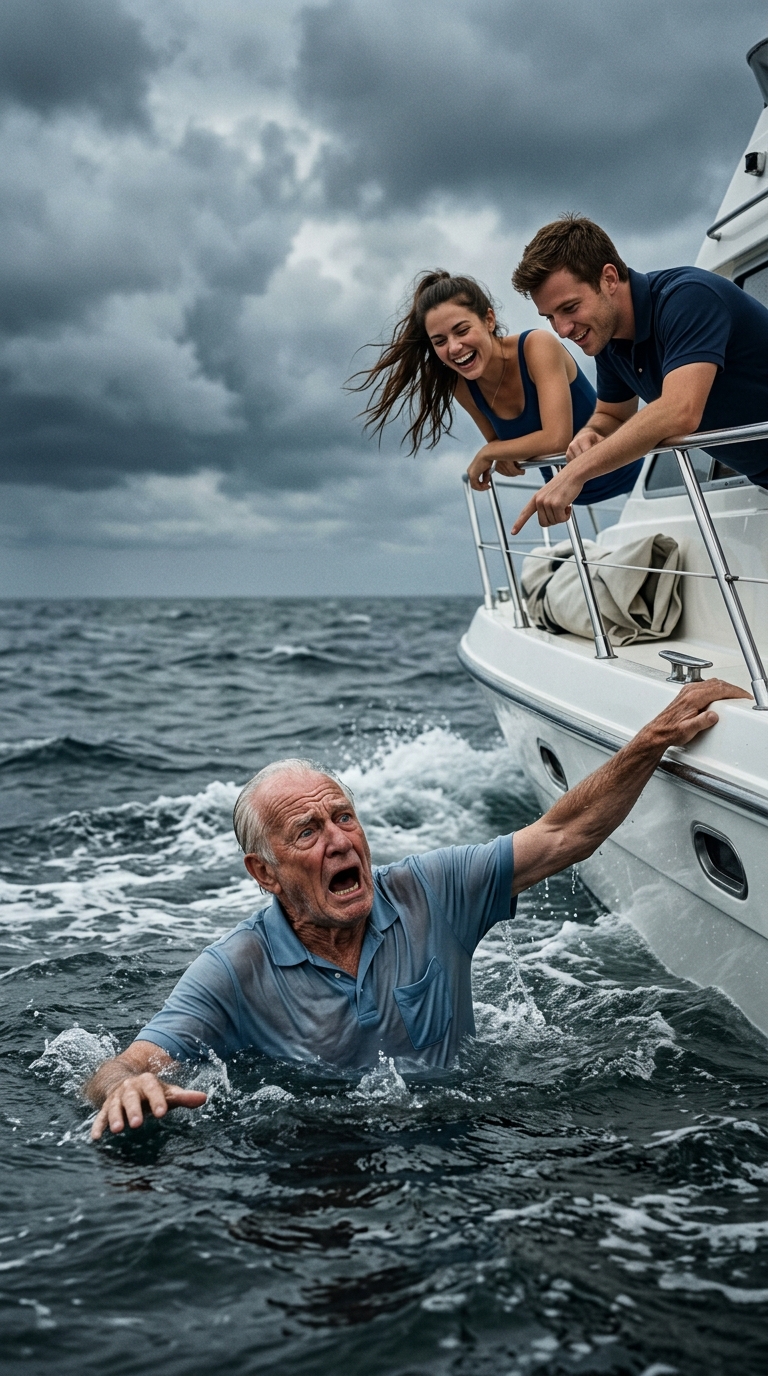
By pure chance, another fisherman found him early the next morning. Half-dead, exhausted, barely conscious. The man pulled him from the sea, brought him to a hospital, and for several days doctors fought to pull him back from the edge of death.
Meanwhile, rumors had already spread through the town that the old fisherman had vanished at sea.
The children pretended they knew nothing.
Only Sofia could not bear the guilt and came to the hospital every day until she finally saw her father alive.
And then Daniel returned home.
And he made certain his children would regret what they had done.
The father did not scream.
He did not contact the police.
He did not create a scandal.
Instead, he calmly gathered his children around the table and quietly told them that he knew everything.
Daniel entered the house peacefully, as though nothing had happened, and called his children to sit down. He neither shouted nor accused them, and he made no attempt to argue.
When everyone was seated, he slowly removed a folder filled with documents and carefully spread them across the table.
His voice remained calm and steady, which made his words feel even heavier.
He explained that after what happened at sea, he had made one final decision and completely changed his will. Everything they had expected to inherit — the house, the land, the money — no longer belonged to them.
Instead, he had transferred everything to the man who had saved his life without hesitation.
And the seaside home they had been willing to betray him for had now been turned into a shelter for elderly people with nowhere else to go.
Daniel looked at his children for a long, exhausted moment and quietly added that he had chosen to leave them not property, but something far more valuable — the opportunity to become decent human beings and one day truly understand what they had done.
A silence fell across the room so deep that even the sound of someone struggling to breathe could be heard.
And in that very moment, each of them realized they had lost far more than an inheritance.
They had lost their father.
Their dignity.
And themselves.
