

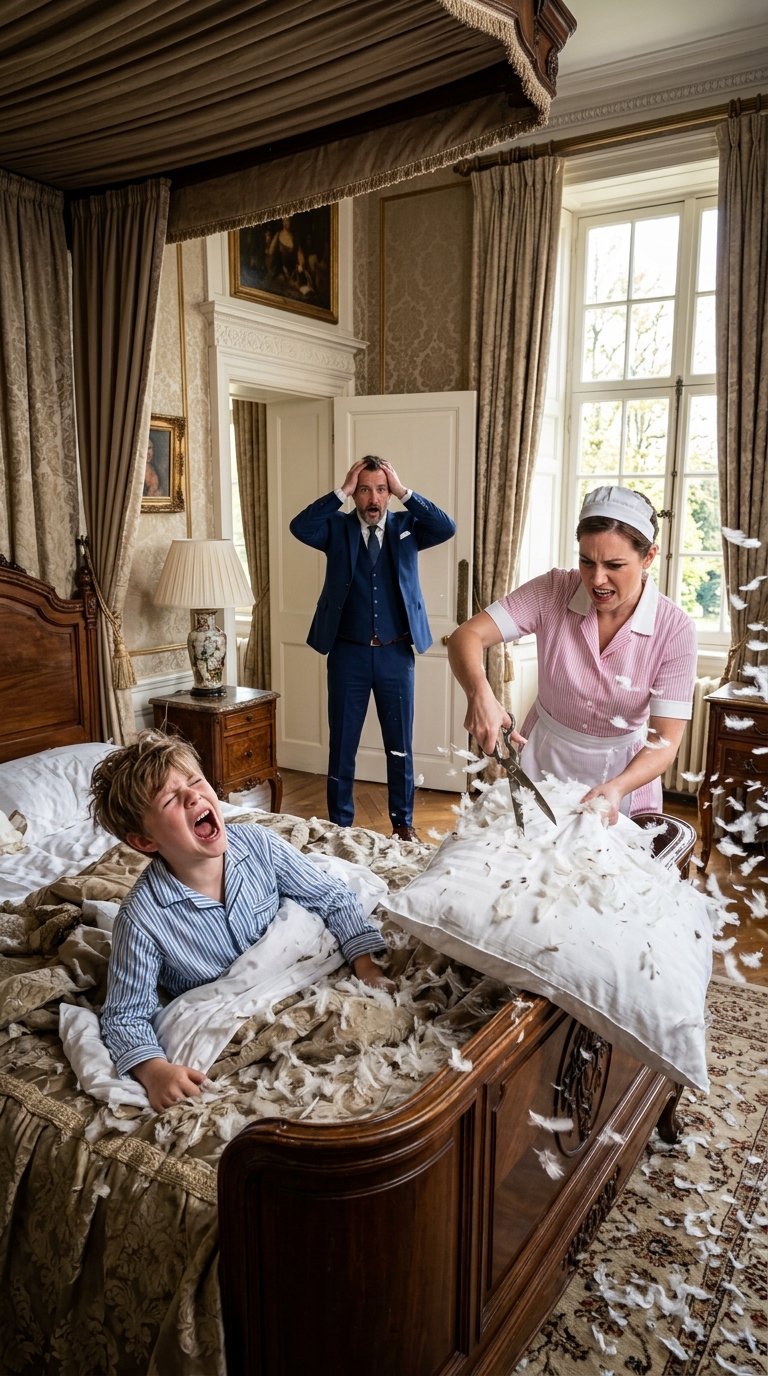
It was nearly two in the morning inside the old colonial mansion on the edge of Ridgewood when the silence suddenly shattered.
A piercing scream echoed through the hallways once again, bouncing off the walls and startling the few staff members still awake. Just like every night before, the cries came from Noah’s bedroom.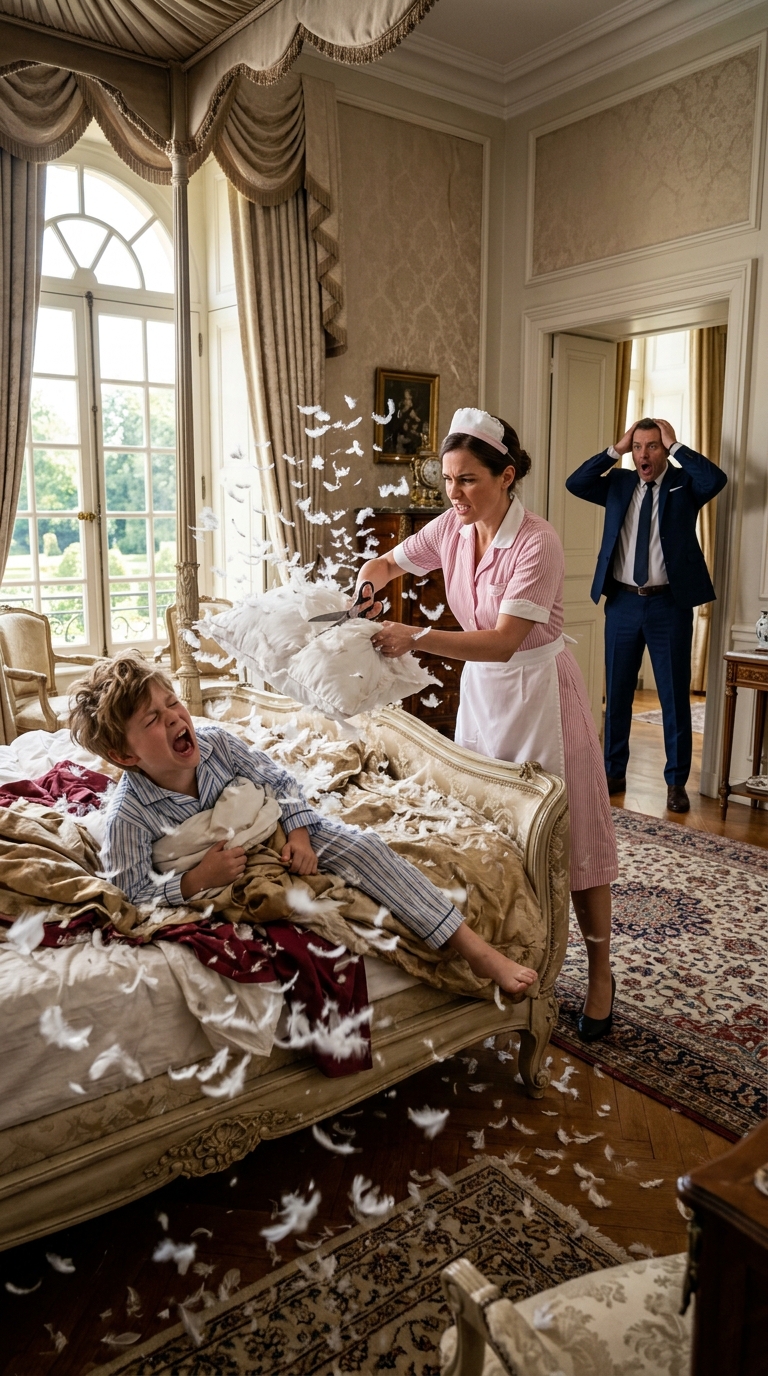
Noah was only six years old, yet his eyes carried a heaviness no child should ever have. That night—like countless others—he fought against his father’s grip. Michael Turner, a worn-out executive still dressed in his wrinkled suit, dark circles deep beneath his eyes, held his son by the shoulders with patience already exhausted.
“That’s enough, Noah,” he barked, his voice strained. “You’re sleeping in your bed like a normal kid. I need sleep too.”
With a frustrated shove, he pushed the boy’s head onto the spotless silk pillow resting at the top of the bed. To Michael, it was just another expensive decoration—another sign of the wealth he had spent years chasing.
But to Noah, it was something far worse.
The instant his head touched the pillow, his body jerked violently, as though electricity had shot through him. A scream ripped from his throat—not a tantrum, not defiance, but pure pain. His hands reached upward desperately while tears streamed down his flushed cheeks.
“No, Dad! Please! It hurts! It hurts!” he sobbed.
Exhausted and convinced by everyone around him, Michael only heard disobedience.
“Stop exaggerating,” he muttered. “Every single night with the same drama.”
He locked the bedroom door from the outside and walked away, never noticing the silent figure standing nearby who had witnessed everything.
That figure was Margaret Collins.
Margaret was the new nanny, though everyone simply called her Mrs. Margaret. Her silver hair was tied neatly into a bun, her hands rough from years of hard work, her eyes sharp from experience. She had no framed diplomas and no professional certificates—but she understood children. And the cries she had just heard were not the cries of a spoiled child. They were cries of suffering.
Ever since arriving at the mansion, Margaret had noticed things others ignored. During the day, Noah was kind and affectionate. He loved sketching animals and hiding behind curtains before jumping out with shy giggles. But every evening, fear consumed him. He clung to walls, begged not to enter his bedroom, and tried to sleep anywhere except his bed—the couch, the hallway floor, even a stiff kitchen chair.
Some mornings, red marks appeared on his skin. His ears looked irritated, and strange scratches covered parts of his body.
Vanessa Brooks, Michael’s fiancée, always had an explanation ready.
“Probably a reaction to the fabric,” she would say smoothly. “Or maybe he scratches himself during the night.”
She spoke with such calm certainty that everyone accepted her answers—all except Margaret.
Vanessa always appeared flawless: styled hair, elegant clothes, a smile polished to perfection. But Margaret noticed the irritation in her face whenever Noah spoke, the impatience whenever he wanted comfort, and the cold distance whenever Michael showed the boy affection. To Vanessa, Noah wasn’t family.
He was a problem.
That night, while muffled sobs slipped through the locked bedroom door, something inside Margaret finally snapped. She still didn’t know the reason—but she knew Noah’s terror was real.
When the mansion finally grew quiet, Margaret made her move.
She waited until the lights dimmed and footsteps disappeared. Then she took a small flashlight from her pocket and quietly headed toward Noah’s room, her heart hammering in her chest. Using the master key, she unlocked the door.
The sight inside broke her heart.
Noah was still awake, curled tightly into the corner of the bed, knees pressed against his chest, hands clamped over his ears as though he wanted to vanish. His eyes were swollen from crying, and angry red marks covered his skin.
“Noah,” Margaret whispered softly. “It’s me. Grandma Margaret.”
Relief immediately washed over his face.
“Grandma,” he murmured weakly. “The bed bites.”
Not itchy. Not uncomfortable. Bites.
Margaret gently stroked his hair and told him to stay still. Then she turned toward the pillow. It looked completely harmless—smooth white silk, perfectly arranged. She pressed her palm firmly into the middle.
Pain exploded through her hand instantly.
It felt as though dozens of needles stabbed into her skin at once. She gasped and jerked her hand away. Under the flashlight beam, tiny spots of blood appeared across her palm.
Fear instantly became rage.
Margaret flipped on the bedroom light and stormed into the hallway.
“Mr. Turner!” she shouted. “You need to come here right now.”
Michael rushed into the room moments later, Vanessa hurrying behind him with fake concern spread across her face. Margaret said nothing. She grabbed a pair of sewing scissors and ripped open the pillow.
Metal pins spilled out across the bed—dozens and dozens of them.
The silence that followed felt suffocating.
Everything hit Michael at once: the nightly screams, the marks on Noah’s skin, his terror of the bed, the excuses.
Slowly, his eyes shifted toward Vanessa’s sewing kit sitting open in the next room, several pins missing.
“Get out,” he said quietly. “Leave my house. Now. Before I call the police.”
Vanessa didn’t argue.
She didn’t have to.
After she was gone, Michael collapsed to his knees and pulled Noah tightly into his arms, trembling.
“I’m so sorry,” he whispered brokenly. “I should have listened.”
That night changed everything.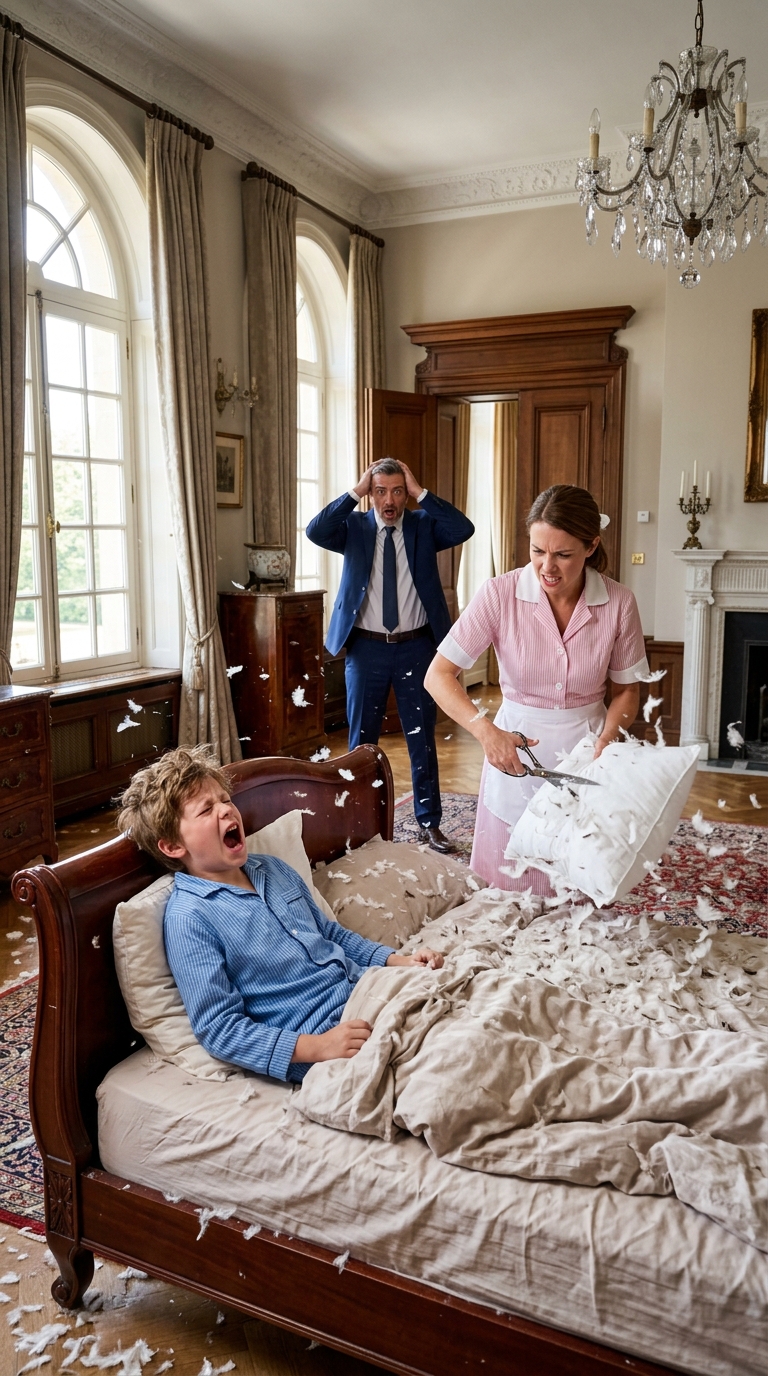
For the first time in months, Noah slept peacefully. His bedroom no longer felt like a place of fear. Michael learned how to truly be there for his son—not distant, not controlling, but attentive and loving.
And Margaret stopped being just the nanny.
She became family.
Because one woman believed a child when he cried, “It hurts.”
And sometimes, listening to those words can save a life.
