

PART 1: THE WIDOW ON THE DIRT ROAD
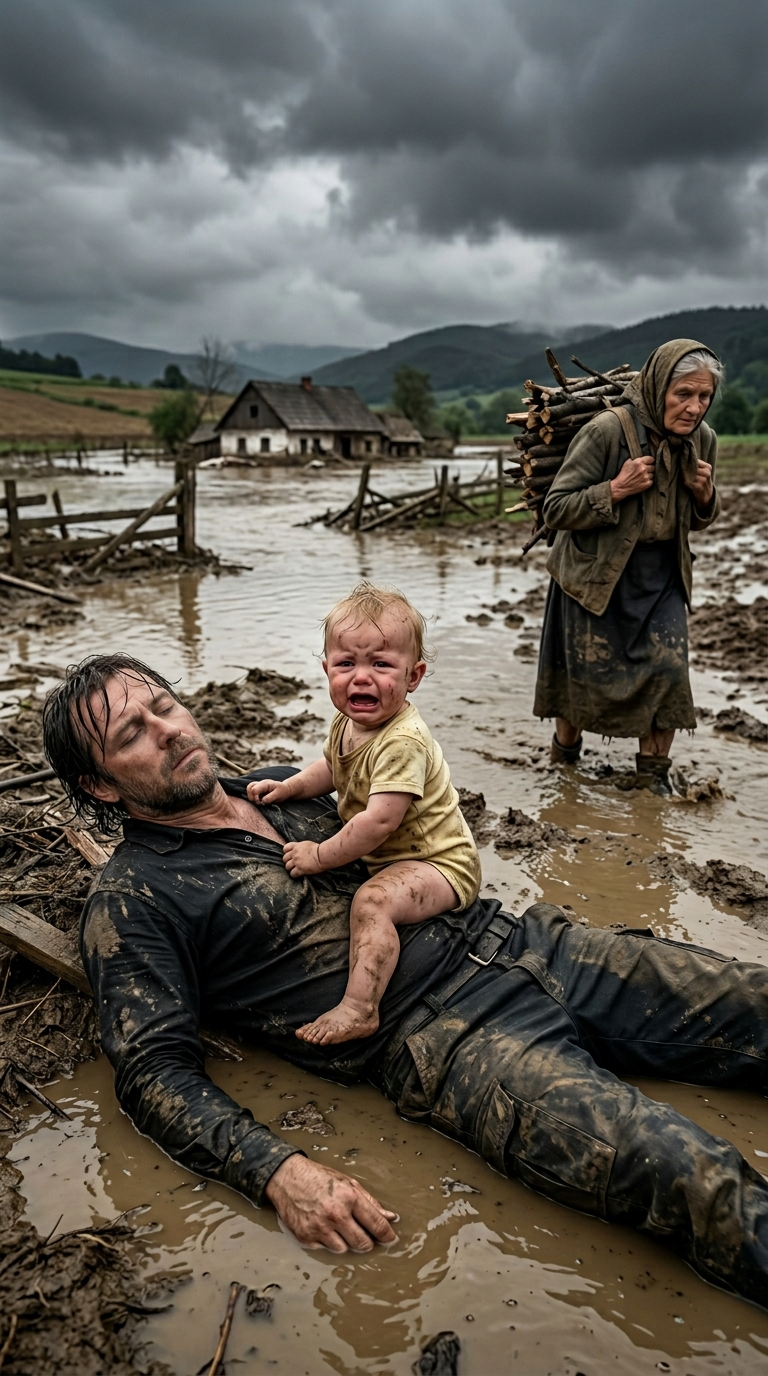
A lonely widow carried bundles of firewood through the countryside… until she discovered a man collapsed beside the road with a sleeping baby still held tightly in his arms.
To the people living in the small rural town in New Mexico, Selma Brooks had almost faded from existence. She was merely the quiet widow who dragged heavy firewood across dusty trails every morning, carrying not only wood on her shoulders but also the unbearable weight of loneliness and abandonment.
Then one freezing morning, the silence of her routine was broken.
A man lay unconscious near the edge of the dirt road with a baby asleep in his arms.
Selma could have kept walking. After all, that was exactly what the town had done to her after her husband passed away.
But instead, she chose differently.
She dropped the firewood that would have kept her warm that night and lifted the stranger from the dirt. Carrying the exhausted man and the sleeping child, she brought them to the only thing she still owned in this world:
Her home.
What started as one simple act of kindness slowly became something much greater, binding together three lonely souls that nobody else wanted.
During those first days, the man never spoke. He simply breathed quietly inside the old clay-and-wood farmhouse where the walls held more prayers than conversations. Selma carefully laid him on the straw mattress that had once belonged to her late husband, Benjamin Brooks.
It was the only place in the house where Benjamin’s scent still faintly remained.
Yet she never hesitated.
She rested the stranger’s head on the cleanest cloth she owned and wrapped his cracked feet in an old blanket forgotten beneath years of dust.
The baby she placed inside a woven basket lined with faded floral fabric left over from the years she used to sew clothes for neighbors.
Selma heated well water inside a clay basin and gently washed the stranger’s feet with warm cloths.
They were split open and bleeding from endless walking.
Each time she wiped away dirt and dried blood, she whispered quiet prayers beneath her breath, speaking both to God and to her own fears at the same time.
The baby never cried.
He slept peacefully, as though completely certain he had finally found safety.
Watching the tiny child awakened something painful inside Selma.
Tenderness.
Longing.
Grief.
She and Benjamin had spent years praying for children, but her womb never carried life. Month after month, she cried alone behind the farmhouse while neighbors built families all around her.
And now fate had suddenly placed a child into her arms.
Not through blood.
Through choice.
She cooked soft white corn porridge mixed with milk and carefully fed the baby one spoonful at a time, testing the warmth against the back of her hand first.
The child swallowed slowly and peacefully, as though he was learning the taste of kindness.
Meanwhile, the stranger drifted between fever and survival.
Selma often studied him quietly.
Beneath the exhaustion, he looked young, though pain marked every feature of his face. He wore no wedding ring. Carried no identification.
Only a necklace of blue beads resting against his chest — the symbol of a faith brought from somewhere far away.
Time moved strangely inside the farmhouse after that.
The sun rose and disappeared again as though even it paused to wonder who the man truly was.
Selma rarely left his side.
Her body ached from sleepless nights, but her heart remained alert. She changed cold compresses, fed the baby, and softly sang old lullabies her mother once sang during years of hardship and mourning long ago.
Then, on the third morning, something changed.
The man’s chest suddenly rose in a violent gasp, like someone bursting free from deep water.
His eyes snapped open.
Panic filled them immediately.
He tried to sit upright while his trembling hands searched desperately through empty air.
“Benny!” he rasped hoarsely. “Where… where’s the boy?”
Selma woke instantly from the chair beside the stove and hurried toward him carrying a steaming mug of herbal tea.
“Easy now,” she whispered gently. “The baby’s safe.”
She pointed toward the woven basket nearby.
Wrapped inside the floral blanket, the child slept peacefully.
The stranger collapsed backward again as silent tears rolled down his dirt-covered face.
It was the cry of a man who had carried the world on his shoulders and somehow refused to let it fall.
“My name’s Selma,” she said softly while handing him the mug. “Drink. It’ll warm you up.”
He accepted the tea with shaking hands.
“I’m Daniel,” he whispered weakly. “And the boy… he’s Benny. My nephew.”
His voice cracked painfully.
“My sister didn’t survive the journey west. I buried her in the desert two weeks ago.”
Selma felt her throat tighten painfully.
Daniel stared quietly at the sleeping child.
“I promised her Benny wouldn’t grow up starving like we did,” he continued. “I promised I’d find somewhere green. Somewhere better.”
Selma nodded slowly.
“The land here isn’t as kind as people claim,” she admitted softly. “But there’s water in the well. And enough wood for a fire.”
Then she looked directly at him.
“For now, that’s enough.”
PART 2: WHISPERS THROUGH THE TOWN
Days slowly became weeks. Daniel Mercer recovered little by little, though fever still haunted him through long nights. Selma Brooks cared for him with cold cloths, herbal remedies, and quiet prayers whispered beside the fire while little Benny Mercer grew stronger every day inside the farmhouse.
The baby quickly gained weight from the corn porridge and fresh milk Selma traded for by selling vegetables from her small garden behind the house.
But in a town where homes stood close together and lonely lives depended on gossip for entertainment, people noticed everything.
Especially when Selma suddenly stopped hauling firewood through the hills each morning.
The first person bold enough to investigate was Martha Doyle, an older woman with sharp eyes and an even sharper tongue.
She crossed Selma’s fence one Tuesday morning carrying a plate of cornbread disguised as kindness.
“Anybody home?” Martha shouted while clapping loudly near the yard.
Selma stepped calmly onto the porch, wiping her hands against her apron.
Behind her, the sound of an axe splitting wood echoed across the property.
Martha’s eyes widened instantly. Daniel stood shirtless beside the woodpile, sweat glistening across his shoulders beneath the morning sun while he chopped enough firewood to last weeks.
Then Benny started crying inside the farmhouse.
The older woman nearly dropped the plate.
“Lord have mercy,” Martha gasped. “A man? And a baby? Living inside a widow’s house?”
Selma walked down the porch steps and quietly accepted the cornbread.
“Thank you for the food, Martha,” she said politely. “Daniel and the boy needed shelter. I had room. That’s all.”
“That’s all?” Martha crossed her arms dramatically. “A respectable widow living with some wandering stranger? What would Benjamin say if he saw this?”
Selma inhaled slowly.
For years she had feared the judgment of women like Martha. She kept her head lowered in town, accepted pity like scraps thrown to a starving animal, and allowed herself to slowly disappear after her husband’s death.
But something inside her had changed.
Maybe it happened the moment she lifted Daniel from the dirt road.
Or maybe it happened while rocking Benny to sleep late at night.
Either way, the invisible widow no longer existed.
“What Benjamin would say,” Selma answered firmly, “is that his home should never turn away hungry people.”
Martha blinked in surprise.
“The town already thinks you’ve lost your mind,” she snapped back. “Or worse.”
Selma’s eyes hardened slightly.
“The town ignored me when I was starving after my husband died,” she replied calmly. “Now suddenly everybody has opinions because I’m not alone anymore?”
Martha stepped backward like she’d been struck.
“Save your gossip for church,” Selma continued. “Inside my home, kindness makes the rules.”
The older woman muttered something about sin and punishment before hurrying away across the dirt road.
After that day, rumors spread through town like wildfire.
Some claimed Daniel was hiding from the law.
Others insisted Selma had secretly remarried him already.
A few cruel voices whispered even uglier things.
But inside the farmhouse, peace slowly took root anyway.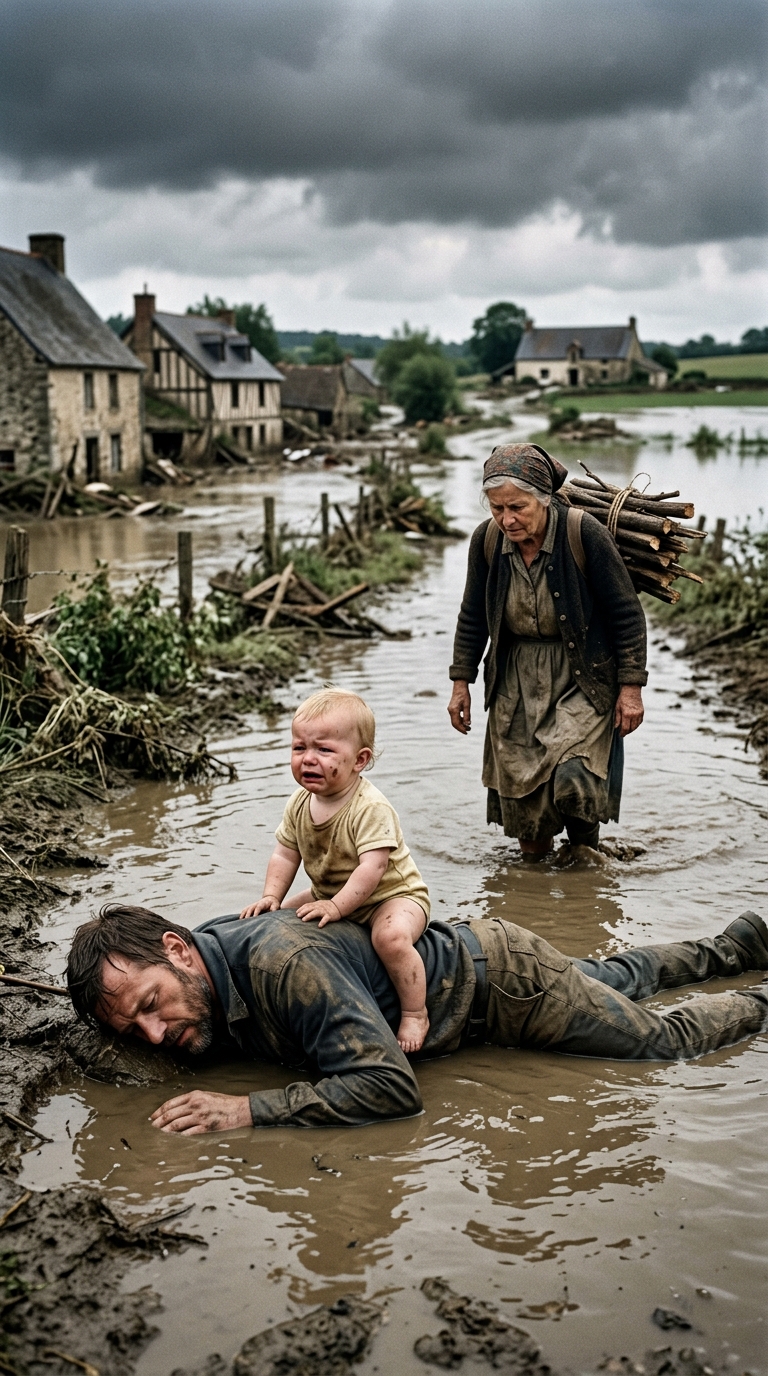
Once his strength returned, Daniel began repairing everything loneliness and time had destroyed.
The leaking roof gained fresh boards before winter rains arrived. Broken fences were rebuilt with cedar posts. He plowed the hard ground behind the house and planted beans, squash, and corn.
Without ever speaking about it directly, the three of them slowly became a family.
Selma woke each morning to the smell of coffee brewing beside the stove while Benny laughed from his basket nearby. Daniel rarely wasted words, but gratitude lived quietly inside everything he did.
One evening beneath the flickering light of a kerosene lamp, Selma sat sewing tiny shirts for Benny from leftover fabric scraps while Daniel sharpened a hoe across the table.
Outside, crickets filled the darkness.
Finally, Daniel spoke.
“You never asked why I was running.”
Selma paused her stitching but didn’t immediately lift her eyes.
“I didn’t need to,” she answered softly. “Your feet were bleeding. The baby was starving. Sometimes survival matters more than the past.”
Daniel slowly lowered the tool.
“The past matters,” he said quietly.
For several long seconds, he stared toward Benny sleeping peacefully nearby.
Then he finally revealed the truth.
Benny’s father was a wealthy ranch owner from southern Texas. A violent man who forced himself upon Daniel’s younger sister after exploiting debts their family couldn’t repay.
When she died giving birth, the ranch owner demanded the child back.
Not as a son.
As property.
“He planned to raise Benny like another ranch hand,” Daniel whispered darkly. “A bastard with no name and no future.”
Cold fear slid down Selma’s spine.
“So I stole him,” Daniel admitted. “I took Benny in the middle of the night and crossed two states trying to disappear.”
The farmhouse suddenly felt much smaller.
Danger no longer belonged to the past.
It could still come looking for them.
“They’ll search forever if they have to,” Daniel continued. “But I won’t let them take the only good thing my sister left behind.”
Then he looked directly at Selma.
“I never wanted to bring this trouble to your door. If you want me gone, I’ll leave before sunrise.”
Selma turned toward Benny sleeping peacefully beneath the lamp glow.
She remembered all the nights she cried behind the farmhouse praying for a child.
Praying for purpose.
Praying not to feel invisible anymore.
And somehow, against all odds, she finally had a family.
Strange.
Broken.
Unexpected.
But hers.
She calmly picked up the sewing needle again.
“The sun’s rising tomorrow,” she said softly. “And the crops still need water.”
Daniel stared at her silently.
“You’re not going anywhere.”
PART 3: JUDGMENT AT THE FARMHOUSE
Months passed, and the rainy season finally swept across rural New Mexico, transforming dusty yellow roads into deep red mud. Little Benny Mercer began crawling around the farmhouse yard, coating his knees in dirt while filling the house with laughter. Daniel Mercer and Selma Brooks built something gentle and unspoken between them.
There were no dramatic confessions of love.
Only quiet care.
Fresh coffee waiting beside the stove each morning.
Cool water carried out to the fields during long afternoons.
Lingering glances that lasted slightly longer than necessary.
But peace in small towns is fragile.
And eventually, the town turned against them.
The problem was no longer only Daniel’s presence. People resented the happiness growing inside Selma’s home. Her garden flourished. Her farm produced better harvests than neighboring properties. The lonely widow everyone once pitied had somehow created a life worth envying.
That bitterness slowly disguised itself as morality.
One Sunday morning, the sound of approaching horses shattered the calm around the farmhouse.
Selma stepped onto the porch and froze.
Standing outside the gate was Father Thomas Hale beside the deputy sheriff and several men from town.
Daniel sensed danger immediately.
Without hesitation, he stepped protectively in front of Selma and Benny.
“What do you want?” Selma asked coldly.
Father Thomas folded his hands solemnly.
“We’re here for the moral protection of this community,” he announced. “A widow living beneath the same roof as a man who is not her husband is an insult to God.”
Selma’s jaw tightened.
The priest continued.
“The deputy is here to escort the stranger out of town.”
Then his eyes shifted toward Benny.
“And the child will be taken to the orphanage in Santa Fe where proper Christian women can raise him.”
The world seemed to stop.
Again.
Someone wanted to take everything from her.
Daniel clenched his fists tightly.
“I’m not leaving,” he growled. “And nobody touches that boy.”
The deputy sheriff rested one hand near his revolver.
The tension thickened instantly.
Then suddenly, Selma stepped forward.
Past Daniel.
Past Benny.
Past fear itself.
She stopped only inches away from Father Thomas.
For years she had been invisible.
The grieving widow.
The barren woman.
The quiet nobody everyone ignored.
Not anymore.
“Father,” Selma began slowly, her voice carrying across the silent yard, “where was this community’s morality when Benjamin died and I nearly starved through my first winter alone?”
The priest swallowed hard.
“Selma, don’t speak out of anger…”
“Where was the deputy’s justice,” she interrupted sharply, “when merchants paid me half price for my firewood because they knew I had nobody to defend me?”
The crowd behind the fence shifted uncomfortably.
Selma’s voice grew stronger with every word.
“You people ignored me when I was lonely. You ignored me when I was hungry. But now suddenly you care because my home has laughter again?”
Father Thomas stepped backward slightly.
“God does not approve of sin,” he replied weakly.
Selma’s eyes flashed with fury.
“Don’t use God to excuse cruelty,” she snapped.
Silence crashed across the yard.
“You’re not offended by my morality,” she continued loudly. “You’re offended because I stopped being miserable.”
Nobody answered.
“You’re angry because my land produces more than yours now. Angry because this house has joy inside it while your own homes are filled with bitterness and rules.”
The words struck like stones.
Then Selma pointed directly toward Benny.
“That child is my son as much as he’s Daniel’s nephew. I stayed awake through his fevers. I taught him how to laugh again.”
Her voice cracked emotionally.
“If you want to take them away,” she whispered, “you’ll have to burn this house with me inside it.”
Complete silence followed.
Neighbors watching near the fence slowly lowered their eyes in shame.
The truth in Selma’s voice was too powerful to fight.
Even the deputy sheriff looked uncertain now.
Finally, Father Thomas turned away.
“May God have mercy on your soul, Selma,” he muttered quietly before walking back toward his horse.
The deputy followed.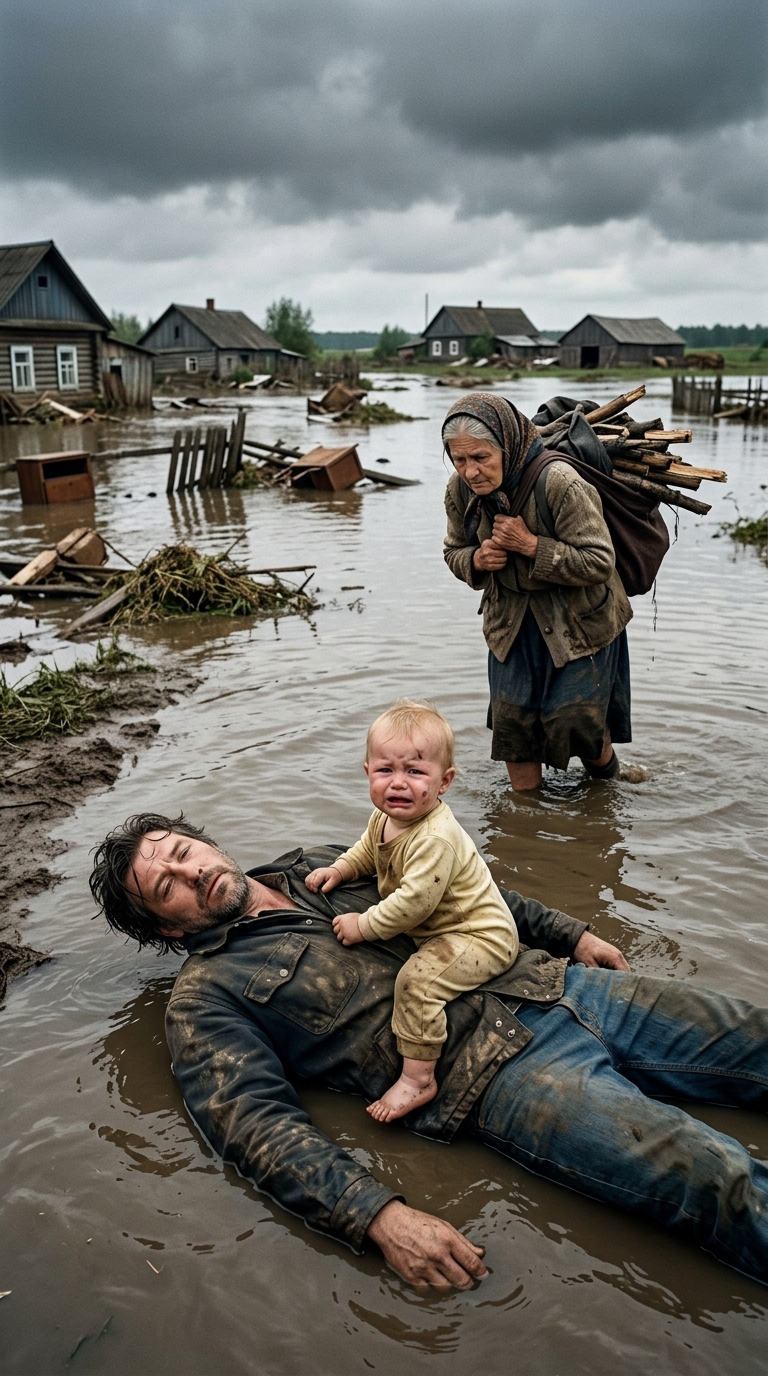
Then the townspeople slowly dispersed like smoke drifting through the wind.
Selma remained standing in the middle of the yard, her shoulders trembling from grief and adrenaline.
A moment later, Daniel stepped behind her.
For the first time since arriving at the farmhouse, he gently placed both hands on her shoulders.
Strong.
Protective.
Certain.
Selma turned toward him with tears filling her eyes.
Then she collapsed into his arms.
Daniel held her tightly while burying his face against her hair, which smelled faintly of rosemary and woodsmoke.
“It’s over,” he whispered softly. “Nobody’s taking us away.”
