

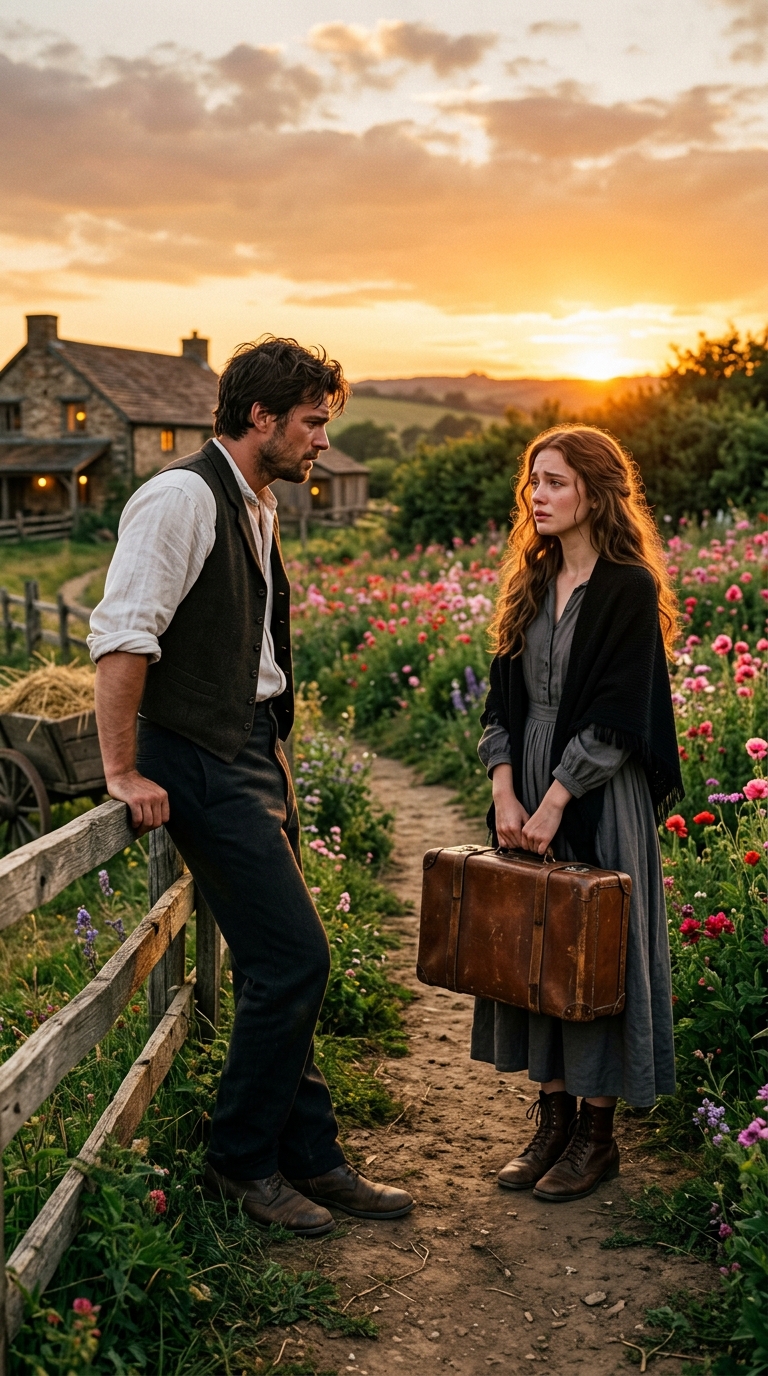
The daughter thrown out of her home found a family among the flowers.
The afternoon Mariana Castañeda said “no,” silence fell over the living room as if someone had switched off the world.
The Castañeda house, in an old town in Guanajuato, had always smelled of polished wood, freshly brewed coffee, and family pride. On the walls hung portraits of stern men with mustaches, women dressed in their Sunday best, and a history everyone repeated like law: the Castañedas never made mistakes, the Castañedas didn’t mix with just anyone, the Castañedas protected their name above any desire.
Mariana was twenty-four years old and had obeyed her whole life. She had learned to speak softly, to walk carefully, to smile when visitors came, and to hide her dreams in a notebook tucked between her clothes. But that afternoon, sitting across from her father with her cold hands in her lap, she knew that if she stayed silent one more time, she would lose herself forever.
“Don Patricio Montiel is a respectable man,” her father, Don Arturo, said, tapping the table lightly with his fingers. “He has businesses, properties, influence. This marriage will save our affairs and you’ll be well provided for.”
Doña Elvira, her mother, lowered her gaze. She knew Mariana did not love that forty-eight-year-old man—widowed, proper, and cold—who looked at her as if he had already chosen the perfect piece of furniture for his house.
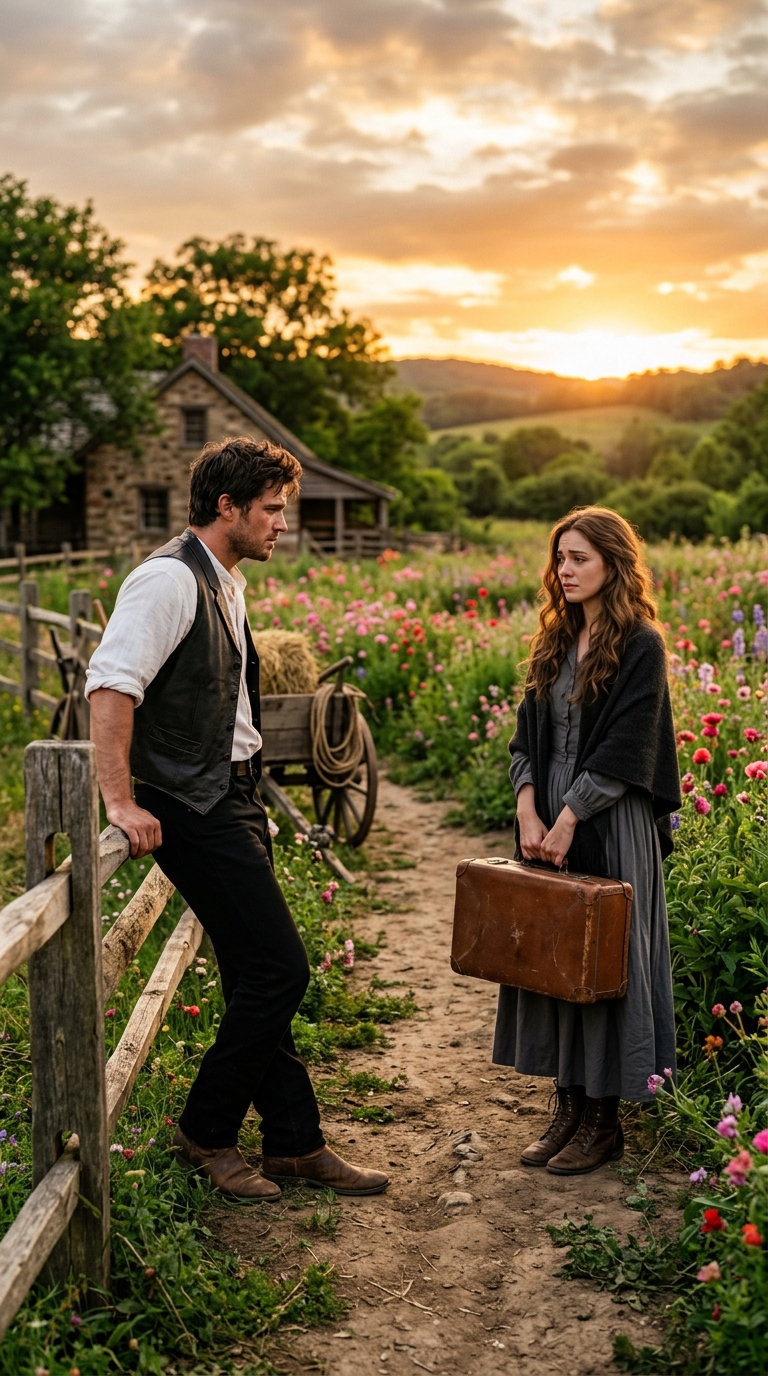
“I can’t marry him,” Mariana said.
Don Arturo raised his head.
“What did you say?”
“That I can’t. I don’t love him. And I don’t want my life to be the price paid to settle a debt I didn’t create.”
The slap never came, but her father’s look hurt just as much.
“You’re ungrateful,” he said, standing up. “Everything you have, you owe to this family. If you don’t obey, then you no longer belong here.”
Mariana felt something break inside her. She looked at her mother, hoping for a word, a defense, a gesture. Doña Elvira’s eyes were full of tears, but she said nothing.
“If you walk out that door,” Don Arturo declared, “don’t come back.”
Mariana didn’t cry. She stood up slowly, went to her room, and packed a small suitcase with three simple dresses, a sweater, her notebook of floral drawings, and the savings she had secretly collected from selling embroidery. At dawn, while the town was still asleep, she walked through the iron gate without looking back.
The news spread before noon. “The Castañeda daughter left because she’s rebellious.” “She turned down Don Patricio.” “What a disgrace for her father.” Mariana heard the whispers as she walked to the bus station with her suitcase. No one helped her. No one asked if she had somewhere to sleep.
She bought a ticket on the first bus heading to Michoacán.
She didn’t know exactly where she was going. She only knew she preferred the fear of an unknown road to the safety of an elegant cage.
The bus left her near a valley surrounded by green mountains, where the air smelled of damp earth and pine. She walked nearly an hour along a dirt path until she reached a farm called Las Dalias.
The place was beautiful but sad. Fields of flowers stretched across the hillside: red dahlias, pale roses, tired tuberoses, and out-of-season marigolds growing in disordered rows. The greenhouses had broken glass, the pots were crowded too closely together, and the main stone house with old tile roofs seemed to be in mourning.
In the courtyard, an older man was carrying sacks.
“Good afternoon,” Mariana said. “I’m looking for work.”
The man looked at her with distrust.
“Work? There’s barely enough here for those of us who are already here.”
“I can clean, plant, cut flowers, cook—whatever you need. I only need a roof and food.”
The man, whose name was Don Chuy, pointed toward the greenhouse.
“Talk to the boss. But don’t get your hopes up. Don Julián isn’t in the business of taking in lost souls.”
Inside the greenhouse, Mariana found Julián Robles, a thirty-three-year-old man, tall, with rolled-up sleeves and dark eyes that never seemed to rest. He was examining some sick roses with a serious expression.
“We’re not hiring,” he said before she could finish explaining.
“Then give me three days to prove myself. If I’m no good, I’ll leave.”
Julián observed her: the worn suitcase, shoes covered in dust, and the straight back despite her exhaustion.
“Three days,” he finally agreed. “You’ll sleep in the room next to the storeroom. No one gets special treatment here.”
“I’m not asking for any,” Mariana replied.
That same afternoon she started working. Don Chuy taught her the tasks with grunts. Julián barely looked at her. Doña Refugio, the woman who ran the kitchen and had raised Julián since he was a boy, gave her a plate of hot soup without asking questions.
At dinner, Mariana met Sofía, Julián’s nine-year-old niece—a thin, quiet girl with huge, sad eyes. She sat beside her uncle and looked at Mariana as if she were an intruder.
“Is she staying?” the girl asked.
“Only a few days,” Julián answered.
Mariana said nothing. She knew how to recognize someone afraid of losing more.
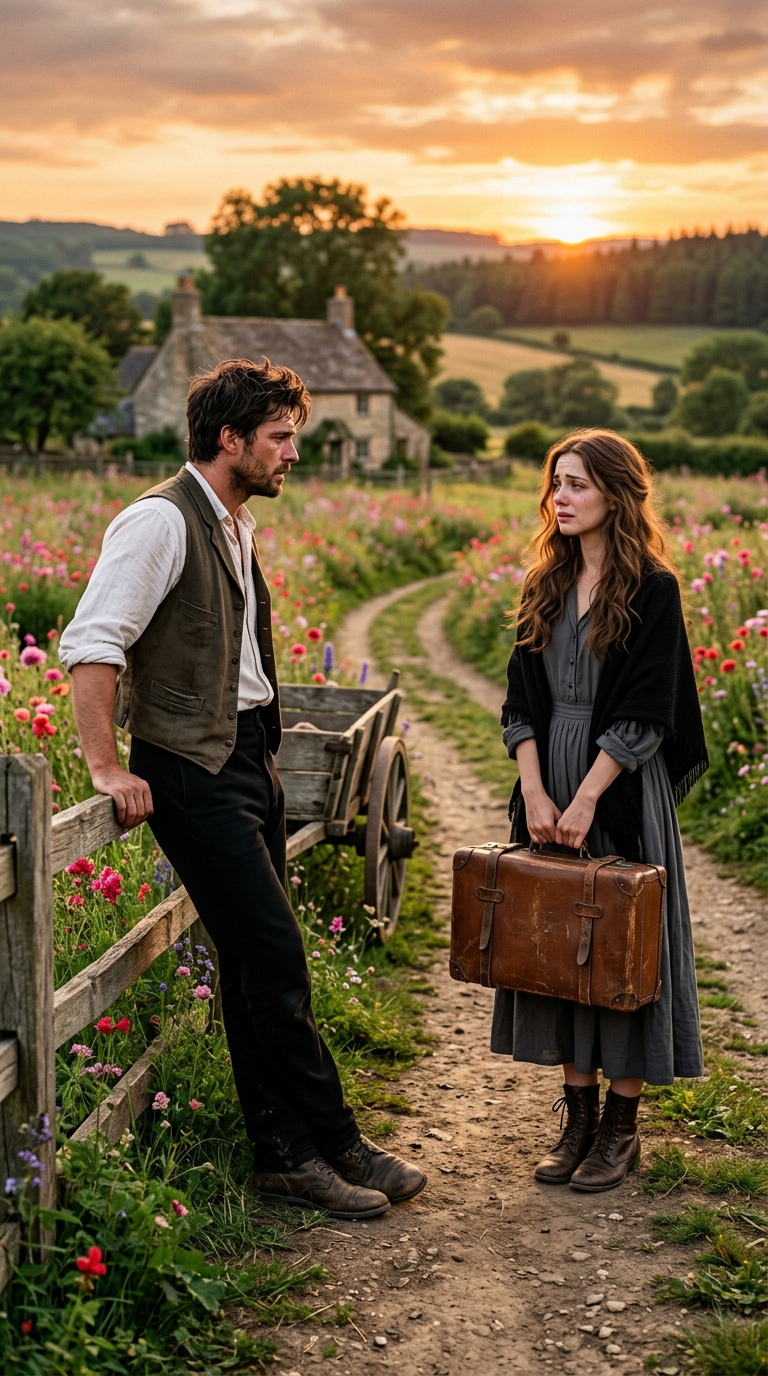
During the first week, Mariana spoke little and observed a lot. She noticed the flowers weren’t dying from lack of beauty, but from lack of care. The dahlias needed more space. The rose bushes were poorly pruned. Watering reached some areas too late and drowned others. The bouquets they took to market were large, heavy, and graceless, as if no one remembered that a flower should also tell a story.
One morning, using flowers that were about to be thrown away, Mariana made five small bouquets: wine-colored dahlias with white tuberoses, cream roses with eucalyptus leaves, delicate marigolds mixed with wildflowers. She tied them with fine twine.
“And what’s that?” Don Chuy grumbled.
“Flowers that no one was going to buy.”
“Even less like that.”
But at the market, the five bouquets sold before noon.
Carmen, the woman running the stall, called excitedly:
“Tell the girl to make more. People asked who made them.”
Julián received the extra money without saying a word. But that night, for the first time, he looked at Mariana with real attention.
The days passed. Mariana cleaned the house windows, opened curtains that had been closed for months, and placed fresh flowers on the table. Sofía began approaching the greenhouse without speaking. One day she handed her a ribbon that had fallen. Another day she stayed to watch how Mariana arranged a bouquet.
“Flowers don’t like to be squeezed,” Mariana explained gently. “If you give them space, they breathe better.”
Sofía didn’t answer, but she returned the next day.
Just when it seemed Las Dalias was beginning to wake up, the threat arrived.
A black car drove up the dirt road. Out stepped Esteban Ledesma, a businessman from Morelia—elegant, smiling, and dangerous. He offered to buy the entire farm to turn it into a boutique hotel.
“You have debts, Don Julián,” he said, handing over an envelope. “I’m giving you a dignified way out.”
“Las Dalias is not for sale,” Julián replied.
Ledesma smiled.
“Not yet.”
After that visit, several buyers canceled orders. The bank called demanding overdue payments. A supplier refused to deliver fertilizer without advance payment. Julián began spending entire nights reviewing accounts.
One night, Mariana overheard him telling Doña Refugio:
“Maybe selling is best for Sofía. I can’t keep holding up a dead dream.”
Those words burned Mariana. The next day she brought a folder made of recycled paper to the office.
“Don’t sell,” she said.
Julián looked up, exhausted.
“It’s not that simple.”
“I know. That’s why I made a plan.”
She showed him drawings, lists, and calculations. Bouquets for rural weddings, arrangements for churches, table centerpieces for small hotels, special orders for Day of the Dead. She proposed selling less quantity but with more value. Telling the story of Las Dalias. Making every bouquet feel as if it had been made for a memory.
Don Chuy, listening from the doorway, let out a laugh.
“It sounds nice, but banks don’t accept pretty flowers.”
Mariana looked at him calmly.
“Then let’s make flowers that sell before they wilt.”
Julián remained silent. Then he took the folder.
“All right. We’ll try it. But if we do this, you’ll be in charge.”
Mariana felt fear and hope mix in her chest.
“You won’t regret it.”
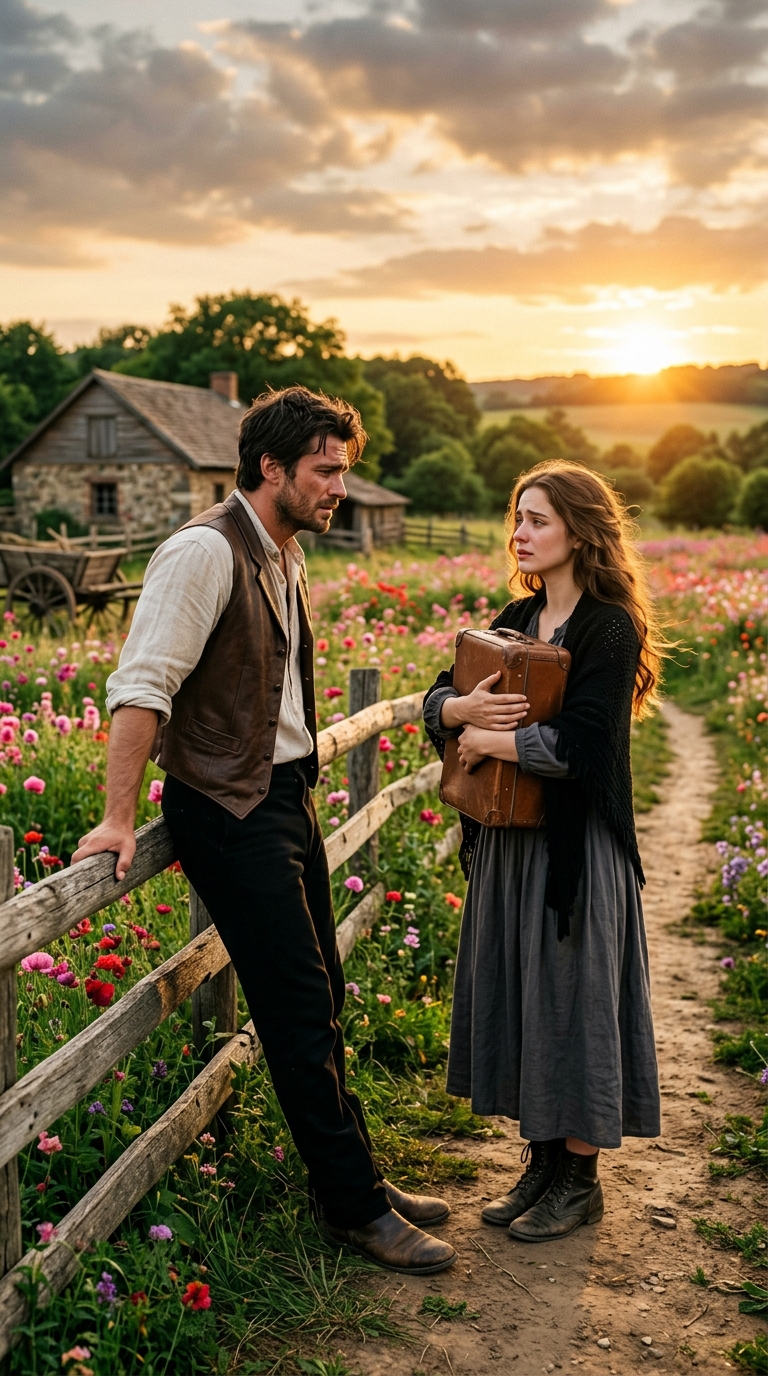
The farm became a whirlwind of activity. They cut flowers at dawn, assembled bouquets until night, and delivered orders to nearby towns. Carmen secured a wedding. Doña Refugio spoke with the parish. Don Chuy, though he grumbled, carried boxes with more energy than before. Sofía began helping with the ribbons.
But just as the first large orders were about to go out, Don Arturo Castañeda appeared.
He arrived alone, furious, wearing a dark suit under the Michoacán sun.
“So this is where you are,” he said when he saw Mariana with her hands stained with dirt. “Working like a servant.”
Julián tried to intervene, but Mariana raised a hand.
“I’ll speak with him.”
Don Arturo clenched his jaw.
“Your mother is sick with sadness. Don Patricio still agrees to marry you. I’ve come to give you one last chance.”
Mariana took a deep breath. Sofía watched from the porch. So did Julián.
“I don’t need any man to accept me in order to have value, Father.”
“You are my daughter. Your duty is to obey.”
“You threw me out when I stopped being useful to you. You didn’t come to ask for forgiveness. You came to recover a business piece.”
Don Arturo’s face went pale.
“You’ll regret this.”
“Maybe. But it will be my regret. My life. My decision.”
The silence stretched. For the first time, Don Arturo found no words to dominate her. He turned and left.
Mariana cried when the car disappeared, but she didn’t fall. Sofía approached slowly and took her hand.
“Don’t go,” the little girl whispered.
Mariana knelt in front of her.
“I’m not going anywhere.”
August brought unexpected results. The bouquets from Las Dalias became known. The rural wedding published photos. Two hotels requested weekly arrangements. The parish ordered permanent flowers for every Sunday. With the payments, Julián managed to renegotiate with the bank.
When Esteban Ledesma returned, he found Julián, Mariana, Don Chuy, and Sofía in the courtyard, surrounded by boxes ready for delivery.
“My offer still stands,” the businessman said.
Julián smiled for the first time in a long while.
“So does ours: Las Dalias is not for sale.”
Ledesma looked at Mariana and understood that this young woman had changed the game. He left without saying goodbye.
That night, they all ate together. Doña Refugio made mole, Don Chuy told bad jokes, and Sofía placed a crooked bouquet she had made herself in the center of the table.
“It’s for the house,” she said.
Mariana smiled with tears in her eyes.
Months later, Las Dalias was not rich, but it was alive. The fields filled with color again. The house breathed with open windows. Sofía laughed more. Don Chuy no longer called her “the girl,” but “our Mariana.”
One afternoon, Julián sat beside her on the porch as the sun set over the red dahlias.
“You arrived asking for three days,” he said. “And you ended up saving us.”
Mariana looked out at the fields.
“You saved me too.”
Julián looked at her with tenderness.
“Stay. Not as an employee. Stay as part of this home. No conditions, no cages, no contracts.”
Mariana felt that, at last, a door was opening without demanding she stop being herself.
“I’ll stay,” she answered.
And when Sofía ran toward them holding a flower, Mariana understood that a home is not always where you are born. Sometimes it is the place where, after being rejected, someone looks at you with love and says:
“Here, you can bloom.”
