

Chapter 1: The Shattered Morning
The silence inside a solitary home on a Sunday morning carries a distinct, crushing weight. Since losing my wife, Sarah, three years ago, holidays had become something to endure rather than celebrate.
That Easter Sunday, I stood in the middle of my worn kitchen, watching the microwave turn a mug of leftover dark roast coffee.
The low hum filled the space, competing with the steady ticking of the hallway clock. Pale sunlight—too cold for an Ohio spring—cut through the blinds, catching dust drifting in the still air.
I am Tom Whitaker, a man who spent twenty-five years in the chaos and blood of emergency crisis response. I had retired into silence—a silence I both needed and hated. I had just reached for the microwave handle when my phone, resting on the cold granite counter, jolted violently to life.
The screen lit up with one word: Emily.
A reflexive smile formed instantly, the kind only a father knows. I expected to hear Sophie laughing in the background, maybe wrapping paper tearing, or a rushed question about glazing a ham. I answered and lifted the phone to my ear.
“Happy Easter, sweetheart,” I said, warmth already in my voice.
What I heard next drained the air from my lungs.
“Dad… please come get me.”
It wasn’t a request—it was a hollow, desperate signal from a nightmare. Emily never sounded like that. Not even during the drawn-out divorce scare years ago when she nearly left Ryan Mercer before convincing herself everything would be okay. Back then, it was frustration and tears. This was something else entirely. Her voice was thin, ragged, trembling with a kind of terror I’d only heard from victims trapped in twisted wreckage.
The father in me felt my chest tighten painfully. The veteran responder in me shut that down instantly, sliding into cold, precise focus.
“I’m on my way,” I said flatly. No questions. No hesitation. The assessment had already begun.
I left the coffee untouched. Grabbed my keys from the hook. The metal clink cut sharply through the silence. I climbed into my truck, the engine roaring alive in sync with my pulse. As I reversed out, my mind cycled through worst-case scenarios. I knew the Mercer home—the polished image they showed the world.
But as I sped toward it, one question took hold:
What exactly am I driving into?
By the time I reached the hill leading into their gated neighborhood, distant flashing lights hinted that the Mercer family’s perfect image was already starting to crack.
Chapter 2: The Porcelain Suburb
The Mercer house sat like a crown jewel at the end of a pristine cul-de-sac. 18 Hawthorne Lane. A large colonial home of spotless white brick and slate roofing. When I slammed my truck into park, the contrast of the scene hit me hard.
The yard looked like a staged postcard of suburban perfection. Pastel plastic eggs scattered neatly across bright green grass. Painted wooden rabbits near blooming shrubs. A banner stretched across the porch read, Happy Easter. From down the street came the soft laughter of children, blending with the rich smell of a honey-glazed ham drifting from the kitchen window.
It looked like a place where nothing ugly could ever exist.
I cut across the lawn, crushing a plastic egg under my boot. Before I could knock twice, the door opened.
Ryan Mercer stood there in a crisp shirt, sleeves rolled to show an expensive watch. His hair was perfect—but his expression made adrenaline flood my system. He was smirking. Annoyed.
Behind him stood his mother, Linda Mercer. Cold, sharp, composed. She held a crystal glass, studying me with quiet disdain.
“Emily called me,” I said evenly. “She’s coming with me.”
Ryan laughed. A dismissive, grating sound. “Tom, relax. She’s just emotional. It’s Easter. Don’t cause a scene.”
He tried to close the door. I stopped it with my boot.
Linda stepped forward, eyes narrowing. She shoved me hard in the chest. “She is not leaving our holiday dinner. Go back to your lonely, pathetic little house, Tom.”
I barely reacted. Losing Sarah had taught me how to absorb pain without flinching. But years of pulling victims from behind polished doors had taught me something else too—when words were hiding something worse.
Through the gap in the door, a sound slipped out.
Not crying.
A wet, desperate struggle for breath.
Every muscle in my body tightened. The grieving father disappeared. The responder took over.
I drove forward, forcing my way inside. Ryan grabbed my arm, but I twisted free, sending him stumbling back.
I crossed the marble foyer in seconds—then saw the living room.
Chapter 3: The Ruined Holiday
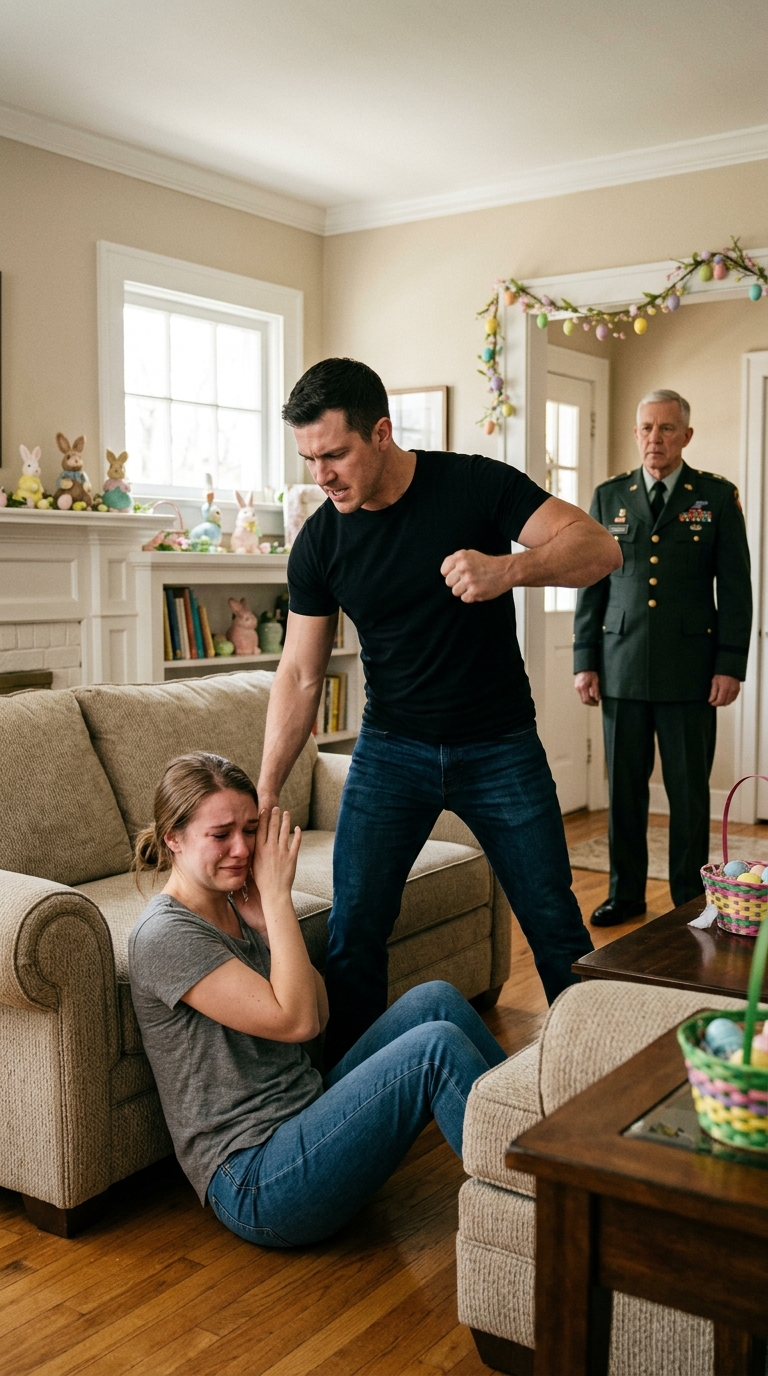
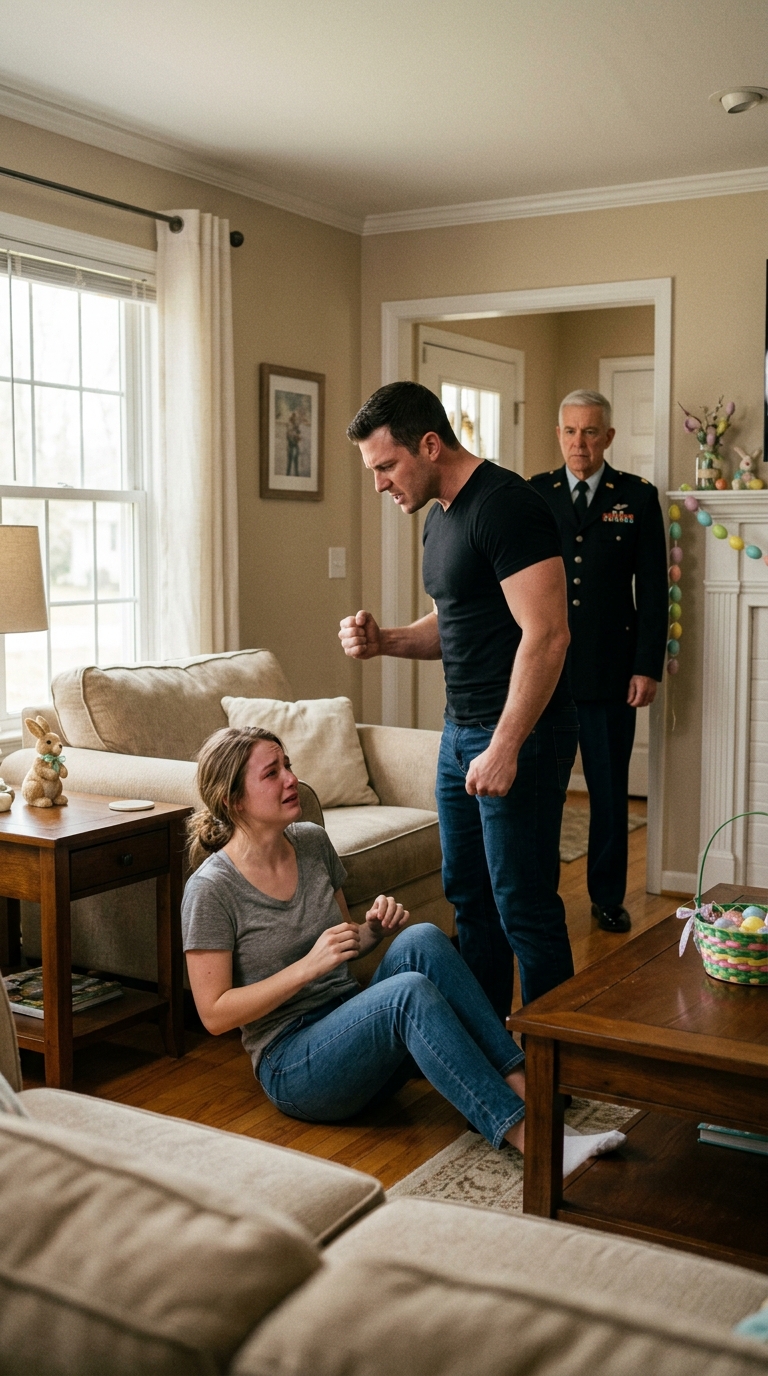
The room had been perfect. Now it was wrecked.
Eggs crushed across a Persian rug. A basket overturned beside the couch. Chocolate smeared like something torn apart.
And on the floor—
My daughter.
“Emily,” I whispered.
Her face was badly injured. Lip split, blood running. Her cheek swelling dark and fast. Her dress soaked red.
For a second, everything went silent.
Then she lifted her head. One eye met mine—wide, filled with shame.
“He said… he said I ruined Easter.”
Something inside me froze solid. Not explosive anger—something colder. More precise.
I pulled out my phone. Dialed 9-1-1.
With my other hand, I locked the front door. The click echoed loudly.
Ryan stepped forward—then saw the phone. Heard the dispatcher. Saw the locked door.
His confidence vanished.
“9-1-1, what is your emergency?”
“My daughter has been brutally assaulted,” I said steadily.
Everything changed in that moment.
Chapter 4: The Standoff and the Digital Trail
While I assessed Emily, Linda launched into frantic excuses. “She fell! She’s dramatic!”
Emily flinched. The dispatcher heard everything.
“Yes,” I confirmed calmly. “Both of them are still here.”
Ryan tried to intimidate me. “Turn that phone off.”
“Try me,” I said quietly.
He didn’t move.
Then I saw Sophie. Silent. Frozen. Covered in chocolate and fear.
I reached out. “Sweetheart. Come here.”
Linda tried to stop her—but Sophie ran to me.
“Daddy pushed Mommy,” she whispered.
That was it.
Sirens approached. Ryan tried to talk his way out. I documented everything—photos, blood, damage.
Then I caught Linda hiding her phone. I took it.
A message was open:
Emergency. Emily got completely hysterical, attacked Ryan, and fell hard. Police might be involved. Please back us up and say she’s been acting erratic if anyone asks.
“You were writing a script,” I said.
A knock thundered at the door. Police.
Sophie pointed at Ryan. “He hurt Mommy because she wanted to leave.”
And everything collapsed.
Chapter 5: The Reckoning and the Architecture of Truth
Ryan ran. Officers tackled him instantly.
The truth unfolded fast. Paramedics took Emily. Neighbors came forward. Cameras revealed everything—Emily trying to leave, Ryan dragging her back, Linda blocking the door.
Statements piled up. Evidence stacked higher.
By evening, Ryan was arrested for felony domestic violence. Linda was charged for obstruction and false statements.
Their perfect world was gone.
At the hospital, Emily finally spoke.
“I thought if I stayed quiet… he’d change.”
I took her hand. “Bad men don’t change because you stay quiet.”
She cried. “I should’ve left sooner.”
“No,” I said. “You left today. That’s what matters.”
Later, my phone buzzed.
“You think this is over, Tom? We own the judges in this county.”
Empty threats.
Chapter 6: Peace is Not Silence (Epilogue)
The weeks that followed were hard—but clear.
I didn’t fight alone. Old colleagues helped. Lawyers, investigators, advocates. We built a wall around Emily and Sophie.
The Mercers expected silence.
Instead, they faced evidence, witnesses, charges—and consequences.
Emily got protection. Custody. Freedom.
Their illusion collapsed completely.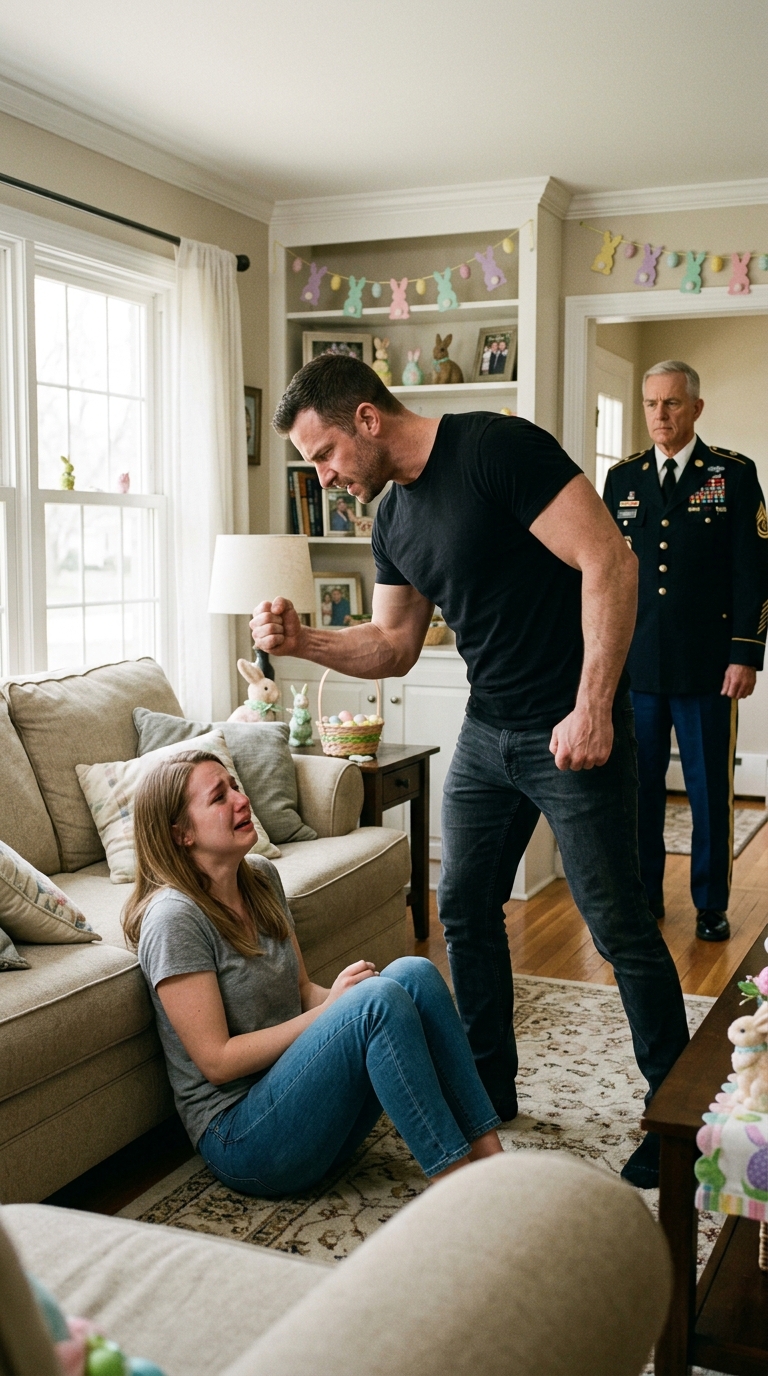
Weeks later, in my quiet home, Sophie dyed Easter eggs at the kitchen counter. Late—but happy.
No yelling. No fear. Just peace.
“Grandpa,” she said, smiling, “this feels way better than Easter.”
“It does,” I told her.
Watching them, I realized something: silence isn’t peace.
Peace is telling the truth.
And if any part of this feels familiar, remember—real love doesn’t demand silence. It protects. It listens. And when needed… it breaks the door down.
