

I stood by the stainless-steel grill, heat pressing against my apron as I turned corn with long tongs.
It was the kind of Sunday afternoon real estate agents fantasize about—a sky so blue it looked painted, air thick with charcoal smoke and blooming jasmine, and the manicured lawn of Oak Creek glowing in the sun.
My son, Robert, flipped burgers with the same focus he gave his coding work, while my daughter-in-law, Amanda, arranged an arugula salad with surgical precision.
The grandkids, Emma and Leo, shrieked with laughter, chasing each other across the wide patio with neon-green water guns. Nothing felt out of place. It was a perfect snapshot of the American Dream, built on my son’s success in tech.
Or so I believed. My phone buzzed in my apron pocket. I wiped my hands and pulled it out, squinting at the glare. Unknown Number. I opened the message. “Leave now. Don’t talk to anyone.”
I stared at the screen, frowning. At first, I assumed it was a prank—maybe a wrong number or one of the kids playing a joke, though they were soaked and nowhere near a phone.
I looked up. Robert was laughing at something Emma said. Amanda inspected a wine glass for smudges. Everything looked so normal that the message felt absurd, like a glitch in a flawless moment.
I slipped the phone back into my pocket and reached for the seasoning. Ignore it, I told myself. Don’t let a random text ruin the barbecue.
Before I could continue, Amanda approached. She held a glass of Chardonnay, adjusting her oversized designer sunglasses with her free hand. Her smile was tight and practiced—it didn’t reach her eyes.
“Lucia,” she said, lowering her voice into that familiar ‘management’ tone. “We need to talk.”
I set down the tongs. “Is everything okay, dear? Is the corn burning?”
She let out a short sigh. “It’s not the corn. Robert and I think you’ve been giving the kids mixed messages again. You told Emma earlier that it’s fine to eat dirt because it ‘builds immunity.’”
I blinked, caught off guard. “Oh, Amanda, I was joking. She dropped a cracker on the grass. I just meant—”
“I’m sure you didn’t mean any harm,” she cut in, her voice sweet but edged with something sharper. “But that kind of language undermines the structure we’re building here. We rely on hygiene standards. Chaos isn’t part of the curriculum.”
She spoke to me like a supervisor correcting an employee. Heat rose to my neck, and it wasn’t from the grill.
I forced a polite smile—the one I’d perfected over decades. “Amanda, I didn’t mean anything by it. Just a grandmother’s silly comment.”
“We need you to operate within our established protocols,” she said, sipping her wine while scanning the yard for other “issues.”
“Protocols,” I repeated softly, the word bitter on my tongue. As if love had rules. As if family dinners were board meetings.
My phone buzzed again—longer this time.
I pulled it out, my hand trembling. Same number.
“Leave NOW.”
Another message appeared immediately.
“DO NOT TELL THEM. GO TO YOUR CAR.”
All caps this time. My pulse spiked, a cold dread forming in my stomach that had nothing to do with Amanda’s lecture. I scanned the yard again. The kids laughed. Robert checked the meat. Amanda stared at me, waiting.
Everything looked normal—too normal. Almost artificial.
“Excuse me,” I murmured, my voice distant. “I need to take this. It might be the pharmacy.”
Amanda rolled her eyes and turned away. “Fine. Just don’t be long. Lunch timing matters.”
I stepped away, heading for the side gate, pretending to answer a call. “Hello? Yes, this is Lucia,” I said into silence. My legs felt heavy, like I was walking through water.
At the gate, I unlatched it. The click sounded too loud in the quiet afternoon. I slipped through, moving faster toward the driveway where my ten-year-old Honda Civic sat behind Robert’s black Range Rover.
My hands shook as I reached for my keys. They slipped and hit the asphalt with a sharp clatter. As I bent to pick them up, another message came through.
“Don’t alert anyone. Just drive. Go North.”
A chill ran through me. I didn’t know whether to laugh it off or obey—but something deep inside urged me to listen.
I got into the car, locked the doors, and started the engine. My heart pounded wildly as I backed out and turned the corner, out of sight.
Three houses down, I pulled over, breathing hard. What am I doing? Leaving my family because of a text?
Then I heard it.
Sirens—but not the usual wail. Short bursts.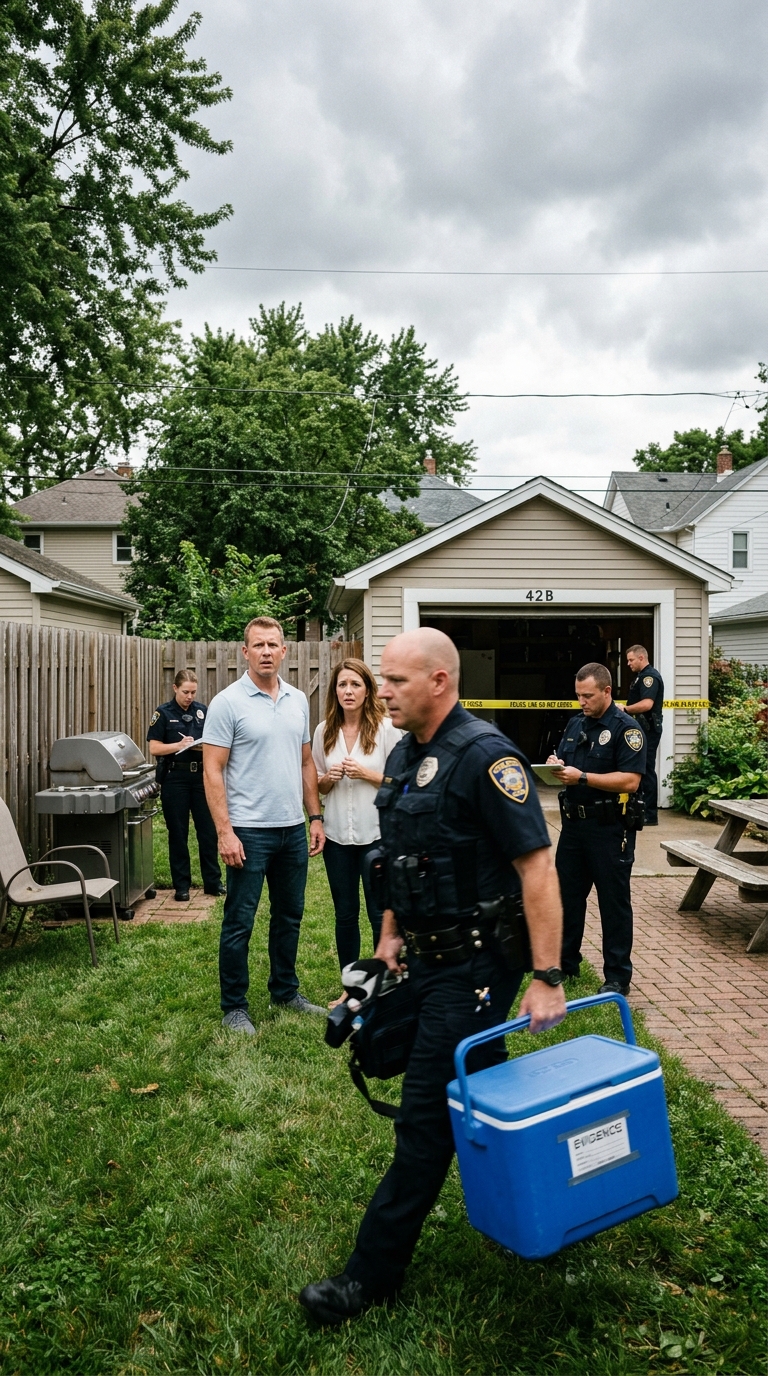
I checked the rearview mirror. Two police cars turned into Robert’s driveway, lights flashing silently. Then more followed—black SUVs, unmarked cars, even an armored truck.
I watched in horror as officers in tactical gear flooded the lawn where my grandchildren had just been playing. They moved fast, weapons drawn, surrounding the house.
From my car, I saw chaos unfold. Neighbors gathered. The front door burst open. Robert ran out, still in his apron, shouting with his hands raised.
Officers forced him to his knees.
My hands tightened around my phone as tears blurred my vision. Another message appeared:
“Are you safe? Don’t go back. I’ll explain everything later.”
I saw Amanda brought out, her wine glass gone, her hands cuffed. Someone had just saved me—but from what?
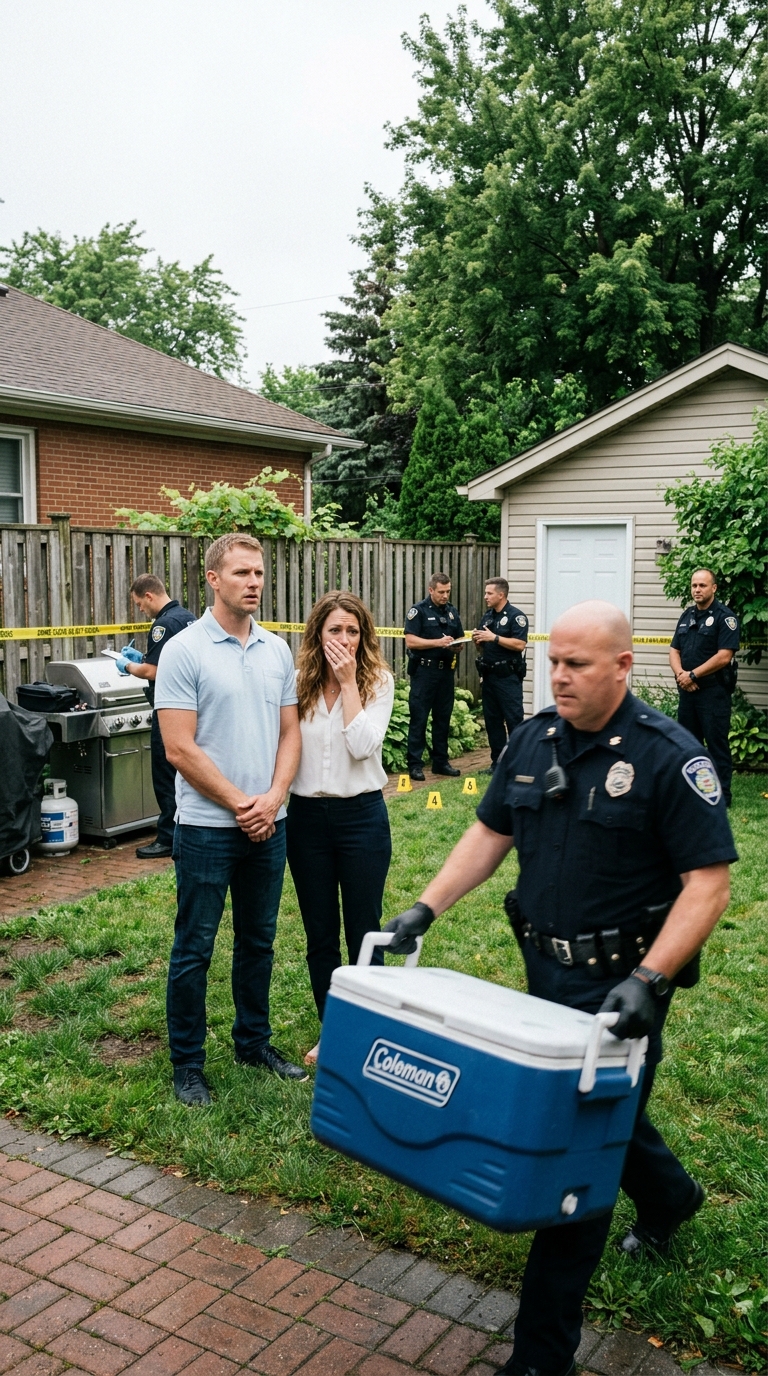
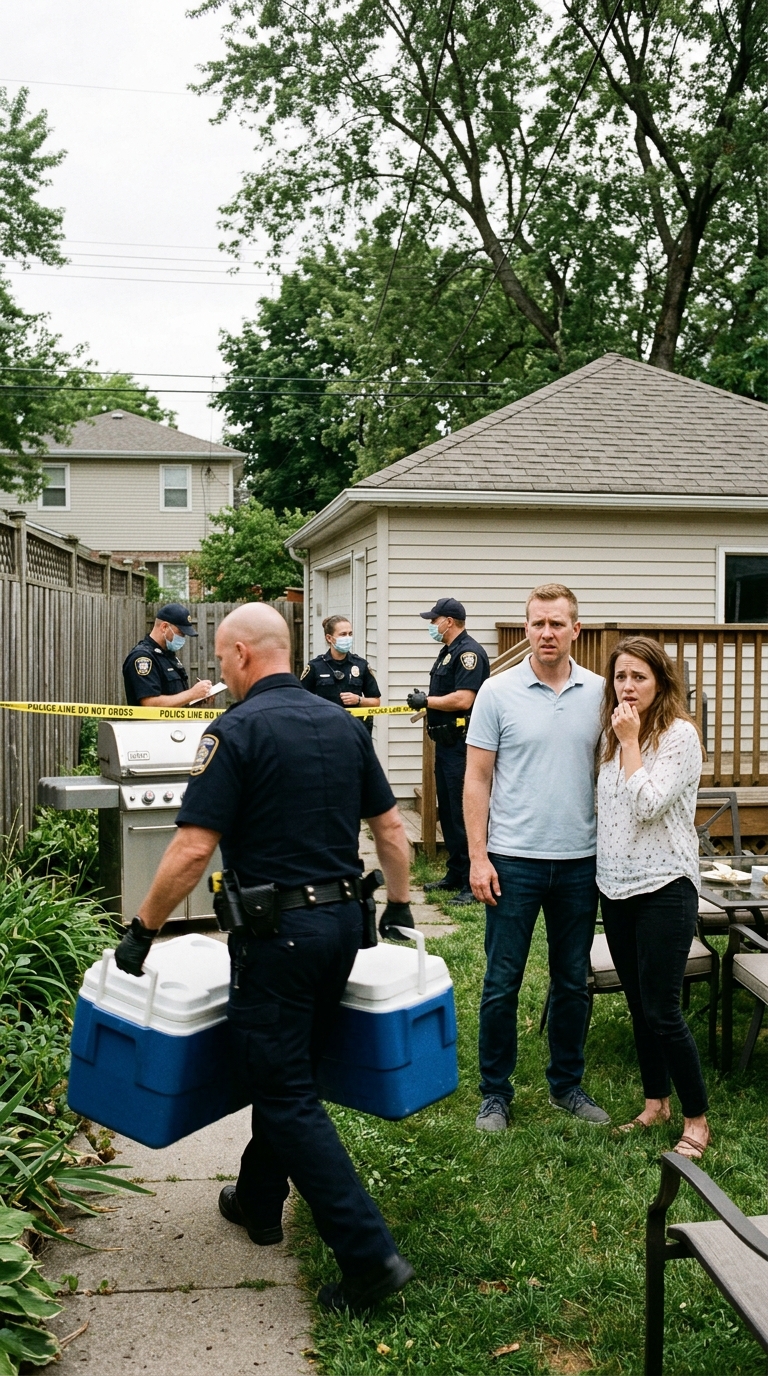
For hours, I stayed outside the yellow tape, sitting in my car, shaking as officers tore through my son’s life. At one point, Amanda screamed at an agent, her composure gone. Robert sat on the lawn, handcuffed, defeated.
Eventually, a tall officer approached. His badge read Detective Miller.
He tapped on my window. I rolled it down.
“Ma’am, are you Lucia Morales?”
“Yes,” I whispered.
He nodded. “We need you to come with us. You’re not under arrest, but we have questions.”
“My son…” I began, but my voice failed.
“He’s being processed. Please follow the cruiser.”
The ride to the station blurred past. Inside, they placed me in a small, cold room.
Detective Miller sat across from me and slid a thick folder forward.
“Mrs. Morales, your son and daughter-in-law are under investigation for federal crimes—wire fraud, embezzlement, identity theft, and money laundering.”
“Robert? That’s impossible,” I said. “He works in cybersecurity!”
“Yes,” the detective replied. “Which made it the perfect cover. They’ve been moving money through fake charities and shell companies for years.”
“But… why tell me to leave?” I asked.
Miller frowned slightly. “We didn’t. We planned to question you there.”
“Then who…” I stopped myself.
“We need to show you something,” he said, opening the folder.
At the top was a document—an incorporation for a company called L.M. Holdings.
“Do you recognize this?”
“No.”
“You’re listed as the CEO and primary beneficiary.”
I froze.
More pages followed—emails, transfers, my name attached to everything.
“You were used to launder nearly two million dollars,” he said. “On paper, you’re the ‘Family Investor.’ The fall guy.”
“I didn’t know anything about this,” I said, tears burning.
“We believe you,” he said. “A whistleblower warned us you were being set up.”
The realization hit hard. My own family had used my identity.
“The protocols,” I whispered. It all made sense.
“We’ll need your phone for evidence,” he added. “But you’re free to go tonight.”
By midnight, I learned Robert had partially confessed. Amanda demanded a lawyer. The money had moved through a fake charity—the same one she’d encouraged me to donate to.
I had been funding my own downfall.
Later, sitting alone in my car outside the station, I felt empty. I pulled out an old backup phone and dialed the number that had warned me.
It rang once. Then a message appeared:
“I told you I’d explain later. Check your email. The password is the date of the barbecue.”
At a 24-hour diner, I logged in. A message waited—from Daniel Reyes, a quiet analyst who used to work with Robert.
The subject line read: “You were never supposed to be part of this.”
I opened it.
He explained everything—how he found hidden financial records labeled “Project Matriarch,” how Amanda chose me as the scapegoat, how Robert eventually agreed, how the raid was planned for that very barbecue.
“I couldn’t stop it,” he wrote. “But I could get you out.”
I closed the laptop and cried—quietly, deeply.
In the months that followed, the story spread. Robert took a deal. Amanda tried to flee and was arrested at the airport.
Six months later, I visited Robert in prison.
“Mom,” he said, tears in his eyes. “I didn’t mean for this to touch you.”
“You signed the papers,” I replied calmly. “You were going to let me take the fall.”
He broke down. “I was scared.”
“I know,” I said. “But you didn’t protect me. Someone else did.”
“I love you,” I told him. “But I can’t trust you.”
I left.
Later, I drove to a small apartment and left a box of donuts at the door with a note:
“For the socks. And for my life. Thank you.”
Now, whenever my phone buzzes unexpectedly, I pause. Not out of fear—but awareness. And I silently thank the stranger who broke the rules, the one who made sure that while my family fell apart, I didn’t fall with them.
