

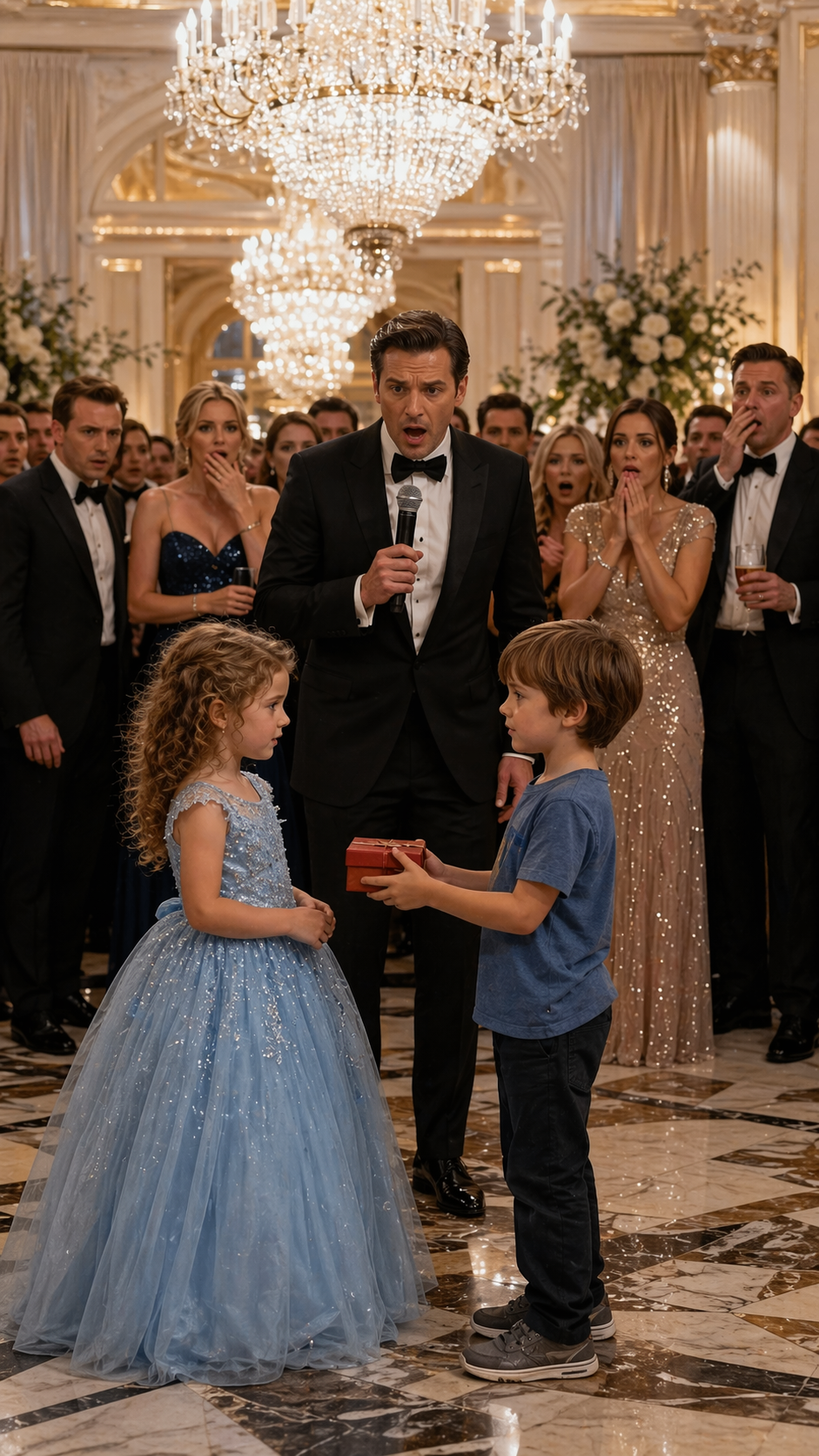
The Building Filled With Too Much Light
The first thing guests noticed upon entering the Ridgeview Museum atrium was the brightness, because it spilled through the glass ceiling in clean, costly beams, reflecting off polished stone and making everything look like it had been touched by daylight even though it was already evening.
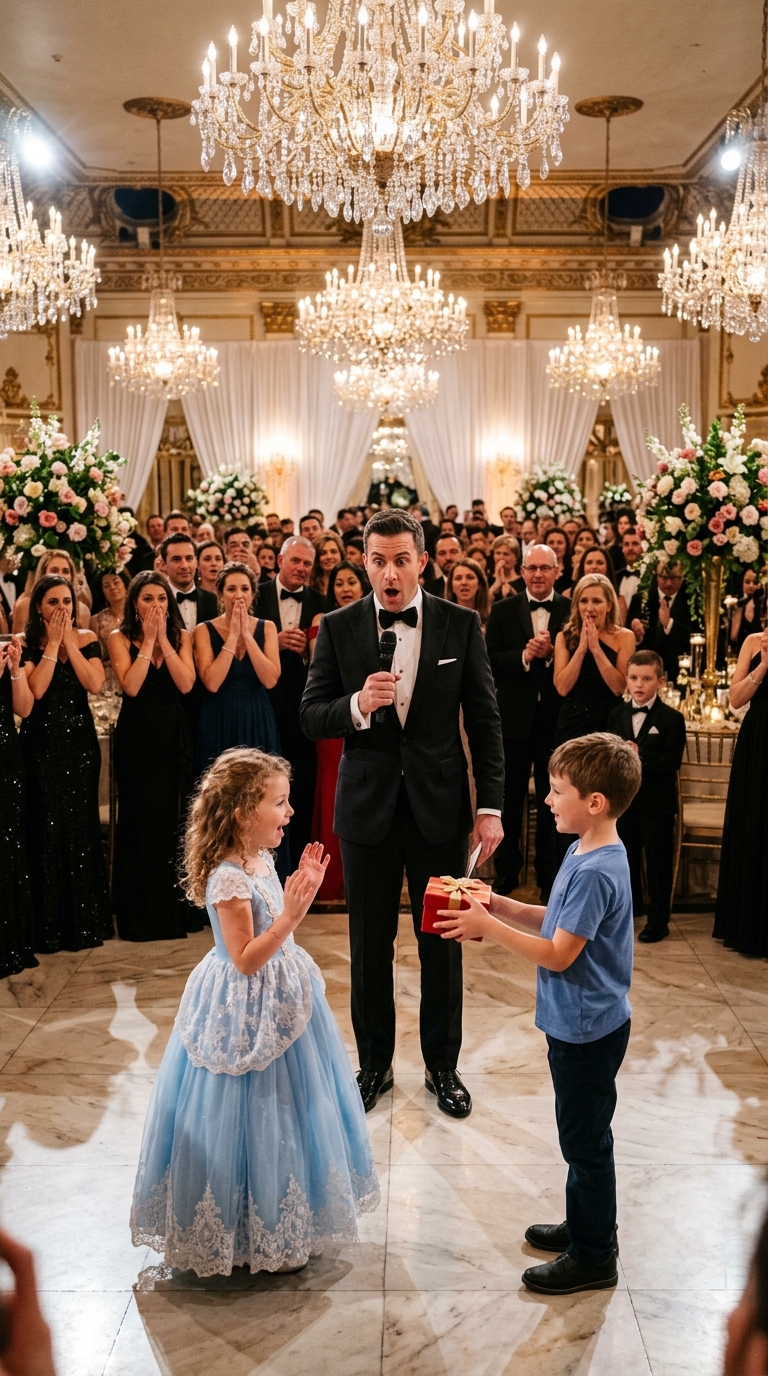
Donors gathered in polished clusters around sculptures, servers moved through them with endless trays, and the soft background music seemed chosen less for enjoyment and more to signal status and belonging.
Warren Vale had mastered the art of granting access to that world, as naturally as others learned sport or conversation, and the guest list reflected it: council members who smiled for photos, hospital executives speaking in careful language, investors who measured everything at a glance, and familiar public figures who arrived late but still seemed perfectly timed.
It was meant to mark forty years, though Warren called it an anniversary instead of a birthday, as if the word “birthday” was beneath him, as if distance from it made it more serious.
His health-tech company had funded much of the night, and the museum director had already thanked him twice, yet Warren stood near the small stage with slightly hunched shoulders, like someone waiting for bad news rather than applause.
Near him, his daughter sat apart on a cushioned bench, slightly removed from the crowd, because Warren had learned how to give her space without making it feel like isolation.
Lila preferred edges and quiet corners, places where she could observe without being observed. She wore a pale dress stitched with faint silver threads that caught the light in soft flashes, and her styled hair kept slipping behind one ear as she tried, unconsciously, to make herself smaller.
People spoke to her gently, the way adults do with children they assume are fragile. Lila answered with small nods, restrained smiles, and sometimes by holding a notebook on her lap, writing instead of speaking when words felt too heavy.
Her eyes did most of the communicating—alert, wide, and careful—making adults instinctively lower their voices around her.
Warren watched her hands more than her face, because hands revealed what words did not. Her fingers pressed into fabric, released, then pressed again, as if she were trying to contain something only she could feel.
The Offer That Sounded Like Surrender
When the museum director finally signaled the start, the music softened and the room gradually stilled, forming a single audience facing the stage.
Warren stepped up, took the microphone, and looked out as though he didn’t fully recognize the world he had helped build.
He had spoken to executives, investors, and conferences, always controlled, always prepared, yet his grip on the mic was tight, his breathing shallow, like words were stuck somewhere behind his ribs.
“Thank you for coming,” he began, and it landed gently, almost rehearsed, though his tension betrayed him. “I know everyone has busy lives, and I know it’s not every day you get dragged to a museum because a guy who sells software wants an audience.”
A few people laughed, relieved, but Warren’s smile didn’t fully arrive, and when he glanced toward Lila, the laughter faded.
“I asked you here for something that doesn’t fit on a program,” he continued, pausing as if forcing air past a weight.
“I’ve spent three years chasing every possible kind of help, because my daughter hasn’t used her voice since the day our family changed, and I’m running out of ways to pretend I can solve it with money, influence, or stubbornness.”
A wave of quiet concern moved through the crowd. Warren lifted a hand slightly.
“If there is someone here,” he said, “a therapist, a physician, a teacher, a counselor, anyone who truly knows how to reach her and bring her voice back, I will fund whatever work you believe is right, and I will add a personal gift of one million dollars, because I need my little girl to find herself again.”
The number settled heavily in the air. Warren looked almost regretful as soon as it was spoken—not because he didn’t mean it, but because it revealed how far he had already fallen into desperation.
He stepped back from the microphone. The room felt suddenly too still, as if no one knew how to respond to a father asking for his child’s return in public.
Lila remained seated, watching him without moving.
Three Years of Silence
Warren had sat through years of clinical language—terms like “selective mutism,” “trauma response,” and structured treatment plans presented with professional calm.
He had followed every recommendation, attended every session, signed every form, believing that persistence and resources would eventually solve what felt like an unsolvable problem.
But Lila’s silence did not behave like something to fix. It behaved like weather—arriving without warning, staying without reason.
Before the accident, she had spoken constantly, narrating everything she saw and felt, filling their home with questions and observations. Then one ordinary day turned irreversible, and after that, her mother was gone, and Lila’s voice disappeared with her.
Physically unharmed, she still left the hospital different. Warren remembered her staring at him in silence, her expression too old for her age, as if something inside her had shut down completely.
At first he believed time would heal it. Then months became seasons, seasons became years, and silence became the structure of their life.
She communicated through gestures, notes, and expressions that required no sound, while therapists tried every approach they knew. Warren never stopped searching, never stopped paying, never stopped hoping.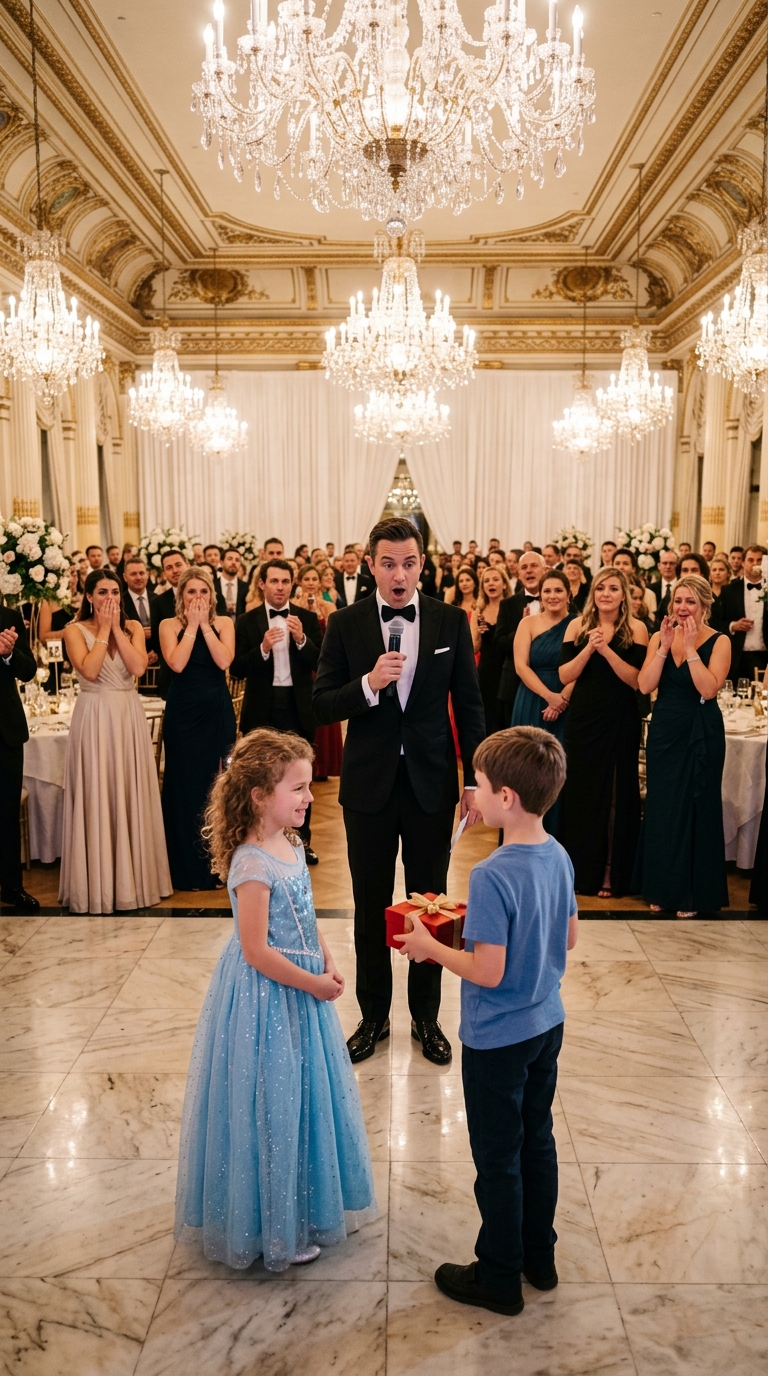
What he never admitted was that he feared the silence was not only grief—but something deeper, something that reflected how powerless he had become.
The Boy by the Doors
A voice broke through from the back of the hall near the entrance.
“I can help her.”
Heads turned immediately. The voice did not belong to a professional. It belonged to a child.
A boy stood near the doors—thin, slightly younger than Lila, wearing worn clothes and scuffed shoes, his posture cautious but steady. He looked like someone used to being dismissed before speaking.
Security moved toward him, unsure how to handle something so small that refused to be intimidated.
Warren reacted sharply, more from shock than anger.
“This is a private event,” he said. “Who let him in?”
The boy lifted his chin.
“I heard what you said,” he replied. “I’m not here for food or money, and I’m not here to cause trouble, but I can help her, because I know what it’s like to keep your words locked up.”
Warren looked toward Lila, expecting withdrawal. Instead, she was watching the boy intently.
After a brief hesitation, Warren raised a hand, allowing silence to hold.
The boy stepped closer carefully, then stopped at a respectful distance from Lila and lowered himself to her level.
“Hi,” he said softly. “I’m Wesley.”
Lila did not respond, but her fingers stopped moving.
Warren exhaled, torn between disbelief and fragile hope.
“She hasn’t spoken in a long time,” he said.
Wesley nodded. “That’s okay,” he answered. “You don’t have to say anything for me to listen.”
The Small Object
Wesley reached into his pocket and placed a small toy truck on the floor between them. It was worn, cracked, and clearly well-used.
“My mom gave me this,” he said. “She said if I ever felt like the world was too big and I was too small, I could hold it and remember that somebody had once made space for me.”
The room shifted subtly. People stopped whispering.
Warren stayed silent, afraid to interrupt something fragile.
Wesley continued, carefully.
“After she wasn’t around anymore,” he said, “I stopped talking much, because when you don’t talk, it feels like time stays still, and if time stays still, you can pretend nothing has changed.”
Lila’s gaze moved between Wesley and her father.
“But time doesn’t stay still,” he added. “It moves even when you’re quiet, and if you stay quiet too long, you don’t freeze the moment you miss, you just get stuck inside it, and then it feels like everyone else is walking forward while you’re standing in place.”
Warren noticed Lila’s grip tighten, not in fear now, but in attention.
Wesley nudged the toy slightly closer.
“You don’t have to talk for them,” he said. “You don’t have to talk to prove anything, and you don’t have to talk to make anyone feel better, but if you say one word, just one, it doesn’t mean you’re leaving her behind, it just means you’re letting yourself come with the rest of your life.”
The First Word
The silence that followed felt stretched. Warren braced himself for disappointment again.
Lila looked down, then up, then at Wesley, then at her father. Her lips parted slightly.
A small sound escaped.
Then, clearer than anything before:
“Dad.”
Warren froze.
Lila repeated it, a little stronger.
“Dad.”
The room reacted in broken disbelief, some gasping, some crying.
Warren dropped down beside her immediately.
“Sweetheart,” he whispered. “I’m here.”
She reached for him and held on tightly, as if confirming he was real.
Wesley stepped back quietly toward the edge of the room, trying not to be seen.
A Different Kind of Promise
Warren stood, still holding Lila, and called out.
“Wait.”
Wesley paused.
Warren approached carefully.
“How did you do that?” he asked.
Wesley shrugged.
“I just told her the part nobody told me,” he said. “That talking doesn’t erase what you miss, and being quiet doesn’t protect it.”
Warren studied him.
“Where’s your family?” he asked gently.
“I’m at a shelter a few blocks from here,” Wesley said. “My aunt took me in for a while, but it didn’t work out, and I’m not trying to make anyone feel sorry for me, so it’s fine.”
Warren almost reached for money, then stopped.
Instead he said, carefully:
“Would you come have dinner with us tomorrow?”
Wesley hesitated.
“I don’t have clothes like this,” he said.
“You don’t need them,” Warren replied.
Lila stepped forward and spoke again, quietly:
“Friend.”
Wesley looked at her and nodded.
“Yeah,” he said. “Friend.”
After the Crowd
The guests slowly left, unsure how to process what they had seen.
In the car, Lila tested her voice again and again.
“Dad,” she repeated softly.
At home, she asked, after a long pause:
“Mom… would she… like Wesley?”
“She would,” Warren said. “She would like him, and she would be proud of you, because you didn’t hide forever.”
Morning at the Shelter
The next morning, Warren went alone.
At the shelter, he found Wesley cautious but present.
“I meant what I said,” Warren told him. “Dinner is dinner, and you’re welcome.”
Wesley replied:
“I don’t want to be someone’s charity project.”
“Then don’t be,” Warren said. “Just be a kid who came to dinner.”
Wesley nodded.
As Warren left, he understood something simple: the thing that had reached his daughter had not been wealth or expertise, but a child who understood silence from the inside.
