

PART 1 — The Slice Reserved for Me
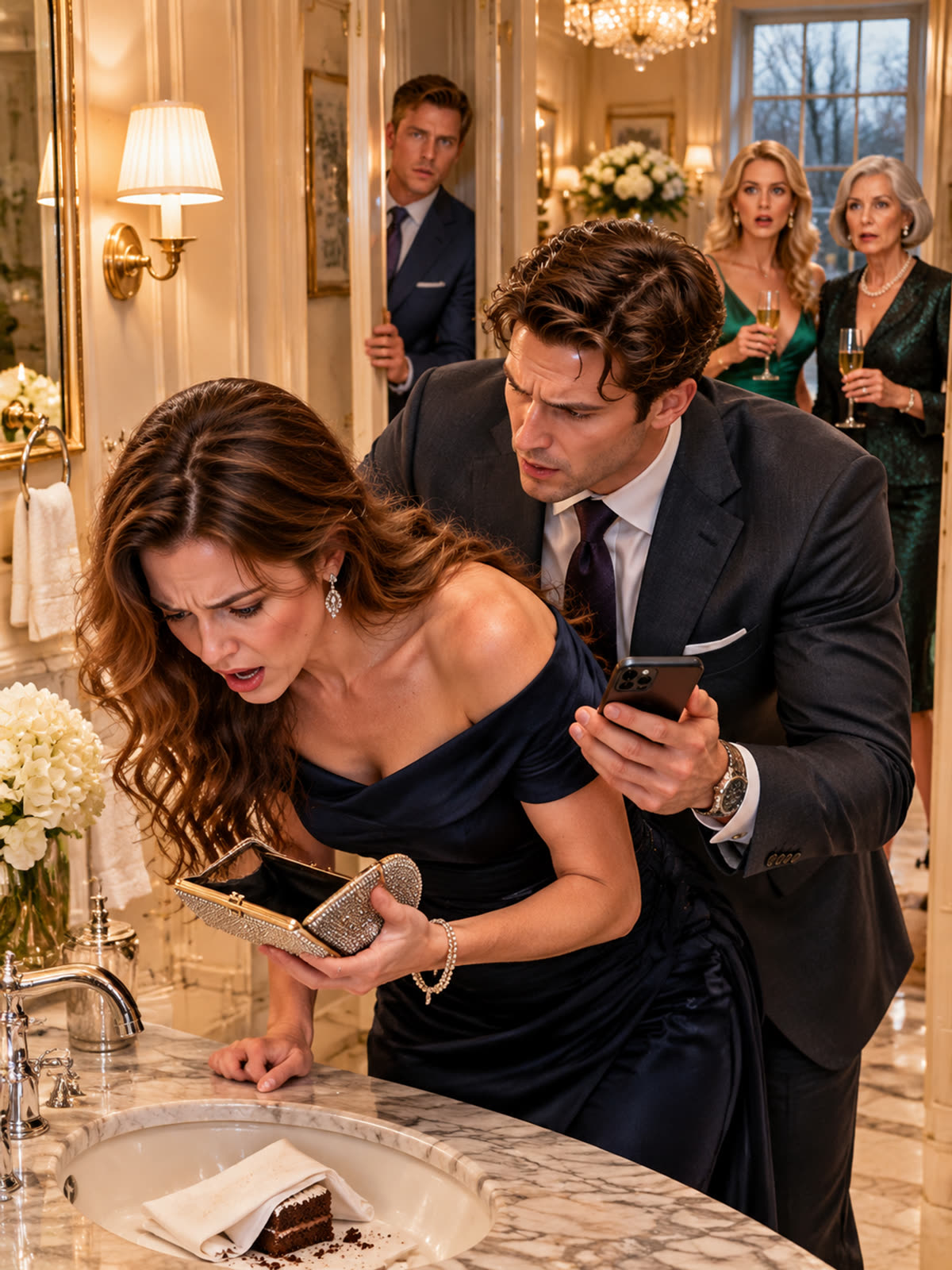
During my sister’s birthday dinner, a message from my husband appeared on my phone: “Don’t eat anything she gives you!” The blood seemed to turn cold inside me as I looked at the cake she had brought to my place herself. Three days later, I was due at an attorney’s office to discuss the $800,000 inheritance my grandfather had left me. All at once, her recent affection acquired a terrifying explanation. I lowered my fork, arranged my expression, and made a show of tasting the dessert. What Caleb showed me afterward, however, reached far beyond anything I had imagined. To understand how that November celebration in Upper Arlington, Ohio, became the beginning of my quiet rebellion, you first need to see Clarissa Monroe’s dining room. My younger sister never merely invited people over. She staged an occasion. The room carried the mingled aromas of roasted garlic, costly cedarwood candles, and newly poured champagne. Twenty people crowded a twelve-foot walnut table covered in ivory linen. Above us, chandelier light scattered through crystal glasses and broke into small, golden reflections against the walls. A gold-foil calligraphy banner over the sideboard declared Thirty and Thriving.
Clarissa had placed dessert before every guest on her cherished gold-edged bone china. Everyone, that was, except me. My slice sat on an ordinary, thick white plate that looked as though it had come from the back of her everyday cupboard. The chocolate espresso torte rose in a generous wedge beneath a gleaming ganache, nearly black in the candlelight. A miniature brass cocktail pick held a cream paper flag at its peak. Clarissa’s elegant handwriting identified it as Allergy-Safe, the words underscored with a small heart. “I had Velvet Crumb bake a completely separate mini-torte just for you, Audrey,” she announced, projecting her voice above the conversation and the soft clatter of spoons. Standing behind me, she set one perfectly manicured hand on my shoulder. Her emerald silk dress brushed the chair. “Zero hazelnuts, zero cross-contamination, separate prep station. I personally stood at the counter and verified the ingredient sheet with Tessa twice. You know I would never let you sit there empty-handed on my birthday.” Appreciative murmurs traveled around the table. My mother, Evelyn Vance, touched her mouth with a linen napkin and smiled over the arrangement of white hydrangeas. “Honestly, Clarissa has the biggest heart of anyone I know,” Evelyn chimed in, her eyes finding me with their customary polished expectation. “Even on her own milestone night, she is thinking of her big sister first.”
“That really was thoughtful of you, Clarissa,” I said, putting on the courteous smile I had relied on at family gatherings for fifteen years. “Thank you.” My sister bent nearer, surrounding me with pear-and-musk perfume. “Well, don’t just admire it,” Clarissa urged. Her smile widened slightly without reaching her eyes. “The espresso ganache is best before it cools down. Take a bite. I want to see if Tessa got the bitterness right.” Several clients from her boutique laughed, hearing affectionate teasing where there was something sharper. I laughed softly along with them, lifted the tarnished silver dessert fork, and pushed it through the shining coating into the dense sponge. I should be honest about that moment. People who later learned what happened liked to believe I had already sensed danger, that some buried instinct had recognized my sister’s hostility. Nothing so dramatic was happening inside my head. I was exhausted. As a senior analytical chemist in quality assurance at a Columbus biomedical facility, I had just finished a sixty-hour week reviewing batch-purity reports. Mostly, I was calculating how long after the candles were extinguished I could politely invent a headache and leave for my quiet living room.
My phone vibrated against my leg, one abrupt, unmistakable pulse. Caleb had a rule about dinner-table phones: silent, dark, and put away. He regarded messaging someone across a table as exceptionally rude. During seven years of marriage, I had never seen him violate that rule. I stopped with my fork suspended above the plate, adjusted my position enough to look into my lap, and read his warning. Don’t eat anything she gives you! Another message followed almost immediately. Put the fork down right now. Act normal. Do not let her see you panic. Slowly, I looked beyond the hydrangeas and wavering candle flames. Caleb’s chair was empty. A few minutes earlier, Clarissa’s husband, Nathan, had asked him to help with the wireless receiver in the adjoining study. Caleb was a structural engineer who happened to be good with stubborn wiring, and the dinner playlist had kept cutting out. Through the archway behind my mother, I spotted him beside the built-in credenza. One hand held his phone; the other held Clarissa’s rose-gold tablet, its screen turned toward Nathan.
Nathan Monroe was a broad-shouldered commercial contractor, dependable and sparing with words, a man who repaired a neighbor’s gutter without making a story out of it. As I watched, the color disappeared from his weathered face. His mouth fell slightly open. He stared at the tablet as though the ground beneath his home had suddenly become unstable. His eyes moved to his smiling wife beside me, then met mine. Something hard and cold settled behind my ribs. My heartbeat did not accelerate. Instead, it became slow and heavy, and I recognized the clinical stillness that sometimes overtook me when a volatile substance spilled in the laboratory. “Audrey?” Clarissa prompted, her fingers pressing a little more firmly against my shoulder. “Is it too rich? You haven’t even tasted it.” Three days, I thought. On Thursday afternoon, I was supposed to meet Harrison Caldwell, an estate attorney in Granville, and finalize the $800,000 trust left by our grandfather, Arthur Sterling. For two weeks, Clarissa had been unusually loving. She had sent childhood photographs, insisted I attend her thirtieth birthday, and promised that Grandpa’s death could become the beginning of a better relationship between us. Now a quiet thought cut through all of it: she did not want reconciliation. She wanted me unable to go.
I kept my face still. I did not shove away the plate or do anything that might attract the room’s attention. Instead, I smiled with apparent appreciation, balanced a narrow piece of cake on the fork, and brought it toward my lips. As I tilted my head and raised my napkin to catch an imaginary crumb, I slipped the untouched mouthful neatly into the folded linen in my other hand. Then I returned the empty fork to the plate, moved my jaw as though chewing, and swallowed nothing. “Mmm,” I said smoothly, touching the napkin to my mouth while keeping the cake hidden inside it. “Tessa really outdid herself. That espresso glaze is incredible.” The change in Clarissa’s expression lasted barely a moment: the tension around her mouth eased, and a glint of triumph crossed her eyes. Anyone who had not been watching closely would have missed it. Across the table, my mother relaxed her shoulders and drank slowly from her wineglass. “I told you,” Clarissa purred, patting me once before returning to the head of the table. “Take your time with it. Finish every crumb.” I waited only long enough to avoid appearing abrupt. “Actually, excuse me for just a second,” I said, moving my chair back carefully. “My lab monitor just pinged me—one of the overnight stability chambers must be throwing a sensor alert. I’ll be right back.”
No one challenged the excuse. For years, my family had treated my work as a peculiar preoccupation that occasionally interfered with more important things. With my leather clutch and the folded napkin held loosely against my palm, I left the dining room and entered the darker passage toward the front foyer. The moment I moved beyond Evelyn’s view, my composure sharpened into urgent concentration. I had suffered from a severe hazelnut allergy since I was five. Even a trace of the protein could make my airway swell rapidly, leaving only minutes for medical intervention. For twenty-eight years, I had carried two epinephrine auto-injectors whenever I left home. Keeping them in the velvet-lined interior pocket of my handbag required no more thought than breathing. I entered the little powder room beneath the stairs, fastened the brass latch, and placed the folded napkin in the porcelain basin, carefully avoiding contact with the ganache. Then I opened my clutch and reached into its inner pocket. There was nothing there but smooth lining. Under the vanity light, I searched between my keys, lip balm, and tissues. Both injectors were missing.
A sickening cold expanded through my chest. When Caleb and I arrived, Clarissa had eagerly offered to take my coat and purse upstairs, claiming she would put them in the master-bedroom closet so “none of the caterers’ coats brush against your nice leather.” I had allowed her to carry them away without hesitation. Now I opened the powder-room door and stepped into the narrow hallway. Caleb waited close to the study, his back against the wainscoting and his fingers clenched around his phone. “My injectors are gone,” I whispered, barely louder than the laughter behind us. “She took them out of my bag when she hung up my coat.” Fury darkened his eyes in a way I had never seen. He moved close at once, using his shoulder to conceal the screen before turning it toward me. “I snapped photos of her tablet before Nathan even walked back in,” Caleb murmured, keeping his breathing under strict control. “The audio app was linked to her Apple ID, and notifications kept popping up across the top banner while I was reconnecting the speaker. Audrey… I opened the thread because I saw your name.”
The photographed conversation was labeled Mom. Evelyn’s message at 7:42 asked whether I had received the white plate and instructed Clarissa to make certain nobody else touched it. Clarissa’s answer, sent at 7:56, told her to relax. Tessa had mixed roasted hazelnut flour directly into the cocoa sponge, and the espresso concealed the smell. Clarissa said she had already emptied my purse; the pens were locked in her upstairs jewelry safe. In twenty minutes, she expected me to be on my way to the emergency room, where observation would keep me away from Granville on Thursday. My stomach seemed to drop through the floor. I read the exchange again, fixing every bright letter in my memory. My sister had leaned over me, smiled into my eyes, and encouraged me to eat while knowing she had placed my rescue medication beyond my reach. My mother had helped her arrange the timing. “We have to get out of here,” I breathed, sweat making the leather clutch slippery in my hands. “And I need that plate. If they realize you saw the tablet, they’ll scrub the kitchen and delete the thread.” Caleb lightly caught my wrist. “Audrey, wait,” he said, and the look on his face deepened the dread inside me. “That’s not even the worst part. Keep scrolling.”
I moved to the next photograph. Instead of another message, it showed a clear scan from Clarissa’s cloud storage, saved only two hours before the guests arrived. The heading read Petition for Temporary Emergency Guardianship and Waiver of Trust Distribution. A notarized medical affidavit halfway down alleged that I had been suffering serious cognitive disorientation for months. At the bottom was a remarkably convincing imitation of my signature. I stared until the blue strokes blurred in the dim corridor. Whoever had copied it had studied my handwriting: the upward turn of the y in Audrey, the particular diagonal mark through the paired t’s in Bennett. Beside it was a new notarial seal dated the following morning. The name belonged not to Grant Mercer, as I first thought, but Grant Holloway, my mother’s old acquaintance from the heritage society board. “They didn’t just plan a hospital trip,” I whispered, the deliberateness of the scheme pressing heavily against my chest. “If I end up sedated in an emergency room tonight, Evelyn walks into the courthouse tomorrow morning with this petition, claims I suffered an acute breakdown, and hands the waiver straight to Harrison Caldwell before Thursday.” Caleb’s jaw tightened. “And look at the attachment right below it,” he muttered. “I didn’t have time to photograph every page before Clarissa’s footsteps came down the hall, so I took a quick burst. Nathan saw it too. He’s still in the study trying not to throw up.”
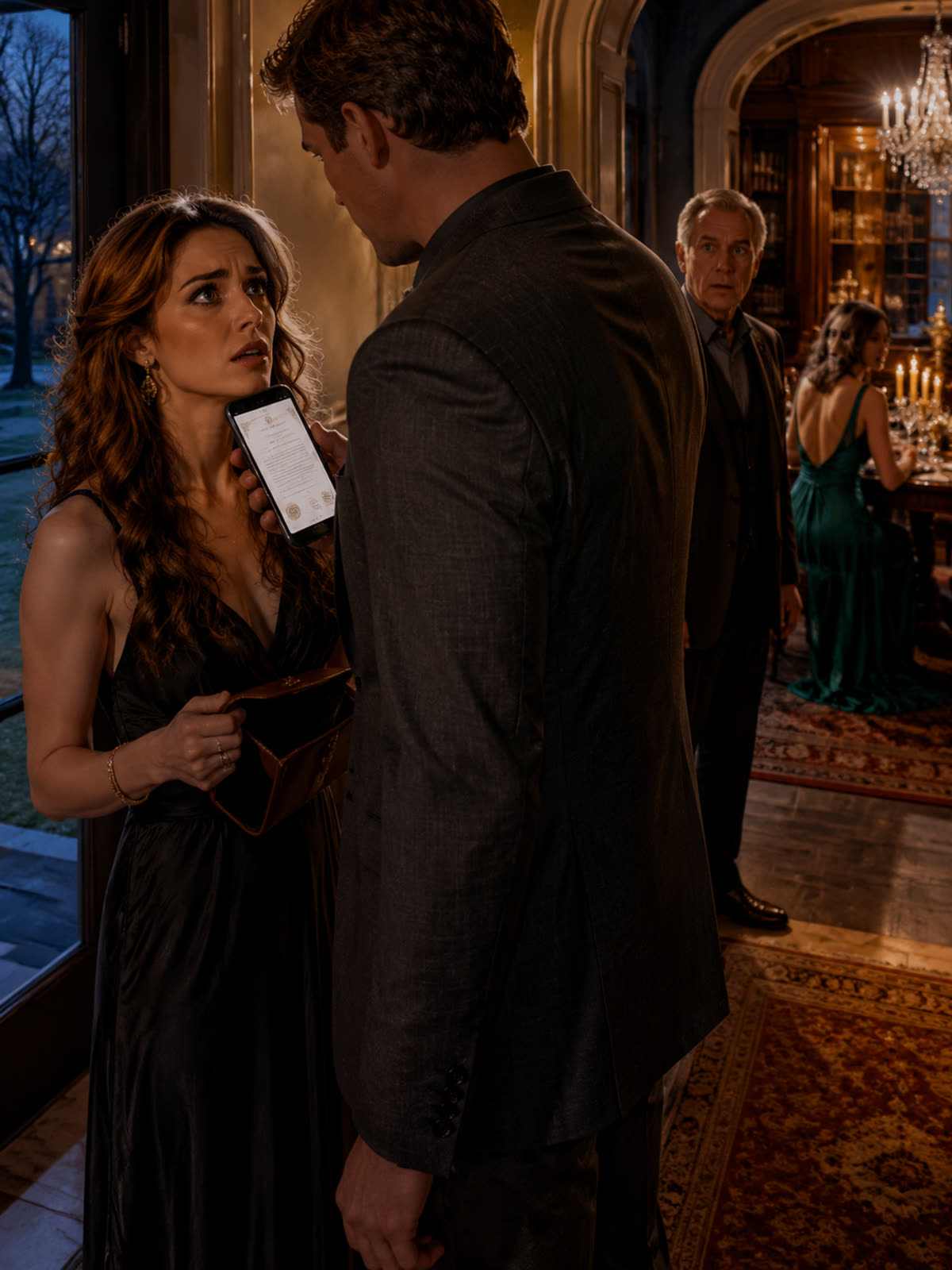
The third photograph was slightly blurred at its edges, but I could read the heading: an itemized Velvet Crumb Bakery invoice, paid in cash. Beside it was an anxious message Clarissa had sent three days earlier. She told the recipient not to let Mom worry about the Granville attorney. Even if I refused dessert, the dawn wellness call was already arranged. Either way, I would miss Thursday. The detached voice I used during a laboratory audit returned. “We need to move,” I said. “Right now. If we stay five more minutes, Clarissa is going to wonder why I’m still upright.” The next sequence occupied six minutes; later, I reconstructed it from our phone timestamps as carefully as a laboratory procedure. Caleb went back into the study to give Nathan a silent warning to keep quiet. I returned to the dining room. The conversation had grown louder, another bottle of prosecco had been opened, and Clarissa was pulling crimson tissue paper from a gift box containing an Italian leather tote. “Audrey, everything okay at the lab?” Evelyn asked. Her eyes went immediately to my white plate, then to my face, examining my lips and neck for swelling or hives.
“Not really,” I lied, giving the answer a tired sigh. “The primary incubator lost temperature calibration, and the junior tech on duty doesn’t have clearance to reset the logs. If I don’t drive in and verify it manually, we lose three weeks of stability data.” My mother’s brows tightened. “Oh, sweetheart, on Clarissa’s birthday?” Her disappointment sounded appropriate, but something had departed from her schedule. I reached for the white plate, where the cake remained undisturbed except for my fork’s single incision. “I’m so sorry, Clarissa,” I said. “I didn’t even get to finish this amazing slice, and I’m starving. Do you mind if I grab a container from the kitchen and take it with me to the lab? I’ll bring your plate back this weekend.” Her new leather handbag stopped halfway out of its box. For an instant, the gracious hostess vanished. “Leave the plate here, Audrey,” she said too quickly. “I’ll wrap the slice in foil for you myself.” I knew what would happen if I gave it to her: the cake would disappear, be replaced, or end up in the disposal. “Don’t get up, you’re in the middle of gifts!” I replied brightly, already turning toward the pantry door. “I know right where your gallon bags are. I’ll be out of your hair in thirty seconds.”
Before my mother could rise, I pushed through into the marble kitchen. The caterers had gone, leaving stacked trays and the lingering scent of coffee. I opened the third drawer beside the double oven, took a heavy freezer bag, and slid the entire plate inside with its cake and brass Allergy-Safe flag intact. I forced out the extra air and pressed both seals closed. Two steps into the mudroom brought me to the recycling area. A clean cream bakery box lay on top of the flattened cardboard, the Velvet Crumb name printed across it in elegant script. A yellow duplicate order slip was taped to the lid. Without using the flash, I photographed the box, its label, and the note at the bottom of the ticket three times. It specified one custom dark-chocolate espresso order, a special flour request, and cash payment. I placed the sealed plate inside the large canvas work tote I had left by the coat rack, collected my coat, and joined Caleb at the front door. He said nothing. His hand settled steadily against my lower back as he guided me outside into the cold November air.
We had reached the middle of the brick path when the oak front door opened sharply behind us. “Audrey!” Clarissa stood on the stone porch, hugging herself through the emerald silk. Her heels struck the steps as she hurried toward us. “Where are you going in such a rush? You didn’t even say goodbye to Mom.” I turned beneath the carriage lamp. “I told everyone about the lab alert, Clarissa,” I replied. “Happy thirtieth. Enjoy the rest of your evening.” Her attention dropped to the canvas tote at my side. “What did you put in your bag? Did you take my porcelain plate?” There was something almost clinical about the way I observed her now. “You told me to finish every crumb,” I said softly. “I wanted to make sure nothing went to waste.” She advanced with her hand extended. “Give it to me,” she snapped. “I don’t like my good dishes leaving the house. I’ll throw the cake in a plastic tub for you.” Caleb moved half a step ahead of me, his six-foot frame blocking her without any show of aggression. “It’s fine, Clarissa. We’re already running late for the lab. We’ll make sure your plate is returned to you personally.”
For a moment, I believed she might grab the bag. She stared up at Caleb, breathing fast in the cold. Then two guests opened the front door behind her and came outside. In an instant, her shoulders straightened, and an artificial smile settled over her face. “Fine,” she hissed so quietly only we could hear. “You always have to make a dramatic exit, Audrey. You can’t stand one night not being about you.” I looked at the woman whose hair I had braided for her first school dance, whose hand I had held in urgent care after she broke her collarbone falling from a borrowed bicycle at ten. “Goodnight, Clarissa,” I said. We climbed into Caleb’s sedan, and the locks engaged with a reassuringly solid sound. Once we were off the street, he turned toward Lane Avenue rather than home. We went directly to the twenty-four-hour pharmacy near the medical center. My prescription history and clinical credentials were already recorded in the regional system. After twenty minutes of measured calls to the physician on duty, I had an emergency replacement twin-pack of epinephrine injectors.
We remained in the car beneath the parking lot’s buzzing sodium lights. The two new, unopened pens lay across my lap. In the trunk, the freezer bag stood inside a cardboard box. Caleb reached over the console and wrapped his warm hand around my chilled fingers. I did not cry, which surprised me. My eyes felt as dry and scratched as they did after too many hours at a microscope. Instead, memories started arranging themselves into a pattern I had spent decades refusing to recognize. To understand how Evelyn and Clarissa could share a candlelit meal while waiting for my throat to swell shut, you have to understand the structure of our family. Our father left when I was eight and Clarissa was five. Evelyn remained in a modest Westerville colonial with a respectable divorce settlement and an appetite for status that nothing ever seemed to satisfy. From then on, she assigned us fixed roles. Clarissa was fragile, lovely, deserving of protection. I was capable, durable, and available to take the strain. Audrey is fine became the phrase that explained away everything.
It meant I got up at six to prepare Clarissa’s lunch and press the pleats in her school uniform while our mother slept. It meant I lost the quiet upstairs bedroom because the streetlight outside Clarissa’s window supposedly caused headaches. It meant that when Ohio State offered me a full academic scholarship, Evelyn scarcely lifted her eyes from her magazine before warning me not to make my sister feel inferior. My allergy was the troublesome exception to her account of me. It demonstrated that I was not indestructible, and she hated the inconvenience. In retrospect, the warnings were everywhere. At eleven, I attended one of her neighborhood holiday cookie exchanges. She had made plain shortbread for me and chocolate-coated hazelnut crescents for the guests, placing them in matching red tins distinguished by masking-tape labels. Eight-year-old Clarissa volunteered to carry both tins to the buffet. Somewhere along the short trip, the labels changed places. After two bites, my tongue began to itch with that familiar metallic sensation, and my throat tightened. I remembered the cold hallway linoleum beneath me as paramedics worked, and Clarissa beside the banister in her velvet holiday dress, observing with a still, curious expression.
My mother dismissed it before the ambulance had left. “She’s eight, Audrey. She mixed up the lids. Stop acting like the world revolves around your stomach.” No one questioned why an eight-year-old reading far above her grade level had apparently removed one strip of tape and carefully applied it to the other tin. Money followed the same family logic. Three years earlier, Clarissa opened a home-decor boutique in an expensive strip mall. She and Nathan put their savings into imported glassware and velvet furniture that failed to sell. When eighteen thousand dollars in overdue rent threatened the shop, Evelyn arrived at my apartment in tears. Caleb and I, she reminded me, had “two stable salaries and no children to worry about.” I transferred the entire sum that Friday without a repayment agreement or interest. Six months later, after the business steadied, Clarissa held a ribbon-cutting brunch and publicly thanked Evelyn for “saving her dream with a generous family loan.” I did not even appear on the thank-you card. The only relative who consistently recognized what was happening was Grandfather Arthur.
Arthur Sterling, Evelyn’s father, had been a master watchmaker, quiet and acutely observant. Years earlier, he invested profits from his Granville repair shop in commercial buildings on Broadway, buying when other people saw little promise there. While my mother pursued country-club connections, he remained content in flannel, smelling of machine oil and cedar shavings, repairing old chronographs under a brass lamp. Every July, he arrived in his Buick, put my duffel in the back, and took me to Granville for three weeks. His sunny workshop was the one place where reading an ingredient label did not make me difficult. After my diagnosis, he discarded every jar of nut butter in his pantry and taught himself to bake apple pies so I could have dessert without fear. He showed me how to dismantle a pocket watch, identify a tiny fracture in a brass spring, and record every step before reassembling the mechanism. “People lie with their mouths, Audrey,” he used to tell me, looking over his jeweler’s loupe. “They never lie with their ledgers. Always check the mechanism.”
When his heart weakened two years earlier, my mother and sister surrounded him with apparently devoted attention. They offered to manage his prescriptions, take him to cardiology appointments, and handle his correspondence so he would not feel “overwhelmed.” Between a demanding laboratory certification and an hour-long commute, I was foolishly grateful that Evelyn seemed finally willing to care for someone. During his last three months, however, every planned visit met an obstacle. “He’s resting, Audrey. The doctor said too many visitors agitate his blood pressure. Clarissa is already here—just stay home and let him sleep.” If I sent cards or something I had baked, Evelyn promised to deliver them. Arthur died in his sleep fourteen months before that birthday dinner. Two days after the funeral, my mother called me into her parlor and gave me a simple account of the estate. She would receive his house. Clarissa would receive a modest sum to help the boutique. The Broadway properties were being sold to cover taxes and medical expenses. Grief had hollowed me out. I did not request probate documents. I believed her.
Then, three weeks before the party, a registered envelope from Caldwell & Associates finally reached my current address after being redirected twice. It required me to appear in Granville on Thursday afternoon concerning an $800,000 trust distribution. Back at our own house after the dinner, I enclosed the already sealed plate in a second bag, put it at the rear of the garage freezer, and attached a bright red laboratory label: CHAIN OF CUSTODY — DO NOT OPEN. I uploaded Caleb’s photographs to three encrypted cloud services and sent another set to my best friend, Maya. At 10:48 that night, the messages began. My phone vibrated forty-three times over the next two hours. Clarissa complained that guests were asking why I had rushed away and accused me of embarrassing her at her own celebration. She demanded the porcelain plate back in the morning, saying the set had cost four hundred dollars. Then she wanted to know what Caleb had told Nathan, who was behaving strangely and refusing to look at her. Evelyn declared herself appalled at the possibility that Caleb had searched private devices. Whatever we thought we had seen, she insisted, was simply joking stripped of context.
Clarissa’s next message suggested I was becoming paranoid and that Mom was concerned about my mental health because I had been working too much. Not one of those messages asked whether I felt well. No one assured me the cake was harmless. An innocent sister who feared I believed she had exposed me to a dangerous allergen would have called in alarm. She would have told me not to eat another mouthful until the ingredients were checked. Clarissa never did. She thought she had watched me swallow the cake, and somewhere inside that house she was still waiting for the ambulance. Beside Caleb in the dark, I watched the ceiling fan turn through the shadows and listened to the wind shake our gutters. The memories did not stop coming. Neither did the knowledge that my mother had been part of the plan from the beginning. Every affectionate message of the previous fortnight now carried another meaning. What had looked like a bridge between sisters had been a route toward the hospital, the courthouse, and the deadline I was not supposed to meet.
At 12:15, headlights passed across our bedroom blinds. A diesel engine rumbled into silence in the driveway, followed by the heavy sound of a truck door. Caleb was immediately on his feet, looking through the slats. “It’s Nathan,” he said quietly. I pulled a wool cardigan around myself and went downstairs. Before he could ring, I opened the front door. Freezing rain had darkened the shoulders of his flannel jacket. He had no umbrella, and his face looked a decade older than it had at dinner. Two familiar blue-and-white plastic cylinders rested in his right hand: the scuffed epinephrine injectors taken from my clutch. Under his left arm, held tightly against his chest, was a worn leather ledger stained with oil and marked with a tiny gold watchmaker’s gear. I knew that book. I had watched Arthur write in it every summer of my childhood. “Audrey,” Nathan rasped, his voice breaking in the freezing air. “You need to let me in. What they did to you tonight isn’t even half of it.”
PART 2 — The Call They Had Already Planned
At half past midnight, we gathered around my oak kitchen table beneath the warm bulb under the range hood. Freezing rain tapped the bay window. Nathan leaned forward with his elbows on his knees, looking at the mug of black coffee I had set before him without raising it. My recovered injectors lay between us. A narrow scratch across the primary pen’s barcode confirmed what I already knew; I had dropped that one on the concrete of my laboratory’s parking deck in July. “When you and Caleb left,” Nathan began, his voice raw and empty, “I waited until the last guest pulled out of the driveway. I didn’t say a word while we cleared the glasses. I just watched her.” He rubbed his face slowly with one calloused hand. “She was humming, Audrey. She was loading the dishwasher and humming, checking her phone every two minutes like she was waiting for a delivery confirmation.” Behind my chair, Caleb stood against the counter with his arms folded, listening without looking away.
“When she went upstairs to draw a bath,” Nathan continued, “I walked into our bedroom closet and opened the little biometric jewelry safe she keeps behind her winter coats. She forgets my thumbprint is still programmed into the backup slot from when we installed it.” He touched the two pens with a knuckle. “These were wrapped in a cocktail napkin, shoved underneath her passport.” For a while, no one spoke. Then he reached into his damp canvas work bag. “Then I went back to the study and unlocked her tablet,” he whispered, sliding the rose-gold iPad toward me. “I didn’t just read tonight’s texts. I scrolled back to August. And then I went down to the basement storage room where Evelyn had me stack her old antique armoire last month when she redid her hallway.” His hand came to rest on Arthur’s leather ledger. “The back panel of that armoire was loose when I carried it down the stairs,” Nathan said, finally meeting my eyes. Red showed around them. “I thought it was just old glue giving out. Tonight, after reading those messages, I went down there with a flashlight and pulled the false backing off. That ledger was taped inside—along with a bundle of sealed envelopes addressed to you.”
My fingers felt almost numb when I picked up the tablet. Caleb drew a chair alongside mine and placed his warm hand against the back of my neck. For twenty-five minutes, I read through three months of planning. This had not begun as a sudden flare of jealousy at a birthday table. It had developed deliberately, each decision slipped between ordinary messages about hair appointments, charity lunches, and seasonal wreaths. On August 19, Evelyn had told Clarissa that Harrison Caldwell’s office sent a registered notice for me to her house. Arthur’s file still carried the Westerville address I had used during graduate school, and she had signed for the envelope. Clarissa immediately wanted it opened and demanded to know the amount. Eight hundred thousand dollars, Evelyn replied: the Broadway storefronts and Arthur’s dividend portfolio, all intended for me. Clarissa’s separate cash allocation was one hundred twenty thousand. Then my mother described the provision that had set everything in motion. I had to appear personally at Caldwell’s office by five on November 14. If I did not, the entire larger inheritance would pass to Clarissa as the alternate beneficiary.
My sister’s response was furious. She complained that I did not need the money while her boutique was barely surviving. My mother advised her to calm down, even in writing. I did not know there was a deadline, she pointed out. She had already assured Caldwell’s secretary that I continued to receive mail at her house. They had ninety days to ensure I never arrived in Granville before the cutoff. My chest tightened as I moved down the thread. On October 28, Clarissa reported a problem. The attorney’s office had apparently traced my current address. I had contacted her about the letter requesting my attendance on November 14. Evelyn instructed her not to reveal anything. She was to invite me to her thirtieth birthday on Monday, sound loving, and say she wanted us to reconnect. Clarissa asked whether the next step was to slash my tires, then dismissed the idea because I could simply hire an Uber. My mother called that childish. What they needed was something that would prevent me from traveling, physically and legally, for at least seventy-two hours without leaving an obvious trail back to them.
On November 2, Clarissa proposed the allergy. A serious reaction at dinner, she wrote, would send me to the emergency room, where doctors would keep me under observation. Evelyn reminded her about the injection pens I always carried. My sister answered that small objects were easily lost from handbags. She also explained that Tessa, the Velvet Crumb owner, badly needed money for her kitchen lease. For $2,500 in cash, she believed Tessa would bake hazelnut flour into a single dark-chocolate espresso slice. There would be no visible nuts, no distinctive texture, and no detectable smell beneath the chocolate and coffee. My mother took forty minutes to respond. Then she instructed Clarissa to pay in cash and keep her name out of it. She wanted a second plan in case I skipped dessert or left the hospital early. She had already spoken to Grant Holloway about an emergency guardianship waiver. At dawn, she would call crisis services and claim that I had been disoriented, paranoid, and incapable of caring for myself since Arthur’s death. A seventy-two-hour evaluation hold would take me past Thursday. By Friday, she promised, the money would belong to Clarissa. My sister praised her ingenuity. Evelyn replied with a champagne-glass emoji.
I lowered the tablet gently so the others would not see how badly my hands shook. In my work, I measured contaminants in parts per million. I understood what an allergen could do to a human body when epinephrine was unavailable. Clarissa had seen me gasping on a hallway floor at eleven. She had decided to reproduce that terror deliberately, for $2,500, to buy herself three days and a real-estate portfolio. “Open the ledger,” Nathan said quietly. “And look at the envelopes tucked inside the back cover.” I opened the worn binding. Arthur’s precise, angular fountain-pen handwriting filled pages of bank reconciliations covering three years. Small red asterisks marked dozens of entries. A $4,500 check for home-care supplies had been endorsed by Evelyn, though no supplies had arrived. An $11,200 wire to Monroe Interiors LLC had been authorized using her secondary signature without Arthur’s approval. Another withdrawal, $8,900, covered country-club dues and boutique inventory. The columns continued, orderly and devastating. On the last sheet, dated four months before he died, he had totaled the missing money in heavy, unsteady ink: $142,800.00.
Behind that final page were six cream envelopes. Each bore my name, my Columbus apartment address, and a postage stamp that had never passed through the mail. My mother had apparently collected them from his bedside, promised to send them, and hidden them in the false back of a cabinet. My throat felt hot and dry as I opened one. Arthur had written it two months before his death. He said Evelyn had told him I was too occupied with my laboratory to visit Granville, though he found that difficult to believe of me. His phone had been behaving strangely; it never rang when I called. If the letter reached me, he wanted me to come sit with him on the porch. There was something important about the Broadway buildings he needed to explain before his heart failed. One tear fell onto the paper and spread through the ink. Caleb’s hand pressed more firmly against my shoulder. They had not merely taken my medication or tried to steal an inheritance. They had taken the final months I should have shared with the one member of my family who loved me without calculating a return.
While telling me Arthur was too ill for company, they had allowed him to believe I was too busy to come. That realization hurt in a place the money could not reach. Nathan waited before speaking again. “There’s one more thing,” he said, so softly I had to bend closer. “After I finished reading the tablet, I walked over to my desk and logged into my contracting company’s business banking portal. Clarissa handles the quarterly tax filings for me—or at least she told me she did.” He took a folded printout from his jacket and spread it alongside the ledger. “Six weeks ago, someone opened a $45,000 commercial line of credit under Monroe Contracting, using my digital signature and a copy of my driver’s license,” he said. His eyes looked hollow. “Every single cent was transferred within forty-eight hours to pay off back sales tax liens on Clarissa’s boutique. She was drowning in debt, Audrey. She wasn’t just greedy for your grandfather’s money—she was days away from losing her shop and getting exposed to me.” I reached across the table and covered his trembling wrist. “I am so sorry, Nathan,” I whispered.
He raised his head, and something firmer began replacing the shock. “Don’t be sorry for me,” Nathan said. “I’m not going back to that house tonight. I already backed up her entire tablet to an encrypted drive and emailed copies to my brother, who’s an attorney in Cincinnati. Whatever you need to do to stop them—police, lawyers, court—I’m standing right next to you.” None of us slept. Nathan spent two hours on the guest-room sofa, resting without really finding relief, while Caleb and I worked at the dining table. At 1:15 a.m., I called Upper Arlington’s non-emergency police dispatch. I calmly explained that I had reason to believe a relative had knowingly adulterated food with my severe allergen and removed my emergency medication. I requested an official incident number. I did not ask for a patrol car at that hour. What mattered was establishing a record before my mother made her promised dawn call. Afterward, I wrote a detailed timeline on a yellow legal pad, organizing dates, amounts, witnesses, photographs, and messages into a sequence that could be followed without guesswork.
By six, thin gray daylight was filtering through the frost at the kitchen windows. I made another pot of dark coffee, splashed cold water on my face, and dressed in a neat navy sweater and tailored trousers. If Evelyn kept to her plan, we had very little time before the second trap closed. At 6:32, a firm, measured knock sounded at the front door. Caleb and I exchanged a quiet look. I walked down the hall and opened it. Two uniformed Upper Arlington officers stood outside, their breath visible in the cold. Beside them waited a small woman in a charcoal wool coat, an official lanyard at her neck and a county clipboard in her hands. The senior officer was broad-shouldered; his silver nameplate read Sgt. Alvarez. “Good morning,” he said evenly. “Are you Audrey Bennett?” “I am,” I answered without a tremor. His eyes moved briefly over my face and clothing. “Ma’am, we received an urgent call around five-thirty this morning from a deeply concerned relative,” he said. “She reported that you bolted from a family dinner last night in an erratic state, took property that wasn’t yours, and have been experiencing severe cognitive disorientation and emotional distress to the point that you may not be able to care for yourself safely. We’re here with County Crisis Services to conduct a welfare evaluation. May we step inside?”
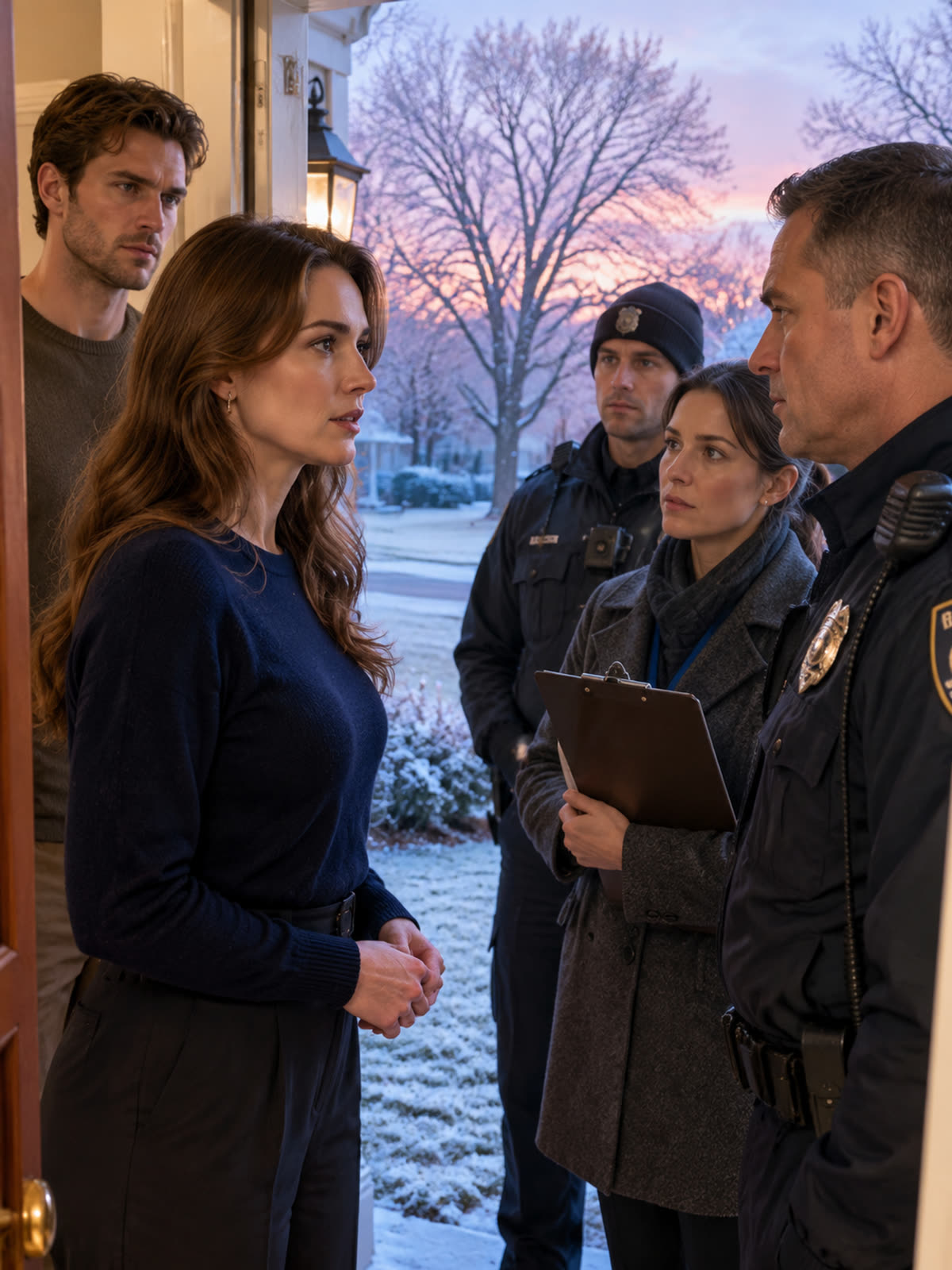
Evelyn had followed her timetable exactly. A hold beginning Tuesday morning would confine me until Friday, leaving the Granville deadline behind by sixteen hours. “Of course, officers,” I said, moving aside. “Please come in out of the cold. In fact, I was expecting you.” Sgt. Alvarez stopped briefly, one eyebrow rising. The liaison, whose identification read Elena Ross, looked equally surprised as she entered our bright foyer. I took them to the kitchen, where Caleb was calmly pouring coffee, and offered them seats at the oak table. I did not pace or raise my voice. I used the same composure I brought to an audit involving a failed pharmaceutical batch: measured explanations supported by evidence. “Before we begin your evaluation, Ms. Ross,” I said, placing a tabbed folder in front of them, “I’d like to give you the incident number I filed with your department’s non-emergency line at 1:15 AM—roughly four hours before my mother called you.” Alvarez took the yellow slip and examined the dispatch code, his expression changing.
I set Clarissa’s unlocked tablet beside the folder. “Second,” I continued, “I’d like you to read the highlighted text thread from November 2nd between my mother, Evelyn Vance, and my sister, Clarissa Monroe. Specifically, the paragraph where my mother outlines her plan to call Upper Arlington crisis services this morning and fabricate a claim of cognitive disorientation so I will be placed on a seventy-two-hour hold and miss an estate deadline on Thursday.” The refrigerator’s hum became the loudest sound in the room. Alvarez bent toward the screen. Elena lowered her glasses and read beside him. As their eyes moved down the messages, professional caution gave way to a hard, quiet disgust. I placed the recovered pens next to the tablet. “And these,” I added, “are my emergency allergy medications, which were removed from my purse during my sister’s birthday dinner last night before she served me a chocolate cake secretly baked with hazelnut flour.” At that moment, Nathan entered from the hall in the same rumpled flannel he had worn during the night, exhaustion visible around his eyes.
“Who placed the wellness call this morning, Sergeant?” Nathan asked. Alvarez checked his notes. “The caller identified herself as Evelyn Vance, Mrs. Bennett’s mother—with corroboration on the line from a Clarissa Monroe.” Nathan stood squarely beside the table. “Clarissa is my wife,” he said, his voice unwavering. “I was in the house when my wife hid those auto-injectors in her jewelry safe. I retrieved them myself at midnight and brought them here, along with her tablet. My wife and mother-in-law are trying to use your badge to keep Audrey from claiming an $800,000 inheritance from her grandfather.” Elena closed her clipboard with a sharp snap. She did not proceed to a diagnostic interview. “Mrs. Bennett,” she said warmly as she stood, “you are clearly lucid, safe, and entirely capable of managing your own affairs. I am closing this assessment as completely unfounded—and flagging the initiating call as a malicious misuse of emergency crisis resources.” I had expected to need to defend my sanity. Instead, their own messages had done it for me.
Alvarez put his notebook away, his expression grim. “Mrs. Bennett, do you still have the slice of cake you took from the dinner?” “Double-sealed in my garage freezer with a timestamped photo log,” I said. “And I have photographs of the bakery box and the cash order ticket from Velvet Crumb in my phone.” He took out a business card and wrote a direct number on the back. “Don’t throw anything away,” he instructed. “I’m turning this over to Detective Owen Mercer in our Major Crimes and Financial Fraud unit before my shift ends. Filing a false emergency report is a misdemeanor on its own—but deliberately tampering with food to trigger a severe medical emergency, combined with forgery and elder financial theft? That’s felony territory. Keep your phone on.” Ten minutes after the patrol car left, I contacted my laboratory director and requested four days of emergency personal leave. Then I packed the frozen, bagged plate in a rigid cooler with ice blocks. I was no longer willing to let this remain a dispute my family could describe away as hurt feelings or a misunderstanding.
At 9:30, I stood at the intake counter of Midwest Analytical Laboratories on the west side of Columbus. The independent, ISO-accredited facility handled food-contamination testing for commercial litigation. I paid $650 for formal legal chain-of-custody intake and a twenty-four-hour rush ELISA assay targeting hazelnut protein, Corylus avellana. A technician logged the sealed plate, photographed the little brass Allergy-Safe marker, and gave me a stamped receipt. Returning to the car, I called Caldwell & Associates. The receptionist went silent for a moment when I identified myself, then transferred the call. “Mrs. Bennett,” said a dry, resonant voice, seasoned by decades of precise legal work, “I must admit, I am profoundly relieved to hear from you. We have been attempting to reach you since August.” I gripped the steering wheel. “I only received your redirected notice three weeks ago, Mr. Caldwell,” I replied. “My mother told me after the funeral that Grandfather’s estate was already settled.” I heard papers move at the other end of the line.
“Your grandfather’s estate is far from simple, Mrs. Bennett. Let me verify the mailing address listed in our original contact sheet: 412 Birchwood Drive, Westerville?” “That is my mother’s house. I haven’t lived there since I was twenty-two.” Caldwell released a long breath. “When my paralegal telephoned the secondary family contact in August to confirm your residence, your mother explicitly assured us that you still received your important legal mail there. We dispatched three formal notices via certified mail. I am looking at the green return receipts right now. Every single one bears the signature of Evelyn Vance.” I looked through the windshield without really seeing the parking lot. “And did she call your office again in late October?” I asked. He paused before answering. “On October 29th, Mrs. Vance telephoned my assistant. She claimed you were deeply distressed by your grandfather’s passing, wanted nothing to do with the Granville properties, and intended to sign a formal disclaimer waiving your share. She asked twice whether the trust would automatically roll over to your sister, Clarissa, if you failed to appear by Thursday at 5:00 PM.”
“Tell me the exact terms of the trust, Mr. Caldwell.” Over the following five minutes, he explained what Arthur had arranged. This was not an ordinary will my mother could easily challenge through probate. Two years before his death, he established the Arthur Sterling Revocable Trust and transferred his assets into it. Evelyn received the residential property in Westerville free of debt. Clarissa’s allocation was $120,000 in cash. The principal gift belonged to me: three fully rented historic commercial buildings on Broadway in downtown Granville, accompanied by a dividend investment account, together appraised at $812,000. “However,” Caldwell said, his voice becoming more exact, “Arthur insisted on a strict physical-acceptance provision. To take title to the commercial portfolio, you must appear personally in my office, verify your identity before a notary, and execute the acceptance deed before 5:00 PM this Thursday, November 14th. If the primary beneficiary fails to appear within the ninety-day window, the gift is legally deemed declined and reverts immediately to the alternate beneficiary.” I already knew the answer, but said it anyway. “Clarissa.” “Precisely.”
Dry leaves raced across the asphalt outside my car. “Mr. Caldwell,” I asked, “Do I have to wait until Thursday at five?” “Not at all. The window is open right now.” The answer changed the shape of the next two days. I did not have to spend Thursday racing a deadline while my mother invented another obstruction. I could finish first. “Then I will be in your office tomorrow morning at ten o’clock,” I vowed. “And I am bringing a witness—and documentation you need to see.” “I will clear my morning,” he replied. Beneath his formality, I thought I heard the smallest trace of satisfaction. I drove home feeling drained to the bone. That afternoon, I scanned every page of Arthur’s ledger and all six letters. Caleb had gone to a work site in Dublin. Nathan had driven to Cincinnati to meet his attorney brother and secure his contracting company’s accounts. Alone at the kitchen table, I moved carefully from one document to the next, giving each the attention I wished someone had given Arthur while he was still alive.
At 3:45, the doorbell rang. On the security screen beside the pantry, my mother stood on the porch in a perfectly maintained camel-hair trench coat. Her silver bob was immaculate. A thick manila folder rested beneath her arm. My pulse gave one forceful beat—not so much fear as the disturbing clarity of recognizing a predator beneath a pearl necklace. I released the deadbolt. “Audrey,” Evelyn said, stepping inside before I could invite her, bringing jasmine perfume and cold air with her. “Thank goodness you’re home. I was beside myself this morning when you didn’t answer my texts. You left Clarissa’s dinner in such a state.” I closed the door and followed her toward the kitchen. “Did I?” I asked. “Funny, I felt perfectly calm. Until the police knocked on my door at six-thirty this morning.” She showed no visible reaction. Setting her designer bag on the counter, she removed a newly typed legal document from the folder and pushed it across the table.
“Honestly, Audrey, I only called them because I was terrified you were having a stress-induced episode,” she said without hesitation. “You’ve been working insane hours at that lab, and stealing your sister’s china isn’t normal behavior. I just want to take some pressure off your shoulders.” The heading on the paper read IRREVOCABLE DISCLAIMER OF TRUST INTEREST. My full legal name appeared over the blank signature line. “What is this, Mom?” “It’s a simple release form for Grandpa’s old buildings in Granville,” Evelyn replied in the soothing, patronizing voice she had used on me since childhood. “I had Grant Holloway review it to save you the trip. He’s meeting us at his notary office on Riverside Drive at five o’clock so we can wrap this up painlessly.” I studied her face. “You’ve known about the $800,000 trust since August,” I said. Her lips tightened, the first small fracture in her composure. “I was waiting for the right time to discuss it as a family. Be realistic, Audrey. You and Caleb have a lovely home, two high-paying corporate jobs, and zero debt. Clarissa has poured her soul into her boutique, and she’s struggling with overhead. Those commercial buildings would secure her future. A generous older sister wouldn’t even hesitate.”
“Grandfather left them to me.” My mother gave a short, contemptuous scoff. “Arthur was eighty-two years old and barely knew what day it was toward the end. Clarissa and I sacrificed our lives taking care of him while you hid behind your test tubes in Columbus. You owe this family, Audrey. Just sign the paper and stop being selfish.” For three seconds, I looked at her without the explanations I had spent a lifetime supplying. I saw her without childhood loyalty softening the picture, without the old hope that one day being reasonable enough would make her fair. Then I put two fingers against the document and slid it back until it reached her polished nails. “No,” I said. She stopped moving. The simple refusal seemed to interrupt a mechanism she had trusted for decades. “Excuse me?” I kept my voice level. “I am not signing your disclaimer, Mom. I am not meeting Grant Holloway. And I am driving to Granville tomorrow morning.” Panic crossed her eyes before anger covered it. She pulled the page off the table and thrust it into her folder, her fingers unsteady.
“If you walk into Harrison Caldwell’s office tomorrow, you are burning every bridge in this family to the ground! I will tell the entire church, every aunt, every cousin how you stole your sister’s livelihood out from under her while she was drowning!” I folded my arms. “Tell them whatever you like,” I answered softly. “Just make sure you also tell them why you paid Tessa at Velvet Crumb $2,500 in cash to bake roasted hazelnut flour into my birthday cake.” Halfway toward the front door, Evelyn stopped. Her back went rigid inside the camel coat. She did not look around. “You always were a cold, ungrateful little girl,” she spat into the hallway. “You’re just like your father.” The door slammed hard enough to knock the framed watercolor beside the coat rack crooked. I stood in the kitchen and listened as her sedan accelerated out of the driveway. My hands were no longer shaking. Her threats were familiar, but something in their power over me had finally broken.
Three seconds later, my phone sounded twice on the counter. The first notification announced an encrypted PDF from Midwest Analytical Laboratories. The rush allergen analysis had finished twelve hours early. Before I could open it, an unfamiliar local number filled the screen. I answered. “Audrey Bennett.” The man on the line had a crisp, gravelly voice. “Mrs. Bennett, this is Detective Owen Mercer, Upper Arlington PD,” he said. “I just got off the phone with the lab director at Midwest Analytical—we’re pulling a copy of your results right now. More importantly, my partner and I just paid an unannounced visit to Velvet Crumb Bakery with a preliminary warrant for their point-of-sale logs. The owner, Tessa? She panicked the second we mentioned felony food tampering. She’s sitting in an interview room at the precinct right now—and she’s already talking.”
PART 3 — The Safeguard in the Gears
Silver mist lay across the fields bordering Route 16 on Wednesday morning as Caleb drove us east toward Granville. Nathan followed in his dark-blue pickup, its headlights steady through the fog in our rearview mirror. My leather briefcase rested across my knees. Inside was the notarized report Midwest Analytical had delivered the previous evening. The chocolate espresso cake Clarissa served me contained 18,400 parts per million of concentrated Corylus avellana—roasted hazelnut protein. This was not a trace left on a shared spoon or a stray crumb from another mixing bowl. The allergen was present in a deliberate concentration beneath the cocoa and espresso. For years, I had read laboratory results with a professional distance. This time, the numbers described something my sister had expected me to put into my own mouth while she stood behind my chair. The paper gave measurable form to what the messages had already revealed, stripping away any remaining room for my mother to describe it as a joke, a misunderstanding, or another example of me being overly sensitive.
Beside the report was Tessa’s sworn statement, signed shortly before midnight at the Upper Arlington precinct under a reduced cooperation agreement. She admitted that Clarissa had entered the bakery on Thursday afternoon carrying twenty-five hundred-dollar bills in a plain envelope. In return, she wanted one dark-chocolate slice prepared with forty percent hazelnut flour and no allergen warning. Clarissa had specifically instructed her to put Allergy-Safe on the order ticket as cover. I had stared at that phrase for a long time the night before. It was not simply the absence of a warning. It was a false assurance, chosen because both women knew exactly what I checked before eating anything prepared outside my own kitchen. They had taken the habit that kept me alive and turned it into part of the deception. Under the polished ganache, there had been nothing accidental. Under the little paper heart, there had been nothing loving. As the farmland passed outside the window, my briefcase held the measurements, the admission, and the written planning that connected them.
Caldwell & Associates occupied the upper floor of a restored nineteenth-century brick building facing Broadway’s wide, tree-lined stretch. Arthur’s storefronts stood only two blocks away, on the same street where he had recognized an opportunity fifty years before. We climbed an oak staircase that creaked under our feet. Harrison Caldwell waited at the top. He was lean and silver-haired, wearing a charcoal three-piece suit and thin tortoiseshell glasses. Behind the lenses, his gray eyes were keen and observant. He shook my hand and held it a moment longer than professional courtesy required. “You have Arthur’s posture,” he remarked quietly. “And from what I heard over the phone yesterday, you inherited his backbone, too.” Hearing my grandfather’s name in that setting brought a sudden ache into my chest. So much of the previous day had involved documenting what had been done to him and what had been planned for me. For a moment, Caldwell’s observation reminded me that Arthur had left something besides evidence and property. There were parts of him my mother had never controlled.
We sat around a large mahogany conference table overlooking the historic square. Caldwell’s senior paralegal and an independent notary waited at the other end. I spent ninety minutes reading the trust acceptance papers, examining the parcel numbers, lease provisions, and escrow figures with the patient attention I brought to a clinical protocol. I would not be hurried through a document after spending so long being kept from one. Caleb remained beside me, and Nathan sat across the table. The room was quiet enough that the ordinary sounds of turning pages and shifting chairs seemed unusually distinct. I checked one section against the next and made certain I understood what I was accepting. The portfolio was no longer an abstract sum in an envelope or the prize at the center of my sister’s scheme. It was Arthur’s work: buildings he had bought when others passed them by, leases and investments assembled over years, a legacy he had chosen to place in my hands. The more I read, the clearer that choice became.
At 11:24 a.m., I took the cap off a substantial fountain pen and wrote my name on the acceptance line. The notary pressed down the embossed seal. Ten minutes later, Caldwell’s paralegal returned with electronic confirmation that the signed deed had been transmitted to the Licking County Recorder’s office. “It is official, Mrs. Bennett,” Caldwell announced, taking off his glasses and laying them on the desk blotter. “The three Broadway commercial properties and the accompanying investment trust—valued at $812,400 as of this morning—are legally and irrevocably yours. Not a court in the state of Ohio can overturn that signature.” I released a breath that felt as though I had been holding it since Monday’s dinner. Caleb exhaled beside me and squeezed my hand. My mother’s carefully timed phone call, the missing pens, the guardianship papers, the invitation wrapped in sudden affection—none of them had kept me from this chair. Thursday’s deadline was still more than a day away, but the signature they had tried to prevent was already recorded.
Caldwell stood and walked to a steel vault set into the paneled wall behind his desk. “Now,” he said, “Your grandfather left two additional items strictly in my custody. His explicit written instruction was that I was not to surrender them until you physically sat in this chair and signed the deed.” He returned with a small polished mahogany box and a thick cream envelope closed with dark-red sealing wax. I recognized the box immediately. Arthur had used it for the Swiss escapement tools he valued most. His uneven but unmistakable handwriting spelled my name on the envelope. For a moment, I could only look at it. The letters Nathan found had carried the pain of words that never reached me while their writer was still alive. This envelope had been protected from my mother’s hands. Arthur had placed it somewhere she could not intercept it, with a man he trusted to wait until the conditions were met. Even before I opened it, I understood that he had been trying to reach me through a route she did not know how to close.
I slipped my thumb under the wax, breaking the brittle crimson circle, and unfolded the heavy paper. Arthur began by telling me that if Harrison was giving me his letter, his faith in me had been justified: I had made it through whatever obstruction my mother placed in my way. Then came an apology he had been too weak to offer during his final months. Two years earlier, he noticed that his bank balances failed to agree with his ledger. Reviewing the statements himself, he discovered that Evelyn and Clarissa had been taking money for years through invented caregiver charges, false repair invoices, and transfers supporting the boutique. More than $142,000 had vanished. Reading his explanation brought the image of him back with painful clarity: the careful hands, the angular figures, the patience with which he had always traced a fault to its source. His heart had been failing, but his ability to recognize a damaged mechanism had not. The people who relied on his age to dismiss him had underestimated the habits of a lifetime.
He explained why he had not confronted them openly. At eighty-two, with his health deteriorating, he feared Evelyn would answer with a guardianship battle and have him placed in a nursing home before he could finish protecting what remained. He had also realized that she was intercepting my letters and preventing my calls from reaching him. So, instead of announcing what he knew, he built a concealed safeguard into the trust. He had not left me Broadway because he pitied me. He had chosen me because I was the only relative who sat on his porch without expecting a check when the visit ended. That sentence undid me more thoroughly than the valuation of the properties ever could. For so long, Evelyn had made affection and usefulness difficult to separate. Arthur had known the difference. He had noticed the hours we spent together, the conversations that were not requests, the simple pleasure of sitting beside him. Even with his household and correspondence under someone else’s control, he had remembered who I was.
The pressure of his pen had deepened in the final lines. He instructed me that if Evelyn and Clarissa interfered with my visit to Harrison, I should not spare them. I was to ask Caldwell to open Clause Twelve, a provision he had created specifically with them in mind. His last advice was to keep my mind clear and always check the ingredients. Tears spilled over my cheeks, blurring the handwriting as I pressed my knuckles to my mouth. From a sickroom, surrounded by people treating his life’s work like a source of ready cash, he had found a way to place a shield between them and me. They had prevented our final conversations, but they had not kept him from leaving instructions. I opened the mahogany box. On green felt lay his 1962 gold Omega pocket watch, a stack of certified bank statements with fraudulent checks circled in red, and a small silver thumb drive marked Voicemails & Audit. Together, the objects felt unmistakably like him: the watch he loved, the records he trusted, and the proof he refused to leave exposed.
With tears still on my face, I looked up at the attorney. “Tell me about Clause Twelve.” Caldwell placed his hands together over his leather portfolio. His gray eyes acquired a cold, formidable focus. “When Arthur restructured the trust two years ago, he anticipated that your mother and sister might attempt to obstruct your claim. At his insistence, I drafted Clause Twelve—an exceptionally strict Bad Faith and Malicious Interference forfeiture provision.” He opened a bound trust document and turned it toward me. “In plain English,” he explained, “Clause Twelve stipulates that any beneficiary who engages in fraud, deception, coercion, or malicious interference to delay, obstruct, or prevent another beneficiary from claiming their rightful share automatically forfeits one hundred percent of their own interest in the trust. Legally, they are treated as though they had predeceased Arthur.” I looked down at the watch in its green-lined box, then back at the pages between us. Arthur had done more than make his wishes clear. He had anticipated that they might try to defeat those wishes and had attached a consequence to the attempt.
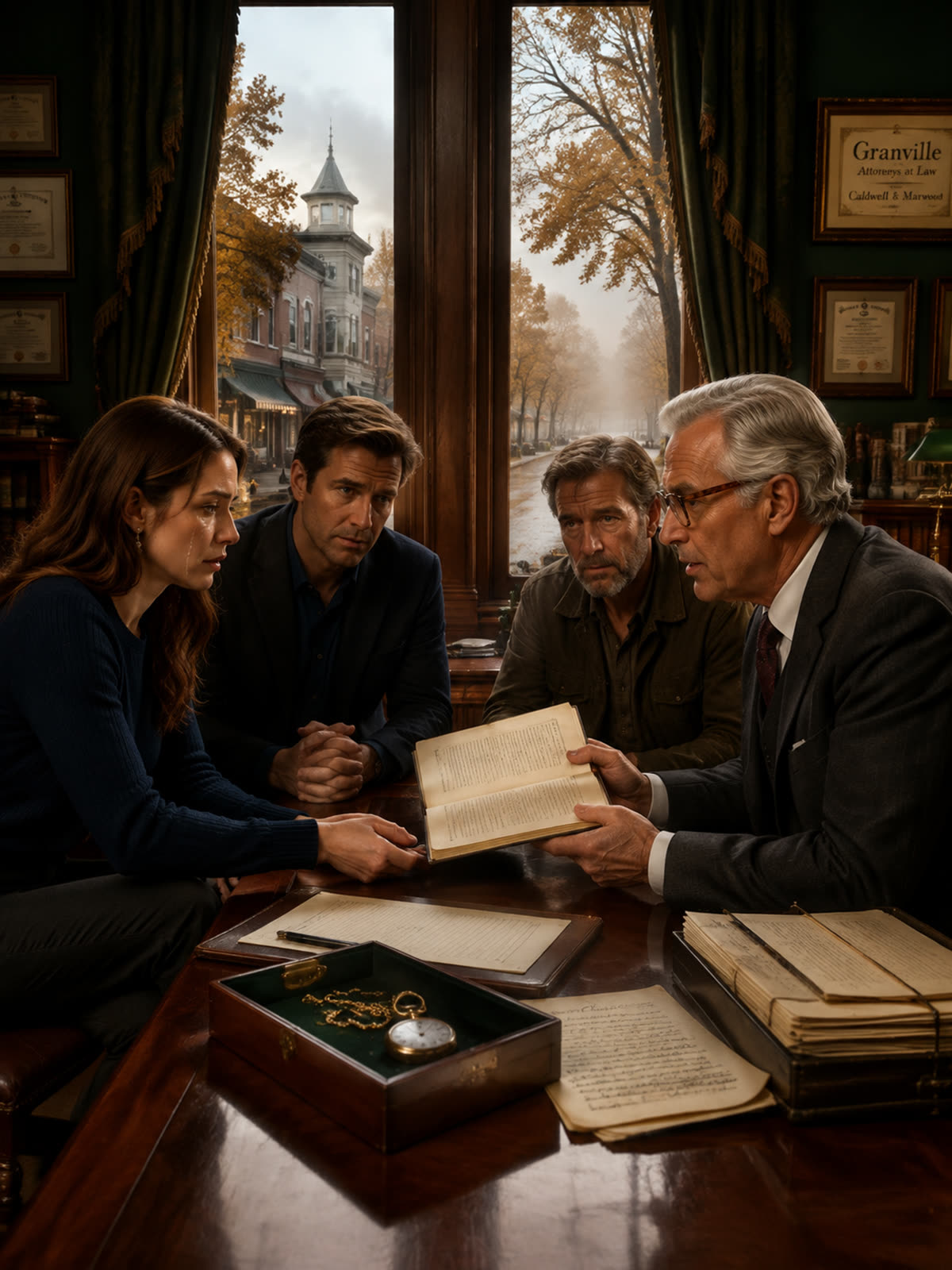
The implications settled across the conference table. “Clarissa’s $120,000 cash distribution,” I whispered. Caldwell nodded. “Precisely,” he said. “It has not yet been disbursed—I placed an administrative hold on it the moment I noticed the irregularities with your certified mail receipts. If you present me with credible, documented proof of malicious interference, I am not merely permitted as trustee to invoke Clause Twelve; I am fiduciary-bound to execute it. Clarissa loses every cent, and that $120,000 rolls directly into the trust residue—which belongs to you.” My sister had not simply risked the inheritance she wanted to steal. She had jeopardized the one Arthur had already provided for her. The cash she considered insufficient was still waiting under Caldwell’s control, untouched by the boutique’s overdue accounts. Her attempts to acquire the larger portfolio had created the evidence that could take away the smaller distribution. The thought did not feel triumphant in the way I might once have expected. It felt exact. Arthur had designed the consequence around their conduct, leaving them to choose whether it would ever become necessary.
“And what about my mother?” I asked, sliding the ledger and allergen report across the polished wood. “She already got the Westerville house.” Caldwell opened Arthur’s book and studied the first pages of red-marked transactions. His eyes narrowed. “Oh, Arthur thought of Evelyn, too. While her real estate transfer closed last year, Clause Twelve includes an explicit estate clawback mandate. If proof of pre-mortem financial misappropriation is presented, the trust is legally required to file an immediate civil recovery action—with statutory treble damages and attorney’s fees—and place an immediate emergency lien against any real property she holds.” Nathan shifted upright. “Treble damages,” he murmured. “Three times $142,800? That’s over four hundred thousand dollars. Evelyn doesn’t have four hundred thousand in cash.” Caldwell’s answer was dry and unhesitating. “No,” he said. “Which means the estate will force the liquidation of her Westerville home to satisfy the judgment.” The house my mother treated as evidence of her security was now part of the recovery mechanism Arthur had left behind.
For the next hour, I arranged the evidence before him. There was the independent laboratory report identifying the hazelnut concentration. There was Tessa’s signed admission explaining the cash payment and false labeling. There were printed copies of the iPad conversations, with their dates and instructions. I added the forged guardianship petition carrying Grant Holloway’s stamp, the bakery-box photographs, and Nathan’s sworn account of recovering my injectors. His statement also covered the unauthorized $45,000 credit line opened in his company’s name. I placed the records carefully, without rushing, so that each item supported the next. The evidence did not depend on whether Caldwell believed I had been a good daughter or whether Clarissa could cry persuasively. It connected a financial motive to a deliberate plan, then connected that plan to the cake, the missing medication, and the false emergency call. My grandfather had taught me to document a mechanism before taking it apart. Now the entire mechanism lay on a mahogany conference table, with its moving pieces identified.
Caldwell read every page in a silence that became grimmer as the hour passed. He did not dismiss a photograph as an unfortunate angle or a message as a joke. He checked the records with the same seriousness Arthur had given the entries in his ledger. By the time he closed the folder, his face looked carved from stone. “Your mother and sister booked this exact conference room for tomorrow afternoon at 4:45 PM,” he said quietly. “They are bringing Victor Hale—a notoriously aggressive Columbus litigation attorney who specializes in squeezing trust distributions. They intend to sit in those chairs, watch the clock strike five, demand title to your $800,000 Broadway portfolio, and walk out with Clarissa’s $120,000 check.” For a moment, I pictured the appointment as they had arranged it. They expected me to be elsewhere, confined or delayed or persuaded into surrender. They expected the passing of a few final minutes to reward everything they had done. Even now, after the failed wellness call and my refusal to sign, they were preparing to arrive with counsel and claim the outcome they had planned.
Caldwell looked at me over his glasses. “Would you prefer I handle the execution of Clause Twelve privately by certified mail, Mrs. Bennett? Or would you like to be in the room?” I closed my fingers around Arthur’s gold watch. Its cool weight steadied me. For years, my family’s version of events had traveled ahead of mine. Evelyn explained why I was fine, why Clarissa deserved help, why Arthur could not receive visitors, why I was supposedly too distressed to manage my own affairs. Other people heard her account first and expected me to fit inside it. Tomorrow, she intended to sit in this room and speak for an absence she had tried to create. This time I could be present. I would not need to shout over her or convince the room that my feelings mattered. Caldwell had the documents. The trust held the consequence. Arthur’s own records showed what happened long before that birthday dinner. I looked across the table. “I want to be in the room,” I said.
That evening, back in Columbus, Caleb and Nathan accompanied me to the precinct to meet Detective Owen Mercer and an assistant county prosecutor. We delivered certified copies of the laboratory findings, the recovered auto-injectors, and the forged guardianship waiver. We also supplied the evidence concerning Evelyn’s handling of the certified mail, including the three USPS return receipts bearing the signatures associated with her interception of the notices. The materials had grown from a set of phone photographs into a substantial case file. I remembered the first message in my lap at the dinner table, the fork above the white porcelain, and the fraction of a second in which I had to decide how to keep my face normal. Everything after that moment had required a different kind of control: preserving instead of confronting, recording instead of arguing, allowing their words to remain available rather than giving them an opportunity to disappear. Across the table, Mercer turned his attention to the thick file and tapped his pen against it.
“Between the felony food tampering, the false emergency crisis report, the forged $45,000 credit line, and the federal mail fraud, the prosecutor is ready to sign arrest warrants by noon tomorrow,” he said. “If you want, we can pick them up at their houses at breakfast.” The offer left a brief silence. After all the hours of preserving records and arranging proof, the investigation had reached the point where the next step could happen without another conversation with my mother or sister. They could be approached at home before they ever climbed Caldwell’s staircase. The decision in front of me was no longer whether I could stop their plan. The portfolio was already mine, and the evidence had reached both a trustee and investigators. What remained was whether they would hear Arthur’s answer in the room they had reserved for their expected victory. My hand remembered the weight of his watch. I thought of the sealed letters behind the armoire panel, the calls that had not rung, the final months they had taken from us.
“Wait,” I said softly. “They have an appointment in Granville at 4:45 PM tomorrow. They think they’re walking out with nearly a million dollars.” Mercer’s mouth moved into a slow, grim smile. “You want the civil hammer to drop first?” I kept my voice even. “I want them to hear every single word from my grandfather’s lawyer,” I replied. “And I want them to know he beat them.” He looked toward the prosecutor, who answered with one silent nod. “Fine by us, Mrs. Bennett. You take 4:45 PM upstairs. My partner, a county deputy, and a U.S. Postal Inspector will be waiting quietly in the lobby downstairs at five o’clock sharp.”
Disclaimer: This story is a work of fiction inspired by real-life themes. Names, characters, places and events are fictionalized, and any resemblance to real persons is purely coincidental. It does not represent any person or organization and does not encourage inappropriate behavior. Images are for illustration purposes only.
